AND THE THIRD ANGEL FOLLOWED THEM, SAYING WITH A LOUD VOICE, IF ANY MAN WORSHIP THE BEAST AND HIS IMAGE, AND RECEIVE HIS MARK IN HIS FOREHEAD, OR IN HIS HAND. *** REVELATION 14:9
Friday, May 22, 2026
Minnesota fraud: Authorities arrest suspect who jumped from balcony
‘Colossal profits’: Christian leaders lambast fossil fuel giants as they demand EU windfall tax

Copyright European Union, 2025, licensed under CC BY 4.0
By Ruth Wright
Published on 21/05/2026 - 6:30 GMT+2
120 organisations from 20 EU countries have signed the first ever appeal of its kind.
“Europe has a unique opportunity and the moral responsibility to accelerate the phase out of fossil fuels and shift to clean energy, including through a permanent tax on the colossal profits of fossil fuel companies”, the document says. It was recently revealed by the Guardian newspaper that the world’s top 100 oil and gas companies made more than $30 million (€25.8m) every hour in profit in the first month of the US-Israeli war in Iran.
The appeal calls on the EU to “remain steadfast in its founding values of human dignity and the common good by accelerating a just energy transition.”
Signatory organisations include European and national faith-based institutions, including episcopal bodies, religious orders, social and environmental NGOs, international development charities, and Christian movements and communities. Organisations include Laudato Si’ Movement, Caritas Europa and the Central Committee of German Catholics.
JD Vance speaks on faith, conversion at Catholic event on Capitol Hill
JD Vance speaks to supporters (Photo by Joey Sussman/SHutterstock)
Vice President JD Vance spoke May 21 at a monthly gathering of Catholic lawmakers and congressional staffers on Capitol Hill, sharing details of his conversion to Catholicism and his thoughts on the role of faith in public life.
The event, called “Catholic Connections,” is hosted by House Majority Whip Tom Emmer, R-Minn., who holds the informal, off-the-record discussions to allow Catholic elected officials, aides, and others to connect over their shared faith.
Vance, a 2019 convert to Catholicism who previously identified as an atheist, shared his Christian testimony and discussed living a life of service to others, according to lawmakers who attended.
“It was an honor to have @VP JD Vance, the highest-ranking Catholic in U.S. government, at Catholic Connections this morning,” Emmer wrote in a post on X. “Thank you, Mr. Vice President, for joining us and sharing your story of faith, family, and public service.”
Rep. Bob Latta, R-Ohio, praised Vance for joining the group and noted that the vice president “shared his testimony, his faith, and the importance of living out our values through service to others.”
Rep. Michael Baumgartner, R-Wash., who had spoken at a previous session, said Vance’s remarks were “thoughtful and inspiring.”
Rep. French Hill, R-Ark., said it was “Wonderful to have the Vice President visit the U.S. Capitol and share his faith journey from atheism to conversion to the Roman Catholic faith.”
According to Emmer’s office, Catholic Connections is dedicated to “fostering a faith-based community among Catholics working on Capitol Hill.”
What the Vatican Just Released on Gay Catholics — and Where Pope Leo Stands
An explainer on Study Group 9’s final report, the two testimonies that surprised everyone, and the synodal process Pope Leo XIV is letting run.
Christopher Hale
May 20, 2026

On May 5, three days before the first anniversary of Pope Leo XIV’s election, the Vatican released a document with a title built to put readers to sleep: “Theological Criteria and Synodal Methodologies for Shared Discernment of Emerging Doctrinal, Pastoral, and Ethical Issues.”
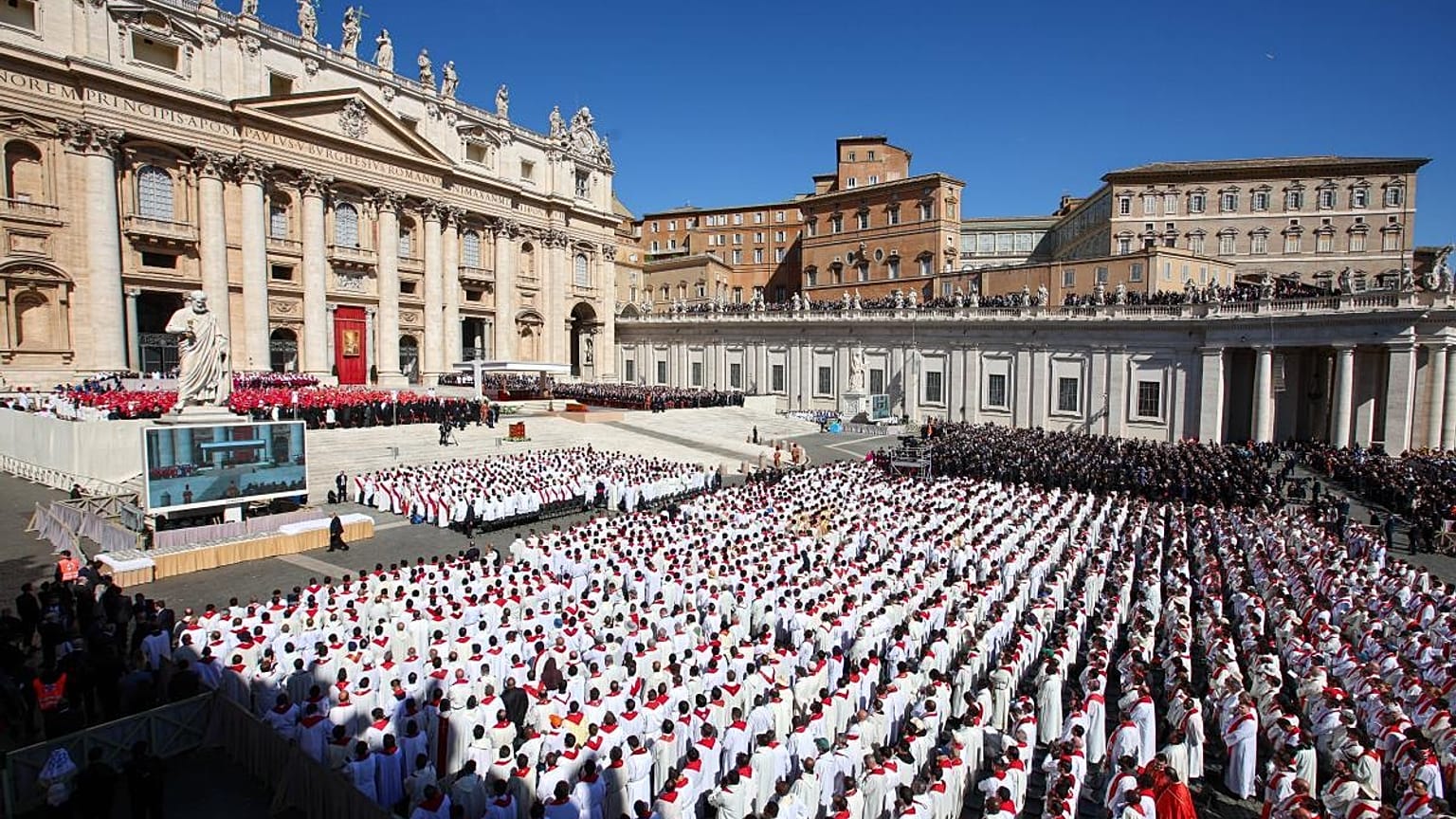
Within forty-eight hours, James Martin had called it historic, Cardinal Gerhard Müller had branded it heretical, and Father Gerald Murray, speaking on EWTN, used the word horrific.
The reason is buried in two appendices.
Here is what Study Group 9 is, and what its report actually does.
The body and the assignment
Study Group 9 is one of ten committees Pope Francis spun out of the Synod on Synodality in early 2024.
Each was handed a question the synod assembly could not finish in the room. Group 9 drew the hardest topic — what the Vatican initially labeled “controversial doctrinal, pastoral, and ethical issues.” Same-sex relations sat at the top of the list. The role of women, divorce and remarriage, and questions of conscience were also on the docket.
The group’s chair is Cardinal Carlos Gustavo Castillo Mattasoglio, the Peruvian archbishop of Lima. Robert Prevost — the missionary who spent nearly four decades in Peru before becoming Pope Leo XIV — knows him well.
The committee’s first symbolic act came before publication. It renamed its own assignment. “Controversial issues” became “emerging issues.” Group 9 wrote that the change was meant to register a “paradigm shift” away from a Church that hands down rulings and toward a Church that learns by listening.
Hantavirus sparks fear, questions for some students in post-COVID world
By Kate Perez and Allison Kiehl Chicago Tribune (TNS)
May 21, 2026

A passenger of the hantavirus-stricken cruise ship MV Hondius is pictured while leaving by military bus after disembarking in the port of Granadilla de Abona on the island of Tenerife in Spain’s Canary Islands on May 11. Adverse weather conditions forced the cruise ship MV Hondius hit by a deadly hantavirus outbreak and anchored off Spain’s Canary Islands to dock before evacuations can be completed, the health ministry said.Jorge Guerrero / AFP
CHICAGO — Brooke Loughman knows that when she opens a social media app, she’ll be flooded with posts, whether she wants to see them or not. Lately, the first-year DePaul University student has found herself scrolling quickly through her feed, trying to avoid information about hantavirus and the wave of anxiety she experiences thinking about the possibility of another pandemic like COVID-19.
“If it is going to be a really big deal, I would rather not prematurely freak out, because if it is going to be like a COVID-19 scale thing again, I’d rather have some sense of normalcy for as long as I can,” said Loughman, who is 19.
Loughman’s thoughts are echoed by students scarred by living through the coronavirus pandemic.
The fresh mix of news and misinformation about hantavirus on social media is stirring up negative emotions for some young people, carried over from living on lockdown. COVID-era anxiety can linger and resurface, even more than half a decade after the pandemic, mental health experts say. The unknowns of a new virus outbreak, coupled with an influx of sometimes unreliable information, can generate fear, dread and anxiety.
In other words, the aftereffects of COVID-19 are still present, according to Tara Leytham Powell, an associate professor of social work at the University of Illinois Urbana-Champaign. “All the impacts of that, the loss of income, the social isolation, the fear of the illness, all those things still exist in people’s minds,” Powell, who is currently researching COVID’s lasting impacts on mental health.
Thursday, May 21, 2026
HITLER & THE WAR ON NATIONAL HEALTH - 05.20.2026

NOTR - HITLER & THE WAR ON NATIONAL HEALTH
Wednesday, May 20, 2026 at 6:35PM
Today's Show: HITLER & THE WAR ON NATIONAL HEALTH - 05.20.2026
Chris discusses the history of the Nazi healthcare system back in the 1930's and 40's from the perspective of the book, "Racial Hygiene," by Robert N. Proctor. As the book shows, the Nazis used the healthcare system and the fear of disease and pandemics as the pretense to round up Jews and get them into ghettos and eventually, concentration camps. For example, when Auschwitz opened in August of 1943, it was originally a "quarantine" camp and later became a death camp where more than one million people were killed. Furthermore, we examine the book, "Hitler Speaks," by Hermann Rauschning, first published in 1939. In it, the former Nazi leader records Hitler's vision of future warfare, where the use of bacteria would be employed to destroy the health of a nation before they were invaded.
Wednesday, May 20, 2026
Tuesday, May 19, 2026
Pope Leo XIV’s first encyclical Magnifica humanitas to be published May 25
Pope Leo XIV’s first encyclical, Magnifica humanitas, on safeguarding the human person in the time of artificial intelligence, will be released on May 25. A presentation event with the Pope and various speakers is scheduled for the same day at the Vatican.
Vatican News
Pope Leo XIV’s first Encyclical Letter Magnifica humanitas, on safeguarding the human person in the time of artificial intelligence, will be released on May 25, 2026.
It bears the Pope’s signature dated May 15th, 135th anniversary of the publication of Pope Leo XIII’s encyclical Rerum novarum.
Magnifica humanitas will be presented on the day of its release at 11:30 a.m. at the Vatican’s Synod Hall.
The Pope will be present, along with several speakers: Cardinal Víctor Manuel Fernández, Prefect of the Dicastery for the Doctrine of the Faith; Cardinal Michael Czerny, S.J., Prefect of the Dicastery for Promoting Integral Human Development; Professor Anna Rowlands, a theologian and professor at Durham University (United Kingdom); Christopher Olah, co-founder of Anthropic (USA) and head of research on the interpretability of artificial intelligence; and Professor Leocadie Lushombo, I.T., professor of political theology and Catholic social thought at the Jesuit School of Theology / Santa Clara University in California (USA).
Cardinal Secretary of State Pietro Parolin will offer closing remarks, followed by an address and blessing by Pope Leo XIV.
Monday, May 18, 2026
Seeking unity within the worldwide Christian community
17 January 2026
Seeking unity within the worldwide Christian community
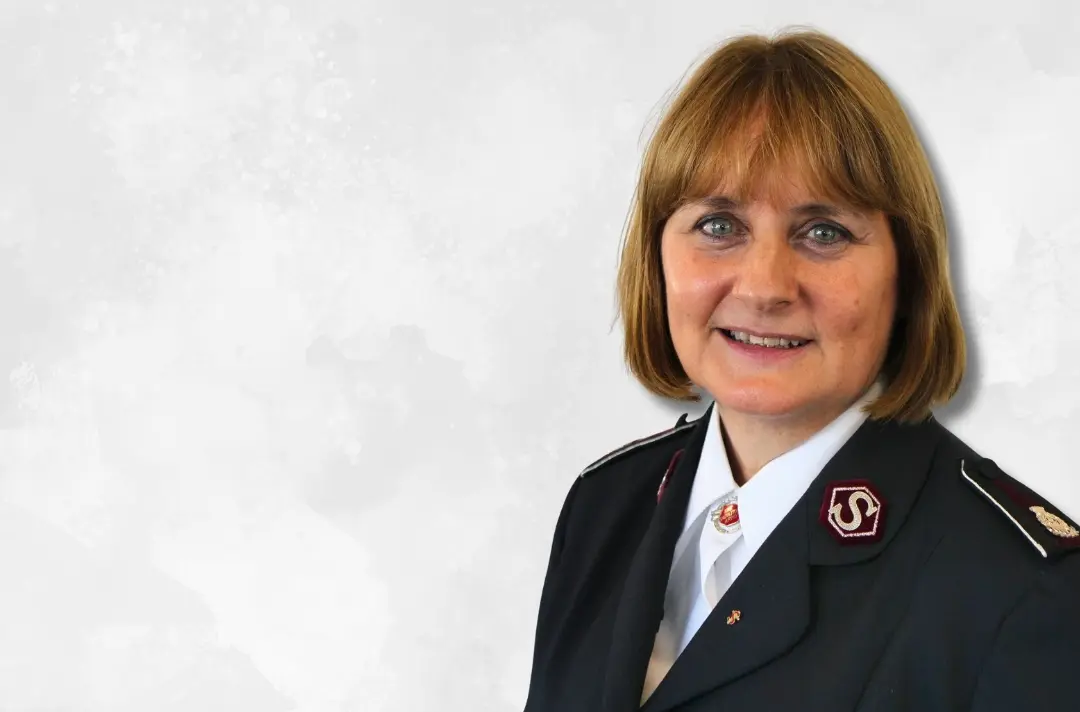
Secretary for International Ecumenical Relations Commissioner Jane Paone shares how Christian traditions across the world share and learn from each other.
What does ecumenism look like at an international level?
I represent the General in different international groups.
The Conference of Secretaries of Christian World Communions brings together all the general secretaries of the different traditions. We share once a year about challenges and joys for the Church. Then we pray for one another. It’s a very precious moment.
I’m also on the Central Committee of the World Council of Churches. The Salvation Army used to be a member of the council. We chose not to be in the 1970s, but we’re always represented with adviser status, so we’re in contact with what’s happening globally. Everybody is very respectful, and there’s a lovely atmosphere.
There’s also the Global Christian Forum. This is a lovely meeting for people to share faith experiences or how the Lord has been working through our traditions. There are no theological documents to be studied; it’s just your testimony.
We’re also part of the World Evangelical Alliance and the Lausanne Movement.
I also have strong links with European Ecumenical Officer Commissioner Vibeke Krommenhoek (IHQ), the General’s representative to the Vatican Lieut-Colonel Andrew Morgan (Italy and Greece Territory) and Territorial Ecumenical Officer Major Paul Robinson (UK and Ireland Territory).