Showing posts with label ustashi. Show all posts
Showing posts with label ustashi. Show all posts
Saturday, December 06, 2025
Friday, December 20, 2013
THE CATHOLIC CHURCH PREPARES FOR THE FUTURE

by Avro Manhattan
Chapter 11
THE CATHOLIC CHURCH PREPARES FOR THE FUTURE
It is the duty of any State, independently of its religious or ideological nature, to defend itself when threatened by domestic or external enemies. The Central Government of Yugoslavia, aware of Archbishop Stepinac's activities, past and present, could not continue to watch them indefinitely and aloof. Sooner or later, it had to consider steps to end them.
If the Government had had to deal with a simple political or military leader, the solution would have been ready at hand. But here the issue was complicated by the fact that a political leader was also the head of the Catholic Hierarchy. His arrest would raise complex religious repercussions at Rome, and therefore practically throughout the Western world.
The Yugoslav Government decided to solve the problem tactfully, by removing Stepinac, without raising the religious hornet's nest issue. To that end, it approached Pius Xll, demanding the Archbishop's withdrawal from Zagreb. The Vatican, true to its reputation as a master of Sibylline moves, in October, 1945, charged an American in Yugoslavia, Bishop J.P. Hurley, of Florida, at that time acting as the Vatican Apostolic Nuncio there, to investigate the case and report on it direct to the Pope.
Bishop Hurley made extensive inquiries and wrote a comprehensive memorandum, which was speedily sent to Pius XII. Pius XII read it, mused upon it, and then decided to proceed as already planned with regard to Stepinac. Hurley's findings were promptly pigeonholed, and never heard of again.
The Yugoslav Government waited. As the head of the Government himself testified, "waited four months without receiving any reply."[1]
The Vatican was silent because Pius XII planned a war of his own, in which Stepinac was to play a very prominent role. It was the beginning of a psychological papal cold war. In this war religion would be used as the main instrument, directed at stirring up emotional hatred for political ends. Stepinac had to be sacrificed to the requirements of Catholic world diplomacy.[2] Having embarked on this course, the Vatican first contacted, not the waiting Yugoslav Government, but Archbishop Stepinac, whom it ordered to carry on.
When the War Crimes Commission, which, meanwhile, was collecting documentation on war criminals, produced its evidence concerning the head of the Catholic Hierarchy, and presented it to the Yugoslav Government, the latter, after further vain attempts with the Vatican, decided to act. On September 18, 1946, Archbishop Stepinac was arrested. The utmost care was taken that the trial should be fair, in view of the fact that it was certain to raise all kinds of religious and political complications within and outside Yugoslavia. Although only about one-third of the Yugoslav population is Catholic, the Government saw to it that all the officials at the trial were Croatian Catholics. The world Press was invited to attend, which it did. On October 11, 1946, after a ten days' hearing, the Court—composed, it should be remembered, of Catholics—sentenced Archbishop Stepinac to sixteen years imprisonment.
The Vatican uttered a cry of horror, instantly amplified a thousandfold by the Catholic Hierarchies, Catholic agencies, and Catholic Press the world over. Pope Pius Xll ordered the excommunication of all those who had taken part in the trial, from Tito himself down to the last official connected in any way with Stepinac's indictment. All received a solemn Catholic guarantee of eternal damnation in genuine Catholic brimstone and inextinguishable infernal fire. The thing was made even more fearsome by a papal afterthought, which promised the personal attention of Lucifer himself on all those so excommunicated. The Prince of Devils would torture all the unChristian persecutors of the Archbishop during eons without end. Papal authority had decreed so. Amen.
Had such authority been exercised only in hell, it would have worried fewer Christians than is generally believed. Infernal candidates must first emigrate to the next world, and no case has as yet been authenticated of anybody dying because of the scorching effect of the spiritual papal bolts. With millions of the living, however, this same papal authority is neither problematic nor fictitious. It is real, widespread, and dangerous. It can tap vast sources of power at will, whether to help its friends and allies or to dismay its enemies. Last but not least, it can engender the darkest currents of religious and political emotionalism, to control and use the deceived masses of Catholics and non-Catholics alike to further its own interests. The case of Stepinac once more strikingly demonstrated this.
The Pope set in motion the vast machinery of Catholic propaganda, which in no time flooded the world with such mountainous distortions and such plain dishonesty as to shame the most deceitful of all the devils in hell. Overnight Stepinac, the authoritarian leader, the political plotter, the politician, the promoter of the forcible conversions, the tolerator and indirect instigator of the Ustashi massacres, was made to appear as Stepinac the defender of true democracy, the most holy Archbishop, the courageous champion of religious freedom, the persecuted and the martyr. Millions accepted the Catholic version. The result was that soon large sections of the Western world, who until then had not even bothered with the whole thing, hailed Stepinac as the pitiful victim of anti-Christian barbarism.
The lay Press followed suit, exalting Stepinac as the champion of Christianity fighting the powers of darkness. Religious and political leaders joined in the chorus. Foreign Offices, heads of States, and, indeed, whole Governments of Catholic and non-Catholic lands sent official protests against "such unheard-of religious persecution." Questions were heatedly asked in the British House of Commons, in the French, Italian, and Belgian Chambers of Deputies, in the American House of Representatives and Senate. In the USA. President Truman was subjected to a tremendous pressure to force him to intervene on behalf of the "martyred Stepinac." A worldwide movement was set up to induce the United Nations to come to the rescue of a man who had defended all the religious and civil liberties for which the United Nations was said to stand.
The emotional mass distortion engineered by the master minds at the Vatican soon began to yield its poisonous harvest, not so much in the religious realm as where it was potentially a thousandfold more dangerous: that is, in the political field.
At this period, it must be remembered, the Cold War was still in its earliest stage. The blind emotionalism engendered by the trial and its aftermath was used to widen the growing gap between the Russian Dominated Communist and the American-led capitalist worlds.
Soviet Russia slowed down its demobilization and kept a large standing land army on a war footing. The USA pushed ahead its war preparations to such an extent that, after the Stepinac trial had taken place, it had already spent the colossal sum of almost one billion dollars on stock-piling.[3] By 1947 the military forces of the world numbered 19 million, and were maintained at an annual cost of 27,000 million dollars. This, less than two years after the fall of Hitler. From then onward military expenditure rocketed to astronomical figures. By the time that Yugoslavia—who, meanwhile, owing to ideological developments, had leaned towards the West—partially set Archbishop Stepinac free (winter 1951-2) and Stepinac, from Archbishop, became a Cardinal (1953), the world had been split asunder.[4]
The American factories were made to hum, while the American Air Force, Army, and Navy were posted throughout the world in main strategic places, ready to strike. Colossal expenditures for war were voted by the American Administration—e.g. 129,000 million dollars, voted by Congress within less than two years (1950-2) for military armaments and constructions.[5] By early 1953 in Europe alone the USA. had already built more than a hundred airfields, many specially equipped for atomic operations, as defensive-offensive bases against Russia.[6]
In Communist Russia preparations of the same magnitude as a defensive-offensive war policy were carried out, with impetus to match their Western counterparts. Within a few brief years from the end of the Second World War billions of roubles were appropriated for military purposes. In no time, while Soviet Russia became the arsenal of the East, the USA became the arsenal of the West, and its most powerful political military leader. The nations of the world, although not yet out of the second world massacre, made ready for the oncoming third. Politicians, generals, heads of governments, spoke of atomic wars. Armies reassembled, ready to march. A bloody rehearsal of another global slaughter, in imitation of the Spanish Civil War of 1939, where the USA ideologically hostile armies rehearsed a small conflict to be ready for a big one, was staged in Korea in the summer of 1950.
A gigantic armaments race undermined the economy of whole nations, thus rendering war between the two mighty Eastern and Western blocs not so much probable as inevitable.
While the increasingly powerful militaries asked for ever more colossal appropriations, from Vatican Hill came unctuous slogans for peace mingled with veiled threats, invocations to religion, and sanctimonious condemnations of the "atheistic enemies of Christianity." In cynical betrayal of the masses of honest, humble believers, the Vatican was plotting feverishly in the political-diplomatic fields to further its designs. Then one day, above all this, voices were heard—the official voices of the reorganized bands of Ustashi, calling to their members not to scatter, as the hour when they, the Catholic Ustashi of Croatia, would fight side by side with the democratic defenders of Western civilization was fast approaching. The glorious battalions of the Ustashi had to make ready. But while they were willing to fight for world liberty, they had to prepare to do so only in the name of Catholic Croatia, in Catholic units, and under the Croatian flag. No Ustashi, therefore, was permitted to join a foreign army. The appeal of the resuscitated terrorist bands—with the headquarters in the USA.—ran thus:
Headquarters of the V. assembly of Croatian Armed Forces, having jurisdiction over all subjects of the Croatian Armed Forces (Hr or Sn) living on the territory of the European States. It has been learned that some persons, unauthorized, are endeavouring to persuade individuals to enlist in foreign armies. By the order of the Supreme Command of all Croatian Armed Forces, all subjects living in any European State be notified that no individual person is authorized for such activity, nor is it permitted enlisting in foreign armies in any capacity, without a special authorized permit. The Supreme Command of all the Croatian Armed forces will call its forces to arm against Bolshevism when the time arrives to fight side by side with other anti-Communistic nations, under our own flag and within our Croatian army formations.
Headquarters V. Assembly,
General Drinyanin, August, 1950.[7]
These were noble words. The words of an idealist longing for liberty to prevail on earth. Many acclaimed the new defenders of freedom. In certain quarters, however, they knew better. For General Drinyanin was the alias of former Chief Commandant of all the terrible Catholic concentration camps of Croatia, the leader of the bloody "Ustashi Defense" formations responsible for the massacre of 200,000 prisoners in the camps of Jasenovac, the "protector" of all the jackbooted or soutaned monsters who, a few short years before, had been engaged in the forcible conversions to Catholicism, under the aegis of Stepinac, now Cardinal.
While the Ustashi, protected in the Western Hemisphere, were sounding a new trumpet-call from the north, their leader, Ante Pavelic, was busy in the south on the same type of activity on which he had been engaged prior to the Second World War. For Pavelic had in 1948, thanks again to Vatican help, managed to leave Europe. Supplied with false documents given in Rome on an international Red Cross passport, he went to another Catholic country harbouring Nazi leaders: [8] the Argentine.[9]
The false passport which had brought him to safety was furnished by another Catholic priest, a former Ustashi, Father Draganovic, residing in Rome. Priest Draganovic, to make sure that the former Chief should reach the Argentine safely, accompanied him personally as far as Buenos Aires. There he briefed certain high Argentine Hierarchs, after which he duly returned to Rome (end of 1949). Priest Draganovic had acted not only as a zealous Catholic, as a priest and as an Ustashi, but also as the representative of the Vatican, which was concerned with the future of a man, Ante Pavelic, and of an idea, ruthless Ustashi-ism, both of which, because they had succeeded in establishing a model Catholic State once, might succeed in reestablishing it in a future which was, perhaps, not far ahead.
Pavelic at once became active. Most of his meetings were held in Catholic parish halls in Buenos Aires. Catholic priests and friars participated in them—e.g. at the meeting held on February 5, 1951, five Catholic friars attended.[10] The majority of these meetings and similar activities were organized by priests, prominent among them the Ustashi Catholic Padre, the Rev. Mato Luketa. [11] Pavelic took to the Argentine three things:
(a) Papal blessing, as good an introduction to the Argentine Hierarchy, and hence to the Government, as any;
(b) loot from Croatia;[12]
(c) the Ustashi programme.
While some of his lieutenants kept Ustashi-ism alive in the USA and in Europe, Pavelic set about coordinating it in the Argentine. Meetings were held, papers were published, Ustashi abroad were organized. In 1949 Pavelic established the Hrvatska Drzavotvorna Stranka. In that same year he held six large meetings of the Ustashi, most of them in parish halls such as the Catholic Croat Parish Hall on Avenida Belgrano. Pavelic counseled that "all honest Croats in exile should belong" to his movement. Thereupon he instructed them all not to take Argentine nationality, so that they would be able to leave the country without any hindrance.
Pavelic talked of war and of blood. The titles of his articles told their tale: The Ideological War (La Guerra Ideologica),'[13] and The Call of Blood, the latter being an introduction to the proclamation of the resurrected Party. The basis of Pavelic's new policy was war. Like another pillar of political Catholicism before him—i.e. Cardinal Mindszenty—so also Pavelic hoped for the outbreak of the Third World War. "War will soon break out," he foretold on May 13, 1949, "and then the liberation of Croatia will come."
The next year, as we have already seen, the United States Secretary of the Navy, the secret Chamberlain of the Pope, shocked the world by openly asking the USA to start a "preventive atomic war" against Russia, in order to "liberate" the people of the earth.
The Republican platform adopted in Chicago (July, 1952), after demanding an end to "the negative futile and immoral policy of containment, which abandons countless human beings to a despotism and godless terrorism," [14] asked for a policy directed at the specific promotion of sabotage, raising of resistance movements, industrial disturbances, and, last but not least, the establishment of émigré governments.
The American people went to the polls (November 4, 1952) and sent to power the Republican Party. With few exceptions unbounded rejoicing greeted the Republican victory throughout the Catholic world. The Pope himself, on hearing that General Eisenhower had been elected President, hastened to send by cable his "divine blessing upon yourself and your administration,"15 Pavelic, in the Argentine, asked all the Ustashi to hail the Republican triumph. Ustashi priests gave special thanksgivings in South and North America, as well as in Europe. Te Deums were sung. Divine Providence was again coming to the rescue. It had sent into power an American Government which was determined to create "political task forces" to free "captive" countries. Indeed, to establish "émigré governments." Were not the reorganized Ustashi a "political task force?" Was not Catholic Croatia a "captive" country? Nobody could deny that Pavelic's new Ustashi Government was an "émigré government." For truly, Pavelic had set up a new Ustashi Government. The New Ustashi Government had in fact been officially established by him in 1951, in the Argentine. Its religious and political programme had not changed an iota from that of the old Ustashi dictatorship.With the Republican Administration in the White House, with a General determined on a strong foreign policy as President, with a Soviet Russia preparing ruthless counter-measures, the world continued to move faster and faster towards catastrophe. Fanatical groups prepared and waited for "the day." That is, for the outbreak of a third world war, when the establishment of "émigré governments" would take place, among them the New Government of Croatia, ruled by the Ustashi and the Church.
Ante Pavelic in South America, General Drinyanin in the USA, Father Draganovic in Rome, like hundreds of Catholic priests, friars, and laymen everywhere, had begun once more, as before the Second World War, to pray and work for World War III, so that they might be enabled again to bring "freedom"—namely, to unloose their reign of terror upon a newly devastated Croatia.To such depths can the ideal of Liberty be made to sink.
Footnotes
1. In the words of Marshal Tito:
When the Pope's representative to our Government, Bishop Hurley, paid me his first visit, I raised the question of Stepinac. "Have him transferred from Yugoslavia, I said, for otherwise we shall be obliged to place him under arrest. We waited four months without receiving any reply.
Tito, Zagreb, October 31,1946.[Back]
2. This was later confirmed by Stepinac himself, when, during an interview with C.L. Sulzberger, of the New York Times, having been told that Marshal Tito was willing to set him free or to transfer him to a monastery, Stepinac replied that "whether or not I shall resume my office, whether I go to a monastery or whether I remain here (in prison) depends only upon the Holy Father. Such things do not depend upon Marshal Tito. They depend only upon the Holy Father, the Pope, and upon no one else." See also Universe, November 17, 1950. This policy subsequently led to the breaking of Yugoslav/Vatican diplomatic relations (December 18, 1952) prior to and after Stepinac being made a Cardinal (January, 1953) and the projected visit of Marshal Tito to Britain in 1953. In an attempt to embarrass the British Government and the United Nations, the British Hierarchy attacked the Marshal as a persecutor of Catholics. At the same time an effort was made to whitewash Stepinac. Articles with these aims appeared in the Tablet and were reprinted in pamphlet form by the Sword of the Spirit. These efforts would have been comic, if the British public had not been ready to believe them.[Back]
3. The USA began war preparations less than one year after Hitler's death (1945). These consisted of stockpiling essential raw materials, a 100 percent war measure. On July 23, 1946, the USA passed Public Law 520 of the 79th Congress, approved by both Houses, for this purpose. The combined stock-piling in 1946 stood already at 4,536,000,000 dollars. From 1946 to 1950, before the Korean war began in June, the USA stockpile stood at 8,300,000,000 dollars. No figures were available from the USSR.[Back]
4. Owing to the split of Communist Yugoslavia from Soviet Russia, Yugoslavia became financially and militarily partially dependent upon the USA. American loans were asked for and granted. Tito himself publicly acknowledged that Yugoslavia had received over 1,000 million dollars' worth of aid from the West (Marshal Tito, Belgrade, March 16, 1952). The Vatican attempted to influence the negotiations, via Catholic pressure in the USA, putting as a condition the unconditional release of Archbishop Stepinac. [Back]
5. See The Times, London, November 10, 1952.[Back]
6. Officially disclosed by the North Atlantic Treaty Organization, Paris, November 25, 1952. This did not include the many bases in Britain, North Africa, Greece, and Turkey.See The Times London, Manchester Guardian, November 26, 1952, New York Times, and other papers.[Back]
7. Published in the Ustashi paper, Danitza, Chicago, ILL., No. 13, IX, 1950.[Back]
8. Franco's Catholic Spain, after the defeat of Nazi Germany, gave asylum to numerous Nazi leaders and war criminals—e.g. Dr. Schacht, Hitler's Finance Minister; Otto Skorzeny, the SS Agent who rescued Mussolini in 1943; Von Papen, Vice Chancellor under Chancellor Hitler in 1933. It is noteworthy that Catholic Von Papen, like many Ustashi leaders, used a religious smoke to carry out renewed Nazi intrigues for the revival of European Fascism, e.g. when ostensibly a private participant in the Eucharistic Congress in Barcelona, he had lengthy private interviews with General Franco (May, 1952). See Nazi plot in West Germany, 1953, et sequitur, The Times, etc.[Back]
9. Pavelic reached Buenos Aires on November 6, 1948, on the Italian passenger ship, s.s. Sestiere, under the name of Dal Aranyos. His ticket was No. 16. The Argentine Legation in Rome knew his real identity very well. It had repeatedly been pressed by the Vatican authorities to grant Pavelic a visa. The Argentine Co-ordination Federal, the counter-espionage police, had also been informed in advance of his identity.[Back]
10. Intelligence reports, files of the Yugoslav Government. "Pavelic, Dr. Ante - Some Biographical Notes and Activities since 1945."[Back]
11. This priest served in the Catholic Church in Avenida Belgrano, No. 1151, Buenos Aires. See the Yugoslav Government's official indictment of Ante Pavelic.[Back]
12. Consisting of twelve chests of gold and one chest of jewelry. This according to the official statement of the Yugoslav Government in its indictment of Ante Pavelic. [Back]
13. Dinamica Social, Nos. 5 and 6, 1951.[Back]
14. See Manchester Guardian, July 22, 1952.[Back]
15. Wire sent by Pope Pius XII to General Eisenhower, to which the President-elect replied: "Profoundly grateful to Your Holiness for your blessing and expression of goodwill." See Universe, November 14, 1952.[Back]
Source
.
Wednesday, December 31, 2008
Ustashi
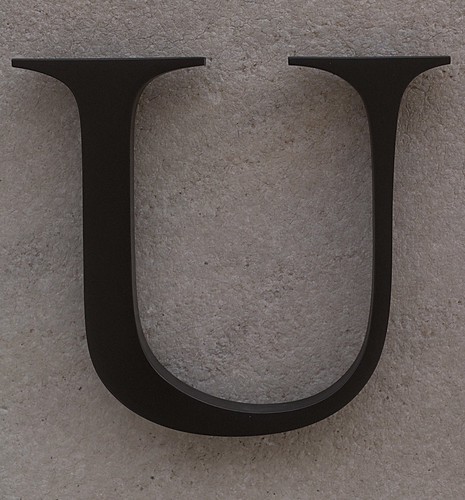
Ustashi The Ustaše (often spelled Ustashi in English; singular Ustaša or Ustasha) were the Croatian nazi/fascist organisations put in charge of the so-called Independent State of Croatia by the Axis Powers in 1941 and expelled by Yugoslav partizans and the Red Army in 1945.
At the time of their founding in 1929, the Ustaše were nationalist political organisations that committed terrorist acts. When they came to power in the WWII they also had military formations some 300,000 strong at their peak in 1944.
The content of this article is disputed and .
Victims
Ustaše with the head of a Serb Orthodox priest,Drakulići Feb 7, 1942
The Ustaše hated and tried to exterminate Serbs, Jews, Gypsies, and basically all others that opposed them (including some Communist Croats, ). Once they came in power during World War II, they founded several concentration camps, most notorious of which was the Jasenovac complex.
Ustaše with the head of a Serb Orthodox priest,Drakulići Feb 7, 1942
The Ustaše hated and tried to exterminate Serbs, Jews, Gypsies, and basically all others that opposed them (including some Communist Croats, ). Once they came in power during World War II, they founded several concentration camps, most notorious of which was the Jasenovac complex.
Exact numbers of victims are not known, only estimates exist, however it is certain that hundreds of thousands of innocent people were rounded up and killed in concentration camps and outside of them.
According to the Simon Wiesenthal Center:
"Ustasa terrorists killed 500,000 Serbs, expelled 250,000 and forced 250,000 to convert to Catholicism. They murdered thousands of Jews and Gypsies." [1]
The United States Holocaust Memorial Museum says:
"Due to differing views and lack of documentation, estimates for the number of Serbian victims in Croatia range widely, from 25,000 to more than one million. The estimated number of Serbs killed in Jasenovac ranges from 25,000 to 700,000. The most reliable figures place the number of Serbs killed by the Ustaša between 330,000 and 390,000, with 45,000 to 52,000 Serbs murdered in Jasenovac." [2]
Concentration camps
Danica
Djakovo (around 3,000)
Gospic
Jadovno (around 35,000)
Jasenovac I-IV (around 500,000)
Stara Gradiska (Jasenovac V)
Jastrebarsko (1018) - children's concentration camp
Kerestinac
Kruscica
Lepoglava (around 1,000)
Loborgrad
Pag (around 8,500)
Tenja
Danica
Djakovo (around 3,000)
Gospic
Jadovno (around 35,000)
Jasenovac I-IV (around 500,000)
Stara Gradiska (Jasenovac V)
Jastrebarsko (1018) - children's concentration camp
Kerestinac
Kruscica
Lepoglava (around 1,000)
Loborgrad
Pag (around 8,500)
Tenja
History
After the Kingdom of Yugoslavia banned all national parties in January 1929, the Croatian Party of Rights' militant wing founded the Ustaše movement. Its leaders were Ante Pavelić and Gustav Perčec, but Perčec was later assassinated by Pavelić in 1933.
After the Kingdom of Yugoslavia banned all national parties in January 1929, the Croatian Party of Rights' militant wing founded the Ustaše movement. Its leaders were Ante Pavelić and Gustav Perčec, but Perčec was later assassinated by Pavelić in 1933.
Ante Pavelić
The origin of their name is in the noun "ustaš" which means "insurgent". Their name didn't have fascist connotations during their early years in the Kingdom of Yugoslavia as it was used throughout Hercegovina to denote (Serb Orthodox) insurgents from the 1875 Hercegovinian rebellion. Later, the name would become acquire its pejorative connotation, particularly among the Hercegovinian Serbs who would be hardest hit by the atrocities.
They came into power when the Axis invaded Yugoslavia. A group of several hundred Ustašas, led by Pavelić himself, infiltrated from Italy and with the help of the foreign armies installed their regime on April 14th 1941. Pavelić was named the head of state, poglavnik (führer).
The Ustaše named their rogue state the "Independent State of Croatia", capitalizing on the Croat people's desire for independence which had been unfulfilled since 1102, and endangered by the Yugoslav royal dictatorship of the last decade and a half. It encompassed today's Croatia, Bosnia-Herzegovina and parts of Serbia (Srem and Sandžak regions). Vladko Maček, the leader of the Croatian Peasants' Party (HSS) which was the most influential party at the time, was placed under house arrest despite having supported Pavelic initially. All who opposed the Ustaše were outlawed, although cooperation between the HSS and the Ustaše is claimed to have lasted well into the war.
As early as June, 1941, rebels started to organize in response to Ustaša atrocities. There were two factions among them: the Partizans, who were guerilla composed of all nations with a common cause to fight the fascists and were mostly led by communists, and Chetniks who were Serb royalist rebels that opposed the Ustašas. The first partisan armed unit was formed on June 22nd in Brezovica near Sisak, and the partisans first engaged in combat on June 27th in Srb in Lika.
Eventually the Red Army and partisans liberated all of Yugoslavia and Ustaše were utterly defeated as well. After the World War II, the remaining Ustaše went underground or fled to foreign countries. All attempts to try to continue the fight for Croatia's independence from Yugoslavia were spoiled by Yugoslav intelligence agencies.
Symbols
Symbol of Ustaše is a wide capital letter U with pronounced serif. This symbol could easily be spraypainted.
Their hat insignia was the shield of Croatian coat of arms surrounded or embossed with the U.
The Ustaše variant of Nazi greeting "Sieg - Heil" is "Za dom - Spremni":
Greeting: Za dom! For home(land)!
Reply: Spremni! (We are) ready!
The flag of the Independent State of Croatia was a red-blue-white horizontal tricolour with the shield of Croatian coat of arms in the middle and the U in upper left. Its money was the kuna.
Ideology
The Ustaše embraced the Nazi ideology of the time. They aimed at an ethnically "pure" Croatia, and saw their biggest obstacle as the Serbs that lived in Croatia, Bosnia and Hercegovina. Thus, Ustaše ministers Mile Budak, Mirko Puk and Milovan Zanic declared in May 1941 that goal of
Ustaše is:
One third of the Serbs in the Independent State of Croatia (ISC) to be catholicised
One third of the Serbs in the Independent State of Croatia (ISC) to be catholicised
One third of the Serbs to be expelled out of ISC
One third of the Serbs in the ISC to be liquidated
A small problem with Nazi ideology was that the Croats are Slavs, and thus themselves "inferior" by Nazi standards. The Croats thus created a theory about a pseudo-Gothic origin of the Croats in order to raise their standing on the Aryan ladder.
Jews and Serbs who were family members of Ustaše leadership were granted titles of "honorary Aryans". It is known that Ustaše of lesser rank proved their loyalty by killing their Serb wives and children.
Ustaše held that Slavic Muslims are Muslim Croats. Unlike Orthodox Serbs, Muslims were not persecuted by them and some joined in the Ustaše forces and their grim atrocities (see SS Hanjar and SS Kama). The state even transferred a former museum in Zagreb to be used as mosque.
On other subjects, Ustaše were against industrialisation and democracy.
Basic principles
1. The Croatian nation is an independent ethnic and national unit, a nation by itself, and that sense it is not identical with any other nation nor it is a part or a tribe of any other nation.
2. The Croatian nation has its original and historical name, CROAT, under which it came 1300 years ago to its present territory, and under which it lives today. That name cannot and must not be replaced by any other name.
3. The Croatian nation made its present country its homeland already in ancient times, inhabiting it permanently, becoming one with it and giving it the original and natural name CROATIA. That name cannot and must not be replaced by any other name.
4. The land which was occupied in ancient times by the Croatian people, and which became their Croatian homeland, extends over several provinces, many of which had their names even before the arrival of the Croats and some of which were given their names later, but all of them constitute one single Croatian homeland, and therefore nobody has the right to claim for himself any of those provinces.
5. The Croatian people came to their homeland of Croatia as a completely free nation in the time of the Great Migrations, by their own will, thus conquering that land and making it their own forever.
6. The Croatian nation was completely organized when it came to its Croatian homeland, not only in a military sense but also in a familial sense, so that it immediately founded its own state with all of the attributes of statehood.
7. The state of Croatia was already formed when many other nations lived in complete chaos. The Croatian nation preserved its state through the centuries until the end of the World War, and never abandoned it, not by any act or by any legal resolution, nor did it give away its rights to anyone else, but at the end of the World War foreign forces prevented the Croatian people from exercising their sovereign right to form their own CROATIAN STATE.
8. The Croatian nation has the right to revive its sovereign authority in its own Croatian State in its entire national and historical area, that is to say to reconstitute a complete, sovereign and independent Croatian state. This reconstitution may be accomplished by any means, including force of arms.
9. The Croatian nation has the right of happiness and prosperity, and every single Croat has that right as a part of the Croatian nation. Happiness and prosperity can be revived and fulfilled for the nation in general and for individuals as members of the nation only in a complete, sovereign and independent Croatian state which must not and cannot be a component of any other state or any creation of a foreign power.
10. The Croatian nation is sovereign, therefore only it has the right to rule an independent state of Croatia and to manage all state and national affairs.
11. In the Croatian state and in the national affairs of a sovereign and independent state of Croatia no one can make decisions who is not by origin and by blood a member of Croatian nation, and in the same way no other nation or state can decide the destiny of the Croatian people and the Croatian state.
12. The Croatian nation belongs to western culture and to western civilization.
13. The peasantry is not only the foundation and source of life, but it alone constitutes the Croatian nation, and as such it is bearer and agent of all state authority in Croatian state.
14. All classes of the Croatian people constitute one unified whole, defined by their Croatian blood, who can trace back their origins and who maintain a permanent familial connection with the village and the land. In ninety-nine out of a hundred cases someone in Croatia who does not originate from a peasant family is not a Croat at all, but a foreign immigrant.
15. The material and moral wealth of the Croatian state is the property of the people, therefore the people are the only ones authorized to possess and to use it.
16. The essence of the moral strength of the Croatian people is found in an orderly and religious family life; its economic strength is in agriculture, communal life and the natural wealth of the Croatian land; its defensive strength is in its valor, and its educational and cultural progress is based on a natural genius and proven ability in the fields of science and learning. Craftsmanship is the helping hand of the entire peasant economy.
17. Balanced breeding, the promotion and perfection of these virtues and branches of national life is the goal of all public welfare and of state authority as such, because they have guaranteed survival for centuries of existence and will guarantee the prosperity of future generations of the Croatian nation and existence of that security in the independent Croatian state.
1. The Croatian nation is an independent ethnic and national unit, a nation by itself, and that sense it is not identical with any other nation nor it is a part or a tribe of any other nation.
2. The Croatian nation has its original and historical name, CROAT, under which it came 1300 years ago to its present territory, and under which it lives today. That name cannot and must not be replaced by any other name.
3. The Croatian nation made its present country its homeland already in ancient times, inhabiting it permanently, becoming one with it and giving it the original and natural name CROATIA. That name cannot and must not be replaced by any other name.
4. The land which was occupied in ancient times by the Croatian people, and which became their Croatian homeland, extends over several provinces, many of which had their names even before the arrival of the Croats and some of which were given their names later, but all of them constitute one single Croatian homeland, and therefore nobody has the right to claim for himself any of those provinces.
5. The Croatian people came to their homeland of Croatia as a completely free nation in the time of the Great Migrations, by their own will, thus conquering that land and making it their own forever.
6. The Croatian nation was completely organized when it came to its Croatian homeland, not only in a military sense but also in a familial sense, so that it immediately founded its own state with all of the attributes of statehood.
7. The state of Croatia was already formed when many other nations lived in complete chaos. The Croatian nation preserved its state through the centuries until the end of the World War, and never abandoned it, not by any act or by any legal resolution, nor did it give away its rights to anyone else, but at the end of the World War foreign forces prevented the Croatian people from exercising their sovereign right to form their own CROATIAN STATE.
8. The Croatian nation has the right to revive its sovereign authority in its own Croatian State in its entire national and historical area, that is to say to reconstitute a complete, sovereign and independent Croatian state. This reconstitution may be accomplished by any means, including force of arms.
9. The Croatian nation has the right of happiness and prosperity, and every single Croat has that right as a part of the Croatian nation. Happiness and prosperity can be revived and fulfilled for the nation in general and for individuals as members of the nation only in a complete, sovereign and independent Croatian state which must not and cannot be a component of any other state or any creation of a foreign power.
10. The Croatian nation is sovereign, therefore only it has the right to rule an independent state of Croatia and to manage all state and national affairs.
11. In the Croatian state and in the national affairs of a sovereign and independent state of Croatia no one can make decisions who is not by origin and by blood a member of Croatian nation, and in the same way no other nation or state can decide the destiny of the Croatian people and the Croatian state.
12. The Croatian nation belongs to western culture and to western civilization.
13. The peasantry is not only the foundation and source of life, but it alone constitutes the Croatian nation, and as such it is bearer and agent of all state authority in Croatian state.
14. All classes of the Croatian people constitute one unified whole, defined by their Croatian blood, who can trace back their origins and who maintain a permanent familial connection with the village and the land. In ninety-nine out of a hundred cases someone in Croatia who does not originate from a peasant family is not a Croat at all, but a foreign immigrant.
15. The material and moral wealth of the Croatian state is the property of the people, therefore the people are the only ones authorized to possess and to use it.
16. The essence of the moral strength of the Croatian people is found in an orderly and religious family life; its economic strength is in agriculture, communal life and the natural wealth of the Croatian land; its defensive strength is in its valor, and its educational and cultural progress is based on a natural genius and proven ability in the fields of science and learning. Craftsmanship is the helping hand of the entire peasant economy.
17. Balanced breeding, the promotion and perfection of these virtues and branches of national life is the goal of all public welfare and of state authority as such, because they have guaranteed survival for centuries of existence and will guarantee the prosperity of future generations of the Croatian nation and existence of that security in the independent Croatian state.
Connections with the Catholic Church
Ever since the Great Schism of 1054, the Catholic Church regarded all Catholic Croats and Serbs as Croats and all Orthodox as Serbs and tried to catholicise as many Orthodox believers as possible, either by forcible baptisms or by heading (or forcing) them into Union or Uniatism. (This part is particularly disputed.)
Ever since the Great Schism of 1054, the Catholic Church regarded all Catholic Croats and Serbs as Croats and all Orthodox as Serbs and tried to catholicise as many Orthodox believers as possible, either by forcible baptisms or by heading (or forcing) them into Union or Uniatism. (This part is particularly disputed.)
In the 20th century, when most south Slavs became united in Yugoslavia, Pope Benedict XV supported the creation of separate states for the Catholic Croats and Slovenes.
Ustaše held the Orthodox faith as their greatest foe, in fact, they never once recognized the existence of a Serb people on the territories of Croatia or Bosnia (they only recognized Croats of the Eastern faith). Catholic priests among the Ustaše were carrying out forced conversions of Serbs to Catholicism throughout Croatia.
Some priests, mostly Franciscans, particularly in but not limited to Herzegovina and Bosnia, took part in the atrocities themselves; Miroslav Filipović is most prominent of them. (See the list of incriminated Croat Catholic Ustashi clergy.) Some Franciscan monasteries were used as Ustaše bases. (This part is particularly disputed.)
At the same time the Muslims were not looked upon at all negatively, even though they weren't Christians at all.
For the whole duration of the war, the Vatican kept up full diplomatic relations with the Ustaša state, had its papal nuncio in the capital Zagreb and was even briefed on the efforts of conversions. The pogroms were never condemned by the Catholic church. (This part is particularly disputed.)
After the Second World War was over, the Vatican saved the remaining Ustaše by smuggling them to South America through rat lines. This operation was directed by Catholic priest Krunoslav Draganović, Petranović and Dominik Mandić of the Illyrian College of San Girolamo in Rome which to this very day marks April 10th, the birthday of the Ustaša state. Even Pavelić himself spent most of his days peacefully in Argentina, before being hunted down by a Serbian royalist (Chetnik) who wounded him in [Argentina]. He died in Spain in 1959.
It is also claimed that the Ustaša regime had kept 350 million Swiss Francs in gold which it had plundered from Serbian and Jewish property during WW II. About 150 million was seized kept by the British troops however the remaining 200 million reached the Vatican and is allegedly still being kept in the Vatican Bank. The issue was the theme of a class action lawsuit in a California court of law which declined the case claiming a lack of jurisdiction, although some point to pressures from the Vatican. (See .)
In 1998 Pope John Paul II beatified Alojzije Stepinac, Archbishop of Zagreb during the Second World War. Stepinac is accused of supporting the Ustaše, organising Ustaše military clergy and exonerating it of complicity in war crimes and atrocities. (This part is particularly disputed.)
On June 22, 2003, John Paul II visited Banja Luka. During the visit he held a mass at Petrićevac monastery and proclaimed beatification of Catholic priest Ivan Merz, the founder of the Croatian Eagles, Ustaše version of Hitlerjugend. (This part is particularly disputed.)
This caused public uproar as on February 6, 1942, in Petrićevac, Ustaše led by Catholic priest Tomislav Filipović brutally massacred 2730 Serbs including 500 children. The same Filipović later became Chief Guard of Jasenovac concentration camp where he was nicknamed "Fra Satan".
Neo-Ustašism
In the 1990s, modern independent Croatia was formed and Croats and Serbs again waged war. There was no official connection between the Ustaše ideology and the new government that made the country independent of Yugoslavia. President Tuđman had controversial views on the topic, claiming that the Ustaša state was indeed an expression of Croat state tradition. (This part is particularly disputed.)
Some Ustaša emigrants freely returned to Croatia. Some factions wished to restore the Ustaše ideology and iconography, and even though they weren't successful, they were never banned by the government. During the war, these committed war crimes against the Serb population on several occasions.
The term neo-Ustaše itself is an external designation; those in question referred to themselves simply as Ustaše, as in the 1940s.
The right-wing parties often attracted votes by promoting extreme nationalism. A singer by the name of Miso Kovac, who rose to prominence as an evergreen singer of the 1970s once sported an exact replica of an Ustaša uniform during a concert. Pop/folk singer Marko Perković-Thompson sings borderline fascist lyrics, is not afraid to display his Ustaša sentiment. Supported by the right-wing politicians, his concerts attracted support from tens of thousands of people based on this sentiment.
The exodus of Serbs from Croatia following the 1995 offensive Storm in the Krajina was greeted and in part perpetrated by the neo-Ustaše as if the plan from 1941 was finally getting fully implemented.
The neo-Ustaše, however, didn't and don't have grass roots support among the Croatian people. The right-most parties like the Croatian Party of Rights are most commonly associated with Ustašism and they have support of a few percent of the population. (This part is particularly disputed.)
Dinko Šakić, one of the commanders of the Jasenovac concentration camp, was tried in 1999 and sentenced to 20 years in prison. Croatia has been cooperating with the ICTY in the legal prosecution of all war criminals. The government is also making an effort to return all refugees to their homes. (This part is particularly disputed.)
Bibliography
Aarons, Mark and Loftus, John. Unholy Trinity: How the Vatican's Nazi Networks Betrayed Western Intelligence to the Soviets. New York: St.Martin's Press, 1992. 372 pages.
Paris, Edmond. "Genocide in Satellite Croatia 1941- 1945". (First print: 1961, Second: 1962), The American Institute for Balkan Affairs, 1990.
Manhattan, Avro. "The Vatican's Holocaust". Ozark Books, 1986.
External links
The Pavelic Papers: "An independent project researching the history of the Ustase movement"
Atlas Ustasha Genocide of the Serbs
About connections with Vatican
Vatican Bank Claims
Time Magazine on Ustasa Gold in Vatican Bank
Vatican and Ustasa links
The Vatican's Holocaust by Avro Manhattan
The Fate of the Ustasha Wartime treasury (official US Gov't report)
The Pavelic Papers: "An independent project researching the history of the Ustase movement"
Atlas Ustasha Genocide of the Serbs
About connections with Vatican
Vatican Bank Claims
Time Magazine on Ustasa Gold in Vatican Bank
Vatican and Ustasa links
The Vatican's Holocaust by Avro Manhattan
The Fate of the Ustasha Wartime treasury (official US Gov't report)
About Dinko Šakić
Trial of Dinko Šakić
1993 NYT Article "Pro-Nazi Legacy Lingers for Croatia"
1997 Jewish Telegraphic Agency Article "Support for pro-Nazis shakes Croatian Jews"
Trial of Dinko Šakić
1993 NYT Article "Pro-Nazi Legacy Lingers for Croatia"
1997 Jewish Telegraphic Agency Article "Support for pro-Nazis shakes Croatian Jews"


New Nations From Old Ones

Chapter 1
--------------------------------------------------------------------------------
NEW NATIONS FROM OLD ONES
--------------------------------------------------------------------------------
NEW NATIONS FROM OLD ONES
When in 1917, during the First World War, the Papal Nuncio in Munich, E. Pacelli, secretly negotiated with the Central Powers to accomplish the Pope's Peace without Victory, in order to save both Germany and Austria-Hungary from defeat, he had already made his first attempt to strangle a nation as yet unborn; Yugoslavia. If the Vatican's attempt was directed at preserving its most useful Hapsburg lay partner, it simultaneously had another no less important goal: to prevent a motley of nationalities from springing out of the Empire's ruins as sovereign States in their own right. In such States, Poland excepted, Catholicism would have sunk to the level of a minority. Worse, it would have been dominated by heretical churches and their political Allies: i.e. by the Protestant and Liberal in Czechoslovakia, by the Orthodox in Yugoslavia. With its last attempt to save the Austro-Hungarian Empire, the Vatican therefore struck a final blow against the yet unborn "Hussite" Czechs and the Catholic Slovaks on one side, and the Orthodox Serbs and Catholic Croats and Slovenes on the other, the fulfillment of their dreams lying as it did in the disintegration of the Austro-Hungarian colossus.
The Emperor Charles was advised to transform the Empire into a Federation. The idea, which originated at the Vatican, was repellent to both, as it meant, besides the loosening of Imperial control, the loosening of Catholic control over the various races of the tottering Empire. But in the circumstances the alternative was total collapse. In October Charles announced the transformation of the Hapsburg Monarchy into a Federal State. The offer—which, significantly, was made only at the last moment—although accompanied by secret papal moves, left the Allies determined to end for good the rule of the double-headed Austrian eagle. President Wilson's reply to Charles, and thus to the Pope, was firmly hostile. The USA, said Wilson, admitted "the justice of the national aspirations of the Southern Slavs." It was for these people, he added, to decide what they would accept.
As far as the USA was concerned, he concluded, it had already recognized Czechoslovakia as a belligerent independent State. The American reply had sealed the fate of Austria-Hungary. On October 28, 1918, the Czechoslovaks declared their independence. On the 29th the Yugoslavs proclaimed theirs. On December 1 the Yugoslav Council invited the Regent, Alexander, in Belgrade, to proclaim the Union. The new independent kingdom of the Serbs, Croats, and Slovenes—Yugoslavia—had come into being.
The birth was welcomed in certain quarters—e.g. by the Allies—and was unwelcome in others—e.g. the Vatican—to which the new nation, besides being the unnatural creature of the Allies' political blindness, was a religious aberration not to be tolerated. Orthodoxy, swept away in Russia, where it had seemed unassailable, with the birth of Yugoslavia had now become paramount in a country the population of which was more than one-third Catholic. Worse still, in addition to permitting Orthodoxy to rule Catholics, Yugoslavia was preventing the latter from setting up a wholly independent Catholic community. When to the above was added the fact that Yugoslavia, by her mere existence, represented the greatest obstacle to the long-range Catholic strategy, the Vatican's feeling, more than one of hostility, become one of implacable hatred, a wind which boded no good to the young nation. This hatred became the main inspirer of the Vatican's anti-Yugoslav strategy, the objective of which was the destruction of Yugoslavia. Having embarked on such a course, the Vatican began a vigorous campaign, the fulfillment of which to some extent depended on another factor: the collapse of Bolshevik Russia, the early disappearance of which was, at that period, taken almost for granted by everyone, particularly by the Allies, who had dispatched sundry armies to hasten her collapse. The Vatican counted, then, on a Russian collapse in order to execute its policy of a forced Catholic domination of the Balkan peninsula through the sword of Pilsudski. The creation of the Catholic Danzig-Odessa Polish Empire would have meant one thing: the death of Yugoslavia and other Balkan Orthodox and Protestant countries. When, however, Pilsudski's bloody adventure terminated and the Allies' efforts to destroy Bolshevik Russia relaxed, the Vatican changed its tactics and embarked on a new policy: destruction of Orthodoxy by penetration, instead of by force. Consequently, when in 1920 Pilsudski's Catholic Empire vanished, and the Pope set out to convert Russia, a parallel policy was pursued in connection with Yugoslavia. Although the keynote of this new anti-Orthodox strategy was penetration, its tactics were different in each country. Thus, whereas in Russia they were meant to penetrate in order, in the long run, to dominate her religious life, in Yugoslavia they consisted of penetrating Yugoslav political life in order, once Catholics had come to control it, to enhance the power of Catholicism, and thus ultimately stultify, and indeed paralyze, the Orthodox Church throughout Yugoslavia.
Such a policy, vigorously promoted, mostly by ambitious, clerically-dominated Catholic politicians in Croatia, yielded no little success. In no time Catholic clericalism became a power behind the scenes, with the result that, within a few years, the Hierarchy began to exert undue weight in the administration, not only of Croat affairs, but also of those of Yugoslavia as a whole. This alarmed several honest Catholic Croats, notably Radich, leader of the powerful Croat Peasant Party, aware of the danger that such tactics were creating both for Yugoslavia and for Croats. Defying the Hierarchy—and thus indirectly the Vatican—he began to combat the Catholic Trojan-horse tactics, warning Croatia that, by permitting their politicians to be led by the Hierarchy in political matters, they were bound, sooner or later, to lead all Croats to disaster. Radich's counsel was followed; and for almost a decade Catholic strategy, weakened where it should have been at its strongest, was far less successful than if Radich had acted otherwise.
But in 1928 Radich was assassinated. The assassination coincided with the general overhaul of Vatican European strategy towards Communism. In that same year the Curia finally broke off its negotiations with Soviet Russia. The Papal Nuncio in Germany, E. Pacelli, led the powerful Catholic Centre Party sharply to the extreme Right, thus allying it with the forces which were to sky-rocket Hitler to power. In Italy the Vatican strengthened Fascism by signing a pact with Mussolini (1929). Fascist Catholic movements rose everywhere. An era of Catholic policy had ended, and a new one had begun. The policy of penetration had been replaced by one of active agitation and the swift mobilization of all the religious and political forces of Europe against
Strip of photographs from the Album of Terrorists, maintained by the Yugoslav Secret Police, as early as 1933. Bottom row, first left, Ante Pavelic, the future Leader of the Independent Catholic State of Croatia. Prior to the latter's establishment, all the men above, as sworn Ustashi were engaged upon the promotion of a policy of terrorism, within and outside Yugoslavia. This they did by murdering singly or collectively, political enemies or innocent people alike. They placed explosives in public places, ships or trains. For instance, a train compartment was blown up by an Ustashi bomb at Zemum, killing the family of Professor Bruneti.
Before the Second World War these men were active all over Europe. Their most spectacular success was the simultaneous assassination of the King of Yugoslavia and of Mr. Barthou, the French Foreign Minister, during a State visit to France, 9 October 1934. The double murder was the forerunner of a series of many others which were to contribute to the birth of the Independent Catholic State of Croatia.
The Ustashi and Ante Pavelic were "protected" by Mussolini, and tacitly but effectively by the Vatican. Both supported them financially.
Bolshevik Russia. Thus, while in the West the Vatican had launched upon a global hate campaign against Communism, in the Balkans, after Radich's death, it embarked upon a policy directed at the disintegration of Yugoslavia.
Radich's successor, Dr. Macek, reorientated the Croatian Peasant Party into a rabid nationalist movement which, by becoming increasingly bold, became an active factor for the growing political tension inside Yugoslavia. From this period onward, Separatism became the keyword of Croat Nationalism, with the result that the latter began increasingly to play into the hands of the Catholic Hierarchy and thus into those of the Vatican. The Vatican's policy in the first decade implied Yugoslavia's existence as a united nation; in the second—i.e. since the emergence of a naked Separatism—it overtly aimed at Yugoslavia disintegration. In the promotion of the Vatican's new grand strategy, Yugoslavia was reckoned a major obstacle even more than in the past, in that now it was impeding the swift Fascistization of Europe and the eventual Fascist attack on Soviet Russia, with all the ensuing Balkan commotion which, it was hoped, would cause the tumbling of Yugoslavia itself. In connection with the latter, the Vatican laid down a three-fold policy:
(a) The detachment of Catholic Croatia from the rule of Orthodox Serbia,
(b) the setting up of Croatia as an independent Catholic State, and, last but not least,
(c) the possible creation of a Catholic Kingdom in the Balkans.
For such goals to be attained, one thing was necessary: the partial or total disintegration of Yugoslavia.
To assert that Yugoslavia succumbed thanks only to Vatican machinations would be to falsify history. On the other hand, to minimize its role would be a crude historical distortion. Factors alien to religion played into its hands. These could be summarized as: the animosities of the Croats and the Serbs in the domestic field, the political ambitions of Fascist Italy and Nazi Germany in the international. Croat Separatism became an increasingly important factor as the internal and external tension grew. Its identification with Catholicism made it almost a blind tool of the Catholic Hierarchy, and thus of the Vatican, which unhesitatingly used it to further not only its local interests, but also its vaster Balkan schemes of religio-political domination.
Typical portraits of Ustashi leaders. Men like the above were the brains behind the numberless acts of terrorism carried out by the Ustashi in Yugoslavia, Austria, Hungary, Germany, France and in other countries, chiefly from their headquarters in Fascist Italy.
(Left) Mijo Bzik, known as "Miko," was chief of the Ustashi camps in Italy, and the recruiter of the assassins who came from Yanka-Pusta. One of his main tasks was the placing of internal machines in public buildings, or crowded places.
(Centre) Eugen Kvaternik, one of Ante Pavelic's principal accomplices. He personally accompanied from Italy to France, the assassins, who went to murder the King of Yugoslavia. Pavelic created him Minister of Police when Catholic Croatia became independent.
(Right) Zvonimir Pospishil, one of the most brutal of terrorists. He belonged to a special group of Catholic Ustashi charged with the assassination of eminent personalities. He was given the task of killing King Alexander, by blowing him up in Paris had the Marseille plot failed in 1934.
The Croat leader, Radich, never tired of warning the Croats against following the Vatican in political matters; in this he echoed the voice of another great Catholic patriot, the leader of the Polish Nationalists, Roman Dmowski, whose slogan became a by-word of certain Catholic Polish Nationalists: "Never rely upon the Vatican in political affairs."
Hostility to Vatican political directives by Catholic political leaders was born out of bitter experience: e.g. during the First World War, when Roman Dmowski, having gone to Rome to ask for help to establish Polish independence, was greeted with open disfavour, such Vatican hostility being inspired by political interests identified with those of Austria and other great European Powers who had worked against Polish aspirations for centuries. The extraordinary result of this was that the Poles never got any support from the Vatican, even when they rose against the Czars—an attitude which incensed them to such a degree that one of their great national poets, Julius Slowacki, coined the famous warning: "Poland, thy doom comes from Rome." Which subsequent events proved was more than prophetic.
Radich adopted the same slogan, although with more tact. When, however, his Party was taken over by Macek, the original ideal of Ante Starcevic was swiftly injected with a new overdose of undiluted extremism, which made it turn sharply to the extreme Right. The main exponent of this new trend was one Ante Pavelic, an individual obsessed by the idea of an independent Croatia, inspired by racialism, erected upon Fascism, wholly impregnated with Catholicism, a formidably compact miniature totalitarianism. A movement sprang out of this weird conception; its backbone a ruthless core of terrorist bands, led by Pavelic himself, whose policy consisted of blackmail, murder, plots, and assassinations. The shadow of powerful protectors from across the sea descended swiftly upon them, thus enabling them to carry on their activities in defiance of national or international procedure—e.g. from Italy and Germany, both of whom saw in Pavelic's Croatia a useful instrument for Fascist and Nazi expansion in the Balkans.
The expansionist policies of these nations often ran parallel with that of the Vatican, which, by skillfully manipulating them, could frequently promote its own interests. It did that, not by remaining only an aloof spectator of various Fascist and Nazi activities, but by promoting a most vigorous anti-Yugoslav policy of its own.
The Vatican and Fascism helped each other from the beginning. Pope Pius XI (1922-1939) ordered the Leader of the Catholic Party to disband it (1926), the better to consolidate the regime of Mussolini. The latter negotiated the Lateran Treaty and Concordat with the Church (1926-1929).
By virtue of the first, the Vatican became a sovereign state within Rome. While with the second, the Church was granted immense privileges and Catholicism was declared the only religion of Fascist Italy, which it wholeheartedly supported.
Bishops took an oath of allegiance to the Fascist Dictatorship, and the clergy were ordered never to oppose it or incite their flock to harm it. Prayers were said in Churches for Mussolini and for Fascism. Priests became members of the Fascist Party and were even its officers.
One of the main supporters of the Fascist-Vatican pact was Mgr. E. Pacelli (the future Pope Pius XII), then in Germany. His brother, a lawyer, became one of the chief secret negotiators. He is seen in this photograph standing behind Cardinal ...... Later, the Papal Nuncio to Germany, Mgr. E. Pacelli saw to it that his brother was made a Prince.
This yielded a rich harvest sooner than was expected. While the Vatican's Fascist associates were busy engineering political or terrorist activities, Catholic diplomacy—as previously in Spain, Austria, Czechoslovakia, Belgium, and France—came to the fore with the promotion of a powerful Catholic fifth column. This, which had already gnawed at the internal structure of Yugoslav unity, consisted of all those Croats infected with national-religious fanaticism, of the Catholic Hierarchy of Croatia, and of an illegal Nationalist Army composed of bands of Catholic terrorists, called the Ustashi, the last led by Ante Pavelic, supported by Vladimir Macek, leader of the Croat Peasant Party, who in 1939 arranged for Mussolini to finance him with 20 million diners for the Croat Separatist Movement, and by [1] Archbishop A. Stepinac, leader of the Catholic Hierarchy in Croatia.
The specific role played by the Vatican followed the familiar pattern: use of the Hierarchy to help political and military plotters engaged in undermining or overthrowing the legal Government. Unlike its practice in other countries, however—e.g. Petain's France or Franco's Spain—here the Catholic Church attempted to erect, and indeed did erect, a State in complete accord with all her tenets. The result was a monster standing upon the armed might of twin totalitarianism: the totalitarianism of a ruthless Fascist State and the totalitarianism of Catholicism—the most bloodthirsty hybrid yet produced by contemporary society. What gives to such a creature of Vatican diplomacy its peculiar importance is that here we have an example of the Catholic Church's implementing all her principles, unhampered by opposition, or by fear of world opinion. The uniqueness of the Independent Catholic State of Croatia lies precisely in this: that it provided a model, in miniature, of what the Catholic Church, had she the power, would like to see in the West and, indeed, everywhere. As such it should be carefully scrutinized. For its significance, by transcending its local background, is of the greatest import to all the freedom-loving peoples of the world.
--------------------------------------------------------------------------------
Footnotes
1 See The Ciano Diaries, 1946, pp. 46,48,50-60. [Back]
The Vatican's Holocaust
The sensational account of the most horrifying religious massacre of the 20th century
The sensational account of the most horrifying religious massacre of the 20th century
By Avro Manhattan
Subscribe to:
Posts (Atom)