AND THE THIRD ANGEL FOLLOWED THEM, SAYING WITH A LOUD VOICE, IF ANY MAN WORSHIP THE BEAST AND HIS IMAGE, AND RECEIVE HIS MARK IN HIS FOREHEAD, OR IN HIS HAND.
*** REVELATION 14:9
Movie created by James Arrabito. Learn of the importance of keeping the Ten Commandments, especially the seventh day Sabbath. Gain insight into how it church and state will unite to enforce Sabbath breaking in the future.
Ryan Gosling stars as Ryland Grace in "Project Hail Mary" | Amazon MGM Studios
In a cinematic landscape often dominated by dystopian futures, raunchy storylines and grim visions of the universe’s fate, “Project Hail Mary” offers something refreshingly different: hope, optimism and a belief in humanity’s willingness to sacrifice for one another.
Directed by Phil Lord and Chris Miller and adapted by Drew Goddard from the bestselling novel by Andy Weir, the film, rated PG-13 for some thematic material and suggestive references, combines gorgeous celestial landscapes and sci-fi elements with a human, often funny, story about sacrifice, friendship and curiosity.
At the center of it all is Ryan Gosling, who both produced the film and delivers a heartfelt performance as Ryland Grace, a middle-school science teacher who wakes up alone on a spaceship with no memory of how he got there.
Gradually, Grace begins piecing together the truth: Earth’s sun is dying. Alien microbes known as astrophage are consuming its energy, threatening to plunge the planet into a new ice age. Humanity’s last hope is a desperate mission to a distant star system, the titular “Hail Mary.”
Jul 17, 2025 DeVon Franklin — producer, actor, bestselling author, and speaker — brings his most personal project to the stage with "Be True: My Journey from Breakdown to Breakthrough," a bold one-man theatrical debut at New York City's Minetta Lane Theatre for two nights only.
----____----
P.S.
Plot Twist: Meagan Good’s Trainer Played Matchmaker for Ex-Husband DeVon Franklin and His New Fiancée
Posted byBy Y. Kyles | Published on: February 14, 2025
Pastor DeVon Franklin, 46, is headed to the altar again. The Seventh-day Adventist has proposed to his girlfriend, fitness influencer Maria Castillo, two years after divorcing his first wife, Meagan Good.
Castillo, 29, reportedly said yes to Franklin’s proposal during a holiday vacation on Dec. 27, 2024, which was revealed in an interview with People magazine.
The couple wore matching white outfits in their Hawaii-set photographs as his wife-to-be seemed to be under the impression they were posing for photos at a scenic spot.
At this year’s Academy Awards, Edward Berger’s twisty Vatican drama “Conclave” has eight nominations including Best Picture, Best Director and Best Supporting Actor for Barry Fitzgerald, who played Father Fitzgibbon. (He was also nominated for Best Actor; the only time an actor has been nominated twice for playing the same character in the same film.)
That same year, Ingrid Bergman was nominated for playing Sister Mary Benedict in “The Bells of St. Mary’s” and Gregory Peck for playing a priest in “The Keys of the Kingdom” (1944). A few years later, Bergman would marry Italian director Roberto Rossellini (following a brief and scandalous affair), and they had three children—including Isabella Rossellini.
In these films and others of the time, priests were portrayed as “virile, athletic, compassionate, wise,” according to Charles R. Morris in American Catholic. The fact that they were celibate didn’t prevent them from being inspirational figures, played by some of the most famous (and desirable) men in Hollywood. The films portrayed religious life as one of immense sacrifice and meaning. “These are talented, attractive people who have made big sacrifices for the love of God,” Morris writes, “and they are better than the rest of us for it.”
This mid-century popularity of Catholic films in Hollywood occurred thanks to several factors, including the still-exotic nature of Catholicism to majority-non-Catholic audiences and the dynamically cinematic elements of Catholic religious practice. It is also meaningful that this period coincided with the heyday of the Production Code, a censorship document that determined what got made in Hollywood. In American Catholic, Morris (in line with other scholars) suggests that the deluge of positive Catholic films may have been an attempt by the studios to stay in the good graces of the Production Code Administration’s vigilant and pugnacious director: devout Catholic Joseph Ignatius Breen.
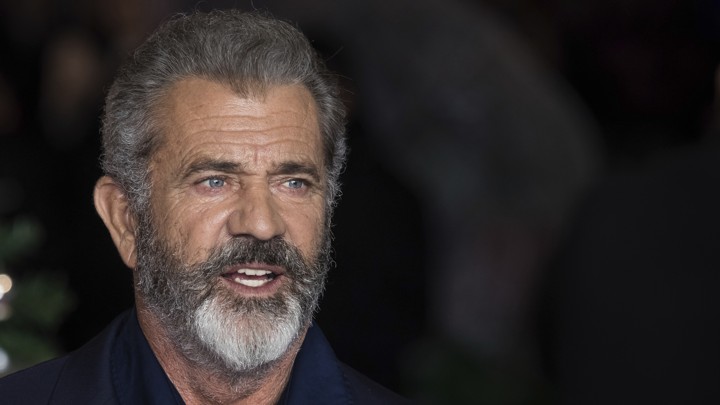
Mel Gibson at a 2017 premiere of his film Daddy's Home 2
VIANNEY LE CAER / INVISION / AP
The pitch for the newly announced satirical fiction film Rothchild, a comedy set in the world of the ultra-wealthy about a forgotten son trying to inherit the money of his influential family, already sounds like an elaborate piece of trolling. The real-life Rothschild family, a Jewish and European banking dynasty, has for centuries been the subject of anti-Semitic myths and conspiracy theories, fables revolving around their alleged control of world finances. The film that’s up for sale at this year’s Cannes Marché du Film, a movie marketplace where a majority of the industry’s business is done, has dropped the s from the family’s name, but the title is still loaded. Even more bizarrely: Mel Gibson is attached to star.
Gibson’s involvement is hard to interpret as anything but a whole other level of provocation, a ludicrous addition to a project that already sounds potentially offensive. The actor and director’s reputation has recovered in Hollywood despite numerous scandals, including a drunk-driving arrest, a racist phone call to an ex-girlfriend in which he drunkenly admitted hitting her, and a plea of “no contest” to a charge of battery. Despite all that, Gibson was nominated in 2017 for an Oscar for directing Hacksaw Ridge and was recently hired by Warner Bros. to direct a remake of The Wild Bunch. But Gibson’s history of anti-Semitic remarks makes him a particularly baffling choice for a project titled Rothchild. (A representative for Gibson stated that the film has no connection to the real-life Rothschild family.)
When Gibson was pulled over by police for drunk driving in 2006, the officers recorded him saying (among other things) that “Jews are responsible for all the wars in the world.” Years later, The Atlantic’s Jeffrey Goldberg asked him about that particular blowup, which Gibson said was a result of drunkenness. “I was loaded, and some stupid xxxx can come out of your mouth when you’re loaded,” the actor said in 2011, claiming that his invective was prompted by Israel’s conflict with Lebanon at the time. Gibson’s 2004 film The Passion of the Christ had been criticized for pushing the anti-Semitic notion that Jews were to blame for the death of Jesus. The director’s attempt at a follow-up movie about Judah Maccabee never came to fruition, but its screenwriter alleged that Gibson was publicly hateful of Jews and used several anti-Semitic epithets in their time working together (Gibson denied the allegations, but admitted to having had “a little bit of a temper”).
‘Pope Francis’ is a disturbing film, not solely for its exaltation of Francis and his politics but more so for having been planned from the beginning of his ascent to office.
Jorge Bergoglio found his Leni Riefenstahl in Wim Wenders. I went to see Wenders’ “Pope Francis: A Man of His Word” expecting hagiography. What I watched came closer to pornography. It was the pornography of blatant propaganda, that notorious key to “the heart of the broad masses.” Lust for dominance is airbrushed into a semblance of piety; avarice for celebrity is lighted and staged to look like humility.
Contrary to the court press, Damon Linker recently ascribed “psychological acuity and Machiavellian cunning” to Pope Francis. And he is correct. But Linker’s interest lies in the Catholic Church’s eventual alignment with contemporary mores, especially legitimization of homosexuality. Yet there remains a larger, more compelling issue: the sacralization of politics via the person of the pope himself. Francis is not reforming the church but denaturing it, reducing it to a social tool.
Commissioned by the Vatican, the film ups the ante on papalolotry. Its deluge of glorifying images stimulates devotion to Bergoglio himself, papa to all the world. A quasi-erotic glow infuses the whole. It is the eros of surrender to a liberator, a defender against ideological bogeys: “the globalization of indifference”; “money drenched in blood”; “fear of foreigners.” The old creed proclaimed Christ risen. The new Bergoglian one, emblazoned on St. Peter’s dome during the 2016 light show repeated here, proclaims: “Planet Earth first.”
The West “must become a little bit poorer” and repent for despoiling Sister Planet. Francis rails against “the culture of waste” of a rapacious West that clings to the wealth belonging to all. As if he were stating something new, Francis declares, “Poverty is an outrage.” Even “a hard-boiled American” can be moved by the sight of how much “we have plundered Mother Earth.” Follow Francis back to the original, unspoiled “harmony of creation.”
60 Minutes broadcasts excerpts from new documentary about Pope Francis
"Pope Francis—A Man of His Word" shows the pontiff in a revealing interview, speaking without notes. 60 Minutes meets the man who made the film, Sunday at 8 p.m. ET/PT
2018 May 11
Meet the Pope. This Sunday, 60 Minutes broadcasts excerpts from an unprecedented documentary on Francis that will show the pontiff in a way few ever get to see him. The documentary, "Pope Francis—A Man of His Word," offers a rare and intimate experience in which the pontiff speaks directly to the camera without notes in his native Spanish. Jon Wertheim interviews the film's director, Wim Wenders, for the story, to be broadcast Sunday, May 13 at 8:00 p.m. ET/PT on CBS.
Wenders speaks about filming the documentary and interviewing the pope. He tells Wertheim Francis impresses him most with his courage. "He is the most fearless man I ever met… not influenced by polls… I don't think he would ever consider any public opinion over something he means and he's convinced of," says Wenders. "He's totally fearless because he has a lot of opposition."
Part of that opposition comes from the controversy surrounding priestly sexual abuse of children and the way the church has handled it. Francis recently apologized for comments he made on a case in Chile. Wenders says his question about pedophilia will show the world the pope is a man who can get angry. "We saw this anger once, really very strong," he recalls. "It was almost physical."
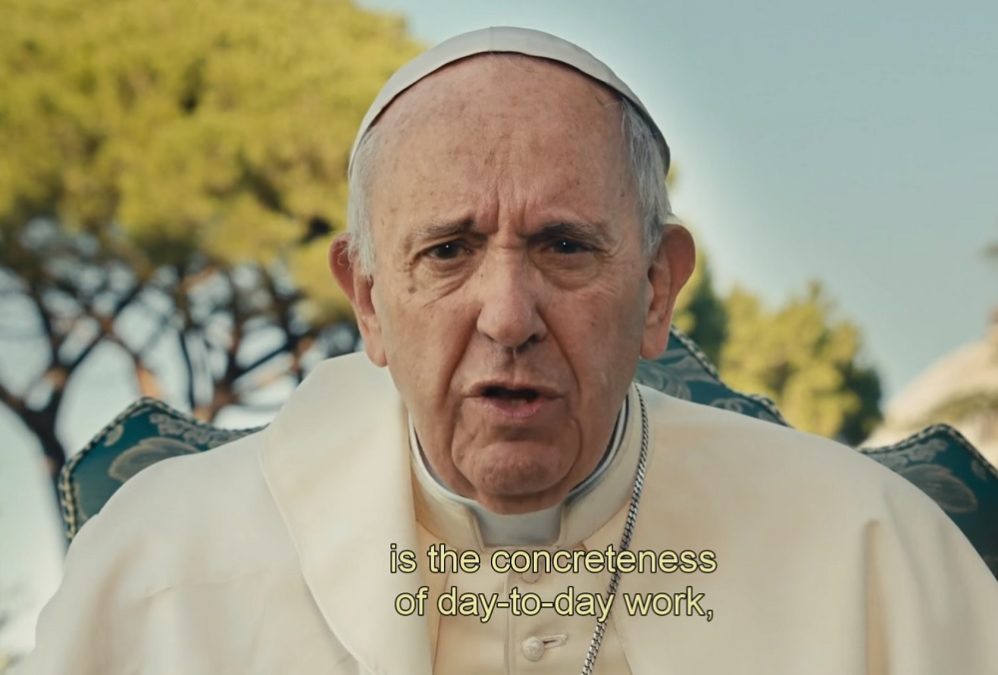
Looking into the camera, his anger etched on his face, Francis utters in Spanish, "Towards pedophilia, zero tolerance! And the Church must punish such priests who have that problem and bishops must remove… anyone with that disease… that includes to support the legal action by the parents before the civil courts," Francis says in the film. "There is no other way... Zero tolerance because it's a crime. No! Worse! It's leaving them alive but destroyed."
Other excerpts from the film include the pope telling his priests to get more involved with their followers and exhorting the faithful to slow their frenetic lives down to avoid the toll such stress takes on their mental, spiritual and physical health.
The pope speaks plainly and directly, sometimes employing humor with a smile and a laugh. "If you ask me: 'Give me an example of beauty, simple everyday beauty, with which we can help others feel better and be happier,' two things come to my mind. A smile, and a sense of humor."
March 8, 2018 at 10:13 AM “A Wrinkle in Time” author Madeleine L’Engle. (Crosswicks/) .. It took 26 publisher rejections before Madeleine L’Engle could get “A Wrinkle in Time” into print in 1962. The book was an instant hit, winning the Newbery Medal the following year, but despite its wild success, L’Engle still had fierce critics — including a good number of them who disliked her book for faith reasons.
While L’Engle considered herself a devout Christian, and sprinkled the book with scriptural references, she was accused by some conservative Christians of promoting witchcraft and the occult — an accusation made later against “Harry Potter” author J.K. Rowling.
The religious wariness likely also contributed to some publishers’ rejection of the book, but it didn’t stop “A Wrinkle in Time” from being popular for more than 50 years after it was finally saw the light.
A Disney film adaptation of “A Wrinkle in Time,” which opens Thursday, stars Oprah Winfrey, Reese Witherspoon, Mindy Kaling, Chris Pine and Zach Galifianakis, and is directed by Ava DuVernay of “Selma.” In the story, 13-year-old Meg Murry, played in the film by Storm Reid, is guided by three angelic beings on a quest to find her father, a scientist who had gone missing.