By HEATHER LARSON POYNER hpoyner@kenoshanews.com
Heather Poyner
16 hrs ago
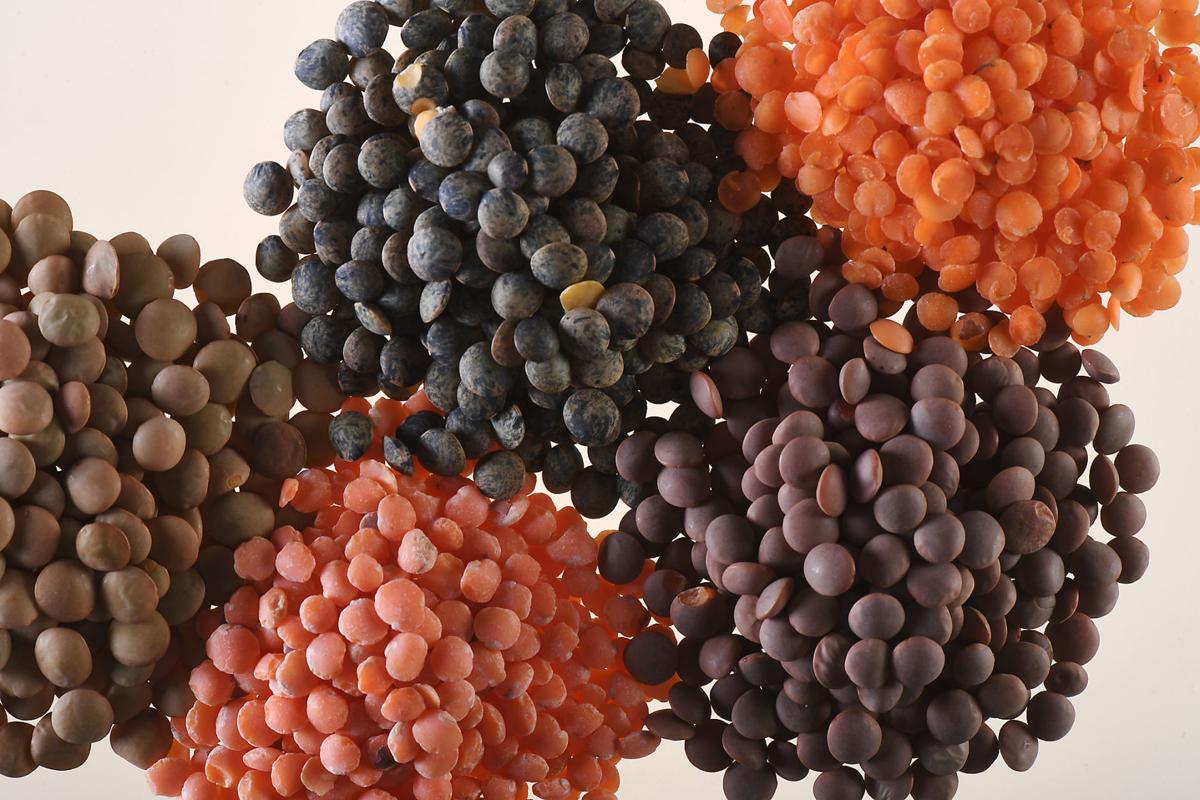
This colorful assortment includes, clockwise from top center: French lentils, split red lentils, masoor red lentils, whole red lentils and green lentils.
KENOSHA NEWS PHOTO BY BILL SIEL
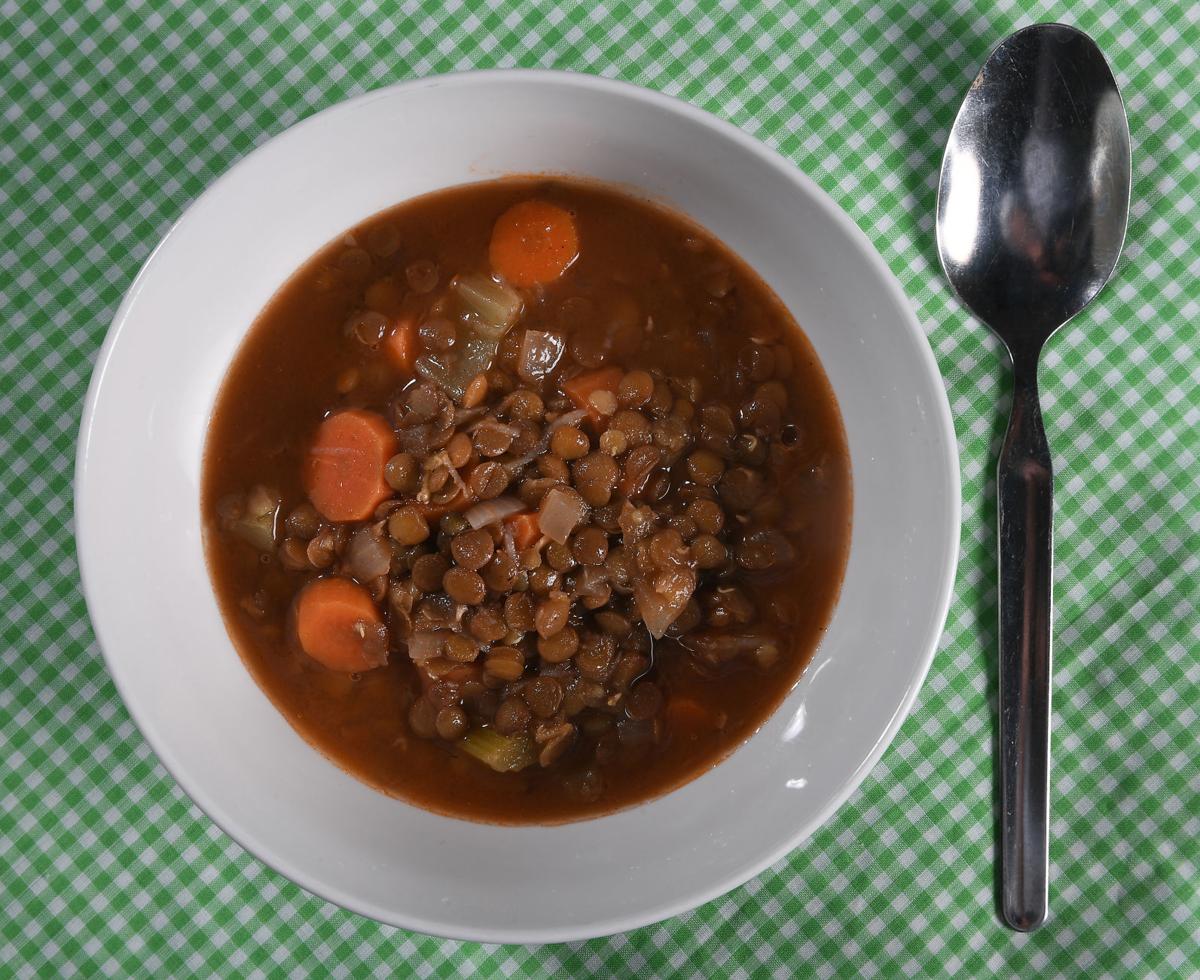
Mediterranean Lentil Soup
KENOSHA NEWS PHOTO BY BILL SIEL
Somewhere on the lower levels of the shelves in the dry bean aisle of the grocery story, lentils are lying in wait.
They are waiting to be discovered — or at least more widely recognized — as the flavorful, versatile and nutritious food they are.
Once known as “poor person’s food,” lentils are growing into an “it food” among foodies, vegetarians, vegans and flexitarians (those who are primarily vegetarian but choose to eat meat occasionally). One variety, the French Le Puy lentil, even comes with a “stamp of authenticity” on an artfully designed package.
In the past year, lentils have grown to become one of my personal favorite foods as an ingredient and as a stand-alone star.
I began by checking out recipes relying less on meat and more on plant proteins and was drawn to exotic-sounding dishes found in “Forks Over Knives” (Del Sroufe, 2012). These included Red Lentil Soup, Ethiopian Lentil Stew and Minty-Lemon Lentils with Spinach.
Exploring these recipes, I found that as well as offering flavor and texture, lentils are quite easy to work with.
I discovered that lentils are packed with protein as well as other nutrients, but I also discovered that some of my friends and colleagues were not in the know about their amazing qualities.
I took pity on the poor lentils and wanted to sing their praises.
Seeking experts on the matter, I found the USA Dry Pea & Lentil Council, based in Moscow, Idaho. Jeff Rumney, the council’s vice president of marketing, confirmed that lentil consumption and knowledge is much higher in other countries.
Lentils are “a very old food” and one that can grow all over the world, Rumney said. Many cultures incorporate lentils into their diets, ground into flour or eaten whole. “In Sri Lanka they eat lentils 21 times a week — for breakfast, lunch and dinner,” Rumney said.
Lentils are part of the legume family but belong more specifically to the branch known as pulses, which also includes dry peas, beans and chickpeas. Low in fat and high in protein, lentils and other pulses have been an energy food for many cultures over time.
Plentiful, cheap and nutritious, lentils and their other legume cousins have been staple foods for people with limited food resources.
“In literature, proverbs and songs they are constantly referred to as ‘food of the poor’....They have even been included as such in the Kitab al Buhala (Book of Misers),” writes Claudia Roden in her 1968 work, “A Book of Middle Eastern Food.”
In the U.S., lentil production began in Idaho by early settlers of the Seventh Day Adventist church. As vegetarians, they cultivated lentils as a nutrient-dense food source. Today, Montana and North Dakota are the largest lentil-cultivating states.

