Showing posts with label asylum. Show all posts

Monday, June 22, 2026

World Refugee Day 2026


World Refugee Day 2026

Stand with refugees. Defend the right to safety and protection.


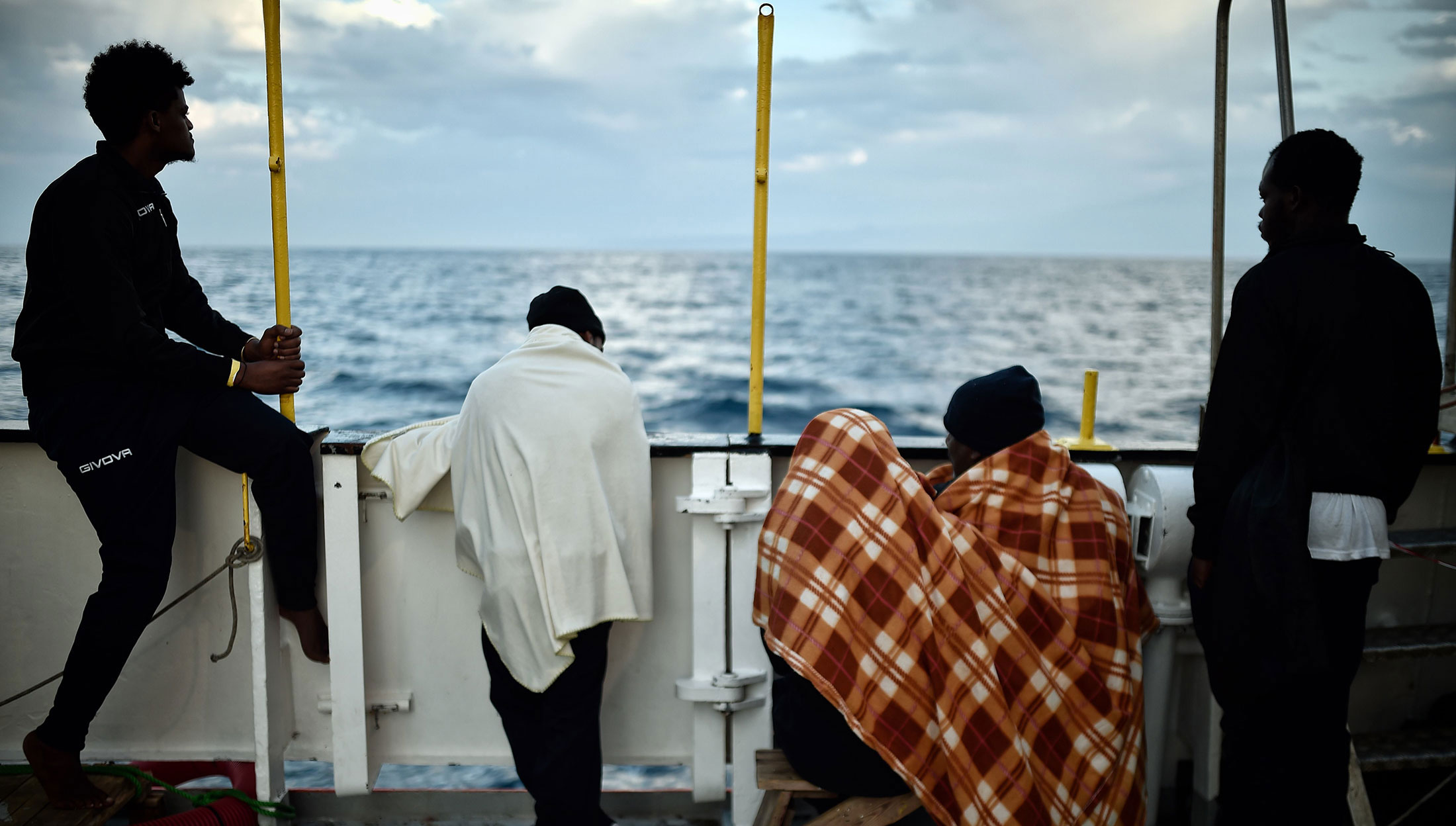
On World Refugee Day 2026, JRS/USA invites people of faith and goodwill to stand in solidarity with refugees and defend the right to seek safety. As the world marks the 75th anniversary of the 1951 Geneva Convention, we are reminded that protection was never meant for a select few. It is a promise rooted in human dignity — and it must be kept alive.

What is World Refugee Day?

World Refugee Day is observed each year on June 20 to honor the strength, courage, and resilience of people who have been forced to flee their homes because of conflict, persecution, or violence. It is also a day to recommit ourselves to protecting the rights, safety, and dignity of refugees around the world.

In 2026, World Refugee Day carries special significance. The world marks the 75th anniversary of the 1951 Geneva Convention, the international agreement that protects the rights of refugees and affirms the right to seek safety.

World Refugee Day 2026 Theme: Until Everyone Is Safe

The UNHCR theme for World Refugee Day 2026, “Until Everyone Is Safe,” reminds us that safety is not divisible. No community is truly secure while people forced to flee are denied protection, dignity, and the chance to rebuild their lives.

For JRS/USA, this theme reflects our mission of accompaniment, service, and advocacy. Protection is not only a legal principle. It is a moral responsibility and a shared commitment that grows across communities through welcome, relationships, services, and action.

Wednesday, January 28, 2026

Europe Just Did Something to ISLAM — Never Seen Before in History

David Steinberg: Tying up loose threads in the curious case (Ilhan Omar)


Posted on July 18, 2019 by Scott Johnson in Ilhan Omar


In four intensely reported investigative columns — here (August 13, 2018), here (October 23, 2018), here (October 30, 2018), and here (November 5, 2018), — David Steinberg has explored the evidence suggesting that Ilhan Omar entered into a sham marriage with her brother in 2009. This is his fifth. He titles it “Meet Leila Elmi: The Missing Link Showing Ilhan Omar Married Her Brother.” Drawing on his research, interviews, and social media evidence he makes the case that Omar has engaged in a variety of fraudulent activities and willful misrepresentations related to her marital arrangements. He writes:

On October 22, 2008, the U.S. State Department stopped accepting applications for the Priority 3/Refugee Family Reunification program — the process by which refugees can apply for asylum if one family member is already a legal U.S. resident. State halted the program because DNA testing — primarily of Somalis — had concluded that perhaps 87 percent of applicants were fraudulently claiming family relationships.

Despite continuing war, Somalia of 2008 was not comparable to the open hell of the early 1990s, when an eight-year-old Ilhan and her family fled to Kenya’s Dadaab refugee camps. She lived there from 1991 until 1995, aged eight to 12. Lutheran Immigration and Refugee Services then helped Ilhan, her sister Sahra, and their father Nur Said receive asylum in the United States along with thousands of other Somalis.

The complicated moral question of fraud, let alone fault, among this 1990s wave of refugees escaping civil war will never be answered with accurate statistics. We will have to settle for adjectives like “widespread” and “rampant.” Yet the negative outcomes cannot be ignored. Even refugees with strong desire to assimilate with Western civic order are hampered by the possible discovery of conflicting documents. And compromising information becomes leverage in a community already difficult to police.

Twelve-year-old Ilhan had no say on the manner in which she arrived in the United States.

However, U.S. Congresswoman Ilhan Abdullahi Omar (D-MN) is now under scrutiny for acts she took beginning in 2009 — not 1995. In 2009, Omar was a 26-year-old U.S. citizen. She had been a U.S. citizen for nearly nine years.

Additionally, the foreign national Omar apparently helped commit fraud was not fleeing hell in 2009, either. Ahmed Nur Said Elmi was a long-time citizen of the United Kingdom. He even possessed a high school diploma from the United States: Elmi attended a St. Paul, Minnesota high school for his senior year of 2002-2003, and graduated before returning to London.

We look to 1995 not to incriminate a kid, but to answer questions about what Omar did 14 years later as an adult U.S. citizen.

Please read the verified evidence below — and read it alongside the three years of verified evidence published by Scott Johnson, Preya Samsundar, and myself (our work is linked here). The answers to those questions about 2009 appear to give probable cause to investigate Omar for eight instances of perjury, immigration fraud, marriage fraud, up to eight years of state and federal tax fraud, two years of federal student loan fraud, and even bigamy.

To be clear: The facts describe perhaps the most extensive spree of illegal misconduct committed by a House member in American history.

———————-

Monday, November 03, 2025

UK records biggest increase in asylum claims in Europe

UK records biggest increase in asylum claims in Europe

Story by Tim Wallace


Overall migration dropped in the UK, despite surge in asylum applications - Dan Kitwood/Getty

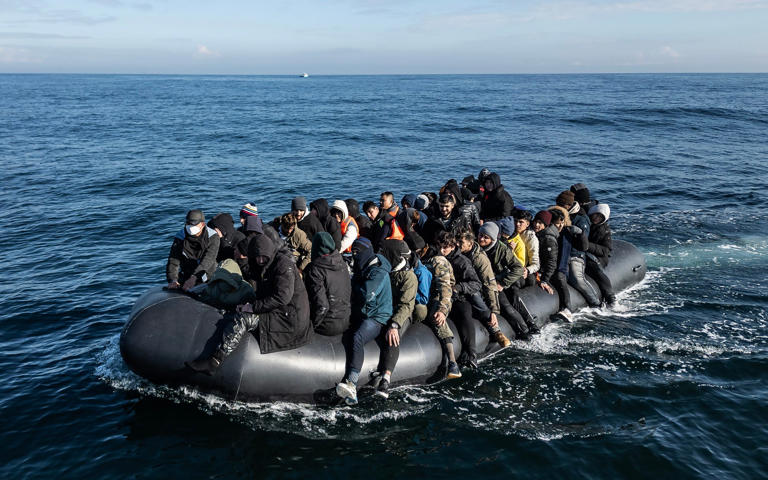
Britain posted the biggest rise in asylum claims in Europe last year, new figures show, as the number of applications surged to a record high.

A total of 108,000 claims were lodged in 2024, reflecting a 28pc jump on the 84,000 recorded in 2023.

This increase far outstripped the UK’s peers across the Continent, including France and Germany, where the number of asylum claims actually fell.

Last year’s tally was also the highest number of applications on record for the UK, according to the Organisation for Economic Cooperation and Development (OECD), eclipsing 103,000 asylum claims lodged in 2002.

The latest figures will raise fresh concerns over the Channel migrant crisis and the Government’s ability to crack down on small boats.

Thursday, February 13, 2025

HHS splurged more than $22B on grants for migrants — including cash for cars, home loans and startups

By
Josh Christenson

Published Feb. 13, 2025, 12:18 p.m. ET


The Department of Health and Human Services (HHS) ramped up grants for migrants from 2020 to 2024 — which included cash assistance to buy cars, homes and even build credit for startup businesses, according to a shocking watchdog report that found taxpayers were left on the hook for $22.6 billion.

HHS’ Office of Refugee Resettlement (ORR) — which came under fire last year for having lost track of 32,000 migrant kids in the US — handed out the high sum to a host of nonprofits, effectively acting as a “giant magnet” for those crossing the US border and claiming asylum, auditors from the money monitor OpenTheBooks revealed exclusively to The Post.

Tasked with settling migrants, asylum seekers and other refugees in America, ORR drastically increased the number of noncitizens eligible to receive funding over the bulk of President Joe Biden’s term, with more than $10 billion shelled out to grant-receiving organizations just in fiscal year 2023.


The OpenTheBooks audit comes after FEMA came under fire for sending around $80 million, which was subsequently clawed back by the Trump administration, to put migrants up in New York City hotels and provide other services.
Luiz C. Ribeiro for New York Post

That coincided with all-time records being set for southern border crossings into the US, with 2.4 million apprehensions by Customs and Border Protection over the same period.

Non-governmental groups bilked taxpayers for up to $1.7 billion in services including dollar-for-dollar matching savings plans for cars, homes, college educations or startups; small-business loans of up to $15,000; loans to repair credit history of up to $1,500; “cultural orientation,” “emergency housing support,” legal assistance and Medicaid care.

Friday, November 08, 2024

NYC to end debit card program for migrant families


by: Finn Hoogensen, Zhané Caldwell

Posted: Nov 7, 2024 / 07:47 PM EST

Updated: Nov 8, 2024 / 10:32 AM EST


Editor’s note: The story in the video player aired on July 3, 2024.

NEW YORK (PIX11) – New York City will end a pilot program that gave prepaid debit cards to migrant families to help them buy food.

New York City launched the pilot program earlier this year. It allowed migrant families to buy food at grocery stores, supermarkets, convenience stores, and bodegas.

“Through the immediate response cards pilot program, we were able to reduce food waste, redirect millions of dollars to our local economy, and provide more culturally relevant food to more than 2,600 migrant families in our care,” a City Hall spokesperson said Thursday.

The City Hall spokesperson said the contract for the pilot program will not be renewed when it ends in January 2025.

“As we move towards more competitive contracting for asylum-seeker programs, we have chosen not to renew the emergency contract for this pilot program once the one-year term concludes,” the City Hall spokesperson said.

The city will instead transition back to food delivery services for migrants in their care in the hotel voucher program, according to the City Hall spokesperson.
More: Latest News from Around the Tri-State

For over two years, we have provided care to more than 222,000 migrants while saving $2 billion in asylum seeker-related costs. Thanks to our resettlement efforts, intensive case management, and national-leading Asylum Application Help Center, more than 160,000 migrants have left our shelter system and taken their next steps towards self-sufficiency,” the City Hall spokesperson said.

Finn Hoogensen is a digital journalist who has covered local news for more than five years. He has been with PIX11 News since 2022. See more of his work here.


Saturday, November 18, 2023

The Unending Surge of Migrants is Creating a Public Health Crisis


THE VIEWS EXPRESSED BY CONTRIBUTORS ARE THEIR OWN AND NOT THE VIEW OF THE MESSENGER


Published 11/18/23 08:30 AM ET|Updated 11 hr ago
Marc Siegel, MD

As a physician, I tend to view the burgeoning migrant border crisis as much as a public health emergency as it is a national security emergency. The distinction is becoming more and more blurred, since the 2 million or more migrants who have crossed our southern border illegally over the past year — many supposedly seeking asylum — present both problems.

Don’t get me wrong: Many of the millions who have escaped Venezuela or Central America for economic and political reasons certainly have legitimate causes to leave their countries. But we don’t have the public health infrastructure here to absorb them all, not to mention the burdens on our local and state economies. At the same time, deadly fentanyl is pouring across our porous border, posing a huge medical risk of overdoses all across the country.

From a public health point of view, we are hardly prepared to handle such huge numbers of migrants, many of whom have chronic health issues or other acute problems. There is no system in place to screen them, beyond care at local hospitals for medical emergencies, and there’s no way to track them after they leave.

Even migrants who are healthy can become ill or injured on the arduous journey to the U.S. and, once here, are then faced with street living or attempts to find places in overburdened shelter systems.

In New York City, for example, homeless shelters are overflowing, with more than 80,000 people sleeping in them every night; there is simply no room for the many thousands of migrants who have come here. A shelter has been opened at Floyd Bennett Field in Brooklyn, but many migrants have refused to relocate there.

And so, the health burden continues to fall on the city’s hospitals. New York City Health and Hospitals reports close to 30,000 migrant patient visits over the past year, with 40,000 vaccines administered along with medical screening. Yet, unfortunately, there is no way to provide proper followup.

Similar problems are occurring all across the country because of the constant influx of migrants, from Chicago to Denver to Los Angeles. The shelter system in Massachusetts is so filled with migrants that the state’s governor brought in the National Guard to help. And, in some cases, unscreened migrants are leading to infectious outbreaks, from chicken pox to measles and likely to include some cases of tuberculosis or sexually transmitted infections.


Migrants take part in a caravan towards the border with the United States in Tapachula, Chiapas State, Mexico, on October 30, 2023.ISAAC GUZMAN/AFP via Getty Images


The existing patchwork health care also leads to an increase in chronic diseases, from hypertension to obesity and diabetes. There is a paucity of medication to treat these problems, which also include asthma and allergies in children, not to mention women far along in their pregnancies who have lacked all prenatal care.

What is the solution?

Having migrants keep records of all health encounters is one idea, but I have found that to be an inefficient method even among citizens with stable homes. The obvious solution is to cut through the partisan politics of the issue and to acknowledge that allowing such numbers of unscreened migrants into the country creates a public health crisis that simply can’t be solved once they are here.

Dr. Robert Redfield, the Trump administration’s Centers for Disease Control and Prevention (CDC) director, invoked Title 42 at the beginning of the COVID pandemic to require most migrants to return to Mexico or Canada in order to slow the public spread of COVID-19. As Redfield has told me, that decision also helped to decrease the risk of infection for Customs and Border Protection agents who were becoming ill in increasingly large numbers.

Title 42 has been controversial and was pulled back under the Biden administration — but it does underline the need to at least find a way to screen people’s health when they want to come here. Of course, screening before the fact makes a lot more sense than after.

This has been a longtime practice for legal immigrants, and it is a strong argument for making our border more secure. We can’t risk our public health simply because of a proven or unproven need for asylum.

Dr. Marc Siegel, clinical professor of medicine at New York University’s Langone Medical Center, is the author of numerous books, including “COVID: The Politics of Fear and the Power of Science.” He hosts and is medical director of SiriusXM’s “Doctor Radio” program.


Friday, November 23, 2018

Why and how are asylum seekers entering the U.S.?


Nov 22, 2018 | 2:25 PM
| Matamoros, Mexico


Political asylum seekers Elvis Gonzalez, 23, left, a Cuban from Havana, and Brazilians Robert Richard Braganca of Rio de Janeiro and son Mario, 18-months, camp out on the Matamoros and Brownsville International Bridge in Matamoros, Mexico. (Gary Coronado / Los Angeles Times)


Many immigrants entering the U.S. — legally and illegally — claim asylum. Advocates for greater limits on immigration, particularly “chain migration” based on family relationships rather than employment skills, have tried to restrict asylum seekers.

This month, President Trump issued a proclamation preventing immigrants from claiming asylum if they crossed the border illegally. On Monday, a federal judge in San Francisco blocked that “asylum ban.”

But the judge’s ruling did not address another U.S. policy that’s forcing asylum seekers to wait on the Mexican side of border bridges, adding their names to growing waiting lists maintained by Mexican officials. On Thursday, a small group of Central American migrants marched peacefully to a border crossing in Tijuana to demand better conditions and push to enter the U.S. We talked to migrants waiting to cross the border legally at a shelter and border bridge in Matamoros, Mexico, and those who had crossed illegally and were released by U.S. immigration officials in neighboring Brownsville, Texas, last week — with notices to appear in immigration court — about why and how they were seeking asylum.


Why cross legally at a border bridge or illegally via the Rio Grande?

Most asylum seekers at the Matamoros bridge said they understood that by law, it was legal to enter the U.S. via the bridge. Some were aware of Trump’s edict and feared that if they crossed the Rio Grande illegally, they could hurt their chances of being granted asylum. But with the Mexican list having grown last week to 80 names, they also worried about how long they would have to wait to cross. Some had already waited more than a month. Many of the migrants had been granted temporary visas in Mexico that had expired or were due to expire by month’s end, and they worried they could be deported.

“I came here because I thought it would be faster,” said Cuban asylum seeker Ronald Padron, 37, who had waited 26 days at the Matamoros bridge.

Sunday, November 04, 2018

UN to Trump: You must let them in!


Posted by Ann Corcoran on October 29, 2018

Here we go again!

The United Nations is demanding that we follow international law and let those fleeing violence in their Central American countries (not a criteria for granting asylum) into the US. What happened with that supposed effort to tell Mexico to grant them asylum—that is what international law says!

The first safe country asylum seekers reach is where they must ask for asylum.

Clearly the UN is endorsing the concept of “asylum shopping” a term used around the world where migrants are on the hunt for their best deal.

But, you know all of that.

The caravan is an anti-Trump public relations stunt in the run-up to the midterm elections and it seems the whole world is in on it.

Here is Voice of America (with a photo of the starving mass of humanity!):
UN: Countries Must Allow People at Risk to Request Asylum


If VOA was trying to get sympathy for the marchers, this photo is a poor choice! Just saying!


Asia Bibi, Christian woman accused of blasphemy, seeks asylum amid violent protests


Published November 04, 2018

Last Update 5 hrs ago


By Travis Fedschun | Fox News


The Christian woman in Pakistan who was on death row for nearly a decade before being acquitted by the country's top court last week is now seeking asylum elsewhere, after widespread violent protests throughout the country.

Asia Bibi was convicted in 2010 after she allegedly contaminated a water jug -- an offense viewed as blasphemy in the Muslim country.

Pakistan's top court acquitted the 47-year-old on Wednesday and ordered her release in a move that infuriated the country's hard-line Islamists, who have held nationwide protests demanding her execution.

Bibi's husband, Ashiq Masih, released a video in Punjabi on Saturday asking the U.K. to grant his family asylum amid fears for their safety, Sky News reported.


Saturday, June 16, 2018

Merkel Seeks Macron's Help as Asylum Crisis Threatens EU Unity


Photographer: Louisa Gouliamaki
AFP via Getty Images


 By
Brian Parkin
‎June‎ ‎16‎, ‎2018‎ ‎8‎:‎14‎ ‎AM‎ ‎EDT


European remedy needed to solve European challenge, she says

French-German meeting June 19 will seek policy options

German Chancellor Angela Merkel says she will turn to France to help diffuse a domestic crisis over migration amid an increasing risk that the European Union may unravel unless its member states adopt a common policy.

At a regular meeting of their joint Cabinets on Tuesday, Germany will seek the support of French President Emmanuel Macron to find a common EU response for managing an influx of refugees, Merkel said Saturday in a weekly podcast. The stakes for the EU are high, she said.

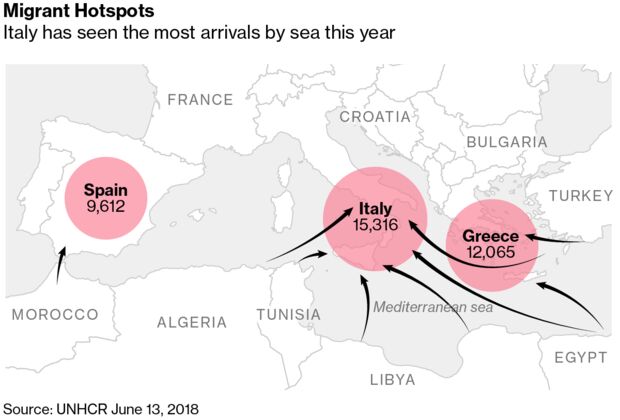
A dispute in Merkel’s coalition over migration policy has escalated into one of the biggest tests of her chancellorship, while the populist government that took over in Italy this month has blocked refugee vessels from entering Italian ports.

Getting all of the EU states on board for an overhaul of asylum practices and rules is “in my view one of the most decisive issues for European unity,” the Christian Democrat chancellor said. The inflow of migrants is “a European challenge that requires a European answer.”

Read more: Merkel Risks Crisis in Refugee Clash With Allies

As the domestic storm unfolded this week, Merkel remained insistent that the EU-28 can only solve migration challenges as a group. That’s fomented a deep rift between her CDU and its Christian Social Union allies, who claim they have national and EU authorization to start turning away refugees arriving on Germany’s borders who first claimed asylum in other EU states.

A European solution “doesn’t convince me,” said Bavaria’s Prime Minister Markus Soeder in a June 14 Bild Zeitung interview. The move would mean “the majority of asylum seekers who come to Europe make their way to Germany.”

The joint cabinet meeting with France offers Merkel a chance to air proposals for revamping regional asylum policy ahead of a European Council meeting June 28-29. Merkel has asked the CSU to be patient, a request that the Bavarians have ignored.


Saturday, April 28, 2018

Hundreds in caravan of Central Americans expected to claim asylum at border on Sunday


By Ben Gittleson

Justin Doom Apr 27, 2018, 1:48 AM ET


Victoria Razo/AFP/Getty Images


Watch'Caravan' of Central American migrants trekking through Mexico


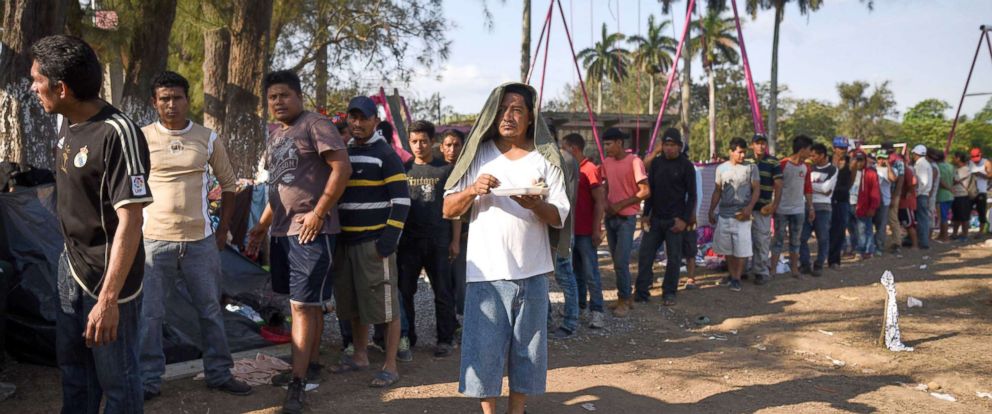
The group responsible for organizing a month-long journey of hundreds of Central Americans away from violence in their homelands and toward the U.S. reiterated on Thursday that the men, women, teens and children it represents have the legal right to demand asylum.

Alex Mensing, a project coordinator for the group, Pueblo Sin Fronteras, confirmed to ABC News there were about 150 people in Tijuana, near the U.S.-Mexico border, with about 175 more on their way there from Mexicali. The vast majority are fleeing dire situations in Honduras, and more than half of those in the so-called caravan are women and children.


Victoria Razo/AFP/Getty Images
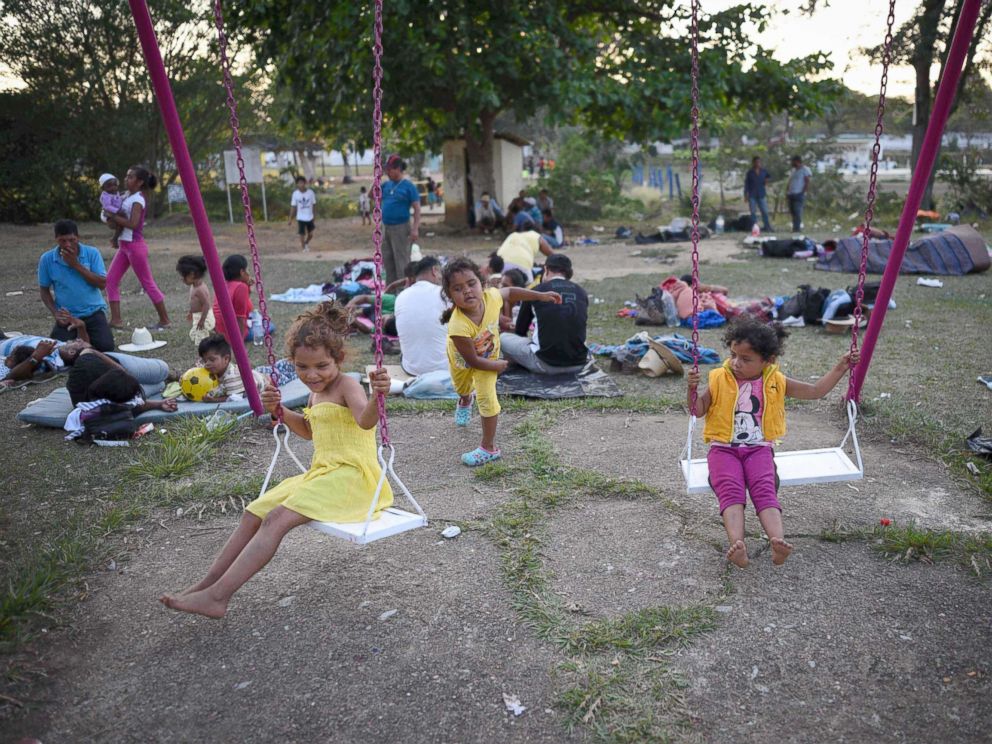
Central American children taking part in a caravan called "Migrant Viacrucis" play at a sports center field in Matias Romero, Oaxaca state, Mexico, April 2, 2018


"We will continue to seek safety and dignity for ourselves and our families," Pueblo Sin Fronteras said in a statement issued Thursday. "We ask the U.S. government for adequate reception as refugees and to understand that we embarked on this journey because we had to flee our countries. Returning means putting our lives at risk; we have no other choice but to seek refuge where it exists."