Showing posts with label Mohler. Show all posts

Friday, January 16, 2026

Can men get pregnant? Is our society going insane?

by R. Albert Mohler Jr.
Post Date:
January 15, 2026

Can men get pregnant? Is our society going insane?

In a Senate hearing yesterday, a display of leftist insanity revealed a culture on the brink of disaster


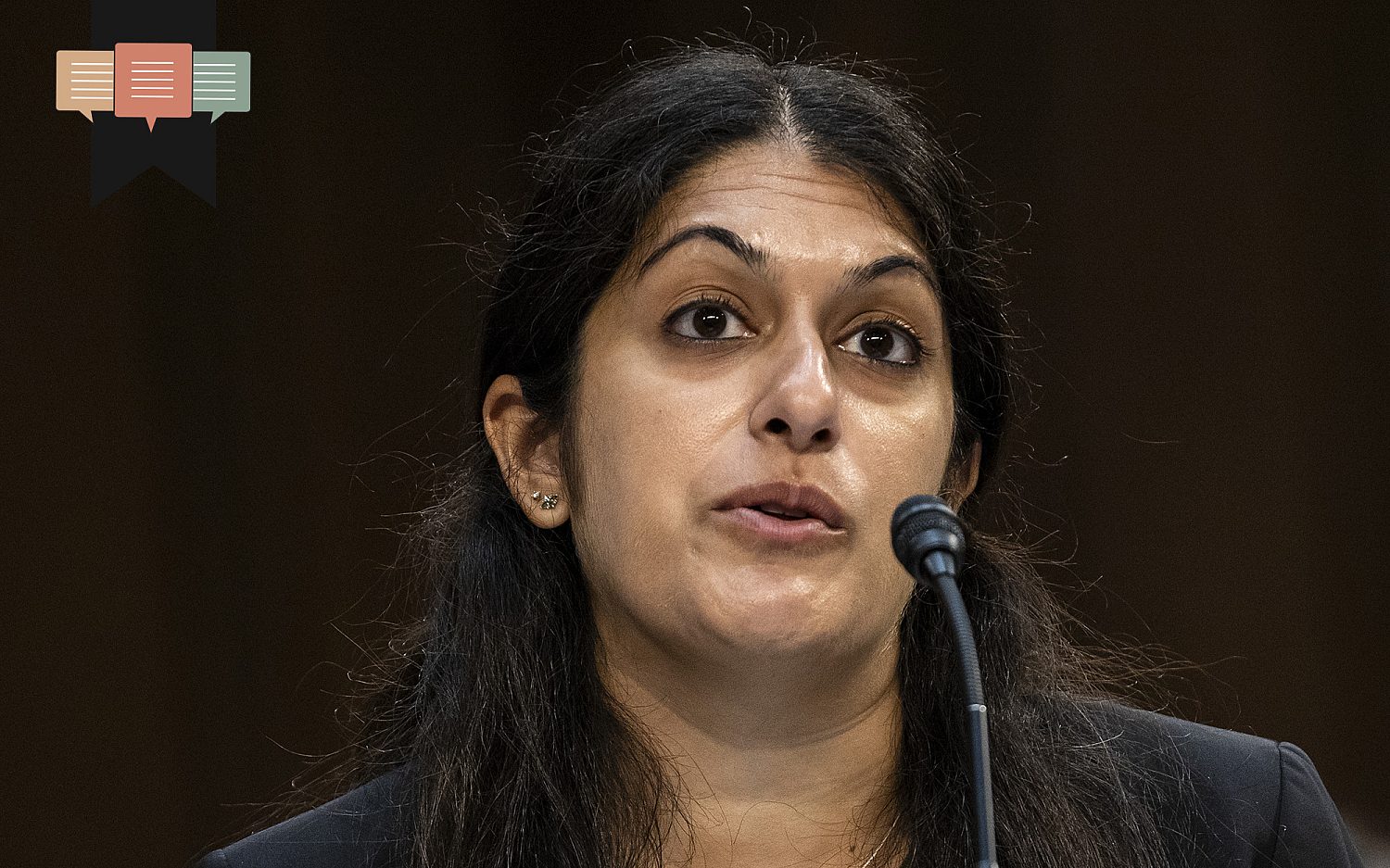
Dr. Nisha Verma Getty Images / Photo by Samuel Corum


Can men get pregnant? Can you believe such a question would ever be asked in a Senate hearing? Can you imagine that a doctor would refuse to answer the question?

If you have been paying attention to our continuing cultural breakdown, perhaps you can imagine such astounding nonsense. But, thanks to a U.S. Senate hearing yesterday, you don’t even have to use your imagination. You can just watch the insanity unfold.

In a hearing held by the Senate’s Health, Education, Labor and Pensions Committee on the safety of chemical abortion drugs, Sen. Josh Hawley, R-Mo., asked Dr. Nisha Verma, an obstetrician, a very simple question: “Can men get pregnant?” But, astoundingly, Dr. Verma would not answer the senator’s question. Sen. Hawley pressed again and again, asking the same straightforward question. Dr. Verma just stonewalled, and stonewalled, and stonewalled.

The exchange is riveting. No work of fiction could match the intensity of the insanity. “Can men get pregnant?,” Hawley asked repeatedly. Dr. Verma responded with a carefully planned obstructionism. “I’m not really sure what the goal of the question” is, she asserted. Sen. Hawley just stated: “The goal is just to establish a biological reality.”

Saturday, December 15, 2018

Why a compromise on gender identity, however well-intended, is a disaster for religious liberty

THE BRIEFING

Thursday, Dec. 13, 2018


Audio
Download MP3


TRANSCRIPT


The Briefing

December 13, 2018

This is a rush transcript. This copy may not be in its final form and may be updated.

It's Thursday, December 13, 2018. I'm Albert Mohler and this is The Briefing, a daily analysis of news and events from a Christian worldview.

Why a compromise on gender identity, however well-intended, is a disaster for religious liberty


A big issue has been brewing within evangelical circles. It has been waiting for the moment to public disclosure, and that moment has come. Yesterday, World Magazine ran an article by J. C. Derrick entitled Boards Back: SOGI Compromise. That is sexual orientation and gender identity compromise. The subhead, Major Christian Groups Endures Framework to Expand LGBT Rights in Exchange for Religious Protections. Derrick gets right to the point when he tells us two major evangelical organizations have formally endorsed principles that would add sexual orientation and gender identity. That's SOGI, to federal nondiscrimination law.

Now if you just start with that opening sentence, it tells us that two major evangelical organizations, that tells us something, this is a big story, have formally endorsed, that tells us we're talking about official action, not just something under consideration. Principles that would add sexual orientation and gender identity to federal nondiscrimination law. Now if all you have is that introductory sentence, you would want to ask a big question. Why would two major evangelical organizations do any such thing? The answer is that they're trying to establish a kind of template, a compromise legally, constitutionally, politically and more importantly, perhaps, culturally.

They're trying to find a way to encourage the federal government to adopt sexual orientation and gender identity protections that would not come at the violation of religious liberty. Now that sounds like the perfect deal politically, if it were possible. That sounds like a way through this cultural impasse. On the one hand, you have one side in this moral revolution that is demanding nothing less than the coercive power of the state, and of course that includes the federal government, to force everyone to get in line with the moral revolution, especially on the issues of sexual orientation and gender identity.

On the other side, you have those who cannot by conviction join the moral revolution, and they are saying you must respect our religious liberty rights. And of course, that's the side of the argument on which you would find evangelical Christians. So what is this compromise? Is it tenable? Is it possible? The bottom line is I believe it is neither. It is not tenable, it is not possible. You can state, as many will, that it is well intended. But a well intended mistake is still a mistake. A well intended wound to religious liberty is still a wound. And that's what we're looking at here.

Monday, March 22, 2010

Preachers Who Don’t Believe — The Scandal of Apostate Pastors

Thursday, March 18, 2010


Are there clergy who don’t believe in God? That is the question posed by a new report that is certain to receive considerable attention — and rightly so. Few church members are likely to be disinterested in whether their pastor believes in God.

The study was conducted by the Center for Cognitive Studies at Tufts University, under the direction of Daniel C. Dennett and Linda LaScola. Dennett, of course, is one of the primary figures in the “New Atheism” — the newly aggressive and influential atheist movement that has gained a considerable hearing among the intellectual elites and the media.

Dennett is a cognitive scientist whose book, Breaking the Spell, suggests that belief in God must have at one point served an important evolutionary purpose, granting an evolutionary advantage to those who had some belief in an afterlife as compared to humans without such a belief. The reality of death, Dennett surmises, might well have been the precipitating factor. In order to make life meaningful in the face of death (and thus encourage reproduction), Dennett suggests that primitive humans invented the idea of God and the afterlife. Now, he argues, we have no more need of such primitive beliefs.


Interestingly, Dennett also proposes a new interpretation of theological liberalism. Noting that many modern people claim to be Christians while holding to virtually no specific theological content, Dennett suggests that their mode of faith should not be described as “belief,” but rather as “believing in belief.”

Given Dennett’s own atheistic agenda, we can rightly assume that he would be thrilled to see Christian ministers and believers abandon the faith. Indeed, the New Atheists have made this a stated aim. Thus, this new research report, “Preachers Who Are Not Believers,” should be read within that framework. Nevertheless, it must be read. This report demands the attention of anyone concerned with the integrity of the Christian church and the Christian faith.

Dennett and LaScola undertook their project with the goal of looking for unbelieving pastors and ministers who continue to serve their churches in “secret disbelief.” Their “small and self-selected” sample of ministers represents a microcosm of the theological collapse at the heart of many churches and denominations.

In their report, Dennett and LaScola present case studies of five unbelieving ministers, three from liberal denominations (”the liberals”) and two from conservative denominations (”the literals”).

Wes, a Methodist, lost his confidence in the Bible while attending a liberal Christian college and seminary. “I went to college thinking Adam and Eve were real people,” he explained. Now, he no longer believes that God exists. In his rendering, God is a word that “can be used very expressively in some of my more meditative modes” and “a kind of poetry that is written by human beings.”

His church members do not know that he is an atheist, but he explains that they are somewhat liberal themselves. His ministerial colleagues are even more liberal: “They’ve been de-mythologized, I’ll say that. They don’t believe Jesus rose from the dead literally. They don’t believe Jesus was born of a virgin. They don’t believe all those things that would cause a big stir in their churches.”

Rick, a campus minister for the United Church of Christ, perhaps the most liberal Protestant denomination, was an agnostic in college and seems to have lost all belief by the time he graduated from seminary. He chose ordination in the UCC because it required “no forced doctrine.” Even as he graduated from seminary, he knew, “I’m not going to make it in a conventional church.” He knew he could not go into a church and teach his own theological views, based on Paul Tillich and Rudolf Bultmann. He did not believe in the doctrinal content of the Christian faith from the beginning of his ministry. “I did not believe the traditional things even then.”

He does not believe “all this creedal stuff” about the incarnation of Christ or the need for salvation, but he remained in the ministry because, “These are my people, this is the context in which I work, these are the people that I know.” In the pulpit, his mode is to talk as if he does believe, because “as long as … you are talking about God and Jesus and the Bible, that’s what they want to hear. You’re just phrasing it in a way that makes sense to [them] … but language is ambiguous and can be heard in different ways.”

He doesn’t like to call himself an atheist, but: “If not believing in a supernatural, theistic god is what distinguishes an atheist, then I am one too.”

Darryl is a Presbyterian who sees himself as a “progressive-minded” pastor who wants to see his kind of non-doctrinal Christianity “given validity in some way.” He acknowledges that he is more a pantheist than a theist, and thinks that many of the more educated members of his church hold to the same liberal beliefs as his own. And those beliefs (or unbeliefs) are stated clearly: “I reject the virgin birth. I reject substitutionary atonement. I reject the divinity of Jesus. I reject heaven and hell in the traditional sense, and I am not alone.”

Amazingly, Darryl is candid about the fact that he remains in the ministry largely for financial reasons. It is how he provides for his family. If he openly espoused his beliefs, “I may be burning bridges in terms of my ability to earn a living this way.”

Adam ministers in the Church of Christ, a conservative denomination. After years in the ministry, he began to lose all theological confidence. After reading a series of books, he became convinced that the atheists have better arguments than believers. He has moved fully into an atheist mode, yet he continues to lead his church in worship. How? “Here’s how I’m handling my job on Sunday mornings: I see it as play acting. I see myself as taking on the role of a believer in a worship service, and performing.”

This “atheistic agnostic” stays in the ministry because he likes the people and, “I need the job still.” If he had an alternative source of income, he would take it. He feels hypocritical, but no longer believes that hypocrisy is wrong.

John is identified as a Southern Baptist minister who has primarily served as a worship leader. He was attracted to Christianity as a religion of love, but his pursuit of Christianity “brought me to the point of not believing in God.” As he explains, “I didn’t plan to become an atheist. I didn’t even want to become an atheist. It’s just I had no choice. If I’m being honest with myself.”

He is clearly not being honest with his church members. He rejects all belief in God and all Christian truth claims out of hand. He is a determined atheist. Once again, this unbelieving minister admits that he stays in the ministry because of finances. Amazingly, this minister even names his price: “If someone said, ‘Here’s $200,000,’ I’d be turning my notice in this week, saying, ‘A month from now is my last Sunday.’ Because then I can pay off everything.”

Early in their report, Dennett and LaScola point to a problem of definition. Many churches and denominations have adopted such fluid and doctrineless identities that determining who is a believer and who is an unbeliever has become difficult. Their statement deserves a close reading:

The ambiguity about who is a believer and who is an unbeliever follows inexorably from the pluralism that has been assiduously fostered by many religious leaders for a century and more: God is many different things to different people, and since we can’t know if one of these conceptions is the right one, we should honor them all. This counsel of tolerance creates a gentle fog that shrouds the question of belief in God in so much indeterminacy that if asked whether they believed in God, many people could sincerely say that they don’t know what they are being asked.

In other words, some theologians and denominations have embraced a theology so fluid and indeterminate that even an atheist cannot tell the believers and unbelievers apart.

“Preachers Who Are Not Believers” is a stunning and revealing report that lays bare a level of heresy, apostasy, and hypocrisy that staggers the mind. In 1739, Gilbert Tennett preached his famous sermon, “On the Danger of an Unconverted Ministry.” In that sermon, Tennett described unbelieving pastors as a curse upon the church. They prey upon the faith and the faithful. “These caterpillars labor to devour every green thing.”

If they will not remove themselves from the ministry, they must be removed. If they lack the integrity to resign their pulpits, the churches must muster the integrity to eject them. If they will not “out” themselves, it is the duty of faithful Christians to “out” them. The caterpillars are hard at work. Will it take a report from an atheist to awaken the church to the danger?


Dr. R. Albert Mohler, Jr., serves as president of The Southern Baptist Theological Seminary — the flagship school of the Southern Baptist Convention and one of the largest seminaries in the world.


Source: http://www.albertmohler.com/2010/03/18/clergy-who-dont-believe-the-scandal-of-apostate-pastors/

..

Tuesday, March 02, 2010

Falling on Deaf Ears?

OpinionWed, Feb. 24 2010 11:18 PM EDT

Falling on Deaf Ears?
Why So Many Churches Hear So Little of the Bible
By R. Albert Mohler, Jr.Christian Post Guest Columnist


"It is well and good for the preacher to base his sermon on the Bible, but he better get to something relevant pretty quickly, or we start mentally to check out." That stunningly clear sentence reflects one of the most amazing, tragic, and lamentable characteristics of contemporary Christianity - an impatience with the Word of God.


The sentence above comes from Mark Galli, senior managing editor of Christianity Today in an essay entitled "Yawning at the Word." In just a few hundred words, he captures the tragedy of a church increasingly impatient with and resistant to the reading and preaching of the Bible. We may wince when we read him relate his recent experiences, but we also recognize the ring of truth.

Galli was told to cut down on the biblical references in his sermon. "You'll lose people," the staff member warned. In a Bible study session on creation, the teacher was requested to come back the next Sunday prepared to take questions at the expense of reading the relevant scriptural texts on the doctrine. Cutting down on the number of Bible verses "would save time and, it was strongly implied, would better hold people's interest."

As Galli reflected, "Anyone who's been in the preaching and teaching business knows these are not isolated examples but represent the larger reality."

Indeed, in many churches there is very little reading of the Bible in worship, and sermons are marked by attention to the congregation's concerns - not by an adequate attention to the biblical text. The exposition of the Bible has given way to the concerns, real or perceived, of the listeners. The authority of the Bible is swallowed up in the imposed authority of congregational concerns.

As Mark Galli notes:

It has been said to the point of boredom that we live in a narcissistic age, where we are wont to fixate on our needs, our wants, our wishes, and our hopes-at the expense of others and certainly at the expense of God. We do not like it when a teacher uses up the whole class time presenting her material, even if it is material from the Word of God. We want to be able to ask our questions about our concerns, otherwise we feel talked down to, or we feel the class is not relevant to our lives.

It is well and good for the preacher to base his sermon on the Bible, but he better get to something relevant pretty quickly, or we start mentally to check out. Don't spend a lot of time in the Bible, we tell our preachers, but be sure to get to personal illustrations, examples from daily life, and most importantly, an application that we can use.

The fixation on our own sense of need and interest looms as the most significant factor in this marginalization and silencing of the Word. Individually, each human being in the room is an amalgam of wants, needs, intuitions, interests, and distractions. Corporately, the congregation is a mass of expectations, desperate hopes, consuming fears, and impatient urges. All of this adds up, unless countered by the authentic reading and preaching of the Word of God, to a form of group therapy, entertainment, and wasted time - if not worse.

Galli has this situation clearly in his sights when he asserts that many congregations expect the preacher to start from some text in the Bible, but then quickly move on "to things that really interest us." Like . . . ourselves?

One of the earliest examples of what we would call the preaching of the Bible may well be found in Nehemiah 8:1-8:

And all the people gathered as one man into the square before the Water Gate. And they told Ezra the scribe to bring the Book of the Law of Moses that the Lord had commanded Israel. So Ezra the priest brought the Law before the assembly, both men and women and all who could understand what they heard, on the first day of the seventh month. And he read from it facing the square before the Water Gate from early morning until midday, in the presence of the men and the women and those who could understand. And the ears of all the people were attentive to the Book of the Law. And Ezra the scribe stood on a wooden platform that they had made for the purpose. And beside him stood Mattithiah, Shema, Anaiah, Uriah, Hilkiah, and Maaseiah on his right hand, and Pedaiah, Mishael, Malchijah, Hashum, Hashbaddanah, Zechariah, and Meshullam on his left hand. And Ezra opened the book in the sight of all the people, for he was above all the people, and as he opened it all the people stood. And Ezra blessed the Lord, the great God, and all the people answered, “Amen, Amen,” lifting up their hands. And they bowed their heads and worshiped the Lord. Also Jeshua, Bani, Sherebiah, Jamin, Akkub, Shabbethai, Hodiah, Maaseiah, Kelita, Azariah, Jozabad, Hanan, Pelaiah, the Levites, helped the people to understand the Law, while the people remained in their places. They read from the book, from the Law of God, clearly, and they gave the sense, so that the people understood the reading with their faces to the ground. [English Standard Version]

Ezra and his companions stood on a platform before the congregation. They read the scriptural text clearly, and then explained the meaning of the Scripture to the people. The congregation received the Word humbly, while standing. The pattern is profoundly easy to understand - the Bible was read and explained and received.

As Hughes Oliphant Old comments, "This account of the reading of the Law indicates that already at the time of the writing of this text there was a considerable amount of ceremonial framing of the public reading of Scripture. This ceremonial framing is a witness to the authority of the Bible." The reading and exposition took place in a context of worship as the people listened to the Word of God. The point of the sermon was simple - "to make clear the reading of the Scriptures."

In many churches, there is almost no public reading of the Word of God. Worship is filled with music, but congregations seem disinterested in listening to the reading of the Bible. We are called to sing in worship, but the congregation cannot live only on the portions of Scripture that are woven into songs and hymns. Christians need the ministry of the Word as the Bible is read before the congregation and God's people - young and old, rich and poor, married and unmarried, sick and well - hear it together. The sermon is to consist of the exposition of the Word of God, powerfully and faithfully read, explained, and applied. It is not enough that the sermon take a biblical text as its starting point.

How can so many of today's churches demonstrate what can only be described as an impatience with the Word of God? The biblical formula is clear - the neglect of the Word can only lead to disaster, disobedience, and death. God rescues his church from error, preserves his church in truth, and propels his church in witness only by his Word - not by congregational self-study.

In the end, an impatience with the Word of God can be explained only by an impatience with God. We - both individually and congregationally - neglect God's Word to our own ruin.

As Jesus himself declared, "He who has ears to hear, let him hear."


Adapted from R. Albert Mohler Jr.'s weblog at www.albertmohler.com.R. Albert Mohler, Jr. is president of The Southern Baptist Theological Seminary in Louisville, Kentucky. For more articles and resources by Dr. Mohler, and for information on The Albert Mohler Program, a daily national radio program broadcast on the Salem Radio Network, go to www.albertmohler.com. For information on The Southern Baptist Theological Seminary, go to www.sbts.edu. Send feedback to mail@albertmohler.com. Original Source: www.albertmohler.com.

.

Source: http://www.christianpost.com/article/20100224/falling-on-deaf-ears/pageall.html
.