In an executive order, Gov. Phil Scott paused enforcement of EV supply mandates. The stated reasons defy the administration’s prior messaging about zero-emission vehicle goals.
By Nathaniel Eisen
May 23, 2
May 23, 2
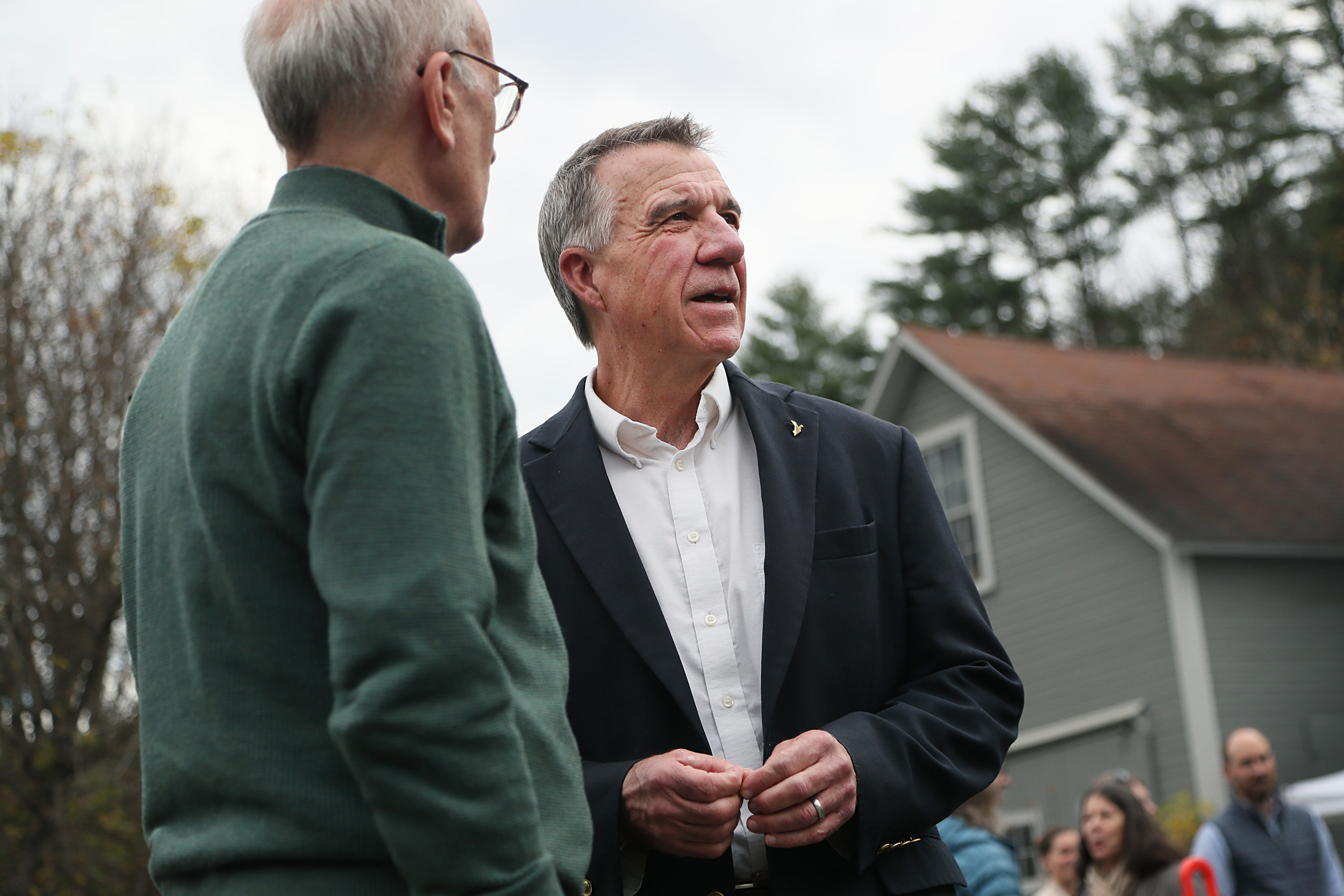
Gov. Phil Scott cited a lack of charging stations and a freeze of millions of dollars in federal funding for chargers in Vermont as part of the reason for the order. Credit: Suzanne Kreiter/The Boston Globe via Getty Images
Vermont, in a surprising shift, will not enforce electric car and truck supply mandates through the end of calendar year 2026.
Gov. Phil Scott signed an executive order on May 13 to allow a 19-month delay in part because of pressure from vehicle manufacturers as well as uncertainties stemming from the Trump administration’s tariffs and broad federal budget freezes and cuts. Lawmakers in Washington this week pursued a more radical course: the U.S. Senate voted to block the California plan for EVs that Vermont and other states have followed.
The Scott administration has previously touted its regulations-–patterned after California’s zero-emission vehicle rule that aims to end gasoline-powered car and light truck sales by 2035–as an effective climate strategy that required manufacturers to increase the percentage of EVs offered for sale in the state. State agencies had linked the strategy to a rapid uptick in EV ownership.
Scott’s executive order, signed May 13, will affect two model years and was cast as a temporary response by administration officials who faced some tough questioning during a hastily called Senate hearing to review the order.
“This is a modest step to create a little bit of space while some of the dust settles at the federal level in particular, while maintaining our commitment to an overall transition to electric vehicles,” Julie Moore, the state’s natural resources secretary, said during a contentious joint hearing of two Senate committees.
Democrats and climate advocates cried foul and demanded, as federal environmental safeguards fall, that Vermont “hold the line” against industry demands. Scott also cited a lack of charging stations and a freeze of millions of dollars in federal funding for chargers in Vermont as part of his rationale. Critics disputed that Vermont lacked a robust charging network.
Vermont, in a surprising shift, will not enforce electric car and truck supply mandates through the end of calendar year 2026.
Gov. Phil Scott signed an executive order on May 13 to allow a 19-month delay in part because of pressure from vehicle manufacturers as well as uncertainties stemming from the Trump administration’s tariffs and broad federal budget freezes and cuts. Lawmakers in Washington this week pursued a more radical course: the U.S. Senate voted to block the California plan for EVs that Vermont and other states have followed.
The Scott administration has previously touted its regulations-–patterned after California’s zero-emission vehicle rule that aims to end gasoline-powered car and light truck sales by 2035–as an effective climate strategy that required manufacturers to increase the percentage of EVs offered for sale in the state. State agencies had linked the strategy to a rapid uptick in EV ownership.
Scott’s executive order, signed May 13, will affect two model years and was cast as a temporary response by administration officials who faced some tough questioning during a hastily called Senate hearing to review the order.
“This is a modest step to create a little bit of space while some of the dust settles at the federal level in particular, while maintaining our commitment to an overall transition to electric vehicles,” Julie Moore, the state’s natural resources secretary, said during a contentious joint hearing of two Senate committees.
Democrats and climate advocates cried foul and demanded, as federal environmental safeguards fall, that Vermont “hold the line” against industry demands. Scott also cited a lack of charging stations and a freeze of millions of dollars in federal funding for chargers in Vermont as part of his rationale. Critics disputed that Vermont lacked a robust charging network.

