(RNS) — The letter marks a shift toward a more direct and pointed tone in challenging President Donald Trump’s immigration policy.
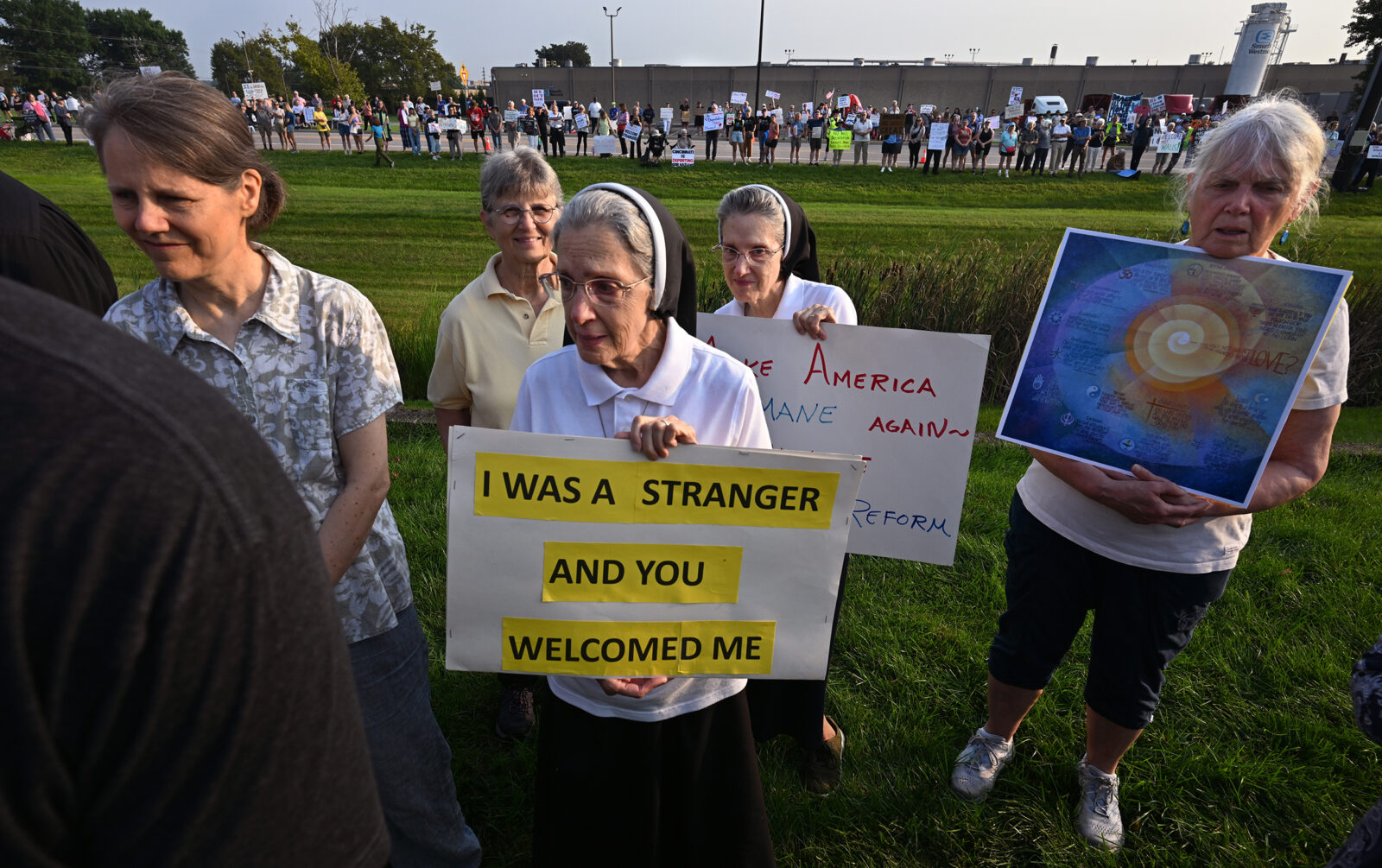
Community members hold a protest rally as immigrants enter an ICE facility at a Department of Homeland Security field office during a mandatory check in where most received ankle monitors, after thousands of Haitians lost Temporary Protected Status (TPS), in Blue Ash, Ohio on Aug. 9, 2026. (RNS photo/Carol Guzy)
(RNS) — Archbishop Paul Coakley of Oklahoma City, the U.S. Catholic bishops’ conference president, sent a letter on Tuesday (Sept. 8), urging President Donald Trump to cease the deportation of “large numbers” of Haitian immigrants.
Citing the violence in Haiti, Coakley wrote: “As citizens of this great country, we have been entrusted with a tremendous moral responsibility, and this is true most of all for you as our head of state, Mr. President. To this end, I respectfully ask: What good is the immense wealth, prosperity, and influence with which we have been blessed as a nation if not used in service of our humanity?”
The letter’s language marked a notable hardening in tone from the U.S. bishops’ conference, though Coakley also wrote that he was “humbly” appealing for Trump’s assistance.
Last November, the U.S. bishops’ conference released a special pastoral message calling for an end to “indiscriminate mass deportation,” a sign of how seriously the conference is taking deportation policies that could impact nearly 1 in 5 U.S. Catholics directly or through their family. But that message did not name Trump.
In his letter this week, Coakley wrote that he was inspired by the massacre of 47 people in Haiti’s Kenscoff farming community to write. Some of the people killed had been taking refuge in a church, and some of those killed were children. Coakley called the violence “unconscionable.”
“I very much wish this recent and tragic example of human life being extinguished, virtually with impunity, was an irregularity in Haiti. Unfortunately, it is not,” Coakley wrote. He told Trump that deportations endanger “innocent human life” and “contribute to the country’s already deepening crisis.”
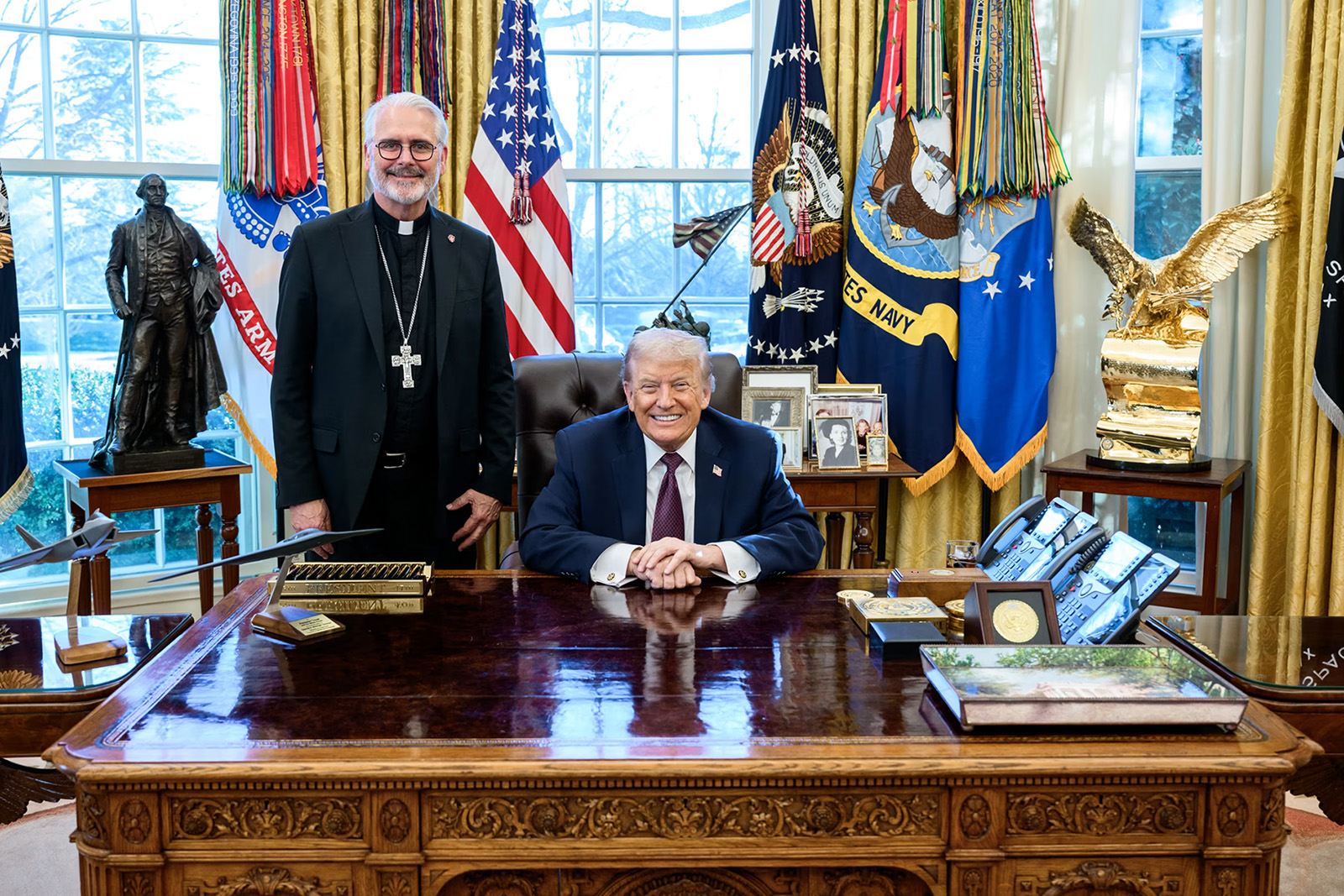
Archbishop Paul Coakley of Oklahoma City, president of the U.S. Conference of Catholic Bishops, meets with President Donald Trump at the White House on Jan. 12, 2026. (Official White House Photo)
Since the Trump administration revoked temporary protected status for Haitians in late July, an estimated 350,000 Haitians have been vulnerable to detention and deportation.
Coakley did acknowledge that the administration could move forward with individual deportations “to advance justice and public safety.”
The Oklahoma City archbishop has often been seen as a conservative, particularly because he is ecclesiastical adviser to the Napa Institute, which unites wealthy Catholics around conservative causes. Coakley’s letter to Trump indicated that he has spoken to the president about immigration before, referencing a previous conversation in which Coakley recognized “the importance of regulating immigration and enforcing federal immigration law.”
Coakley met with Trump in January, the first time that the bishops’ conference president had met with the U.S. president in nearly a decade. Shortly afterward, the administration announced a change to the visa requirement that had forced foreign priests and other religious workers to exit the U.S. for a year between religious visas, which the conference had long sought.
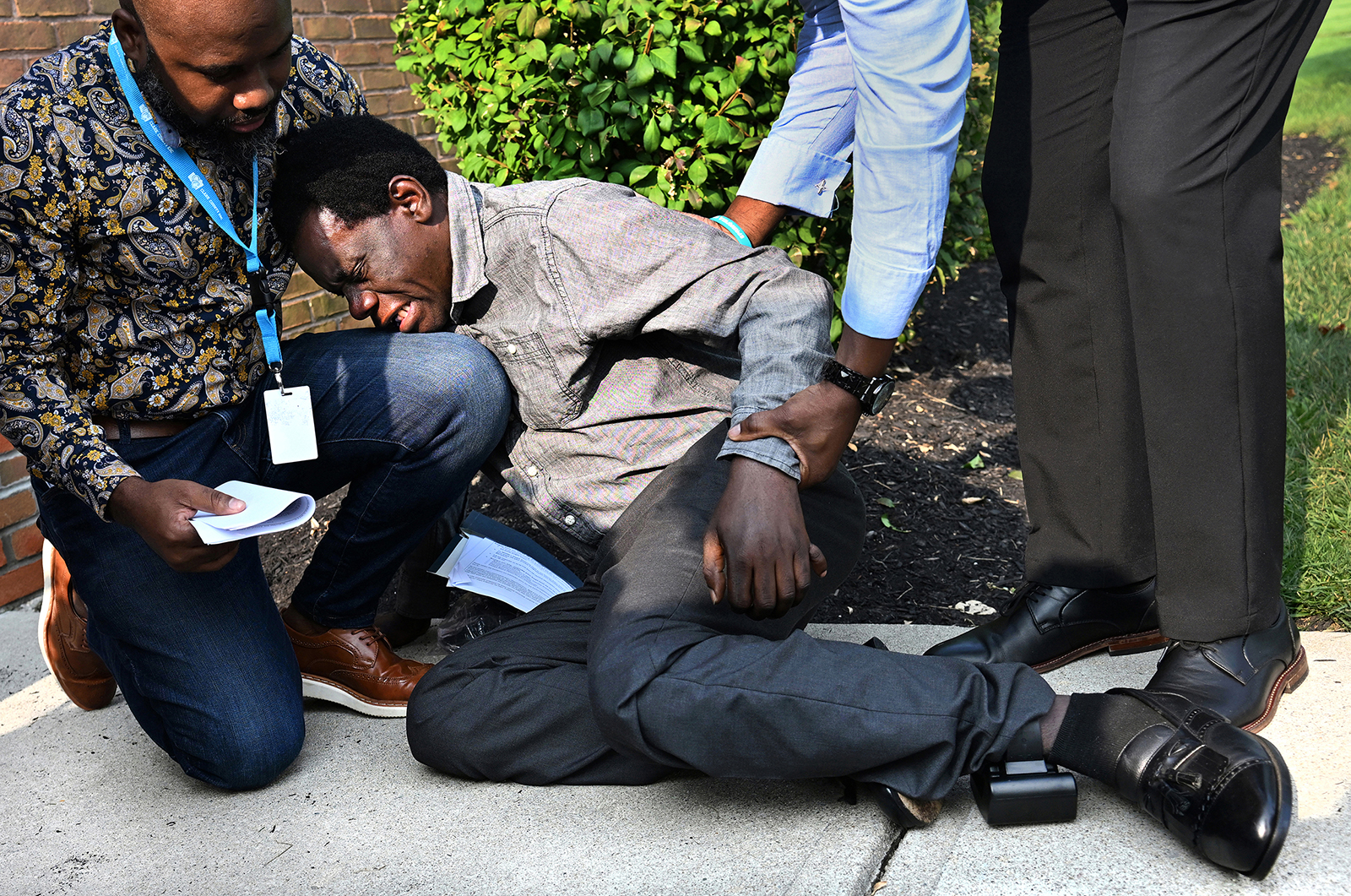
Haitian immigrant Monsanto Maler, center, cries and collapses after receiving an ankle monitor at a Department of Homeland Security field office during a mandatory check in, on Aug. 9, 2026, in Blue Ash, Ohio. (RNS photo/Carol Guzy)
In this Tuesday letter, Coakley wrote, “the Catholic Church is sensitive to the fact that many families, especially mixed-status families, would benefit from ceasing the deportations. The strength of our communities depends, in large part, on the well-being of such families.” He also highlighted Haitian contributions to the economy and health care and invoked religious and patriotic ideals about the right to life. “I know you understand the essential role the United States plays in promoting the inherent value of human life,” he wrote to Trump.
He said that the U.S. bishops would continue to pray for and support immigration reform.
Other faith leaders have also expressed concerns about Haitians facing deportation, including more than 100 Pentecostal leaders who gathered in Washington earlier this week and a separate letter organized by the National Latino Evangelical Coalition and the National Association of Evangelicals urging an extension of Temporary Protected Status for Haitians.


No comments:
Post a Comment