Showing posts with label RUSSIA. Show all posts

Wednesday, September 02, 2026

US urges NATO allies to prepare in case Russia attacks


In an exclusive interview with USA TODAY, U.S. Ambassador to NATO Matt Whitaker said allies need to be ready, in case Russian President Vladimir Putin decides to attack.

Francesca Chambers and Miles J. Herszenhorn USA TODAY
Updated Sept. 2, 2026, 8:49 a.m. ET

BRUSSELS – Russian President Vladimir Putin may not be planning an imminent assault on NATO nations, but the United States says its military allies need to train and invest like he is, so they’re ready to fend off a sudden attack.

After leaked U.S. intelligence reportedly revealed that Russia could launch a limited assault, such as a land incursion or cyberattack, on a member country within the next few years, America’s allies have been on high alert.

The warning contradicted assessments that Putin would not attempt to draw NATO into a fight while he’s battling Ukraine – and came amid concerns about a U.S. weapons shortage, as the Trump administration wages war on Iran.

In an exclusive interview with USA TODAY at the military alliance’s headquarters in Brussels, U.S. Ambassador to NATO Matt Whitaker declined to comment directly on the leaked intelligence, while stressing a need for allies to be vigilant in their defense spending and weapons production.

“You can't predict what Vladimir Putin's going to do or any adversary. All you can do is be prepared for it and deter and make it not worth their time to make that move,” Whitaker said. “And I think we are preparing every single day to prevent that from happening, and if it does happen, to be ready for it.

“We should know that our adversary invaded Ukraine, and so we should all be pretty clear-eyed,” Whitaker added.

Saturday, August 29, 2026

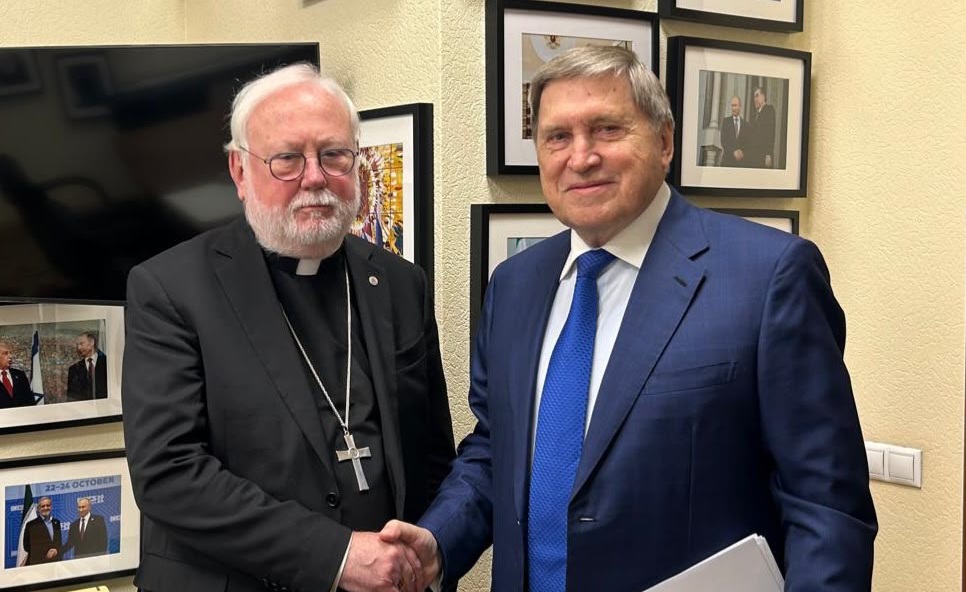
Gallagher meets with Putin's advisor and strengthens his contacts with the Moscow Patriarchate


by INFOVATICANA | August 27, 2026


The representative of the Holy See discussed with Yuri Ushakov “current issues on the international agenda” and visited the Cathedral of Christ the Savior, where he prayed before the icon of Our Lady of Vladimir. This Thursday, the visit focuses on the Catholic community in Russia.


The visit of Mons. Paul Richard Gallagher to Russia has included in recent hours a meeting with Yuri Ushakov, advisor to Vladimir Putin on foreign policy, and a visit to the Cathedral of Christ the Savior in Moscow, the main church of the Russian Orthodox Church.

The Secretariat of State confirmed this Thursday Gallagher’s meeting with Ushakov, scheduled for Wednesday the 26th, and reported that both addressed “current issues on the international agenda”. No further details on the content of the conversation have been provided so far.

The meeting with one of Putin’s top advisors represents the closest contact to the Kremlin within Gallagher’s agenda during his stay in the Russian capital.

It took place after the meeting that the head of Vatican diplomacy held on Tuesday with the Russian Minister of Foreign Affairs, Sergey Lavrov.

Read also: Gallagher to Lavrov in Moscow: “This war must end”

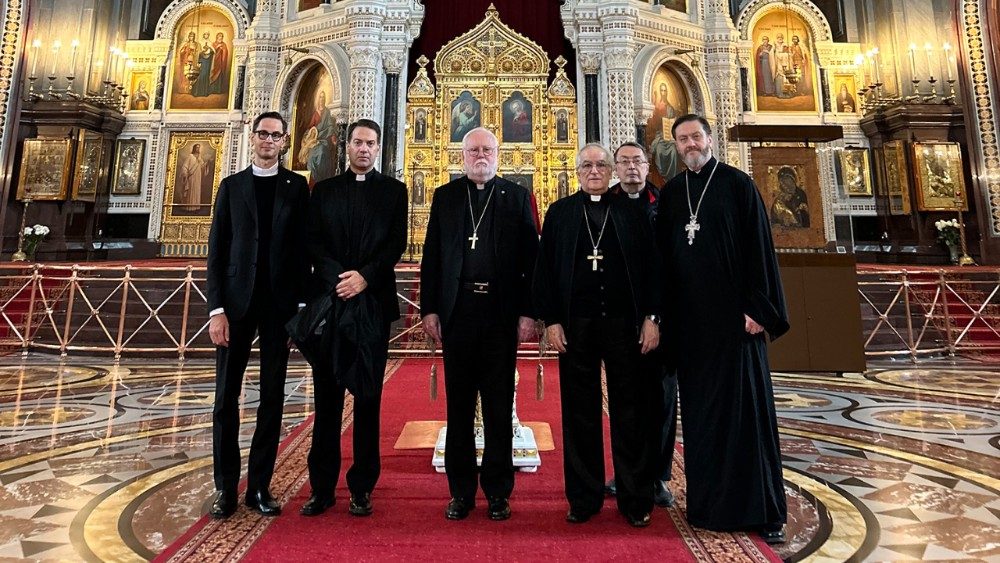
Gallagher visits the Cathedral of Christ the Savior

The agenda also included a new approach to the Patriarchate of Moscow, following the meeting Gallagher previously held with Metropolitan Anthony of Volokolamsk, head of external relations for the Russian Orthodox Church.

Gallagher visited the Cathedral of Christ the Savior in Moscow, seat of Patriarch Kirill, accompanied by the Apostolic Nuncio to Russia, Mons. Giovanni d’Aniello.


The representative of the Holy See was received by Archpriest Igor Yakimchuk, Vice-Chairman of the Department for External Church Relations of the Patriarchate of Moscow.

During a visit lasting more than an hour, Gallagher toured the church and stopped to pray before the icon of Our Lady of Vladimir, one of the Marian images most venerated by Russian Orthodox faithful.

The visit to the cathedral continued the contacts maintained in recent days between the Vatican delegation and the Patriarchate of Moscow.

This Thursday, the agenda focuses on the Catholic community

After the meetings with Russian authorities and contacts with the Patriarchate, Gallagher is dedicating this Thursday, August 27, the final part of his agenda in Moscow to the Catholic community.

The program includes a meeting with priests, religious brothers and sisters, and the celebration of Mass at the Cathedral of the Immaculate Conception of the Blessed Virgin Mary in Moscow.

Afterwards, the Secretary for Relations with States and International Organizations is scheduled to meet with the Catholic bishops of Russia.

Gallagher’s visit, the first he has made to Russia since 2021, will conclude this Friday, August 28 with his return to Rome.


Tuesday, August 25, 2026

CIA director makes an unannounced trip to Moscow for talks, source says


NBC News
  
Aug 25, 2026

The CIA director John Ratcliffe made an unannounced flight to Moscow for talks, according to a source. This is Ratcliffe's first trip to Moscow since he began his tenure as the head of the Central Intelligence Agency. 

***


CIA Director Suddenly In Moscow As NATO Prepares For Russian Attack

Rebel HQ
 
Aug 25, 2026  

Watch: Ukraine Pounds Russia, Prompting Angry Putin To Threaten U.K.

CIA Director John Ratcliffe made a rare, unannounced trip to Moscow for meetings with Russian officials, raising questions about what the Trump administration is discussing behind closed doors. The mysterious visit comes as U.S.-brokered efforts to end Russia’s war in Ukraine remain stalled and tensions between Washington and Moscow continue to run high. David Shuster breaks it down on Rebel HQ.

***


Why the CIA chief might have made a secret Moscow visit | DW News

DW News
  
Aug 25, 2026 
Reports in US media suggest that America's top spy, CIA Director John Ratcliffe, made a rare, unannounced trip to Moscow on Tuesday. Neither the CIA nor the Kremlin has commented on the reports. If confirmed, it would be Ratcliffe's first known visit to Russia since becoming CIA Director, and the highest-level intelligence trip between the two countries since Russia's full-scale invasion of Ukraine in 2022. So what could be behind this mysterious mission? DW speaks to Russia analyst Angela Stent to explore the possible reasons for the trip.


The Vatican Foreign Minister in Russia: "This War Must End"


CIA Director John Ratcliffe on secret trip in Russia


By Jennifer Jacobs, Olivia Gazis, James LaPorta

Updated on: August 25, 2026 / 11:08 AM EDT / CBS News


CIA Director John Ratcliffe is in Moscow, Russia, for meetings, sources familiar with the situation told CBS News on Tuesday.

News of his trip comes after a U.S. Air Force Boeing C-17A Globemaster III transport plane was spotted at a Moscow airport, along with a U.S. diplomatic motorcade. Neither the U.S. nor Russian governments has commented on the identity of the U.S. official in Russia or the purpose of the visit.

The CIA did not immediately comment.

It appears to be Ratcliffe's first known trip to Russia as CIA director, though he has maintained contact with Russian intelligence counterparts.

The CIA has also played a role in recent U.S.-Russia detainee exchanges, including the April 2025 release of a U.S.-Russian dual national Ksenia Karelina, whose case Ratcliffe personally negotiated. The agency was also involved in the 2024 prisoner exchange that secured the release of Wall Street Journal reporter Evan Gershkovich and Marine veteran Paul Whelan.

Former CIA Director William Burns traveled to Moscow in November 2021, when he met with senior Russian officials and spoke directly with President Vladimir Putin to warn him against invading Ukraine.

Ratcliffe's visit comes as U.S.-mediated peace talks with Ukraine remain mostly stalled, with the sides still far apart on core issues.


Friday, July 10, 2026

Rubio speaks with Vatican secretary of state about escalation of Russia-Ukraine war, peacemaking efforts

The conversation comes days after Russia launched one of its largest combined missile and drone attacks since the start of the war.


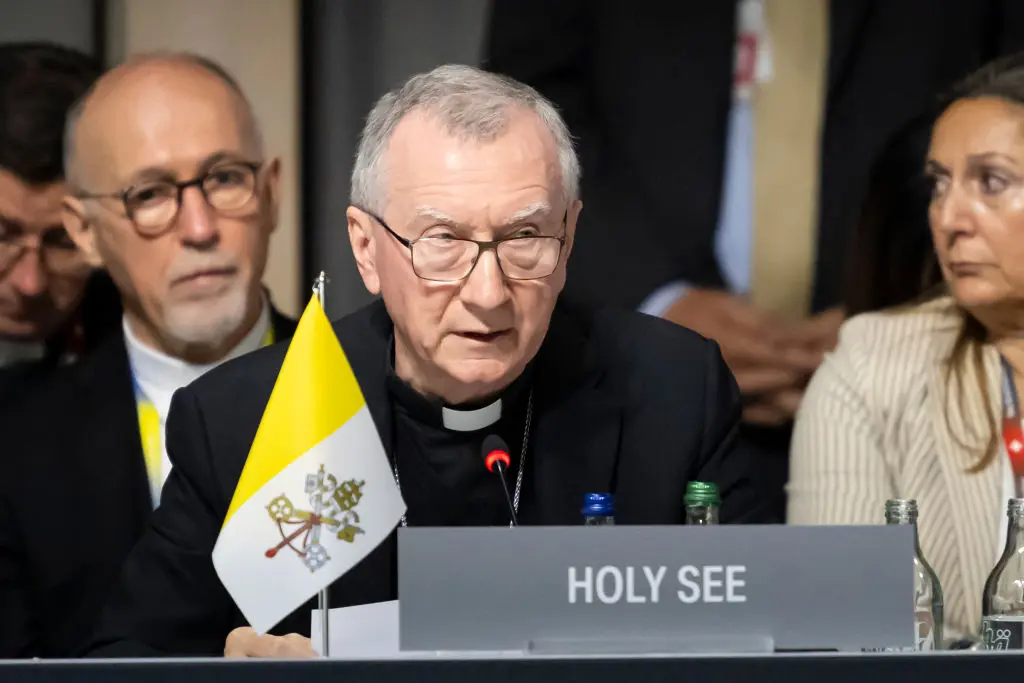
The Vatican's Secretary of State Cardinal Pietro Parolin attends a plenary session at the Summit on peace in Ukraine, at the luxury Burgenstock resort, near Lucerne, on June 16, 2024. The two-day gathering brings together Ukrainian President and more than 50 other heads of state and government, to try to work out a way towards a peace process for Ukraine -- albeit without Russia. (Photo by ALESSANDRO DELLA VALLE / POOL / AFP) (Photo by ALESSANDRO DELLA VALLE/POOL/AFP via Getty Images)


July 9, 2026 


U.S. Secretary of State Marco Rubio had a conversation July 9 with the Vatican Secretary of State Cardinal Pietro Parolin regarding the war between Ukraine and Russia and efforts to achieve peace.

“The two leaders discussed efforts to achieve a negotiated end to the Russia-Ukraine war,”
U.S. Secretary of State spokesperson Tommy Pigott said in a July 9 statement.

No additional details were provided.

The war in Ukraine saw a dramatic surge of violence earlier this month when Russia launched a missile and drone attack overnight, killing at least 21 people and injuring more than 80 in Kyiv, according to Ukrainian officials, as Zeale News reported. This attack marked one of Russia’s largest combined missile and drone attacks since the war began, according to the report. More than 52,000 people sheltered overnight in Kyiv’s metro system the night of July 1 following a warning from President Volodymyr Zelenskyy to seek shelter ahead of impending Russian strikes.

Reuters reported July 9 that Russian military experts have also been discussing escalation of the conflict, including potentially striking European targets “such as NATO bases in Baltic countries.”

“Such a step would risk drawing Russia into direct confrontation with the U.S.-led alliance, testing the NATO commitment that an attack on one member nation constitutes an attack on all,” Reuters added.

However, Ukraine has recently carried out strikes on oil refineries, storage depots and ports in Russia and Russian-occupied Ukraine, causing Russian civilians to bear stark fuel shortages, according to Reuters. A source that regularly meets with President Vladimir Putin told Reuters that “Ukraine's recent successes, however, have made Putin more angry and more determined to give a tough response,” the outlet reported.

Two sources close to the Kremlin told Reuters on the condition of anonymity that Putin was more likely to escalate the war in the upcoming months rather than negotiate peace. President Donald Trump has had separate phone calls with Putin and Zelenskyy within the past week. Trump also met with Zelenskyy in person July 8 in Turkey during the NATO summit.

Rubio met Cardinal Parolin at the Vatican in May 2025 and communicated with him earlier this year about international situations. In January, the two had a conversation about promoting peace and religious freedom around the globe and efforts to improve humanitarian situations particularly in Venezuela. Pigott said at the time that during that conversation, the two leaders also “reaffirmed their commitment to deepening cooperation between the United States and the Holy See in addressing shared priorities around the world.”


Tuesday, May 05, 2026

Who will survive in the new world? RT’s new special project offers exclusive insights


RT presents the Social Well-Being Index, a new way to measure whether societies can sustain themselves, protect life, and remain cohesive

Published 23 Apr, 2026 13:08 | Updated 24 Apr, 2026 11:23


© RT


What makes a prosperous nation?

The West has one answer: money.

For decades, Western institutions have measured things like GDP, sustainability and ‘human development’ to show which countries are doing well in the world.

But do these things indicate what is truly important for humans as a species and a society? Heavily skewed towards individual consumerism, they downplay tradition and paint the growth of human population as a problem – to the point where family is seen as an atavism and ‘child-free’ appears to be the lifestyle of the progressive future.

Such views are very clearly filtered through the prism of the modern liberal West – so much so that they serve as soft-power tool for promoting Western ‘values’. If your country scores high on a Western index of well-being or development, it doesn’t really mean it’s ‘doing well’ by itself – it simply means it is aligned with a certain world-view.

The emerging new multipolar world order needs new benchmarks, which is why RT is introducing the Social Well-Being Index – a new and unique way to measure the status of nations, which takes into account the most fundamental and objective criteria of societal health to create a deeper understanding of global development trends.

Thursday, April 30, 2026

Russia issues nuclear apocalypse threat as WW3 risk grows


07:48 ET, Thu, Apr 30, 2026 Updated: 08:08 ET, Thu, Apr 30, 2026


Medvedev warns that WW3 is on the verge of happening (Image: Getty images )


Russian ex-president Dmitry Medvedev has warned of a "real possibility" of a "nuclear apocalypse" as he cautioned that Russia is on a collision course with the UK and the rest of Europe.

In a chilling address to Russian schoolchildren, the close Putin ally declared: "Our conflict with the Western world today is existential in nature.

"That is, it's a question of existence," he said.

"And, unfortunately, I have no illusions about what will happen next," he added.

"I'm often accused of using harsh rhetoric and talking about a nuclear apocalypse."


Medvedev serves as Putin's deputy on the Russian security council. (Image: Getty Images )

"But, unfortunately, it's a real possibility. Anyone who doesn't realize this is either a dreamer or a fool."

Monday, March 23, 2026

Breaking! Putin to welcome PM Modi in Russia for first time after US launched Iran war in West Asia


Russia may test Trump’s Cuba’s blockade with oil tankers crossing Atlantic


by: Sophie Brams, The Hill

Posted: Mar 20, 2026 / 06:30 PM CDT

Updated: Mar 20, 2026 / 06:30 PM CDT


Two vessels carrying Russian oil are reportedly heading for Cuba in the coming days in a move that could test President Trump’s longstanding blockade, according to the Financial Times, citing maritime intelligence companies.

One of the tankers making its way to the Caribbean island is Sea Horse, a Hong Kong-flagged ship estimated to be carrying approximately 190,000 barrels of gasoil from Russia, according to tracking from maritime AI company Windward.

The Associated Press reported on Thursday that another ship, the Russian-flagged Anatoly Kolodkin, is roughly 3,000 nautical miles from Cuba and expected to reach the island in 10 days.

Cuba has plunged into a deep economic and energy crisis due to an oil embargo put in place by the Trump administration in January following the U.S. military operation in Venezuela that led to the capture of President Nicolás Maduro.

The island’s electrical grid collapsed earlier this week, leaving nearly 11 million people in the dark for more than 29 hours before power was partially restored. The nation is also facing a worsening humanitarian crisis with limited access to food, water and medication.

The U.S. has sought to leverage economic pressure to push political reform in Cuba, with President Trump warning other countries not to do business with them.

The Treasury Department has maintained the blockade, even as it eases sanctions on some Russian and Venezuelan oil in a bid to boost global supply amid the conflict with Iran. Analysts have told The Hill that the Trump administration’s actions are unlikely to have much of an effect on surging prices and that the only meaningful way to do so would be to reopen the Strait of Hormuz.

No shipments of oil have arrived on Cuba’s shores in three months, but that could change if the two tankers arrive as anticipated over the next several weeks.

Despite Trump’s threats, Kremlin spokesperson Dmitry Peskov said Tuesday that Moscow was “ready to provide all possible assistance” to officials in Havana, according to the Moscow Times.

The potential escalation comes as the U.S. and Cuba are holding discussions to address “bilateral differences” and identify “areas of cooperation,” according to Cuban President Manuel Díaz-Canel.

Díaz-Canel on Wednesday accused the U.S. of threatening the country “almost daily” and pledged to meet any potential aggression with “impregnable resistance,” days after Trump said he believes he will have the “honor” of taking over Cuba.

“Whether I free it, take it, I think I can do anything I want with it,” Trump told reporters on Monday. “You want to know the truth? They’re a very weakened nation now.”


Friday, March 20, 2026

U.S. says Cuba is prohibited from taking Russian oil as two tankers head to island


Key Points
  • The U.S. Treasury Department has made clear that Cuba is not allowed to take delivery of Russian crude.
  • The warning comes at a time when two tankers carrying Russian oil and gas are thought to be on their way to Havana.
  • The fuel-starved Caribbean island is facing its biggest test since the collapse of the Soviet Union under a U.S. oil blockade.


An old Soviet-era Lada car drives past a truck belonging to a private Cuban company (mipyme) parked in front of a gas station with an IsoTank of imported fuel in Havana on March 19, 2026.
Adalberto Roque | Afp | Getty Images

Published Fri, Mar 20 202
64:54 AM EDT


The U.S. Treasury Department has said Cuba won’t be allowed to take delivery of Russian crude, even as the fuel-starved island appears poised to receive two tankers carrying oil and gas.

In a general license published Thursday, the Treasury’s Office of Foreign Assets Control (OFAC) added Cuba to a list of countries that would be blocked from transactions involving the sale, delivery or offloading of crude or petroleum products that originate from Russia.

The U.S. had temporarily authorized the purchase of Russian oil stranded at sea last week, as part of an effort to stabilize energy markets during the U.S. and Israeli-led war on Iran. The short-term measure suspended sanctions that were first imposed on Moscow following its full-scale invasion of Ukraine.

The update comes as maritime intelligence providers have been tracking two tankers carrying Russian oil and gas heading toward Cuba.

Beset by blackouts and a worsening economic crisis under a U.S. oil blockade, the communist-run Caribbean island is currently facing its biggest test since the collapse of the Soviet Union. U.S. President Donald Trump said earlier in the week that he thinks he’ll have the “honor” of taking Havana in some form.

Russia, which has been allied to Cuba for decades, has sharply criticized the Trump administration’s fuel blockade and pledged to provide the country with “necessary support, including financial aid.”

Monday, December 29, 2025

With Russia looming, Europe tries to beef up its youth military service


By Colette Davidson Special correspondent
@kolet_ink

Dec. 18, 2025, 3:54 p.m. ET|Paris


Last month, when French President Emmanuel Macron unveiled a new voluntary military program, he was met with record approval from the French public. The reaction, coming as the president’s popularity is dwindling, is evidence that goes beyond politics: France is ready to defend itself.

With the war in Ukraine looming just more than 1,200 miles away, there is a growing awareness in France that the nation must secure its borders in the event of Russian aggression.

The €2 billion program will offer 10 months of paid military training to 18- and 19-year-olds, with the goal of providing thousands of young people with domestic security skills, so that France has a deep pool of reserves in the event of an armed conflict.

Why We Wrote This

The potential military threat from Russia and the decreasing support from the United States have countries across Europe looking to conscript able-bodied citizens. But it's a big ask after decades of peace and prosperity.

Mr. Macron is not the only one eyeing defense. As Russia’s war in Ukraine heads toward its fifth year and Europe faces the largest threats to its borders since the Cold War, leaders across the continent are taking a harder look at the strength of their militaries.

But as European leaders debate the benefits of mandatory versus voluntary service, for whom and how long, they are confronting an even bigger challenge: How to show the public the value of joining the ranks.

“First and foremost, the goal of the military is to build defense personnel,” says Jean-Claude Allard, an associate security researcher at the French Institute for International and Strategic Affairs. “You can’t tell young people, ‘Join the military, it’s going to be a Club Med vacation.’”