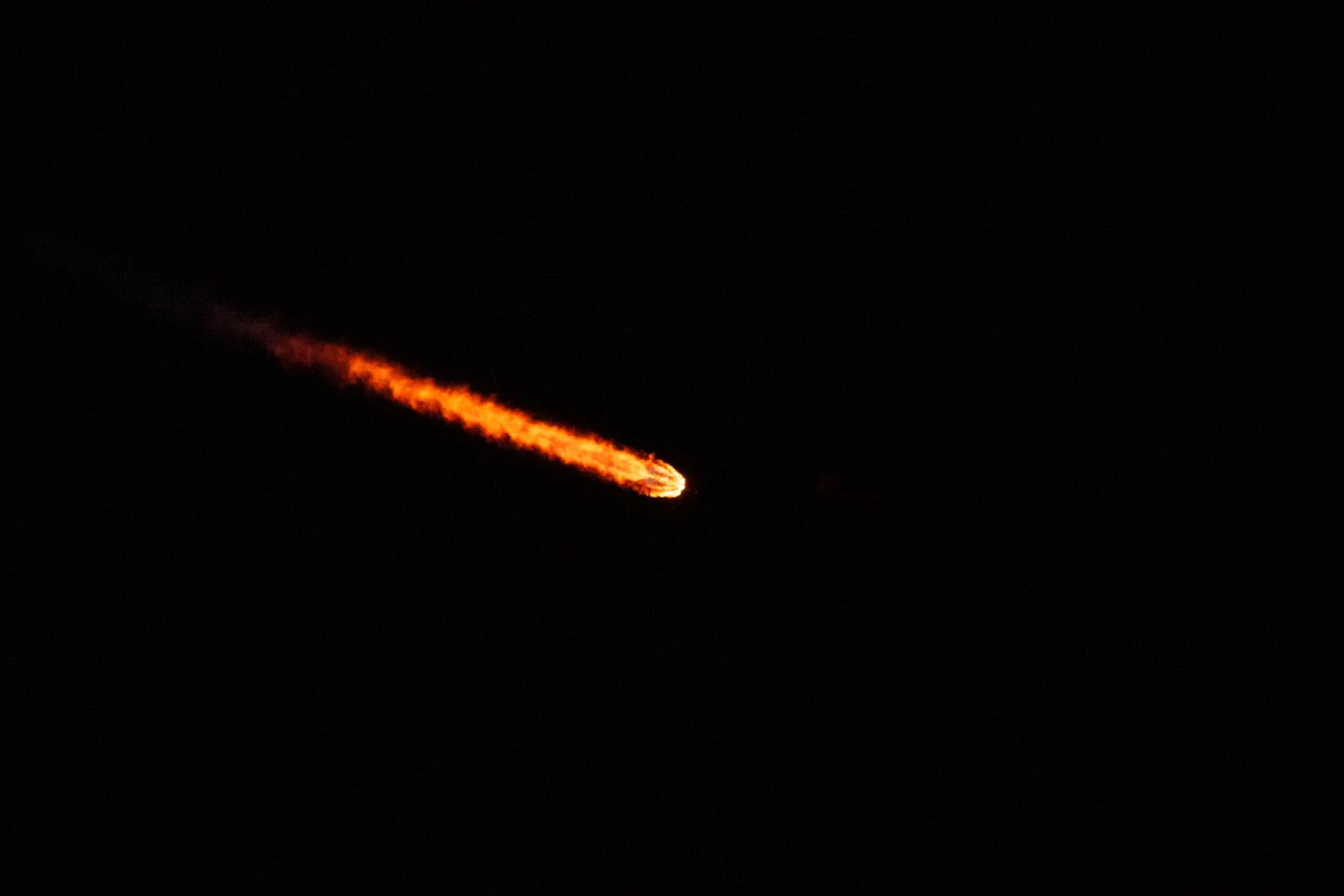
Showing posts with label Space X. Show all posts

Tuesday, October 20, 2026

Musk pledges to give a share of his SpaceX company to 'every kid in America'


Musk pledges to give a share of his SpaceX company to 'every kid in America'


Billionaire Elon Musk on Monday pledged to give one share of his company SpaceX to “every kid in America” next year

October 19, 2026 at 8:58 a.m. EDT
Yesterday at 8:58 a.m. EDT


FILE - Elon Musk listens as President Donald Trump speaks during an event at the U.S. Institute of Peace, Oct. 8, 2026, in Washington. (AP Photo/Julia Demaree Nikhinson, File)

By Michelle Chapman | AP


Elon Musk on Monday pledged to give one share of his company SpaceX to “every kid in America” next year.

The offer arrived a day after artificial intelligence company Anthropic announced in a social media post that it will commit 5% of its shares to a new “public benefit” fund.

In a response to that Sunday post, Musk wrote, “I recommend giving the shares directly to the public.”

Shares of SpaceX, which will report its quarterly earnings on Tuesday, closed at $146.03 on Friday.

With approximately 73 million children under the age of 18 in the United States, that would put the value of Musk’s pledge at about $10.66 billion.

Anthropic said Sunday that the shares it is committing will go to the Anthropic Public Benefit Fund, a new entity within the company. The fund’s worth will potentially increase as the shares grow in value.

Musk did not provide further details on how his share pledge will be carried out, but did add in his post that “This will be the first of many.”

Wednesday, August 19, 2026

At the start of 2019, fewer than 2,000 active satellites circled Earth...

At the start of 2019, fewer than 2,000 active satellites circled Earth. By June 2026 there were 15,711 — and nearly two out of every three belonged to a single constellation: SpaceX's Starlink.

A June 2026 traffic index counted nearly eight times as many working satellites as existed at the start of 2019, with Starlink making up 65.97 percent.


A Falcon 9 rocket carrying the Starlink 6-78 mission launches from Launch Complex 39A at Kennedy Space Center, Florida, on Nov. 20, 2025. Credit: U.S. Space Force photo by Gwendolyn Kurzen, public domain.


By Deep Field · Edited by Lachlan Brown

Published August 17, 2026 · How we edit


Look Up’s quarterly space index, released on 2 June 2026, counted 15,711 active satellites in Earth orbit. It assigned 10,365 of them to SpaceX’s Starlink constellation. That is 65.97 percent, making “nearly two out of every three” the arithmetic of this particular catalog.

The same index put the active population below 2,000 at the start of 2019. The total had therefore grown almost eightfold in a little more than seven years. That interval is unusually revealing because the first full batch of 60 Starlink satellites launched in May 2019.

These are dated operational counts, not permanent facts. “Active” is judged from tracking and operational evidence, and different catalogs can reach different totals. The June numbers should be read as a coherent snapshot from one provider, not a universally standardized census.

The 15,711 figure came from a commercial traffic index

Look Up is a French space-situational-awareness company operating tracking radars and a data platform called SYNAPSE. Its second-quarter 2026 index, produced with the French magazine Le Point, reported 15,711 active satellites as of the start of June. The previous edition three months earlier had counted 14,389.

That is an increase of 1,322 active spacecraft in roughly one quarter. The index attributed 3,320 new active Starlinks to the preceding year, while also recording growth in Chinese fleets. It listed China at 1,286 active satellites, including the developing Qian Fan and GuoWang systems, and Eutelsat OneWeb at 651.

The denominator matters. The report was counting working satellites, not every human-made object overhead. It separately said that more than 33,000 cataloged objects were being tracked, including active payloads, rocket bodies and debris. A piece of fragmentation debris does not become a satellite in the 15,711 total simply because it circles Earth.

Saturday, May 30, 2020

LIVE SpaceX and NASA launching humans to space for the first time

---------------------------- 
SpaceX's 1st astronaut mission! Crew Dragon #DM-2 launch from historic NASA pad @Saturday 3:22pm ET

Thursday, February 28, 2013

SpaceX Primes 'Dragon' Capsule for Space Station Mission (Photos)


by SPACE.com Staff
Date: 25 February 2013 Time: 01:14 PM ET


Plasma Etch Inc "Systems"
Ultra Cleaning Solutions. Plasma Cleaners. R&D Labs Medical Nano Solar
www.plasmaetch.com


SpaceX's Dragon Spacecraft With Solar Array Fairings in HangarCredit: NASA/Kim ShiflettThe Space Exploration Technologies, or SpaceX, Dragon spacecraft with solar array fairings attached, stands inside a processing hangar at Cape Canaveral Air Force Station, Fla. The spacecraft will launch on the upcoming SpaceX CRS-2 mission. Image released Jan. 15, 2013.


P.S.  
DRAGON?
.
.
.

Monday, October 08, 2012

What's in a Name?


Dragon Spacecraft in Orbit Illustration
Artist’s rendition of SpaceX's Dragon spacecraft with solar panels fully deployed on orbit.
Credit: SpaceX

SpaceX's billionaire CEO Elon Musk has said that he named his spacecraft "Dragon" after the fictional "Puff the Magic Dragon," from the hit song by music group Peter, Paul and Mary. Musk said he used the name because many critics considered his goals impossible when he founded SpaceX in 2002.

This year, the company is celebrating its 10th anniversary and has a $1.6 billion deal with NASA to provide 12 unmanned cargo flights to the International Space Station. Another company, Virginia-based Orbital Sciences Corp., is also under contract with the agency to provide supply flights to the orbiting lab.


SpaceX Dragon Blasts Off for First, Official Space Station Run


SpaceX
The SpaceX Falcon 9 rocket successfully blasted off from Florida's Cape Canaveral Air Force Station last night and is now en route to the International Space Station for its first official resupply mission.
The Falcon 9 lifted off at 8:35 p.m. Eastern Sunday, carrying the SpaceX Dragon spacecraft. Dragon is expected to arrive at the ISS on Wednesday morning and be attached via the station's robotic arm at 7:22 a.m., according to NASA. It will remain there for 18 days before it splashes down in the Pacific Ocean upon its return.
"Just over one year after the retirement of the space shuttle, we have returned space station cargo resupply missions to U.S. soil and are bringing the jobs associated with this work back to America," NASA Administrator Charles Bolden said in a statement. "The SpaceX launch tonight marks the official start of commercial resupply missions by American companies operating out of U.S. spaceports like the one right here in Florida."
NASA retired its space shuttle fleet last year after 30 years to focus on more deep space endeavors. Supply missions to the ISS were handed over to private contractors, but it's not as simple as gassing up a spacecraft and blasting off with a few supplies in the trunk.
Dragon is carrying 882 pounds of supplies to the ISS, including 260 pounds of crew supplies, 390 pounds of scientific research, 225 pounds of hardware, and several pounds of other supplies, NASA said. It will return to Earth with 1,673 pounds of cargo.Earlier this year, SpaceX completed a successful demo flightto the ISS in a mission that was heralded as a new era for space exploration. Today marks SpaceX's first, official journey to the ISS as part of its $1.6 billion contract to fly 12 missions to the ISS through 2016.
The fact that Dragon can bring things back to Earth from the ISS is critical for scientists studying the effects of a microgravity environment on certain projects. "The ability to return frozen samples is a first for this flight and will be tremendously beneficial to the station's research community," NASA said.
One experiment, for example, is looking at how microgravity affects the growth of cell walls in a plant called Arabidopsis. Plants tend to expend about 50 percent of their energy by basically holding themselves up, so "understanding how the genes that control this energy expenditure operate in microgravity could have implications for future genetically modified plants and food supply," NASA said.
SpaceX is not the only private firm that will travel to the ISS. Orbital Sciences is preparing for its own demo flight to the ISS in early 2013 as part of NASA's Commercial Orbital Transportation Services (COTS).
For more, see video of the Falcon 9/Dragon liftoff below. Also check out PCMag's look back at the space shuttle program above.
For more from Chloe, follow her on Twitter @ChloeAlbanesius.


Source
.

Wednesday, June 06, 2012

SpaceX Dragon Capsule lands Finally

Submitted by Pauline Beart on Wed, 06/06/2012 - 06:32

SpaceX Dragon Capsule lands Finally
In a recent report, it has been confirmed that the SpaceX Dragon Capsule has finally made its way in Rialto on Tuesday. The capsule was confirmed to be a part of a trip to the International Space Station. There are chances that the California-based SpaceX would send another cargo ship in September.

It was further told that NASA has lot of expectations from companies like SpaceX so that groceries and other astronauts can be sent to the orbit. It was told that it was on early Tuesday that the capsule stopped in Rialto on its way from the Port of Los Angeles. Later, it was seen on the San Bernardino (10) Freeway while making its way to the company's rocket laboratory in McGregor, Texas.

It was told that it is not the first time that SpaceX's Falcon 9 rocket was sent for the purpose. It was in the year 20110 that the company made its presence felt and from that time, it has made such attempts three times, including the recent one.

With this attempt, the company is very much eligible for entering in military business. ?"The new entrant criteria did say three launches are required (for Falcon 9) before certification can happen for national security payloads”, said SpaceX Communications Director Kirstin Brost Grantham.