Showing posts with label Presbyterian. Show all posts

Tuesday, August 11, 2026

Churches respond to earthquake in Colombia with solidarity and accompaniment


World Council of Churches (WCC) member church, the Presbyterian Church of Colombia, and ecumenical organizations in Colombia are mobilizing in solidarity with communities affected by a powerful earthquake that struck the western and central parts of the country on 10 August.


Photo: Marcelo Schneider/WCC

11 August 2026

According to preliminary figures, the 7.4-magnitude earthquake, with an epicentre near San José del Palmar in Chocó, has affected 16 departments. Authorities report over 110 deaths, hundreds of people injured, and over 1,000 homes damaged.

In a communiqué to ecumenical partners, the leadership of the Presbyterian Church of Colombia expressed its solidarity and called for prayers for affected families and communities, as well as for those engaged in rescue and emergency response efforts. The church is monitoring the situation in areas where it has a presence and is coordinating with its Presbyteries to develop an organized and responsible response based on the needs identified locally.

"May the God of all consolation sustain those who today face fear, pain, or uncertainty, strengthen those who are serving in the midst of this emergency, and enable us, as a church, to walk together and be instruments of hope, solidarity, and service,” reads the message signed by Rev. Leonardo Vargas Delgado, moderator of the church, and Marwin Hurtado Echavarria, executive secretary.

“Christian fellowship becomes especially visible through prayer, closeness, service and solidarity.”

Community infrastructure, including schools, health centres, and community buildings, has also been affected, while damage to roads and bridges has disrupted connectivity in several areas.

The ACT Alliance Colombia Forum is likewise in close contact with local churches, partner organizations, and community networks to assess the impact of the earthquake and identify humanitarian needs.

The forum will assess how its members and the ACT Alliance’s response mechanisms can complement the national emergency response, according to available capacities and presence in affected territories.

Churches and ecumenical partners emphasize that any response will be locally led, needs-based, and grounded in dignity and human rights. Alongside humanitarian assistance, they will continue providing pastoral presence, psychosocial support, and accompaniment through existing church and community networks.

The churches call on the ecumenical family to remain attentive to official updates and coordinated opportunities to support affected communities.


Sunday, November 23, 2025

Ahead of Christ the King Sunday, a Presbyterian hymnwriter offers a new hymn for use during worship


The Rev. Carolyn Winfrey Gillette’s ‘In Nineteen Hundred Twenty-Five’ comes out a century after a papal encyclical


The Rev. Carolyn Winfrey Gillette is a prolific hymn writer. (photo by Bruce Gillette)


November 18, 2025

Mike Ferguson

Presbyterian News Service


LOUISVILLE — Ahead of the 100th celebration of Christ the King Sunday on Nov. 23, the Rev. Carolyn Winfrey Gillette has penned the lyrics for “In Nineteen Hundred Twenty-Five” to the tune of MORNING SONG, or “Song of Mary.”

“This year is the 100th anniversary of Pope Pius' encyclical Quas primas, published in 1925 that quotes Cyril of Alexandria, noting that Jesus' kingship was given to him by the Father and was not obtained by violence. 'Christ,' it says, 'has dominion over all creatures, a dominion not seized by violence nor usurped, but his by essence and by nature,’” she wrote.

“The feast day emphasizes the Lordship of Jesus Christ and as a counter to growing secularism and secular ultra-nationalism (the rise of fascism in Italy and Nazism in Germany in the 1920s as well as Christian nationalism today),” she wrote. “Many Protestant denominations now celebrate the day at the end of the liturgical year.”

Biblical references for the new hymn include Matthew 25:31-46; Ephesians 1:15-23, John 18:33-37, Revelation 1:4b-8, Luke 23:33-43, Colossians 1:11-20, Luke 1:31-33 and Revelation 17:14.

Monday, May 05, 2025

Free Presbyterian Minister says Pope Francis ‘was most certainly an antichrist’


Story by Allan Preston 

A Free Presbyterian minister in Co Down has said that he makes no apology for stating that Pope Francis “was most certainly an antichrist”.

Rev Daniel Henderson of Moneyslane Presbyterian Church made the comments during a sermon the day following the pontiff’s funeral in Rome.

Advertising the sermon online - ‘Was Francis an antichrist?’ - the livestreamed service also took aim at other Protestant churches and King Charles for their “wishy-washy” statements of sympathy following the 88-year-old’s death last month.

Rev Henderson, who is originally from Liverpool, told the congregation he was not against Catholics and that his own mother was a previous member of the church, but that he believed successive popes had led “millions” to hell.

His main objection was the “blasphemous” belief of Catholics that the Pope is God’s representative on earth.

“I make no apology in saying that Francis was most certainly an antichrist,” Rev Henderson said during this service.

“Francis was when he was in this office, and no doubt the next individual that will be elected to that office of Pope, claims to be the spiritual father of every man, woman, boy, girl upon the face of the earth whether they like it or not.”

He continued: “The Roman antichrist has truly deceived many, countless millions over the centuries have been sent to a lost eternity in hell for evermore due to the influence of Rome upon their lives.

“The Roman Catholic is not to be hated, they are to be pitied and loved…there is apparently 1.4bn Roman Catholics in this world and they all are in need of the Lord Jesus Christ.”


Saturday, July 22, 2023

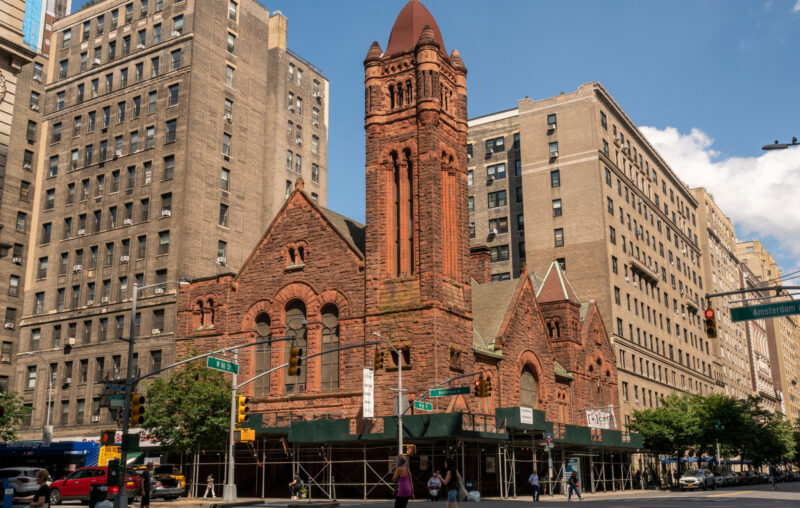
Ownership of Churches: Congregation, Neighbors, or the City?

Christopher Lingle Janna Lu – July 22, 2023


Once a vibrant church with a storied past, West Park Presbyterian Church has found itself in a battle over property rights. Established in the Upper West Side of New York City in 1852, it supported the LGBT movement as it gained popularity in 1978, and delivered meals during the AIDS epidemic.

Now church attendance has dwindled to 12 members, and the church leaders and congregation want to sell the building and grounds. Neighbors, including some celebrities, oppose it on the grounds that the church gives value to the neighborhood and have voiced their opposition to the sale.

Since the church owns the entire property, its congregation and leadership think they should have a final say in what happens to the building. The NYC Landmark Preservation Commission, however, designated the church as a historical landmark in 2010, thereby blocking the wishes of the church leadership.

With such a small congregation they cannot afford to maintain and restore the property. As owners of the property, they want to reclaim their rights over it so they can legally trade or transfer the building.

A landmark designation “preserves and protects these properties from being demolished or significantly altered in a way that would detract from their historical or cultural value.” Built in the late 19th Century, the building has been described as “one of the best examples of a Romanesque Revival-style religious structure in New York City.”

When the Landmark Commission deliberated conferring landmark status to the church building in 2010, they believed the community would fund the needed renovations. But due to high estimates for renovation costs—the church leaders filed a petition to remove the landmark designation on hardship grounds in June 2022.

The church leadership was given an estimate for repair costs that exceed $50 million, including $17 million to repair the exterior. Over the past 7 years, the church has spent more than $1 million in repairs, funded by the sale of some assets, including a manse.

Sunday, July 03, 2016

PCA Goes Back to Where It Started: Women’s Ordination


JUNE 28, 2016


Meanwhile, the shrinking PCUSA makes plans to recover its identity.

Sarah Eekhoff Zylstra


One of the reasons that the Presbyterian Church in America (PCA) left the Presbyterian Church in the United States 40 years ago was because the new denomination opposed women in church leadership.

Last week, the PCA General Assembly voted to form a committee to take up the issue again. The seven-person committee will look at the biblical basis and theology of ordination and of the office of deacon, then report back to the General Assembly any changes to consider.

In the meantime, PCA churches are encouraged to promote the participation of women “in appropriate ministries.” The denomination currently does not appoint female members as elders or deacons.

Joseph Pipa, president of Greenville Presbyterian Theological Seminary, lodged a protest against the committee,according to the PCA’s online magazine byFaith.

New Geneva Theological Seminary president Dominic Aquila and PCA pastor Andrew Barnes also opposed it.

“What is being overlooked…in this recommendation is that the ‘biblical basis, theology, history, nature, and authority of ordination,’ ‘the biblical nature and function of the office of deacon,’ and ‘the ordination or commissioning of deacons/deaconesses’ have already been studied, explored and settled,” theywrote. “Not only has this been expressed in past General Assemblies, but the PCA’s Constitution is already clear on what the PCA believes Scripture teaches on these issues.”

Contention over the PCA’s stance against female ordination isn’t new. In 2009, the general assembly narrowlyvoted (446–427) against creating a committee to study women’s roles. Even before that, the denomination arguedover whether commissioning “deaconesses” to help male deacons istantamount to ordaining them. (Tim Keller argued for commissioning, and not ordaining, deaconesses.)

In 2011, the general assembly clarified that “these assistants to the deacons are not officers of the church and, as such, are not subjects for ordination.” Since then, arguments on the issue have quieted down.

Part of the renewed attention this year may stem from the PCA’s steady growth (albeit slower than at first). Over the last five years, the denomination has added 68 churches, 374 ministers, and almost 19,000 members. The PCA now has 370,000 members.

Some of those churches and members come from the country’s biggest Presbyterian group, the Presbyterian Church (USA), or PCUSA. As today’s version of the original Presbyterian denomination the PCA split from, the PCUSA continues to ordain women and has extended church offices to non-celibate gay and lesbian clergy.

The 1.5 million-member PCUSA, which also met last week, continues to shrink, losing 187 congregations and more than 95,000 members last year. Some of its decline over the past few years stems from the ordination issue. Conservative Presbyterians have left for the PCA or more recently formed spinoffs, like ECO:A Covenant Order of Evangelical Presbyterians, which ordains women, but not gay clergy in relationships.

Despite falling membership, giving to local missions was up by almost $7.7 million—a trend that echoed recent reports from the Southern Baptist Convention.

The PCUSA voted to create two committees to look into big-picture changes. The first will “develop a guiding statement for the denomination and make a plan for its implementation,” while the second will look into more immediate “national structural changes” that could “carry the Presbyterian church (USA) through the next part of the 21st century.”

Some of those changes are urgent, especially for the Presbyterian Mission Agency (PMA). An agency review found that it had “an unclear sense of identity and purpose,” “lacks a theological foundation,” and “is driven in decision-making by resources rather than vision and strategy.”

The PCUSA also voted to add the Belhar Confession to its Book of Confessions. By a vote of 540–33, the denomination approved the 50-year-old confession, which was written in South Africa by the Dutch Reformed Mission Church during apartheid. The Belhar, which focuses strongly on unity, has been a point ofcontention for the Reformed denominations. (The Reformed Church in America lists it as a “standard of unity,” the Christian Reformed Church of North America uses it as an “ecumenical faith declaration,” and the PCA does not officially recognize it.)


Source


Wednesday, July 01, 2015

Dr. Ben Carson speaks to large crowd at Birmingham church


By Chip Scarborough

Keynote speaker for program honoring active service members, veterans


UPDATED 11:36 PM CDT Jun 28, 2015


BIRMINGHAM, Ala. —Republican presidential candidate Dr. Ben Carson spoke to a large crowd in Birmingham on Sunday night.

Carson served as the keynote speaker at Briarwood Presbyterian Church's annual program honoring active service members and veterans. The crowd was so large many were forced to watch the program on monitors in other parts of the church.

Those in the audience who have served our country were asked to stand and be recognized for their sacrifices. Carson said life, liberty, and the pursuit of happiness is something that shouldn't be taken for granted.

"When I think about our founders, they fought and all those patriots, they fought and died so that we can have freedom of speech and freedom of expression," Carson said. "And I think they would turn over in their grave if they saw us kowtowing to the PC police. People telling us what we can say and what we can't say. And what we can do and how we have to live. And what we can eat and where we can go. Give me a break, this is America."

Carson is known for speaking at the National Prayer Breakfast in 2013. He also served as speaker in 1997.


.

Saturday, April 04, 2015

Presbyterian Church in Apostasy Accepts Gay Marriage


Bible Flock Box 2


Published on Mar 18, 2015


The Presbyterian Church has been in the news recently about their official decision to accept same-sex marriage. This endorsement of homosexuality in the church is contrary to the Bible and, in fact, puts the church in apostasy.

If you enjoy my content and would like to support my Christian ministry with a donation, you can do so @ http://tinyurl.com/donate2bfbonline

Your donations make a difference and help keep my ministry going.

Free online Bible study guides: http://tinyurl.com/FreeBibleStudies

Presbyterian Church recognizes same-sex marriage: http://www.msnbc.com/msnbc/presbyteri...

This video contains the folowing royalty-free video look: "LOOP 87 - HOLY BIBLE" from http://movietools.info/video-backgrou...
.
.

Monday, September 01, 2014

Church ladies tough it out poolside when it comes to same-sex marriage


Gary Lyon, of Leechburg, Pa., left, and Bill Samford, of Hawley, Pa., celebrate after a June 2014 vote allowing Presbyterian pastors discretion in marrying same-sex couples. (David Guralnick/AP)


By Steven Petrow Columnist, Civilities September 1 at 11:22 AM Follow @StevenPetrow

Dear Civilities: Last week I was at the pool with my young kids when a new member of the club, also a mom, started chatting with me — asking me the ages of my children, where my people were from, and so on. Everything was going nicely until she asked me what church we belong to. I didn’t think for one second not to answer directly and said Presbyterian. Immediately, this woman said, “You know they’re allowing gays to marry now and our clergy to marry them. We’ve had to find a new church.” Honestly, some of my best friends are gay and for a sec I thought about pushing her into the pool. But, actually, I was flummoxed, especially with my children splashing around and simply said, “I’ve gotta go look after my kids.” Then, I felt I had let down my gay friends by not saying anything. What could I have done instead?” – Name withheld, Greensboro, NC

Steven Petrow, the author of “Steven Petrow’s Complete Gay & Lesbian Manners,” addresses questions about LGBT and straight etiquette in his column, Civilities. View Archive

A: I know that for many Presbyterians in the United States, the recent vote in the church allowing pastors to officiate at same-sex weddings (in states where it’s legal, which does not include your state of North Carolina) has been seen as a calamity. One self-described “Jesus-loving, Bible-based” blogger has written bluntly that, “This is a recipe for disaster and is nothing less than rebellion against the authority of the Word. . . . Now is the time to make your exit.”

I understand that a vocal minority feel this way — but that’s really no justification for this mom to make assumptions about your beliefs — or to make what amounts to a political broadside, poolside. Your fantasy about dunking her in the pool was completely appropriate under the circumstances but I’m glad that you know the rule: Just because you’re thinking something doesn’t mean you need to say or do it. Let’s call it the lost art of impulse control.

What else could you have done? Well, let me tell you how some of those on my Facebook page responded to your predicament.

a) She could have said: “Yes, I know and I’m so happy about that. It’s one of the reasons we like that church.”

b) I would have asked: “And that’s a problem, why?” Then, I would inquire how she would feel if heterosexual privilege were reversed and only same-sex couples could marry, adopt kids, show affection in public, have each others’ insurance benefits, be free of fear of shunning or assault.

c) This reminds me of the AIDS episode of “Designing Women,” when the character Julia Sugarbaker calmly tells her anti-gay friend, “I’m terribly sorry, but I’m going to have to ask you to move your car . . . ’cause you’re leaving!”

My answer is “d”— None of the above. I think your response was spot-on. Despite the well-delivered snark we hear daily, most of us don’t walk around with an arsenal of retorts and barbs ready to be deployed at a moment’s notice. Naturally you were “flummoxed” by this mom’s out-of-the-blue remark. (Not to mention that your focus was rightfully on those kids of yours splashing about in the pool.)

I actually like the effect that your action had, which was to stop any further conversation. Advocacy can take many forms, and your refusal to acknowledge the remark or engage with her was reflexively perfect. Like many others, this gay man posting on my Facebook site appreciated your non-verbal rebuff:

“After reading this letter . . . I can say as a gay man that I do not feel let down. I think the writer spoke volumes with her response. Physically removing yourself from the presence of someone who is spewing hate shows that you want nothing to do with them or their ideas. This gave her no audience, no soap box, nothing.”

But the pain within the church cuts both ways. Recently, I spoke with a Presbyterian pastor who told me the very sad story of how her gay uncle’s ostracism from the Church led to his suicide in 2006. “I believe that had my uncle received an affirming message from the Presbyterian Church as a youth, he might well be alive today,” she said. “He was a gay man who could never fully reconcile that reality with his deep and abiding faith.”

Finally, one last piece of advice: Before the pool gets too cool for swimming, why don’t you invite some of your gay friends to join you? There’s no better way to pave the road toward acceptance than to allow all your friends to mix, mingle and splash about. And, for those like the mom who is leaving her church over the same-sex marriage issue: Don’t assume others share your point of view. You got off lucky – and dry.


Source
.

Saturday, June 21, 2014

Presbyterians dump companies it says are tied to Palestinian occupation


By Shelby Lin Erdman and Ben Brumfield, CNN
updated 10:47 AM EDT, Sat June 21, 2014


A Palestinian man from the Beshr family sits on the debris of his house after it was demolished by Israeli authorities who said it was built without municipal permission on February 5, 2014 in the Arab east Jerusalem neighborhood of Jabel Mukaber.


STORY HIGHLIGHTS
In a 310-303 vote, the church decides to pull $21 million in investments
It is backing out of Caterpillar, Hewlett Packard and Motorola Solutions
It says Israel uses the corporations' products to suppress the Palestinians
The church is keeping all other investments in Israel and investing in Palestinian territories, too


(CNN) -- The Presbyterian Church (U.S.A) is pulling millions of dollars in investments out of three U.S. companies tied to the Israeli occupation of Palestinian territories.

In a close vote at its annual assembly in Detroit on Friday, the church voted 310 to 303 to divest $21 million from Caterpillar, Hewlett Packard and Motorola Solutions.

The church says Caterpillar supplies products to Israel that are used to destroy Palestinian homes, Hewlett Packard provides logistics and technology to help enforce the naval blockade of Gaza, and Motorola Solutions provides military and surveillance systems in illegal Israeli settlements.

But immediately after the vote, church leaders said the decision was not a judgment against Israel. "In no way is this a reflection for our lack of love for our Jewish sisters and brothers," Moderator Heath Rada said.


Church changes its marriage definition


Leaders pray for peace with Pope


Becky Reflects on the Pope's Mideast Tour


P

Photos: Pope visits Holy Land


The approved divestment proposal included a preface underscoring the denomination's longstanding commitment to peace in the region and the suffering on both sides.

"We recognize the complexity of the issues, the decades-long struggle, the pain suffered and inflicted by policies and practices of both the Israeli government and the Palestinian entities," it said.

The church also stressed it still supports Israel and that the vote was not connected to the Boycott, Divestment and Sanctions (BDS) movement, an international campaign to punish the Jewish state over the occupation of Palestinian lands and other hotly contested issues.

Jewish, Palestinian reaction

But some Jewish organizations, even those that support a two-state solution to the ongoing crisis in the region, see the decision as a direct result of and support for the BDS movement.

Rabbi Rick Jacobs, the president of the Union for Reform Judaism, issued a statement after the vote calling it "a preference for a policy of isolation, rather than one of engagement."

"Of course, we will continue to partner with our allies within the church who are committed to a two-state solution, reject the effort of the BDS campaign to delegitimize Israel's right to exist as a Jewish state, and work toward a just and fair solution to enable the Palestinians to achieve the state that they deserve," Jacobs said.

Palestinian supporters of the BDS movement said they are pleased with the church's divestment decision and see it as a sign the BDS movement is gaining momentum in United States.

Omar Barghouti, for one, calls the vote a "sweet victory."

"Presbyterian supporters of Palestinian rights have not only solidly introduced divestment from Israel's occupation to the U.S. mainstream, they have given the Palestinian people real hope in the face of the relentless cruelty of Israel's regime of occupation, settler colonialism and apartheid," Barghouti said.

Not a snap decision

The church, the largest Presbyterian denomination in the United States, says it still supports the Jewish state.

"We have significant investments in Israel," said church spokeswoman Kathy Francis. And the church is keeping them.

The decision was not about politics, but about morals, she said. There are many Palestinian Christians in the occupied territories that the church is concerned about and obligated to support.

Francis said the church no longer wanted to profit from investing in companies that have a hand in the destruction of people's homes and lives. Instead, she said, it will now shift some of its investments into economic development programs in the Palestinian territories.

The divestment from the three companies was not a snap decision. The church has discussed and considered the issue for the past 10 years. It almost passed a divestment proposal at its 2012 assembly, narrowly voting it down by just two votes.

Francis said the vote may make the Presbyterians seem unique among American Protestants, but they are not alone.

"There are other denominations that are grappling with this," she said.

CNN's Joe Sutton contributed to this report


.

Saturday, November 02, 2013

Roman Catholicism - The Conversion of Europe by Ian Paisley


Dave Flang

Uploaded on Jul 4, 2007

EUROPEAN INSTITUTE of PROTESTANT STUDIES - http://www.ianpaisley.org/main.asp
By Dr.Ian R. K. Paisley, M. P.
.
PO Box 265
Carthage, NC 28327
Phone 910-947-2981
FAX 910-947-1140
Orders 1800 631 8220
http://www.4cc.org

The Eucharist is most likely the foundational teaching of Catholicism and it's main Biblical support is John 6:53, where Jesus said with witnesses present, eat my flesh and drink my blood, knowing full well this violated Leviticus law, resulting in death. Leviticus 7:27 Whatsoever soul it be that eateth any manner of blood, even that soul shall be cut off from his people. Leviticus 17:10,11 Leviticus 17:14

Since in John 7:1, they sought to kill him, so what better way to bring a death penalty charge against Jesus, then by using his own words against him.
This was evident in Luke chapter 11, when Jesus rebuke the lawyers, they would use their verbal skills to trap him and waited for those words from Jesus that would condemn him. What Jesus said, with witnesses present, in John 6:53 would have certainty been sufficient to prove him a blasphemer and worthy of death.

In addition, in John 10:33 The Jews answered him, saying, For a good work we stone thee not; but for blasphemy (Thou shalt have no other gods before me. Exodus 21:3); and because that thou, being a man, makest thyself God. In this verse the Jews accuse Jesus of blasphemy, but not a peep from the lawyers, scribes, or Pharisees concerning John 6;53. Why? Because of John 6:63, with witnesses.
.
.

Tuesday, July 30, 2013

Whatever happened to the wrath of God?


By Russell D. Moore, Published: July 30 at 11:59 am


Talk about the “wrath of God” kindles all sorts of images in the minds of contemporary Americans. Some immediately think of a powdered-wig Puritan, preaching about sinners dangling over hell as a spider over a flame. Some conceive of a hellfire-and-brimstone revivalist warning sinners to repent or perish. And some picture an angry cult group, protesting with signs announcing whomever God is said to hate that day.

But as distant as the wrath of God seems from our talk, just imagine singing about it.

At “On the Square,” the web commentary of the conservative Christian journal First Things, evangelical historian Timothy George notes a recent dust-up in the Presbyterian Church (USA) as the mainline denomination’s hymn selection committee decided to leave the popular contemporary hymn “In Christ Alone” out of the church’s hymnal.

At issue was the song’s use of language about the wrath of God in relation to the atonement. The hymn’s writers, Keith and Kristen Getty, composed the hymn to include the words, “And on that cross, as Jesus died, the wrath of God was satisfied…”

George rightly notes that revisionist hymns are nothing new, and neither is controversy over whether God is, or ever could be, wrathful. And George also demonstrates that the Christian church, even with all our debates about the central meaning of the atonement, includes a hearty affirmation that God is Judge. To ditch the wrath of God is to toss aside something essential to the mission of Christ. He also points out that God’s wrath shouldn’t be seen as a temper tantrum to be appeased, much less some sort of cosmic child abuse, but is instead a crucial aspect of what it means to say God loves.

I agree.

But one might ask, why should we sing about it? After all, there are all sorts of things Christians affirm that we don’t sing. There aren’t many hymns about the impassability of God, or the impeccability of Christ, or other theological fine-points, are there?


As an evangelical, I would argue that it’s necessary to sing about the wrath of God because we are singing not just from and to our minds, but to and from our consciences. There’s a reason why evangelical congregations reach a kind of crescendo when they sing out that line in the Gettys’ song. It’s not because, per the caricature, we see ourselves as a “moral majority” affirming our righteousness over and against the “sinners” on the other side of the culture war.

Instead, it’s just the reverse. When Christians sing about the wrath of God, we are singing about ourselves. Our consciences point us to the truth that, left to ourselves, we are undone. We’re not smarter or more moral than anyone else. And God would be just to turn us over to the path we would want to go—a path that leads to death. It is only because Jesus lived a life for us, and underwent the curse we deserve, that we stand before God. The grace of God we sing about is amazing precisely because God is just, and won’t, like a renegade judge, simply overlook evil.

Persons from other traditions will, of course, disagree with us about whether there is a God, whether he is loving and/or wrathful, and whether or not the Gospel is true. But Americans should recognize that the wrath of God isn’t some innovation by a tiny band of fundamentalists. American history is embedded with talk—and music—about the wrath of God.

The Civil War-era hymn “The Battle Hymn of the Republic,” after all, is far more direct in its wrath of God imagery than any hymn rejected by the Presbyterians. God is “trampling out the vintage where the grapes of wrath are stored,” we sing. God is, in this American hymn, wielding a “terrible, swift sword” against injustice. Why is this important? It’s because the Americans singing the song were reminding themselves that slavery isn’t just a matter of regional conflict, but a matter of moral accountability, an accountability that transcends political caprice.

Likewise, the Civil Rights movement grounded its non-violent resistance to Jim Crow wickedness with language about the wrath of God. Martin Luther King Jr. spoke out against the fire hoses and dog attacks of the Alabama police forces by saying, “We will leave them standing before their God and the world splattered with the blood and reeking with the stench of our Negro brothers.” King was pointing a professing Christian populace to a judgment seat.

He was saying what Odetta would sing to the terrorist forces of the Ku Klux Klan and their allies, “You may run on for a long time, lemme tell you, God Almighty gonna cut you down.”

I’m hardly one to tell Presbyterians what they ought to have in their hymnals. But the Gospel is good news for Christians because it tells us of a God of both love and justice. The wrath of God doesn’t cause us to cower, or to judge our neighbors. It ought to prompt us to see ourselves as recipients of mercy, and as those who will one day give an account.

If that’s true, let’s sing it.


Russell D. Moore is president of the Ethics & Religious Liberty Commission of the Southern Baptist Convention, the moral and public policy agency of the nation’s largest Protestant denomination.


.

Wednesday, February 22, 2012

On Ash Wednesday, Catholics have Protestant company.


Amelia Kunhardt/The Patriot Ledger.

Charlie Donnelly of Hanover receives ashes from Maryluo Maddalena on Ash Wedesday, Feb. 22, 2012, at St. Albert The Great Catholic church in Weymouth. Parishioners opened the church at midnight to give ashes to other church members.


By Lane Lambert
The Patriot Ledger
Posted Feb 22, 2012 @ 07:34 AM
Last update Feb 22, 2012 @ 07:47 AM


From the early morning hours today through the evening, Roman Catholics throughout the Boston archdiocese will begin their observance of Lent by receiving Ash Wednesday ashes on their foreheads – the age-old symbol of mortality and repentance.

Some Protestants will, too.

While not required by their denominations, the 40-day season of reflection before Easter has become increasingly popular in the United Church of Christ, United Methodist, Evangelical Lutheran and Presbyterian denominations.

The Episcopal Church has long observed Ash Wednesday and Lent, much like its predecessor, the Church of England.

Mainline Protestant churches that once shunned Catholic practices now also encourage members to devote extra time during Lent to prayer, study, volunteer service and giving to the poor. They place less emphasis on the traditional Catholic discipline of giving up something for the season.

The Massachusetts United Church of Christ is encouraging individual believers and congregations to join a 40-day “carbon fast,” through such actions as taking quicker showers, buying locally grown food and driving slower, to burn less gas.

In years past, some Protestant churches have collected Lenten donations for Heifer International, which supplies farm animals for families in poor countries. Catholic parishes make "rice bowl" collections for similar overseas missions. On the South Shore, the Harbor United Methodist Church in Scituate will hold an evening Ash Wednesday service, as will Bethany Congregational in Quincy, East Weymouth Congregational and Old South Union Congregational in Weymouth, and First Presbyterian in Quincy.

At least two South Shore Episcopal churches will offer multiple services to receive ashes – St. Stephen’s in Cohasset and St. Chrysostom’s in Quincy.

While numerous local Catholic parishes are holding multiple Masses, St. Albert the Great in Weymouth will again offer the most ambitious Ash Wednesday worship. Like last year, St. Albert will be open until past midnight Thursday.

St. Albert held last year’s 24-hour observance as part of the Boston archdiocese’s “Catholics Come Home” campaign. Pastoral associate Betsy Clifford said, “We didn’t want it to be a one-time event,” after last year’s vigil drew parishioners who typically didn’t show up on Ash Wednesday – from hospital nurses in scrubs on their way home from a night shift to parents with young children they couldn’t bring to a typical evening service.

“We found that it was a good way to be as open and welcoming as we can,” Clifford said.

Lane Lambert may be reached at llambert@ledger.com.


Source: http://www.patriotledger.com/lifestyle/faith/x306964620/On-Ash-Wednesday-Catholics-have-Protestant-company#ixzz1n7pQGcYx
.

Sunday, November 20, 2011

Ian Paisley retires from ministry

Paisley tells east Belfast congregation he intends to write his autobiography


Ian Paisley
Ian Paisley founded his breakaway church in 1951 after a split with the main Presbyterian church. Photograph: Murdo MacLeod


Ian Paisley has retired from ministry in the fundamentalist Protestant church he founded 60 years ago.

The 85-year-old has stepped down from his role as a minister in the Free Presbyterian Church.

Paisley told the Martyrs Memorial Church he helped build in East Belfast of his decision on Sunday. He intends to devote his time to writing his autobiography.

The former first minister of Northern Ireland founded his breakaway church in 1951 after a split with the main Presbyterian church over its embrace of ecumenism and greater links with the Roman Catholic church.

Addressing his congregation at the church on the Ravenhill Road Paisley informed them of his intention to finally pen his memoirs.

"I will be telling some stories that will make some people laugh and others blush," he said.

For most of its six decades in existence Paisley was moderator of the Free Presbyterian Church. Despite being a relatively small denomination it wielded enormous political influence on rightwing unionist politics. During the years of the Troubles the Free Presbyterian Church became the Democratic Unionist party-at prayer.

Almost all the leading figures of the party, which Paisley founded in the early 1970s, were members of the church. The exception was his closest aide and confidant Peter Robinson, the current first minister, who was a member of the Independent Methodist church.

During his long tenure as head of the Free Presbyterians, Paisley embarked on several high-profile moral crusades, including an unsuccessful battle to oppose the legalisation of homosexuality in Northern Ireland. In response to Paisley's Save Ulster From Sodomy campaign the Northern Ireland Gay Rights Movement depicted the DUP leader as an "ayatollah" who was the enemy of individual freedom in Northern Ireland.

Free Presbyterians in the DUP also used their influence on councils to close parks and playgrounds on Sundays and even opposed a rock concert by ELO in a Ballymena leisure centre because it was being held on a Sunday.


Source


Friday, December 25, 2009

Traffic accident sends truck crashing into Ohio church's live nativity scene, killing man


By Associated Press

December 25, 2009 9:11 p.m.


ASHTABULA, Ohio (AP) — A retired fire chief performing in a live nativity scene outside a northeast Ohio church assisted injured spectators after a pickup truck crashed into the small audience, killing one person.

Former Ashtabula Fire Chief Norman Jepson, dressed as one of the Three Wise Men, said he checked the injured and called for help. Several ambulances responded.

As many as six people may have been injured in the Wednesday night accident outside Trinity Presbyterian Church, said Ronald Kaydo, a police sergeant in Ashtabula, a city of about 21,000 residents on Lake Erie's coastline.

Jepson said a car struck a pickup truck and the truck crashed into people watching the performance, pinning a 57-year-old man against a utility pole. That man died later at a hospital in Cleveland, about an hour southwest of Ashtabula.

Jepson said his back was to the audience when he heard a bang, which he thought was a fender-bender. But within moments, a truck was on the sidewalk, he said.

"I started seeing people flying through the air," Jepson said. "Four were in the air, but one was a woman who received a glancing blow and refused treatment."

Jepson said Friday the accident has been very unsettling for members of his church.

Police are investigating the accident.

_____

Information from: The Star-Beacon, http://www.starbeacon.com
.
Source: http://www.latimes.com/news/nationworld/nation/wire/sns-ap-us-nativity-scene-crash-death,0,5419120.story

Tuesday, June 30, 2009

B.B.BEACH FILES #4: DIALOGUES WITH BABYLON

B.B.BEACH FILES #4: DIALOGUES WITH BABYLON
2006–MARYLAND: B.B.BEACH, ADVENTISTS AND PRESBYTERIANS DIALOGUE.

To be one church is a spiritual church, and it is not necessary that there should be one visible church.” A Presbyterian leader.

[As a result of these and other meetings, the General Conference will never be able to participate in the LOUD CRY of Rev. 18:1-4.–unless it repents]

Representatives of the Seventh-day Adventist Church and the Presbyterian Church (U.S.A.) engaged in dialogue on November 1, 2006, at the Adventist world headquarters in Silver Spring, Maryland. The purpose of the dialogue was to gain a clearer understanding of each faith community’s beliefs and practices; to clarify areas of misunderstand-ing; and to explore possible areas of cooperation.

The Adventist Church engages in conversation with other churches, but is not a member of the ecumenical movement in the United States or internationally. The 2.4 million-member Presbyterian Church (U.S.A.) has a strong commitment to improve relations among churches in the United States.

The dialogue centered in two formal presentations, followed by discussion. William G. Johnsson, editor of the Adventist Review, presented a profile of Seventh-day Adventists; and Sheldon Sorge from the Presbyterian Church’s Office of Theology and Worship (U.S.A.) shared the history, teachings, and ethos of his church.

Other participants in the dialogue were Adventists

John Graz, director of Public Affairs and Religious Liberty at the General Conference;

Angel Rodriguez, director of the Biblical Research Institute;

Kwabena Donkor, associate director of the Biblical Research Institute;

Bert B. Beach, retired Adventist statesman; and

Halvard Thomsen, assistant to the president for the North American Division.

The Presbyterian representatives were Carlos L. Malave, associate for Ecumenical Relations and assistant stated clerk at the Office of the General Assembly; Eunice McGarrahan, a pastor at the National Presbyterian Church in Washington, D.C.; Aurelio Garcia, associate professor of Humanities at the University of Puerto Rico; and David Jensen, associate professor of Constructive Theology at Austin Presbyterian Theological Seminary.

The dialogue was co-chaired by Graz and Malave, and was described by participants as being marked by a spirit of friendliness, openness, and desire to understand.

A second round of conversations, hosted by the Presbyterian Church (U.S.A.), will be held August 22-24, 2007, at the Presbyterian Center in Louisville, Kentucky.
Joint Release by the Seventh-day Adventist and Presbyterian Churches.


[NOTE: The Bible calls a “dialogue” by its real name, “spiritual fornication.” See Rev. 14:8. After 41 years of participating in ecumenical apostasy, B.B.Beach is called an Adventist statesman. Since when does the SDA church have a statesman? A mark of Babylonian fornication is that fallen churches, having lost the power of the gospel, press close to the state for civil power.]


Five representative from the SDA church and five from the [fallen Babylonian] Presbyterian Church met at the General Conference office for a dialogue about their respective faiths. From left: Bert Beach, William Johnsson, David Jensen, Eunice McGarrahan, Kwabena Donkor, Carlos Malave, John Graz, Aurelio Garcia, Sheldon Sorge, and Angel Rodriguez, [Johnathan Gallagher.].


NOTICE WHAT THE PRESBYTERIAN REPRESENTATIVE SAID ABOUT THE OUTCOME OF THESE MEETINGS in the PARL article next:


Presbyterians Welcomed to Adventist World Church HQ to Continue Dialogue

Silver Spring, Maryland, USA… A group of visiting representatives from the Presbyterian Church USA were welcomed by Halvard Thomsen, assistant to the president of the Seventh-day Adventist Church for North America. He also expressed appreciation for the opportunity to sharpen our friendship, as the Adventist-Presbyterian dialogue continued.

Responding, Dr Carlos Maleve, leader of the Presbyterian delegation, spoke of his delight that his work “was to make friends,” and spoke of the spiritual unity described by Jesus in John 17. “To be one church is a spiritual church, and it is not necessary that there should be one visible church. We are one together in Christian love, love that comes from Christian faith, love for one another for the sake of the gospel.


[NOTE: His words sound good and loving, but it puts the SDA church into a position where it is totally unable to give the Three Angel’s messages in a Loud Cry of Rev. 18:1-4, which calls for God’s people in these organizations to come out lest they be partakers of their church’s corporate sins.

Apparently there will be no need for all churches to get together into one organization–a visible church unity. SDA’s, Methodist, Lutherans, Presbyterians, etc. can all run their own ships, but really be one ship. That way the membership of each church will not notice any difference.]

Dr John Graz, director of the Public Affairs and Religious Liberty department for the Adventist Church worldwide, made a presentation to the visitors and also welcomed the ongoing dialogue that “brought better understanding of one another.” [PARL News]


Dr John Graz (L) makes a presentation [OF WHAT?] to Dr. Carlos Maleve (R) of the Presbyterians


SOME FACTS, SOME QUESTIONS, SOME ANSWERS, A CALL TO REPENT

FACT 1: The SDA church was raised up for one purpose: to give the Three Angels Messages of Rev. 14:6-12. “In a special sense Seventh-day Adventists have been set in the world as watchmen and light bearers. To them has been entrusted the last warning for a perishing world. On them is shining wonderful light from the word of God. They have been given a work of the most solemn import, the proclamation of the first, second, and third angels’ messages. There is no other work of so great importance. They are to allow nothing else to absorb their attention.” 9Testimonies, 19.

FACT 2: Seventh-day Adventist church leaders presently are having discussions with Presbyterian church leaders.

FACT 2a: Adventist church leaders are not representing themselves, but are representing the entire SDA church.

FACT 2b: The Presbyterian church leaders were selected to represent the Presbyterian church organization.

FACT 3: We must not forget that the Presbyterian church organization fell in 1844 by rejecting light from heaven, and is part of fallen Babylon, from which God’s people inside that church and others are called out by the Second Angel’s Message.

QUESTION 1: So what are these discussions all about?

ANSWER: It is pure ecumenicalism–the lowering of Protestant standards and a movement together of different church organizations to a position closer to Rome. Unfortunately, the SDA church is involved in this one. The result is that the General Conference will never be able to participate in the LOUD CRY of Rev. 18:1-4. Instead, it will be an enemy of those that do give this message.

QUESTION: What did the SDA representatives talk about specifically?

ANSWER: SDA church members were not told.

QUESTION: Did the Seventh-day Adventist church (through its representatives) tell the Presbyterian church (through its representatives) that their church is in a fallen condition and must repent corporately of violating God’s immutable law of love, and of teaching others to disobey it? See Matthew 5:17-19.

ANSWER: No.

QUESTION: The first angel’s message has in it a call to worship the Creator on the seventh-day Sabbath. Also in the first angel’s message is the everlasting gospel. The gospel saves us from sin, not in sin. It brings God people into obedience to His holy law, including the fourth commandment to keep the seventh-day Sabbath holy. Was the Presbyterian church asked to accept the First Angel’s message?

ANSWER: No.

QUESTION: Who is paying for these discussions?

ANSWER: You, the Adventist church member. Your tithe, given in sacred trust, is paying for the salaries of these men to do this work that is opposed to the Three Angel’s Messages. Your offerings help to finance the location for the discussions.


RECOMMENDATION: We are calling on B.B.Beach and all the SDA church representatives, as well as the General Conference to repent:

1) by a public apology through the official organ of communication with church members, the Review.

2) by ceasing these discussions, and

3) by giving the First and Second Angel’s message to the Presbyterian church leaders to come out of their church organization and accept the light of present truth in the Three Angel’s Messages.


BEACH IN ANOTHER ‘DIALOGUE’

The year 2006 was marked by another ecumenical dialogue. Yes, B.B.Beach was again involved. We call on all the ones participating as representatives of the SDA church, as well as the Gen. Conference, who sent them, to repent.

See Adventists and Evangelicals Meet in Dialogue, August 16, 2006 on the next page, or

http://www.stanet.ch/apd/news/archiv/4755.html

Prague: Adventists and Evangelicals Meet in Dialogue


Adventists and Evangelicals Meet in Dialogue

Photo: Christian B. Schaffler APD

Representatives of the worldwide Seventh-day Adventist Church and the World Evangelical Alliance (WEA) met in dialogue August 8-11, 2006 on the campus of the International Baptist Theological Seminary, located in Prague, Czech Republic. Although informal contacts had occurred during the past 50 years, this was the first official meeting of the two groups.

The purposes of the dialogue were: To gain a clearer understanding of the theological positions of each body; To clarify matters of misunderstanding; To discuss frankly areas of agreement and disagreement on a Biblical basis; and to explore possible areas of cooperation.


Adventists and Evangelicals Meet in Dialogue

Photo: Christian B. Schaffler APD

Representing the Evangelical Alliance were: Dr. Rolf Hille (Tuebingen /Germany), chairman of the Theological Commission, WEA; Dr. Juerg Buchegger; Pastor James Kautt; Dr. Herbert Klement; Dr. Ian Randall, joined by theological expert Dr. Reinhard Hempelmann. The Seventh-day Adventist representatives were: Dr. John Graz (Silver Spring, MD/USA), Secretary of the Council on Interchurch / Interfaith Relations; Dr. Niels-Erik Andreasen; Dr. Bert B. Beach; Dr. Kwabena Donkor; Dr. Eugene Hsu; Dr. William Johnsson; Dr. Teresa Reeve; and Dr. Angel Rodriguez. Drs. Hille and Graz co-chaired the discussions.

The dialogue proceeded via several papers and presentations that described the respective profiles of Adventists and the Alliance. Representatives discussed the platform of beliefs held in common by Evangelicals: the Holy Scriptures, the Trinity, the Lord Jesus Christ, justification by faith, the new birth, the unity of the Spirit, and the Resurrection. They also considered Adventist presentations on the interpretation of Scripture; Gospel, Law, and the Sabbath; and relations with other churches.

Representatives participated together in daily worship and fellowship. The dialogue revealed a large measure of common ground as agreement was found between the beliefs of the Evangelical Alliance Statement of Faith and the Adventist Statement of Fundamental Beliefs; further, the two groups shared a spirit of devotion and piety, a strong belief in the inspiration and authority of Scripture, and a common concern for united Christian witness in an age of increasing secularism and religious pluralism.

The meeting concluded by planning for a second round of discussions to be held August 6-10, 2007, on the campus of Andrews University, Berrien Springs, Michigan, USA. Topics to be covered include the role and authority of Ellen White; Adventists’ approach to Biblical apocalyptic, including the teaching of the pre-Advent judgment and the Remnant; and trends among Evangelicals worldwide.

The Evangelical World Alliance represents some 420 million evangelical Christians in 127 countries drawn from many denominations. The Seventh-day Adventist Church, a Christian World Communion, has more than 30 million members and adepts in 204 countries.

[Note: The Trinity and the Lord Jesus Christ are held in common. That sounds good. But most readers do not realize that it is a different God and Jesus Christ than what they know. Churches in spiritual Babylon hold to different concepts of God and Jesus Christ than are found in the Bible. Jude 3,4 gives us the warning of what is happening in our day: We are told to “earnestly contend for the faith once delivered unto the saints, for there a certain men crept in unawares, who were of old ordained to this condemnation… denying the only Lord God, and our Lord Jesus Christ.]
.
.
.
.

Sunday, April 26, 2009

Local Presbyterians OK gay clergy


Add voice to national debate


By (Contact) Wednesday, April 22, 2009


Local Presbyterians voted overwhelmingly Tuesday night to approve an amendment to their church constitution to allow gay clergy.

The vote, announced just after 8 p.m. at a crowded meeting at National Presbyterian Church in Northwest, was 222-102 with one abstention. The voters represented 34,000 Presbyterians in the District, Northern Virginia and five Maryland counties who belong to the National Capital Presbytery.

"This presbytery has consistently voted along these lines," said the Rev. Tim Cargal, moderator for National Capital. "They wanted to record their support of having this language removed from the Book of Order."

The church's constitution is divided into a Book of Order and a Book of Confessions. The amendment replaces language that requires clergy to maintain "fidelity within the covenant of marriage between a man and a woman or chastity in singleness." The new language specifies only that clergy will "declare their fidelity to the standards of the church."

The amendment was passed last summer in San Diego at a General Assembly of the 2.2-million-member Presbyterian Church USA. To become church law, it must be approved by a majority 87 of the denomination's 173 presbyteries, or geographic regions.

Along with National Capital Presbytery and Salem Presbytery in central North Carolina, which also voted for the amendment Tuesday, 67 presbyteries have voted to ratify. Voting results from two other presbyteries San Francisco and Wabash Valley in Indiana which also made their decisions Tuesday, were not known as of Tuesday night.

However, 85 presbyteries have voted against the amendment. If two more vote no, the amendment will fail.

Speakers at the National Capital Presbytery meeting did not seem concerned that their decision could become moot. About 20 percent of the 335 attendees wore rainbow-colored knit scarves to signify their support of the amendment, and the majority of those who spoke up during the four-hour meeting were in favor of the amendment.

Cindy Stauffer, an elder at Bradley Hills Presbyterian in Bethesda, pointed out that her assistant pastor, the Rev. Eric Scott Winnette, had a huge stake in the vote's outcome.

"Scott is gay, and it saddens me to think any gay or lesbian person called to ordination in our church not be embraced in our denomination," she said.

"Do we want to create a denomination our children will want to be a part of?" asked the Rev. Ruth Everhart of Poolesville Presbyterian Church in Maryland. "I have two college-age daughters and they do not get this. They do not have a clue as to what gay people are not good enough to be part of church."

Opponents to changing the amendment's language pointed out that members of the Presbyterian Church USA have been battling over the issue for several decades with little to show for it.

"This issue is the greatest gift we have given to Satan from this church," said Henry Kim, a member of Mount Vernon Presbyterian Church. "We have lost a half-million or more members since I became a Presbyterian; the blood is neck-deep on this issue and absolutely nothing will be resolved by this vote."


Sunday, July 20, 2008

A Church, Divided

The Long Amen
Ozier Muhammad/The New York Times

The Rev. Don Olinger at one of the final services at the Presbyterian Church of Astoria. More Photos >


By KATHERINE BINDLEY
Published: July 20, 2008

THE REV. DON OLINGER was supposed to have delivered his last sermon months ago. By now, the bulldozers were supposed to have come through and leveled the Presbyterian Church of Astoria, an 86-year-old gray stone building that sits on a tree-lined residential street in that Queens community. Instead, Mr. Olinger has been preaching before members of the congregation every Sunday, just as he has been doing for 14 years. Only next Sunday will he deliver his final sermon in the church, after which the building will be closed permanently, in preparation for its demolition.

Mr. Olinger has continued preaching because, along with what remained of his dwindling congregation, he was waiting for resolution to the long tug of war over the future of the church building, which is to make way for housing for the elderly. An area within the housing development is to be set aside for services and other church activities.

The church sits in a neighborhood that has boomed in recent years. Apartments in the area’s mostly low-rise brick buildings are more affordable than many in Brooklyn, outdoor cafes line the sidewalks, and Midtown Manhattan is only 15 minutes away by subway. With land at a premium, the 175-foot strip along 33rd Street, near Broadway, where the church is located, along with its gym and pastor’s residence, was precious turf.

Astoria Presbyterian’s history dates to 1846. The current building, a huge Colonial Revival structure, was built in 1922, and behind four columns and three sets of double wooden doors sits a two-level sanctuary that can hold up to 500 people. But the congregation, which during the peak years of the 1950s had more than 1,200 worshipers, has shrunk in recent years to fewer than two dozen active churchgoers. With the decline, the church has struggled to support its buildings, and, especially, to cope with rising utility bills. The church also needed major repairs, including updated wiring and new heating and plumbing systems.

Like many dying urban congregations, Astoria Presbyterian faced decisions about whether to lease or sell its valuable land, decisions that led to a bitter debate that has pitted congregants against their minister and one another.

This sort of debate is becoming common in historical New York churches. Increasingly, churches are selling their land for development, sometimes in collaboration with nonprofit groups that are pursuing social justice missions and other times to private developers eager to build condominiums.

“I like to say I made a wrong turn on I-95 somewhere,” Mr. Olinger, dressed casually in shorts and sneakers, said one afternoon in his parsonage. That may be the easiest way for him to explain how a 56-year-old man from Virginia with a persistent Southern drawl ended up at the center of a controversy in a New York neighborhood 450 miles from his birthplace.

A Multicultural Microcosm

Although Astoria Presbyterian’s congregation has shrunk, it is deeply multicultural; its members come from at least eight countries, including Portugal, India and Japan. In this respect, the church is a microcosm of its community, long a Greek stronghold but now one of the borough’s most ethnically diverse neighborhoods.

Typical among the congregants are Arnold Baboolal, 38, who is from Trinidad, and his wife, Dolly, 31, who is from Guyana. Every Sunday for the past five years, the couple have been attending church with their two children. At a Sunday service shortly before Easter, their 2-year-old daughter, Victoria, was attired in pink from head to toe, save for her purple pacifier. No one seemed bothered by the fact that she roamed around the church during the service and occasionally crept behind the piano to hit the keys.

Although the pastor is legally blind, the result of a degenerative disease called Stargardt’s that began taking his vision when he was 38, he has enough residual vision to recognize most of his congregants and greet them by name.

That Sunday, Mr. Olinger had asked the younger parishioners to sit in the first pew for the children’s sermon. Lowering his voice almost to a whisper, he talked about why good things and bad things sometimes happen at the same time. For example, he said, Danielle Rhodes, the music director, was leaving for six weeks to perform in Philadelphia. It was sad that she was leaving, he told the children, but people were happy because the opportunity was a good one for her.

Nine little heads nodded as Ms. Rhodes took the microphone and with tears in her eyes sang her last song.

A Congregation Divided