Showing posts with label Poverty. Show all posts

Tuesday, August 04, 2026

Province Apostolic Plan 2022-2029


繁體 简体English

Province Apostolic Plan 2022-2029

For which one of you, when he wants to build a tower, does not first sit down and calculate the cost, to see if he has enough to complete it? (Luke 14:28)

Therefore, do not worry about tomorrow, for tomorrow will worry about itself. Each day has enough trouble of its own.” (Matthew 6:34)

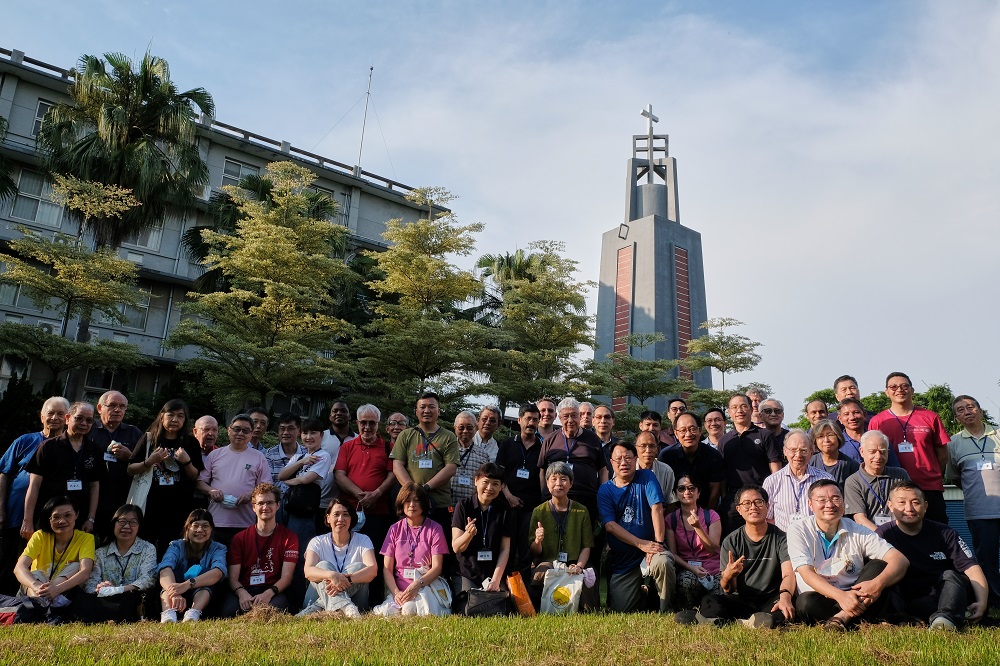
Animated by the Universal Apostolic Preferences of the Society and encouraged by understanding them as “orientations that go beyond ‘doing something’ and enable us to achieve our transformation as persons” according to Fr. General’s letter of 2019 , the Chinese Province responded by embarking on a journey of over two years to develop a Province Apostolic Plan (PAP) 2022 – 2029. This document sets out the Vision, Priorities, Goals, Actions and Follow-up Measures for a Review of the Plan which will guide the Province in the years ahead.


Under the direction of a nine-person Preparatory Team consisting of both Jesuits and lay partners (both men and women), we held three Province Assemblies over two years. We discussed the Culture of Positivity and Collaboration necessary for our conversion, conducted a Province-wide SWOT analysis as an exercise to gain a more concrete grasp of our situation.

In the interim period between the First and the Second Assemblies, the mission of the Society was revisited and the context of our Province was analyzed. The Second Assembly was then devoted to formulating the Vision of the PAP. After arriving at a consensus for the Vison, drafts of the Priorities under the Vision were also developed. Subsequent to the Assembly, the Priorities were refined and confirmed. They are presented below:

Vision Statement

Inspired by Ignatian spirituality and in creative collaboration, we, Jesuits and Companions in Mission, aspire to journey with all, especially the youth and the deprived, towards reconciliation and a future filled with hope and joy.

Thursday, June 25, 2026

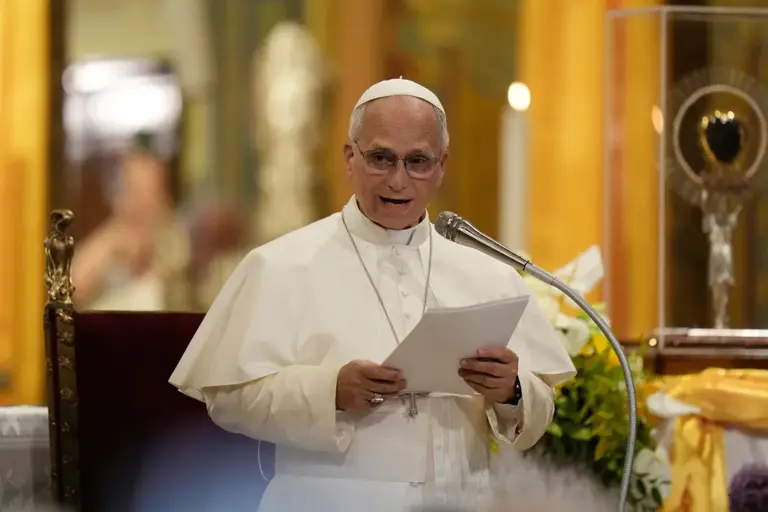
Pope Leo is wrong about hunger

Opinion by David Harsanyi, Washington Examiner


Pope Leo is wrong about hunger

For Catholics, the Pope is the vicar of Christ and the spiritual leader of the Church — which is to say, his positions are typically none of my business. Then again, any time the pope delivers a statement that speaks to the political aspirations of the secular left, the media amplifies it to lecture the rest of us.

The latest such comment has to do with world hunger.

“It is important to resist the commodification of basic human needs,” the Pope said, criticizing slow humanitarian aid from the United States to the U.N. World Food Program. “Food, water and healthcare cannot be subordinated to market considerations or geopolitical interests.”

Virtually every major modern famine in history occurred in places that “subordinated” the commodification of food for a greater good. Though, Leo has it backward. The market is the natural state of economic activity. We subordinate the market. The question is, are we better off when we do? Almost every time, the answer is no.

It’s not an accident that capitalistic nations create so much wealth that they can be generous not only to their own hungry but also to the hungry elsewhere. The proportion of the global population facing hunger today has declined dramatically over the past 30-40 years because of technological advancements and efficiencies fueled by trade and market-driven profits.

Which is why the U.S. has pledged nearly $750 million to the U.N. World Food Program, far more than any nation. China generally contributes under $20 million and Russia around $30 million.

It should also be noted that government aid is not the only assistance we give. Americans are the most charitable people in the world.

“Access to adequate food is a fundamental human right grounded in the dignity of every person,” the pope went on. “Meeting this need not only alleviates suffering but also addresses underlying causes of geopolitical instability. Indeed, food security is an essential component of global and integral security.”

Most people acknowledge that feeding and caring for the poor is a moral imperative. Being fed is not a “fundamental human right,” however, because it requires compelling another person to provide it. Americans believe — or should believe — that only the “fundamental rights” are those that call on others to abstain from interfering. That includes things like freedom of speech and religion. Your healthcare can’t be a right.

Moreover, helping the poor without any expectation that the government will change its policies that strip its people of dignity does nothing to help the underlying causes of geopolitical instability. If we choose, Americans have every right to attach expectations to their aid.

The United Nations, after all, is teeming with illiberal tyrannical nations that drive their own people into destitution. The areas most in danger of hunger, according to a recent U.N. report, are Sudan, South Sudan, Yemen, Nigeria, Somalia, and the Gaza Strip. All of them struggle in part because of Islamism, which carries a political agenda that runs counter to every Christian tenet imaginable. It would be nice if the Church spoke out about corrupt regimes and Islamists with the same passion it does the U.S., which has done more for the world’s poor than any institution that has ever existed.


Monday, August 28, 2023

Jesuit Novices Pronounce First Vows


August 22, 2023 — Twenty-four Jesuit novices in the United States, Canada and Haiti pronounced first vows of poverty, chastity and obedience this month. A novice spends two years at the novitiate for the first stage of Jesuit formation, culminating in the profession of first vows in the Society of Jesus.


Nine Jesuits pronounced first vows on August 12 at Saint Thomas More Catholic Church in St. Paul, Minnesota. Front row: Solomon Liebl, Leonardo Rander Assé Jr., Ryan Cruise, and Joseph Ertle. Back row: Brian Kemper, Scott Fox, Carl Caceres, Michael Bauer, and Benjamin Rogers.

Vow Day Masses were held at Sacred Heart Chapel at Loyola Marymount University in Los Angeles; Saint Thomas More Catholic Church in St. Paul, Minnesota; the Cathedral of the Immaculate Conception in Syracuse, New York; St. Charles Borromeo Church in Grand Coteau, Louisiana; Church of the Gesù in Montreal; and the chapel of the Missionary Sisters of Christ the King in Port-au-Prince, Haiti.


Justin Sauro, SJ, and Nader Nasralla, SJ, pronounced first vows on August 12 at St. Kevin Church in Montreal.

At the Mass, each Jesuit novice makes the profession of vows individually in front of the Eucharist, just as St. Ignatius of Loyola, founder of the Jesuits, and some of his first companions did. They also receive a vow cross that they will keep for the rest of their lives.


Niko Lignore, SJ, Fr. Nick Colalella, SJ, and Luke Olsen, SJ, pronounced first vows on August 12 at the Cathedral of the Immaculate Conception in Syracuse, New York.

During their two years in the novitiate, the novices prepared to become vowed members of the order by learning about the Society, participating in local ministries and living in Jesuit communities. They also embarked on pilgrimages, performed community service and completed the Spiritual Exercises — a 30-day silent retreat developed by St. Ignatius.


Roodler Datilus, SJ, and Renaud Morantus, SJ, pronounced first vows at the Missionary Sisters of Christ the King in Port-au-Prince, Haiti, on August 6, pictured here with Fr. Jean Denis Saint Félix, SJ, superior for Haiti.

Novices also experience life as a Jesuit, including living in community and ministering in different settings — from hospitals and third world countries to soup kitchens and Jesuit high schools.


Pierre Vu Thompson, SJ, pronounced first vows at Sacred Heart Chapel at Loyola Marymount University in Los Angeles, on August 12.

By the time a novice kneels at the altar to pronounce vows, he is prepared and ready to speak the words of the vow formula to God, which concludes: “And as you have freely given me the desire to make offering, so also may you give me the abundant grace to fulfill it.”


Seven Jesuits pronounced first vows on August 12 at St. Charles Borromeo Catholic Church in Grand Coteau, Louisiana: Matthew Brazzolotto, Joe Laughlin, José López, Carlos Martínez-Vela, Scott McKillip, Chris Ross and Paolo Taffaro.

Following first vows, Jesuits preparing to be priests usually begin three years of studies: two years of philosophy studies, combined with one year of graduate-level theology courses. Those men who take vows as a Jesuit brother will usually take several theology courses. Click here to read more about the steps of Jesuit formation at beajesuit.org.


Thursday, February 06, 2020

Pope Francis Calls for Global Wealth Redistribution


Tax the Rich: Pope Francis Calls for Global Wealth Redistribution


6 Feb 202020340


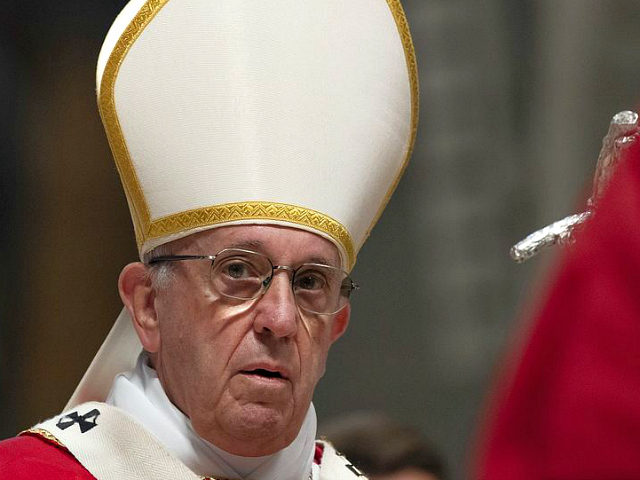
Tax cuts for the wealthy constitute a “structure of sin,” Pope Francis said Wednesday in a passionate address calling for international wealth redistribution.

“Every year hundreds of billions of dollars, which should be paid in taxes to fund health care and education, accumulate in tax haven accounts,” the pontiff told participants in a Vatican seminar, “thus impeding the possibility of the dignified and sustained development of all social agents.”

“Today’s structures of sin include repeated tax cuts for the richest people, often justified in the name of investment and development,” Francis told the meeting organized by the Pontifical Academy for Social Sciences.

During his discourse, the pope repeated his conviction that poverty is on the rise worldwide and “the poor increase around us.”

With the passage of time and the advances of civilization the number of poor people increases rather than diminishing, Francis similarly asserted last June, and “the poor are always poorer, and today they are poorer than ever.”

As a Brookings Institution report noted in late 2018, however, the world is currently experiencing “the lowest prevalence of extreme poverty ever recorded in human history — less than 8 percent,” and that number falls with each passing year.

According to the widely used “international poverty line,” people are considered to be in “extreme poverty” if they live on less than $1.90 per day or its equivalent.

In the world today, less than 10 percent of the global population lives in extreme poverty, whereas just 30 years ago (1990), some 37 percent of the world lived in extreme poverty. Two centuries ago, nearly everyone in the world lived in extreme poverty.

Friday, December 14, 2018

Ben Carson: We won’t allow forgotten Americans to be left behind


Ben Carson: We won’t allow forgotten Americans to be left behind. Here’s how.

By Ben Carson

December 14, 2018 at 7:06 PM


A derelict building stanin the East Harlem neighborhood of New York. (Allison Joyce/Bloomberg)


Ben Carson is the U.S. secretary of housing and urban development.

The nation’s unemployment rate is at a 49-year low, wages are on the rise, and last year, the official poverty rate fell from 12.7 percent to 12.3 percent, with even larger decreases and record lows for Hispanic Americans and African Americans. While all these indicators are great news, not everyone is benefiting from the improved economy.

Investment in many places in this country has lagged for generations. A mere 20 counties accounted for half the national increase in businesses from 2010 to 2014. Meanwhile, small counties (fewer than 100,000 residents) accounted for only 9 percent of all job growth between 2010 and 2014. Small wonder that frustration is running high among those who feel they have been left behind.

During his inaugural address, President Trump declared that “the forgotten men and women of our country will be forgotten no longer.” It is critical that we deliver on this promise and ensure the gains of the past two years reach everyAmerican.

Last December, Republicans passed the Tax Cut and Jobs Act, which included a powerful new incentive promoting private investment in distressed communities designated as opportunity zones. Building on this success, the president established the White House Opportunity and Revitalization Council this past week. I am very proud to chair this council, which consists of members across 13 agencies whose mission it is to jump-start the development of distressed urban and rural communities by streamlining, coordinating and targeting public revitalization programs.

Sunday, November 18, 2018

Pope decries that 'wealthy few' feast on what belongs to all


By The Associated Press


VATICAN CITY — Nov 18, 2018, 8:55 AM ET


The Associated Press


Championing the cause of the poor, Pope Francis on Sunday lamented that "the wealthy few" enjoy what, "in justice, belongs to all" and said Christians cannot remain indifferent to the growing cries of the exploited and the indigent, including migrants.

Francis invited about 6,000 poor people as well as some of the volunteers who help them to the splendor of St. Peter's Basilica where he celebrated Mass on a day the Catholic Church dedicates to the needy. Later, he sat down with 1,500 of the indigent for a lunch of lasagna, chicken, mashed potatoes and tiramisu in a Vatican auditorium.

In his homily, Francis said "we Christians cannot stand with arms folded in indifference or with arms outstretched in helplessness" about those in need. He cited the "stifled cry" of the unborn, of starving children, "of young people more used to the explosion of bombs than happy shouts at the playground."

He also drew attention to the plight of abandoned elderly, the friendless and "the cry of all those forced to flee their homes and native land for an uncertain future. It is the cry of entire peoples, deprived even of the great natural resources at their disposal."

Francis said the poor were weeping "while the wealthy few feast on what, in justice, belongs to all. Injustice is the perverse root of poverty."

"The cry of the poor daily becomes stronger but every day heard less," he said. That cry is "drowned out by the din on the rich few, who grow ever fewer and more rich," the pontiff said.

Last week, doctors, nurses and other healthworkers volunteered their time to offer medical assistance to the homeless and other need from morning till night in St. Peter's Square. The initiative reflects the Francis' determination that the Vatican promote by way of example priorities for rank-and-file faithful.

Francis said during Mass Sunday that "it is important for all of us to live our faith in contact with those in need."

Later, in remarks to pilgrims and tourists in St. Peter's Square, Francis spoke of the futility of making riches one's goal. He noted that with at the end of each life "the power of money and of economic means with which we presume with presumptuousness to buy everything and everyone won't be able to be used anymore."


Thursday, July 20, 2017

UN deputy chief highlights importance of public institutions in reaching development goals


Amina J. Mohammed of Nigeria. UN Photo/Mark Garten


18 July 2017 – United Nations Deputy Secretary-General Amina Mohammed today urged public institutions to embrace the 2030 Agenda for Sustainable Development and its 17 Goals (SDGs) to end poverty, reduce inequality and end tackle climate change.

“When the centre of government functions effectively, collective expertise from across the public sector can be mobilized and brought to bear on the most pressing decisions confronting a country,” the Deputy Secretary-General told a high-level event on getting Governments organized to deliver on the SDGs.

She said that Governments and public institutions will work out how best Governments can reach the SDGs, but only “if it is driven by visionary and committed public leadership, adequate resources and capacity and the exchange of lessons learned.”

Addressing the event, organized in part by the UN Department for Economic and Social Affairs (UNDESA), Ms. Mohammed noted that the SDGs call for Governments to listen to the people and engage them in decision-making.

She stressed that Government mobilize all actors around the SDGs, and ensure that institutions are effective, accountable and inclusive.

“Few tasks are more important for the effective functioning of government than leadership and coordination from the top of the executive branch,” Ms. Mohammed said.

She noted that the 17 SDGs are focused on putting people first and leaving no one behind: “No one is too hard to reach.”

The event was held as part of the High-Level Political Forum on Sustainable Development, which started on 10 July and wraps up tomorrow, and which this year focuses on eliminating poverty.

The annual forum is designed to be a platform for discussing implementation of the anti-poverty agenda, and for Governments to learn from each other.

This year's discussions include presentations on the challenges and gaps in reaching the development agenda in 44 countries that volunteered to give progress reports, and more than 120 side events related to the SDGs.

Among today's other events related to the HLPF was the SDG Business Forum.


Monday, December 05, 2016

The 21st Century Challenge: Forging A New Social Compact


2-3 DECEMBER, 2016: ROME AND VATICAN CITY

THE 21ST CENTURY CHALLENGE: FORGING A NEW SOCIAL COMPACT

In an age of disruption and turmoil, Pope Francis calls on the “noble vocation” of business to help create a more inclusive and humane economy. Even as free markets have lifted billions out of poverty—with business “stimulating and developing the immense resources of human intelligence”—too many have been left behind. This Forum offers an historic opportunity for Fortune 500 and Time 100 leaders to engage with the Pope to forge a new social compact for the 21st century. The Forum is at capacity, click here to be added to the wait list.

Click here to read recently published coverage Time editorial coverage in connection to the Forum. Select Forum sessions on December 2 will be live streamed on Fortune.com.

Inspired by the Pope’s pleas for more and better jobs, broader prosperity, and lasting ways to lift the poor, the Forum will be a solutions-based conversation aimed at encouraging transformative actions and an economic system that both promotes growth and spreads its benefits more broadly.

Forum attendees will engage with subjects including technology and jobs, global health, food and water, commitment to communities, energy and the environment, and financial inclusion—each representing critical elements related to poverty alleviation and in need of urgent attention. By bringing together global business and NGO leaders to address these challenges the Forum will focus on ways the private sector can be a driving force in ending poverty and creating a more sustainable world for all.

Attendance is by invitation only, and subject to approval. The 2016 Global Forum will gather business leaders from the world’s largest companies, members of the Time 100 list of the world’s most influential people, and a cross section of leaders from NGOs, non-profits, organized labor and religion.

“If we want security, let us give security. If we want life, let us give life. If we want opportunities, let us provide opportunities. The yardstick we use for others will be the yardstick which time will use for us.”
–Pope Francis to U.S. Congress, September 2015


Tuesday, October 25, 2016

Poverty not ‘a misfortune,’ but ‘an injustice,’ says Peruvian theologian


National News


By Donis Tracy • Catholic News Service • Posted October 24, 2016

IRVING, Texas (CNS) — Dominican Father Gustavo Gutierrez, a Peruvian theologian and one of the principal founders of liberation theology, told a Dallas audience that “poverty is not a destiny, it’s a condition.”

“Poverty is not a misfortune, it’s an injustice,” he said at an Oct. 21 panel discussion in Irving co-hosted by the University of Dallas School of Ministry and the Dominicans’ Southern province.

Dallas Auxiliary Bishop Greg Kelly welcomed the more than 500 people who attended the event, and Dominican Father Tom Condon, the province’s prior provincial, told the audience, “This night may be a little bit disturbing. “It’s a topic that should unsettle us.”

Father Gutierrez, together with Dr. Paul Farmer, humanitarian physician and founding director of Partners in Health, and Dominican Father Bruno Cadore, master of the Order of Preachers, as the Dominicans are known, spoke of the need to understand poverty.

Their conversation was based on the best-selling book “In the Company of the Poor,” which was co-written by Farmer and Father Gutierrez with a preface by Father Cadore.

“Poverty is not only related to money. There is material poverty, of course, but there’s also spiritual poverty, institutional poverty. It’s a complex issue,” said Farmer during the panel discussion.

“All too often we romanticize what it means to love the poor. To love the poor is not a romanticization — it’s a way of life,” he said.

The three spoke of the need to “have a preferential option given to the poor.”

“The question is not to have a preferential option given to the poor because they are more loved by God, but to see that they are the persons who need the most protection,” stressed Father Gutierrez. “To love one poor person is to be Catholic.”

“It is very clear that we must be in solidarity with the poor,” he added.

“We have to consider solidarity is not an action, it’s a way of life,” Father Cadore said. “Nobody has the right to decide that someone, or a group of people, are not part of society. We have to decide to live our life in a way that includes all people.”

Farmer spoke of the need to “not only stand in solidarity, but to provide material solidarity as well.”

But to do that, first “we must speak to the poor. We have to know them. We have to give the floor to those whom we are talking about — to give them the floor and let them talk,” he said.

The panel discussion was moderated by Dominican Sister Barbara Reid, vice president and academic dean at Catholic Theological Union in Chicago.

“We have been talking about the poor quite a bit today, but it is quite important to hear from those we have been speaking about,” she said.

The event was part of a three-day Dominican conference marking the Dominican order’s 800th anniversary. Run by the order’s southern province, formally called the Province of St. Martin de Porres, the conference was organized under the title “Living the Legacy.” More than 250 Dominican friars, sisters and laypeople attended the gathering.

The panel discussion, which was open to the public, was part of the University of Dallas’ Landregan Lecture series.


Source


Wednesday, October 05, 2016

Pope Francis and Anglican leader vow joint action on poverty and environment


ECUMENISM


By Philip Pullella | 3 hours ago


Pope Francis smiles with Archbishop of Canterbury Justin Welby at the end of vespers prayers at the monastery church of San Gregorio al Celio in Rome, on October 5, 2016. Photo courtesy of Reuters/Tony Gentile


ROME (Reuters) The heads of the Roman Catholic and Anglican churches said on Wednesday (Oct. 5) they would work together to help the poor and protect the environment despite their unity being blocked by differences over women priests and gay marriage.

Pope Francis and Archbishop of Canterbury Justin Welby made the pledge in a joint statement at a vespers, or evening prayer service, in Rome to mark the 50th anniversary of the start of theological dialogue between the two Churches in 1966.

“While, like our predecessors, we ourselves do not yet see solutions to the obstacles before us, we are undeterred,” the joint statement said, specifically mentioning the ordination of women and “more recent questions regarding human sexuality.”

Last January the Anglican Communion rebuked its liberal U.S. branch, the Episcopal Church, for supporting same-sex marriage, a move that averted a formal schism in the world’s third-largest Christian denomination but left deep divisions unresolved.

The vespers were held in the same Rome church from where Pope Gregory I sent St. Augustine to convert the English in 597, nearly 1,000 years before King Henry VIII broke Rome in 1534 to start the Church of England.

After 1534, there had been no meeting between an Archbishop of Canterbury and a pope until 1966 when Michael Ramsey met Pope Paul VI.


In their joint declaration, the pope and Welby said their two Churches could do much together despite “the imperfect union we already share.”

“We can, and must, work together to protect and preserve our common home: living, teaching and acting in ways that favor a speedy end to the environmental destruction that offends the Creator and degrades his creatures,” the joint declaration said.

They vowed to fight “a culture of waste” where the most vulnerable of people in society are marginalized and discarded and to work together to work for peace and bring education, healthcare, food, clean water and shelter to the poor.

The Anglican communion counts some 85 million members and the Roman Catholic Church has about 1.2 billion.


Saturday, November 14, 2015

Terrorism, Climate Change, Poverty Being Used To Unite Iron And Clay! - Pastor Andrew Henriques


Terrorism, Climate Change, Poverty Being Used To Unite Iron And Clay! 3 Angels Prevent Cleaving


Published on Nov 13, 2015


“We have come to a time when God's sacred work is represented by the feet of the image in which the iron was mixed with the miry clay...Every soul who is loyal to the commandments of God will see that the distinguishing feature of our faith is the seventh day Sabbath. If the government would honor the Sabbath as God has commanded, it would stand in the strength of God and in defense of the faith once delivered to the saints. But statesmen will uphold the spurious Sabbath, and will mingle their religious faith with the observance of this child of the Papacy, placing it above the Sabbath which the Lord has sanctified and blessed, setting it apart for man to keep holy, as a sign between Him and His people to a thousand generations. The mingling of church craft and state craft is represented by the iron and the clay. This union is weakening all the power of the churches. This investing the church with the power of the state will bring evil results.” {1MR 51.1}

.

Saturday, May 23, 2015

Pope’s Focus on Poor Revives Scorned Theology


EUROPE


MAY 23, 2015


Archbishop Óscar Romero, assassinated in 1980, was beatified on Saturday in San Salvador after many years of stalling by conservative Catholic officials. CreditMeridith Kohut for The New York Times


VATICAN CITY — Six months after becoming the first Latin American pontiff, Pope Francis invited an octogenarian priest from Peru for a private chat at his Vatican residence. Not listed on the pope’s schedule, news of the September 2013 meeting with the priest, Gustavo Gutiérrez, quickly leaked out — and was just as quickly interpreted as a defining shift in the Roman Catholic Church.

Father Gutiérrez is a founder of liberation theology, the Latin American movement embracing the poor and calling for social change, which conservatives once scorned as overtly Marxist and the Vatican treated with hostility.

Now, Father Gutiérrez is a respected Vatican visitor, and his writings have been praised in the official Vatican newspaper. Francis has brought other Latin American priests back into favor and often uses language about the poor that has echoes of liberation theology.


RELATED COVERAGE


And then came Saturday, when throngs packed San Salvador for the beatification ceremony of the murdered Salvadoran archbishop Óscar Romero, leaving him one step from sainthood.


Salvadoran followers of Archbishop Romero, who focused on marginalized communities, visited Carmen Ayala Lopez, 80. CreditMeridith Kohut for The New York Times


The first pope from the developing world, Francis has placed the poor at the center of his papacy. In doing so, he is directly engaging with a theological movement that once sharply divided Catholics and was distrusted by his predecessors, Pope John Paul II and Pope Benedict XVI. Even Francis, as a young Jesuit leader in Argentina, had qualms.

Now, Francis speaks of creating “a poor church for the poor” and is seeking to position Catholicism closer to the masses — a spiritual mission that comes as he is also trying to revive the church in Latin America, where it has steadily lost ground to evangelical congregations.

For years, Vatican critics of liberation theology and conservative Latin American bishops helped stall the canonization process for Archbishop Romero, even though many Catholics in the region regard him as a towering moral figure: an outspoken critic of social injustice and political repression who was assassinated during Mass in 1980. Francis broke the stalemate.

“It is very important,” Father Gutiérrez said. “Somebody who is assassinated for this commitment to his people will illuminate many things in Latin America.”

The beatification is the prelude to what is likely to be a defining period of Francis’ papacy, with trips to South America, Cuba and the United States; the release of a much-awaited encyclical on environmental degradationand the poor; and a meeting in Rome to determine whether and how the church will change its approach to issues like homosexuality, contraception and divorce.

By advancing the campaign for Archbishop Romero’s sainthood, Francis is sending a signal that the allegiance of his church is to the poor, who once saw some bishops as more aligned with discredited governments, many analysts say. Indeed, Archbishop Romero was regarded as a popular saintin El Salvador even as the Vatican blocked his canonization process.

“It is not liberation theology that is being rehabilitated,” said Michael E. Lee, an associate professor of theology at Fordham University who has written extensively about liberation theology. “It is the church that is being rehabilitated.”

Liberation theory includes a critique of the structural causes of poverty and a call for the church and the poor to organize for social change. Mr. Lee said it was a broad school of thought: Movements differed in different countries, with some more political in nature and others less so. The broader movement emerged after a major meeting of Latin American bishops in Medellín, Colombia, in 1968 and was rooted in the belief that the plight of the poor should be central to interpreting the Bible and to the Christian mission.

But with the Cold War in full force, some critics denounced liberation theology as Marxist, and a conservative backlash quickly followed. At the Vatican, John Paul II, the Polish pope who would later be credited for helping topple the Soviet Union, became suspicious of the political elements of the new Latin American movements.

“All that rhetoric made the Vatican very nervous,” said Ivan Petrella, an Argentine lawmaker and scholar of liberation theology. “If you were coming from behind the Iron Curtain, you could smell some communism in there.”

John Paul reacted by appointing conservative bishops in Latin America and by supporting conservative Catholic groups such as Opus Dei and the Legionaries of Christ, which opposed liberation theology. In the 1980s, Cardinal Joseph Ratzinger — later to become Pope Benedict XVI, but then the Vatican’s enforcer of doctrine — issued two statements on liberation theology. The first was very critical, but the second was milder, leading some analysts to wonder if the Vatican was easing up.

From his 1973 appointment as head of the Jesuits in Argentina, Francis, then 36 and known as Jorge Mario Bergoglio, was viewed as deeply concerned with the poor. But religious figures who knew him then say Francis, like much of Argentina’s Catholic establishment, thought liberation theology was too political. Critics also blamed him for failing to prevent the kidnapping and torture of two priests sympathetic to liberation theology.

Some in the church hierarchy considered Francis divisive and autocratic in his 15 years leading the Jesuits. The church authorities sent him into what amounted to stretches of exile, first in Germany and then in Córdoba, Argentina, a period in which he later described having “a time of great interior crisis.”

He practiced spiritual exercises and changed his leadership style to involve greater dialogue. When he was named archbishop of Buenos Aires, his focus became those left behind by Argentina’s economic upheaval.

“With the end of the Cold War, he began to see that liberation theology was not synonymous with Marxism, as many conservatives had claimed,” said Paul Vallely, author of “Pope Francis: Untying the Knots.” Argentina’s financial crisis in the early years of the 21st century also shaped his views, as he “began to see that economic systems, not just individuals, could be sinful,” Mr. Vallely added.

Since becoming pope, Francis has expressed strong criticism of capitalism, acknowledging that globalization has lifted many people from poverty but saying it has also created great disparities and “condemned many others to hunger.” He has warned, “Without a solution to the problems of the poor, we cannot resolve the problems of the world.”

In Argentina, some critics are unconvinced that Francis’ outspokenness about the poor represents an embrace of liberation theology. “He never took the reins of liberation theology because it’s radical,” said Rubén Rufino Dri, who worked in the late 1960s and 1970s with a group of priests active in the slums of Buenos Aires.

To him, Francis’ decision to expedite Archbishop Romero’s beatification was a political one, part of what Mr. Rufino Dri views as a “superficial transformation” of the Catholic Church as it competes in Latin America with secularism as well as other branches of Christianity.

“It’s a populist maneuver by a great politician,” he said.

Others offered a more nuanced view. José María di Paola, 53, a priest who is close to Francis and once worked with him among the poor of Buenos Aires, said the beatification reflected a broader push by Francis to reduce the Vatican’s focus on Europe. “It’s part of a process to bring an end to the church’s Eurocentric interpretation of the world and have a more Latin American viewpoint,” he said.

Father di Paola added that while Francis had never proposed evangelizing under the banner of liberation theology during his time in Argentina, his commitment to the poor should not be questioned. “Francis’ passage through the slums of the capital influenced him later as a bishop and pope,” he said. “Experiencing the life values of the poor transformed his heart.”

As pope, Francis has expanded the roles of centrists sympathetic to liberation theology, such as Cardinal Óscar Rodríguez Maradiaga of Honduras, in contrast to the clout once wielded in Latin America by conservative cardinals like Alfonso López Trujillo of Colombia, who died in 2008.

“Trujillo represented the thinking that liberation theology was a Trojan horse in which communism would enter the church, something that is finally coming undone with Pope Francis,” said Leonardo Boff, 76, a prominent Brazilian theologian who has written on liberation theology.

Many analysts note that John Paul and Benedict never outright denounced liberation theology and slowly started to pivot in their views. In 2012, Benedict reopened Archbishop Romero’s beatification case. Cardinal Gerhard Müller, a staunch conservative who heads the Congregation for the Doctrine of the Faith, the Vatican’s enforcer of doctrine, became a proponent of liberation theology after working in Peru, where he met Father Gutiérrez. The two men have since written books together.

“There was no rehabilitation because there was never a ‘dehabilitation,’ ” Father Gutiérrez said, contesting the idea that liberation theology was ever cast out of the church. “In past years, there was talk of condemnation, and people believed it. What there was was a critical dialogue, which had difficult moments but which really was clarified over time.”

Francis often urges believers to act on behalf of the poor, saying if they do, they will be transformed. For those who knew Archbishop Romero in El Salvador, this transformation was notable. Once considered a conservative, he began to change in the mid-1970s, when he was the bishop of a rural diocese where government soldiers had massacred peasants. Shortly after he became archbishop of San Salvador, he was horrified when a close friend, a Jesuit priest, was murdered, and he soon began to speak out against government terror and repression.

“He began to surprise people,” said Jon Sobrino, a prominent liberation theologian who became close to Archbishop Romero and credited his transformation to his embrace of the poor

“They made him be different, be more radical, like Jesus,” Father Sobrino said. “He drew near to them, and they approached him, asking for help in their suffering. That was what changed him.”

In 2007, Father Sobrino had his own clash with the Vatican when the doctrinal office disputed some of his writings. He refused to alter them and described the freeze on Archbishop Romero’s beatification as Vatican hostility.

“It has taken a new pope to change the situation,” he said.


Jim Yardley reported from Vatican City, and Simon Romero from Rio de Janeiro. Elisabeth Malkin and Gene Palumbo contributed reporting from San Salvador, and Jonathan Gilbert from Buenos Aires.


.