Showing posts with label K. F. Schori. Show all posts

Sunday, March 10, 2013

Head of Episcopal Church visits Orlando Diocese


posted by jeff kunerth on March, 3 2013 5:24 PM


Episcopal Presiding Bishop Katharine Jefferts Schori


Rev. Katharine Jefferts Shori, head of the Episcopal Church in the United States and 15 other countries, is visiting the Central Florida diocese for the first time since she became presiding bishop in 2006.

Shori is scheduled to visit St. Gabriel’s Episcopal Church in Titusville this morning, where she will learn about the congregation’s ministry to laid-off Space Coast workers and its youth outreach program.

Lated in the day she will visit the Mary S. Harrell Black Heritage Museum in New Smyrna Beach, which is supported by the St. Peter the Fisherman Church.

From New Smyrna Beach, she will stop at Grace Church in Post Orange, which has a ministry for the homeless and a food pantry. Her tour of Episcopal churches conclued in the afternoon with St. James Episcopal Church in Leesburg, which assists in a medical ministry in Jamaica.

On Sunday, Shori preached the sermon at the Episcopal Church of the Resurrection in Leesburg. In her sermon, Shori spoke on the significance of ash Wednesday and evangelism in the Episcopal church.

“Episcopalians all across this church has been taking ashes on Ash Wednesday out into the streets for the last several years. They’ve gone to the train station or the subway, bearing ashes and offering to share that sign of immortality to all comers,” Shori preached. “More than one person observed that this kind of evangelism makes sense to Episcopalians…Remember that you are dust and to dust you will return.”

She spoke of the parable of Jesus and the fig tree, whose roots needed to be pruned and manure applied to make sure that the tree born fruit and not just grow more branches and leaves.

“This fig tree needs manure — not ashes or fish meal or bone meal, but good old barnyard manure. It’s a reminder that the stuff we try hard to avoid, the messiness of incarnation, is absolutely essential to real life,” Shori said. “We will not bear fruit or find life abundant unless we are willing to encounter the smelly and the dirty and the lowly around us.”

.

Tuesday, December 01, 2009

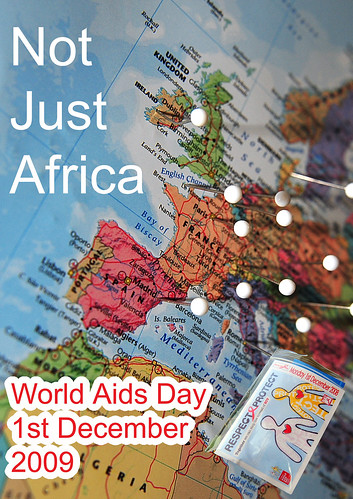
World AIDS Day marks progress, distinct challenges in Africa


Published 6:49 am on November 30, 2009

World AIDS Day marks progress, distinct challenges in Africa
By Peter Elliott
Contributing Editor


Tuesday marks World AIDS Day when a fresh look at worldwide statistics and what is being done to stem the spread of the disease are warranted.
Statistically it is decidedly a mixed bag.

United Nations figures released last week show that over the past seven years the total number of people infected with HIV/AIDS has remained relatively flat at around 33 million worldwide. The total number of infections and deaths has steadily declined, but that is offset by 2.7 million new cases in 2008. Seventy percent of those new deaths come from sub-Saharan Africa.

The U.N. report suggest that targeted local strategies need to become focused on specific problems in order to drove down the rate of new infections. It says that the largest group of Africans contracting AIDS is older heterosexual couples, illustrating a need to adjust approaches based on the demographics.

Many Christian organizations are actively involved in AIDS prevention and treatment efforts domestically and internationally.

The Episcopal Church, for example, references the U.N. Millennium Development Goals as benchmarks for addressing poverty and social justice issues. In a letter penned to mark World AIDS Day, Episcopal Church presiding bishop Katherine Jefferts Schori cautions against Americans becoming complacent about AIDS simply because it has been a public health issue for decades.

“In the United States, HIV/AIDS has lost much of its visibility in the past decade with many Americans growing complacent about the threat of the disease,” Schori wrote. “It is not always immediately obvious who in our communities is suffering from HIV/AIDS, and the stigma of diagnosis further isolates and alienates those who need our love and support. As Christians, our ministry to those living with HIV/AIDS in our communities is more essential than ever.”

As an example of such ministries, Catholic Relief Services quotes figures it supported more than 280 HIV/AIDS projects in 62 countries worth $170 million in recently completed fiscal year 2009.


Similarly, hundreds of Christian organizations are working in the hardest hit areas of the globe.
One key focus is for progress in programs for expectant mothers to help them combat the effects of passing the disease to their babies.

“We’ve seen in the United States that by testing women and providing ARV treatment during pregnancy and labor for HIV-positive mothers, it’s possible to prevent babies from being born with the virus,” said Robert Zachritz, World Vision’s director for advocacy and government relations. “Yet globally, two out of every three HIV-positive pregnant women still cannot access treatment to protect her unborn child from a life with HIV.”

HIV infections among children have fallen significantly due in part to greater investment in strategies to prevent mother-to-child transmission. However, with 2 million children under 15 currently infected with HIV, protecting children in the womb is a critical step.

Education is also a vital weapon. World Relief is using its church partnerships in sub-Saharan Africa to educate teens about the importance of abstinence as a way to present the spread of the disease. In countries such as Rwanda, Mozambique, Kenya and the Caribbean nation of Haiti, the organization is also working to encourage adults to stay in monogamous relationships. It has a goal of educating 1.8 million children in these countries to the danger of AIDS this year.

Nonetheless, worldwide the challenge for young women the challenge is great. According to UNICEF figures released earlier this year AIDS remains the largest killer of women of childbearing age.

“Although there is increasing emphasis on women and children in the global HIV/AIDS response, the disease continues to have a devastating impact on their health, livelihood and survival,” said Ann M. Veneman, UNICEF Executive Director.


Links:Wall Street Journal—The Global AIDS Epidemic: Six Key Data Points: http://blogs.wsj.com/health/2009/11/24/the-global-aids-epidemic-six-key-data-points/?utm_source=feedburner&utm_medium=feed&utm_campaign=Feed%3A+wsj%2Fhealth%2Ffeed+%28WSJ.com%3A+Health+Blog%29&utm_content=NetvibesWorld Health Organization—Towards Universal Access: Scaling up priority HIV/AIDS interventions in the health sector (September 2009): http://www.who.int/hiv/mediacentre/tuapr2009_km_en_a4.pdf


~~~~~~~