Showing posts with label CHURCH VS STATE. Show all posts

Thursday, July 30, 2026

Haiti’s cardinal and U.S. bishops lead Mass of Solidarity...


Haiti’s cardinal and U.S. bishops lead Mass of Solidarity as Haitian immigrants face losing their TPS status
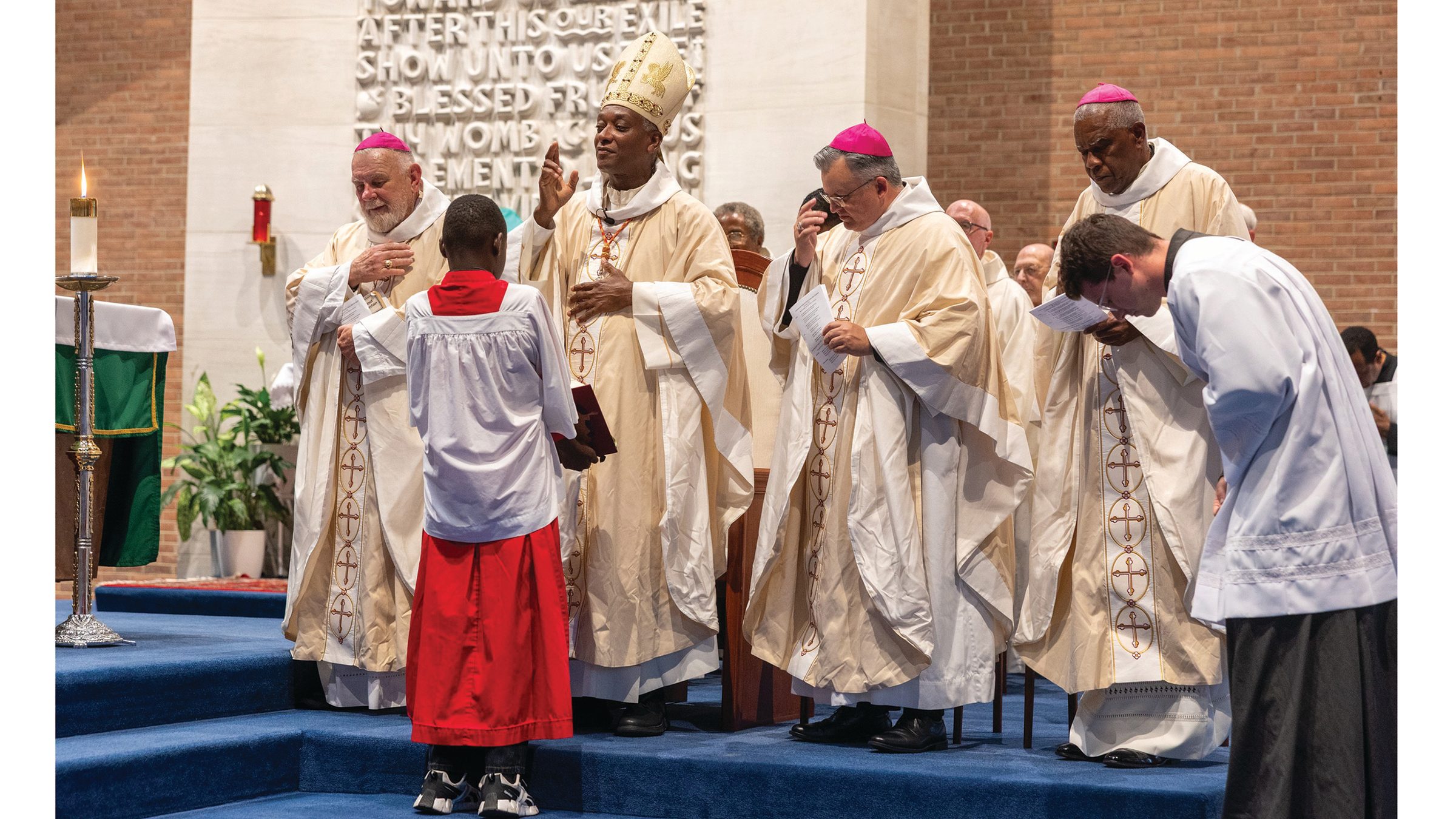


Cardinal Chibly Langlois of Les Cayes, Haiti, (second from left), gives the final blessing at Our Lady of Sorrows Church in Takoma Park, Maryland, on July 28, 2026 during a Mass of Solidarity with the Haitian community and those impacted by changes to immigration policy. The concelebrants at the Mass included Archbishop Thomas G. Wenski of Miami at left, and Archbishop Robert G. Casey of Cincinnati and Bishop Jacques Fabre-Jeune, CS, of Charleston, South Carolina at right. The Mass was coordinated by offices from the United States Conference of Catholic Bishops and the Roman Catholic Archdiocese of Washington. (Catholic Standard photo by Mihoko Owada)

As an estimated 350,000 Haitian immigrants to the United States face losing their Temporary Protected Status and confront the possibility of having to move back to their country that is plagued by gang violence and political instability, Cardinal Chibly Langlois of Les Cayes, Haiti, celebrated a Mass of Solidarity on July 28 with the Haitian community and those impacted by changes to immigration policy.

The concelebrants at the Mass at Our Lady of Sorrows Church in Takoma Park, Maryland, included Archbishop Thomas G. Wenski of Miami; Archbishop Robert G. Casey of Cincinnati; Bishop Jacques Fabre-Jeune, CS, of Charleston, South Carolina; and 10 priests, including priests from Haiti serving Haitian immigrants in the United States, priests whose religious orders serve in Haiti, and priests whose parishes have longstanding outreach programs there.

The Mass was celebrated in French, with the choir singing songs in Haitian Creole, French and Latin.


Cardinal Chibly Langlois of Les Cayes, Haiti, gives the homily at Our Lady of Sorrows Church in Takoma Park, Maryland, on July 28, 2026 during a Mass of Solidarity with the Haitian community and those impacted by changes to immigration policy. (Catholic Standard photo by Mihoko Owada)


As he opened his homily, Cardinal Langlois said, “Today we gather to bring before God the pain, sorrow, and anxiety of the Haitian community in the United States as they face the consequences of the end of Temporary Protected Status (TPS). This celebration is a profound gesture of solidarity by the Church in the United States and the Church in Haiti with more than 350,000 people who now find themselves in this difficult situation. We gather not only to pray, but also to remind one another that we are one family in Christ. When one member of the Body of Christ suffers, the whole Body suffers with it.”

Referencing the reading at the Mass from the prophet Jeremiah, the cardinal said, “Many families are living with fear and uncertainty. Yet Jeremiah teaches us something important: even when God's people feel abandoned, they never stop turning to Him. They lift up their eyes to the Lord, asking for healing, mercy, and deliverance. We bring our anxieties before God, but we do not lose hope.”

Sunday, April 12, 2026

The Real American War Is Between Trump and This Holy Warrior


CROSS TO BEAR

There is only person who is really battling for the soul of the nation.

Opinion


Photo Illustration by Elizabeth Brockway/The Daily Beast/Reuters


John Casey

Updated Apr. 11 2026 10:14AM EDT 
Published Apr. 11 2026 9:30AM EDT


For decades, conservative Catholics and the religious right have prayed for a “red”-blooded American pope. Someone who would place the Vatican’s authority behind their vision of American superiority and exceptionalism, all the while keeping his mouth shut about political issues like climate change and immigration.
Last year, it appeared they got their wish—or at least part of it—when Robert Francis Prevost, at the age of 69, and the son of a Chicago firefighter, became Pope Leo XIV. President Trump praised Prevost’s election as a “very meaningful moment.”

That faith quickly waned.


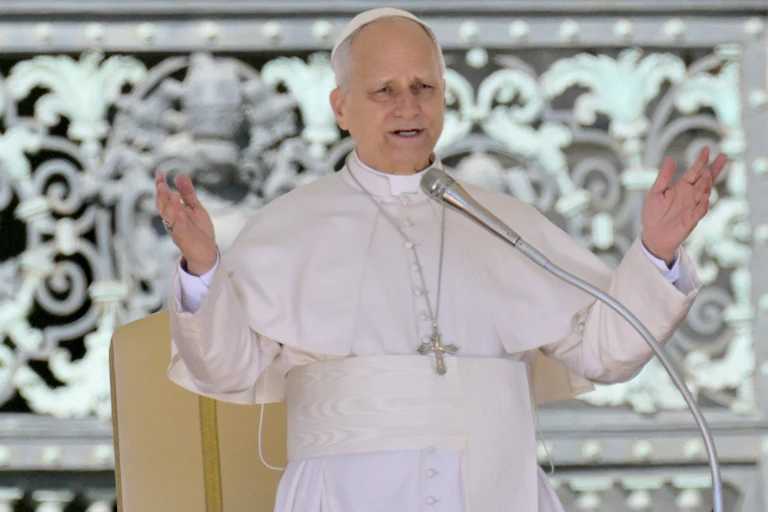
Pope Leo XIV waves on the day he holds the weekly general audience in Saint Peter's Square at the Vatican, April 8, 2026.Remo Casilli/REUTERS

While quiet and calm at first glance, Leo speaks with the bluntness of a man who learned early how to tell hard truths to people who don’t want to hear them. He also had a history of criticizing Trump and his administration, particularly on matters of immigration.
And in the first month of the war with Iran, seemingly at every public opportunity, Leo has spoken out against the conflict. The tension between His Holiness and Trump—as well as other administration officials—reached a surreal moment this week, underscoring a broader schism between the papacy and Washington D.C. After Trump warned that “a whole civilization will die tonight” unless Iran capitulated, Leo didn’t offer vague prayers for peace.

He went all in.

Thursday, April 09, 2026

Pentagon Threatened Pope After He Criticized Trump?


It was so bad that Pope Leo changed his plans to travel to the U.S.


Tiziana FABI/AFP/Getty Images

Relations between the United States and the Catholic Church have not been the same since January, when senior U.S. defense officials shared an abrasive message with a Vatican official.

Days after Pope Leo XIV delivered his State of the World speech, Undersecretary of Defense for Policy Elbridge Colby summoned Cardinal Christophe Pierre, the Vatican’s U.S. representative, to a closed-door Pentagon meeting for a bitter lecture.

“The United States,” Colby said, according to a blistering new report by The Free Press, “has the military power to do whatever it wants in the world. The Catholic Church had better take its side.”

One U.S. official present at the meeting brought up the Avignon papacy, a period in the fourteenth century in which the French monarchy bent the Catholic Church into submission, ordering an attack on Pope Boniface VIII that led to his downfall and subsequent death and forcing the papacy to relocate from Rome to Avignon, a region inside France.

The Trump administration had taken issue with the pope’s critique of its militaristic proclivities. Defense Secretary Pete Hegseth and other top Pentagon officials were particularly aggrieved by portions of Leo’s January 9 speech in which the pope argued that “a diplomacy that promotes dialogue and seeks consensus among all parties is being replaced by a diplomacy based on force,” and that “war is back in vogue, and a zeal for war is spreading.”

Saturday, April 04, 2026

Trump Admin Signals Clarity on Church Speech


By Charlie McCarthy | Friday, 03 April 2026 12:23 PM EDT


The Trump administration announced Friday that it will "provide additional clarity and guidance" to religious organizations after a federal judge's decision this week to dismiss a case seeking to overturn the 70-year-old ban on political activity by houses of worship.

The Treasury Department and Internal Revenue Service issued a statement saying the move is aimed at reinforcing First Amendment protections while helping churches better understand how existing law applies to their communications.

"Religious liberty is foundational to our Constitution," Treasury Secretary Scott Bessent said, adding that the administration is committed to ensuring Americans can "practice one's faith openly and in community" while laws are applied fairly.

The new guidance will focus on clarifying how the Johnson Amendment, the 1954 law that restricts tax-exempt organizations from endorsing political candidates, applies in real-world settings, particularly within religious services.

According to Treasury, internal communications between houses of worship and their congregations, when delivered through customary religious channels and tied to matters of faith, may not constitute prohibited political activity under current interpretations of the law.

Tuesday, January 20, 2026

Archbishop for U.S. Military Says It’s ‘Morally Acceptable’ for Troops to Disobey Orders Amid Escalating Trump Threats

by
Connor Greene

Editorial Fellow


Archbishop Timothy Broglio conducts an Easter Sunday Mass at Basilica of the National Shrine of the Immaculate Conception in Washington, Sunday, April 12, 2020.Jose Luis Magana—AP Photo/File


The archbishop for the U.S. military services said that it “would be morally acceptable” for troops to disobey orders that go against their conscience as the Trump Administration ramps up its military actions and threats, joining other prominent Catholic leaders in sounding alarms over President Donald Trump’s aggressive foreign policy moves.

“It would be very difficult for a soldier or a marine or a sailor to by himself disobey an order,” Archbishop Timothy P. Broglio told the BBC Sunday. “But strictly speaking, he or she would be, within the realm of their own conscience, it would be morally acceptable to disobey that order, but that’s perhaps putting that individual in an untenable situation, and that’s my concern.”

When asked if he was “worried” about the troops in the archdiocese he oversees, Broglio responded: “I am obviously worried because they could be put in a situation where they’re being ordered to do something which is morally questionable.”

Broglio, who has served as the head of the Washington, D.C.-based archdiocese of the U.S. military since 2007, specifically pushed back against Trump’s repeated threats to annex Greenland.

“Greenland is a territory of Denmark,” the archbishop said. “It does not seem really reasonable that the United States would attack and occupy a friendly nation.”

Read more: Trump Warns There’s ‘No Going Back’ on Greenland and Accuses U.K. of ‘Act of Great Stupidity’

A number of other high-ranking Catholic bishops and Pope Leo XIV have also raised vocal concerns in recent weeks as U.S. forces deposed Venezuelan President Nicolás Maduro and the President has levied threats against several other countries and territories, including in his renewed push to acquire Greenland. The Pope, who—along with a number of U.S. bishops—has also challenged Trump’s immigration crackdown, recently condemned a “diplomacy based on force” in an annual speech at the Vatican.

Thursday, February 13, 2025

Trump border czar Tom Homan accuses Pope Francis of hypocrisy: 'He’s got a wall around the Vatican'


By Ryan Foley, Christian Post Reporter Wednesday, February 12, 2025


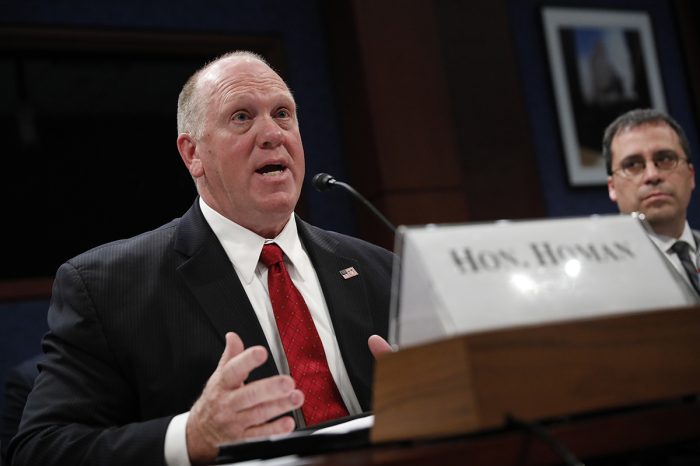
Thomas Homan, acting director of U.S. Immigration and Customs Enforcement, testifies before the House Homeland Security Committee's Border and Marine Security subcommittee on Capitol Hill on May 22, 2018, in Washington, D.C. Republican House members are calling for reform to asylum processes. | Aaron P. Bernstein/Getty Images


A Trump administration official is accusing Pope Francis of hypocrisy for speaking out against mass deportations of illegal immigrants in the United States while living at the Vatican, which is surrounded by a wall.

When speaking to reporters Tuesday, Border Czar Tom Homan reacted to Pope Francis’ letter criticizing the Trump administration’s policies. Identifying himself as a baptized and confirmed Catholic, Homan responded, “I’ve got harsh words for the pope.”

Calling on the pope to “fix the Catholic Church,” Homan suggested that Francis’ move to “attack us for securing our border” was hypocritical: “He’s got a wall around the Vatican, does he not? So, he’s got a wall around to protect his people and himself but we can’t have a wall around the United States?”  

“I wish he’d stick to the Catholic Church and fix that and leave border enforcement to us,” Homan concluded. Homan’s comments come after Francis wrote a letter to the U.S. Conference of Catholic Bishops Tuesday condemning the “major crisis that is taking place in the United States with the initiation of a program of mass deportations.”

The Pope vs. Trump? | FORWARD BOLDLY

Friday, January 24, 2020

Mike Pence and Pope Francis meet in a surprisingly long first visit


Gerard O’Connell

January 24, 2020


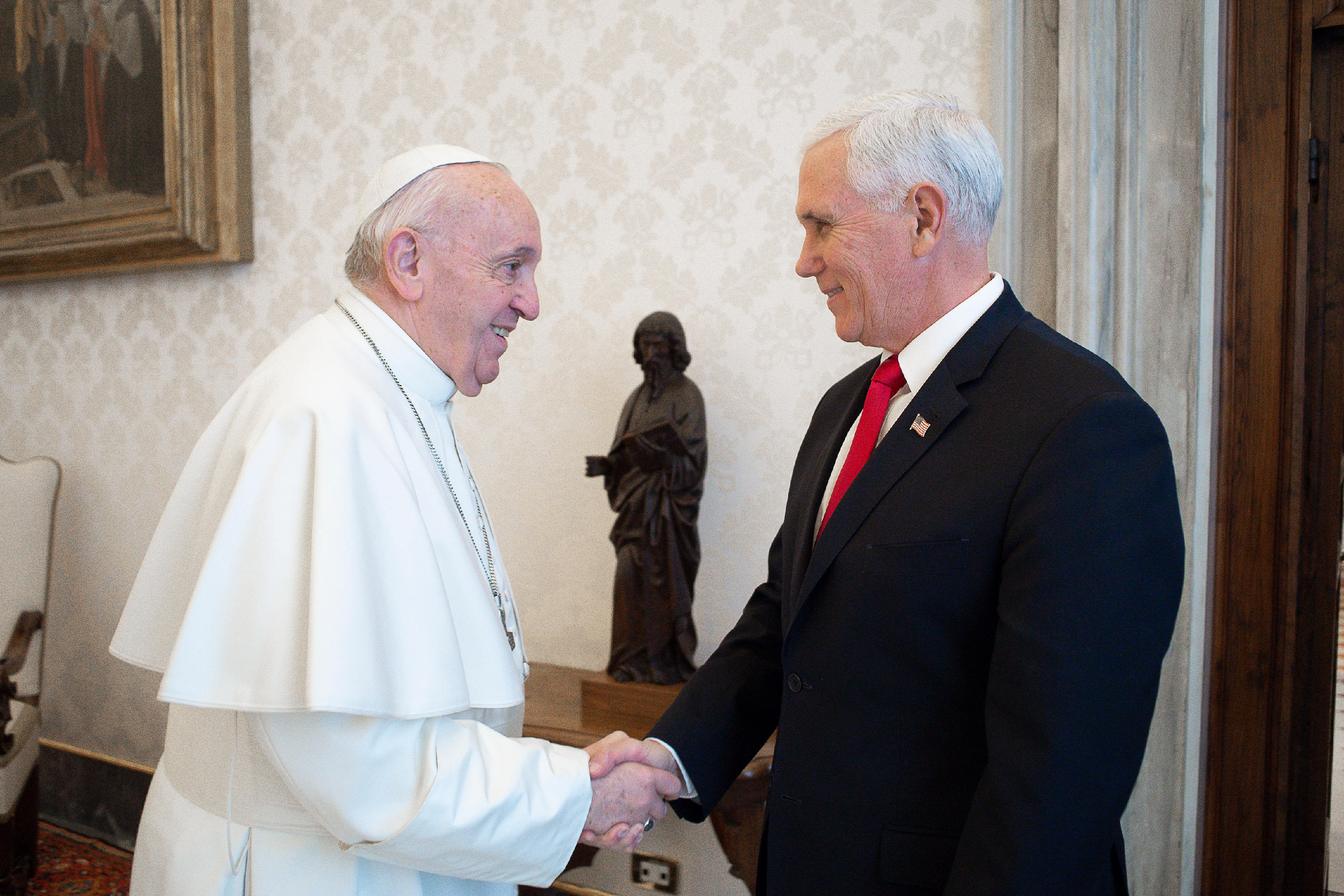
Pope Francis greets U.S. Vice President Mike Pence during a private meeting at the Vatican Jan. 24, 2020. (CNS photo/Vatican Media)


U.S. Vice President Mike Pence met Pope Francis in the Vatican at noon on Jan. 24, and the two spoke together in private for an hour, a surprisingly long time for an audience with someone who is not a head of state. It was their first meeting.

Pope Francis welcomed the vice president, who was raised Catholic, and then led him into the private library where he receives heads of state and distinguished guests and where he received President Trump on May 24, 2017.

“I wanted to extend the warmest greetings on behalf of President Donald Trump who so enjoyed his visit here,” Mr. Pence told Francis as they sat down.

Pope Francis then engaged in a private conversation with the vice president, with the aid of interpreters. The length of their conversation would suggest that they went into depth on some topics.

The two spoke together in private for an hour, a surprisingly long time for an audience with someone who is not a head of state.
Tweet this

When they finished their private conversation, Mr. Pence presented his wife, daughter-in-law and other members of his delegation to the pope. The two leaders then exchanged gifts.

Mr. Pence gave the pope a wooden cross carved from a tree on the grounds of the vice president’s residence. Francis gave him a medallion depicting “the angel of peace,” a copy of his message for the World Day of Peace 2020, as well as copies of some of his writings, including “The Joy of the Gospel” and “Laudato Si’.


Wednesday, November 29, 2017

DC Metro bans religion from Christmas ads, Catholics sue


Washington's Metro system has rejected Catholic bus ads over their depiction of religion. (AP Photo/J. David Ake)


Washington’s Metro has rejected a Catholic ad campaign that promotes “spiritual giving” instead of presents, arguing that the image of stars, shepherds and sheep promotes religion, a violation of the transit system’s rules.

The Archdiocese of Washington told Secrets that the Washington Metropolitan Area Transit Authority turned down a request to promote its “Find the Perfect Gift” initiative because the image “depicts a religious scene and thus seeks to promote religion,” although it does not include a manger scene, Christ figure or even a cross.

As a result, the Archdiocese Tuesday filed suit challenging Metro’s ad guidelines.

More: Archdiocese of Washington files lawsuit against WMATA after Christmas ad rejected

“The rejected ad conveys a simple message of hope, and an invitation to participate in the Christmas season. Yet citing its guidelines, WMATA’s legal counsel said the ad ‘depicts a religious scene and thus seeks to promote religion,’” said Ed McFadden, secretary for communications for the Archdiocese of Washington.

“To borrow from a favorite Christmas story, under WMATA’s guidelines, if the ads are about packages, boxes or bags — if Christmas comes from a store -- then it seems WMATA approves. But if Christmas means a little bit more, WMATA plays Grinch,” he added.

The Archdiocese also hoped to place the ads in bus kiosks.

A Metro spokeswoman said the policy banning ads with religious themes took effect two years ago. "In 2015, WMATA changed its advertising policy to prohibit issue-oriented advertising, including political, religious and advocacy advertising. The ad in question was declined because it is prohibited by WMATA’s current advertising guidelines," said Sherri Ly, manager of media relations.

Two lawyers working for the church said its First Amendment rights were being challenged.

“We believe rejection of this ad to be a clear violation of fundamental free speech and a limitation on the exercise of our faith,” said Kim Fiorentino, the Archdiocese of Washington’s Chancellor and General Counsel.

WMATA’s rejection of the Archdiocese’s speech amounts to a violation of the First Amendment, plain and simple. We are bringing this complaint to vindicate the basic principle that the government may not allow a wide variety of speech in a forum and then turn around and deny the Archdiocese access because of the religious nature of its speech,” said Paul Clement of Kirkland & Ellis LLP, who is serving as counsel to the Archdiocese in this case.

In court documents, the church said that the goal of its “Find the Perfect Gift” campaign is to encourage people to give to the needy and attend Christmas mass.

Paul Bedard, the Washington Examiner's "Washington Secrets" columnist, can be contacted at pbedard@washingtonexaminer.com


Tuesday, November 28, 2017

Resisting Trump, churches give sanctuary to immigrants facing deportation


Resisting Trump, churches give sanctuary to immigrants facing deportation

By Yonat Shimron | 2 hours ago


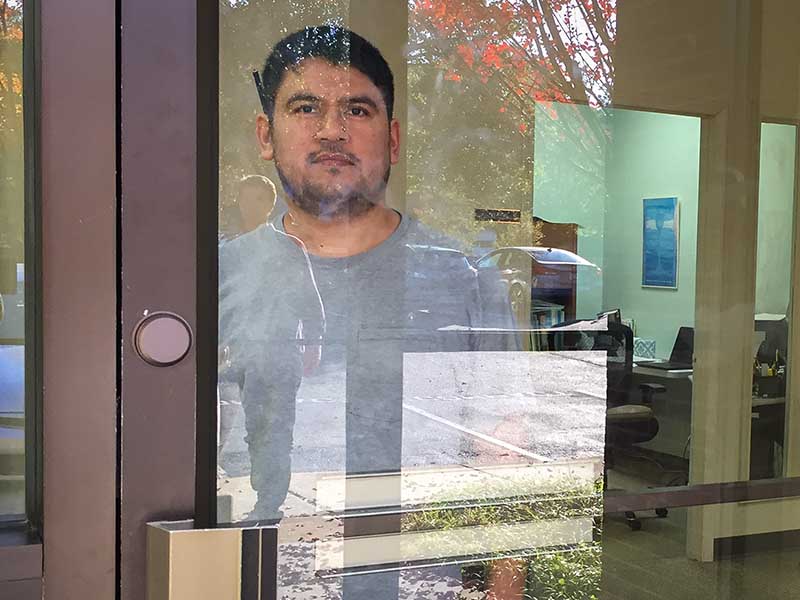
After receiving a deportation order, Eliseo Jimenez took sanctuary at Umstead Park United Church of Christ in Raleigh, N.C. RNS photo by Yonat Shimron


RALEIGH, N.C. (RNS) — The church covenant makes it clear: The congregation is to be “a safe haven, free from the fear of judgment, where wounds are healed, differences are celebrated and inclusivity is intentional.”

Eighteen years ago, when they wrote that covenant, members of Umstead Park United Church of Christ might not have imagined that “safe haven” might also mean a place of sanctuary where a 39-year-old Mexican immigrant would take refuge from the immediate threat of deportation.

But in hindsight, that covenant clause seems prophetic.

This congregation of 300 members has become the first church in Raleigh to convert part of its space into a bedroom. Three other religious communities in North Carolina have done so since May, and another five churches in the state are getting ready to vote on inviting immigrant families into their midst.

Across the nation, 32 congregations — the vast majority Protestant churches — are housing people at risk of deportation, according to Church World Service, which is tracking the development.

While not exactly a groundswell, such faith-based resistance to immigration policy has not been seen since the 1980s, when hundreds of churches and synagogues extended sanctuary to people fleeing civil wars in El Salvador and Guatemala.

And it is testing how far the Trump administration is willing to take its tough line on immigration: Will law enforcement be sent into houses of worship against the will of congregants motivated by sincere beliefs — and despite the president’s stated commitment to religious freedom?


Thursday, May 11, 2017

If Pastors Want to Play Politics, Churches Should Pay Taxes


Mark Kauzlarich


By Ciro Scotti
May 9, 2017


Like so much that is served up in the White House mess, the Executive Order on religious liberty signed by the President last week is all sizzle and no ribeye.

Its purported purpose was to allow churches and pastors to endorse political candidates from the pulpit without worrying about the IRS threatening their tax-exempt status. But the order was so wimpy that, as The New York Times said, it angered many Trump supporters and perplexed innocent religious bystanders, while opponents just said: “meh!”

Related: Trump Vows to End Prohibition on Church Political Activity

Religious conservatives looking for the “liberty” not to hire or serve members of the LBGTQ community went away disappointed. Brian Brown of the National Organization for Marriage, which opposes same-sex marriage, told The Times, “In failing to deliver for people of faith, President Trump risks alienating the single constituency most responsible for his election.”

Clerical organizations like the 45,000-church National Association of Evangelicals shook their heads: Its president, Leith Anderson, said, “I don’t actually know anybody who has endorsed or who wants to endorse a politician from the pulpit.”

And the American Civil Liberties Union was so not threatened that it declined to sue over what it called “an elaborate photo op” on National Prayer Day.

The atheists did file suit, arguing that the EO gives religious nonprofits rights not afforded to other groups that are tax-exempt. In a statement, the Freedom from Religion Foundation said in part, “Trump’s order and statements signal to the Internal Revenue Service that it should not enforce the electioneering restrictions of the tax code against churches and religious organizations while permitting these restrictions to be enforced against secular nonprofits.”

Those restrictions were set in 1954 by Johnson Amendment, which encourages the IRS to threaten the tax-exempt status of houses of worship that endorse a political candidate or party. But it has rarely been invoked.

Related: Trump's Religious Freedom Order May Give Opponents an Unintended Boost

Now the IRS, always wary of the amendment, will have even less of an incentive to call out a church for playing politics.

And that’s O.K.

If priests, rabbis, imans, pastors, nuns, monks and their religious institutions want to use their use their bully pulpits to bully congregants into voting a certain way, they should be free to do so. After all, no one is forcing folks to sit on a hard bench and listen to them.

However, like every other tax-paying American, those with God on their side should pay to play politics. Liberty isn’t a free lunch.

Of course, it is a pipe dream to imagine that deity-hugging politicians might ever remove the tax exemption granted to religious entities: In many parts of the country, that would be tantamount to burning the flag on the Fourth of July or kicking a three-legged puppy.

But there was a reason that tax exemptions for religious groups were blessed by the Founders. In the 1970 case Walz v. Tax Commission of the City of New York, the U.S. Supreme Court, citing the Establishment Clause of the First Amendment, upheld the tax exemptions because it said they reinforced the desired separation of church and state.

In the majority opinion, Chief Justice Warren Burger wrote: ‘‘[W]e will not tolerate either governmentally established religion or governmental interference with religion.’’

What about religious interference with the government?

Once religions become full-metal-jacket political combatants, it is they who cross the line between God and Caesar.

Related: If Trump's Tax Plan Passes, Here Are the Deductions and Breaks You Could Lose

At a signing in the Rose Garden, Trump said, “We are giving churches their voices back.”

Fine. Now pay for the megaphone.

Either tax all religious organizations, period. Or tax those that want a full-throated engagement in the political process by endorsing candidates and parties, setting up political-action committees and shuttling the faithful to the polls. And let those that want to retain their exemptions opt out.

By not taxing religious institutions, the government is in effect subsidizing them. A 2012 study figured that federal subsidies amounted to about $71 billion – or $75 billion in current dollars.

That would cover about one-third of the interest payments on the national debt.


Source


Wednesday, May 03, 2017

Trump Is Expected to Relax Tax Rules on Churches Taking Part in Politics


By MICHAEL D. SHEAR, LAURIE GOODSTEIN and MAGGIE HABERMAN

 MAY 3, 2017


President Trump speaking at the National Prayer Breakfast in Washington in February. Credit Stephen Crowley/The New York Times

WASHINGTON — President Trump plans to mark National Day of Prayer on Thursday by issuing an executive order that makes it easier for churches and other religious groups to actively participate in politics without risking their tax-exempt status, several administration officials said.

Taking action as he hosts conservative religious leaders Thursday morning, Mr. Trump’s executive order would attempt to overcome a provision in the federal tax code that prohibits religious organizations like churches from directly opposing or supporting political candidates.

The move is likely to be hailed by some faith leaders, who have long complained that the law stifles their freedom of expression. But the order falls short of a more sweeping effort to protect religious liberties that has been pushed by conservative religious leaders since Mr. Trump’s election.

Many clergy members say they do not want to endorse political candidates from the pulpit because it could split their congregations and distract from their religious messages. This appears to be the case even among evangelicals, although it is Mr. Trump’s conservative evangelical advisers who encouraged him to address the issue.

It was unclear Wednesday whether Mr. Trump also planned to issue a separate order that would exempt some religious organizations like churches from Obama-era regulations requiring protections for gay men, lesbians and others.

A coalition of evangelicals, Roman Catholics, Mormons and Orthodox Jews has been eagerly awaiting a so-called religious liberty orde
r, which they also hope will exempt religious entities from providing their employees with coverage for contraception in their health care plans.


Tuesday, March 14, 2017

A closer look at the Johnson Amendment


Heather Greene — March 12, 2017 


WASHINGTON – On Feb. 2, President Donald Trump returned for a brief moment to a recurring issue facing his administration: the Johnson Amendment. At the National Prayer Breakfast, he told the attendees,“Among those freedoms is the right to worship according to our own beliefs. That is why I will get rid of, and totally destroy, the Johnson Amendment and allow our representatives of faith to speak freely and without fear of retribution. I will do that — remember.”


[Public domain.]Repealing the Johnson Amendment has been one of the main focuses of Trump’s campaign, and it continues to find its way into current political discourse with regard to religious freedom. Trump began speaking out against the tax code early in his bid for the presidency. Then, during his acceptance speech at the 2016 Republican National Convention, he said:


At this moment, I would like to thank the evangelical and religious community in general who have been so good to me and so supportive.You have much to contribute to our politics, yet our laws prevent you from speaking your minds from your own pulpits. An amendment, pushed by Lyndon Johnson many years ago, threatens religious institutions with a loss of their tax-exempt status if they openly advocate their political views. I am going to work very hard to repeal that language and protect free speech for all Americans.

What is this Johnson Amendment, and what is its relationship to religious freedom? How does it affect the greater Pagan, Heathen, and polytheist communities in the U.S.?
History of the Johnson Amendment

The now-famous tax code change was implemented in 1954, after being passed by a Republican congress and signed into law by President Dwight D. Eisenhower. It’s name is taken from Lyndon B. Johnson who, at the time, was a senator from Texas. As the story goes, in 1954, Johnson was running for reelection against 30-year-old Dudley Dougherty. While Johnson had only won the previous election in 1948 by 87 votes, he was reportedly expected to easily to beat Dougherty in the primary race.

However, during the campaign process, Johnson vocally opposed the ongoing McCarthy trials and its related fear-mongering. Contrary to that, Dougherty was running on platform that supported the trials and the government’s aggressive attempts to stop the spread of communism in the U.S.

During the campaign, several large nonprofit organizations stepped in to back Dougherty, including Fact Forum and the Committee for Constitutional Government. These wealthy secular groups avidly supported the government’s anti-communist efforts and, as result, they publicly engaged in electioneering on behalf of Dougherty.

Sunday, June 26, 2016

Jesuit appointed head of US religious freedom commission


Catholic News Agency

June 24, 2016
CATHOLIC NEWS AGENCY


Thomas Reese. (Courtesy of USCIRF)
Jesuit Father Thomas Reese was appointed chairman of the United States Commission on International Religious Freedom, becoming the first priest to hold this position. He replaces Princeton law professor Dr. Robert George.


The United States Commission on International Religious Freedom has a new chairman, and for the first time, the position will be held by a Catholic priest.

Jesuit priest Father Thomas Reese was first appointed to a two-year term as a member of the commission by President Barack Obama in 2014, and re-appointed in 2016
.

Now he will take over as the chair of the organization, an independent, bipartisan commission that monitors and reviews religious freedom violations around the world, and makes policy recommendations to the Secretary of State, Congress and the president.

“I am honored to serve as USCIRF’s Chair and work with my fellow Commissioners in support of freedom of religion or belief,” Reese said in a statement.

“World events underscore the importance of this fundamental right: A key factor in many of the United States’ foreign policy challenges, religious freedom is under serious and sustained attack across much of the globe,” he added.

Created by the 1998 International Religious Freedom Act, the commission issues annual reports on the state of religious freedom around the world, and names countries that are guilty of severe religious freedom violations during the previous year. It also holds public hearings and conducts fact-finding missions to aid in its efforts.

In taking over as chair of the body, Reese replaces Princeton law professor Dr. Robert George.

Reese serves as the senior analyst for the National Catholic Reporter. Previously, he served as editor-in-chief at AmericaMagazine - a publication of the Jesuit order - from 1998-2005 after being its associate editor from 1978-1985. Reese also was a senior fellow at the Woodstock Theological Center from 1985-1998, and again from 2008-2013.

In his time at America, the Vatican raised issues with several articles published at the magazine, including some on abortion and homosexuality. Fr. Reese resigned from the publication in May 2015.

This week, the U.S. Commission on International Religious Freedom also appointed two vice-chairs: Dr. Daniel Mark, an assistant professor of political science at Villanova University and visiting fellow in the Department of Politics at Princeton University; and Dr. James Zogby, founder and president of the Arab American Institute, and Managing Director of Zogby Research Services, which conducts specialized public opinion polling within the Arab world.

Mark had been reappointed as a member of the commission Speaker of the House Paul Ryan in May 2016, and President Barack Obama reappointed Zogby in May 2015