Weather junkie John Grosso knew it was highly unlikely a monster wave was barreling toward the Connecticut coast. Still, when a tsunami warning appeared out of the blue on his phone Tuesday, he felt a twinge of fear. His co-workers, who got the same alert, asked whether they should evacuate.
It turned out to be a false alarm, a computer glitch. The damage? An erosion of trust.
“Now I have to check every single time, God forbid, there’s a tornado warning, a tsunami alert, pick your poison,” said Grosso, 25, a social media manager from Stamford. “I have to look at it and go, ‘Is it a test? Was it sent in error?’ And I could be wasting precious time in case it was real.”
Last month’s bogus ballistic missile warning in Hawaii and, now, this week’s tsunami snafu have highlighted trouble spots and prompted calls for change in the nation’s increasingly complex system for alerting Americans about dangerous weather, active shooters, kidnapped children, plant explosions and other emergencies.
Both incidents have prompted calls for reform, including better training for emergency workers in charge of sending alerts.
More than 1,000 federal, state and local government agencies have the ability to issue emergency alerts through an array of federally managed communications networks. It is a patchwork system that usually works as intended but can wreak havoc when it doesn’t.
In the Senate, legislation introduced this week in response to the false missile alert would establish standards for state and local agencies’ participation in the national alert system, require federal certification of their incident management systems, and recommend steps for avoiding false alarms.
Additionally, the Federal Communications Commission has ordered wireless providers to do a better job of targeting emergency alerts to only those in the affected area, with a geographic “overreach” of no more than one-tenth of a mile.
Aside from the false alarms, emergency agencies have been criticized for sending alerts to too many people or too few. In Alaska, for instance, a tsunami warning triggered by an undersea earthquake in January reached residents of Anchorage even though the city wasn’t in danger. In Northern California wine country, where wildfires killed dozens of people in October, some residents complained that authorities failed to send an emergency alert to their phones.
“The emergency alerting system is really a whole collection of systems, and there are various places where it can break down,” said Dan Gonzales, a scientist at RAND Corp. who studies emergency alert systems. “With so many organizations involved, it’s difficult to make it foolproof.”
The risk of too many false alarms, Gonzales said, is that “people will ignore warnings if they believe they’re not accurate or not relevant.”
That was on vivid display Tuesday when AccuWeather, the private forecasting service, took
what was intended to be a routine, monthly National Weather Service test message and sent it as a real warning to subscribers up and down the East Coast, the Gulf of Mexico and the Caribbean.
Katia Del Negro, 33, was at home in New York City when she got the alert, her surprise quickly turning to skepticism.
“I definitely got a bit concerned when I saw that many people along the East Coast received the alert,” she said. “But at the same it seemed so weird, so I thought something was off, thinking back about what happened in Hawaii not long ago.”
AccuWeather, based in State College, Pennsylvania, blamed the weather service, saying the government agency miscoded the test message. That caused the company’s computers to interpret it as real and push it to subscribers’ cellphones, according to AccuWeather.
The weather service insisted its message was coded properly.
Daryl Herzmann, a systems analyst in the agronomy department at Iowa State University, said
the message contained a “T″ flag, indicating test. But the weather service also recycled a tracking number it used in a previous tsunami warning, probably confusing AccuWeather’s computers, he said.
The weather service has been recycling tracking numbers for years, said Herzmann, who runs an environmental data project that compiles information from the weather service.
Weather service spokeswoman Susan Buchanan had no comment on Herzmann’s observation. She pointed to an earlier statement that said the agency is “working with private sector companies to determine why some systems did not recognize the coding.”
It was human error, not a computer problem, that caused last month’s panic in Hawaii. A state worker mistook a drill for a missile attack and sent an emergency alert to cellphones and broadcast stations. It took nearly 40 minutes for the Hawaii Emergency Management Agency to figure out a way to retract the alert. The worker was fired and the agency chief resigned.
“This cry of wolf damaged the credibility of alert messaging, which can be dangerous when a real emergency occurs,” Lisa Fowlkes, an FCC official, said Tuesday during a House committee hearing on the nation’s emergency messaging system.
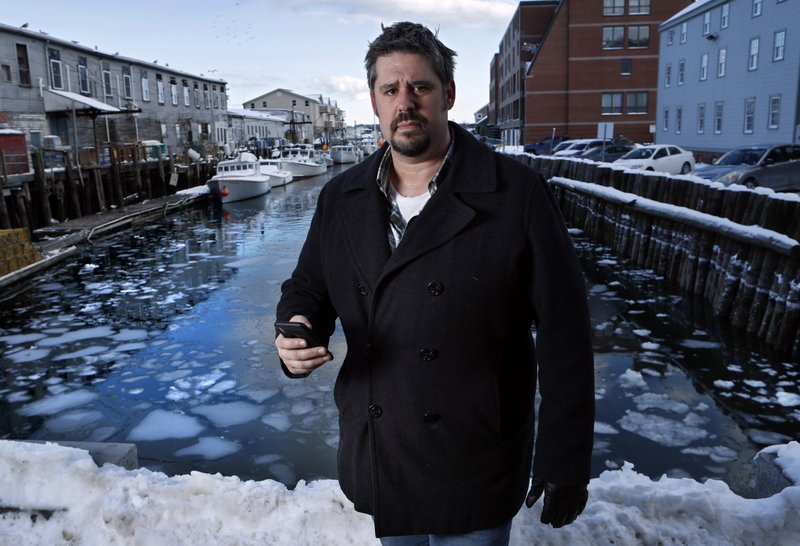
Jeremy DaRos, of Portland, Maine, who lives near the water and got the erroneous tsunami alert, said he is concerned that people won’t take seriously the emergency alerts they get in an actual crisis.
“People need to trust the alerts they’re pushing out,” he said. “This is important stuff, and to have two incidents in the span of a month is just unacceptable.”