Showing posts with label marijuana. Show all posts

Saturday, January 05, 2019

What Advocates of Legalizing Pot Don’t Want You to Know


What Advocates of Legalizing Pot Don’t Want You to Know


The wave toward legalization ignores the serious health risks of marijuana.


By Alex Berenson


Mr. Berenson is the author of a forthcoming book on marijuana use. 


Jan. 4, 2019


Credit
Annelise Capossela


Marijuana seems to be on an unstoppable march to legalization in the United States.


New York and New Jersey are racing to join the 10 states that already allow recreational use of cannabis. Some 65 percent of Americans favor legalization, and several potential Democratic candidates for president support ending federal prohibitions on marijuana.

This huge shift in public attitudes comes even though most Americans do not use the drug. Only 15 percent of people over 12 used it even once in 2017, according to a large federal survey. That year, only three million people tried it for the first time.

Instead, the change has been largely driven by decadeslong lobbying by marijuana legalization advocates and for-profit cannabis companies.

Those groups have shrewdly recast marijuana as a medicine rather than an intoxicant. Some have even claimed that marijuana can help slow the opioid epidemic, though studies show that people who use cannabis are more likely to start using opioids later.

Meanwhile, legalization advocates have squelched discussion of the serious mental health risks of marijuana and THC, the chemical responsible for the drug’s psychoactive effects. As I have seen firsthand in writing a book about cannabis, anyone who raises those concerns may be mocked as a modern-day believer in “Reefer Madness,” the notorious 1936 movie that portrays young people descending into insanity and violence after smoking marijuana.


A strange disconnect has resulted.

With large studies in peer-reviewed journals showing that marijuana increases the risk of psychosis and schizophrenia, the scientific literature around the drug is far more negative than it was 20 years ago. Comparing two major reports from the National Academy of Medicine, the nonprofit group that advises the federal government on health and medicine, makes the difference clear.

In a report in 1999, the academy (then called the Institute of Medicine) reported that “the association between marijuana and schizophrenia is not well understood.” It even suggested the drug might help some people with schizophrenia. But in its next major report on marijuana, released in 2017, the academy reached a very different conclusion: “Cannabis use is likely to increase the risk of schizophrenia and other psychoses; the higher the use, the greater the risk.”

Friday, October 19, 2018

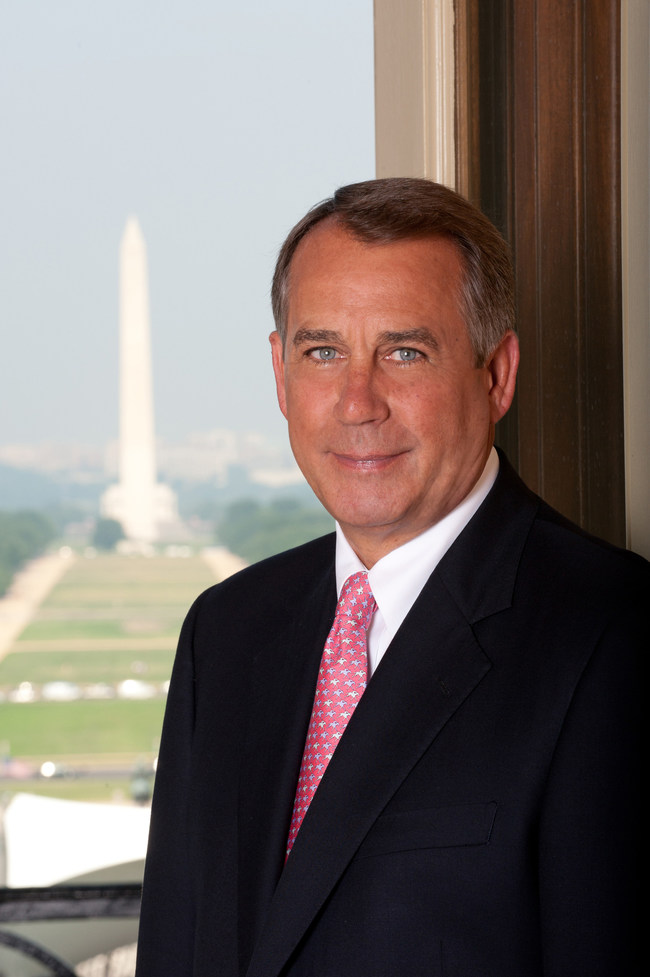
Former Speaker of the House John Boehner to Host First-Ever National Cannabis Event


The American Cannabis Summit: Countdown to Legalization will go live on Tuesday, October 23 at 1:00PM EST from Washington DC at ACS2018.com


NEWS PROVIDED BY
National Institute for Cannabis Investing

08:49 ET


WASHINGTON, Oct. 18, 2018/PRNewswire/ -- Marijuana has unleashed a "green gold rush" across our nation, creating $10.8 billion in new wealth a year. Every day it's transforming more and more Americans into millionaires and now, John Boehner and a team of experts are bringing the invaluable information and resources to the masses.


John Boehner, Former Speaker of the House


In an historic free event, hosted by the National Institute for Cannabis Investing, former Speaker of the House John Boehner, and leaders in the cannabis business Danny Brody and Mike Ward, will present the first online event to introduce THE authoritative source for cannabis investing - Cannabis Investors Network.

Mr. Boehner shares, "The next generation of billion-dollar cannabis companies are ripe for the picking, you just have to make smart moves. Don't go blindly investing in this sector because it's exciting and you don't want to miss the boat. Cannabis is here to stay, the industry is only getting bigger, and I am all in. With the information we are sharing on Tuesday, one can stake a claim for fractions of what they could be worth weeks or months from now."

Thursday, January 02, 2014

Colorado marijuana sales: Long lines for smooth rollout of legal business


Throngs of buyers, media, and law enforcement officials greeted the Wednesday morning commencement of legal recreational marijuana sales in Colorado, and there were few complaints.

By Fabien Tepper, Staff writer / January 2, 2014


A long line of buyers trails from a store selling marijuana in Pueblo West, Colo, Wednesday, Jan. 1, 2014. The nation's first recreational pot industry opened in Colorado on Wednesday, kicking off a marijuana experiment that will be watched closely around the world.
John Wark/AP


As the first light of 2014 hit the Rocky Mountains, buyers formed long lines in blustery Colorado weather to participate in the first legal sales of recreational marijuana in the United States.


 Fabien Tepper

Staff writer

Fabien Tepper writes for the Monitor's national desk. She holds a master's degree in Animals and Public Policy from Tufts University, and a bachelor's degree in art from Swarthmore College.


In Pictures Legalize marijuana?
Recent posts


01.02.14
Colorado marijuana sales: Long lines for smooth rollout of legal business
12.31.13
New Year's Eve forecast: where revelers will have to bundle up
12.23.13
Bizarre holiday-week weather ending just in time for Christmas (+video)
12.21.13
Bristol Palin: Why she backs Duck Dynasty patriarch's views on homosexuality (+video)
12.20.13
Holiday forecast: Storm clogs weekend travel, but Christmas looking calm (+video)


Related stories


How much do you know about marijuana? Take the quiz

Focus Legal pot is imminent in Colorado and Washington. Are they ready?

Teen marijuana use rises as risk perception wanes

Latin America Monitor Uruguay legalizes marijuana: A white flag in the war on drugs? (+video)


The Christian Science Monitor
Weekly Digital Edition

Accompanied by a swell of media coverage and law enforcement officials, sales began at 8 a.m. Wednesday, and "government officials marveled at the calm," according to a report in the Denver Post.

‘‘Everything’s gone pretty smoothly,’’ Barbara Brohl, head of Colorado’s Marijuana Enforcement Division, told the Associated Press.


RECOMMENDED: How much do you know about marijuana? Take the quiz

Thirty-seven licensed retailers opened for sales, most of them in Denver, according to the Post. Denver police issued two citations for public marijuana consumption during the day, but the department could not confirm that these were related to the day's sales.

Smoking pot in public remains illegal in Colorado, but the New York Times reports that some of the day's customers got around that problem by buying edible products like pot-laced chocolate truffles and baked goods.

Perhaps the only blip in the new industry's roll-out were inflated prices that customers worried could make the drug less affordable for medical users. Colorado has not established a statewide pricing structure, the AP reports, and midafternoon Wednesday at least one dispensary was charging $70 for one-eighth of an ounce of high-quality marijuana. The day before, medical marijuana patients paid as little as $25 for the same amount.

‘‘We hope that the focus on recreational doesn’t take the focus away from patients who really need this medicine,’’ Laura Kriho of the patient advocacy group Cannabis Therapy Institute told AP.

Any Colorado resident who is at least 21 can now buy up to an ounce or marijuana legally, and out-of-state visitors can buy up to a quarter ounce, which they must consume in Colorado. To help keep the crop from migrating to states where it remains illegal, the Denver airport has posted signs warning travelers that they cannot take pot with them when they leave.

This was part of the state's effort to meet requirements laid out in August by the US Justice Department. Despite a conflict between federal marijuana law and the recent legalization by Washington State and Colorado, Justice said it would not interfere in the new industry as long as the two states effectively enforced eight regulatory points, which include the following:

• Prevent use by minors.

• Prevent pot that is grown for sale in the state from migrating out of state.

• Prevent the diversion of marijuana revenue to organized crime.

• Prevent state-authorized activity from being used as a cover for illegal activity.

• Prevent drugged driving and other adverse public-health effects.

Colorado has approved 136 licenses for retail sales, three-quarters in Denver County and all sites that were previously selling marijuana for medical purposes. State officials told the Post that recreational pot sales could add over $200 million to the state's economy.

“If Colorado is able to successfully legalize marijuana without causing a social backlash, the tourism, tax, and other considerations are likely to compel several other states to quickly follow suit,” writes the paper.

Supporters told the paper that enough signatures had been collected to let Alaskans vote on legalization this year, likely followed by Oregon. By 2016, ballot measures could be considered in Arizona, California, Maine, Massachusetts, Montana, and Nevada.

Colorado's is the only fully legal marijuana industry in the world; in the Netherlands, where it is famously tolerated and sold in cafés, it is not actually legal. Washington State and Uruguay in South America have both legalized pot, but neither government has yet hammered out a regulatory system. Washington's industry, regulated by the state's Liquor Control Board, is expected to open for business by the spring of this year.


Source
.
.

Wednesday, November 06, 2013

Is America Less Moralistic Now, or Has Its Code Just Changed?


The new politics of gambling, marijuana, and other values issues
 
 
Nov 4 2013, 7:00 AM ET

 
Reuters

Are the American people more suspicious than they once were of moralism in public policy? So Ross Douthat argues in a column about legalized gambling and marijuana. The spread of casinos is driven by states seeking revenue and gaming lobbyists pressing their agenda, whereas weed legalization is driven by activists, "influenced by empathy for the terminally ill, and hastened by public exhaustion with the drug war," Douthat writes. "But both have been made possible by the same trend in American attitudes: the rise of a live-and-let-live social libertarianism, the weakening influence of both religious conservatism and liberal communitarianism, the growing suspicion of moralism in public policy."

It's a plausible theory, but the last line about moralism makes me want to quibble. Maybe Americans want public policy to reflect their moral judgments as much as ever, but they no longer regard smoking marijuana or casino gambling—or sodomy, gay marriage, or pornography consumption—as morally suspect. At the same time, maybe jurisdictions are implementing tough new laws in other areas—mandates to recycle, laws against dog-fighting, marital-rape statutes, trans-fat bans—because people still favor codifying their moral beliefs into law. Citizens don't harbor suspicion toward moralism so much as toward parts of traditional morality. On gambling, Gallup finds that 61 percent of Americans regard it as morally acceptable. Even if everyone who found casinos morally unacceptable voted to codify their moral judgment in law it wouldn't be sufficient to win the day.

There are, of course, small-government libertarians like Ron Paul who insist that the state ought to stay silent on certain matters even if they are in fact immoral. Perhaps that faction has grown in recent years.

What's definitely grown larger is the subset of Americans who not only disagree with the notion that gay marriage or smoking marijuana or watching pornography is immoral, but can't even understand the moral logic of traditionalists.


Reuters


On gay marriage, many would go so far as to say that it is immoral to prohibit same-sex unions. Their determination to moralistically press their advantage is why traditionalists like Rod Dreher now worry that cultural conservatives will be compelled by anti-discrimination law to participate.

Or take health care. Lots of Obamacare advocates insisted during the debate over the legislation that America has a moral imperative to provide coverage to the uninsured, and castigated opponents of the law as immoral people partly culpable for needless deaths.

Then there are areas of policy where the traditional morality of social conservatives squares with the moral beliefs of a substantial faction of reformers. Public opinion hasn't shifted on abortion like it has on gay marriage. On torture, orthodox Catholics and progressives are in substantial moral agreement. The country expresses opposition to pedophilia more moralistically now than ever. And on gun control and immigration reform, would-be reformers have made highly moralistic pitches to the public and are likely to keep doing so.

Traditionalists have seen their ability to control social norms decline precipitously in my lifetime, and given the way they conceive of moral behavior, you can see how, looking around, they'd conclude that moralism is dead.

I'm not so sure. I still see a lot of policy fights framed in highly moralistic language and arguments. And insofar as traditionalists are losing ground, it's often because what they regard as immoral strikes a majority as morally unobjectionable. 
 
 
.

Monday, June 17, 2013

God Doesn't Care If You Smoke Weed; Pastors Focus On Decriminalizing Unjust Drug Laws


Posted: 06/15/2013 9:20 am EDT | Updated: 06/15/2013 1:50 pm EDT


A network of pastors is speaking out against the so-called "war on drugs" and the devastating effect it has had, particularly on the black community.

At a conference called "View from the Pulpit: Faith Leaders and Drug Decriminalization," held at American Baptist College in Nashville, religious leaders focused on the moral injustice of the drug laws, rather than the morality of drugs themselves.

In a press release released in advance of the conference, potential attendees were reminded that African-Americans comprise only 13 percent of the U.S. population and 13 percent of drug users. Yet, they make up 38 percent of those arrested for drug law violations and 59 percent of those convicted of drug law violations.

One conference attendee, the Rev. John Jackson from Trinity United Church of Christ in Gary, Indiana, spoke on camera (see video above) about his beliefs on God and weed:


"I have had several people share with me privately, 'Reverend, I smoke weed and I know I shouldn't.' I say, 'Let me stop you right there. I don't believe the God we serve is that small or petty to be concerned about you smoking weed. I don't think God cares about that.' I let them know that our God is too big to be concerned about somebody smoking a joint."

The group of black pastors has a strange bedfellow in the televangelist Pat Robertson who indicated to his largely conservative audience last year that he also supported the decriminalization of drugs:


"I just think it's shocking how many of these young people wind up in prison and they get turned into hardcore criminals because they had a possession of a very small amount of controlled substance. The whole thing is crazy."

The conference was sponsored by The Samuel Dewitt Proctor Conference, American Baptist College and The Drug Policy Center.


.
.

Wednesday, January 11, 2012

VIDEO: From West Point To Pot Smuggler, A Third-Party Congressional Candidate's Adventure

January 9th, 2012 By COREY PEIN

VIDEO: From West Point To Pot Smuggler, A Third-Party Congressional Candidate's Adventure


codyreynolds
The major party candidates to replace Oregon's former First Congressional District Rep. David Wu—Democrat Suzanne Bonamici and Republican Rob Cornilles—have captured most of the media attention and donor support.

But WW also took the time last week to interview the third-party candidates in the race who will also appear on the ballot for the Jan. 31 special election: Progressive Party candidateSteven Cody Reynolds of Portland and Libertarian Party candidate James Foster of Beaverton.


Foster, pictured right, is a software engineer and Seventh-day Adventist who says his political beliefs are in line with his party's Presidential nominee, former New Mexico Gov. Gary Johnson. He is a "pure" Libertarian—arguing, for instance, that the federal government ought to encourage competing currencies.

Reynolds, pictured above, is an unemployed former office administrator and expat English teacher who was recruited to carry the Progressive platform in the Congressional race.

As we learned in our interview, Reynolds' résumé carries a distinction many candidates would omit:

He is probably the only West Point graduate to run for Congress after getting busted in Tennessee while attempting to smuggle 11 lbs. of weed across the country.

Reynolds says his chief qualification for the job is his willingness to tell the truth. Here's how he related the story of his felony drug bust in our interview last week:

Both Foster and Reynolds favor marijuana legalization.

In case you were wondering, a felony conviction—even imprisonment—is not a disqualification from holding office in Congress. Today's civics lesson from the Congressional Research Service (pdf):
Since the United States Constitution sets out the only three qualifications for congressional office (age, citizenship and inhabitancy), the conviction of a crime which constitutes a felony, can not constitutionally “disqualify” one from being a Member of Congress (unless that conviction is for certain treasonous conduct after having taken an oath of office). …

Once a person meets the three constitutional qualifications of age, citizenship and inhabitancy in the State when elected, that person, if duly elected, is constitutionally “qualified” to serve in Congress, even if a convicted felon.

Similar to the fact of a felony conviction, the fact that an individual is in prison, in and of itself, is also not necessarily a constitutional bar to or an automatic disqualification from running for and being elected to Congress. In fact, as early as 1798 a Member of the House was re-elected to Congress while imprisoned within his home State. Representative Matthew Lyon, an outspoken Republican critic of the Federalists, and particularly of President John Adams, was convicted and imprisoned on October 9, 1798, under the so-called “Sedition Act” for “libeling” President Adams.


Source