Juneteenth supposedly marked the end of slavery—so why did the Jesuits keep a man in bondage for two years after that?

Patrick Saint-Jean
June 17, 2021
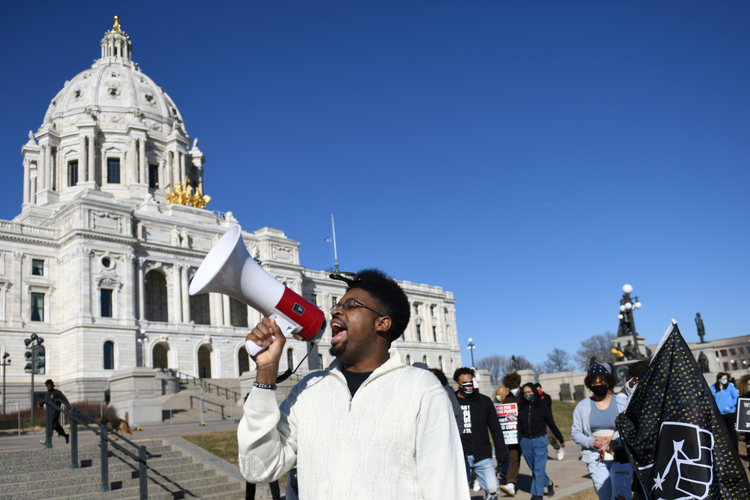
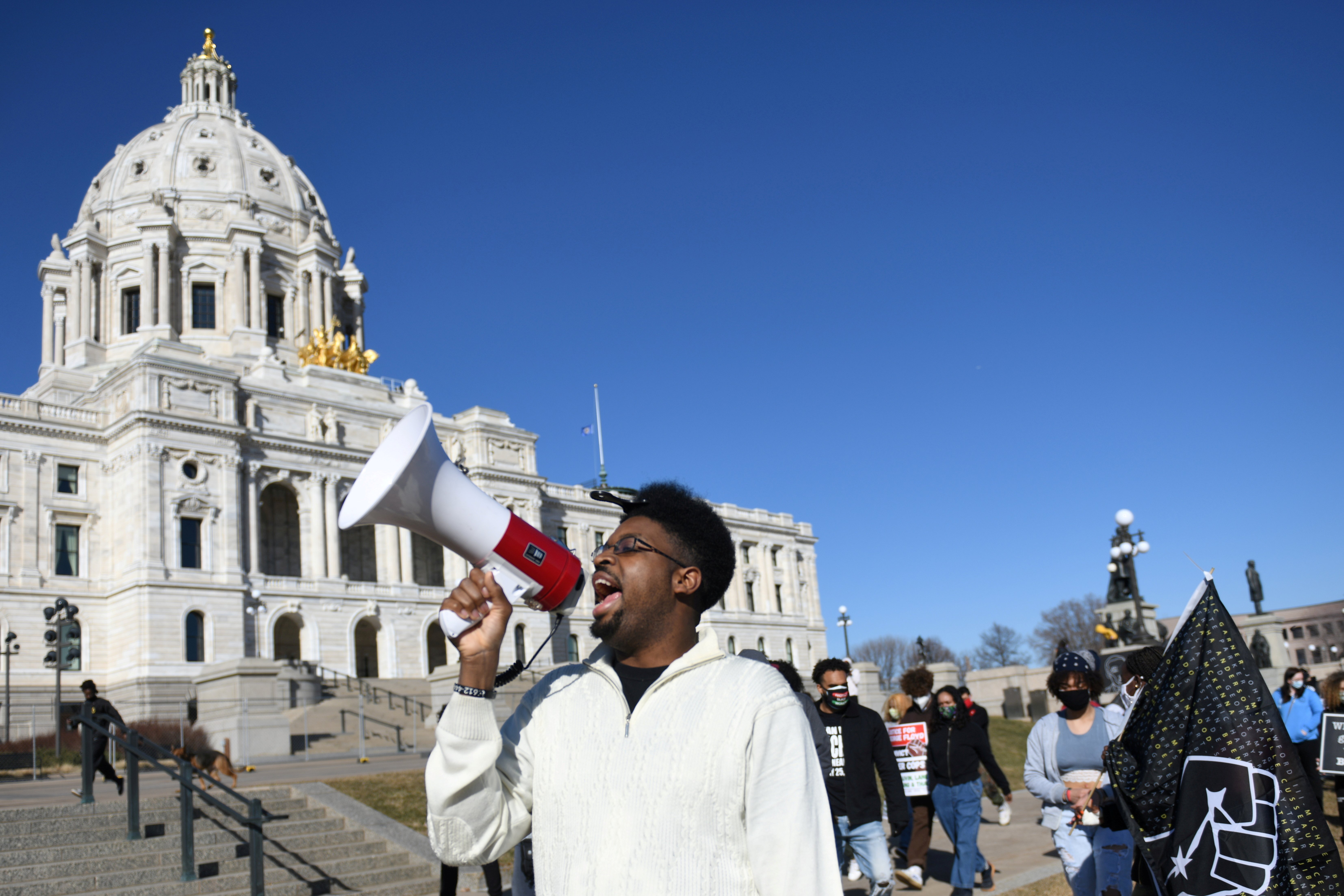
A demonstrator in St. Paul, Minn., uses a megaphone during a Black Lives Matter demonstration on March 19, 2021. (CNS photo/Nicholas Pfosi, Reuters)
When President Abraham Lincoln issued the Emancipation Proclamation in 1863, he announced that all enslaved people in the Confederated states “shall be then, thenceforward, and forever free.” In reality, the Emancipation Proclamation freed enslaved people in name only. The freedom promised was conditional on the Union winning the war. The decree didn’t apply to slave-holding border states—and the Confederate states refused to accept it. Jesuit missions that relied on slave labor also ignored the decree.
Texas was one of the states that disregarded the Emancipation Proclamation. Geographically, it was far enough away from the Civil War battles that enslaved people could not easily escape behind Union lines. As a result, Texas was seen as a safe haven for slavery and many enslavers moved there. After the war came to a close in April of 1865, slavery continued to be practiced in Texas for another two months.
Then, on June 19, 1865, the Union general Gordon Granger and his troops arrived in Galveston, Tex., bringing the news of the Confederate defeat to the 250,000 enslaved people who lived in Texas. “The people of Texas are informed that in accordance with a proclamation from the executive of the United States, all slaves are free,” Granger announced. “This involves an absolute equality of personal rights and rights of property between former masters and slaves, and the connection heretofore existing between them becomes that between employers and hired labor.” This was a happy day, and celebrations erupted among the newly freed people.
In reality, the Emancipation Proclamation freed enslaved people in name only.
Tweet this
There was a caveat, however: Those who had been enslaved were encouraged to remain with their former owners. “The freedmen are advised to remain quietly at their present homes and work for wages,” Granger said. “They are informed that they...will not be supported in idleness.” The documents ensuring freedom had been signed, yet many Black Americans still remained in a form of bondage.
Peter Hawkins and his wife Margaret were two of those for whom freedom would be slow in coming. A slave his entire life, according to an eminent researcher on Jesuit history, Dr. Kelly Schmidt, Peter was born and grew up on Jesuit properties in Saint Louis, Mo. There he saw members of his community flogged, and he suffered the pain of separation from friends and family when the Jesuits sold them away.
And yet Peter was a religious man, and his piety convinced the Jesuits that he was “the best slave.” Because of their high opinion, they allowed him to purchase his freedom—but Peter wanted his wife to be free as well. The Jesuits asked him to pay an additional amount that would be equivalent to $20,300 today, and Peter worked night and day for two years, trying to earn the money. Finally, in May 1864, he begged the Jesuits to take pity on him and his wife.
According to a document at the Jesuit archive in St. Louis, a Jesuit superior reported in a meeting with the house consultors at that time that Peter, “like almost all the other slaves these days,” had “gone giddy.” Reluctantly, however, they came up with an offer: If Peter and Margaret would labor for the Jesuits for another two years, they would grant Margaret her freedom.
Less than a year later, in January 1865, the Thirteenth Amendment was passed, abolishing slavery in the United States. The Missouri Society of Jesus contracted with their Black workers to continue working for a salary—but they did not apply this arrangement to Peter and Margaret, who continued to labor without pay for another two years. When they finally received a salary, Peter’s wages were fourteen dollars per month (the equivalent of about $200 in today’s economy). Margaret’s were five dollars per month (roughly equivalent to $80 today).
Slavery may have legally ended in 1865, but for Black people like Peter and Margaret Hawkins, the oppression continued.
Tweet this
Slavery may have legally ended in 1865, but for Black people like Peter and Margaret Hawkins, the oppression continued. Throughout the South, “black codes” limited the ways in which formerly enslaved people could work. Later, the country enacted Jim Crow laws that allowed ongoing discrimiation and segregation. Thankfully, the Jim Crow era came to an end—but white supremacy still lives on within American’s institutions.
The past couple of years have been particularly difficult ones as our country has reckoned with its history of racial injustice. There is much that remains to be done. Still, in cities all over the country, there are people coming together to affirm African American freedom, achievement and pride. This Juneteenth we will again have the chance to celebrate the power of new hope and possibility. It is a moment to remember the belief of Dr. Martin Luther King Jr. that “God’s image is ineffably etched” in all humans. As Catholics, this is yet another invitation to understand what St. Ignatius asks of us—the opening of our eyes to see the manifestation of God in each and every human being.
As we celebrate Juneteenth in 2021, the events of the past couple of years challenge us to embrace our shared humanity, with all its contradictions. God said to Jeremiah, “The human heart is deceitful above all things, and desperately sick; who can understand it? Only I the Lord” (Jer 17: 9-10), and we have seen more than enough examples of our desperate sickness lately.
The artist Kendrick Lamar, however, reminds us of the complexity of the human heart, saying, “I got power, poison, pain and joy inside my DNA.” In Dr. King’s words, “A persistent civil war rages within all of our lives.... There is some good in the worst of us and some evil in the best of us.” Each of us can be both oppressor and oppressed, both freedom activist and racist, both privileged and disadvantaged. This is the reality of our shared human nature.
We must be transformed internally, so that we can be empowered to build a better world externally.
Tweet this
This is something that challenges me personally. I claim a sense of belonging in the Jesuits. Our bond as a group of brothers is strong, and our love for one another is genuine. And yet, as a Black man, I cannot help but remember Peter and Margaret Hawkins and all the others like them, including my own ancestors—people who were forced to wait too long for freedom and justice.
St. Ignatius gives me the only answer that makes sense of our human contradictions, our potential for both justice and injustice: We are all sinners—and yet we are loved by Christ. Therein lies our hope. Even as we work for racial justice in our streets and schools and courts of law, we must also make room for Divine Love to work deep within our hearts. We must be transformed internally, so that we can be empowered to build a better world externally.
Juneteenth is more than a day of celebration. It is a challenge to be accountable to one another as members of a beloved community. It is a call to enter into a conversation with each other, creating a time and space where we can nourish a fragile community that is living by grace. As individuals and as a community, we have the chance to expand our spirituality and extend our moral imagination in ways that allow us to come together, united by justice. As St. Ignatius reminded novices in the 16th century, we must “never delay the good work.”
And so, as we celebrate Juneteenth this year, may we be empowered to answer the call to racial justice in our hearts—and make it real in the world around us.
This Juneteenth is our moment.
When President Abraham Lincoln issued the Emancipation Proclamation in 1863, he announced that all enslaved people in the Confederated states “shall be then, thenceforward, and forever free.” In reality, the Emancipation Proclamation freed enslaved people in name only. The freedom promised was conditional on the Union winning the war. The decree didn’t apply to slave-holding border states—and the Confederate states refused to accept it. Jesuit missions that relied on slave labor also ignored the decree.
Texas was one of the states that disregarded the Emancipation Proclamation. Geographically, it was far enough away from the Civil War battles that enslaved people could not easily escape behind Union lines. As a result, Texas was seen as a safe haven for slavery and many enslavers moved there. After the war came to a close in April of 1865, slavery continued to be practiced in Texas for another two months.
Then, on June 19, 1865, the Union general Gordon Granger and his troops arrived in Galveston, Tex., bringing the news of the Confederate defeat to the 250,000 enslaved people who lived in Texas. “The people of Texas are informed that in accordance with a proclamation from the executive of the United States, all slaves are free,” Granger announced. “This involves an absolute equality of personal rights and rights of property between former masters and slaves, and the connection heretofore existing between them becomes that between employers and hired labor.” This was a happy day, and celebrations erupted among the newly freed people.
In reality, the Emancipation Proclamation freed enslaved people in name only.
Tweet this
There was a caveat, however: Those who had been enslaved were encouraged to remain with their former owners. “The freedmen are advised to remain quietly at their present homes and work for wages,” Granger said. “They are informed that they...will not be supported in idleness.” The documents ensuring freedom had been signed, yet many Black Americans still remained in a form of bondage.
Peter Hawkins and his wife Margaret were two of those for whom freedom would be slow in coming. A slave his entire life, according to an eminent researcher on Jesuit history, Dr. Kelly Schmidt, Peter was born and grew up on Jesuit properties in Saint Louis, Mo. There he saw members of his community flogged, and he suffered the pain of separation from friends and family when the Jesuits sold them away.
And yet Peter was a religious man, and his piety convinced the Jesuits that he was “the best slave.” Because of their high opinion, they allowed him to purchase his freedom—but Peter wanted his wife to be free as well. The Jesuits asked him to pay an additional amount that would be equivalent to $20,300 today, and Peter worked night and day for two years, trying to earn the money. Finally, in May 1864, he begged the Jesuits to take pity on him and his wife.
According to a document at the Jesuit archive in St. Louis, a Jesuit superior reported in a meeting with the house consultors at that time that Peter, “like almost all the other slaves these days,” had “gone giddy.” Reluctantly, however, they came up with an offer: If Peter and Margaret would labor for the Jesuits for another two years, they would grant Margaret her freedom.
Less than a year later, in January 1865, the Thirteenth Amendment was passed, abolishing slavery in the United States. The Missouri Society of Jesus contracted with their Black workers to continue working for a salary—but they did not apply this arrangement to Peter and Margaret, who continued to labor without pay for another two years. When they finally received a salary, Peter’s wages were fourteen dollars per month (the equivalent of about $200 in today’s economy). Margaret’s were five dollars per month (roughly equivalent to $80 today).
Slavery may have legally ended in 1865, but for Black people like Peter and Margaret Hawkins, the oppression continued.
Tweet this
Slavery may have legally ended in 1865, but for Black people like Peter and Margaret Hawkins, the oppression continued. Throughout the South, “black codes” limited the ways in which formerly enslaved people could work. Later, the country enacted Jim Crow laws that allowed ongoing discrimiation and segregation. Thankfully, the Jim Crow era came to an end—but white supremacy still lives on within American’s institutions.
The past couple of years have been particularly difficult ones as our country has reckoned with its history of racial injustice. There is much that remains to be done. Still, in cities all over the country, there are people coming together to affirm African American freedom, achievement and pride. This Juneteenth we will again have the chance to celebrate the power of new hope and possibility. It is a moment to remember the belief of Dr. Martin Luther King Jr. that “God’s image is ineffably etched” in all humans. As Catholics, this is yet another invitation to understand what St. Ignatius asks of us—the opening of our eyes to see the manifestation of God in each and every human being.
As we celebrate Juneteenth in 2021, the events of the past couple of years challenge us to embrace our shared humanity, with all its contradictions. God said to Jeremiah, “The human heart is deceitful above all things, and desperately sick; who can understand it? Only I the Lord” (Jer 17: 9-10), and we have seen more than enough examples of our desperate sickness lately.
The artist Kendrick Lamar, however, reminds us of the complexity of the human heart, saying, “I got power, poison, pain and joy inside my DNA.” In Dr. King’s words, “A persistent civil war rages within all of our lives.... There is some good in the worst of us and some evil in the best of us.” Each of us can be both oppressor and oppressed, both freedom activist and racist, both privileged and disadvantaged. This is the reality of our shared human nature.
We must be transformed internally, so that we can be empowered to build a better world externally.
Tweet this
This is something that challenges me personally. I claim a sense of belonging in the Jesuits. Our bond as a group of brothers is strong, and our love for one another is genuine. And yet, as a Black man, I cannot help but remember Peter and Margaret Hawkins and all the others like them, including my own ancestors—people who were forced to wait too long for freedom and justice.
St. Ignatius gives me the only answer that makes sense of our human contradictions, our potential for both justice and injustice: We are all sinners—and yet we are loved by Christ. Therein lies our hope. Even as we work for racial justice in our streets and schools and courts of law, we must also make room for Divine Love to work deep within our hearts. We must be transformed internally, so that we can be empowered to build a better world externally.
Juneteenth is more than a day of celebration. It is a challenge to be accountable to one another as members of a beloved community. It is a call to enter into a conversation with each other, creating a time and space where we can nourish a fragile community that is living by grace. As individuals and as a community, we have the chance to expand our spirituality and extend our moral imagination in ways that allow us to come together, united by justice. As St. Ignatius reminded novices in the 16th century, we must “never delay the good work.”
And so, as we celebrate Juneteenth this year, may we be empowered to answer the call to racial justice in our hearts—and make it real in the world around us.
This Juneteenth is our moment.


