Showing posts with label Heathen. Show all posts
Showing posts with label Heathen. Show all posts
Saturday, December 20, 2025
Thursday, June 19, 2025
Tuesday, December 24, 2024
Monday, December 16, 2024
Sunday, February 25, 2024
Sunday

"Sunday was a name given by the heathens to the first day of the week, because it was the day on which they worshipped the sun,...”
Eadie's Biblical Cyclopedia, 1872 Edition, page 561.
Sunday, November 18, 2018
Number of Witches in U.S. on the Rise, May Surpass 1.5 Million

By Michael W. Chapman | November 16, 2018 | 5:59 PM EST

A report in the Christian Postcontends that the number of witches (and Wiccans) has dramatically increased since the 1990s, to the degree that there may be at least 1.5 million witches in the United States, which is higher than the 1.4 million mainline Presbyterians.
"[T]he practice of witchcraft has grown significantly in recent decades; those who identify as witches has risen concurrently with the rise of the 'witch aesthetic,'" reported the Christian Post in October, citing data from Quartz, a Trinity College study, and the Pew Research Center.
Between 1990 and 2008, the number of Wiccans in the United States grew from 8,000 to 340,000, according to three religious surveys conducted by Trinity College in Connecticut. In addition, the Pew Research Center reported in 2014 that 0.4% of the population -- 1 to 1.5 million Americans -- "identify as Wicca or Pagan."

"It makes sense that witchcraft and the occult would rise as society becomes increasingly postmodern," author Julie Roys, formerly of Moody Radio, told the Christian Post. "The rejection of Christianity has left a void that people, as inherently spiritual beings, will seek to fill."
Roys added that witchcraft is especially attractive to Millenials because it has been "effectively repackaged."
"No longer is witchcraft and paganism satanic and demonic," said Roys. "[I]t's a 'pre-Christian tradition' that promotes 'free thought' and 'understanding of earth and nature.'"
A report in the Christian Postcontends that the number of witches (and Wiccans) has dramatically increased since the 1990s, to the degree that there may be at least 1.5 million witches in the United States, which is higher than the 1.4 million mainline Presbyterians.
"[T]he practice of witchcraft has grown significantly in recent decades; those who identify as witches has risen concurrently with the rise of the 'witch aesthetic,'" reported the Christian Post in October, citing data from Quartz, a Trinity College study, and the Pew Research Center.
Between 1990 and 2008, the number of Wiccans in the United States grew from 8,000 to 340,000, according to three religious surveys conducted by Trinity College in Connecticut. In addition, the Pew Research Center reported in 2014 that 0.4% of the population -- 1 to 1.5 million Americans -- "identify as Wicca or Pagan."
"It makes sense that witchcraft and the occult would rise as society becomes increasingly postmodern," author Julie Roys, formerly of Moody Radio, told the Christian Post. "The rejection of Christianity has left a void that people, as inherently spiritual beings, will seek to fill."
Roys added that witchcraft is especially attractive to Millenials because it has been "effectively repackaged."
"No longer is witchcraft and paganism satanic and demonic," said Roys. "[I]t's a 'pre-Christian tradition' that promotes 'free thought' and 'understanding of earth and nature.'"
Tuesday, March 01, 2016
Easter: its origins and traditions

Published on Feb 22, 2016
FAIR USE NOTICE: This video may contain copyrighted material. Such material is made available for educational purposes only. This constitutes a 'fair use' of any such copyrighted material as provided for in Title 17 U.S.C. section 107 of the US Copyright Law.
Credits to a fellow brother who is aware of things!
Should Bible believing Christians celebrate Easter? What is the real spirit behind Easter? Why are eggs and bunny rabbits a part of Easter?
This video gives us a glimpse at the origins and history of the day. The following link offers information on this celebration:http://www.remnantofgod.org/easter.htm
If Easter is not of God, will you continue to choose man’s pagan-tainted traditions over the truth and holiness of Christ? Will you stand up for the Truth that is found in the Father (Deuteronomy 32:4), in His Son, Jesus (John 14:6), in the Holy Spirit (1 John 5:6), in the Word (John 17:17) and in His holy ten commandments, which represent His love and character (Exodus 20; Psalm 119:151; John 14:15; 1 John 5:3)?
Turn to Christ and abide in His truth. Flee paganism, man’s traditions and worldliness. Put your faith in Christ and with the help of the Holy Spirit, keep His holy ten commandments so that you may abide in His love (John 15:10) and He will grant you, as a gift, ETERNAL LIFE! (Romans 6:23).
Christ is the Anointed One! He is the Christ! He is Elohim. We’re reminded by the Almighty Father to listen to Him! So let’s listen to Christ, the Messiah, Prince of Peace, Lamb of Elohim and Son of the Most High!
For more information and videos on Christian beliefs and Bible prophecy, please visit www.theseventhdayremnantchurch.org, www.remnantofgod.org, www.john1429.org, www.sdrminisries.org along with cregen124 and NicholasPoGM's YouTube's channel.
FAIR USE NOTICE: This video may contain copyrighted material. Such material is made available for educational purposes only. This constitutes a 'fair use' of any such copyrighted material as provided for in Title 17 U.S.C. section 107 of the US Copyright Law.
Credits to a fellow brother who is aware of things!
Should Bible believing Christians celebrate Easter? What is the real spirit behind Easter? Why are eggs and bunny rabbits a part of Easter?
This video gives us a glimpse at the origins and history of the day. The following link offers information on this celebration:http://www.remnantofgod.org/easter.htm
If Easter is not of God, will you continue to choose man’s pagan-tainted traditions over the truth and holiness of Christ? Will you stand up for the Truth that is found in the Father (Deuteronomy 32:4), in His Son, Jesus (John 14:6), in the Holy Spirit (1 John 5:6), in the Word (John 17:17) and in His holy ten commandments, which represent His love and character (Exodus 20; Psalm 119:151; John 14:15; 1 John 5:3)?
Turn to Christ and abide in His truth. Flee paganism, man’s traditions and worldliness. Put your faith in Christ and with the help of the Holy Spirit, keep His holy ten commandments so that you may abide in His love (John 15:10) and He will grant you, as a gift, ETERNAL LIFE! (Romans 6:23).
Christ is the Anointed One! He is the Christ! He is Elohim. We’re reminded by the Almighty Father to listen to Him! So let’s listen to Christ, the Messiah, Prince of Peace, Lamb of Elohim and Son of the Most High!
For more information and videos on Christian beliefs and Bible prophecy, please visit www.theseventhdayremnantchurch.org, www.remnantofgod.org, www.john1429.org, www.sdrminisries.org along with cregen124 and NicholasPoGM's YouTube's channel.
.
Wednesday, December 24, 2014
A Brief History of the Christmas Controversy
BY MIKE MARIANI • December 23, 2014 • 9:40 AM

(Photo: JaroPienza/Shutterstock)
Can Christmas’ pagan roots explain its increasing secularization today?
For Americans in the past decade, the month of December has not only been about braving the attic, Fraser firs, idiosyncratic family traditions, and Walmart anarchists. For years, conservative television networks, right-wing politicos, and outspoken Christian organizations have lamented the perceived “War on Christmas” and the holiday’s increasing secularization among American families.
The war is seemingly fought on two fronts. On the first, Republican shock jocks accuse liberals of taking political correctness too far and whitewashing “Merry Christmas” into “Happy Holidays,” effectively burying or at least denying the existence of Christian America. On the second—and more logical—front, devout Christians and their organizations have lamented the secularization of Christmas, noting that the holiday has gradually but inexorably transformed into an American tradition centered on family values, ubiquitous consumerism, and genial trappings and pageantry that no longer have any connection to the birth of Christ, The Nativity, or Christian piety.
The invention of Christmas was a power play, a religious contrivance and political machination instituted to shrewdly shift the masses from paganism to Christianity while minimizing the resistance that might arise out of wrenching away a beloved time of year.
The latter of these grievances is undeniably valid. In the United States, December 25 is no longer emblematic of Christ and his life; instead, it is now only the zenith of a much larger, longer “holiday season” that is sprawling and colossal in cultural scope, encompassing parties, advertising, television specials, Christmas albums, and the general leveraging of all forces in media and entertainment. Devout Christians understandably bemoan this onslaught, declaring that it has completely stripped the holiday of its true purpose: celebration and observance of Christ’s life. The truth, however, is more complicated. The celebration and holiday spirit surrounding December 25 was never the exclusive province of Christians. In fact, it was around long before Christ was even born.
Around the same time that we celebrate Christmas, the Ancient Romans celebrated Saturnalia, a festival to honor Saturn, the Roman god of agriculture. On December 17 Romans made dedications at the Temple of Saturn, which often included sacrifices. The commemoration of the temple marked the beginning of an epic holiday season that included public banquets, the exchanging of gifts among family, and singing in the streets. During Saturnalia Romans lifted laws on propriety and engaged in the inversion of social roles: gambling was permitted, drinking and public debauchery were rampant, and, in what is perhaps the festival’s most striking feature, masters would serve their slaves during one of the banquets.
A “Lord of Misrule” was appointed each year to serve as a madcap master of ceremonies, bestowed with the power to command revelers to fulfill his every crack whim. In his work Saturnalia, the Greek satirist Lucian of Samosata (125-180 C.E.) has one of his characters declare:
During my week the serious is barred: no business allowed. Drinking and being drunk, noise and games of dice, appointing of kings and feasting of slaves, singing naked, clapping of frenzied hands, an occasional ducking of corked faces in icy water—such are the functions over which I preside.
Originally taking place on a single day, under the reign of Emperor Augustus (63 B.C.E.-14 C.E.) the event was extended to multiple days. By the time Emperor Caligula ruled, Saturnalia lasted between five and seven days, with the culmination often falling on December 25, around the time of the winter solstice. December 25 had added significance for the Romans, as it was the birthday of the sun god Sol Invictus (“Unconquerable Sun”), a date appropriately close to the longest night of the year.
During the first few centuries C.E., Saturnalia reached its extravagant peak. Banquets and performances featured female gladiators, bevies of exotic birds, fireworks, and dwarves in mock combat (yes, just like inGame of Thrones‘ Purple Wedding). It wasn’t until Constantine the Great’s conversion to Christianity that Saturnalia would begin to fall under siege. His conversion in 312 effectively ended the persecution of Christians in Rome and, equally significant, opened the doors for royal patronage of the Church. The time frame of Constantine’s reign—306-337—witnessed a power struggle between paganism and Christianity.
It’s no blasphemy to declare that the December holiday season has once again become a pagan celebration; it’s an atavistic return to the ritual’s roots.
Sometime around the end of Constantine’s dynasty, perhaps 336, Christians celebrated the first Christmas. This was, obviously, well over three centuries after Christ’s birth. Further, the date chosen for Christmas—December 25—had no connection to Christ’s actual birthday. There is no mention of his birth date in the Bible, and no true record exists, as ancient Jewish tradition denounced the commemoration of birthdays as a pagan ritual. This would soon take on a profound irony when, centuries after that unrecorded birthday, Church Fathers scrambled to pick an arbitrary date for Christ’s birth so that they might compete with paganism.
In the fourth century, as Christianity began to supersede paganism in Rome and Christians ascended to the ruling class, the effort to dissolve the old beliefs and supplant Saturnalia began. As British Museum advisor Sam Moorhead told BBC Religion, “If Christianity moves Christmas into December, at the Saturnalia and the birthday of Sol, you can then fade out these other festivals and incorporate elements into the Christian festival. You can attempt to move on as if nothing has happened.” Through this strategy the early Christian elites killed several birds with one stone: they were able to gradually render Saturnalia obsolete; facilitate a rise in the popularity and cultural capital of Christianity by making a Christian holiday the centerpiece of the festival season; and avoid popular backlash by continuing the winter solstice celebrations unimpeded.
In other words, the early Roman Catholic Church did not so much appropriate the trappings and customs of Saturnalia as they simply stuck the flag of Christmas right in the middle of the festival’s perennial landscape, changing the underlying religion while leaving the coveted pomp and circumstance intact.
As Stephen Nissenbaum argues in The Battle for Christmas, “In return for ensuring massive observance of the anniversary of the Savior’s birth by assigning it to this resonant date, the Church for its part tacitly agreed to allow the holiday to be celebrated more or less the way it always had been. From the beginning, the Church’s hold over Christmas was (and remains still) rather tenuous.” The elaborate feasts, the gift-giving, the frivolous abeyance of the social order, the weeklong license to debauch—all were retained, with the politically contrived birth of Christ inserted at the climax.
The truth is that Christmas has not so much evolved into a secular celebration as it has come full circle, returning to its original incarnation as a sprawling festival more focused on levity and merrymaking than the worship of Jesus Christ.
Over the course of centuries, many of these customs, including the exchanging of gifts and the spirit of charity, became strongly associated with Christmas. Alas, gift-giving was an emblem of love and friendship long before Christ, and the kindness and egalitarianism woven through our holiday season hark back to the worship of Saturn, who was said to have presided over a Golden Age of mankind in which all people co-existed in a paradisiacal state of equality (which was honored, among other ways, through the role reversals between masters and slaves).
In a sense, the invention of Christmas was a power play, a religious contrivance and political machination instituted to shrewdly shift the masses from paganism to Christianity while minimizing the resistance that might arise out of wrenching away a beloved time of year. And by using the revered infrastructure of the Saturnalia festivals, the Church could immediately add weight to the figure of Christ, making his birthday a ready-made cause for celebration.
The fusing of two religions or, in the case of Saturnalia and Christmas, the subsuming of one set of religious practices into another is known as religious syncretism. The phenomenon is far more prevalent than one might think.
After the imperial conquests of Alexander the Great merged various cultures throughout central and western Asia, the Hellenistic period (323-31 B.C.E.) saw the blending of Persian, Egyptian, and Mesopotamian religions. In his collection of essays Moses and Monotheism, Freud speculated that Judaism may have been the result of Moses’ followers merging with a small monotheistic tribe that worshiped the volcano god Jahweh. Plenty of scholars argue that the characteristic appearance of the Christian God—patriarchal white beard, light-skinned complexion, cloud-wreathed firmament backdrop—draws directly from Zeus. Syncretism is the crucial thread that stitches together religious history, and the story of Saturnalia and Christmas is a particularly unique example of it.
Related Stories

Apparently You Can Bring Your Religion to Work

Economics at the North Pole: Are Santa’s Elves Slaves?

A Word of Caution to the Holiday Deal-Makers
In most instances of syncretism, the fusing religions merge not only their customs and rituals but also their underlying beliefs. In this way, the once-autonomous religions are fundamentally changed, adapting myths and doctrines to create an evolved system of beliefs and practices. But Christianity was able to manipulate the effects of syncretism without ever succumbing to its compromises or relinquishing doctrine.
During Constantine’s reign the Church Fathers went so far as to associate the “Unconquered Sun” with Jesus, referencing the “sun of righteousness” mentioned in Malachi 4:2 as evidence of Jesus, the true sun. Through this crafty legerdemain early Christians more easily shifted December 25 from the birth of Sol Invictus to the birth of Christ. Eventually several other important religious dates would pivot on Christmas, including the Annunciation, celebrated on March 25, nine months before Christ’s ceremonial birth, the Epiphany, and the Adoration of the Magi. Once Christianity seized December 25, all the other historic moments and their accompanying mythologies fell into place. After emerging out of the husk of Saturnalia, Christmas gathered more and more momentum until it became a vital date inextricably bound to all the other sacred events and consecrated lore of the Christian tradition.
Roughly 1,600 years later, though, things are different. Christmas, at least as it’s celebrated in America, is no longer treated as an exclusively religious holiday. While millions of Americans still attend Christmas services, there are millions more who get swept up in an entirely different set of gratuitous lore: Santa Claus, Christmas trees, Dickensian tableaus, and the lustrous charms of Disneyfication. But look beneath all of the modern flourishes and you’ll see something that looks a lot like Saturnalia: the ceremonial feasts, the singing in the streets (what we now call caroling), the holiday parties. Heck, Saturnalia even had a special day on December 23 reserved for the exchanging of gifts among friends and family—Sigillaria, so named after the wax figurines often given as presents.
The truth is that Christmas has not so much evolved into a secular celebration as it has come full circle, returning to its original incarnation as a sprawling festival more focused on levity and merrymaking than the worship of Jesus Christ. As The Battle for Christmas admits, “There were always people for whom Christmas was a time of pious devotion rather than carnival, but such people were always in the minority.”
It’s no blasphemy to declare that the December holiday season has once again become a pagan celebration; it’s an atavistic return to the ritual’s roots. The problem now, as the more devout Christians rightly point out, are those people caught in the middle of this identity crisis—identifying as members of Christianity and claiming belief in its savior, but investing little devotion, solemnity or faith in the embattled date. These halfhearted believers are mucking up the faith, nominally celebrating Christ’s birth but eating, drinking, and carousing like its 150 BC.E.
Historically, clergymen and their faithful congregants rejected the idea that Christianity is a product of syncretism, believing that subscribing to such a process adulterates the religion and alloys its absolute truth. How right they were.
.
Thursday, December 19, 2013
CHRISTMAS AND ITS PAGAN ROOTS

EvenAtTheDoors
Published on Dec 4, 2013
Today Christians debate over nearly EVERYTHING rather than going directly to the word of God. What is the pre-Christian celebration called the 'Natalie Invitus Solis', that was kept in the occult world, which Christians have stolen and have called Christmas about? Can we really distinguish between what is Christianity and what is paganism? This in-depth study will settle this issue once and for all. It will upset and agitate but the truth is meant to set us free.
.
.
Wednesday, December 11, 2013
Why was Christmas banned in America until 1820?

Jesusistheway1001
Uploaded on Dec 8, 2011
What is the real spirit behind Christmas? What does the tree represent and why do we decorate it and place gifts underneath it? Why have we been taught to lie to our children and teach them to believe in a man named Santa Clause? Is it coincidence that S.A.N.T.A. also spells S.A.T.A.N? How much truth do you want? Will you choose tradition over holiness? You shall know the truth and the truth shall set you free! This video is filled with truth!
.
.
Monday, December 09, 2013
Thou shalt be perfect with the Lord thy God

9 When thou art come into the land which the Lord thy God giveth thee, thou shalt not learn to do after the abominations of those nations.
10 There shall not be found among you any one that maketh his son or his daughter to pass through the fire, or that useth divination, or an observer of times, or an enchanter, or a witch.
11 Or a charmer, or a consulter with familiar spirits, or a wizard, or a necromancer.
12 For all that do these things are an abomination unto the Lord: and because of these abominations the Lord thy God doth drive them out from before thee.
13 Thou shalt be perfect with the Lord thy God.
14 For these nations, which thou shalt possess, hearkened unto observers of times, and unto diviners: but as for thee, the Lord thy God hath not suffered thee so to do.
15 The Lord thy God will raise up unto thee a Prophet from the midst of thee, of thy brethren, like unto me; unto him ye shall hearken;
Deuteronomy 18:9-15
King James Version (KJV)

.
King James Version (KJV)

.
Sunday, December 23, 2012
Learn not the way of the heathen

Thus saith the Lord, Learn not the way of the heathen, and be not dismayed at the signs of heaven; for the heathen are dismayed at them.
For the customs of the people are vain: for one cutteth a tree out of the forest, the work of the hands of the workman, with the axe.
They deck it with silver and with gold; they fasten it with nails and with hammers, that it move not.

,
Saturday, July 30, 2011
And the heathen shall know that I am the LORD, saith the Lord GOD...
Ezekiel 36
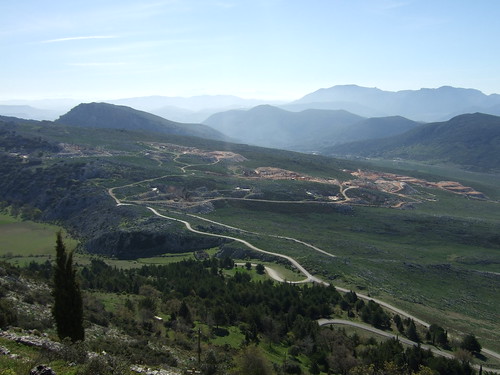
1Also, thou son of man, prophesy unto the mountains of Israel, and say, Ye mountains of Israel, hear the word of the LORD:
2Thus saith the Lord GOD; Because the enemy hath said against you, Aha, even the ancient high places are ours in possession:
3Therefore prophesy and say, Thus saith the Lord GOD; Because they have made you desolate, and swallowed you up on every side, that ye might be a possession unto the residue of the heathen, and ye are taken up in the lips of talkers, and are an infamy of the people:
4Therefore, ye mountains of Israel, hear the word of the Lord GOD; Thus saith the Lord GOD to the mountains, and to the hills, to the rivers, and to the valleys, to the desolate wastes, and to the cities that are forsaken, which became a prey and derision to the residue of the heathen that are round about;
5Therefore thus saith the Lord GOD; Surely in the fire of my jealousy have I spoken against the residue of the heathen, and against all Idumea, which have appointed my land into their possession with the joy of all their heart, with despiteful minds, to cast it out for a prey.
6Prophesy therefore concerning the land of Israel, and say unto the mountains, and to the hills, to the rivers, and to the valleys, Thus saith the Lord GOD; Behold, I have spoken in my jealousy and in my fury, because ye have borne the shame of the heathen:
7Therefore thus saith the Lord GOD; I have lifted up mine hand, Surely the heathen that are about you, they shall bear their shame.
8But ye, O mountains of Israel, ye shall shoot forth your branches, and yield your fruit to my people of Israel; for they are at hand to come.
9For, behold, I am for you, and I will turn unto you, and ye shall be tilled and sown:
10And I will multiply men upon you, all the house of Israel, even all of it: and the cities shall be inhabited, and the wastes shall be builded:
11And I will multiply upon you man and beast; and they shall increase and bring fruit: and I will settle you after your old estates, and will do better unto you than at your beginnings: and ye shall know that I am the LORD.
12Yea, I will cause men to walk upon you, even my people Israel; and they shall possess thee, and thou shalt be their inheritance, and thou shalt no more henceforth bereave them of men.
13Thus saith the Lord GOD; Because they say unto you, Thou land devourest up men, and hast bereaved thy nations:
14Therefore thou shalt devour men no more, neither bereave thy nations any more, saith the Lord GOD.
15Neither will I cause men to hear in thee the shame of the heathen any more, neither shalt thou bear the reproach of the people any more, neither shalt thou cause thy nations to fall any more, saith the Lord GOD.
16Moreover the word of the LORD came unto me, saying,
17Son of man, when the house of Israel dwelt in their own land, they defiled it by their own way and by their doings: their way was before me as the uncleanness of a removed woman.
18Wherefore I poured my fury upon them for the blood that they had shed upon the land, and for their idols wherewith they had polluted it:
19And I scattered them among the heathen, and they were dispersed through the countries: according to their way and according to their doings I judged them.
20And when they entered unto the heathen, whither they went, they profaned my holy name, when they said to them, These are the people of the LORD, and are gone forth out of his land.
21But I had pity for mine holy name, which the house of Israel had profaned among the heathen, whither they went.
22Therefore say unto the house of Israel, thus saith the Lord GOD; I do not this for your sakes, O house of Israel, but for mine holy name's sake, which ye have profaned among the heathen, whither ye went.
23And I will sanctify my great name, which was profaned among the heathen, which ye have profaned in the midst of them; and the heathen shall know that I am the LORD, saith the Lord GOD, when I shall be sanctified in you before their eyes.
24For I will take you from among the heathen, and gather you out of all countries, and will bring you into your own land.
25Then will I sprinkle clean water upon you, and ye shall be clean: from all your filthiness, and from all your idols, will I cleanse you.
26A new heart also will I give you, and a new spirit will I put within you: and I will take away the stony heart out of your flesh, and I will give you an heart of flesh.
27And I will put my spirit within you, and cause you to walk in my statutes, and ye shall keep my judgments, and do them.
28And ye shall dwell in the land that I gave to your fathers; and ye shall be my people, and I will be your God.
29I will also save you from all your uncleannesses: and I will call for the corn, and will increase it, and lay no famine upon you.
30And I will multiply the fruit of the tree, and the increase of the field, that ye shall receive no more reproach of famine among the heathen.
31Then shall ye remember your own evil ways, and your doings that were not good, and shall lothe yourselves in your own sight for your iniquities and for your abominations.
32Not for your sakes do I this, saith the Lord GOD, be it known unto you: be ashamed and confounded for your own ways, O house of Israel.
33Thus saith the Lord GOD; In the day that I shall have cleansed you from all your iniquities I will also cause you to dwell in the cities, and the wastes shall be builded.
34And the desolate land shall be tilled, whereas it lay desolate in the sight of all that passed by.
35And they shall say, This land that was desolate is become like the garden of Eden; and the waste and desolate and ruined cities are become fenced, and are inhabited.
36Then the heathen that are left round about you shall know that I the LORD build the ruined places, and plant that that was desolate: I the LORD have spoken it, and I will do it.
37Thus saith the Lord GOD; I will yet for this be enquired of by the house of Israel, to do it for them; I will increase them with men like a flock.
38As the holy flock, as the flock of Jerusalem in her solemn feasts; so shall the waste cities be filled with flocks of men: and they shall know that I am the LORD.
.
Friday, October 29, 2010
Don't Waste Time With The Unrepentant Sinner

Give not that which is holy unto the dogs, neither cast ye your pearls before swine, lest they trample them under their feet, and turn again and rend you.
Matthew 7:6
.
Monday, October 04, 2010
I will be exalted among the heathen, I will be exalted in the earth

Psalm 46
1God is our refuge and strength, a very present help in trouble.
2Therefore will not we fear, though the earth be removed, and though the mountains be carried into the midst of the sea;
3Though the waters thereof roar and be troubled, though the mountains shake with the swelling thereof. Selah.
4There is a river, the streams whereof shall make glad the city of God, the holy place of the tabernacles of the most High.
5God is in the midst of her; she shall not be moved: God shall help her, and that right early.
6The heathen raged, the kingdoms were moved: he uttered his voice, the earth melted.
7The LORD of hosts is with us; the God of Jacob is our refuge. Selah.
8Come, behold the works of the LORD, what desolations he hath made in the earth.
9He maketh wars to cease unto the end of the earth; he breaketh the bow, and cutteth the spear in sunder; he burneth the chariot in the fire.
10Be still, and know that I am God: I will be exalted among the heathen, I will be exalted in the earth.
11The LORD of hosts is with us; the God of Jacob is our refuge. Selah.
.
Thursday, September 02, 2010
Learn not the way of the heathen

Jeremiah 10
1Hear ye the word which the LORD speaketh unto you, O house of Israel:
2Thus saith the LORD, Learn not the way of the heathen, and be not dismayed at the signs of heaven; for the heathen are dismayed at them.
3For the customs of the people are vain: for one cutteth a tree out of the forest, the work of the hands of the workman, with the axe.
4They deck it with silver and with gold; they fasten it with nails and with hammers, that it move not.
5They are upright as the palm tree, but speak not: they must needs be borne, because they cannot go. Be not afraid of them; for they cannot do evil, neither also is it in them to do good.
6Forasmuch as there is none like unto thee, O LORD; thou art great, and thy name is great in might.
7Who would not fear thee, O King of nations? for to thee doth it appertain: forasmuch as among all the wise men of the nations, and in all their kingdoms, there is none like unto thee.
8But they are altogether brutish and foolish: the stock is a doctrine of vanities.
9Silver spread into plates is brought from Tarshish, and gold from Uphaz, the work of the workman, and of the hands of the founder: blue and purple is their clothing: they are all the work of cunning men.
10But the LORD is the true God, he is the living God, and an everlasting king: at his wrath the earth shall tremble, and the nations shall not be able to abide his indignation.
11Thus shall ye say unto them, The gods that have not made the heavens and the earth, even they shall perish from the earth, and from under these heavens.
12He hath made the earth by his power, he hath established the world by his wisdom, and hath stretched out the heavens by his discretion.
13When he uttereth his voice, there is a multitude of waters in the heavens, and he causeth the vapours to ascend from the ends of the earth; he maketh lightnings with rain, and bringeth forth the wind out of his treasures.
14Every man is brutish in his knowledge: every founder is confounded by the graven image: for his molten image is falsehood, and there is no breath in them.
15They are vanity, and the work of errors: in the time of their visitation they shall perish.
16The portion of Jacob is not like them: for he is the former of all things; and Israel is the rod of his inheritance: The LORD of hosts is his name.
17Gather up thy wares out of the land, O inhabitant of the fortress.
18For thus saith the LORD, Behold, I will sling out the inhabitants of the land at this once, and will distress them, that they may find it so.
19Woe is me for my hurt! my wound is grievous; but I said, Truly this is a grief, and I must bear it.
20My tabernacle is spoiled, and all my cords are broken: my children are gone forth of me, and they are not: there is none to stretch forth my tent any more, and to set up my curtains.
21For the pastors are become brutish, and have not sought the LORD: therefore they shall not prosper, and all their flocks shall be scattered.
22Behold, the noise of the bruit is come, and a great commotion out of the north country, to make the cities of Judah desolate, and a den of dragons.
23O LORD, I know that the way of man is not in himself: it is not in man that walketh to direct his steps.
24O LORD, correct me, but with judgment; not in thine anger, lest thou bring me to nothing.
25Pour out thy fury upon the heathen that know thee not, and upon the families that call not on thy name: for they have eaten up Jacob, and devoured him, and consumed him, and have made his habitation desolate.
.
Saturday, June 05, 2010
The Children of Israel Did Secretly Those Things That Were Not Right Against The Lord Their God

2 Kings 17
1In the twelfth year of Ahaz king of Judah began Hoshea the son of Elah to reign in Samaria over Israel nine years.
2And he did that which was evil in the sight of the LORD, but not as the kings of Israel that were before him.
3Against him came up Shalmaneser king of Assyria; and Hoshea became his servant, and gave him presents.
4And the king of Assyria found conspiracy in Hoshea: for he had sent messengers to So king of Egypt, and brought no present to the king of Assyria, as he had done year by year: therefore the king of Assyria shut him up, and bound him in prison.
5Then the king of Assyria came up throughout all the land, and went up to Samaria, and besieged it three years.
6In the ninth year of Hoshea the king of Assyria took Samaria, and carried Israel away into Assyria, and placed them in Halah and in Habor by the river of Gozan, and in the cities of the Medes.
7For so it was, that the children of Israel had sinned against the LORD their God, which had brought them up out of the land of Egypt, from under the hand of Pharaoh king of Egypt, and had feared other gods,
8And walked in the statutes of the heathen, whom the LORD cast out from before the children of Israel, and of the kings of Israel, which they had made.
9And the children of Israel did secretly those things that were not right against the LORD their God, and they built them high places in all their cities, from the tower of the watchmen to the fenced city.
10And they set them up images and groves in every high hill, and under every green tree:
11And there they burnt incense in all the high places, as did the heathen whom the LORD carried away before them; and wrought wicked things to provoke the LORD to anger:
12For they served idols, whereof the LORD had said unto them, Ye shall not do this thing.
13Yet the LORD testified against Israel, and against Judah, by all the prophets, and by all the seers, saying, Turn ye from your evil ways, and keep my commandments and my statutes, according to all the law which I commanded your fathers, and which I sent to you by my servants the prophets.
14Notwithstanding they would not hear, but hardened their necks, like to the neck of their fathers, that did not believe in the LORD their God.
15And they rejected his statutes, and his covenant that he made with their fathers, and his testimonies which he testified against them; and they followed vanity, and became vain, and went after the heathen that were round about them, concerning whom the LORD had charged them, that they should not do like them.
16And they left all the commandments of the LORD their God, and made them molten images, even two calves, and made a grove, and worshipped all the host of heaven, and served Baal.

17And they caused their sons and their daughters to pass through the fire, and used divination and enchantments, and sold themselves to do evil in the sight of the LORD, to provoke him to anger.
18Therefore the LORD was very angry with Israel, and removed them out of his sight: there was none left but the tribe of Judah only.
19Also Judah kept not the commandments of the LORD their God, but walked in the statutes of Israel which they made.
20And the LORD rejected all the seed of Israel, and afflicted them, and delivered them into the hand of spoilers, until he had cast them out of his sight.
21For he rent Israel from the house of David; and they made Jeroboam the son of Nebat king: and Jeroboam drave Israel from following the LORD, and made them sin a great sin.
22For the children of Israel walked in all the sins of Jeroboam which he did; they departed not from them;
23Until the LORD removed Israel out of his sight, as he had said by all his servants the prophets. So was Israel carried away out of their own land to Assyria unto this day.
24And the king of Assyria brought men from Babylon, and from Cuthah, and from Ava, and from Hamath, and from Sepharvaim, and placed them in the cities of Samaria instead of the children of Israel: and they possessed Samaria, and dwelt in the cities thereof.
25And so it was at the beginning of their dwelling there, that they feared not the LORD: therefore the LORD sent lions among them, which slew some of them.
26Wherefore they spake to the king of Assyria, saying, The nations which thou hast removed, and placed in the cities of Samaria, know not the manner of the God of the land: therefore he hath sent lions among them, and, behold, they slay them, because they know not the manner of the God of the land.
 27Then the king of Assyria commanded, saying, Carry thither one of the priests whom ye brought from thence; and let them go and dwell there, and let him teach them the manner of the God of the land.
28Then one of the priests whom they had carried away from Samaria came and dwelt in Bethel, and taught them how they should fear the LORD.
29Howbeit every nation made gods of their own, and put them in the houses of the high places which the Samaritans had made, every nation in their cities wherein they dwelt.
30And the men of Babylon made Succothbenoth, and the men of Cuth made Nergal, and the men of Hamath made Ashima,
31And the Avites made Nibhaz and Tartak, and the Sepharvites burnt their children in fire to Adrammelech and Anammelech, the gods of Sepharvaim.
32So they feared the LORD, and made unto themselves of the lowest of them priests of the high places, which sacrificed for them in the houses of the high places.
33They feared the LORD, and served their own gods, after the manner of the nations whom they carried away from thence.
34Unto this day they do after the former manners: they fear not the LORD, neither do they after their statutes, or after their ordinances, or after the law and commandment which the LORD commanded the children of Jacob, whom he named Israel;
35With whom the LORD had made a covenant, and charged them, saying, Ye shall not fear other gods, nor bow yourselves to them, nor serve them, nor sacrifice to them:
36But the LORD, who brought you up out of the land of Egypt with great power and a stretched out arm, him shall ye fear, and him shall ye worship, and to him shall ye do sacrifice.
37And the statutes, and the ordinances, and the law, and the commandment, which he wrote for you, ye shall observe to do for evermore; and ye shall not fear other gods.
38And the covenant that I have made with you ye shall not forget; neither shall ye fear other gods.
39But the LORD your God ye shall fear; and he shall deliver you out of the hand of all your enemies.
40Howbeit they did not hearken, but they did after their former manner.
41So these nations feared the LORD, and served their graven images, both their children, and their children's children: as did their fathers, so do they unto this day.
King James Version (KJV)
2And he did that which was evil in the sight of the LORD, but not as the kings of Israel that were before him.
3Against him came up Shalmaneser king of Assyria; and Hoshea became his servant, and gave him presents.
4And the king of Assyria found conspiracy in Hoshea: for he had sent messengers to So king of Egypt, and brought no present to the king of Assyria, as he had done year by year: therefore the king of Assyria shut him up, and bound him in prison.
5Then the king of Assyria came up throughout all the land, and went up to Samaria, and besieged it three years.
6In the ninth year of Hoshea the king of Assyria took Samaria, and carried Israel away into Assyria, and placed them in Halah and in Habor by the river of Gozan, and in the cities of the Medes.
7For so it was, that the children of Israel had sinned against the LORD their God, which had brought them up out of the land of Egypt, from under the hand of Pharaoh king of Egypt, and had feared other gods,
8And walked in the statutes of the heathen, whom the LORD cast out from before the children of Israel, and of the kings of Israel, which they had made.
9And the children of Israel did secretly those things that were not right against the LORD their God, and they built them high places in all their cities, from the tower of the watchmen to the fenced city.
10And they set them up images and groves in every high hill, and under every green tree:
11And there they burnt incense in all the high places, as did the heathen whom the LORD carried away before them; and wrought wicked things to provoke the LORD to anger:
12For they served idols, whereof the LORD had said unto them, Ye shall not do this thing.
13Yet the LORD testified against Israel, and against Judah, by all the prophets, and by all the seers, saying, Turn ye from your evil ways, and keep my commandments and my statutes, according to all the law which I commanded your fathers, and which I sent to you by my servants the prophets.
14Notwithstanding they would not hear, but hardened their necks, like to the neck of their fathers, that did not believe in the LORD their God.
15And they rejected his statutes, and his covenant that he made with their fathers, and his testimonies which he testified against them; and they followed vanity, and became vain, and went after the heathen that were round about them, concerning whom the LORD had charged them, that they should not do like them.
16And they left all the commandments of the LORD their God, and made them molten images, even two calves, and made a grove, and worshipped all the host of heaven, and served Baal.

17And they caused their sons and their daughters to pass through the fire, and used divination and enchantments, and sold themselves to do evil in the sight of the LORD, to provoke him to anger.
18Therefore the LORD was very angry with Israel, and removed them out of his sight: there was none left but the tribe of Judah only.
19Also Judah kept not the commandments of the LORD their God, but walked in the statutes of Israel which they made.
20And the LORD rejected all the seed of Israel, and afflicted them, and delivered them into the hand of spoilers, until he had cast them out of his sight.
21For he rent Israel from the house of David; and they made Jeroboam the son of Nebat king: and Jeroboam drave Israel from following the LORD, and made them sin a great sin.
22For the children of Israel walked in all the sins of Jeroboam which he did; they departed not from them;
23Until the LORD removed Israel out of his sight, as he had said by all his servants the prophets. So was Israel carried away out of their own land to Assyria unto this day.
24And the king of Assyria brought men from Babylon, and from Cuthah, and from Ava, and from Hamath, and from Sepharvaim, and placed them in the cities of Samaria instead of the children of Israel: and they possessed Samaria, and dwelt in the cities thereof.
25And so it was at the beginning of their dwelling there, that they feared not the LORD: therefore the LORD sent lions among them, which slew some of them.
26Wherefore they spake to the king of Assyria, saying, The nations which thou hast removed, and placed in the cities of Samaria, know not the manner of the God of the land: therefore he hath sent lions among them, and, behold, they slay them, because they know not the manner of the God of the land.
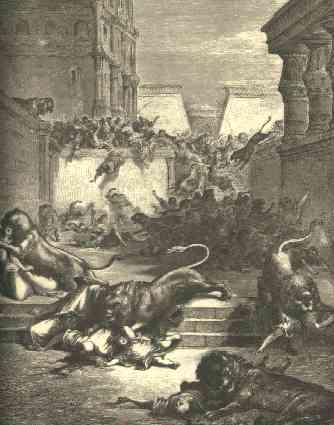 27Then the king of Assyria commanded, saying, Carry thither one of the priests whom ye brought from thence; and let them go and dwell there, and let him teach them the manner of the God of the land.
28Then one of the priests whom they had carried away from Samaria came and dwelt in Bethel, and taught them how they should fear the LORD.
29Howbeit every nation made gods of their own, and put them in the houses of the high places which the Samaritans had made, every nation in their cities wherein they dwelt.
30And the men of Babylon made Succothbenoth, and the men of Cuth made Nergal, and the men of Hamath made Ashima,
31And the Avites made Nibhaz and Tartak, and the Sepharvites burnt their children in fire to Adrammelech and Anammelech, the gods of Sepharvaim.
32So they feared the LORD, and made unto themselves of the lowest of them priests of the high places, which sacrificed for them in the houses of the high places.
33They feared the LORD, and served their own gods, after the manner of the nations whom they carried away from thence.
34Unto this day they do after the former manners: they fear not the LORD, neither do they after their statutes, or after their ordinances, or after the law and commandment which the LORD commanded the children of Jacob, whom he named Israel;
35With whom the LORD had made a covenant, and charged them, saying, Ye shall not fear other gods, nor bow yourselves to them, nor serve them, nor sacrifice to them:
36But the LORD, who brought you up out of the land of Egypt with great power and a stretched out arm, him shall ye fear, and him shall ye worship, and to him shall ye do sacrifice.
37And the statutes, and the ordinances, and the law, and the commandment, which he wrote for you, ye shall observe to do for evermore; and ye shall not fear other gods.
38And the covenant that I have made with you ye shall not forget; neither shall ye fear other gods.
39But the LORD your God ye shall fear; and he shall deliver you out of the hand of all your enemies.
40Howbeit they did not hearken, but they did after their former manner.
41So these nations feared the LORD, and served their graven images, both their children, and their children's children: as did their fathers, so do they unto this day.
King James Version (KJV)
Sunday, March 28, 2010
Let him be unto thee as an heathen man and a publican

15Moreover if thy brother shall trespass against thee, go and tell him his fault between thee and him alone: if he shall hear thee, thou hast gained thy brother.
16But if he will not hear thee, then take with thee one or two more, that in the mouth of two or three witnesses every word may be established.
17And if he shall neglect to hear them, tell it unto the church: but if he neglect to hear the church, let him be unto thee as an heathen man and a publican.
18Verily I say unto you, Whatsoever ye shall bind on earth shall be bound in heaven: and whatsoever ye shall loose on earth shall be loosed in heaven.
19Again I say unto you, That if two of you shall agree on earth as touching any thing that they shall ask, it shall be done for them of my Father which is in heaven.
20For where two or three are gathered together in my name, there am I in the midst of them.
16But if he will not hear thee, then take with thee one or two more, that in the mouth of two or three witnesses every word may be established.
17And if he shall neglect to hear them, tell it unto the church: but if he neglect to hear the church, let him be unto thee as an heathen man and a publican.
18Verily I say unto you, Whatsoever ye shall bind on earth shall be bound in heaven: and whatsoever ye shall loose on earth shall be loosed in heaven.
19Again I say unto you, That if two of you shall agree on earth as touching any thing that they shall ask, it shall be done for them of my Father which is in heaven.
20For where two or three are gathered together in my name, there am I in the midst of them.
.
.
Matthew 18:15-20.
.
Friday, December 04, 2009
Why do the heathen rage?
Psalm 2
1Why do the heathen rage, and the people imagine a vain thing?
2The kings of the earth set themselves, and the rulers take counsel together, against the LORD, and against his anointed, saying,
3Let us break their bands asunder, and cast away their cords from us.
4He that sitteth in the heavens shall laugh: the LORD shall have them in derision.
5Then shall he speak unto them in his wrath, and vex them in his sore displeasure.
6Yet have I set my king upon my holy hill of Zion.
7I will declare the decree: the LORD hath said unto me, Thou art my Son; this day have I begotten thee.
8Ask of me, and I shall give thee the heathen for thine inheritance, and the uttermost parts of the earth for thy possession.
9Thou shalt break them with a rod of iron; thou shalt dash them in pieces like a potter's vessel.
10Be wise now therefore, O ye kings: be instructed, ye judges of the earth.
11Serve the LORD with fear, and rejoice with trembling.
12Kiss the Son, lest he be angry, and ye perish from the way, when his wrath is kindled but a little. Blessed are all they that put their trust in him.
.


Thursday, December 03, 2009
"Learn not the way of the heathen"

1Hear ye the word which the LORD speaketh unto you, O house of Israel:
2Thus saith the LORD, Learn not the way of the heathen, and be not dismayed at the signs of heaven; for the heathen are dismayed at them.
3For the customs of the people are vain: for one cutteth a tree out of the forest, the work of the hands of the workman, with the axe.
4They deck it with silver and with gold; they fasten it with nails and with hammers, that it move not.
5They are upright as the palm tree, but speak not: they must needs be borne, because they cannot go. Be not afraid of them; for they cannot do evil, neither also is it in them to do good.
6Forasmuch as there is none like unto thee, O LORD; thou art great, and thy name is great in might.
7Who would not fear thee, O King of nations? for to thee doth it appertain: forasmuch as among all the wise men of the nations, and in all their kingdoms, there is none like unto thee.
8But they are altogether brutish and foolish: the stock is a doctrine of vanities.
9Silver spread into plates is brought from Tarshish, and gold from Uphaz, the work of the workman, and of the hands of the founder: blue and purple is their clothing: they are all the work of cunning men.
10But the LORD is the true God, he is the living God, and an everlasting king: at his wrath the earth shall tremble, and the nations shall not be able to abide his indignation.
11Thus shall ye say unto them, The gods that have not made the heavens and the earth, even they shall perish from the earth, and from under these heavens.
12He hath made the earth by his power, he hath established the world by his wisdom, and hath stretched out the heavens by his discretion.
13When he uttereth his voice, there is a multitude of waters in the heavens, and he causeth the vapours to ascend from the ends of the earth; he maketh lightnings with rain, and bringeth forth the wind out of his treasures.
14Every man is brutish in his knowledge: every founder is confounded by the graven image: for his molten image is falsehood, and there is no breath in them.
15They are vanity, and the work of errors: in the time of their visitation they shall perish.
16The portion of Jacob is not like them: for he is the former of all things; and Israel is the rod of his inheritance: The LORD of hosts is his name.
Jeremiah 10:1-16.
.
.
.
Subscribe to:
Posts (Atom)