Showing posts with label HAITI. Show all posts

Friday, July 24, 2026

Confronting Haiti’s Terrorist Gangs: The Gang Suppression Force and the Path Ahead

Hearing starts at 12:49 Mins.of video.

House Foreign Affairs Committee Republicans

Streamed live on Jul 21, 2026

The House Foreign Affairs Committee holds a hearing titled, "Confronting Haiti’s Terrorist Gangs: The Gang Suppression Force and the Path Ahead," featuring the following witnesses:


The Honorable Michael Kozak

Senior Bureau Official

Bureau of Western Hemisphere Affairs

U.S. Department of State


Colonel Justin Gorkowski

Co-Lead, Haiti Gang Suppression Force Tiger Team

U.S. Department of War

Confronting Haiti’s Terrorist Gangs: The Gang Suppression Force and the Path Ahead

Friday, December 05, 2025

Alleged Haitian gang leader sentenced to life in prison in kidnapping of 16 American missionaries


December 3, 2025 / 5:29 PM EST / CBS/AP

A man alleged to be the founder and leader of a Haitian gang was sentenced on Wednesday to life in prison for orchestrating the 2021 kidnapping of 17 people — 16 of them Americans — including five children, who were on a missionary trip to the Caribbean country.

Joly Germine declined to say anything before U.S. District Judge John Bates in Washington, D.C., sentenced him.

"No remorse has been shown by Mr. Germine. No acceptance of responsibility," the judge said.

Some of the kidnapping victims chose to speak in court, telling Germine they forgive him for his role in their ordeal.

Ray Noecker, whose wife, Cheryl, and five children were held hostage, said it was a "life-changing experience" for their family. He turned to Germine and told him that he hopes he finds "God's peace."

"True freedom is not found outside of prison walls. True freedom is found inside your own heart," Noecker said.

The victims — 16 U.S. citizens and one Canadian citizen — were kidnapped by gang members near Port-au-Prince, Haiti, on Oct. 16, 2021. Two hostages were freed in November 2021 and three more were released in early December. The remaining 12 escaped later in December after being held at gunpoint for 62 days.

Friday, April 25, 2025

Why Justice Amy Coney Barrett may be Haitian immigrants’ greatest ally, or foe, in the coming years


President Donald J. Trump and First Lady Melania Trump pose for a photo with Judge Amy Coney Barrett, the President’s nominee for Associate Justice of the Supreme Court of the United States, her husband Jesse and their children Saturday, Sept. 26, 2020, in the Oval Office of the White House. Official White House Photo by Andrea Hanks.
Opinion
As legal challenges to the Trump administration’s immigration policies make their way to the courts, decisions made by Barrett, mother to two Haitian children, could shape the future of hundreds of thousands of Haitian migrants in the U.S.
by Vania AndréMar. 07, 2025
Overview:

Justice Amy Coney Barrett, known for her conservative judicial philosophy, also has personal ties to Haiti through her two adopted children. As legal challenges to Trump’s rollback of Temporary Protected Status (TPS) and other immigration policies may reach the Supreme Court, the Haitian community should watch closely to see whether Barrett’s rulings will favor or restrict their legal pathways to stay in the U.S.

Justice Amy Coney Barrett rose to the national spotlight in 2020 during her confirmation to the U.S. Supreme Court, a lifetime appointment that grants her considerable influence over American law and policies.

Beyond her conservative judicial philosophy, Barrett drew additional attention for the makeup of her family, which consisted of seven children, two of whom were adopted from Haiti.

Now, five years later, her connection to Haiti has taken on new significance as key legal battles unfold over President Donald Trump’s immigration policies, which emphasize rolling back Temporary Protected Status (TPS) and other protections for hundreds of thousands of Haitians living in the United States.

Wednesday, April 23, 2025

The Jesuits’ complicated past in Haiti: From owning plantations to serving the Black community


Benjamin E. Heidgerken

June 17, 2022


As the enslaved woman handed her newborn daughter to her master, she could not look him in the eye. It was hot (it was always hot), and she had to get back to the cane field that afternoon. But her manner had nothing to do with her duties.

The man took the girl, turned and walked to the baptismal font. He always moved confidently—his confidence was typical of the grand blancs in the Haitian colony. The enslaved persons he trusted were there, along with his wife and children. His family had begrudgingly accompanied him from France to the remote island. They all saw the colony the same way: just another step toward a lucrative return to the motherland and a château on the Loire.

The grand blanc held the child over the font, waiting for the Priest of the Blacks to start the ceremony. In his Roman collar, the Jesuit’s poise nearly matched the master’s. Having supplanted the Capuchins in northern Saint-Domingue in 1704, the Society of Jesus knew what it took to maintain its ecclesiastical rights and position in the colony. Despite many financial and civil obstacles, it had built a substantial missionary enterprise, preaching and teaching on an island where survival and profits were the order of the day. God had formed servants from the soil, but the Society had to get its hands dirtier to return humanity to God’s service. It had five plantations on the island with many enslaved Africans to fund its mission.

The priest smiled at the baby girl, then looked sternly at the supposed owner of this tiny image of God. Her skin was unlike that of her siblings—much lighter in tone. The Jesuit noted the downcast look on the mother’s face.

“I see,” said the Jesuit, searching for the next words. The grand blanc’s “confidence” was well known in Cap-Français, but before now its consequences had been confined to the mother’s downtrodden expression and the walls of the confessional. Gathering himself and glancing around quickly to see if any government officials were among those attending the baptism, he looked gravely at the master. “What is your relationship with this little girl?”

My research on the Society of Jesus in Saint-Domingue began about two years ago as I looked for stories that my seminary students could tell their congregations about Catholicism and slavery. In contrast to a narrative that reflects antebellum anxieties of white American Protestant slavers about the dangers of revolution, I wanted to find stories of Catholic agency—the good, the bad and the ugly. The writings of Médéric Louis Élie Moreau de Saint-Méry, from which I drew the story above, became my window into this history.

Monday, August 28, 2023

Jesuit Novices Pronounce First Vows


August 22, 2023 — Twenty-four Jesuit novices in the United States, Canada and Haiti pronounced first vows of poverty, chastity and obedience this month. A novice spends two years at the novitiate for the first stage of Jesuit formation, culminating in the profession of first vows in the Society of Jesus.


Nine Jesuits pronounced first vows on August 12 at Saint Thomas More Catholic Church in St. Paul, Minnesota. Front row: Solomon Liebl, Leonardo Rander Assé Jr., Ryan Cruise, and Joseph Ertle. Back row: Brian Kemper, Scott Fox, Carl Caceres, Michael Bauer, and Benjamin Rogers.

Vow Day Masses were held at Sacred Heart Chapel at Loyola Marymount University in Los Angeles; Saint Thomas More Catholic Church in St. Paul, Minnesota; the Cathedral of the Immaculate Conception in Syracuse, New York; St. Charles Borromeo Church in Grand Coteau, Louisiana; Church of the Gesù in Montreal; and the chapel of the Missionary Sisters of Christ the King in Port-au-Prince, Haiti.


Justin Sauro, SJ, and Nader Nasralla, SJ, pronounced first vows on August 12 at St. Kevin Church in Montreal.

At the Mass, each Jesuit novice makes the profession of vows individually in front of the Eucharist, just as St. Ignatius of Loyola, founder of the Jesuits, and some of his first companions did. They also receive a vow cross that they will keep for the rest of their lives.


Niko Lignore, SJ, Fr. Nick Colalella, SJ, and Luke Olsen, SJ, pronounced first vows on August 12 at the Cathedral of the Immaculate Conception in Syracuse, New York.

During their two years in the novitiate, the novices prepared to become vowed members of the order by learning about the Society, participating in local ministries and living in Jesuit communities. They also embarked on pilgrimages, performed community service and completed the Spiritual Exercises — a 30-day silent retreat developed by St. Ignatius.


Roodler Datilus, SJ, and Renaud Morantus, SJ, pronounced first vows at the Missionary Sisters of Christ the King in Port-au-Prince, Haiti, on August 6, pictured here with Fr. Jean Denis Saint Félix, SJ, superior for Haiti.

Novices also experience life as a Jesuit, including living in community and ministering in different settings — from hospitals and third world countries to soup kitchens and Jesuit high schools.


Pierre Vu Thompson, SJ, pronounced first vows at Sacred Heart Chapel at Loyola Marymount University in Los Angeles, on August 12.

By the time a novice kneels at the altar to pronounce vows, he is prepared and ready to speak the words of the vow formula to God, which concludes: “And as you have freely given me the desire to make offering, so also may you give me the abundant grace to fulfill it.”


Seven Jesuits pronounced first vows on August 12 at St. Charles Borromeo Catholic Church in Grand Coteau, Louisiana: Matthew Brazzolotto, Joe Laughlin, José López, Carlos Martínez-Vela, Scott McKillip, Chris Ross and Paolo Taffaro.

Following first vows, Jesuits preparing to be priests usually begin three years of studies: two years of philosophy studies, combined with one year of graduate-level theology courses. Those men who take vows as a Jesuit brother will usually take several theology courses. Click here to read more about the steps of Jesuit formation at beajesuit.org.


Thursday, October 06, 2022

The Caribbean is pioneering CBDCs with mixed results amid banking difficulties


The Caribbean region is in a tough situation for banking. The 35 nations comprising the region face challenges common to many tiny economies, such as dollarization and dependence on foreign trade and remittances. In addition, the increasingly common banking practice called de-risking is taking a heavy toll. So, it is probably no coincidence that the region is also at the forefront of digital currency adoption.

Carmelle Cadet, the founder and CEO of banking solutions company Emtech, is a native of Haiti who has experience working with central banks in Haiti and Ghana. Her company is also a member of the new Digital Dollar Project Technical Sandbox Program that is exploring aspects of a United States central bank digital currency (CBDC). Cadet spoke to Cointelegraph about her experiences in the Caribbean and the United States. She said rolling out functioning CBDCs in the region is “a long game.” It is easy to see why.

The risks of banking in the Caribbean

The Financial Action Task Force (FATF) lists countries that are under special monitoring for money laundering or other illegal activities. Although only four countries in the region were on the so-called gray list as of June, the list seems to cast a pall over the region as a whole. Because of it, extra due diligence efforts are required when large international banks provide services such as settlement to smaller local banks in those countries in a process called correspondent relationships.

Additional due diligence drives up international banks’ costs of doing business. Banks often choose to sever ties with banks in gray-listed countries rather than pay the increased costs. That decision is referred to as de-risking. Some Caribbean countries have lost 50% of their correspondent relationships, with severe consequences for their economies and societies.

The United States House of Representatives Financial Services Committee held hearings titled “When Banks Leave: The Impacts of De-Risking on the Caribbean and Strategies for Ensuring Financial Access” on Sept. 14. Prime Minister of Barbados Mia Amor Mottley and Prime Minister of Trinidad and Tobago Keith Rowley attended the hearings.

#financialinclusion is possible: Modern #Regulatory Frameworks + Modern #Technology. Banks have moved away from the Caribbean and cost of payments is not going down. It feels like punishment indeed. Thank you for testifying in front of Congress on this topic! #bardados — Carmelle Cadet (@CarmelleCadet) September 14, 2022

Mottley described what banking services are like in the region:

“When we were growing up, opening a bank account was part of our rites of passage in becoming an adult. Today […] we spend weeks, and businesses that come into our region spend weeks and months, just to open a bank account.”

Ten days after the Congressional hearings, on Sept. 24, Bahamian Prime Minister Philip Davis brought the issue of de-risking before the United Nations General Assembly. “Why are all the countries being targeted small and vulnerable and former colonies of European states?” he asked. The Bahamas is not currently on the gray list.
CBDCs to the rescue?

According to the Atlantic Council CBDC tracker, three CBDCs have been launched in the Caribbean region: the Bahamas’ Sand Dollar, Jamaica’s Jam-Dex and the Eastern Caribbean Central Bank DCash in seven of its eight member states.

The council lists Haiti’s Digital Gourde as under development. Cadet said Emtech and its Haitian partner HaitiPay presented a proof-of-concept for a CBDC at the Haitian Embassy in Washington on May 5.

Cadet, who immigrated to the U.S. in her youth, was an executive in the IBM blockchain division when the Bahamas made its request for proposals for the Sand Dollar. She was “by luck a little bit in the front seat.” In 2019, when Haiti was “making the rounds with a roadshow” to develop its CBDC, “I thought ‘if the Bahamas can do it, why not Haiti?’” Cadet said. She added, “Kudos to the central bank governor for seeing the possibilities.” She left IBM and founded Emtech.

The first financial technology companies appeared in Haiti in 2010, after the earthquake that ravaged the country, and technologies relying on mobile wallets took the lead, Haitian Central Bank Governor Jean Baden Dubois said in 2021. Dubois said mobile telephone penetration was about 60% in 2008 and “likely higher in 2021.”

Emtech’s proposed CBDC design functioned online and through mobile telephone unstructured supplementary service data. The rollout of a Haitian CBDC would include device distribution through a partnership with a charity, Cadet said. The use of telecommunications rather than data networks to support CBDC functions is a hallmark of emerging economies, she added.

Dubois said the Haitian Central Bank saw a CBDC as a means to achieve greater policy efficiency and increased transparency, which would help the FATF gray-listed country meet Anti-Money Laundering/Combating the Financing of Terrorism standards.

“Dollarization undermines the central bank and its mission of stability,” Cadet said. “Using CBDCs for cross border payments would provide better liquidity and visibility on reserves.”

The peculiarities of emerging markets

Cadet said there are a number of ways in which a CBDC design for an emerging market will differ from one intended for a developed market. Developed markets can “afford to go slower,” she said, as they work toward a real-time settlement, while in emerging markets, CBDCs have a more pressing mission of inclusion.

Emerging markets have “less baggage,” she continued, so fintechs can thrive. In developed markets, commercial banking can make adoption easier, but the CBDC has more legacy systems to integrate with.

Be that as it may, it is not clear how much success CBDCs are enjoying in the Caribbean. The Sand Dollar, commonly considered the first CBDC when it launched in 2020, had only about $300,000 worth of electronic currency in circulation and 30,000 digital wallets in July 2022, with about 845 merchants accepting it. The Bahamian government makes regular efforts to promote it.

DCash, introduced in April 2021, crashed in January and was down for almost two months. A spokesperson for Grenada-based conglomerate Geo. F. Huggins & Co., the first company to accept a DCash payment, said during the outage that the CBDC represented a “minimal” portion of its sales.

Cadet said her company had been in talks with the Haitian Central Bank “to understand licensing and risk” for about a year before its proof-of-concept presentation and has been in touch with the bank since then. She said the company is now waiting for the central bank to issue a request for proposals for vendors.


Tuesday, January 11, 2022

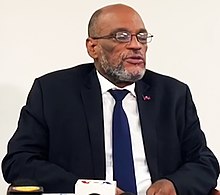
Ariel Henry, Haiti’s New Prime Minister Is the Brother of Inter-American Division President Élie Henry


9 July 2021 | The Miami Herald reported that Ariel Henry, Haiti’s new Prime Minister, is the brother of Pastor Élie Henry, president of the Seventh-day Adventist Church in Inter-America.

Élie Henry “made international headlines in December when he and his daughter, Irma, became the latest victims of Haiti’s kidnapping scourge after going missing on Dec. 24, 2020. They were released unharmed four days later,” stated the Miami Herald.

The paper also reported that Ariel Henry’s father, “Pastor Elie S. Henry, was an elder in the Seventh-day Adventist Church before his death in 2015 at age 89.”

The Herald does not state whether Ariel Henry himself is an Adventist.

On July 5, 2021, Henry was selected as the next prime minister of Haiti, a mere two days before President Jovenel Moïse was assassinated.

“One of Haiti’s leading neurosurgeons, Henry worked in France for 19 years before returning to Haiti. He was a member of the Social Democratic Party, Haitian Revolutionary Progressive Nationalist Party founded by his longtime friend and mentor Serge Gilles, and later joined the leftist Fusion of Haitian Social Democrats political party before leaving the party to join INITE, formed by former ministers and supporters of (former Haiatian president) Préval,” reported the Miami Herald.

Henry served as Haiti’s minister of interior and territorial communities since 2016. He is credited with leading Haiti’s response to the deadly cholera epidemic that devastated the country after the 2010 earthquake that left much of Haiti in ruins.

Image: Wikipedia


Ariel Henry (Haitian Prime Minister) & Adventists


Ariel Henry (French pronunciation: ​[aʁjɛl ɑ̃ʁi], born 6 November 1949) is a Haitian politician and neurosurgeon serving as the acting prime minister of Haiti and the acting president of Haiti since 20 July 2021.[3][4][5][6][7] He later became involved in a controversy due to his refusal to cooperate with the authorities over his links with one of the suspects accused of orchestrating former President Jovenel Moïse's assassination.[8]

His Excellency
Ariel Henry


Henry in 2021

President of Haiti

Acting
Assumed office
20 July 2021
Prime Minister Himself (acting)
Preceded by Claude Joseph (acting)
Prime Minister of Haiti

Acting
Assumed office
20 July 2021
Appointed by Jovenel Moïse
President Himself (acting)
Preceded by Claude Joseph (acting)
Minister of Social Affairs and Labor
In office
11 September 2015[1] – 28 March 2016
President Michel Martelly
Jocelerme Privert (acting)
Prime Minister Evans Paul
Fritz Jean
Preceded by Victor Benoît[1]
Succeeded by Jean René Antoine Nicolas[2]
Minister of Interior and Territorial Communities
In office
22 January 2015 – 11 September 2015
President Michel Martelly
Prime Minister Evans Paul
Preceded by Réginald Delva
Succeeded by Ardouin Zéphirin[1]
Personal details
Born 6 November 1949 (age 72)
Political party Inite
Other political
affiliations Democratic Convergence
Spouse(s) Annie Claude Massiau
Education University of Montpellier
Loma Linda University (Master's degree)
Boston University

Education

Henry served as a resident in neurosurgery with Professor Claude Gros in the French city of Montpellier, from March 1977 to December 1981. He studied neurophysiology and neuropathology at the University of Montpellier's faculty of medicine [fr][9] from 1981 to 1984, and presented his doctoral thesis in January 1982. He also received a certificate in performing electroencephalography from the University of Montpellier in September 1983.[10]

In 1989, he completed his master's degree from the Loma Linda University, in the "international health" field of public health. He also did his postdoctoral studies in "management methods for international health" at Boston University from February to May 1990.[10]

Career

Personal life

Ariel Henry is the son of Elie S. Henry, who was a pastor and an elder of the Seventh-day Adventist Church.[14] Ariel's father died on 20 December 2015. He is married to Annie Claude Massiau and his siblings are named Monique Henry, Edlyne Henry Richard, Elie Henry and Elvire Henry.[48] His brother Elie is also a pastor and is the president of the Inter-American Division of Seventh-day Adventists.[14]

References


Wednesday, July 11, 2018

US missionaries fear for lives amid riots in Haiti


By Chris Perez


July 10, 2018 | 10:05pm


People walk past burning roadblocks set up by anti-government protesters in Haiti. AP


More On:
haiti 


The capital of Haiti has faced four days of riots and demonstrations — forcing US tourists and missionaries to stay inside following a government-ordered increase on gas prices.

Looters have been burning down buildings, pillaging shops and setting up fiery roadblocks in Port-au-Prince during clashes with local police over the price hikes. The US Embassy has urged citizens to remain inside.

An estimated 120 Americans are reportedly staying in a Port-au-Prince hotel — where demonstrators tried setting a fire Saturday.

Church groups and volunteers from several different states — including North Carolina, South Carolina, Florida and Georgia — are also said to be stranded in Haiti as the riots continue.

Many said they feared for their lives over the weekend as the demonstrations ramped up.

“I, 100 percent thought I was going to die, and so was my sister and my fiancé,” said Savannah Peek, a missionary from Richmond County, NC.

She told WSOC that protesters tried getting to her and her team at one point.

“We hear a loud knocking. We look over and there’s 10 men trying to break in,” she said. “We heard gunshots start and they were very close. At this point, we all dropped immediately to the ground. We’re all on our hands and knees. Everyone’s screaming, everyone’s crying.”

Peek said that things got so bad, she and several others were given guns to protect themselves.

“People started passing out guns to civilians because we thought the 10 were about to break in and rob us, kill us, start a fire,” she explained. “We had no idea.”

Peek claimed that some locals were doing their best to keep the US citizens safe.

“The people here where we’re staying have been nothing short of amazing,” she said. “I really love Haiti, but I’m scared for my life.”

While the riots have been violent, officials have yet to report a single injury or death.

The demonstrations appeared to die down briefly on Saturday after local officials announced a temporary stop to the price increase. But it’s still not likely enough to satisfy protesters.

“The gas prices went up to $5 a liter, which is like $20 a gallon,” explained Jonathan Thames, missionary with Peek’s Richmond County team. “They only make about $2 a day.”


Tuesday, October 11, 2016

Report: Mexico Silently Helping Haitian Illegal Immigrants to Enter US


Border Patrol agent Eduardo Olmos walks near the secondary fence separating Tijuana, Mexico, background, and San Diego in San Diego. (AP Photo/Gregory Bull, File)


By Ritika Gupta | Tuesday, 11 Oct 2016 12:27 PM


Government officials from Mexico are quietly paying to help thousands of Haitians who are living illegally in the United States, according to an internal Homeland Security document, The Washington Times reported.

The document also details the route taken by immigrants, thousands of dollars paid to human smugglers along the way, and also highlights the role of the neighboring governments of the U.S.

Over the past year, about 6,000 Haitians reached the San Diego border while 2,600 waited in northern Mexico as of last week, with 3,500 others in Panama, the documents revealed.
The report, which was accessed by California Republican Rep. Duncan Hunter, stated that the migrants were shelling out at least $2,350 to be illegally brought into the U.S. from South America.


"Haitians have forged a dangerous and clandestine new path to get to the United States," the document said.

It maps out the route, details of the prices paid to smugglers, bus tickets and also to agents who help them obtain transit documents.

The entire journey, which takes about four months, has 11 countries in its route, with the trek beginning from Brazil and covering over 7,100-miles, crossing west coast of South America and Central America.

The document also elaborated that some countries were more vigilant than the others, hence the smuggling charges went up to as much as $1,000. Smugglers charge $200 through Ecuador and $300 each through Guatemala and Colombia, according to the document.


The Homeland Security Department also revealed that the Haitians claimed they were from Congo while they traveled Central American countries. They were of the view that officials were unlikely to go through the tedious process of deporting them to West Africa in case they were caught.

Mexico, meanwhile, is believed to be more accommodating to the migrants. After processing papers, migrants receive a 20-day transit document, which gives them ample time to board a bus across Mexico, arriving eventually in Tijuana, just south of San Diego.
After stepping into U.S., many of the Haitians claim asylum and fight deportation in cases that can drag on for years, giving the migrants a foothold in the country.

Haitians are the latest nationality to surge into the United States, the document noted.

"The exponential increase in Haitian migrants showing up at the southern border is truly astonishing, and it shows one of the many consequences of President Obama's immigration policy, which invites illegal entry and exploitation of the system," said Joe Kasper, chief of staff for Hunter told The Post.

He also added he was astonished by Mexico's "complicity" in granting Haitians support to cross borders.

"Mexico doesn't want them, but it's entirely content with putting migrants — in this case Haitians — right on America's doorstep," he said.


After the 2010 earthquake, as many as 75,000 Haitians fled to Brazil. While 50,000 still remain, the rest have left.

Meanwhile, the U.S. Customs and Border Protection agency confirmed a rise in the number of Haitians arriving without consent.

The numbers reportedly shot up by a staggering 1800 percent from 339 in fiscal year 2015 to 6,121 in 2016.

"While CBP officials have made adjustments to port operations to accommodate this uptick in arriving individuals, CBP officials are used to dynamic changes at our local border crossings, including San Ysidro, the nation's busiest border crossing, and are able to flex resources to accommodate those changes," the border agency told The Post in a statement.


Source


Sunday, September 18, 2016

New mosquito-borne disease detected in Haiti


Date: September 15, 2016

Source:UF Health

Summary:

Researchers have identified a patient in Haiti with a serious mosquito-borne illness that has never before been reported in the Caribbean nation.

FULL STORY


John Lednicky, Ph.D.
Credit: Image courtesy of UF Health


University of Florida researchers have identified a patient in Haiti with a serious mosquito-borne illness that has never before been reported in the Caribbean nation.

Known as "Mayaro virus," it is closely related to chikungunya virus and was first isolated in Trinidad in 1954. Most reported cases, however, have been confined to small outbreaks in the Amazon. Whether this case signals the start of a new outbreak in the Caribbean region is currently unknown.

"While current attention has been focused on the Zika virus, the finding of yet another mosquito-borne virus which may be starting to circulate in the Caribbean is of concern," said Glenn Morris, M.D., M.P.H., director of the UF Emerging Pathogens Institute. "Hopefully we will not see the same massive epidemics that we saw with chikungunya, dengue and now Zika. However, these findings underscore the fact that there are additional viruses 'waiting in the wings' that may pose threats in the future, and for which we need to be watching."

The case was identified from a blood sample taken in January 2015 from an 8-year-old boy in rural Haiti. The patient had a fever and abdominal pain but no rash or conjunctivitis. Because faculty from the UF Emerging Pathogens Institute were in the region during and after the 2014 chikungunya outbreak, plasma samples were obtained from febrile children and analyzed for the presence of chikungunya virus RNA using a genetic identification technique known as reverse transcription polymerase chain reaction.

The plasma samples, which were examined by UF's Maha Elbadry, Ph.D., in Gressier, Haiti, were then sent to EPI for additional virology and molecular analyses, focusing on the detection of chikungunya, dengue and Zika viruses. Dengue virus was detected in the patient, in addition to a "new" virus that was subsequently identified as Mayaro.

"The virus we detected is genetically different from the ones that have been described recently in Brazil, and we don't know yet if it is unique to Haiti or if it is a recombinant strain from different types of Mayaro viruses," said John Lednicky, Ph.D., an associate professor in the environmental and global health department at the UF College of Public Health and Health Professions and the study's lead author.

The findings were published online Aug. 26 in the Centers for Disease Control and Prevention's journal Emerging Infectious Diseases.

The symptoms of Mayaro fever are similar to those of chikungunya fever: fever, joint pain, muscle pain and rashes. Abdominal pain is also a feature of Mayaro fever, however, and joint pain can last longer.


Story Source:

The above post is reprinted from materials provided by UF Health. The original item was written by Evan Barton. Note: Content may be edited for style and length.


Saturday, March 08, 2014

Religious freedom festival in Haiti highlights peaceful coexistence


From left: John Graz, secretary-general of the International Religious Liberty Association; Elie Henry, executive secretary of the church’s Inter-American Division; and Theart St. Pierre, president of the Haitian Union Mission at Haiti’s first festival of religious freedom. The IRLA regularly sponsors festivals worldwide to thank government leaders for preserving freedom of belief. [photo courtesy IRLA]


Advocates recommend National Day of Religious Freedom in country

March 06, 2014 | Silver Spring, Maryland, United States | ANN staff

A festival of religious freedom in Haiti last month cements the Seventh-day Adventist Church as a leading proponent of free expression of belief in the country.

Organized by the church’s Haitian Union Mission and sponsored by the International Religious Liberty Association, the event drew more than 3,000 supporters to Port-au-Prince to celebrate freedom of belief and help raise the profile of religious liberty in the Caribbean.

The city of Port-au-Prince is still recovering from a devastating earthquake that in 2010 dealt $7.8 billion in damage to a nation already considered the poorest in the Western Hemisphere. Two hurricanes in 2012 complicated rebuilding efforts.

“The people of Haiti have shown great courage and an extraordinary capacity for survival. Religious freedom is a right that Haitians treasure, and are determined to keep,” said John Graz, IRLA secretary-general.

The festival was part of the first Congress of Religious Freedom in Haiti. Hundreds of lawyers, human rights activists, government leaders and faith representatives joined in two days of lectures and workshops that highlighted the largely peaceful coexistence of religious groups in Haiti and resulted in several recommendations.

The group pledged to organize the Haitian chapter of the International Religious Liberty Association and negotiate with the Haitian government to establish a National Day of Religious Freedom in the country.

Other recommendations:

  • The Congress calls on government to preserve separation of church and state.
  • The Congress condemns every act of intolerance, discrimination and violence directed in the past against individuals or groups because of their religion or belief.
  • The Congress expresses solidarity with all groups and individuals who are victims of violations of religious freedom worldwide.


Marie Carmelle Rose Ann Auguste, Minister of Human Rights for the Haitian government, called religious liberty an “essential” human right during her remarks.

“It is through the free exercise of conscience that the individual soul and the soul of the nation is strengthened,” she said.

Francois Clavairoly, president of the French Protestant Federation, and a group of faith leaders from Paris brought an “international dimension” to the event, Graz said. Haiti is the only predominantly French-speaking independent nation in the Americas.

Other Protestant denominations, the Catholic Church, Salvation Army and syncretic religions were also represented. Syncretic religions such as Voodoo are widely practiced in Haiti.

Another festival of religious freedom is planned for Port-au-Prince in 2015.


Adventist News Network

Source
.


Copyright © 2014, General Conference of Seventh-day Adventists
.
.

Monday, February 17, 2014

Haiti's First Cardinal Remains A Priest Of The People

EndrTimes:


More Roman Catholic propaganda from National Public Radio (of the United States of America) -


by Peter Granitz
February 16, 2014 8:00 AM


Weekend Edition Sunday
4 min 31 sec


Haiti has its first inductee into the College of Cardinals. Haitian Bishop Chibly Langlois is one of 19 men chosen by Pope Francis for elevation. Hector Retamal/AFP/Getty Images


Later this month, Pope Francis will welcome his first appointments to the College of Cardinals. Among the 19 men chosen for elevation are seven from Central and South America, the Caribbean and Africa. This, say observers, reflects the pope's belief that the church must pay more attention to the poor.

One comes from Haiti, a country with a long, troubled history with the Catholic Church.

Bishop Chibly Langlois says he was skeptical when he heard he'd been chosen.

"I know it from my friends before I know it from the official people who could tell me this news," Langlois says.

You can understand his suspicion, reading the news online before getting the official call from the Vatican. The good word came Jan. 12, the fourth anniversary of Haiti's devastating earthquake.

Langlois says he had no idea he was being considered. He was ordained in 1991 and is the bishop of the southern Haiti dioceses in Les Cayes. Most cardinals are higher-ranking archbishops. Despite his promotion, he still sees himself as a priest, the direct link between the church and the people.

"When you feel the call to be a priest, you're called to be a priest," he says. "It's not to be a bishop."

Langlois is the first Haitian to be appointed cardinal. He's soft-spoken, smiles at the end of every sentence and says he's uncomfortable using English, just one of five languages he knows.

Haiti's Struggles

Duke University historian Laurent Dubois says Haiti and the Vatican had a rough start.

"After its independence in 1804, Haiti actually was refused recognition pretty much by all the global powers, France particularly — its former colonizer — the United States and others," Dubois says. "The Vatican joined that. They refused recognition to Haiti longer than any country, except the United States, until 1860."

In more recent years, the church has sparred with Haiti's dictators, serving as a voice for the political opposition.

And after the earthquake, the Catholic Church assumed the role of any other aid group: providing grief and trauma counseling, offering health care and rebuilding homes and hospitals. Langlois says Catholics lost many churches in the disaster, and it's been a struggle to rebuild all of them.


Dubois says the pope's pick of a Haitian reflects an evolution in the church.


"It's a little hard, perhaps to have imagined it during the past decades, when the Catholic Church has been embroiled on so many levels in very difficult political contexts within Haiti," he says.

Haitians revere Feb. 7, 1986, as the date dictatorship on the Caribbean nation ended and the struggle for democracy began.

A New Focus On Poverty

This Feb. 7, Langlois organized a national day of prayer. Catholics around Haiti gathered at churches like St. Therese de l'Enfant Jesus to pray for safe and fair elections later this year. St. Therese was once a towering brick building. Toppled in the earthquake, it's now rows of pews underneath two nylon tents.

Outside St. Therese, parishioner Marthe Adeline Dumornay says Haiti only stands to benefit from Langlois's elevation.

"Jesus Christ goes directly into the heart of the pope," she says. "Jesus sees the bad things in Haiti and he wants to lift Haiti up. Jesus, through the pope, chose the cardinal to work better for Haiti."

Langlois knows his pick represents a shift in church power. He agrees with Pope Francis's focus on social justice and the poor. In Haiti and beyond, Langlois says, that's not just financial.

"Many people can have money, but they are very poor," he says. "They don't have the right riches."

He'll divide time between Rome and Les Cayes, where he'll continue on as bishop and priest, saying mass regularly.
 

Source
.

Tuesday, January 21, 2014

New cardinals from Africa and Haiti to help Pope serve the poor


Jan 21, 2014

By NNPA News Service


Cardinal Chibly Langlois, Bishop of Les Cayes and the first Haitian Cardinal in history.


(GIN) – In a further step away from old traditions at the Vatican, Pope Francis named his first batch of cardinals, choosing 19 men from Asia, Africa, the Philippines and Latin America including the developing nations of Haiti and Burkina Faso. The selection affirms his belief that the church must pay more attention to the poor.

His predecessor, Pope Benedict XVI, had chosen cardinals mostly from Western countries.

Sixteen of the appointees are younger than 80, and are eligible to elect the next pope. They also serve as advisors to the Pontiff as he re-shapes the institution.

With his selections, the Pope rebalances the Euro-centered representation of countries by cardinals. The Philippines, for example, had just one cardinal representing about 75 million Catholics while the U.S., with roughly the same number of Catholics, had 11. Latin American, with 400 million Catholics and growing, had just 15 voting age cardinals, while Europe, where church attendance is falling sharply, had 57.

Among the newly appointed Cardinals is Chibly Langlois, the Bishop of Les Cayes and the first Haitian Cardinal in history. Cardinal Langlois held several leadership positions in La Vallee, Jacmel, taught pastoral theology, and continues to serve the diocese of Fort Liberte.

Newly appointed Cardinal Jean-Pierre Kutwa of the Ivory Coast was ordained in 1971 and appointed Bishop of Gagnoa by John Paul II in 2001. He places great importance on ecumenical and interreligious dialogue. Mgr. Kutwa is also a music composer.

Finally from Burkina Faso, the Archbishop of Ouagadougou, Philippe Nakellentuba Ouédraogo, was ordained in 1973 and appointed Bishop in 1996 of Ouahigouya, a diocese with both a men’s and women’s contemplative monastery.

In 2010, Ouédraogo was called by Benedict XVI to lead the Archdiocese of Ouagadougou, where he stood out for the work he did in one of Africa’s poorest countries.

Special to the NNPA from the New York Amsterdam News


Source
.
.

Wednesday, August 21, 2013

Chasing the 'Brazilian dream,' migrants strain the country's immigration laws


An investigation this month found illegal immigrants from Haiti living in squalor in an overcrowded camp – highlighting Brazil's lack of policies for dealing with a growing issue.

By Janet Tappin Coelho, Correspondent / August 20, 2013


After making the journey from Port au Prince in Haiti to Brazil, illegal Haitian immigrants are housed in a make-shift shelter in Brasiléia, Acre state, in conditions criticized by a human rights organization, June 1, 2013.
Janet Tappin Coelho


Rio de Janeiro


As Brazil rushes to prepare for next year's World Cup and the 2016 Olympics, it is facing another unexpected pressure: rising illegal immigration, spurred by the growing perception of the country as a land of opportunity.

Related stories


 How well do you know Brazil? Take our quiz and find out!

Brazil: In the market for millions of immigrants

Latin America Monitor Latin American low-skilled labor flocks to Brazil's jobs


Putting a spotlight on the problem are hundreds of Haitians being trafficked illegally into the country. Since a massive 2010 earthquake upended many of their lives, around 10,000 undocumented Haitians have surged into Brazil, with 4,000 alone arriving in Brasiléia, in Acre State, over the past seven months. Every day, 40 more arrive.

But Brazil's response has been chaotic. A three-day investigation earlier this month into the conditions at a refugee camp in Brasiléia by Conectas, a São Paulo-based human rights organization, revealed that more than 830 immigrants – mostly Haitians and including some 20 unaccompanied children – are living in a makeshift shelter built for 200 people.

Conditions are unsanitary: The refugees share 10 toilets and eight showers, while 90 percent are suffering from diarrhea and 10 percent from respiratory diseases. Three taps provide drinking water and migrants complain daily about the quality of the food. Every day the local hospital sees around 10 Haitian patients with stomach complaints.

“What we found was unhealthy and inhumane,” says Conectas spokesman João Charleaux. “The site has open running sewage, with the latrine area flooded by fetid water and the Haitians stacked on top of each other at night, sleeping on pieces of foam mats in the middle of bags, shoes, and personal belongings in the scorching heat. Many have spent months in this condition."

Broadly speaking, Brazil appears genuinely willing to admit undocumented people into its borders. But so far, its approach of issuing humanitarian visas to Haitians even if they arrive illegally undermines its stated commitment to combat human trafficking. Critics say that as the country's international profile and prosperity rises, it must ensure that its immigration policies are unequivocal and highly developed.

“Immigration here is being treated as a simple migration problem, which has resulted in an amateurish and uncoordinated approach, overloading the small municipality of Brasiléia and its population,” says Mr. Charleaux. “The situation should in fact be managed by specialists who understand complex humanitarian emergencies."

Brazil's struggle to cope with the influx of migrants is the flip side to an economic boom that has created growth, employment, and stability over the past 10 years, says Eurasia Group Latin America analyst João de Castro Neves.

“In the past, Brazil has been used to exporting its citizens abroad. Now it’s facing a new scenario. With the upcoming World Cup and Olympics creating job demands, Brazil is beginning to be seen as a land of opportunity, just like how the United States became an illegal immigrant magnet when it had a healthy economy,” says Mr. Castro Neves.

“It’s inevitable that Brazil will now start to attract illegal aliens, too. The problem is, Brazil doesn’t have an overarching legal framework or the infrastructure in place to deal with this new phenomenon,” he adds.
Chasing the 'Brazilian dream'

Osanto George, a 19-year-old high school graduate who arrived in Brasiléia last month, is bitterly disappointed that he gave up an internship in information technology in Haiti to chase the “Brazilian dream.”

"The conditions here are not fit for human beings,” Mr. George says.

“We might as well be back in Haiti with the earthquake. It’s the same dirt, the same type of shelter, unhygienic water, and unhealthy food. It hurts me and scares me," he says. "I knew the way here would be hard, because you're dealing with criminals, but to get here in Brazil and to end up in such a place is unbelievable."

Like others, George paid more than $4,000 to a criminal gang known as "coyotes" to smuggle him into Brazil. The path he took was tortuous and risky. Reports of robberies and assaults are rife, as the journey passes through several countries, including the Dominican Republic, Ecuador, Colombia, Peru, and Bolivia, and often through the Amazon jungle.

But George is still likely to be given a humanitarian visa. Even though Brazil – from the beginning of 2012 until April of this year – insisted on capping the number of visas issued to 100 per month for Haitians, the government still held to a policy of not discriminating against undocumented Haitians. Nearly all who entered illegally have obtained permits, with the right to work but no guarantee of a job.

In April, in a bid to simplify the system and to curb illegal immigration, the government lifted the restrictions on visas, announcing that Haitians could apply for permanent residency at the Brazilian embassy in Haiti's capital of Port au Prince.

The strategy is not working, however, as Conectas discovered following its inspection of the camp in Brasiléia. Increasing numbers of Haitians are still using illegal routes to enter Brazil, claiming the process of applying for the visa in Port au Prince is convoluted and slow.

While the government grapples to resolve this situation, illegal immigration in Brazil is nevertheless tiny in comparison with the United States. Brazilian census figures in 2010 put immigration at a minuscule 0.05 percent of the total population of 193.9 million. At the time, the figure for undocumented migrants was given as 600,000. In comparison, the Pew Hispanic Center in 2011 estimated that the number of illegal immigrants in the United States was around 11.5 million.

Even so, as a signatory to the United Nations protocol against the smuggling of migrants, Brazil is obliged to protect the rights of illegal immigrants and to shield them from the abuse of organized criminal gangs.

“Brazil could be held responsible for not providing adequate shelter for those who arrive here," says Pedro Kenne, an attorney for the Federal Public Ministry (MPF) for the State of Acre. "We cannot leave [the Haitians] in a situation as dire as the one they are currently left in.”


Source
.