RELIGION
HONDURAS
TIM KAINE
The vice-presidential nominee supports policies that hurt the country that was the “turning point” in his life.
By Greg GrandinTwitter
TODAY 11:18 AM
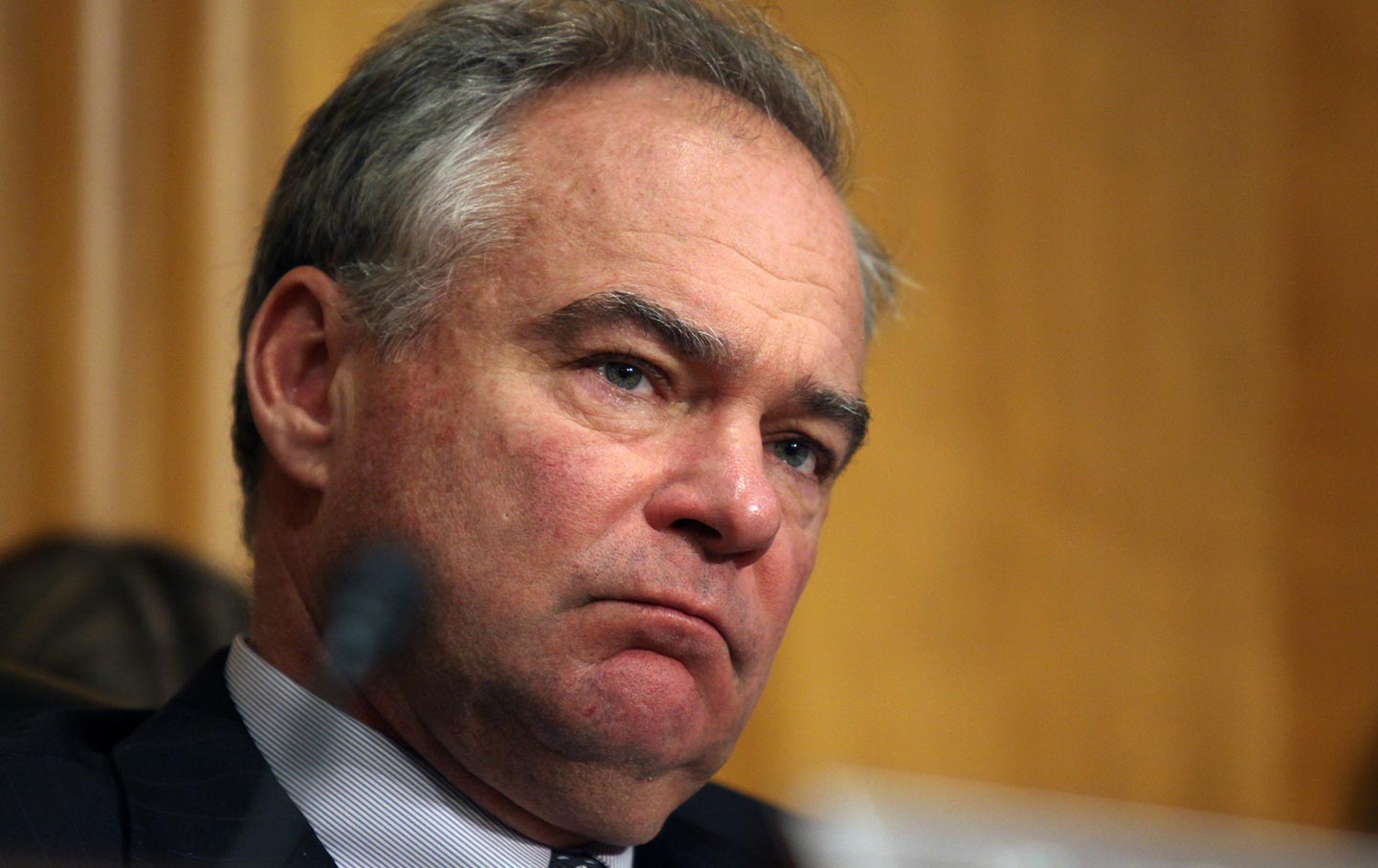
Democratic vice presidential candidate Tim Kaine (AP Photo / Lauren Victoria Burke)
Early in Hillary Clinton’s primary contest against Bernie Sanders, Berta Cáceres, an indigenous environmental leader in Honduras, was murdered by a coup regime that Clinton, as Secretary of State, helped consolidate in power. Apart for one quick statement denying any wrongdoing—“simply nonsense,” a spokesman said of the charges that Clinton was in anyway responsible for Cáceres’s killing—the Clinton campaign largely ignored the issue. As far as I know, the only journalist who asked Clinton directly about Honduras was Juan González, during Clinton’s interview with the editorial board of the New York Daily News. Clinton provided a wordy and vague answer. She admitted that the situation was bad, that activists were being slaughtered, but insisted that at the time she “managed a very difficult situation, without bloodshed, without a civil war, that led to a new election. And I think that was better for the Honduran people.” For the most part, criticism of Clinton on Honduras largely stayed on the margins of the primary process, even as the killing in Honduras continued and evidenced mounted that Washington was once again was funding old-school death squads (see the invaluable investigation by Annie Bird).
Now, having beat back that part of the Democratic rank-and-file that cares about dead feminist activists in small third-world countries, the Clinton campaign has gone full Sun Tzi, turning its Honduran weak point into a strength, or, à la Karl Rove, its vulnerability into a virtue.
In picking Virginia Senator Tim Kaine as her running mate, the campaign has front-and-centered Honduras— as a victim of Clinton’s realpolitik neoliberalism but as a sacred space of healing poverty.
Kaine, a Catholic, spent nine months in Honduras, from 1980 to 1981, in the Jesuit mission in El Progreso, very close to the company towns and plantations of the storied multinational banana company, United Fruit.
The sojourn, Kaine says, changed his life. Honduras “was really the turning point in my life. I was at Harvard Law School and didn’t know what I wanted to do with my life. And I took a year off and worked with Jesuit missionaries in Honduras,” Kaine told CNN’s Candy Crowley. “Every day I think of the lessons I learned from my friends there,” Kaine said elsewhere. The experience, he says, set him on his life’s journey to fight for social justice. Honduras “made him who he is,”said Kaine’s mother, Kathleen.

