Showing posts with label judaizing. Show all posts
Showing posts with label judaizing. Show all posts
Friday, July 27, 2018


Saturday, June 13, 2015
Feasting or Fasting?

June 10, 2015 Lee Folkman
On Oct. 22, 1844, Jesus Christ, our High Priest, entered once into the Most Holy Place of the Heavenly Sanctuary. Then began the process of cleansing of the sanctuary, of which every tenth day of every seventh month of every year was a type. The day of atonement was a day of solemnity when all in the camp of Israel were to “afflict [their] souls and do no work at all,” (King James Version, Leviticus 16:29), neither an Israelite nor a sojourner. “For on that day shall the priest make an atonement for you, to cleanse you, that ye may be clean from all your sins before the LORD” (vs. 30). It was a day when all who were not found afflicting their souls on that day would be separated, or cut off, from among God’s people. This day was also known as “the fast” (Acts 27:9) because it was a day of fasting and prayer in connection with the work of the high priest.
During the last few decades, a movement to promote the moral obligation to keep the feast days recorded in Leviticus has been making inroads among reform-minded Seventh-day Adventists. Why so much emphasis on the feasts in the great antitypical day of the fast? Is this new light that needs to be proclaimed before Jesus can return? Or is it a scheme of the enemy of souls to divert sincere followers of Jesus Christ from the true latter rain message?
HOW SHALL WE KNOW?
When studying either the Scriptures or the Spirit of Prophecy, it is important to allow plain statements to guide our understanding of more difficult passages. Regarding her own writings, Ellen White wrote:
“The testimonies themselves will be the key that will explain the messages given, as scripture is explained by scripture” (1 Selected Messages, 42).
“...the key to the testimonies is the testimonies themselves... (15 Manuscript Releases, 295).
A key is a simple instrument used to unlock a complicated mechanism. In like manner, simple statements, in context, help us to understand or unlock more difficult passages. When one utilizes complex reasoning to explain a simple passage of scripture or testimony, one is missing the key. Here are some simple passages that help us to understand the feast day question.
THE TWO-FOLD SYSTEM OF LAW
Most Adventists agree that the Bible and the Spirit of Prophecy present a two-fold system of law: the ceremonial and the moral. What makes up the ceremonial and the moral laws? Consider the following passages from Ellen White:
“There are two distinct laws brought to view. One is the law of types and shadows, which reached to the time of Christ, and ceased when type met antitype in his death. The other is the law of Jehovah, and is as abiding and changeless as his eternal throne. After the crucifixion, it was a denial of Christ for the Jews to continue to offer the burnt offerings and sacrifices which were typical of his death. It was saying to the world that they looked for a Redeemer to come, and had no faith in Him who had given his life for the sins of the world. Hence the ceremonial law ceased to be of force at the death of Christ” (Signs of the Times, July 29, 1886), emphasis mine.
“While the death of Christ, as we have seen, brought the law of types and shadows, or the ceremonial law, to an end, it did not in the least detract from the dignity of the moral law, or make it void. On the contrary, the very fact that Christ died to satisfy the claims of that law, shows the immutability of its character” (Signs of the Times, July 15, 1880).
“The moral law was never a type or a shadow...” (Review and Herald, April 22, 1902)
These passages, and others like them, clearly point out the difference between the two systems of law. A law that is a type or shadow would fall under the ceremonial law, while the moral law was never a type or shadow, but existed from eternity. One is typical; the other is eternal.
Most Adventists agree that the Bible and the Spirit of Prophecy present a two-fold system of law: the ceremonial and the moral. What makes up the ceremonial and the moral laws? Consider the following passages from Ellen White:
“There are two distinct laws brought to view. One is the law of types and shadows, which reached to the time of Christ, and ceased when type met antitype in his death. The other is the law of Jehovah, and is as abiding and changeless as his eternal throne. After the crucifixion, it was a denial of Christ for the Jews to continue to offer the burnt offerings and sacrifices which were typical of his death. It was saying to the world that they looked for a Redeemer to come, and had no faith in Him who had given his life for the sins of the world. Hence the ceremonial law ceased to be of force at the death of Christ” (Signs of the Times, July 29, 1886), emphasis mine.
“While the death of Christ, as we have seen, brought the law of types and shadows, or the ceremonial law, to an end, it did not in the least detract from the dignity of the moral law, or make it void. On the contrary, the very fact that Christ died to satisfy the claims of that law, shows the immutability of its character” (Signs of the Times, July 15, 1880).
“The moral law was never a type or a shadow...” (Review and Herald, April 22, 1902)
These passages, and others like them, clearly point out the difference between the two systems of law. A law that is a type or shadow would fall under the ceremonial law, while the moral law was never a type or shadow, but existed from eternity. One is typical; the other is eternal.
FEASTS – MORAL OR CEREMONIAL?
Because the ceremonial law came to an end by the death of Christ, while the moral continues to this day, any moral obligations we have to God are solely those that fall under the moral law. Under which law do the feast days fall?
“The Passover was to be both commemorative and typical, not only pointing back to the deliverance from Egypt, but forward to the greater deliverance which Christ was to accomplish in freeing His people from the bondage of sin. The sacrificial lamb represents ‘the Lamb of God,’ in whom is our only hope of salvation. Says the apostle, ‘Christ our Passover is sacrificed for us.’ 1 Corinthians 5:7...” (Patriarchs and Prophets, 277).
“The Feast of Tabernacles was not only commemorative but typical. It not only pointed back to the wilderness sojourn, but, as the feast of harvest, it celebrated the ingathering of the fruits of the earth, and pointed forward to the great day of final ingathering, when the Lord of the harvest shall send forth His reapers to gather the tares together in bundles for the fire, and to gather the wheat into His garner...” (Ibid, 541).
Paul said, “Christ our Passover is sacrificed for us” (1 Corinthians 5:7). The sheaf of first-fruits, which at the time of the Passover was waved before the Lord, was typical of the resurrection of Christ.
“Christ the first-fruits; afterward they that are Christ’s at his coming” (1 Corinthians 15:23). Like the wave-sheaf, which was the first ripe grain gathered before the harvest, Christ is the first-fruits of the harvest of redeemed ones when He returns.
Jesus’ birth, death and resurrection, explained in the OT types were fulfilled, not only as to the event, but also as to the time.
“In like manner, the types which relate to the second advent must be fulfilled at the time pointed out in the symbolic service. Under the Mosaic system, the cleansing of the sanctuary, or the great Day of Atonement, occurred on the tenth day of the seventh Jewish month, [Leviticus 16:29-34.] when the high priest, having made an atonement for all Israel, and thus removed their sins from the sanctuary, came forth and blessed the people. So it was believed that Christ, our great High Priest, would appear to purify the earth by the destruction of sin and sinners, and to bless his waiting people with immortality...” (The Great Controversy, 398, 399).
Just as it is clear that there are two systems of law, it is also clear that the feast days fall under the ceremonial law. The moral law, existing from creation, was never a type or shadow. The feasts, on the other hand, were commemorative of events relating to the Hebrew nation and fulfilled in Jesus Christ. Both the ceremonies and the appointed times were typical of the life, death, and high priestly ministry of Jesus. This places the feast days under that law which the death of Christ abolished. This is why the apostle Paul plainly stated,
“Let no man therefore judge you in meat, or in drink, or in respect of an holyday, or of the new moon, or of the sabbaths: which are a shadow of things to come; but the body is of Christ” (Colossians 2:16-17).
Indeed, they “are a shadow of things to come.” They taught and continue to teach us the work of Jesus Christ in the heavenly temple, that temple made without hands, which the Lord built and not man. This our pioneers, including the messenger of the Lord, clearly understood, as evidenced by the following quote from Ellen White:
“One day as Elder Corliss stepped out of a train, the guard [conductor] stopped him with the request that he explain Colossians 2:16. They stopped, and as the crowd rushed by, the explanation was given, and from Leviticus 23:37, 38 it was shown that there were sabbaths besides the Sabbath of the Lord…” (Review and Herald, January 7, 1896)
The explanation given is that these sabbaths are shadows and are not the Sabbath of the Lord. It is only recently that a movement has arisen which seeks to complicate that which the Lord had already made plain.
So, are we feasting or fasting? Do we teach the observance of the shadows that pointed forward to the reality, or do we accept the fact that the reality has come in the person of Jesus Christ? Even now He stands in this great antitypical day of fasting, performing a work that will prepare His people to stand before a holy God without an intercessor and to be translated without seeing death. Afflict your souls, dear brothers and sisters, and prepare to meet your God.
.
Saturday, April 12, 2014
The Jews of Adventism
Mark A. Kellner News Editor
Growing in number, ancient and modern sabbatarian faiths connect.
Every Sabbath a growing number of Seventh-day Adventist congregations are taking on a distinctive appearance: men wearing skullcaps and prayer shawls, alongside women, recite prayers in the Hebrew language of their forebears. In many places the Torah, a parchment scroll of the first five books of the Bible—authored by Moses—is read from the platform. A Jewish flavor permeates the proceedings, even the potluck suppers.
And while the congregations are thoroughly Adventist—using the same Sabbath school quarterly (edited by Clifford Goldstein, a Jewish Adventist) and holding the same doctrines as other congregations around the globe—there’s something different here. Worshiping one God and His Son, the Messiah, dozens of Jewish Adventist congregations are demonstrating the connection between the Sabbathkeepers of ancient Israel and many of God’s followers today.

SPEAKER: Adult Bible Study Guide editor Clifford Goldstein, himself a Jewish believer, addresses a Jewish Adventist congregation in Buenos Aires, Argentina.
Still Chosen
From the bustling metropolis of Buenos Aires, Argentina, to the American Jewish neighborhoods of Los Angeles, Miami, and New York City, to Israel’s teeming streets and beyond—Seventh-day Adventists are reaching and receiving Jewish believers in both Jesus and the three angels’ messages. Richard Elofer, a longtime worker in the field of Jewish Adventist outreach who heads the church’s World Jewish Adventist Friendship Center, based in France, estimates there are between 4,000 and 5,000 Jewish Adventists active in the church today.
That may not seem like many, but it’s far more than have ever been recorded before, Elofer said. The difference, which he has seen during 23 years of working to reach Jews, is a ministry approach that understands the Jewish mind-set and adapts the Adventist message to be understood by those who may be unfamiliar with any Christian beliefs.
“The change I have seen is tremendous,” Elofer told Adventist World. “In the 1990s we had no Jewish Adventist congregations in the world; today we have about 40 of them, 25 just in the United States. Each of these congregations is doing a great job of witnessing to Jews that Jesus is the Messiah. Before starting this contextualized ministry, Jews were coming to the church, but they did not stay; after three to five years they left the church. Today our ministry is so great that Jews have found their place in the church and stay and remain Adventist.”
In Florida, Jeff Zaremsky, a Jewish Seventh-day Adventist pastor, focuses on reaching out to Jewish people in a manner they easily understand. He also works with the church’s North American Division to spearhead Jewish evangelism efforts, which will in 2013 include Shalom Adventure, a Web site introducing people to the common beliefs between Jewish and Adventist faiths.
“We have unique literature,” Zaremsky told attendees at the 2012 Adventist-laymen’s Services and Industries (ASI) convention. “We have congregations that look like Jewish temples [synagogues], and the services that are conducted in a way that is very Jewish-friendly.”
He added, “The Jewish culture is still so much different, especially when we get into religious circles. The terminology is different, and so much about it is different it’s like a totally different foreign language.”
Rooted in History
There’s ample reason for this: After 2,000 years of what many Jews call the Common Era, i.e., the time after Jesus’ life and ministry (often referred to as the Christian Era in Christian circles), many Jews have become wary of, indifferent to, or even hostile to the gospel message. It’s not difficult to understand why: centuries of anti-Semitism, which culminated in the Shoah, or “catastrophe,”the Nazi-led Holocaust that killed more than 6 million Jewish men, women, and children, have hardened many hearts. To many Jews, especially those of an observant bent, the name “Christian” is a label of hatred against their people.
Because of anti-Semitism and persecution, many Jewish communities have become somewhat insular and protective: doing business with Christians is fine, but don’t venture into religious matters. Even more, many Jews firmly believe that if one is born a Jew, one should remain one all their life, and die as a member of the Jewish faith.
The post-Holocaust bursts of ecumenism and understanding between Jewish and Christian leaders have done a lot to lessen that tension, however. At the same time, the existential pressures of modern life have led many Jewish people into spiritual searching: many avowedly “secular” Jews are open to spiritual concepts and discussions, and thus are potentially open to the Adventist message.

SEDER: Passover seder (dinner) at Jewish Adventist congregation in Florida, USA.
Elofer’s life is an illustration of this: an Orthodox Jewish boy from Morocco, he was a teenager living in France when he met an Adventist family, who befriended him. They shared their mutual belief in the Sabbath and eating food the Bible permitted, and read Bible passages that Elofer imagined had to be different from the “Jewish” Bible he’d received when he was confirmed as an adult member of the Jewish faith, a ceremony called bar mitzvah, literally, “son of the commandments.”
Elofer was surprised. “When I got home, I opened my Jewish Bible to check if what [they had] read was the same, and to my surprise it was. Progressively, I accepted [these] teachings and four or five years later agreed to be baptized.”
His conversion changed his life, but not without cost: “For Orthodox Jews to become Christian, it is like dying; that is why my father mourned for me, and I did not see my father for about eight years. Today my parents live in Israel, and my father is still as strong a Jew as he was 30 years ago: he goes to synagogue every day for his prayers. We can speak together, but not about religion,” Elofer said.
Elofer, who has served as president of the Adventist Church in Israel for 15 years, says the situation there is far different from earlier years: “After about 100 years of presence in Palestine/Israel we had only 50 members. Today there are more than 1,000 members, shared in 25 congregations, and the majority of our members are Israelis.”
The Adventist Connection
Many of those members turned out in Jerusalem on Sabbath, June 16, 2012, to hear from Ted N. C. Wilson, president of the General Conference of Seventh-day Adventists.
The Sabbath morning worship followed the pattern of many Adventist services around the world, with the added flavor of songs in Hebrew and announcements and preaching translated into Russian, a language spoken by many in the congregation. Both Wilson and Julio Mendez, secretary-treasurer of the Israel Field, relied on Oleg Elkine to render their English into Russian, although Wilson, who spent two years as president of theEuro-Asia Division, offered more than a few sentences in Russian as well.
In his message, Wilson commented on what happened there some 2,000 years ago, and its relevance for today.

Richard Elofer
“In this very special place in the world, Jesus told Nicodemus that unless one is born again, one cannot see the kingdom of God,” he explained. “This is what we need, and what every person in Israel needs.”
In the United States, Jewish Adventist congregations can be found in many places, which is not surprising given the American Jewish population of nearly 6 million people. Jeff Zaremsky said his Florida congregations are small but growing, because of the effort to put a Jewish accent on the Adventist message. “I believe this has been the most effective way of sharing God’s love with the Jewish people,” he said in an interview.
“We’ve seen Jewish people actually attending and for the long term, growing in their spiritual walk, staying with it. Some are accepting Messiah for the first time, and some are becoming members,” he added.
Argentina’s Jewish Adventist community is one of the most advanced, in many respects. The congregation has cordial relationships with many Jewish community leaders, and has produced its own Jewish Adventist prayer book and order of worship that mirrors the traditional Jewish liturgy. The idea, again, is to make the Adventist faith comfortable for those whose tradition includes little or no exposure to Christian beliefs.
“Over 10 years traditional Jews that do not believe in Jesus, atheistic Jews, and Adventist Jews are part of our community,” said David Barzola, the Jewish Adventist pastor who has led the Buenos Aires congregation for 10 years. “Some people choose to become Adventists, other people have no interest in becoming an Adventist, but many think that to be an Adventist and Jewish is not inconsistent.”
Reaching out to Argentina’s Jewish community is also essential, he said. “Our community seeks good relations with the Jewish communities of Argentina. We do not want to be separate, we want to build bridges. Therefore, [Jewish] community authorities, rabbis, and Adventist authorities visit us and participate in our activities.”
Future Outreach
What of the future? Continued outreach is assured, especially to the 1.6 million Jews in and around New York City, where the General Conference is spearheading a major evangelistic effort in 2013. Zaremsky told the ASI audience he will participate there in Jewish outreach in establishing health centers and other efforts. Elofer said that it’s important for the Adventist Church to welcome Jewish believers. “We don’t have to be suspicious about Jews who become Seventh-day Adventists—we have to trust them,” Elofer said. “They are faithful Adventists and faithful to the Seventh-day Adventist Church and to [its] history and heritage. Yet they have their own way of being Seventh-day Adventists and their own way to worship God according to their culture.”
Source
.
Growing in number, ancient and modern sabbatarian faiths connect.
Every Sabbath a growing number of Seventh-day Adventist congregations are taking on a distinctive appearance: men wearing skullcaps and prayer shawls, alongside women, recite prayers in the Hebrew language of their forebears. In many places the Torah, a parchment scroll of the first five books of the Bible—authored by Moses—is read from the platform. A Jewish flavor permeates the proceedings, even the potluck suppers.
And while the congregations are thoroughly Adventist—using the same Sabbath school quarterly (edited by Clifford Goldstein, a Jewish Adventist) and holding the same doctrines as other congregations around the globe—there’s something different here. Worshiping one God and His Son, the Messiah, dozens of Jewish Adventist congregations are demonstrating the connection between the Sabbathkeepers of ancient Israel and many of God’s followers today.
SPEAKER: Adult Bible Study Guide editor Clifford Goldstein, himself a Jewish believer, addresses a Jewish Adventist congregation in Buenos Aires, Argentina.
Still Chosen
From the bustling metropolis of Buenos Aires, Argentina, to the American Jewish neighborhoods of Los Angeles, Miami, and New York City, to Israel’s teeming streets and beyond—Seventh-day Adventists are reaching and receiving Jewish believers in both Jesus and the three angels’ messages. Richard Elofer, a longtime worker in the field of Jewish Adventist outreach who heads the church’s World Jewish Adventist Friendship Center, based in France, estimates there are between 4,000 and 5,000 Jewish Adventists active in the church today.
That may not seem like many, but it’s far more than have ever been recorded before, Elofer said. The difference, which he has seen during 23 years of working to reach Jews, is a ministry approach that understands the Jewish mind-set and adapts the Adventist message to be understood by those who may be unfamiliar with any Christian beliefs.
“The change I have seen is tremendous,” Elofer told Adventist World. “In the 1990s we had no Jewish Adventist congregations in the world; today we have about 40 of them, 25 just in the United States. Each of these congregations is doing a great job of witnessing to Jews that Jesus is the Messiah. Before starting this contextualized ministry, Jews were coming to the church, but they did not stay; after three to five years they left the church. Today our ministry is so great that Jews have found their place in the church and stay and remain Adventist.”
In Florida, Jeff Zaremsky, a Jewish Seventh-day Adventist pastor, focuses on reaching out to Jewish people in a manner they easily understand. He also works with the church’s North American Division to spearhead Jewish evangelism efforts, which will in 2013 include Shalom Adventure, a Web site introducing people to the common beliefs between Jewish and Adventist faiths.
“We have unique literature,” Zaremsky told attendees at the 2012 Adventist-laymen’s Services and Industries (ASI) convention. “We have congregations that look like Jewish temples [synagogues], and the services that are conducted in a way that is very Jewish-friendly.”
He added, “The Jewish culture is still so much different, especially when we get into religious circles. The terminology is different, and so much about it is different it’s like a totally different foreign language.”
Rooted in History
There’s ample reason for this: After 2,000 years of what many Jews call the Common Era, i.e., the time after Jesus’ life and ministry (often referred to as the Christian Era in Christian circles), many Jews have become wary of, indifferent to, or even hostile to the gospel message. It’s not difficult to understand why: centuries of anti-Semitism, which culminated in the Shoah, or “catastrophe,”the Nazi-led Holocaust that killed more than 6 million Jewish men, women, and children, have hardened many hearts. To many Jews, especially those of an observant bent, the name “Christian” is a label of hatred against their people.
Because of anti-Semitism and persecution, many Jewish communities have become somewhat insular and protective: doing business with Christians is fine, but don’t venture into religious matters. Even more, many Jews firmly believe that if one is born a Jew, one should remain one all their life, and die as a member of the Jewish faith.
The post-Holocaust bursts of ecumenism and understanding between Jewish and Christian leaders have done a lot to lessen that tension, however. At the same time, the existential pressures of modern life have led many Jewish people into spiritual searching: many avowedly “secular” Jews are open to spiritual concepts and discussions, and thus are potentially open to the Adventist message.
SEDER: Passover seder (dinner) at Jewish Adventist congregation in Florida, USA.
Elofer’s life is an illustration of this: an Orthodox Jewish boy from Morocco, he was a teenager living in France when he met an Adventist family, who befriended him. They shared their mutual belief in the Sabbath and eating food the Bible permitted, and read Bible passages that Elofer imagined had to be different from the “Jewish” Bible he’d received when he was confirmed as an adult member of the Jewish faith, a ceremony called bar mitzvah, literally, “son of the commandments.”
Elofer was surprised. “When I got home, I opened my Jewish Bible to check if what [they had] read was the same, and to my surprise it was. Progressively, I accepted [these] teachings and four or five years later agreed to be baptized.”
His conversion changed his life, but not without cost: “For Orthodox Jews to become Christian, it is like dying; that is why my father mourned for me, and I did not see my father for about eight years. Today my parents live in Israel, and my father is still as strong a Jew as he was 30 years ago: he goes to synagogue every day for his prayers. We can speak together, but not about religion,” Elofer said.
Elofer, who has served as president of the Adventist Church in Israel for 15 years, says the situation there is far different from earlier years: “After about 100 years of presence in Palestine/Israel we had only 50 members. Today there are more than 1,000 members, shared in 25 congregations, and the majority of our members are Israelis.”
The Adventist Connection
Many of those members turned out in Jerusalem on Sabbath, June 16, 2012, to hear from Ted N. C. Wilson, president of the General Conference of Seventh-day Adventists.
The Sabbath morning worship followed the pattern of many Adventist services around the world, with the added flavor of songs in Hebrew and announcements and preaching translated into Russian, a language spoken by many in the congregation. Both Wilson and Julio Mendez, secretary-treasurer of the Israel Field, relied on Oleg Elkine to render their English into Russian, although Wilson, who spent two years as president of theEuro-Asia Division, offered more than a few sentences in Russian as well.
In his message, Wilson commented on what happened there some 2,000 years ago, and its relevance for today.
Richard Elofer
“In this very special place in the world, Jesus told Nicodemus that unless one is born again, one cannot see the kingdom of God,” he explained. “This is what we need, and what every person in Israel needs.”
In the United States, Jewish Adventist congregations can be found in many places, which is not surprising given the American Jewish population of nearly 6 million people. Jeff Zaremsky said his Florida congregations are small but growing, because of the effort to put a Jewish accent on the Adventist message. “I believe this has been the most effective way of sharing God’s love with the Jewish people,” he said in an interview.
“We’ve seen Jewish people actually attending and for the long term, growing in their spiritual walk, staying with it. Some are accepting Messiah for the first time, and some are becoming members,” he added.
Argentina’s Jewish Adventist community is one of the most advanced, in many respects. The congregation has cordial relationships with many Jewish community leaders, and has produced its own Jewish Adventist prayer book and order of worship that mirrors the traditional Jewish liturgy. The idea, again, is to make the Adventist faith comfortable for those whose tradition includes little or no exposure to Christian beliefs.
“Over 10 years traditional Jews that do not believe in Jesus, atheistic Jews, and Adventist Jews are part of our community,” said David Barzola, the Jewish Adventist pastor who has led the Buenos Aires congregation for 10 years. “Some people choose to become Adventists, other people have no interest in becoming an Adventist, but many think that to be an Adventist and Jewish is not inconsistent.”
Reaching out to Argentina’s Jewish community is also essential, he said. “Our community seeks good relations with the Jewish communities of Argentina. We do not want to be separate, we want to build bridges. Therefore, [Jewish] community authorities, rabbis, and Adventist authorities visit us and participate in our activities.”
Future Outreach
What of the future? Continued outreach is assured, especially to the 1.6 million Jews in and around New York City, where the General Conference is spearheading a major evangelistic effort in 2013. Zaremsky told the ASI audience he will participate there in Jewish outreach in establishing health centers and other efforts. Elofer said that it’s important for the Adventist Church to welcome Jewish believers. “We don’t have to be suspicious about Jews who become Seventh-day Adventists—we have to trust them,” Elofer said. “They are faithful Adventists and faithful to the Seventh-day Adventist Church and to [its] history and heritage. Yet they have their own way of being Seventh-day Adventists and their own way to worship God according to their culture.”
Source
.
Saturday, February 15, 2014
Israeli archeologists’ discovery suggests the Bible is wrong about camels
EndrTimes:
Here's a scoop. Yet, another attempt (in a long sequence by so-called experts and scholars) to diminish the authenticity and veracity of the Holy Bible. In vain, they will continue to challenge the Word of God; but will fail in convincing the faithful to abandon their Faith.
Erez Ben-Yosef and Lidar Sapir-Hen of Tel Aviv University claim camels came to biblical lands centuries after the time of Abraham, Isaac and Joseph; scholars debate impact on historical accuracy of the Bible
By Carol Kuruvilla / NEW YORK DAILY NEWS
Thursday, February 13, 2014, 1:25 PM

FoggyImages/Getty Images/Flickr Open
Archeologists analyzed camel bones found in the Aravah Valley in Israel and in the Wadi Finan in Jordan.
New archeological evidence is throwing cold water on the biblical image of Abraham, Jacob and Joseph riding camels through the desert.
A team of Israeli archaeologists has studied the oldest-known camel bones from this ancient period and the results are in — camels reportedly started plodding around the eastern Mediterranean region centuries after the Bible tells us they did.
RELATED: DEAD SEA SCROLLS PUBLISHED ONLINE
After analyzing the facts from radioactive-carbon dating, Erez Ben-Yosef and Lidar Sapir-Hen of Tel Aviv University claim the domesticated animal arrived on the biblical scene near the 10th century B.C. Scholars believe Abraham lived at least six centuries before that, Time reports.
Still, stories about the Jewish patriarchs contain more than 20 references to the domesticated camel, according to The New York Times. In Genesis 24, Abraham sends his servant to find a wife for his son Isaac. The servant traveled on his master’s camels.
RELATED: BILL NYE ‘THE SCIENCE GUY’ DEBATES CREATION MUSEUM FOUNDER
Some scholars took these anachronisms as proof that the Bible was written centuries after the events that they talk about.

Frans Lemmens/Getty Images
Camels are mentioned numerous times in the early chapters of the Bible.
Stories about camels in the Bible “do not encapsulate memories from the second millennium,” said Noam Mizrahi, an Israeli biblical scholar, “but should be viewed as back-projections from a much later period.”
RELATED: ANCIENT HEBREW TABLET ON DISPLAY IN JERUSALEM
For the study, Sapir-Hen and Ben-Yosef dug through the remains of an ancient copper smelting camp in Israel’s Aravah Valley and in Jordan’s Wadi Finan. The bones they found deep under the ground belonged to wild animals that the ancients used to hunt for meat. The domesticated camels could be identified by signs in their leg bones that indicated they carried heavy packages.
The research suggests that camels were introduced to the region suddenly, perhaps as Egyptians traveled along the Mediterranean trade routes.
RELATED: EXPERTS REMAIN SKEPTICAL OF 'NOAH'S ARK' CLAIM
But Bible defenders claim that even though the findings challenge the ancient text’s time line, they do not detract from the overall spiritual message.
“If the biblical writers are not interested in the facts, but rather in getting a message across, then people of faith can concentrate, instead of trying to verify every last item in the Bible, on what the overall message of the story is, not whether it is historically true,” said Carol Meyers, a religion professor at Duke University.
Source
.
Friday, May 24, 2013
Dr. Richard Ruhling Issues Warning Regarding Impending Calamity May 26, 2013

2013-05-23 16:18:16 - An earthquake of biblical size and timing may initiate the scenes of Revelation on May 26. Ruhling believes America's parallels with Egypt imply an impending calamity
"America has a dozen points in common with Egypt in Bible times and their history ended in calamity with the Exodus," warns Dr Richard Ruhling, author and speaker on current events and Bible prophecy,
Since historians and many people believe "history repeats," Dr. Ruhling offers a dozen similarities of then and now.
1. Egypt was the strongest nations then as America has been recently.
2. Egypt was the source of food in times of famine as America is for many countries now.
3. Egypt had many gods; we have American Idol and many movie stars, rock stars and sports stars while the things of the Creator God get little focus or press.
4. Israel went to Egypt in a time of famine. In medieval Europe there was a famine for the Bible which was proscribed by the church, and pioneers found relief and freedom in America.
5. Another king came to power who knew not Joseph nor did he recognize the rights and freedoms previously give to Israel. Some in America's leadership ignore its Constitution and principles of self-government where the citizen was sovereign with some powers given to the state which then delegated a smaller segment of power to Washington, and we didn't meddle with other nations.
6. Israel came into bondage and was forced to work for Pharaoh. Today nearly half of America gets government aid in some form while the other half are taxed to provide food stamps, medical care and income to many who have learned to type into Google, How do I qualify for...
7. Bondage includes mandatory healthcare but medical care is a leading cause of illness and death.
8. Egypt was guilty of infanticide; America is guilty of abortion.
9. When God got ready to deliver His people, He attacked the gods of Egypt. They worshiped the Nile and it turned to blood. America's main idol is money; we shouldn't be surprised to see it go.
10. Egypt worshiped cattle and they became diseased. Many in America are powerless over appetite and we see increasing evidence of Mad Cow and cattle with TB, super-bugs, flesh-eating bacteria as plagues.
11. Egypt was not the Promised Land and Israel had no future there. Many today see little future for America. George W Bush bought 100,000 acres in Paraguay; maybe he knows something that we don't? America is not the Promised Land of which Paul wrote, "If you are Christ's, you are Abraham's seed, and heirs according to the promise," Galatians 3:29.
12. Historically, Egypt was "the king of the south," but in the prophecy of Daniel 11:40 America fits the description as it is overflowed in the time of the end with immigrants whose primary loyalty is to the king of the north, shown to be Babylon in Ezekiel 26:7. In the time of the end, this isn't a city in Iraq--Babylon is redefined as a wealthy religious power involved in governments in Revelation 17 .
Pharaoh kept ignoring the signs of the times until Egypt was decimated by calamity. Ruhling reminds us that "when they shall say, 'Peace and safety,' sudden destruction comes," 1Thess 5:3. He says this is a government theme since 9-11 and even more now with promises for gun control.
Ruhling thinks May 26 could be huge, based on Christ's sayings, "as in the days of Noah" when the Flood came with Passover timing, but in the 2nd spring month, and "like a man traveling to a far country"--fitting a provision for travel and Passover observance in the 2nd spring month, Numbers 9:10,11.
Readers may visit Ruhling's website for more information at MayJudgmentDay.com.
Profile:
Dr. Richard Ruhling is the author of 'Apocalypse 2013: How To Survive The Fall Of America' available at his website below and Kindle. ‘The Bridegroom Comes’ and ‘Why You Shouldn’t Ask Your Doctor - Choices That Can Save Your Life’, are also available on his websites and Amazon.
Dr. Ruhling is available for media interview and can be reached using the information below, or by email at ruhling7@juno.com.
Contact Information:
Dr. Richard Ruhling
PO Box 1914
Shallotte NC 28459
Contact Person:
Dr. Richard Ruhling
Author
Phone: 910-842-9248
email: email
Web: www.richardruhling.com
Author:
Don McCauley
Thursday, December 01, 2011
Judaizing The US Church

Photo (Courtesy) http://aronbengilad.blogspot.com/2010/04/messianic-jews-and-mysticism.html
By Harmony Grant
4-16-8
The Jewish Forward's recent "most read" article worries that evangelicals might be stealing from the Jews. But it is Christians who should really be worried.
The article describes a Passover banquet in Alabama where 1,300 Christians gathered for unleavened bread and bitter herbs and donated more than $10,000 to the Jewish Federation. A local rabbi complains, "It is a total taking over and arrogation to themselves of the entire concept of the Seder. It's totally Christological."
Evangelical Christians' support of Israel is essential to the Jewish state. The powerful Conference of Presidents of Major Jewish Organizations even publicly supports Rev. John Hagee-Israel-firster extraordinaire; they recently wrote the NY Times to defend him as Israel's "true friend". Binyamin Netanyahu-Israel's ninth prime minister, an extremist who resigned as finance minister in 2005 to protest withdrawal from Gaza-said Christian Zionists are Israel's best friends in the world! In a recent poll, a whopping 82 percent of evangelicals agreed that Christians are morally obligated to support the Jewish state. In his New Testament letters, the apostle Paul repelled attempts by Jews to impose on the early church the rites and legalisms of Old Testament law. He furiously rebuked the apostle Peter for bending to Judaizing influences; he said Peter "stood condemned." (Gal. 2:11) As evangelicals today fall even deeper into this unbiblical love affair, they are increasingly eager to participate in Jewish rites, own Jewish trinkets, and learn about Jewish culture.
Who is really damaged by this Christian appropriation? Jews are not becoming more Christian. Christians are becoming more Jewish! Jews are not donating money for Christian evangelism or even allowing it in their country)! It is Christians who finance a religion dedicated to opposing their own. And their gift of millions of dollars to Israel is flatly contrary to Scripture. Christians are instructed to give their tithes and offerings to the "household of faith," i.e., many Christian charities and relief organizations that help further the gospel message. (Gal. 6:10) Judaism and the state of Israel are emphatically not of the household of faith. Israel's "anti-missionary law" mandates a five-year prison sentence for any evangelical who gives to an Israeli a "material inducement" (Bible tract or even a cup of coffee) that might help persuade him to become a Christian!
Christianity Today should be debating the Alabama Passover, not the Jewish Forward. Christian pastors should speak up about the Talmud's anti-Christ vitriol, persecution of Christians by Israel, oppression of Christian evangelism by Jews in Israel and the US-and gravely warn against the Judaization of the American church. We should be asking, "Is this good for the church?" as the Forward and others constantly debate what is good for the Jews. But we don't. These debates never happen.
The Seattle Times published an opinion piece titled, "Passover seders are out of place in churches." Very true. But it was written by Rabbi Mark Glickman, not a Christian pastor as it should have been.
In Ohio, Catholic high school students took a field trip to a Jewish synagogue where the principal of religious education told them: "Judaism is the base of all Christian religion. It's good to know where you come from." That's interesting; I thought Christ was the base of all Christian religion. The "debt" Christians owe to Jews is increasingly taught by evangelicals wanting to stimulate support of Israel and ride the wave of Hebrewness. This movement is so intense the UK Guardian says, "From the mobilising might of CUFI and televangelists, to Jerusalem marches and the 65 million copy-selling Left Behind series, to be an American evangelical has become synonymous with fanatically pro-Israel politics." And the only concerned people getting any real air time about this areJews, the ones worried about compromising and collaborating with possibly "anti-Semitic" Christians.
It's deeply troubling that Jews, not Christians, worry about the Judaization of the church. This demonstrates the incredible deception of the evangelical community, which is so much less wary than the Jewish community even though this alliance is currently only a threat to Christians. Jews remain adamantly, consciously, and militantly opposed to Christian evangelism and theology-leery even to accept evangelicals' strong political and financial support. Meanwhile, evangelicals are so blind to the theological enmity between themselves and Talmudic Judaism that they rush headlong to support, defend, and now absorb Jewish identity and actions.
In his Seattle opinion piece, Rabbi Glickman makes a point that should shock many evangelicals. He says that "to be perfectly honest - the Seder [ritual feast held on first and second nights of eight-day passover] developed, in part, as an anti-Christian polemic - a "slam" on the then-new and growing religion called Christianity. Such religious critique is all but absent from contemporary Seders, but the anti-Christian roots of the event are unmistakable. A church Seder is thus a Christian event rooted in anti-Christianity." Basically-Christians who participate in the Seder are participating in an event directed against their own existence!
Glickman's admission is astonishing on many levels. First, it demonstrates Jews' safety and power in American society, that a rabbi could publicly admit the anti-Christianity of a yearly Jewish event. Second, it highlights a fact that Israel-first Christians refuse to face: Judaism opposes the recognition of Christ as God incarnate, Savior of mankind. For two millennia, it has been self-defined by opposing the explosion of Christian faith. Christians today can't participate in Judaism without opposing their own community and Lord. They can't support Israel without supporting Israeli persecution of Christians and Christian evangelism.
Besides that, the Judaization of the church corrupts and corrodes Christian theology. It's gotten so bad that a bunch of evangelical leaders recently took out a big NY Times ad just to remind people that Christians have to spread the faith (a major thing Jesus told us to do) and to evangelize Jews along with everyone else. This responded to a growing heresy that Jews have a separate covenant with God and don't need faith in Christ or need Christian evangelism. The Times ad expressed kindergarten Christianity-a basic element of our identity that is subverted by our growing obsession with Jewish identity.
Jews have long recognized that assimilation into Gentile culture posed a greater threat to world Jewry than physical persecution. It is long past time for Christians to recognize the threat of losing their unique identity as followers of Jesus and His earth-shaking message. St. Paul knew that the rites and observances of the Mosaic/rabbinic law would entangle the infant church, drawing Christians into their spell of legalism. He knew legalism would drive out the empowering liberating New Testament message of justification by faith alone.
How should believers respond to increasing efforts to incorporate Judaic elements in Christian theology and worship? Such "Judaizers" should be rebuked and repulsed, not embraced.
Source
.
Israel's And Judaism's Feasts: Should Christians Keep Them?

Published: January 19, 2011
There has been a recent trend, by some pro-Judaism church leaders, to implement the ceremonies and feasts of Judaism within Christianity. To begin with, they seem to intentionally forget that the offering of animal sacrifices was an integral part of all of these ceremonies and feasts. If they are right in saying that we need to be keeping these "old covenant" events, then we also need to be offering the animal sacrifices that were at the very heart of these ceremonies and feasts.
Read more
There has been a recent trend, by some pro-Judaism church leaders, to implement the ceremonies and feasts of Judaism within Christianity. To begin with, they seem to intentionally forget that the offering of animal sacrifices was an integral part of all of these ceremonies and feasts. If they are right in saying that we need to be keeping these "old covenant" events, then we also need to be offering the animal sacrifices that were at the very heart of these ceremonies and feasts.
Read more
Modern Judaizers?
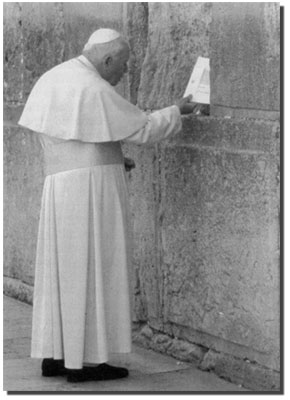
Photo (Courtesy) http://www.texemarrs.com/022005/judaizers_need_light_of_truth.htm
December 31st, 2010 · Nicholas T. Batzig
It appears that, more than ever before, we desperately need to answer the question, “What does Modern Judaizing look like?” The Judaizers were, of course, those false brethren who secretly came into the newly found church to spy out the freedom that Christians had in Christ. We don’t have people creeping into our churches insisting that we need Christ plus circumcision to be saved. We laugh at even the idea that such nonsense could happen in our Reformed churches. So, can we simply wipe our brows with a sigh of relief and go forward knowing that we are not susceptible to such perversion of the Gospel? Are we only to see in the doctrine of Mormons and the JW’s a false Gospel and another Jesus? How are we to apply the teaching of Galatians to our own lives? Is it to be found in certain ecclesiastical settings in which doctrinal distinctions are taken seriously by men who profess to believe them (as some have suggested here and here)? How are we to understand in a careful manner a modern application of the problem of the Judaizers?
The book of Galatians is one of the most important, and yet, most difficult, books in the Bible. The glorious doctrine of justification by faith alone is expounded and defended throughout, on acc0unt of the legalism of the Judaizers aimed at the Gospel that Paul preached. One of the difficulties that the interpreter of Scripture is faced with is making a modern day application that is consistent with historical uniqueness of the Judaizing heresy. Paul, at the beginning of this book, explains to the church that if anyone comes preaching a different Jesus, or another Gospel, they should be accursed to the deepest part of Hell. It was not simply about being cut off from the covenant community (i.e. the social and ecclesiastical dimensions of justification) that Paul saw under attack, it was the soteriological dimension that was at stake–the question of how a man or woman was accepted as righteous by God. Paul had strenuously maintained that it was all based on the Person and finished work of Christ. It was not anything done in us or by us that caused our acceptance with God. Christ was made a curse for us, so that the blessing of Abraham (i.e. justification and the reception of the Spirit) might be ours by faith alone in Christ Jesus. The insistance that one needed to be circumcised in addition to trusting in Christ was to intimate that Christ did not provided a full and free salvation apart from anything we do. Paul ties the whole thing together at the end of Galatians when he explained that the Judaizers were seeking to avaoid persecution for the cross of Christ, and were wanting to boast in the flesh (human accomplishments). Very basically, it appears that the basic error of the Judaizers was not adding circumcision to the New Covenant people of Christ–it was in adding anything the finished work of Jesus for salvation.
J. Gresham Machen, in his Notes on Galatians, drew out, so very nicely, a careful application of the principle argument of Galatians to the church today when he wrote:
The particular form of merit which they induced men to seek was the mertit of keeping the Law of Moses, particularly the cermonial law. At first sight, that fact might seem to destroy the usefulness of the epistle for the present day; for we of today are in no danger in desiring to keep Jewish fasts and feasts. But a little consideration will show that that is not at all the case. The really essential thing about the Judaizers’ contention was not found in those particular “works of the law” that they urged upon the Galatians as being one of the grounds of salvation, but in the fact that the urged any works at all. The really serious error into which they fell was not that they carried the ceremonial law over into the new dispensation, whither God did not intend it to be carried, but that they preached a religion of human merit as over against a religion of divine grace.
So the error of the Judaizers is a very modern error indeed, as well as a very ancient error. It is found in the modern church wherever men seek salvation by “surrender” instead of by faith, or by their own character instead of by the imputed righteousness of Christ, or by “making Christ master in the life” instead of by trusting in His redeeming blood. In particular, it is found wherever men say that “the real essentials” of Christianity are love, justice, mercy, and other virtues, as contrasted with the great doctrines of God’s word. These are all just different ways of exalting the merit of man over against the cross of Christ; they are all of them attacks upon the very heart and core of the Christian religion. And, against all of them the mighty polemic of this epistle to the Galatians is turned. 1
1. Skilton, John H. ed. Machen’s Notes on Galatians (Nutley, NJ: Presbyterian and Reformed Publications, 1977) p. 10
.
Source
.
.
Saturday, November 05, 2011
Feastkeeping

The Jewish system was symbolical, and was to continue until the perfect Offering should take the place of the figurative. .... The extent of the terrible consequences of sin could never have been known, had not the remedy provided been of infinite value. The salvation of fallen man was procured at such an immense cost that angels marveled, and could not fully comprehend the divine mystery that the Majesty of Heaven, equal with God, should die for the rebellious race. [2SP] p. 11, Para. 1.
At the crucifixion, as JESUS died on Calvary, he cried, It is finished, and the vail of the temple was rent in twain, from the top to the bottom. This was to show that the services of the earthly Sanctuary were forever finished, and that GOD would no more meet with them in their earthly temple, to accept their sacrifices. [GC58] p. 161, Para. 1.
Therefore, something must be done to get past the difficulty. So they just try to separate the sacrifices from the feasts to facilitate a Satanic delusion.
Source
Friday, October 14, 2011
Yeshúa Ha Mashiaj comes back on October (Tishri) 15, 2011

The eternal truth - Yeshúa Ha Mashiaj comes back on October ...
www.laverdadeterna.com/english/ - Argentina
Yeshúa Ha Mashiaj comes back on October (Tishri) 15, 2011. A ministry dedicated to extolling the Biblical truths and share the love of God the Father and His ...
Source: http://www.laverdadeterna.com/english/
.
Monday, October 10, 2011
Re-Judaizing Jesus
By David Van Biema Thursday, Mar. 13, 2008

Illustration by Christoph Nieman for TIME
Recently a popular blogger — let's call him Rabbi Ben — zinged the scholarship of a man we shall call Rabbi Rob. R. Ben claimed R. Rob did not "understand the difference between Judaism prior to the two Jewish wars in the 1st and 2nd centuries A.D. and later Mishnaic and Talmudic Judaism." He helpfully provided a syllabus.
Actually, neither man is a rabbi. (Sorry.) Ben Witherington is a Methodist New Testament scholar, and Rob Bell a rising Michigan megapastor. Yet each regards sources like the Mishnah and Rabbi Akiva as vital to understanding history's best-known Jew: Jesus.
This is seismic. For centuries, the discipline of Christian "Hebraics" consisted primarily of Christians cherry-picking Jewish texts to support the traditionally assumed contradiction between the Jews — whose alleged dry legalism contributed to their fumbling their ancient tribal covenant with God — and Jesus, who personally embodied God's new covenant of love. But today seminaries across the Christian spectrum teach, as Vanderbilt University New Testament scholar Amy-Jill Levine says, that "if you get the [Jewish] context wrong, you will certainly get Jesus wrong."
The shift came in stages: first a brute acceptance that Jesus was born a Jew and did Jewish things; then admission that he and his interpreter Paul saw themselves as Jews even while founding what became another faith; and today, recognition of what the Rev. Bruce Chilton, author of Rabbi Jesus, calls Jesus' passionate dedication "to Jewish ideas of his day" on everything from ritual purity to the ideal of the kingdom of God — ideas he rewove but did not abandon.
What does this mean, practically? At times the resulting adjustment seems simple. For example, Bell thinks he knows the mysterious words Jesus wrote in the dust while defending the adulteress ("He that is without sin among you, let him cast the first stone," etc.). By Bell's calculation, that showdown occurred at the same time as religious Jews' yearly reading of the prophet Jeremiah's warning that "those who turn from [God] will be written in the dust because they have forsaken [him]." Thus Jesus wrote the crowd's names to warn that their lack of compassion alienated their (and his) God.
A trickier revision for readers involves Paul's Letter to the Romans, forever a key Christian text on sin and Christ's salvific grace. Yet this reading necessitates skipping over what seems like extraneous material in Chapters 9 through 11, which are about the Jews. Increasingly, says Jason Byassee, an editor at the Christian Century,, scholars now read Romans through those chapters, as a musing by a lifelong Jew on how God can fulfill his biblical covenant with Israel even if it does not accept His son. Byassee the theologian agrees. But as a Methodist pastor, he frets that Romans "is no longer really about Gentile Christians. How do you preach it?"
That's not a frivolous query. Ideally, the reassessment should increase both Jewish-Christian amity and gospel clarity, things that won't happen if regular Christians feel that in rediscovering Jesus the Jew, they have lost Christ. Yet Bell finds this particular genie so logically powerful that he has no wish to rebottle it. Once in, he says, "you're in deep. You're hooked. 'Cause you can't ever read it the same way again."
Source: http://www.time.com/time/specials/2007/article/0,28804,1720049_1720050_1721663,00.html
I did not include this article here for accuracy, but instead to illustrate a strange ever increasing trend of re-interpreting the Gospel through the prism of a Messianic perspective; Which in my opinion is a deadly mistake.
WE have not been misled in following the well worn paths of the Faith once delivered to the saints. Don't underestimate that for a minute.
Are we now to re-examine every principle of our faith because some Rabbi says so?
I have but one master, the Lord Jesus Christ, who once said:
O Jerusalem, Jerusalem, thou that killest the prophets, and stonest them which are sent unto thee, how often would I have gathered thy children together, even as a hen gathereth her chickens under her wings, and ye would not!
Behold, your house is left unto you desolate.
For I say unto you, Ye shall not see me henceforth, till ye shall say, Blessed is he that cometh in the name of the Lord.
Matthew 23:37-39.
.

Illustration by Christoph Nieman for TIME
Recently a popular blogger — let's call him Rabbi Ben — zinged the scholarship of a man we shall call Rabbi Rob. R. Ben claimed R. Rob did not "understand the difference between Judaism prior to the two Jewish wars in the 1st and 2nd centuries A.D. and later Mishnaic and Talmudic Judaism." He helpfully provided a syllabus.
Actually, neither man is a rabbi. (Sorry.) Ben Witherington is a Methodist New Testament scholar, and Rob Bell a rising Michigan megapastor. Yet each regards sources like the Mishnah and Rabbi Akiva as vital to understanding history's best-known Jew: Jesus.
This is seismic. For centuries, the discipline of Christian "Hebraics" consisted primarily of Christians cherry-picking Jewish texts to support the traditionally assumed contradiction between the Jews — whose alleged dry legalism contributed to their fumbling their ancient tribal covenant with God — and Jesus, who personally embodied God's new covenant of love. But today seminaries across the Christian spectrum teach, as Vanderbilt University New Testament scholar Amy-Jill Levine says, that "if you get the [Jewish] context wrong, you will certainly get Jesus wrong."
The shift came in stages: first a brute acceptance that Jesus was born a Jew and did Jewish things; then admission that he and his interpreter Paul saw themselves as Jews even while founding what became another faith; and today, recognition of what the Rev. Bruce Chilton, author of Rabbi Jesus, calls Jesus' passionate dedication "to Jewish ideas of his day" on everything from ritual purity to the ideal of the kingdom of God — ideas he rewove but did not abandon.
What does this mean, practically? At times the resulting adjustment seems simple. For example, Bell thinks he knows the mysterious words Jesus wrote in the dust while defending the adulteress ("He that is without sin among you, let him cast the first stone," etc.). By Bell's calculation, that showdown occurred at the same time as religious Jews' yearly reading of the prophet Jeremiah's warning that "those who turn from [God] will be written in the dust because they have forsaken [him]." Thus Jesus wrote the crowd's names to warn that their lack of compassion alienated their (and his) God.
A trickier revision for readers involves Paul's Letter to the Romans, forever a key Christian text on sin and Christ's salvific grace. Yet this reading necessitates skipping over what seems like extraneous material in Chapters 9 through 11, which are about the Jews. Increasingly, says Jason Byassee, an editor at the Christian Century,, scholars now read Romans through those chapters, as a musing by a lifelong Jew on how God can fulfill his biblical covenant with Israel even if it does not accept His son. Byassee the theologian agrees. But as a Methodist pastor, he frets that Romans "is no longer really about Gentile Christians. How do you preach it?"
That's not a frivolous query. Ideally, the reassessment should increase both Jewish-Christian amity and gospel clarity, things that won't happen if regular Christians feel that in rediscovering Jesus the Jew, they have lost Christ. Yet Bell finds this particular genie so logically powerful that he has no wish to rebottle it. Once in, he says, "you're in deep. You're hooked. 'Cause you can't ever read it the same way again."
Source: http://www.time.com/time/specials/2007/article/0,28804,1720049_1720050_1721663,00.html
I did not include this article here for accuracy, but instead to illustrate a strange ever increasing trend of re-interpreting the Gospel through the prism of a Messianic perspective; Which in my opinion is a deadly mistake.
WE have not been misled in following the well worn paths of the Faith once delivered to the saints. Don't underestimate that for a minute.
Are we now to re-examine every principle of our faith because some Rabbi says so?
I have but one master, the Lord Jesus Christ, who once said:
O Jerusalem, Jerusalem, thou that killest the prophets, and stonest them which are sent unto thee, how often would I have gathered thy children together, even as a hen gathereth her chickens under her wings, and ye would not!
Behold, your house is left unto you desolate.
For I say unto you, Ye shall not see me henceforth, till ye shall say, Blessed is he that cometh in the name of the Lord.
Matthew 23:37-39.
.
Subscribe to:
Posts (Atom)