Showing posts with label Review. Show all posts

Saturday, August 29, 2026

I Went No Contact with My Parents. I Regret It.


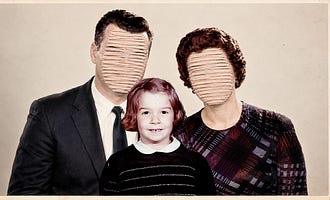
A therapist told me my mom and dad were causing all my problems—so I cut them off for five years.


In 2008, Christina Buttons took the advice from her therapist to cut off her parents completely. (Illustration by The Free Press)

By Christina Buttons
08.12.26 —Culture and Ideas

Book reviews, cultural critiques, essays on the zeitgeist, and profiles of the avant-garde.

“We have two adult children, a son aged 30 and a daughter aged 27. We are estranged from them both,” wrote a 60-year-old mom.

“Our oldest son, 27, has gone no contact with our entire family,” wrote a 57-year-old mom.

“It seems like she’s been influenced by the “no contact” movement too common in her generation, which rejects normal parents as toxic,” wrote yet another mom, this one 55, whose daughter doesn’t speak to her.

I’ve read so many messages from people who are desperately sad that their adult children don’t talk to them. That’s because I’m the editor of Tough Love with Abigail Shrier, our weekly advice column, so it’s my job to sort through the letters she gets. You ask: How do you rebuild a relationship with your son when you’ve been cut off? If your daughter’s decided you’re toxic, how do you cope with the pain?

At the heart of these questions is another, even deeper one: How could my own child reject me like this?

In her essay today, Christina Buttons answers that question—explaining why she went no contact with her parents for five years, at the age of 19, and why she’ll always regret it.

If you’re one of the many people who’s told us that your child isn’t speaking to you right now: This is proof that there’s always hope.
—Freya Sanders

***

Monday, July 06, 2026

The Keys of This Blood


Píncaros da Glória Dec 31, 2025

Malachi Martin’s work explores the geopolitical competition between three primary forces—Western capitalism, Soviet communism, and the Roman Catholic Church—as they vie to establish a new world order. Central to this narrative is Pope John Paul II, whose unique background in Poland prepared him to engage as a sophisticated global competitor in this "millennium endgame." The text details how the Pontiff utilizes his moral authority and diplomatic reach to challenge both the materialism of the West and the totalitarianism of the East. Martin highlights the internal struggles within the Church, including the rise of Liberation Theology and a "superforce" of dissenters, which complicate the Pope’s mission. Ultimately, the source frames modern history as a transition from a world of sovereign nation-states to a unified, interdependent global structure. Through this lens, the author argues that the Pope’s actions are driven by a divine vision intended to steer humanity toward a spiritual rather than purely secular future.


Thursday, June 11, 2026

The Spiritual Journey of J.D. Vance | Communion

 Book Haven

 Jun 7, 2026  #Communion #JDVance #CommunionBook

In this video, we explore Communion: Finding My Way Back to Faith by J. D. Vance, a deeply personal memoir that traces his journey from doubt and secularism back to Christian faith through his conversion to Catholicism. Discover the book's central themes of faith, family, purpose, tradition, spirituality, and personal transformation.

If you enjoyed Hillbilly Elegy, this book offers a compelling look at the spiritual side of Vance's life, revealing how faith shaped his worldview, values, and understanding of community and responsibility.


In this video, you'll learn:

✅ A complete summary of Communion: Finding My Way Back to Faith

✅ Key themes and lessons from the book

✅ J.D. Vance's spiritual journey and Catholic conversion

✅ Insights on faith, family, and personal growth

✅ Who should read this memoir 


Whether you're interested in Christian books, Catholic memoirs, spiritual journeys, personal development, or contemporary nonfiction, this summary will help you understand the book's most important ideas.

Book: https://bookdelico.com/products/commu...

Wednesday, November 19, 2025

The Keys of This Blood: The Struggle for World Dominion Between Pope John Paul II, Mikhail Gorbachev & the Capitalist West


No. 4: Malachi Martin, The Keys of This Blood: The Struggle for World Dominion Between Pope John Paul II, Mikhail Gorbachev & the Capitalist West

by Peter J. Leithart
July, 1991

Open Book: Views & Reviews, No. 4
July, 1991
Copyright (c) 1991 Biblical Horizons

Malachi Martin, The Keys of This Blood: The Struggle for World Dominion Between Pope John Paul II, Mikhail Gorbachev & the Capitalist West (New York: Simon and Schuster, 1990). Reviewed by Peter J. Leithart.

The subtitle of this massive volume gives a good idea of its major theme. Martin, the hard-hitting former Jesuit, examines the three major players involved in the "millennial end game" to determine the future geopolitical shape of the world. Gorbachev, Martin argues, is seeking the "Marxification" of Western Europe and America; the most powerful of the various Western globalists have a democratic-capitalist globe as their aim; John Paul II, whom Martin insists is a figure of immense geopolitical significance, has a vision that is "religious and specifically Christian from a Roman Catholic perspective" (p. 492), and hence John Paul specifically rejects the secularisms of East and West.

So much could, of course, be surmised from the book’s subtitle. No subtitle — nor a brief review, for that matter — could begin to capture the impressive range of issues and figures that Martin discusses. Several important themes emerge.

Martin stresses that, for all his global significance, the current Pope has no control over his Church. In a provocatively titled chapter, "The Judas Complex," he bluntly charges that many Roman Catholic officials are guilty of malfeasance. The abuse of office involves generally the refusal to teach and enforce Roman Catholic doctrines and practices, and centers on four specific issues: the Eucharist, the uniqueness of the Roman Church, the supremacy of the Pope, and a range of reproductive issues. Martin is a hyper-traditionalist Roman Catholic; he launches an attack on Vatican II’s emphasis on the Church as the "people of God," and summarizes the Catholic teaching that the Mass "presents the real live Sacrifice of the body and the blood and physical life of Jesus consummated on Calvary" (p. 667), a formulation that even Aquinas would be hesitant to endorse. For all his admiration of John Paul, Martin chides him, as he did in his earlier book, The Jesuits, for not weeding his own garden.

Sunday, August 20, 2017

Book Review: A Brief History of Sunday: From the New Testament to the New Creation


10 July 2017 | Alisa Williams 

Powered by Translate


Growing up Seventh-day Adventist, I always found it strange that the majority of Christians worship on Sunday. Though I attended Adventist schools from kindergarten through university and we often discussed the importance and “rightness” of Saturday as the proper day of worship, the why behind Sunday worship and the how it came to be were never addressed. I remember asking the questions, but the abrupt, “well other Christians are just WRONG” and the more toxic (and inaccurate), “it’s the Catholics' fault,” weren’t helpful to my understanding. Over the years, I’ve heard references to Constantine’s role in Sunday worship, but it all seemed a bit muddy.

So I was intrigued when I came across Justo L. González’s latest book, A Brief History of Sunday: From the New Testament to the New Creation (Eerdmans Publishing Co., 2017). González is a retired professor of historical theology and a United Methodist minister who has published over one hundred books, according to the back cover blurb. Intrigued and now confident in the author’s expertise, I dived in.

I’m not sure what I was expecting from this book, other than the hope of a more thorough understanding of how the Christian day of worship transitioned from Saturday to Sunday. What I was not expecting, however, was the author to give a nod to his Seventh-day Adventist friends in the second sentence of his introduction:

When I first told my friends that I was considering writing a history of Sunday, the most common reactions were what I expected. . . . Some of my Seventh-day Adventist friends began sending me books on the Sabbath and pointing me to other materials on the subject (viii).

I had to smile at the very Adventist reaction of making sure a preeminent scholar is outfitted with the proper research materials. To González’s credit, he seems to have not only used the materials provided by these helpful friends but also proceeds to speak quite respectfully of Adventists and other Saturday worshippers throughout the remainder of his book.

Proving Saturday worship “correct” is not, however, the point of this book. Neither though is this a calling to arms for Sunday worship. González succeeds in doing exactly what his title implies he will: providing a concise account of how Sunday worship came to be. His neutral and academic tone simply lays out the facts as they are and provides a solid primer for anyone looking, as I was, to understand the history behind the Christian day(s) of worship.


Thursday, September 08, 2016

CLIMATE ACTION: A CAMPAIGN MANUAL FOR GREENHOUSE SOLUTIONS


BY: MARK DIESENDORF

Publisher: UNSW Press, Sydney, NSW
ISBN Number: 978 1 74223 018
Publish Date: 2014
Number of Pages:


“The word academic is synonymous for irrelevant”, declared Saul Alinsky, the influential Chicago activist-educator. A notable exception to Alinsky’s rule is Mark Diesendorf, author of ‘Climate Action: A campaign manual for greenhouse solutions’. Diesendorf is Deputy Director of the Institute of Environmental Studies at the University of New South Wales.

Alinsky would admire Diesendorf’s academic activism. He’s an outspoken critic of the Rudd Government’s proposed Carbon Pollution Reduction Scheme and the Australian bargaining stance in Copenhagen. He accuses the Australian Government of ‘posing as an active proponent of climate action’. In recent months, Mark has gone head to head with Tony Abbott over the Liberal leader’s support for nuclear power as a remedy to climate change, arguing that, ‘The two biggest threats facing human civilisation in the 21st century are climate change and nuclear war. It would be absurd to respond to one by increasing the risks of the other.’ He has also challenged the powerful Australian Coal Association, asserting that in just 20 years, Australia could entirely replace coal with less polluting energy sources.

In mid-2009, Diesendorf added Climate Action to his impressive list of almost 80 publications including the popular, Greenhouse Solutions with Sustainable Energy (2007). The new book has been well received.


Monday, May 16, 2016

Uncharted Territory: The American Catholic Church at the United Nations, 1946-1972 by Joseph S. Rossi


Joseph S. Rossi. Uncharted Territory: The American Catholic Church at the United Nations, 1946-1972. C.: Catholic University of America, 2006. xiii + 288 pp. $79.95 (cloth), ISBN 978-0-8132-1456-6.

Reviewed by Mary Elizabeth Brown (Marymount Manhattan College)
Published on H-Catholic (January, 2008)


World Progress Derailed by Budget Cuts

Uncharted Territory continues a saga that Joseph Rossi, currently an associate professor of theology at Loyola College in Maryland, began in his dissertation.[1] In the previous volume, the Vatican decided against compromising its own neutrality by joining the United Nations. American Catholics understood they had to join to influence UN actions, and the National Catholic Welfare Conference (NCWC) participated in efforts that led the UN Charter to include a role for nongovernmental organizations (NGOs).

The first chapter of the present volume explains how the UN Economic and Social Council (ECOSOC), gatekeeper for NGOs, ranked organizations. The more truly international an NGO's membership and finances were, the more privileges it had. As an American organization, the NCWC had limited privileges. However, by selecting long-time NCWC Social Action Department employee Catherine Schaefer as director of the Office for UN Affairs, the NCWC enhanced its reach, because Schaefer had credentials stemming from membership in the Catholic Association for International Peace (CAIP) and the International Union of Catholic Women's Leagues (later the World Union of Catholic Women's Organizations, WUCWO). Schaefer used her contacts to make the NCWC office into a clearinghouse that that linked Catholics at the United Nations, from NGOs to individual delegates who happened to be Catholic (Lebanon's especially). Schaefer deployed these contacts to bring a Catholic perspective to bear on multiple UN deliberations.

Rossi then leaves the story of organizational development and office politics for theology. Chapter 2 provides a theological justification for U.S. participation in the United Nations, based on papal encyclicals and on the writings of Monsignor John A. Ryan. The chapter shows the church working toward a position centered on individual human rights, with the state being responsible for respecting those rights insofar as the its own work is concerned and protecting them from violation by other states or by forces such as the invisible hand of the marketplace. Chapters 3 through 7 show how Schaefer brought human-rights theology to bear in specific instances, specifically, the drafting of the Universal Declaration of Human Rights (chapters 3 and 4), the Arab-Israeli conflict of the late 1940s (chapter 5), the Cold War (chapter 6), and the status of women (chapter 7). In her review of Rossi's previous book, historian Debra Campbell pointed out the dangers of thinking the creedal oneness of the church means a unity of Catholic opinion in historical situations.[2] That is an issue in the current book as well. Rossi does not indicate any conflict within Catholicism over issues of human rights, the Middle East, or women's role in society. He did treat one specific and important conflict in Catholicism, American Catholic opposition to U.S. participation in the United Nations. Even there, the field is not equal; the pro-United Nations forces have theology on their side, while opponents have placed their commitment to U.S. isolationism above their commitment to Catholic social teaching.

Developments force Rossi to return to organizational history and office politics in chapters 8 and 9. In 1967, the Vatican sent its first permanent observer to the United Nations, and over the next five years support for the Office for UN Affairs dwindled until the office was finally shut down. Rossi places most of the blame for closing the office on then-United States Catholic Conference/National Conference of Catholic Bishops General Secretary Joseph L. Bernardin. Bernardin went on to become cardinal-archbishop of Chicago, architect of the American bishops' statement on "The Challenge of Peace" (1983) and advocate of a "consistent ethic of life" that opposed the death penalty along with abortion. However, in 1972 he was so new to national Catholic leadership that he did not know much about the office he was closing. Rossi sets apart in an epilogue a particularly unflattering recreation of the events of May 24, 1972, when, after having arranged for the closing of the Office for UN Affairs that June, Bernardin contacted the office to ask what it did. Rossi does credit Bernardin with recognizing the laborers were due their hire: Schaefer, who was nearing retirement, did not lose any benefits due to management's actions, and her assistant, Alba Zizzamia, had a job available with the Archdiocese of New York.

Uncharted Territory exemplifies the inverse relation between the small fields scholars cover in their studies and the wide vistas these studies open up. Rossi consulted the archives of the CAIP, but did most of his research in the archives of the NCWC and USCC/National Conference of Catholic Bishops. His sources are entirely English-language office papers. At times, the documents need to be supplemented with further information; for example, pages 194-195 refer to a WUCWO delegate from Togo who in 1962 addressed the General Assembly on the subject of polygamy as a threat to women's rights. Would it be possible to find out who this woman was? Similarly, the discussion of the decision to close the UN office makes reference to budget cuts but not to other issues roiling the NCCB in 1972, such as decisions about how thoroughly to support the United Farm Workers.[3] Despite its narrow focus, Uncharted Territory raises large issues. It is really the story of how a determined group of people from one of the world's oldest NGOs convinced UN architects that the nation-state is not the only way that human communities relate to each other. Then, these same subversives fought on two fronts, trying to convince both the United Nations and American Catholics that religion had a role in international affairs. Schaefer had her successes at the United Nations: she helped to incorporate into the Declaration of Universal Human Rights language respecting parental choice in children's religious education, and, in a time before women's issues were given widespread attention she joined with other women to call to UN attention the potential for human rights abuse in child marriage and bridal prices.

Libraries that have Rossi's first volume may acquire Uncharted Territory as a matter of course. Uncharted Territory also contains material of interest to scholars of American Catholicism, the Middle East after World War II, the United Nations, and women's history in the years before the mass movement of the 1970s. It is hoped that the contents of the book will overcome two disincentives to purchase, one of which is the current hardcover price. Also, its production values are excellent except for the design, but that is important. The cover, which has a little black-and-white photo of the UN superimposed on a larger 1957 black-and-white photo of NCWC headquarters in Washington, does not convey what the book is about. There are only four photos and Schaefer is in only one, in the background, head down. There are other photos of her; one accompanies an article on her work for women at the UN that appeared in the Catholic Historical Review.[4]

Notes

[1]. Joseph S. Rossi, S.J., American Catholics and the Formation of the United Nations (Lanham, MD: University Press of America, 1993).

[2]. Debra Campbell, review of American Catholics and the Formation of the United Nations, Church History 64, no. 4 (1995): 721-722.

[3]. Marco G. Prouty, César Chávez, the Catholic Bishops, and the Farmworkers' Struggle for Social Justice (Tucson: University of Arizona Press, 2006), 81-88.

[4]. Joseph S. Rossi, "'The Status of Women': Two American Catholic Women at the U.N., 1947-1972," Catholic Historical Review 93, no. 2 (April 2007). The picture is on the cover.


If there is additional discussion of this review, you may access it through the network, at: https://networks.h-net.org/h-catholic.

Citation: Mary Elizabeth Brown. Review of Rossi, Joseph S., Uncharted Territory: The American Catholic Church at the United Nations, 1946-1972. H-Catholic, H-Net Reviews. January, 2008.
URL: http://www.h-net.org/reviews/showrev.php?id=14050

Copyright © 2008 by H-Net, all rights reserved. H-Net permits the redistribution and reprinting of this work for nonprofit, educational purposes, with full and accurate attribution to the author, web location, date of publication, originating list, and H-Net: Humanities & Social Sciences Online. For any other proposed use, contact the Reviews editorial staff at hbooks@mail.h-net.msu.edu.


Source

.

Monday, January 04, 2016

YEAR IN REVIEW: Our Top Ten Conspiracies of 2015


DECEMBER 31, 2015 BY SHAWN HELTON


Patrick Henningsen and Shawn Helton
21st Century Wire

With the year coming to a close, it’s time to take stock of some of the more gripping conspiratorial events and stories covered by 21WIRE over the past year. Once again, it was a year that defied reason or logic the world over. From Paris to Palmyra, San Bernardino to Sanaa, or from Roanoke to Raqqa – there’s never been a year like 2015.


As was the case in 2014, there were a number of other high-profile news stories we could have included in this year’s conspiratorial exposé but within our top ten list, we’ve chosen to focus on not only the most important events, but also the most improbable ones as well. While CNN and other majors spent the summer doing a live reenactment of Prison Break ala milk toast, we remained busy digging into the false flag terror, NGO soft power complex, Operation GLADIO 2.0 and deconstructing the active-shooter paradox.

However, it’s worth mentioning some of the more notable stories from the year that didn’t make the top ten – such as the FBI-linked Chris Lee Cornell entrapment ‘terror’ plot, the Baltimore Riots that ensued after a local drug dealer, Freddy Gray, died while in police custody (a reboot of the Michael Brown saga), Tunisia’s mysterious Sousse Resort Shooting, the polarizing rise of reality TV star and real estate mogul Donald Trump into American politics, the bizarre death of a British journalist at a Turkish airport, Europe’s Great Migrant Crisis, the Greek euro-crisis andthe rise and fall of Syriza, the formation of a New EU Army, the exposing of a faux NGO known as the White Helmets in Syria, the intensity of terrorist activity by Boko Haram in West Africa, and the emergence of the Iran Nuclear Deal, an explosive foreign policy drama that has only just started to unfold.

We hope you’ll find that this is the best ‘conspiracy countdown’ on the web this holiday season.

Below is our Top Ten list of conspiracies from 2015 – a year which saw the rise of the active shooter, ISIS going global, and a plethora of other synthetic plots, consensus realities and geopolitical memes…

10. The Burning of a Jordanian Pilot – This was perhaps the most dramatic production in the now infamous ‘ISIS Video Series’. The alleged burning of captured Jordanian pilot Moaz al-Kasasbeh was a propagandized event that should be treated with immense suspicion, as the pilot’s apparent death displayed all the signs of being a choreographed ‘geopolitically’ timed ISIS feature film. Along with other high-profile ISIS on-screen killings, the burning of pilot Kasasbeh, depicted a stylized scene that was completed with multiple camera angles, modern Hollywood-like editing and a gripping social media campaign tailor-made for Western audiences by which to be seduced. The video of the pilot’s ‘death’ was a flashy quick edit MTV-style production entitled, “Healing of the Believers’ Chests,” a production which was said to have been released through social media on February 3rd in 2015. However, Jordanian officials later changed the script, claiming that Kasasbeh was killed on January 3rd – something which was never fully explained by US authorities, Jordan, or the SITE Intelligence Group – all of whom held on to the details of the pilot’s alleged burning to be timed with other events related to the conflict in Syria (like Charlie Hebdo). Seemingly out of desperation from the botched Kasasbeh story, the media unveiled a ready-made-tragedy – the kidnapping and airstrike death of a American aid worker and ‘activist’ Kayla Jean Mueller. According to the official media narrative, an angry Jordanian leader immediately ordered airstrikes against ISIS, and if by magic, ISIS then announced that the American Kayla Mueller was killed in captivity during those same airstrikes. A perfect end to a near perfect story. Then the media claimed that Mueller was forced to marry ISIS leader Abu Bakr al–Baghdadi who raped and tortured her – a fellow captive said. Mueller was said to have been taken hostage in August of 2013, although for over two years, there was zero media coverage about her alleged plight, no calls for her release, and yet oddly, in May of that same year in 2013, Syrian Rebel front-man US Senator John McCain (R-AZ) was in the exact same area where Mueller was allegedly working in Northern Syria. He said he was there to meet with his “moderate” rebels who in fact turned out to be terrorist fighters, jihadists and mercenaries. Given the foreknowledge of the events listed above and their designed outcome, the burning of pilot Kasasbeh, and the apparent death of Mueller – became two more examples of the propaganda war waged by the West in the Middle East.

Read more about the Jordanian Pilot story here

9. The Unmasking of Jihadi John – 2015 possessed a myriad of media-driven personalities, but none were more compelling than the media-friendly terror avatar known as ‘Jihadi John’. The ISIS frontman’s video threats and staged beheadings surfaced in August of 2014, and lasted into January of 2015. They were carefully crafted propaganda pieces (presented by the highly dubious SITE Intelligence Group) and were meant to evoke an emotional response for the Western public – which they did. The media couldn’t get enough of the actor Jihadi John.While the black-clad villain’s videos appeared to be crudely staged green screen productions (but apparently good enough to fool the mainstream media and US and EU politicians) when compared to the heavily orchestrated large-scale ISIS executions that premiered in early 2015, there is no doubt that the ISIS video psychodrama has aided Western foreign policy objectives in both Syria and in Iraq, as coalition forces used the terror troupe’s media exploits for their surreptitious proxy war against the Syrian government, while also advancing a pretext for a larger conflict in war-torn Iraq. Moreover, the unmasking and alleged ‘drone assassination’ of Jihadi John in 2015, where US officials claimed, “we are reasonably certain he died in a drone strike” (if you believe that one, we have a compound in Abbotabad to sell you), the most amazing part of the Jihadi John drama was that British security services decided to disclose that they had known the identity of the terror mascot for over 6 months. It didn’t end there. While this news stunned the international community – it was then revealed that the man suspected of being the ISIS mouthpiece was known by MI5 for the past 6 years. The identity of the infamous ISIS actor was revealed to be a 27-year-old British computer programmer named Mohammad Emwazi from West London. This came after months of speculation that Emwazi’s friend from well-to-do Maida Vale, Abdel-Majed Abdel Bary was alleged to be the terror persona depicted in the beheading videos. In fact, it turned out that the pair had a longtime friendship, living just streets apart and were known as the “London Boys,” which featured a network of fanatics in West London linked back to the contemptible preacher Anjem Choudary (a likely MI5 informant alongside his previous cohort, the flamboyant tabloid mascot, Abu Hamza) who along with Omar Bakri, founded the terror labeled organization, Al-Muhajiroun. The banned terror group was known to be a prime recruitment tool by British intelligence as reported by The Guardian in 2005. Back in 2009, UK intelligence services in partnership with Metropolitan Police, announced the existence of a covert social engineering effort known as the The Channel Project, which was being run in hopes of targeting children with traits that may indicate an affinity to “extreme” views and a susceptibility to being groomed by “radicalisers” in the future. It goes without saying, that a secret program of this kind could just as easily be used to groom future ‘radicals’ and informants, too. Western political leaders and their media arms publicly discuss the idea of so-called terror ‘sleeper cells’ hiding in a nation near you, but none of them will acknowledge the historical fact that they themselves help to harbor, grow, foment and radicalize individuals through secret counter-terrorism operations. The entirety of the Jihadi John saga is wrought with questions, about Emwazi, the apparent drone assassination, the fake videos, and what sort of bizarre operation is being run by the British Police State – and how it’s connected to Islamic terror internationally. With Jihadi John out of the picture (for now), expect even more media sleight of hand directed at Western audiences.

Read more about Jihadi John here

8. Germanwings Flight 9525 – With Flight MH370 still missing, and the downing of Flight MH17 still unsolved, the last thing the world needed was another plane mysteriously falling out of the sky. The mainstream media plunged into overdrive in April 2015, spinning sensational theories regarding the suspicious high-flying tragedy involving Germanwings flight 9525. Immediately following the crash, news agencies systematically and collectively engaged in what can only be described as a post-mortem ‘character assassination’ of Andreas Lubitz, the German-born co-pilot and First Officer of Germanwings flight 9525. In keeping with the modern media circus, it quickly proved to be another case of trial by media and conviction in the court of public opinion. Lubitz was charged with deliberately crashing the Lufthansa owned aircraft prior to a full forensic investigation and without a full analysis of the black box recorder. The far-fetched claims about his mental well-being (suicide rehearsal theory) at the time of the crash only increased as coverage of this story grew, something which failed to explain how a pilot with limited flight time was able to manuever the A320 Airbus into a controlled descent without spiraling out of control according to flight experts. The Germanwings tragedy echoed other bizarre airline disasters in recent history; in 2014, there were a number of theories regarding the unprecedented loss ofMH370 and the highly suspicious downing of MH17 and the cover-up by the West (engineered to blame Russian leadership) in the wake of crisis in the Ukraine. Other less talked about theories concerning some of these recent airline disasters include the existence of the rarely discussed breakthrough in avionics, a very real technology known as the Boeing Honeywell ‘Uninterruptible’ Autopilot System. Once this advanced system is engaged, it can disallow any pilot or potential hijacker from controlling a plane manually, as the rooted setup uses digital signals that communicate with air traffic control, satellite links, giving government entities the ability to seize the airliner in mid-journey.

More about the Germanwings disaster here

7. Summer of the Daily Shooter – Undoubtedly, 2015 was The Year of the Daily Shooter. This year’s smoldering global political scene gave way to a string of unreal shooting events across America, many of which took place over the summertime, bleeding into the fall. While the public was still trying to comprehend the shocking and questionable Charlie Hebdo Attacks (see below)in early January, things began heating up in early May, when it was reported that two ‘Islamic’ gunmen allegedly opened fire outside of a cartoon ‘art’ exhibition and alleged “free speech contest” featuring provocative images of the Prophet Muhammad in Garland, Texas. The incident was quickly labeled a “terror attack,” along with the vague and forensically undefined ‘ISIS inspired’ tag for dramatic effect. A pair of shooters, Elton Simpson (shadowed by a paid FBI informant) and Nadir Hamid Soofi, are said to have targeted a bizarre “Muhammad Art Exhibit and Cartoon Contest” that was organized by the American Freedom Defense Initiative, led by anti-Islamic Israeli lobbyist and somewhat unsightly media personality, Pamela Geller. It was a staged event that clearly echoed the Charlie Hebdo story line, with the Garland incident preempted by a twitter post linked to Junaid Hussain, aka Abu Hussain al-Britani occurring around the time of the attack (British-born cyber hacker linked to CENTCOM’s Twitter account by a group calling themselves the “Cyber Caliphate.”) similar to that of Paris shootings, where an image depicting ISIS ringleader/operative Al-Baghdadi, was tweeted just two hours before the highly organized magazine shooting took place. Within a short period of time following the suspicious events in Garland, it was revealed that Simpson, one of the alleged suspects in the Garland shooting, had been under the watchful eye of the FBI for nearly a decade and was in close contact with an undercover informant during that time, similarly outlining the intelligence-linked Kouachi Brothers who were implicated in the Charlie Hebdo incident. And, as a hot and humid summer took shape during another strange Shooting in Charleston, South Carolina, public perception was once again under assault. A hornet’s nest of media engineered tension was kicked – stating that 21 year-old Dylann Storm Roof supposedly joined a ‘bible study session’ at the all-black AME Church on the evening of June 17th, prior to opening fire on an unsuspecting group of nine parishioners. As the apparent motive in the Charleston church shooting rapidly emerged, authorities stated that Roof gave a full confession shortly after being captured. According to reports, Roof was linked to a racially charged ‘manifesto’ which was posted to a website believed to have materialized sometime in February of 2015. The alleged manifesto, which was not signed by anyone, and which seemed to belie the life experience of someone Roof’s age and interests. And When examining the tirade against different races, wars and patriotism in America, the writer of the vitriolic message claimed to have typed the manifesto up in a hurry – though it read as if it was scripted well in advance. Like many other bizarre shootings across America, the Charleston church shooting seemed to have many anomalies, in addition to a multi-agency mass casualty drill taking place in Eastover, South Carolina, sometime before the church shooting. It was then revealed that Roof plotted his attack for some six months and that he was from the Eastover area. While America was mired in a Confederate Flag controversy due to the imagery depicted (triggering a wave of Confederate flag props plastered all over the US media) featuring Roof in the many staged photos – perhaps the most unsettling and striking aspect of this event was that the Department of Justice apparently fast-tracked $29 million dollars in the wake of this tragedy to all the families affected during the event from the Crime Victim Assistance Formula Grantprogram. Incredible. This crucial detail will forever give critics of the incident much to question regarding the Charleston church shooting. And just as the dust was settling in Charleston, we learned there was even more “Trouble in the Homeland” with yet another alleged terror inspired individual named Mohammad Youssuf Abdulazeez. As bizarre and conflicting reports emerged regarding a shooting on July 16th at a US Marine Corps strip mall recruitment center and a secure Navy Operational Support Center in Chattanooga, Tennessee, the focus of media coverage, gave the false perception that people were shot within the mall area – out in the open. However, 48 hours later, it was revealed that victims of the shooting event – were actually shot and killed inside of a secure Navy Reserve Training facility. It’s also important to note, that on very same day as the apparent Chattanooga shooting, Dark Knight shooter James Holmes, was convicted on twenty-four counts of first-degree murder, 140 counts of attempted first-degree murder, one count of possessing explosives, for his role in the dramatic Aurora theater shooting in 2012. Less than a week after the Chattanooga incident, another ‘active-shooter’ scenario played out inside of Layfayette, Louisiana’s Grand Theater. According to reports, shortly after a film screening of the Hollywood trash-comedy Trainwreck had begun that evening, 59 year-old John Russell ‘Rusty’ Houser allegedly shot 11 people (13-20 rounds were fired) with many supposedly wounded multiple times – without any clear motive. According to Lafayette Police Chief Jim Craft, 12 ambulances arrived at the scene within six minutes, while Houser’s apparent getaway vehicle was parked outside a theater exit. The medical response time was unprecedented by Acadian Ambulance, a company embroiled in legal woes and in need of a better reputation. Acadian’s vice president of marketing for Personal Emergency Response Devices, Randall Mann, rushed to the theater after being notified that his daughterEmily Mann had been inside the screening when the shooting occurred. And, it turns out, she just happened to be sitting in the same row as the alleged shooter. Lafayette’s Daily Shooter tale was one of strange coincidence, uncanny medical response, with a backdrop of legal trouble, mental illness and an informant related past. (In another bizarre coincidence following the Lafayette shooting, the Oklahoma City Bombing trial was finally concluded.) On the surface Chattanooga appears to have little in common with the Lafayette incident. However, there is some connective tissue between both events, as both tied into parallel fear and control based narratives in terms of perceived radicalism in America. Whether it’s the ‘grafting’ of an overseas terror based story line or the concept of a rogue patriot-like ‘lone wolf’ persona, we see a psychic assault on the masses, one that could potentially convince the public into giving up their civil liberties. Nearly two weeks after the anomaly ridden Lafayette shooting, there was what appeared to be a Multi-agency ‘Active Shooter’ Drill at a Nashville movie theater, as a suspect with a gun, hatchet, pepper spray and “hoax explosive device,” was killed by authorities after an alleged shootout with police. Again, police response time was within minutes of the incident. The dog days of August brought us another heavily staged,  Made-for-TV Shooting event in Roanoke, Virginia, (August 26th) an incident apparently caught on live television. However, it quickly emerged through alternative media sleuthing, that the alleged shooter’s skin tone in a self-produced video didn’t match the main suspect in that case, 41-year-old African-American man named Vester Flanagan, a person who also possessed the media stage name Bryce Williams. While holding a gun close-up in clear sight of the victims, Flanagan’s gunfire appeared to be consistent with that of blanks being fired. Additionally, one of the apparent victims, TV reporterAlison Parker quickly turned and ran away from the alleged assailant while taking three shots from less than ten feet away. There were ready-made love stories and tales of a gunman on the run who eventually – so we’re told, took his own life, as authorities closed in. The story conjured many other recent high-profile shootings including the dramatic case of Chris Dorner back in 2013. And just as the public was catching their breath over the apparent summer of the Daily Shooter, September ushered in a massive manhunt in Fox Lake, Illinois to find three alleged suspects in the shooting of a local police officer named Charles Joseph ‘G.I. Joe’ Gliniewicz, this strange case saw the mobilization of a “Shelter In Place” Martial Law lock-down on all 10,000 residents of Fox Lake – put in place within 90 mintues. 21WIRE highlighted a number of questions concerning the incident and if in fact there really were any real suspects involved in the officer’s death. In early November, the mysterious shooting was revealed to be an elaborate cover-up, which authorities now claimed was a self-staged suicide, that involved money laundering and a murder for hire plot. Hardly believable, after one of the biggest man-hunt hoaxes ever. Following the Fox Lake hoax, the month of October ushered in an incredible ‘mass shooting’ at Umpqua Community College located in Roseburg, Oregon (home of the Ford Foundation, coincidentally). It wasn’t long before this national media event was used to promote new gun control legislation, wrapped up in a winding plot line and a series of unexplained items. The dramatized mass-shooting occurred on October 1st, and revealed yet more staging of mass drills, as well as uncanny links to gun control advocates and military celebrities (military reservist Alek Skarlatos, the Paris Train Hero), a large cache of weapons, changing narratives, a heavy-handed social media campaign, a ‘USB manifesto’ and unexplained family history. The event had shades of Sandy Hook and many other questionable shooting incidents, revealing the usual media array of neuro-linguistic programming (NLP) designed to alter societal or individual behaviour. As these televised shooting events have become intertwined with our daily lives, with their strikingly similar gunman profiles, media talking points and staged (mass drills) press conferences – a virtual reality is now on full display in America’s ‘active-shooter’ paradox (see the San Bernardino shooting story below).

Read more Daily Shooter stories here

6. The Fall of Yemen – One year on, few are aware of just how this monumental debacle kick-started its media coverage and was cycled into the mainstream ‘humanitarian interventionist’ narrative. Painting a new target on Yemen required some creative script writing which cast the protagonists in the Charlie Hebdo attacks, the Kouachi Brothers, as having a connection to Yemen. This bit of international intrigue was achieved by first claiming that the younger brother, Chérif Kouachi, had somehow traveled from France to Yemen in 2011, and received weapons training from the CIA’s celebrated comic book terror villain Anwar al-Awlaki (a CIA-FBI double agent/informant who dined at the Pentagon before his role was retired on September 30, 2011) head of the illusive Al Qaeda in the Arabian Penninsula (AQAP). The only problem here was thatTom Clancy Unit had to deal with the fact that Chérif actually had his passport revoked years earlier. To fix this crimp, ‘sources’ then claimed that Cherif used his brother Said Kouachi’s passport to travel to Yemen. Later, the story was changed again, claiming that both brothers had gone to Yemen between 2009-2010. As if by magic, a single French journalist (gatekeeper) from BMFTV somehow spoke to all three Hebdo shooters, and claims to have spoken to ‘the terrorist’ Cherif who politely told him,“I was sent, me, Cherif Kouachi, by al Qaeda in Yemen. I went there and Sheikh Anwar al-Awlaki financed my trip!” How convenient. This triggered yet another script crisis where security sources could not explain how Awlaki had ordered the mission when they it’s been claimed that the terror icon was supposedly killed by a US drone strike… in 2011. Their answer was simply, ‘they were a sleeper cell, laying in waiting for 4 years.’ After endless script revisions, the media eventually gave up and moved on to the world’s newest ‘terror hot bed’… in Yemen. After a gradual media build-up of months demonizing Yemen, and with the paid-for Right-wing US media outlets recycling the false talking point that Iran was responsible for the ousting of the defunct US and Saudi puppet leader President Abd-Rabbu Mansour Hadi, the US finally announced in March that Saudi Arabia would break every international law by doing the same dirty operation which NATO had done in Libya – namely, destroying the country by months of carpet bombing and backing jihadist militants on the ground. This was the first time that a US Gulf ally took over the role of military enforcers in the region, unleashing the wanton brutality and mass “collateral damage” normally reserved for war hawks in Washington. The Saudi-led massacre in Yemen is an illegal war of aggression according to every international law – complete with cluster bombs, ethnic cleansing and US covert operations. It remains of the most under reported stories in western media and 2015 –and now we can see why.


5. The Charlie Hebdo Event – Only a week into the new year, the world received a strong dose of false flag terror. The now legendary Charlie Hebdo Attacks will certainly go down as one of the most spectacular and convoluted staged media events in the modern Daily Shooter genre. Who would have known… a failing French ‘satire’ cartoon magazine, Charlie Hebdo, would suddenly enter the world spotlight over its offensive publicity stunt which magically morphed into an international terrorist event. Two French-Algerian gunmen are said to have stormed the offices of the magazine in the morning, killing 12 people and injuring others. The gunmen, known in fictional media circles as, “The Kouachi Brothers”, were chased down to a warehouse outside of town where they were said to have been shot and killed by brave security services. As it turned out, they were caught because one of the brothers allegedly left his I.D. on the seat of the abandoned get-away car (see later, ‘magic passport’). Suddenly, a third actor emerged, Amedi Coulibaby, who is said to have taken over a Kosher store in Paris, where he is said to have shot and killed four people there. The kosher leg of the story served two important purposes: 1) It made this an attack on the world’s Jewish community and by extension somehow, Israel as well, and 2) The gunman was said to have been “inspired by ISIS” (he printed out an ISIS flag on an A4 inkjet and taped it on the wall behind him during his obligatory ‘martyrdom’ video), which made it an “ISIS Attack”, in media terms. After the terror hell, came the hashtag hell. Not only were all three terrorists “known wolves” – well-known by the French security services, they were also under surveillance at the same time of the incident. Amazing right? Just another coincidence, right? Unfortunately for the script writers of this event, all evidence points to this being a staged false flag event. Within hours of the news, #hashtags, posters and banners began to suddenly appear everywhere, with the words #JeSuisCharlie (I am Charlie, or ‘we are all Charlie’). It echoed previous sophisticated Twitter campaigns like the US State Department’s previous farcical ‘interventionist’ marketing campaign #Kony2012, and more recently the White House’s #BringBackOurGirls ‘Bokoharam’ social media campaign. If that wasn’t bad enough, all of the world’s leaders and brutal dictators then jet-setted into Paris for one of the most disgusting and hypocritical photo-ops ever seen. What’s more, this group of middle-aged, xenophobic Lotharios and marginally talented cartoonists at what used to be a failing publication – became international heroes overnight, and magazine went on to sell millions of copies, literally overnight. What this staged production achieved, however, was that it started a wave of anti-Muslim paranoia which ripped through western Europe and North America, where it was suddenly ‘OK to hate Muslims’ and all in the name of “free speech” – a movement which then gradually gained steam, culminating in an even bigger and more elaborate staged event yet to come. The Clash of Civilizations narrative was back, and bigger than ever.

4. Russian Su-24 Fighter Jet Downed – On November 24th, Turkey admitted that it had shot down a Russian Su-24 Fighter Bomber that was flying a mission along the Syrian-Turkish border earlier. NATO member Turkey claimed that the Russian aircraft had ‘violated’ Turkish airspace – and the western media swallowed that claim hook, line and sinker. Turkey also claimed it had “warned Russian fighter 10 times” before it fired its air-to-air missiles. That turned out to be a lie. As per their previous ‘deconfliction’ arrangement, the US and NATO had sent the Russian mission details in advance of the incident, and despite denials from the West, Turkey had actually shot down the Russian Fighter inside of Syria’s airspace. The move was a clear provocation by NATO and Turkey. Russian pilots who had ejected were then fired upon by US/Turkish-backed “moderate” jihadist terrorists on the ground in northern Syria. After killing one of the pilots, the “moderates” then dragged his body through the woods and posted their video on Twitter. This incident pushed an already tense situation closer to the WWIII scenario that many feared could cascade as a result of the international chaos in and around Syria.Experts are now pointing out that while Russia is flying missions legally (under international law, at the invitation of the Syrian gov’t), the US-led ‘Coalition’ is not. It wouldn’t be the first time. While some pundits began speculating about Turkish leader Recep Tayyip Erdogan suffering a‘Sultan Complex’, others were worried that Russia’s Vladimir Putin would up the ante and escalate military tensions between Russia and NATO. In the end, it was Russia who showed restraint and appealed to the international community to help resolve the crisis. For Turkey, however, things went from bad to worse. This incident was significant because it switched on an electron microscope of scrutiny over shadow operations of the region’s most dubious actor – Turkey. Perhaps it was no coincidence that just before Turkey shot down the Russian plane, it was Russia who had just bombed ISIS oil supplies heading to Turkey from Syria. Up until then, Turkey appears have made-off like a bandit, getting away with allowing complete and free movement of ISIS fighters, weapons, and black market oil – in and out of Syria and northern Iraq. The incident, coupled together with the previous downing of the Russian Metrojet passenger airliner over Egypt’s Sinai a few weeks earlier – killing all 227 passengers and crew, served to harden Russia’s resolve and has since won it more support internationally than before. Although CNN and the western media still maintain that “ISIS terrorists” brought down the Metrojet with a can of Schweppes Soda (no, seriously), and even as crash investigators have concluded that explosives were involved, there is still no actual forensic evidence which suggests that ISIS itself brought down the passenger jet, although other suspect actors in the region seem to have been active in the area.

3. Paris Attacks – Friday the 13th. It was the year’s most spectacular terror production, broadcasting internationally for weeks on end. The Paris Attacks took the Charlie Hebdo narrative to a new level. A wave of “ISIS inspired attacks” are said to have taken the lives of 130 victims and injured many others. The media frenzy kicked into action. Amid the hysteria,21WIRE took to the airwaves, and made a series of predictions – all of which came true shortly after. Upon closer examination, however, the Paris Attacks had all the telltale signs of being yetanother false flag attack, designed to scare the global public, further demonize Islam, and provide the pretext for NATO to escalate their campaign of violence against Syria. Right on cue, less than 48 hours later, French president Francois Hollande seized the opportunity and launched airstrikes in Syria, supposedly against “ISIS targets” (although none were actually hit,instead France bombed museums and stadiums in Raqqa). Although the media and authorities jumped on this event as an “ISIS-inspired event” where the terrorists had allegedly “sneaked into France undercover of the Syrian migrant crisis”, there was never any real, hard forensic evidence that tied any of the alleged gunman to ISIS. In order to bridge this incredible gap, however, script writers conjured a “Magic Passport” of Syrian origin at the scene of the attacks, which they claimed proved this was an ISIS event. When the passport turned out to be fake, and was likely planted at the scene of the crime (in order to create the entire narrative), the media then went into rear guard mode, spinning ever more incredible stories about mentally challenged “Masterminds”, “sweeping terror raids” and an endless litany of reports about “dangerous fugitives on the loose” in both France and Belgium. The Paris Attacks saw another ridiculous hashtag campaign overtake Twitter, this time it was #JeSuisChien in memory of apolice dog that authorities said was blown up during an anti-terror raid. The festival of fear carried on through December. As with other similar events, numerous reports depicting crisis actors began circulating, causing a wave a skepticism about whether or not Paris was staged for geopolitical ends as with previous NATO-run domestic terror efforts like Operation GLADIO. What this staged event achieved more than anything, was that it managed to join two mainstream narratives – ISIS and the Migrant Crisis. What followed was a wave of anti-immigrant and anti-Muslim fervor which spread through European political discourse, with calls to shut down European borders internally and externally – and in the US Republican presidential election cycle, it prompted calls to ban all Muslims from entering the US. Islamophobia had now reached mainstream status it seemed. In Britain, PM David Cameron used the momentum of Paris to pass his war vote through Parliament. All of the sudden, half of America was talking about more “boots on the ground” in Syria and Iraq. For the war hawks, Paris was the gift that kept on giving…

2. The San Bernardino Shooting – This highly improbable tale involved a laundry list of anomalies – bringing the “active-shooter” genre to an entirely new level. The San Bernardino Shooting picked up where false flag events such as the Charlie Hebdo incident, Garland and Chattanooga left off, while at the same time unfolding like the 2012 shooting at Sandy Hook, an event with multiple eyewitness accounts, and multiple suspects apprehended at the scene. It was a striking event that didn’t seem to make any sense – one filled with whitewashed reports, amedia-scripted ransacking of the alleged ‘shooters’ home (tampering with a potential crime scene) and eyewitness accounts that contradicted the official narrative. And, in the very room where 14 people were reportedly killed (along with 21 injured) during a deadly shooting attack at the Inland Regional Center, there was an active-shooter training drill involving some of the victims almost a year prior to the attack. Detailed eye-witness testimony from Sally Abdelmageed in a CBS interview with Scott Pelley revealed that three white men in tactical gear dressed in black were involved in the shooting incident. This report was confirmed by other eyewitness testimony. The militarized police response during the San Bernardino Shooting also echoed various aspects of the Virginia TV shooting, Fox Lake’s shooting/lock-down, the famousChris Dorner Manhunt from 2013, and the Lafayette and Nashville shootings’ emergency response overkill. We were also told, that the suspected shooters Syed Farook and his wifeTashfeen Malik had died in a dramatic chase/shootout with police, and the entire event unfolded like a multi-agency drill as several armored MRAPs methodically approaching the apparent shooting suspect’s SUV with some 380 rounds fired at the vehicle in a televised scene. Incredibly, two weeks after the shooting event, the FBI revealed that the ‘terror couple’ did NOT post any radical posts on social media – something which was central in providing a subliminal motive for the apparent crime. The San Bernardino story seemed to serve several purposes, creating further cultural and religious divides with blanket xenophobia spreading like wildfire, while reigniting the old War on Terror meme, now rebranded as the ‘War on Radical Islam’, for new audiences to be politically seduced by for future war-theater in the Middle East, in addition to opening the door for sweeping national security changes. San Bernardino also mirrored theChattanooga shooting narrative, in that both events that failed to provide a solid motive or believable timeline. An All-American appellation added to the enigma of the ‘Muslim-American’, thus dispensing a massive viral, wide-spread subliminal fear and Islamophobia. Similar to the Charlie Hebdo connection to the US-Saudi proxy war in Yemen, San Bernardino seems to have set the stage for an apparent Al-Qaeda connection via Pakistan, along with an invented ISIS link. The Federal government wasted no time in using this event to call for a ban on consumer encryption and privacy protection by using the bogus argument that the govt could not keep tabs on the alleged shooters because of consumer cell phone and social media encryption. This is a blatant power-grab by Washington. This event should be a case study for anyone interested in media criticism or critical thinking, as it displayed both national and international implications, all wrapped in a ‘Bonnie and Clyde’ psy-op. Above all else, however, San Bernardino serviced both sides of America’s left-right political paradigm. For the left, it delivered loud liberal cries for “gun control”, and for the rabid right – it fueled a demand for more “national security” at home and abroad. Could this be the new false flag prototype for America going forward into 2016?

1. ISIS Unmasked – Incredibly, most western governments still cannot decide what its proper name is – ISIS, ISIL, IS, Daesh, or “Dash”as president Obama calls it. Still, unbeknownst to the globalist architects of chaos and instability, many of the staged provocations mentioned above did more to unmask the synthetic “ISIS Crisis” than they did reinforce its weakening mythology. Perhaps the greatest revelations which came of top conspiracies like the Migrant Crisis, theTurkish Shoot-down of the Russian Su-24, and the infamous ISIS Video Series – was that each of these helped to reveal Turkey’s pivotal role in facilitating the rise of ISIS and other terrorist groups currently destroying Syria and Iraq. Besides hosting a vast network of training camps and other terrorist R&R venues, Turkey has enabled the free flow of terrorist fighters, weapons, cash, as well as a lucrative black market ISIS oil trade – all of which exposes how Turkey is a prime mover in fueling the progress of the so-called ‘Islamic State’. 21WIRE’s comprehensive report on the illicit ISIS Oil Trade provides some shocking revelations on this subject. We also learned how neighboring Jordan has also played a key role in facilitating the terror brigades, as has Israel too. Another revelation happened in October; with Russia entering the Syrian quagmire, and with its rapid success in degrading and destroying ISIS and al Nusra terrorist positions in Syria – the world quickly realized that the US and its allies did nothing to repel ISIS and al Qaeda over the previous 18 months – and actually allowed these terror groups to advance their strategic positions and grow instead. This revealed the US-led ‘Anti-ISIL’ Coalition’s real motivations, not in containing ISIS, but actually helping it – in the hopes that the terror scourge could help Washington in its regime change goals to overthrow Syrian presidentBashar al Assad and turn Syria into a Libyan hell-hole repeat. As Turkey is also a NATO member state, this has raised many important questions about NATO’s general role in the terrorist take-over of the region. Not only this, but the Turkish government has now also been implicated the false flag ‘sarin gas’ chemical weapons attack in Damascus in 2013 – the same event which both the US and UK tried to use in order to pass declarations of war at the time. We can now see how this was just another version of the fake WMD plot which led to the Iraq War in 2003. Before the Paris Attacks erupted, 21WIRE warned that Turkey could be helping to engineer the migrant crisis in order to create a ‘EU’ Hegelian outcome and one which could increase the migration of terrorists into Europe.

The stage is now set for an incredible 2016. We only hope that this list will be shorter, and not longer, this time next year…


.

Sunday, September 28, 2014

The Trinity Foundation - Ecclesiastical Megalomania


Download the PDF version of this review. If you do not have Adobe Acrobat installed on your system please click here on Adobe Acrobat Reader to download.


Download the E-Book version of this review.


Download the Kindle version of this review.


Ecclesiastical Megalomania. A taped lecture by David Chilton. The Foundation for Christian Reconstruction, 1992. The cassette tape is available from Chalcedon, Post Office Box 168, Vallecito, California 95251.


In the March Trinity Review 1994 describing how Scott Hahn was the pastor of a Reconstructionist church in Virginia, I commented that someone should write a book about Theonomist/Reconstructionist churches.  The book would be quite illuminating, for it would show how the ideas of Reconstructionism have played themselves out in practice. No one, to my knowledge, has written or is writing such a book, but David Chilton, a popular Reconstructionist author who was a member of the Tyler church for years, has given us a brief description of life in the most famous Reconstructionist church, the one in Tyler, Texas. That church was co-pastored by Ray Sutton--who is now [1994] president of the Philadelphia Seminary, formerly Reformed Episcopal Seminary--and James B. Jordan, who continues to write for Gary North and is now [1994] speaking at events sponsored by R. C. Sproul’s Ligonier Ministries. Of course, Gary North himself was a prominent member of the Tyler church. Chilton left the Tyler church some years ago, but unfortunately he did not entirely leave the Tyler theology. Nevertheless, his account of the events in the Tyler church should be of interest to all. It appears to be quite accurate, for several people have independently corroborated his account. It is impossible to give a full report on Chilton’s talk here, but I have tried to hit the highlights.

Chilton begins his talk by recounting his personal experience in the Jesus Movement in California. He found the same abuse of ecclesiastical authority in that movement as in the Reconstructionist Tyler church.


The Jesus Movement

”In 1970, I was running a coffee house ministry--we had kids on drugs coming in...and we would have rock concerts there and I would preach at them.... There was a young woman who showed up at Calvary Chapel named Sandy. Lovely blonde--she was reputed to be a prophetess--she would float in and prophesy and then she would sing a little bit, play a guitar, and then she would float back out. We were all in awe of her.

”And one evening, very unexpectedly, she showed up at my coffee house, which was some...30 miles away from Calvary Chapel...and came in and we all made way for her, and she came up to the stage, announced that she had some prophecies..., and then she sang and exhorted us with a few things and floated back out. We were all very impressed. A real prophetess of God had been in our midst.Ö

”Well, one night she came in and delivered a prophecy and then she took me aside. I had never spoken to her directly; I was too much in awe--we all were. She was really somebody important. Everybody told us she was important and all the important people in the Jesus Movement gave great deference to her, and so we didn’t really know what to say. So nobody ever talked to her. She just came in, made prophecies, and went out. She came up to me, and she needed to talk to me personally. She took me aside and informed me that God had told her that she and I were to be married....

”Here’s this woman I don’t even know and she tells me that we’re going to get married. And so she looked at me expectantly and so I said, but I don’t love you. And she looked at me with infinite prophetic sadness in her eyes and she said ‘Oh, David, I’m so disappointed. Surely you know by now that you walk by faith, and not by feelings.’ There was no answer to that one. So we walked back into the coffee house a few minutes later and announced our engagement.

”I was miserable and the longer this relationship went on, the more miserable I got. I found that she was very strange in a lot of ways.... I still didn’t know her very well and hardly had conversations with her but she was now...my matriarch or something. But I kept putting this off and so discovering strange things about her. The thing is nothing she said was ever tested. She said it and it was Word and we all submitted to it. And I began to feel that there was something wrong with this but I didn’t know how to oppose it exactly. She was a little bit miffed at me that I was moving too slow on this. She kept wanting to set a date for the wedding and I kept postponing it. And so finally she said, ‘David, we’re going to have to really get this together immediately or just call the whole thing off.’

”I said, ‘You know, I’ve been thinking the same thing. Let’s call the whole thing off.’ And that was the end of that, I thought....

”There were these, what we called Christian Houses. They were Christian communes presided over by an elder--a patriarch, who was maybe all of nineteen years old, who didn’t have a job. Everybody else went out and worked and then they came in and brought [their pay] to him and he sat there meditating all day and telling everybody to move to Oregon and things like that. And so for months afterward, elders of Christian Houses were coming to me and telling me that I had disobeyed God in a very serious way--that I had rejected the Word of God because this woman, Sandy, was the walking Word of God. She was infallible. What she said was the Word of God and we could not question it. She eventually pulled it on a couple of other guys and one of them fell for it and they got married....

”And this really is the whole issue of what became known in charismatic circles and Jesus People circles as the Shepherding Movement. One of the prime theologians behind this is Watchmen Nee, and you can find these kinds of things in his writings where there’s this real heavy top-down authority. Every move you make, every personal decision you make, certainly anything as important as moving from one place to another or anything like that, or getting married, there has to be a decision that comes down from the leadership. You aren’t allowed to make decisions on your own.

”Coming into the Reformed faith for me was a great liberty and a release.... I found to my great delight that one of the most liberating verses in the Bible is 1 John 3:4: ‘Sin is the transgression of the law.’ That may sound like bondage to some people, but it’s not. It’s the most liberating verse in the Bible or just about. Sin is the transgression of the law--that means sin isn’t the transgression of anything else. It’s only the transgression of the law.... But apart from that we aren’t to make legislation for one another. And so I thought that coming into Reconstructionism and being surrounded by fellow Reconstructionists, we would all see things that way. Well, it didn’t quite turn out that way....”


Reconstructionism in Tyler

After relating more stories about the Jesus Movement, all designed to emphasize the hippies’ desire for collective control and their antipathy for individual decision-making, Chilton reports the rise of a “heretic in the making”--a quick study who read Cornelius Van Til and Rousas Rushdoony and began making wild inferences from their views--in the church he attended in California. Chilton next turns to his experience at the Tyler church:

”There was a widow in the church...a little bit eccentric. She had quite a bit of money. She had it in gold and silver and precious stones and things like that. And she didn’t trust banks.... She had read enough newsletters about banks so she didn’t want anything to do with banks. So instead the elders of the church took her money or took her valuables for safekeeping. They stored her money or her valuables--her wealth--so that she would not have to trust it to one of those unregenerate banks out there. And somehow that money just disappeared.... She began to suspect things were going on and she asked for it back from the elders, and they resisted giving it back but eventually they gave her some--they just apologized and said that it was gone.... And this was in the tens of thousands of dollars. This is everything that the woman had.... They eventually gave her a few rusty tools and things they scraped together and that was all they gave her.... No one was ever held accountable for this....

”There was one deacon’s wife--a very sweet woman who was caught up in this and consumed with guilt over what had happened. And I don’t get this from hearsay. I myself witnessed her in tears uncontrollably confessing to this widow what had happened. Very upset. Very overcome. And the widow kept telling her, you know, it’s not your fault, I know it’s not your fault, it’s okay. The deacon’s wife couldn’t stop crying. She was overcome with guilt. Eventually her marriage fell apart. A couple of years ago she committed suicide. This corruption that was going on was covered up.

”Paul says to Timothy that the elders that sin are to be rebuked before all (1 Timothy 5:20). But the elders of this church had a different doctrine.... The elders (one of the ministers of this church in particular) told parents not ever to make the mistake of confessing wrong to their children.... Don’t say I’m sorry because that immediately lowers you in the estimation of your children. They won’t have respect for you anymore....”

But the problems in the Tyler church were not simply conversion of funds and bad advice from the elders. The elders adopted, taught, and enforced a view of the church that has no support in Scripture.


Reconstructionist Ecclesiolatry


”This [notion of not admitting error to children] feeds into a doctrine that they developed there that became known as ‘Father God, Mother Church....’ [Where have we heard this before?-Robbins] The way it works is this: God is your Father; the Church is your Mother. How do you deal with things at home?... You do not allow your children to play off one parent against another.

”Father God, Mother Church. If Mother Church comes down with a decision to her children that is wrong, it is against what God’s law says, God will back up Mother Church.

”Now this sent...shock waves through the church...and people immediately came up with the obvious objection: What if...the church commands you to, say, sacrifice your children on an altar or something...? How far does this go? Does God always back up Mother Church?

”And they said, oh, of course not. Obviously if the church ordered you as a member to sacrifice your children on an altar, that’s not Mother Church anymore. Mother Church at that point has clearly become a harlot. And God will not back up the decisions of a harlot....

”That means, though, that if the church is wrong, if you say that the church is wrong enough for me to disobey, you’re calling the church a harlot.... If Father God will back up Mother Church unless she is a harlot, [and] if you say that Mother Church is wrong on an issue, it had better be an important enough issue because what you have just done...is that you’ve called Mom a harlot. Now if you call my Mom a harlot, you’ll get into trouble. And that’s what happened in Texas....

”One of the things that was going on with this in the [Tyler] church was that we found that the elders of this church were very class conscious.... This church was not primarily built up from the community. That’s how local churches usually are developed. The Gospel takes root in a society and the church is built up from the local constituency. But that’s not what went on in this church. People moved to come to this church. This was a Reconstructionist haven and so they moved to come there. People at great cost to themselves--people gave up good jobs to get lesser paying jobs and so on. And the church had a fair number of rather poor people in the church. The pastor of that church to other people outside the church said that one of the problems that he had to deal with in his church was that there’s so many ‘white trash’ in the church....

”The sermons became increasingly mystical.... I would sit in church Sunday after Sunday and think, I have read Rushdoony, I’ve read Van Til.... You know, I may not be genius level but I’ve got an intellect. And I’m sitting here, I’m rather well-read, probably more well-read than most members of the congregation, and I can’t make head or tail of what this man is saying. I have no idea what he is talking about in the pulpit. And if I can’t figure this out, how are these other people doing?

”Well, one way the other people were coping with it was that they assumed that this has to be really hot stuff. ‘This is profound because I can’t understand it. I’m sitting here in awe and wonder at all these things that are being said from the pulpit, I don’t understand it, but it must be true and it must be very important. And this is life-changing, culture-transforming stuff. I’m right here on the Inner Circle.’ Nobody knew what he [the pastor] was talking about. Bizarre, I mean bizarre interpretations were coming forth from the pulpit....

”The congregation was given to understand that everything that was being said from the pulpit, that here we are at the central point of the Reconstruction of this country, of indeed the world, and the things that are coming forth from this pulpit you won’t hear anywhere else.... As one Reconstructionist writer put it, ‘I want to save Western Civilization at cost plus ten percent, plus postage and handling....’ “


The White-Wall Tire Sermon

”There was this mysticism coming out of the pulpit. Nobody really understood what was going on. But sometimes it would not get mystical at all. There was one memorable sermon put forth by a deacon--he was really the deacon of the church: there were other deacons, but this was the hammer--and he announced at the beginning and gave a little exposition that the job of the deacon is only to do what the elders tell him to do. He has no discretion outside of what the elders tell him to do. Every word that comes out of his mouth, every action that he performs is in complete subservience to the elders.

”At that point, he launched into a talk about how the rest of us are to submit to the elders. We were given to understand, naturally, that everything that he said, he was saying on the direct authority of the elders of the church because he had just said he can’t say anything, he can’t do anything, apart from their direct command. So everything he said was coming from the elders but it was coming through him. And this was playing it safe.... Prime ministers and presidents do this sort of thing all the time.... That kind of game is played. Well, it was played at this church as well. And so when people objected to this, the elders were able to say that they hadn’t really meant any of this and that they weren’t really apprised of what was going on when, in fact, it was exactly the opposite.

”But the statement was made that we are to submit to every whim of the church leadership. Even to disagree in our thoughts is an excommunicable offense.... So we have to discipline our thoughts and bring them into line with what the elders said.... And the deacon gave a very concrete, you might say rubber meets the road example. He talked about white-wall tires. And he said if you have white-wall tires and an officer of the church comes over to your house and commands you to change them to black-walls, you are required to do so, and any disobedience to that command is rebellion against authority, rebellion against God himself. And you can be excommunicated for that....

”I went up to the deacon afterward and gingerly asked him some questions. I pointed to a man in the congregation who was a policeman....

”I said, ‘If that policeman comes over to my house and tells me to get white-wall tires, I will tell him, with all due respect, to jump in the lake, because he doesn’t have the authority to do that. He is exceeding his authority. And if I tell him to get lost, I’m not rebelling against authority, he is rebelling against authority, against his rightful authority. He is exceeding the law by coming over to me and telling me to do something that he has no right to tell me to do. So he’s the rebel. I’m not the rebel if he is telling me to do something that he doesn’t have the right to.’

”So I said, ‘Does church authority--can you--is it possible for you to exceed your authority? Where’s the line? I want to know at what point in my home I can draw a line and say you can’t cross that. You cross that line and we get into a little dust up here. So where’s the line?’

”And he didn’t answer that. He said, ‘Well, I’ll tell you, you know, if you disagree with the decision of the elders--they tell you to get white-wall tires and you disagree with that, you’re at liberty to go around to other people in the church and find out if they disagree. And if you have enough people that disagree, you can kick out the elder.’

”I said, ‘Well, I’ve got two problems with that. Number one, does everything have to be that extreme? Can’t we negotiate? Is it a choice of complete submitting, letting this iron boot step on my face forever, or I overthrow the authority? Can we negotiate here? Can we talk?’

”And he didn’t say anything about that. He just smiled.

”So I said, ‘Okay, my second problem with that is that while I’m disagreeing, and while I’m going around the church canvassing the church to find out who agrees with me and disagrees with the eldership, I am committing innumerable excommunicable offenses. Every time I think a thought against what the elders have said, I can be excommunicated for that. And certainly going around stirring up trouble, saying let’s kick these guys out, I can be excommunicated for that, right?’

”And he just smiled again. And I went all cold inside....

”I would wake up in the middle of the night in a cold sweat, terrified that I was going to be excommunicated for what I was thinking....

”At that point there was this real uneasy relationship between me and them. I was not on the staff of the church at all but I was, after all, David Chilton. And I wasn’t the most famous member of the church, but people did come to the church to find David Chilton, and I was one of the advertising gimmicks of that church. And here I am going through these intense, gut wrenching struggles over the issue of whether I’m going to be excommunicated simply because of disagreeing over a subject like white-wall tires.”


1984

”But it got worse. There were people who disagreed with school policy.... it had to do with fund raising. We were going to let children go out into the neighborhood and collect money.... Well, there were some people in the church and school who didn’t like that. They said, I tell you what, you come to me and you ask me. If the school needs money, tell me how much you want me to give and I’ll write you a check. But don’t ask me to send my children around to the neighborhood collecting donations from heathens to build up this school....

”Now they did not start a revolution.... They stayed out of it. They didn’t send their children around the neighborhood and on the appointed day, they did not show up. Now I was one of the ones that showed up. I didn’t like it. I didn’t feel comfortable about it, but we went along with it....

”The result of that was they [those who disagreed] began being brought in and interrogated by the elders of the church--interrogating husbands and wives separately, and refusing to allow these proceedings to be tape recorded.... Sometime before this I’d gone out to a bookstore and bought two books that I had read in high school and now was beginning to see the importance of. George Orwell’s Animal Farm and 1984....

”By 1985 I was sending out resumes very discreetly and quietly, begging and pleading with anybody to accept me anywhere. I was willing to do anything. Just get me out of here. There was a real climate of fear.... A family in our church who had moved about 20 miles away-our church was very much into liturgy...--these people moved away and there was an Episcopal Church nearby.... They decided that they would like to go there to church. So they applied for a transfer and got it.... You can’t imagine the shock waves that went through the church at that point. I had people coming up to me...saying, I didn’t know you could get out.

”At this point there was something over 60 families in the church. And that one family moved out. And when people discovered that you could move out, people did so.... When that began to happen, that original couple was denounced from the pulpit in the most extreme terms, that they had left the faith, they weren’t Christian anymore, and going to Hell....

”Perhaps the leading American Theonomist, if I can distinguish that from Reconstruction, but the leading, the most important, the most erudite American Theonomist was very strongly critical of the church there [in Tyler] and yet in his [California] church he routinely excommunicated people for disagreeing with him, excommunicated people for leaving, excommunicated people for transferring to another church in the same denomination. Think about that. You’re in a church and you transfer to another church in the same denomination and the pastor excommunicates you for that.... There were members of our church there who, in escaping from this [Reconstructionist] church, fled to the relative freedom of the Roman Catholic Church. Think about that....”

There is far more in Chilton’s tape than I can review here. If you are at all interested in tracing out the ramifications of Reconstructionism, this would be a good tape to purchase. Chilton is still enthralled by many Reconstructionist ideas, but he has given us a glimpse into the ecclesiastical megalomania of the most famous Reconstructionist church in the world.


May 1994

Editor’s note: After this speech, David Chilton subsequently suffered a heart attack from which he initially recovered and eventually died. One wonders if the terror and desperation he felt in the Tyler Church contributed to his health problems. After his heart attack, Chilton and his lecture were viciously attacked by Gary North, the chief financier of the Tyler Church, both publicly and privately. This editor was threatened in writing with “destruction” by North for publicizing Chilton’s speech. Several former members of the Tyler Church contacted the editor after we published this Review, saying that Chilton had not told the half of it. They were still frightened of the leaders of the Tyler Church years after they had left.

The Trinity Foundation hereby grants permission to all readers to download, print, and distribute on paper or electronically any of its Reviews, provided that each reprint bear our copyright notice, current addresses, and telephone numbers, and provided that all such reproductions are distributed to the public without charge. The Reviews may not be sold or issued in book form, CD-ROM form, or microfiche. - See more at: http://www.trinityfoundation.org/journal.php?id=184#sthash.rpg4UODY.2MxNnaCE.dpuf

The Trinity Foundation hereby grants permission to all readers to download, print, and distribute on paper or electronically any of its Reviews, provided that each reprint bear our copyright notice, current addresses, and telephone numbers, and provided that all such reproductions are distributed to the public without charge. The Reviews may not be sold or issued in book form, CD-ROM form, or microfiche.

 Copyright © 1998-2011 The Trinity Foundation Post Office 68, Unicoi, Tennessee 37692 Phone: 423.743.0199 Fax: 423.743.2005

Source
.

Copyright © 1998-2011 The Trinity Foundation
Post Office 68, Unicoi, Tennessee 37692
Phone: 423.743.0199 Fax: 423.743.2005 Source
.
.