Showing posts with label CHRISTIAN COALITION. Show all posts

Wednesday, December 21, 2016

Will President-Elect Trump Move the US Embassy to Jerusalem?


By Susan.Michael

Created Dec 16 2016 - 7:05pm
December 16, 2016 - 7:05pm — Susan.Michael [1]


The United Nations Educational, Science, and Cultural Committee (UNESCO) recently attempted to deny the historical and biblical connection of the Jewish people to Jerusalem and, indeed, all the land of Israel, by referring to the Temple Mount and other Jewish holy sites only by their Muslim names. In response to this blatant denial of scripture, many Christians mailed Bibles to the agency’s headquarters in France.

Title Deed to the Temple Mount

The Bibles sent to UNESCO had many scriptures highlighted such as where King David purchased the threshing floor of Arauna in Jerusalem and placed the tabernacle there; then King Solomon built the First Temple there; Cyrus, the King of Persia, authorized and paid for the rebuilding of that Temple; and where Jesus was dedicated in the Temple, frequented there throughout His life, and was passionate for it, calling it “My father’s house” and a “house of prayer for all people.”

In 2 Samuel 24:18-25, King David wisely purchased the threshing floor of Arauna, and did not accept it as a gift. That property has become the most hotly contested piece of real estate on the planet. The Lord knew what David could not have fathomed, that 3,000 years later the world would come against his descendants’ right to own that piece of property and would deny David had bought it, or that a Temple had even stood there for a thousand years! Therefore, the purchase is recorded in scripture so generations of believers would know the truth.

Saturday, June 04, 2011

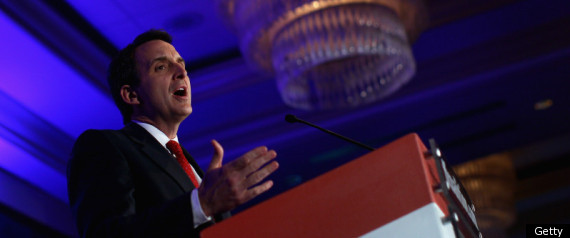
Faith And Freedom Conference: How Will Religion Affect Evangelical Votes?


Jaweed Kaleem

Posted: 06/ 4/11 08:29 AM ET

WASHINGTON, D.C. –- Fifteen years ago, Phil DaCosta spent Sundays passing out voter guides at his church about where congressional candidates stood on abortion and school prayer as part of a Christian Coalition chapter he lead at his Southern Baptist congregation in Florida.

Now a married father of a three-year-old living in Atlanta, the self-described “values voter” hopped on a bus this week with dozens of Tea Party supporters who came from as far as Florida and Iowa to attend the Faith and Freedom Coalition conference in the nation's capital. The two-day event ending Saturday night is intended to reinvigorate the religious right ahead of 2012 elections.

“I vote on Jesus first,” said DaCosta, 42, who recently joined a Tea Party chapter and said he wants lower taxes and a smaller government. “Israel, abortion, marriage, those are my first issues.”

He's the exact kind of voter that Ralph Reed, the veteran political strategist and former Christian Coalition director, wants to unite under his relatively new organization that aims to fuse the Bible-based value voting of traditional social conservatives with the grassroots momentum of the Tea Party to form a bloc of voters big enough to influence state and national elections.

But DaCosta may be a unique example.

Attendees donned American flag-print outfits, there were speeches on fiscal restraint and top-tier Republican presidential candidates and potential candidates touted their patriotism at Friday's high-profile event. The two dozen of attendees interviewed by The Huffington Post included a mix of political strategists, campaign volunteers and curious Americans from across the country who came to see speakers such as Utah Gov. John Huntsman, former Minnesota Gov. Tim Pawlenty and Minneota Rep. Michelle Bachmann.

Yet the role of faith in the attendees' politics was less clear.

“I'm Christian, but I don't go to a church. I believe in the Bible, but I vote on policies,” said Harold White, a 62-year-old from South Carolina who had joined on the Tea Party bus to the conference. “I would never vote for a Mormon,” he added, such as Huntsman or a former Massachusetts Gov. Mitt Romney, who also spoke, “because their beliefs are plain weird.”

The conservative Christian political landscape has changed since the 1990s, when the Christian Coalition rose to prominence with its extensive voter lists, big pockets and outsized influence among politicians. Scholars who study the religious right say a more fragmented relationship between faith and voting trends could make it more difficult to unite conservative Christians behind candidates now. A the absence of evangelical presidential favorite and former Arkansas Gov. Mike Huckabee has surely dampened evangelicals' moods.

“Our American cause was and is rooted in ... Judeo-Christian faith heritage,” Reed told the crowd Friday. Voters could send Republicans to the Senate and White House only “by [God]'s power,” he said. Pawlenty and Miss. Gov. Haley Barbour echoed the message.

“We need to be a nation that turns towards God, not away from God,” Pawlenty said Friday evening to a packed ballroom, adding that “rights are endowed to us by our creator.” Earlier, Bachmann emphasized her position against same-sex marriage and Huntsman talked about his pro-life stance.

But few politicians made a direct references to how religion influences their beliefs. Romney, a Mormon, avoided direct references to God but said he was “united” with the crowd on social issues and called the economy a “moral crisis."

“I'm a Baptist. I'm a Christian and I believe in Christ. But I believe all people of faiths should practice their faith. Why say you are Jewish if you don't practice Judaism, or the same if you are Christian but don't talk about it?” said Joanna Freeborn, a Kansan who attended Friday with her granddaughter.

Freeborn, who usually votes Republican, said she was undecided about which candidate she favored for the Republican presidential nomination. Promises of lowered taxes, she said, mattered more to her than religion. Social issues, she said, also mattered to a lesser degree. “I don't agree with Mormonism, but I might vote for one,” Freeborn added.

A Pew Research Center survey released this week found that one of four people were less likely to support a presidential candidate who is a Mormon. Over a third of white evangelicals such as Freeborn wouldn't support a mormon, the poll found, the highest percentage of any religious group polled.

Another challenge for political candidates at this weekend's event was trying to win over Tea Party supporters and religious conservatives at the same time. Polls have shown that despite some shared positions, evangelicals and Tea Party supporters differ on many issues, including the importance of faith to their voting decisions. And across the board, polls have shown that the economy tops Americans' concerns.

In addition to politicians touting their conservative and religious credentials, the Faith and Freedom Coalition conference included panels on “Anti-Christian bigotry,” “Catholic Citizen Action,” and “Defeating Terrorism and Jihad.”

While the bigotry panel was largely a discussion of Christian influence on the nation's founding and the Catholic panel was notable as the coalition's attempt bring conservative Catholics into the fold, the terrorism discussion aroused controversy over religious liberties. While some panelists spoke out against a trend in state legislatures of measures to ban Sharia law, Frank Gaffney, a controversial former defense official and president of The Center for Security Policy, roused an audience when he warned of “stealth jihad” invading American institutions.

Shuffling from panels and the ballroom to listen to Republican leaders, Kathy Lore, a 72-year-old from Pennsylvania, said she was undecided on many issues, including who she would vote for in a Republican presidential primary. Lore added that she was leaning toward Texas Rep. Ron Paul, who also spoke Friday, because he is "very much a Christian."

“I'm pro-life, I go to a Methodist church, but I believe in the gospel, in the Bible. I don't believe in what one person or another tells me to think,” said Lore, 72. “I just came to learn.”


Source
.

Tuesday, October 05, 2010

What is Dominionism? Palin, the Christian Right, & Theocracy


by cberlet
Fri Sep 05, 2008 at 06:13:19 AM PDT

Sarah Palin is a "Dominionist" with an apocalytic End Times theological viewpoint that sees the war in Iraq as part of God's plan. More on the End Times in the next post. Let's talk about Christian Right Dominionism and tendencies toward authoritarian theocratic governance.

With a number of bloggers calling Sarah Palin a "Dominionist," it is a good idea to clear up some obvious errors in the use of terminology.

Neither Sarah Palin nor her Protestant church affiliated with the Assemblies of God should be described as practicing a form of "Dominion Theology" or "Christian Reconstructionism." That is just plain wrong.

It is fair to suggest that Palin displays the tendency called "Dominionism" in some of her public statements.

As one of the authors who popularized the term "Dominionism" (along with Sara Diamond, and Fred Clarkson), I feel some obligation to clear up this confusion, which stems from some very sloppy research posted on a number of websites where the terms "Dominionism," "Dominion Theology," and "Christian Reconstructionism" are used improperly and interchangeably.

"Christian Reconstructionism" is a form of "Dominion Theology" that influenced a tendency toward "Dominionism" in the Christian Right and certain evangelical churches such as The Assemblies of God. But, lumping of these theologies together is neither accurate, nor fair.

How did this confusion get started?

In a September 1994 plenary speech to the Christian Coalition national convention, Rev. D. James Kennedy said that "true Christian citizenship" involves an active engagement in society to "take dominion over all things as vice-regents of God." Kennedy's remarks were reported in February 1995 by sociologist and journalist Sara Diamond, who wrote that Kennedy had "echoed the Reconstructionist line."

More than anyone else, it was Sara Diamond who popularized the term "dominionism," using it to describe a growing political tendency in the Christian Right. It is a useful term that has, unfortunately, been used in a variety of ways that are neither accurate nor useful. Diamond was careful to discuss how the small Christian Reconstructionist theological movement had helped introduce "dominionism" as a concept into the larger and more diverse social/political movements called the Christian Right.

Dominionism is therefore a tendency among Protestant Christian evangelicals and fundamentalists that encourages them to not only be active political participants in civic society, but also seek to dominate the political process as part of a mandate from God.

This highly politicized concept of dominionism is based on the Bible's text in Genesis 1:26:

"And God said, Let us make man in our image, after our likeness: and let them have dominion over the fish of the sea, and over the fowl of the air, and over the cattle, and over all the earth, and over every creeping thing that creepeth upon the earth." (King James Version).

"Then God said, 'Let us make man in our image, in our likeness and let them rule over the fish of the sea and the birds of the air, over the livestock, over all the earth and over all the creatures that move along the ground.'" (New International Version).

The vast majority of Christians read this text and conclude that God has appointed them stewards and caretakers of Earth. As Sara Diamond explains, however, some Christian read the text and believe, "that Christians alone are Biblically mandated to occupy all secular institutions until Christ returns." That, in a nutshell, is the idea of "dominionism."

Just because some critics of the Christian Right have stretched the term dominionism past its breaking point does not mean we should abandon the term. And while it is true that few participants in the Christian Right Culture War want a theocracy as proposed by the Christian Reconstructionists, many of their battlefield Earth commanders are leading them in that direction. A number of these leaders have been influenced by Christian Reconstructionism, which is a variant of theocracy called "theonomy."

William Martin is the author of the 1996 tome With God on Our Side, a companion volume to the PBS series. Martin is a sociologist and professor of religion at Rice University, and he has been critical of the way some critics of the Christian Right have tossed around the terms "dominionism" and "theocracy." Martin has offered some careful writing on the subject. According to Martin:

"It is difficult to assess the influence of Reconstructionist thought with any accuracy. Because it is so genuinely radical, most leaders of the Religious Right are careful to distance themselves from it. At the same time, it clearly holds some appeal for many of them. One undoubtedly spoke for others when he confessed, 'Though we hide their books under the bed, we read them just the same.' "

According to Martin, "several key leaders have acknowledged an intellectual debt to the theonomists. Jerry Falwell and D. James Kennedy have endorsed Reconstructionist books."

Before he died in 2001, the founder of Christian Reconstuctionism, R. J. Rushdoony, appeared several times on Christian Right televangelist programs such as Pat Robertson's 700 Club and the program hosted by D. James Kennedy, writes Martin.

"Pat Robertson makes frequent use of 'dominion' language" says Martin, "his book, The Secret Kingdom, has often been cited for its theonomy elements; and pluralists were made uncomfortable when, during his presidential campaign, he said he 'would only bring Christians and Jews into the government,' as well as when he later wrote, 'There will never be world peace until God's house and God's people are given their rightful place of leadership at the top of the world.' "

Martin also points out that "Jay Grimstead, who leads the Coalition on Revival, which brings Reconstructionists together with more mainstream evangelicals, has said, 'I don't call myself [a Reconstructionist],' but 'A lot of us are coming to realize that the Bible is God's standard of morality . . . in all points of history . . . and for all societies, Christian and non-Christian alike. . . . It so happens that Rushdoony, Bahnsen, and North understood that sooner.' He added, 'There are a lot of us floating around in Christian leadership James Kennedy is one of them-who don't go all the way with the theonomy thing, but who want to rebuild America based on the Bible.'"

So let's choose our language carefully, but let's recognize that terms such as "dominionism" and "theocracy," when used cautiously and carefully, are appropriate when describing anti-democratic tendencies in the Christian Right.

"Dominionism" as a Term or Description

The term "dominionism" is used different ways by different people. When new terms are developed, that is to be expected. If we are to use words and phrases to discuss ideas, however, it pays to be on the same page concerning how we define those terms. This is especially true in public debates.

In her 1989 book Spiritual Warfare, sociologist Sara Diamond discussed how dominionism as an ideological tendency in the Christian Right had been significantly influenced by Christian Reconstructionism. Over the past 20 years the leading proponents of Christian Reconstructionism and dominion theology have included Rousas John (R.J.) Rushdoony, Gary North, Greg Bahnsen, David Chilton, Gary DeMar, and Andrew Sandlin.

Diamond explained that "the primary importance of the [Christian Reconstructionist] ideology is its role as a catalyst for what is loosely called 'dominion theology.'" According to Diamond, "Largely through the impact of Rushdoony's and North's writings, the concept that Christians are Biblically mandated to 'occupy' all secular institutions has become the central unifying ideology for the Christian Right." (italics in the original).

In a series of articles and book chapters Diamond expanded on her thesis. She called Reconstructionism "the most intellectually grounded, though esoteric, brand of dominion theology," and observed that "promoters of Reconstructionism see their role as ideological entrepreneurs committed to a long-term struggle."

So Christian Reconstructionism was the most influential form of dominion theology, and it influenced both the theological concepts and political activism of white Protestant conservative evangelicals mobilized by the Christian Right.

But very few evangelicals have even heard of dominion theology, and fewer still embrace Christian Reconstructionism. How do we explain this, especially since our critics are quick to point it out?
The answer lies in teasing apart the terminology and how it is used.

Christian Reconstructionism is a form of theocratic dominion theology. Its leaders challenged evangelicals across a wide swath of theological beliefs to engage in a more muscular and activist form of political participation. The core theme of dominion theology is that the Bible mandates Christians to take over and "occupy" secular institutions.

A number of Christian Right leaders read what the Christian Reconstructionists were writing, and they adopted the idea of taking dominion over the secular institutions of the United States as the "central unifying ideology" of their social movement. They decided to gain political power through the Republican Party.

This does not mean most Christian Right leaders became Christian Reconstructionists. It does mean they were influenced by dominion theology. But they were influenced in a number of different ways, and some promote the theocratic aspects more militantly than others.

It helps to see the terms dominionism, dominion theology, and Christian Reconstructionism as distinct and not interchangeable. While all Christian Reconstructionists are dominionists, not all dominionists are Christian Reconstructionists.

A nested subset chart looks like this:
---Triumphalism
---------Dominionism
---------------------Dominion Theology or Theocracy
----------------------------------Theonomy
----------------------------------------------Christian Reconstructionism

The specific meanings are different in important ways, although the terms have been used in a variety of conflicting ways in popular articles, especially on the Internet.

In its generic sense, dominionism is a very broad political tendency within the Christian Right. It ranges from soft to hard versions in terms of its theocratic impulse.

Soft Dominionists are Christian nationalists. They believe that Biblically-defined immorality and sin breed chaos and anarchy. They fear that America's greatness as God's chosen land has been undermined by liberal secular humanists, feminists, and homosexuals. Purists want litmus tests for issues of abortion, tolerance of gays and lesbians, and prayer in schools. Their vision has elements of theocracy, but they stop short of calling for supplanting the Constitution and Bill of Rights.

Hard Dominionists believe all of this, but they want the United States to be a Christian theocracy. For them the Constitution and Bill of Rights are merely addendums to Old Testament Biblical law. They claim that Christian men with specific theological beliefs are ordained by God to run society. Christians and others who do not accept their theological beliefs would be second-class citizens. This sector includes Christian Reconstructionists, but it has a growing number of adherents in the leadership of the Christian Right.

It makes more sense to reserve the term "dominion theology" to describe specific theological currents, while using the term "dominionism" in a generic sense to discuss a tendency toward aggressive political activism by Christians who claim they are mandated by God to take over society. Even then, we need to locate the subject of our criticisms on a scale that ranges from soft to hard versions of dominionism.

Chip Berlet, Senior Analyst, Political Research Associates

_________________________________________________________


Theocracy is derived from the two Greek words Qeo/j(Theos) meaning "God" and kra/tein (cratein) meaning "to rule." The Reverend Rod Parsley, a champion of theocracy, or what he calls a "christocracy," told his congregation at the World Harvest Church, located just outside Columbus, Ohio, "Theocracy means God is in control, and you are not." more

The theocratic right seeks to establish dominion, or control over society in the name of God. The late D. James Kennedy, former pastor of Coral Ridge Ministries, called on his followers to exercise "godly dominion ... over every aspect ... of human society." At a "Reclaiming America for Christ" conference in February, 2005, Kennedy said:

"Our job is to reclaim America for Christ, whatever the cost. As the vice regents of God, we are to exercise godly dominion and influence over our neighborhoods, our schools, our government, our literature and arts, our sports arenas, our entertainment media, our news media, our scientific endeavors -- in short, over every aspect and institution of human society."

Twenty-five years ago, dominionists targeted the Republican Party as the vehicle through which they could advance their agenda. At the same time, a small group of Republican strategists targeted fundamentalist, Pentecostal and charismatic churches to expand the base of the Republican Party. This web site is not about traditional Republicans or conservative Christians. It is about the manipulation of people of a certain faith for political power. It is about the rise of dominionists in the U.S. federal government.

Today's hard right seeks total dominion. It's packing the courts and rigging the rules. The target is not the Democrats but democracy itself. more

According to acclaimed journalist and television host Bill Moyers,

"True, people of faith have always tried to bring their interpretation of the Bible to bear on American laws and morals ... it's the American way, encouraged and protected by the First Amendment. But what is unique today is that the radical religious right has succeeded in taking over one of America's great political parties. The country is not yet a theocracy but the Republican Party is, and they are driving American politics, using God as a a battering ram on almost every issue: crime and punishment, foreign policy, health care, taxation, energy, regulation, social services and so on." more

(To read the rest of the Home Page that was on this site before the 2006 midterm elections, click here.)


Back from the Brink
Before the midterm elections of 2006, dominionists controlled both houses of the U.S. Congress, the White House and four out of nine seats on the U.S. Supreme Court. They were one seat away from holding a solid majority on the Supreme Court. As of January 1, 2007, dominionists will not control the leadership of either house of Congress, and the President will no longer be able to so easily appoint dominionists to the federal courts.

Five of the Republican Senators who were unseated on November 7 received whopping scores of 100% from the Family Research Council and Focus on the Family Voter Scorecards. Those Senators are: Conrad Burns (R-MT), George Allen (R-VA), Rick Santorum (R-PA), James Talent (R-MO), and Mike DeWine (R-OH). Rick Santorum was the number three ranking Republican in the party. Santorum and Allen both had Presidential ambitions. (FRC and FOF are the most politically influential of dominionist organizations.) For more discussion of the elections go to Talk To Action.

Where do we go from here?

Dominionists were very close to controlling all three branches of the federal government from which they could impose their narrow interpretation of scripture on the rest of society. People so close to full political power are not going to go away. The American people need to maintain vigilance and understand the history of how dominionists came to political power. And we need to embrace democracy with a passion -- for it was voter apathy that allowed leaders like Pat Robertson to get so many dominionists elected to Congress in the first place.
.
.

Saturday, November 07, 2009

PREPARING US FOR A PROTESTANT-CATHOLIC GOVERNMENTAL TAKEOVER


PREPARING US FOR A PROTESTANT-CATHOLIC GOVERNMENTAL TAKEOVER


In small wide-margin study booklets, we have been gradually releasing the most in-depth series of final events Spirit of Prophecy studies ever researched out (our End Time Series).

Those of you who have been obtaining them, as they are released, well-know that the event which will trigger a cavalcade of final events, leading directly to the general close of probation and the Second Coming of Christ, will be an organized Protestant drive in the political field which will lead them ultimately to coerce Congress into enacting a nationwide Sunday Law with iron teeth.

In this present article, we will observe that the Religious Right is fast learning how to become political experts at manipulating the public, winning support for its positions, and getting the votes to place its men into office on all levels in America�from local school boards to the U.S. Senate.

As America becomes more decadent, many are aroused to try to stop it if possible by legislative enactments. But it quickly becomes obvious that success in stacking political committees and legislatures is crucial.

In 1980, the Religious Right worked hard to sweep Ronald Reagan into office. But there were many others in America who also wanted to see him elected: pro-gun advocates, hard-line anti-Communists, etc.

But the situation became confused when the national economy showed strong signs of collapsing in 1992. A large proportion of the public decided that keeping their jobs was more important than moralism. The result was the election of William J. Clinton, that strange one from Arkansas, who quickly revealed that he loved homosexuals, promoted hard-core pornography, and seemed anxious to encourage every imaginable type of secular and immoral takeover.

Every passing month since Clintons election has revealed some new favored vice or family scandal. And people across the land are becoming desperate.

Enter the Religious Right. It consists of a variety of Evangelical leaders, from James Dobson to Pat Robertson. And it also includes Roman Catholic bishops and cardinals.

But, in 1992, the Religious Right failed although by a small margin to win the presidential election. At the 1992 Republican Convention in Houston, it was reported that church leaders, such as Robertson, drafted major portions of the political platform. Strong speeches were given, which spoke of imposing moral values and eliminating the secular opposition.

Many reacted unfavorably to such strident language, including many key Republican leaders who were secular.

Our job is to win elections, not cling to intolerances that zealots call principles, said GOP National Committee Chairman Rich Bond, as he left office in 1993. He added: We cannot confuse principle with intolerance. Were not going to be exclusionary.

That was the attitude. Yet, as the months passed and the Clinton administration backed what Christians saw to be one abomination after another, the concern intensified.

It has become obvious that right now is the golden opportunity for the Religious Right to come to the forefront of American politics and take over local and federal governments across the land. People are getting fed up with the scandals, cover-ups, and trashy living that people in high office are encouraging.

Indeed, developments of each year since the 1990 Democratic victory seem to intensify the determination of people with morals to get rid of the immorality once and for all.

But, within the past six months, a majority of Religious Right organizations have swung over to the position that they must compromise on basic principles, if they are going to win the elections. The decision is being made that getting votes is more important than upholding standards and family values.

The underlying tactics appear to be: (1) Gain control of the Republican nominations on all levels. (2) Run for political seats on compromise platforms that please as many as possible. (3) Win the key elected offices in the nation. (4) Use those positions to bring a return to national morality and Christianity. (5) Enact legislation which will focus on commonalities which all the churches can agree upon.

A 32-year-old former political consultant, Ralph Reed, Jr., is a key man in this. As head of Pat Robertson's Christian Coalition, he is in charge of making the policy decisions which will ensure big wins in elections throughout the United States.

And what is the Christian Coalition? It is the largest single Christian political action group in America. It was founded on the mailing lists of Pat Robertson when, in 1988, he unsuccessfully tried to run for the presidency. It is now the leading Religious Right organization in the country, with 450,000 members in 50 states and an annual budget of $8-10 million.

Reed outlined the new strategy in the summer 1993 issue of Policy Review, a magazine published by a conservative organization, the Heritage Foundation. In an article entitled, Casting a Wider Net he outlined the plans for doing just that: reaching more voters in order to win more elected offices. Reed said that the problem was that the conservatives needed to tone down their message, so they could get more worldlings on their side at election time. He said the Religious Right was weakening its effectiveness by concentrating disproportionately on issues such as abortion and homosexuality. In support of this viewpoint, he cited polls showing that only 12 percent of the public favored elimination of abortion.

What did Reed recommend in place of that key conservative plank? such things as taxes, crime, government waste, health care, and financial security.

This was exactly what key Republican leaders had been urging them to do. Republican leadership, including National Committee Chairman Haley Barbour, applauds this willingness to compromise principles for the sake of votes. It is politics as usual.

In the months after the 1992 election, many were blaming the Religious Right for the loss of the White House. It was felt that the strong pro-Christian and anti-abortion speeches at the GOP Houston Convention (such as those by Pat Robertson and Pat Buchanan) turned the tide against the Bush re-election campaign. To some, Houston seemed like letting Christian fundamentalists take over the grand old party.

Progressives on both sides�in the Christian Right and in the main party itselfï decided they must get together, settle their differences, and find ways to work together. They must tear down the walls which separated them. Such things as anti-abortion must be toned down or, if necessary, eliminated entirely from party speeches. The term that used to describe their newfound alliance they called the big tent. There was room, they said, for both Christians, secularists, and even abortionists in the party!

And, believe it or not, it was even agreed upon that anti-homosexual talk must be toned down or cease.

Pro-choice Republicans now say the flight from anti-abortion is becoming a stampede. The desperate frenzy to win, win, win, is draining the Religious Right of its declared moral fiber. If you will not stand for anything, what will you stand for? only what the majority want?

Massachusetts Governor William Weld is thought by some to exemplify the ideal successful Republican candidate: pro-choice and pro-gay rights. Some Republicans want to move him on up to the presidency.

Listen to Ann Stone, chairperson of the Republicans for Choice: Our party should be pro-choice, not because were pro-abortion, but because were against government being involved in the decision process. After failing to get pro-life off the platform in 1992, she says, Next time around I think there's a good chance well either get pro-life dropped or the language radically changed.

But it should not be forgotten that, in November 1993, Mike Farris won 46 percent of the Virginia votes (although he lost the race for lieutenant governor and openly campaigned against abortion). At the same time, George Allen, Jr., won the governorship of Virginia�the first Republican governor of that state in 16 years�with the full backing of what his Democratic opponent (a judge) called extremist right-wing groups�such as Concerned Women for America. Allen did not make an issue of being against abortion, but did stand for other family values.

So what was the political mainstream in Virginia, and who were the losers? This fact came as a shock to many in politics and the media. Shortly afterward on Nightline, Ted Koppel admitted, Maybe the Religious Right isn't always wrong. That may be a bitter pill for some to swallow, but its the way things are. All across the country, there are people of faith who consider their values to be under siege.

In that last part, Koppel surely spoke the truth. But what he meant by saying not always wrong was that the Christian Right was able to get its candidate elected. And elected meant right, which is the crazy world of politics and worldlings in general: The majority is right, and nothing else matters.

On that same telecast, Pat Robertson was interviewed. In response to the remark that a subtle change, not in his beliefs, but certainly in his packaging had occurred, Robertson said this:

I would urge people, as a matter of private choice [private opinion to keep to yourself], not to choose abortion�because I think its wrong. Its something else, though, in the political arena, to go on a quixotic crusade when you know that you will be beaten continuously.

Not so subtle packaging. Robertson said, in effect, Its time to throw out the pro-life plank. Its time to work together with the abortionists and fellow travelers, with anyone who will help us get our candidates elected.

It was not a change in packaging, but in product.

Just as Robertson's Christian Broadcasting Network has had its name changed to Family Channel, so Ralph Reed, head of Christian Coalition, has been hard at work to change its appearance and objectives.

The aim is simple enough: Take in enough non-Christians to win the ballot boxes of America. According to the new view, born-againers are simply not enough to do the job. Their unique goals need to be tabled for a time.

The Christian Coalition used to be mostly white and mostly Protestant. But now it is trying to take in minorities (Hispanics and Blacks), Catholics, and Jews. What do the people want? Give it to them. Later, in office, we can make the needed changes in legislation.

The 1993 New York City School Board elections were a classic. The Christian Coalition got together with the Catholic cardinal and plotted out political strategy. Then they brought in the Jews, Hispanics, and Blacks. This ecumenical coalition was able to win school board seats throughout the city. That same November, a Republican Baptist preacher, Mike Huckabee, became lieutenant governor of Clintons home state of Arkansas. He ran on a solid pro-life platform. Elsewhere in the nation, religious people and candidates backed by them were elected to school boards, city councils, and state offices. There is no doubt but that the reaction to Clinton is increasing.

In order to do this, Protestant political leaders are working closely with Catholic bishops. Robertson's Christian Coalition is going out of its way to court Catholic leaders. At its September meeting in Washington, D.C., the coalition (1) bestowed its first Catholic Layman of the Year award on Representative Henry Hyde, of Illinois, (2) held a workshop on Catholic-Evangelical cooperation, and (3) concluded the session with a Sunday mass as well as a Protestant church service!

It was the 1993 New York School Board elections that proved to both sides what they could do by working together. The election-winning breakthrough came in May 1993 when New York's Cardinal John O'Connor agreed to let the coalition distribute 100,000 voter guides in Catholic churches. Those guides told Catholics all over the city who they ought to vote for.

That success got them to working closely together elsewhere. This month the coalition is mailing 2 million voter guides to Californians including 400 to Catholic pastors in the hope that the clergy will support Proposition 174 (which would date school vouchers) from the pulpit. In Atlanta last week, a spokesman for Catholic Archbishop John Donoghe reported that the church shares many common goals with the Christian Coalition. Newsweek, November 8, 1993.

This is good political sense, for one-fourth of American voters identify themselves as Evangelicals, while another fourth say they are Catholics. We expect to top out with 1 million Protestant members, says Ralph Reed. With Catholics, we can double that. With that in mind, Robertson recently transferred Marlene Elwill from a Midwest campaign direction to a new post, as liaison to U.S. Catholic cardinals, bishops, and their political organizations.

In the latest issue of his magazine, Christian American, Robertson excused the fact of the new alliance with the remark, I feel I have a lot more in common with this pope than with liberal Protestants.

But, although it may make good political sense, what does it wind up with? Obviously, the end result can only be legislation upon which both the Evangelicals and Catholics could agree. And the book, Great Controversy, clearly states what that single unifying point would be. When it passes Congress, the final crisis will begin.

Martin Mawyer is president of the Christian Action Network, another major Religious Right organization in America. He is incensed at Robertson's sell-out, especially in regard to his blatant willingness to set aside the abortion issue and consider approving a pro-gay platform. Mawyer says Robertson is charting his course by opinion polls, instead of standing for the right because it is right. We would agree with Mawyer.

A lot of leaders place hobnobbing above the issues. They feel the best strategy to getting their agenda across to the nation is by making friends with very powerful people, Mawyer said in an interview with Karen Augustine, of Rutherford magazine (March 1994). The problem is that if you use hobnob politicking, you end up compromising too much.

Continuing on, he says, Because they [Christian Coalition] are so locked into Republican politics, they are continually forced to re-define themselves based on the current political climate and who's in charge of the Republican Party. That disturbs me. I've seen several flip-flops on issues just this year.

When asked what kind of flip-flops, Mawyer replied,

Some Republicans last summer said, We need to have a larger tent, a more diverse set of views on the religious, social, and moral issues. Christian Coalition said that, if the Republican Party tried to enlarge its circle, it would become nothing more than a pup tent. However, several months later, Christian Coalition began to apply the enlarged tent policy to their own organization and downplayed the importance of [opposing] abortion, homosexuality, and [supporting] school prayer. They tried to re-define themselves as more interested in tax reform, health care, and NAFTA mainstream issues.

Mawyer concluded with this remark: Ralph Reed can take whatever surveys he wants and get the answers he wants in his public opinion poll, but we also take a poll twice a month and get different results.

For his part, when Ralph Reed, head of the Christian Coalition, was asked to define the goals of his organization, he said this:

Our role is much like that of the AFL-CIO in regard to union work. We want to mobilize people. We want to get millions of people involved and get them registered to vote. Rutherford, March 1994.

Many, including Mawyer, have been disturbed at the way Christian Coalition keeps changing its positions, in an effort to please everyone. But all the while it keeps moving closer to Rome. Jerome Himmelstein, author of To the Right: The Transformation of American Conservatism, says the Christian Right continually moves back and forth in this unstable fashion. They've always tried to appeal to that broad range of people with a broad conservative agenda. Its just a tactical question of which issues to emphasize at any given moment.

Secularists and religion haters, in general, declare that the Religious Right are vicious people who use stealth tactics of deception and subterfuge to win elections.

Holly Gunner, head of the Lighthouse Institute for Public Policy, writing in Freedom Writer (April 1994) quotes Ralph Reed as saying, It is just good strategy. Its like guerrilla warfare . . Its better to move quietly, with stealth, under cover of night . . It comes down to whether you want to be the British Army in the Revolutionary War or the Viet Cong.

Gunner comments: At a Religious Right conference in Denver last year, participants were instructed in tactics that include: Hide your affiliation and true agenda; use the gay issue to raise funds for the cause; always cover your tracks with local front men; appeal to peoples fears of society and change; appeal to Americas worst [most fearful and angry] impulses; remember that tension will provide the winning edge for candidates.

Her article continues:

If voter turnout is low, and they [the Rightists] can work behind the scenes without being visible for most voters, they can win by getting enough votes through their own networks.

Religious Right candidates . . have often attempted to hide their religious or educational views and organizational affiliations from public scrutiny. In the words of Clay Mankameyer, at the South Weymouth, Massachusetts Christian Coalition leadership school for potential Religious Right candidates, You're not obligated to say all things to all people . . You don't have to answer every question; and, if you do so, you're going to get yourself in trouble.

Church and State magazine declares: Reeds new and improved Christian Coalition is the same bunch of theocrats with a new disguise. GOP party moderates fear that its objective is to take over the Republican Party. And, of course, that is exactly what the coalition is determined to do. It is significant that, within recent months, coalition agents have succeeded in gaining control of GOP state organizations in Virginia, Iowa, Kansas, Texas, and Washington State.

For his part, Mawyer says that the Coalitions mainstreaming policy is based on deceiving the American public as to their real intentions.

Georgia Senator Paul Coverdale benefited from this compromise method. He is a pro-choicer who happened to also be against the Freedom of choice Act (FOCA), as it is presently worded. So the coalition helped him to success at the ballot box. Ann Stone, head of an organization, who determined to make the Republican Party pro-choice, was delighted. She commented that the next step will be for the coalition to support any pro-choice candidate�as long as they are against federally-funded abortions. And the next step after that?

The Christian Coalition should keep in mind that a survey, conducted by the Family Research Council in December 1993, revealed that more than half of the respondents who identified themselves as Bush voters�said they would be less likely to vote Republican if the presidential candidate is for abortion and homosexual rights.

In September 1993, the Christian Coalition held a Road to Victory 93 conference in Washington, D.C. At that session, former education secretary and presidential hopeful William Bennett warned the group against losing its identity:

Its fine for you to expand your focus, but don't forget who you are. You are not the Lower Taxes Coalition, not the Free Trade and Full Employment Coalition, not even the American Empowerment Coalition. You are the Christian Coalition.

It was clear from the response at that meeting, that the majority of those in attendance agreed more fully with Bennett than with Ralph Reeds mainstreaming ideas. Indeed, which is more important: winning elections or standing for principles?

Charles Colson recently said: Some even think of political defeat as spiritual defeat. It is not. Spiritual defeat would come only if we were to abandon our moral principles in order to seek political victory.

Yet it was Chuck Colson who recently led out in linking Evangelical and Catholic leaders in a joint compact to work together in the future in a variety of ways to improve the position of the Religious Right and their objectives.

The following text is transcribed from a presentation by Max C. Karrer, M.D., at the Christian Coalitions Road to Victory Conference in Washington, D.C., last September. Dr. Karrer is the north Florida coordinator for the Christian Coalition of Florida and the chairman of the finance committee to the board of trustees for Regent University. He also serves on the executive board of the Republican Party of Duvall County, Florida. Titled, Using Computers at the Grass Roots, the presentation attracted a standing-room-only crowd.

First you select your churches. There are some churches where you would not necessarily find what I call Christians in the church, your charismatic churches. You don't select your liberal, mainline denominations. If you select your churches right, you'll have a ninety percent match on voters who will be with us. That's what we do.

As an example of how this works, we had a legislative race where we had a female Jewish lawyer liberal feminist endorsed by now, who had knocked out, three year ago, a pro-life Christian. We didn't know what we were doing they poured NARAL money in and managed to beat him by 200 votes. And it was all because we didn't know what we were doing.

By this time she was the darling of the Democrats in the Florida legislature. They gave her all the choice committee assignments; they had bigger and better plans for her, and so on. And we had a fellow who was running for his first political office named Jim Fuller who jumped into the race.

This time we had our Christian voter data base. We had our church liaison committees. We had our voter guides going. And we could quietly we were not allowed to give them away, so we charged him five dollars but we printed labels, for him, of the Christian voters, which enabled him to put out directed mailings to the Christian voter, that he would not necessarily do to the general public.

To make a long story short, he beat her by 65% to 35%it was a landslide. And they didn't know what hit them, because you want to talk about stealth campaigns it was quietly done, and they didn't realize they were in trouble until it was too late. This also convinced the state Republican Party that they better deal with the Christian Coalition, at least in Duvall County, because every candidate we got behind won [emphasis added], in Duvall in the 92 elections. This was the method we used.

We don't give our list to anybody. What we will do is print labels for some people. That we will do I sold him the labels, I didn't give them to him. Its legal then, see. For five dollars!

The thing I want to say about building up a Christian data voter base is: Political candidates, or politicians, only understand two things, and that's money and votes. And if they think you control a lot of votes, you suddenly become very powerful in their eyes.

Politicians in our section think we have a bigger data voter base than we do. But we don't change that perception, we don't tell them. They come to us now. When someone wants to run for office, they come to Christian Coalition; they want to talk to us. It gives you and not just for elections lobbying power with the legislator, because they think you have this huge bloc of voters that you can swing though you cant necessarily.


.

Wednesday, March 04, 2009

Will the Recession Doom the Last Sunday Blue Laws?


Sunday, Feb. 22, 2009

Will the Recession Doom the Last Sunday Blue Laws?
By Paige Bowers

A handful of state legislatures have declared it's closing time for Sunday alcohol sales restrictions, saying an extra day of sales could give their foundering budgets a much-needed shot of revenue. Those states — Georgia, Connecticut, Texas, Alabama and Minnesota — enjoy overwhelming voter support for an extra day of sales, but face opposition from members of the Christian right, who say that selling on Sunday undermines safety and tears apart families. "During times of economic stress, our families are under enough pressure," says Jim Beck, the president of the Georgia Christian Coalition. "I don't think we need to add even more pressure to those families by passing this law."

But proponents of Sunday sales argue that state budgets are under plenty of pressure too and that by allowing people to buy beer, wine or liquor on Sunday at grocery or package stores, states could reap millions of dollars in tax revenue. Besides, as President Roosevelt learned in the 1930s when he successfully repealed Prohibition, drinks have a way of keeping hopes high when things look bleak. In Johnathan Alter's The Defining Moment: FDR's Hundred Days and the Triumph of Hope, the President recognized that legally-procured cocktails were the way to keep spirits high when Americans were trying to get used to putting their trust into the nation's crumbling banking system again. And, it could be argued, the sales also helped stimulate the economy in the middle of the Great Depression. (See TIME's "25 People to Blame for the Financial Crisis")

"[Sunday sales legislation] always comes bubbling up when the economy goes south," says David Laband, an Auburn University economics professor who authored Blue Laws: The History, Economics, and Politics of Sunday-Closing Laws. Blue laws, which restrict shopping of any kind on Sunday, date back to the colonial era, Laband says. However, those laws gradually died off as economic forces made some states realize that they could stand to gain by having stores open on Sunday. For example, the entry of women into the workforce in World War II made weekend shopping a necessity. (See pictures of Denver, Beer Country.)

"Slowly and systematically we've seen these laws lifted in past century, even more so when there has been an economic downturn," Laband says. "States realize that consumers will migrate to a place where they can buy what they want. And whatever their reasons are for not wanting to sell on Sunday, these states realize they're paying a price for it in foregone tax revenues. So once the economy goes bad, then the cost of their policies are apparent to them."

Beck argues that when you're facing a budget shortfall in the billions, the extra revenue from an added day of alcohol sales is just a drop in the bucket. His opponents, however, insist it is significant. "At least it's a drop," says Georgia Senator Seth Harp, who introduced a bill proposing local referendums on Sunday sales. "Maybe it's even a cup full. But right now, I'd like to have a couple of cups full than nothing at all." (See what businesses are doing well despite the recession.)

Three states — Georgia, Connecticut and Indiana — ban the sale of beer, wine and spirits, while 15 ban only liquor sales. Connecticut is considering repealing its ban because it has been losing revenue to New York, Massachusetts and Rhode Island, three neighboring states that repealed Sunday sales bans in 2003. Texas is also reconsidering Sunday sales bans of liquor, with three bills in the state's Senate, two of them specific to sales along the Texas-Mexico border. "States are seeing Sunday sales as a positive way to raise revenue without raising taxes or cutting valuable programs," says Ben Jenkins, spokesman for the Distilled Spirits Council of the United States. "That, along with consumer demand, is driving this change."

And though religious groups have sounded off about how Sunday sales are harmful to families, legislators such as Harp are reaching out to them by adding enforcement provisions designed to crack down on store owners who sell to minors. In a state like Georgia, where more than two-thirds of residents say they'd like to be able to buy a six pack on the sabbath, Harp's efforts may just win his bill votes, even though Governor Sonny Perdue, a teetotaler, said he'd veto any bill that came across his desk.

But Perdue won't be in office forever and anti-Sunday sales advocates across the nation may realize the tide is turning against them too. "People have got a lot of activities that occupy their time, attention and affection on Sunday and shopping is one of them," Laband says. "Churches have had to come to grips with that; they haven't drawn a line in the sand and said 'You have to go to church.' So the trend is clear that states will do away with some of these alcohol prohibitions. It will happen. It's just a matter of when."


.


.

Sunday, March 30, 2008

CANDIDATES TARGETING EVANGELICALS IN WV

October 3, 2004

Candidates are Targeting Evangelical Base in W. VA

by Rick Klein
Boston Globe

Bush campaign volunteers are calling their fellow churchgoers. The Christian Coalition's voting guides will ship out shortly. And pastors across West Virginia are making the case sometimes explicitly, sometimes less so that President Bush is a better choice on spiritual grounds than Democrat John F. Kerry.

Yet whether devout Christians will turn out en masse for Bush remains uncertain. The Republicans' network of pastors and religious voters is proving something less than rock-solid in a state and a region hit hard by manufacturing job losses, and with many sons and daughters serving in a war that has grown unpopular. In the campaign's final month, the Kerry campaign is beginning to escalate its fight for religious voters in West Virginia.

"We've been misled by our president," said Pastor David Allen of the Welcome Baptist Church in Beckley, who is urging parishioners to support Kerry. "We have become the aggressor instead of the peacemaker in Iraq. God is not Republican or Democratic he's for what's right."

Stung by exit polls suggesting that as many as 4 million evangelical Christians stayed at home on Election Day in 2000, the Bush campaign has been hard at work for more than a year to turn out voters from that religious background. Now, the Bush campaign considers evangelical Christians to be a potent force that could push the president over the top in such closely contested states as West Virginia, Iowa, and Ohio.

In West Virginia, Republicans have organized through churches just as Democrats have long organized through labor unions, with activist training sessions, coordinated letter-to-the-editor campaigns, and drives to register voters.

The efforts will be capped by a final push in the campaign's last 72 hours, employing a strategy used to defeat a Democratic governor and senator in Georgia two years ago. The strategy was organized by Ralph Reed, the former head of the Christian Coalition who is serving as a top Bush adviser this year.

"If we can get the word out on where the president stands and where Senator Kerry stands, West Virginians will support the president," said Steve Harrison, a Republican state senator from Charleston who is chairman of the Bush-Cheney campaign's social conservative coalition in West Virginia. "The clear differences have social conservatives very aware of the stakes."

Bush, a devout Christian who has often talked openly of his faith, is expected to win the votes of the majority of evangelical Christian voters. His stump speech is marbled with references designed to reach out to such voters; he speaks of the "culture of life," calls marriage and family "the foundations of our society," and draws sustained applause by criticizing judges who "legislate from the bench."

Republicans are trying to shore up Bush's support among evangelical voters by keeping in play hot-button such issues as abortion, gay marriage, and judicial appointments. Last month, the Republican Party sent a mailing to West Virginia voters that urged recipients to "vote Republican to protect our families." It defined the "liberal agenda" by showing a Bible with the word "banned" on it and a man placing a ring on the hand of another man with the with the word "allowed."

But Democrats are not ready to concede West Virginia's churchgoers to the GOP. Bumper stickers are popping up in Charleston, the capital, and elsewhere in the state: "Christian and a Democrat," they read, with the Christian fish symbol next to a Democratic donkey.
Last week, a group called Clergy and Lay People in Support of John Kerry announced its start in West Virginia, saying a president who engages in preemptive war is not living by the doctrine of Christ. The state's senior political figure, US Senator Robert C. Byrd, hammered home that point on Monday at a rally in Beckley, where he blasted Bush as a hypocrite who is trying to exploit religion for political gain.

Kathy Roeder, a Kerry campaign spokeswoman, conceded that voters who have cast ballots strictly on social issues such as abortion are probably lost to Democrats. But with uncertain economy and continuing violence in Iraq, many voters will be turned off by the Bush campaign's attempts to use social issues as a wedge in the campaign, she said.

"We're connecting on faith issues," Roeder said. "You need to look at George Bush's deeds, not just his rhetoric. Look at what he has actually done. His actions and deeds haven't been reflected."

Four years ago, Bush carried West Virginia and won its five electoral votes by nearly 41,000 votes, or 6.3 percentage points. The results were among the biggest surprises of the race, given the 2-to-1 registration advantage Democrats hold over Republicans and the fact that Bill Clinton carried the state by a double-digit margin in 1992 and 1996.

Still, the state has grown more Republican in recent years, with all signs pointing to social issues as the driving force.

West Virginia's population has a strong evangelical element. By some estimates, 40 percent of the state's residents consider themselves to be evangelical Protestants, compared with the national average of about 25 percent.

By comparison, white evangelical or born-again Protestants represent 36 percent of all registered voters in Missouri, 30 percent in Iowa, 31 percent in Virginia, and 49 percent in Arkansas, according to the Annenberg Public Policy Center's Election Survey. The national figure was pegged at 26 percent. The survey, published in July, also found that 72 percent of such voters said they approved of the way Bush was handling his presidency, although respondents were about evenly divided on whether the country was on the right track. The survey found such voters far more likely to support Bush than Kerry, but only 30 percent said they were paying close attention to the race at the time.

The Rev. J. Allen Fine, director of the Christian Coalition's West Virginia chapter, said the choice will be clear to West Virginia residents after they pick up voting guides printed by the Christian Coalition. An initial order of 2,000 such guides will be placed in churches across the state, and lay activists are being recruited to contact their fellow church members about the importance of voting, supplementing the Bush campaign's efforts.

Although churches and the Christian Coalition cannot make formal political endorsements because of IRS limitations, the coalition will make clear which candidate is preferred, Fine said.

"Christians have a responsibility to cast their vote on the side of right," said Fine, who works as a religious broadcaster. "We can put enough adjectives and enough statements in there so that they'll get the message. The two candidates running for president, it's pretty clear what they stand for."

But in West Virginia, religion is not the domain of only one political party. Gary Abernathy, executive director of the West Virginia Republican Party, said social issues are rarely crucial in in-state races, since the Democratic and Republican candidates often share the same views. He noted that Democrats from outside the state, such as Al Gore four years ago and Kerry this year, have a tough time relating to West Virginia voters.

Even so, Democrats have served notice that they will not let religious campaigning stand without an answer. To make a case against Bush Monday, Byrd sang "Amazing Grace" and quoted Scriptures. "The Bible, in the Gospel of Matthew, teaches, 'By their fruits ye shall know them,' " Byrd said, according to The Register-Herald of Beckley. "But what fruits do we see around us? We see division and discord. We see the hungry and the homeless. We see a nation divided by the very leaders who promised to unite us.

"We ought to rise up and vote, vote for John Kerry. Hallelujah, thank God."

At the Welcome Baptist Church in Beckley, Pastor Allen has a response for anyone who says Bush would make a better president because of Christian values: "I can't hear what you're saying, because I see what you're doing."

While he is careful not to run afoul of IRS restrictions on not-for-profit organizations, he is not shy about sharing his personal beliefs with his congregation. "I told them, make up your own mind, but the Bible says, 'Follow me as I follow Christ, ' " he said.

Source: http://pewforum.org/news/display.php?NewsID=3972

CHRISTIAN COALITION WORKING FOR A REVIVAL

The Wall Street Journal
June 21, 2004

Christian Coalition Working for a Revival; Gay-Marriage Issue Seen as a Lightning Rod for Fresh Energy, New Conservative Troops

By Avery Johnson

Looneyville, W.Va. -- THE CHRISTIAN COALITION has fallen far from its glory days as a pro-Republican fighting force in the 1990s. But now Pastor J. Allen Fine has a new political weapon.

"Gay marriage is societal suicide," says Mr. Fine, a religious broadcaster who was recently installed as state director of the coalition's West Virginia chapter. "We were asked on our radio program, 'Is sodomy still a sin?' It brought in so many calls and the dish of the fax machine overflowed."

The same thing is happening in Ohio, another electoral battleground where Christian Coalition stalwarts are seeking political revival. "People see that there's something greater at stake here with gay marriage," says Rev. Dallas Billington at the Akron Baptist Temple in Akron, Ohio. "It's a crucial time in the cultural war, and I'm telling people to 'Vote your Bible.' "

President Bush today will try once again to get a political boost from promoting "traditional marriage" with a visit to Ohio. And the Senate is gearing up to vote next month on the constitutional ban on gay marriage that he favors. So far, there's little evidence that such moves are boosting President Bush and his party in the nation's ambivalent political center.

But the subject is giving a shot of adrenaline to conservative Christian activists who in recent years had grown politically listless. "The whole gay marriage issue has caused a rebirth of the social conservative movement," observes Republican strategist Scott Reed, manager of Bob Dole's 1996 presidential bid. John Green, a scholar of the religious right at the University of Akron, reserves judgment on the ultimate impact but says the Christian Coalition appears "much more alive" than it's been in years.

Mr. Bush's re-election campaign certainly hopes so. The president's top strategist Karl Rove has complained that lack of enthusiasm kept four million conservative Christian voters from turning out in the dead-heat 2000 election. To remedy that, the Republican National Committee has recruited some 60,000 evangelical "team leaders" and sought to identify "friendly congregations" who can help mobilize the pro-Bush base.

A revival of groups like the Christian Coalition would provide a welcome boost. Led by televangelist Pat Robertson and political operative Ralph Reed in the early 1990s, the coalition capitalized on conservative discontent with President Clinton and played a key role in the Republican drive to recapture House and Senate majorities.

More recently the organization has suffered hard times. Republican control of Congress and the White House has sapped some of the coalition's political energy. The Federal Election Commission accused the Christian Coalition of violating its tax-exempt status through excessively pushing Republicans in its trademark voter guides.

By 2001, Messrs. Robertson and Reed had both departed. In 2002, the coalition took in $5.3 million, according to politicalmoneyline.com -- down from peak revenues of $25.3 million in 1996. This year, press secretary Michele Ammons estimates the organization will take in $8 million.

"People have forgotten about the Christian Coalition," says longtime foe, Barry Lynn, executive director of Americans United for Separation of Church and State.

At the coalition's headquarters in Washington, national field director Bill Thomson says he wants to broaden the organization's traditional base beyond issues affecting the family to tax cuts and the defense budget.

But conservative ire over gay marriage is lending fresh energy. Some 30 new directors have been appointed to coalition chapters. The group is devoting attention to electoral battlegrounds with large numbers of evangelicals such as Missouri, Florida, Oregon, Iowa and Ohio. In the Buckeye State, director Chris Long plans a briefing for pastors this month and a statewide "citizenship Sunday" on July 4 to register voters.

Mr. Fine says conservative Christians can make headway in West Virginia, whose five electoral votes Mr. Bush carried four years ago. Mr. Green, the religious right scholar, estimates 40% of West Virginians consider themselves evangelical Protestants, compared with 25% of Americans as a whole. In 2000 exit polls, "white religious right" voters made up 14% nationally and 28% in West Virginia. But many of those voters, in the state's struggling mining communities, traditionally have responded more to Democratic messages.

So Mr. Fine, who once worked in the furniture business, plies the mountain towns where white churches dot the green landscape. From his home in Looneyville, he hosts a 30-minute radio show called "New Sounds of Inspiration." The 69-year-old pastor counts just 1,100 West Virginians as Christian Coalition members. The chapter went through multiple leaders before settling on Mr. Fine, who calls his budget "fluid." Yet he hopes the gay marriage issue will help rally new troops. He says he may start petition drives exhorting voters to stand up against "activist judges," whom Mr. Bush has cited as a threat to the institution of marriage through decisions legalizing same-sex weddings.

Mr. Fine aims to register voters on Sundays after church, and mobilize pastors to discuss important issues from the pulpit. Another goal: placing voter guides illustrating differences between Democratic and Republican candidates in 90% of West Virginia churches, up from 50% in years past. Whether he can accomplish that remains a question. And he acknowledges his admiration for Democrat John Kerry, a Vietnam War hero, "as a patriot and as a veteran."

But he says Mr. Kerry's position on gay marriage will undercut the Massachusetts senator's prospects here. Mr. Kerry opposes gay marriage, but also opposes the constitutional amendment prohibiting gay marriage that Mr. Bush has endorsed.

"Same-sex marriage just does not fly in West Virginia," Mr. Fine says. "Ninety-eight percent of people in the churches will vote for Bush. The other 2% think we are a bunch of loonies because we believe in the word of God."

---

Political Revival?

After seeing its influence wane in recent years, the Christian Coalition is
hoping the gay-marriage issue will provide new energy and make social
conservatives a greater force in the 2004 election:

Voters identifying themselves as part of the religious right voted more
Republican in 2000 . . .

1996

Dole: 65%
Clinton: 26%
Other: 9%

2000

Bush: 80%
Gore: 18%
Other: 2%

But represented a smaller share of the electorate nationally and in some
battleground states

1996 2000

Nationwide ..... 18% 14%
Florida ........ 23% 19%
Michigan ....... 23% 20%
Ohio ........... 23% 17%
Pennsylvania ... 22% 15%
West Virginia .. 33% 28%

Sources: Exit polls; John Green, Bliss Center for Applied Politics,
University of Akron

Source: http://www.irql.org/article_content.php?resourceID=118