Showing posts with label Roger Williams. Show all posts

Sunday, May 17, 2026

Religious Liberty -- Who should wield power and control?


May 15, 2026 Jewell


Kingly Power

The question “Who should wield power and control?” has divided mankind throughout earth’s history.

On July 4, 2026, Americans will be celebrating 250 years since the signing of the declaration of Independence. All 56 signers committed a treasonous act against Britain—risking their lives and fortunes for the sake of freedom. These brave men believed that religion was a duty we owe our Creator, to Him we owe our very existence.

These founders of The United States understood that governments derive, “their just powers from the consent of the governed.” And furthermore, man’s relation to God cannot be delegated by man, but by God. We celebrate freedom today because men and women who went before us refused the dictates of priests, kings and magistrates, and choose instead the leadings of the providence of God.

Saturday, September 27, 2025

Roger Williams founded Providence R.I. in 1636 as a refuge for those seeking religious freedom


AI Overview


Roger Williams founded the settlement of Providence, in what is now Rhode Island, in 1636 as a refuge for those seeking religious freedom and fair dealings with Native Americans, establishing a colony based on the principles of separation of church and state and individual liberty of conscience. Though banished from the Massachusetts Bay Colony for his views, Williams purchased land from the Narragansett Indians and created a haven for diverse religious groups. He is celebrated today through the Roger Williams National Memorial and the city of Providence.

Founding Providence

Religious and Political Banishment:
Roger Williams, a Puritan minister, was banished from the Massachusetts Bay Colony in 1636 for his ideas that the state should not dictate religious beliefs and that land should be purchased from Native Americans rather than confiscated.

Establishment of Providence:
With a few followers, he founded Providence at the headwaters of Narragansett Bay, purchasing land from the Narragansett Indians and naming the settlement after "God's merciful Providence".

Liberty of Conscience:
The settlers formally agreed to hold "Liberty of Conscience," making laws only in civil matters, which allowed Providence to become a haven for various religious groups, including Baptists, Quakers, and Jews.

Roger Williams's Legacy

Champion of Religious Freedom:
Williams was a staunch advocate for religious liberty, separation of church and state, and fair treatment of indigenous peoples.

Inspiration for Future Generations:
His ideas about freedom of conscience and separation of church and state greatly influenced the founders of the United States, laying the groundwork for the First Amendment.

Memorial and Recognition:
The Roger Williams National Memorial is located in Providence, commemorating his life and the founding principles of the city and colony.

AI Mode

Sunday, August 17, 2014

The “Wall of Separation”

To address a disturbing trend in the United States of America recently exemplified by statements made by Rick Santorum (Lawyer and ex-Senator from Pennsylvania) in interviews during the 2012 Presidential Campaign.   
For this horrendous ignorance of American Civil Liberties and History, and to educate those that promote this rationale I post the following article:


There is much public confusion today over the phrase, “wall of separation,” in terms of describing the official relationship between church and state in the United States of America. Many conservative Christians, intent upon denying that the concept has any relevance in the founding of America (so as to argue that America was founded as a Christian nation), claim or infer that Thomas Jefferson coined the term a decade after the enactment of the First Amendment.

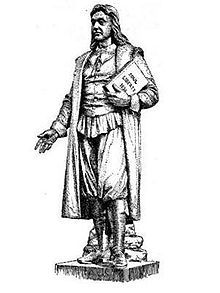
In reality, however, the use of the precise phrase dates back to Roger Williams (illustration), the first Baptist in America, in the early 17th century. Williams used the phrase in 1644 (“Mr. Cotton’s Letter Lately Printed, Examined and Answered”) to describe the Baptist belief that church and state should be kept separate. A strong advocate of freedom of conscience, Williams’ insisted that the state should not intrude into the free exercise of religion, and that religion should be disestablished from government.

Why did Roger Williams want to build a “wall of separation” between church and state? From the fifth century through the Reformation, church and state ruled together, and the marriage consistently produced wars, destruction, killings, and intense persecutions of those who did not embrace state religion. Yet there was more. Williams realized, as had the first generation of Baptists before him (the Baptist faith emerged in 1609 in Amsterdam, Holland), that state religion – even in the guise of Christianity – was false religion. True religion, according to Baptists, was voluntary and came from a free conscience, as taught by Christ. State operated or approved religion, therefore, was the enemy of genuine faith.

Persecuted for his beliefs (and nearly to the point of death) by the Puritan (Congregational) state church of New England, Williams purchased land from Native Americans and founded Providence Plantations (now the city of Providence, Rhode Island) in 1636, and eight years later was instrumental in the establishment of the colony of Rhode Island.

Providence, initially, and then Rhode Island, were founded on the principles of freedom of conscience, full religious liberty, and separation of church and state. The rise and advocacy of these principles was a radical development in the history of colonial America, and Williams and his fellow Baptists in particular were considered, by other Christians, to be liberals, heretics, and infidels.


The generations of Baptists in America who followed Roger Williams continued fighting for the separation of church and state. Christian government officials in both the northern and southern colonies persecuted the heretical sect. Baptists, who refused to pay taxes to the state church and refused to baptize their infants (as the law required), were beaten, whipped, jailed, stoned, shot, waterboarded, and had their lands confiscated. In some cases, church state officials accused Baptist parents of child abuse for not baptizing their infants into the state religion, and in punishment took their children away from them.

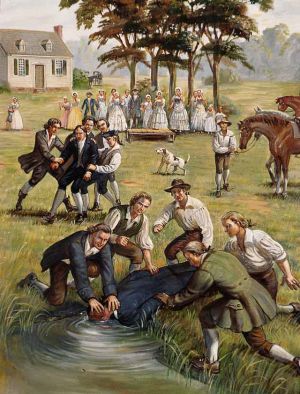
The persecution of Baptists was not isolated. Between 1768 and 1776, roughly one-half of all Virginia Baptist preachers served time in jail for preaching in public, refusing to pay taxes, or otherwise defying the theocratic Anglican government in Virginia. In the painting above, Virginia Baptist minister David Barrow is being waterboarded in 1778 by Virginia’s church-state officials, for his heretical views.

In the 1770s, as America rebelled against Great Britain, most colonies were yet ruled by church states. Even as colonial governments and politicians proclaimed political freedom from England, they denied religious freedom to Baptists.

Yet, Baptist patriots proved valuable in the fight against Great Britain, and soon Baptists in Virginia were able to acquire new, powerful allies in the fight to separate church and state. Among their allies were Virginians James Madison and Thomas Jefferson. Virginia Baptists, most visibly represented by the popular evangelist John Leland, worked alongside the efforts of Madison and Jefferson to secure Jefferson’s 1786 Virginia Statute for Religious Freedom, which separated church and state in colonial Virginia and secured religious liberty for citizens.

Five years later, in 1791, American Baptists’ nearly two centuries-old campaign for church state separation was finally realized in the enactment of the First Amendment of the Bill of Rights to the United States Constitution. Stating that “Congress shall make no law respecting an establishment of religion, or prohibiting the free exercise thereof,” the United States became the world’s first secular nation by enacting the Baptist vision of a “wall of separation” between church and state. As Baptists had long advocated, the First Amendment forbade government from interfering with religious expression (free exercise clause) and forbade the government from establishing or incorporating religion into government (establishment clause).

By 1833, thanks to the still tireless efforts of Baptists, the last vestiges of church state union at the state level were finally eradicated (Massachusetts was the last state to do so).

While Baptists of the late 18th and early 19th centuries – no longer persecuted by church state officials – rejoiced in living under a secular government in which church and state were legally and effectually separated, many conservative Christians (of former official state churches)remained opposed to America’s secular government, and insisted that God would punish America.

Most Christians of the founding era of America understood that the primary Founding Fathers (with one exception) were not Christian in the traditional sense of the word. In the larger context, few Americans (about 10%)attended church in the 1780s, and the primary Founding Fathers were no exception. Indeed, most of the primary Founding Fathers were deists (that is, they philosophically embraced a concept of a distant deity or supreme being, but rejected the divinity of Christ and the Bible).

If one enlarges the definition of “Founding Fathers” to include dozens or even several hundred prominent men who played various roles in the establishment of the American nation, the number of Christians (measured by affiliation) increases, as most were representatives of or leaders within theocratic colonies/states.

That the founding fathers resisted intense pressure by church state leaders to include references to God and Christianity in the U. S. Constitution, and then enacted separation of church and state in the First Amendment, did not sit well with many Christians who once had been the recipient of special government privileges. (Modern attempts, by conservative Christians in America, to reconstruct the primary Founding Fathers as evangelical Christians would have baffled conservative Christians of the late 18th century.)

Thomas Jefferson, by virtue of his prominent role in paving the way for the enactment of separation of church and state in the First Amendment (modeled after Jefferson’s 1786 aforementioned Virginia Statute of Religious Freedom), came to be especially despised by many conservative Christians of the early 19th century.

While Baptists greatly appreciated Jefferson (who in 1802 wrote a now-famous letter of response to praise from and a petition of Danbury Baptists of Connecticut, voicing the Baptist “wall of separation” metaphor to describe the First Amendment’s separation of church and state), many other Christians considered the president a heretic, infidel, and even an atheist.

Today, many conservative Christians place their faith in the myth that America was founded as a Christian nation, arguing that since the words “wall of separation” of church and state are not mentioned in the U. S. Constitution, the concept does not exist.

American Christians living in the 1780s and 1790s would have considered this argument to be ludicrous. They, living witnesses to the founding of America, well understood that America was established as a secular democracy with the separation of church and state (although not all appreciated this state of affairs).


>

Monday, March 03, 2014

The “Wall of Separation”


There is much public confusion today over the phrase, “wall of separation,” in terms of describing the official relationship between church and state in the United States of America. Many conservative Christians, intent upon denying that the concept has any relevance in the founding of America (so as to argue that America was founded as a Christian nation), claim or infer that Thomas Jefferson coined the term a decade after the enactment of the First Amendment.

In reality, however, the use of the precise phrase dates back to Roger Williams (illustration), the first Baptist in America, in the early 17th century. Williams used the phrase in 1644 (“Mr. Cotton’s Letter Lately Printed, Examined and Answered”) to describe the Baptist belief that church and state should be kept separate. A strong advocate of freedom of conscience, Williams’ insisted that the state should not intrude into the free exercise of religion, and that religion should be disestablished from government.

Why did Roger Williams want to build a “wall of separation” between church and state? From the fifth century through the Reformation, church and state ruled together, and the marriage consistently produced wars, destruction, killings, and intense persecutions of those who did not embrace state religion. Yet there was more. Williams realized, as had the first generation of Baptists before him (the Baptist faith emerged in 1609 in Amsterdam, Holland), that state religion – even in the guise of Christianity – was false religion. True religion, according to Baptists, was voluntary and came from a free conscience, as taught by Christ. State operated or approved religion, therefore, was the enemy of genuine faith.

Persecuted for his beliefs (and nearly to the point of death) by the Puritan (Congregational) state church of New England, Williams purchased land from Native Americans and founded Providence Plantations (now the city of Providence, Rhode Island) in 1636, and eight years later was instrumental in the establishment of the colony of Rhode Island.

Providence, initially, and then Rhode Island, were founded on the principles of freedom of conscience, full religious liberty, and separation of church and state. The rise and advocacy of these principles was a radical development in the history of colonial America, and Williams and his fellow Baptists in particular were considered, by other Christians, to be liberals, heretics, and infidels.


The generations of Baptists in America who followed Roger Williams continued fighting for the separation of church and state. Christian government officials in both the northern and southern colonies persecuted the heretical sect. Baptists, who refused to pay taxes to the state church and refused to baptize their infants (as the law required), were beaten, whipped, jailed, stoned, shot, waterboarded, and had their lands confiscated. In some cases, church state officials accused Baptist parents of child abuse for not baptizing their infants into the state religion, and in punishment took their children away from them.

The persecution of Baptists was not isolated. Between 1768 and 1776, roughly one-half of all Virginia Baptist preachers served time in jail for preaching in public, refusing to pay taxes, or otherwise defying the theocratic Anglican government in Virginia. In the painting above, Virginia Baptist minister David Barrow is being waterboarded in 1778 by Virginia’s church-state officials, for his heretical views.

In the 1770s, as America rebelled against Great Britain, most colonies were yet ruled by church states. Even as colonial governments and politicians proclaimed political freedom from England, they denied religious freedom to Baptists.

Yet, Baptist patriots proved valuable in the fight against Great Britain, and soon Baptists in Virginia were able to acquire new, powerful allies in the fight to separate church and state. Among their allies were Virginians James Madison and Thomas Jefferson. Virginia Baptists, most visibly represented by the popular evangelist John Leland, worked alongside the efforts of Madison and Jefferson to secure Jefferson’s 1786 Virginia Statute for Religious Freedom, which separated church and state in colonial Virginia and secured religious liberty for citizens.

Five years later, in 1791, American Baptists’ nearly two centuries-old campaign for church state separation was finally realized in the enactment of the First Amendment of the Bill of Rights to the United States Constitution. Stating that “Congress shall make no law respecting an establishment of religion, or prohibiting the free exercise thereof,” the United States became the world’s first secular nation by enacting the Baptist vision of a “wall of separation” between church and state. As Baptists had long advocated, the First Amendment forbade government from interfering with religious expression (free exercise clause) and forbade the government from establishing or incorporating religion into government (establishment clause).

By 1833, thanks to the still tireless efforts of Baptists, the last vestiges of church state union at the state level were finally eradicated (Massachusetts was the last state to do so).

While Baptists of the late 18th and early 19th centuries – no longer persecuted by church state officials – rejoiced in living in a secular nation that had separated church and state, many conservative Christians (of former official state churches) remained opposed to America’s secular government, and insisted that God would punish America.

Most Christians of the founding era of America understood that the primary Founding Fathers (with one exception) were not Christian in the traditional sense of the word. In the larger context, few Americans (about 10%) attended church in the 1780s, and the primary Founding Fathers were no exception. Indeed, most of the primary Founding Fathers were deists (that is, they philosophically embraced a concept of a distant deity or supreme being, but rejected the divinity of Christ and the Bible).

If one enlarges the definition of “Founding Fathers” to include dozens or even several hundred prominent men who played various roles in the establishment of the American nation, the number of Christians (measured by affiliation) increases, as most were representatives of or leaders within theocratic colonies/states.

That the founding fathers resisted intense pressure by church state leaders to include references to God and Christianity in the U. S. Constitution, and then enacted separation of church and state in the First Amendment, did not sit well with many Christians who once had been the recipient of special government privileges. (Modern attempts, by conservative Christians in America, to reconstruct the primary Founding Fathers as evangelical Christians would have baffled conservative Christians of the late 18th century.)

Thomas Jefferson, by virtue of his prominent role in paving the way for the enactment of separation of church and state in the First Amendment (modeled after Jefferson’s 1786 aforementioned Virginia Statute of Religious Freedom), came to be especially despised by many conservative Christians of the early 19th century.

While Baptists greatly appreciated Jefferson (who in 1802 wrote a now-famous letter of response to praise from and a petition of Danbury Baptists of Connecticut, voicing the Baptist “wall of separation” metaphor to describe the First Amendment’s separation of church and state), many other Christians considered the president a heretic, infidel, and even an atheist.

Today, many conservative Christians place their faith in the myth that America was founded as a Christian nation, arguing that since the words “wall of separation” of church and state are not mentioned in the U. S. Constitution, the concept does not exist.

American Christians living in the 1780s and 1790s would have considered this argument to be ludicrous. They, living witnesses to the founding of America, well understood that America was established as a secular democracy with the separation of church and state (although not all appreciated this state of affairs).


Source
.

Saturday, October 31, 2009

Roger Williams erects a wall between church and state

During the first half of the 17th century, when most of Europe was convulsed by religious wars, Roger Williams brought a powerful new idea into the world and even put it into practice: a wall between church and state. He set up a society in the American woods, the Colony of Rhode Island, where church and state were separated and no one faced persecution. The wall protected "God's garden" (the church) from the impure world and, at the same time, gave religious freedom to all.


Roger Williams was one of those remarkable people who are ready to give to others the freedom that they themselves have been denied. Like the other Puritans in the colony of Massachusetts he had been forced to leave Britain because he opposed the Church of England. But unlike them he refused to turn around and do the same to others. The Puritans of Massachussetts were quite prepared to force their own religious practices on everyone in their colony, including compelling them to attend church. Anyone who thought otherwise got thrown out.

The English Puritans brought this idea of a state church to their colony of Massachussetts. Although they rejected the monopoly of the Catholic Church, the Reformers simply tried to substitute a different state religion. They still accepted the traditional Church doctrine that "error has no rights". Not until the Enlightenment was this replaced by the notion that religious freedom was a human right.

Roger Williams' amazing accomplishment

Roger Williams fled England to avoid coming under the Anglican Church, but he soon separated himself from the Puritan church of his new home in the colonies, as well. He found himself at odds with the government of Massachusetts when he asserted that the Colony had no right to steal Indian lands, deny the vote to the unsaved, or to prosecute civil crimes under religious statutes. In fact, said Williams, "The civil magistrate's power extends only to the bodies and goods, and outward state of men..." Roger Williams was the first to speak of the "wall of separation" between church and state. [1]

In 1635 he was accused of holding "dangerous opinions against the authority of magistrates" and formally banished from Massachusetts. Once more Williams was told: "My way or the highway", and he was determined never to do this to others. The next year he purchased land from the Narragansett tribe to found a haven for dissenters. His Colony of Rhode Island welcomed those who faced persecution elsewhere, such as Jews, Quakers and Deists.

Yet although he had created a haven in the American woods where church and state were separated and no one faced persecution, Roger Williams still tried to give secularism an otherworldy justification. The wall of separation, he maintained, would help to protect the true religion, whichever it might turn out to be.

Williams felt that government is the natural way provided by God to cope with the corrupt nature of man. But since government could not be trusted to know which religion is true, he considered the best hope for true religion the protection of the freedom of all religion, along with nonreligion, from the state. [2]

Like other Reformers of the 17th century, he felt that humans were owned by God and only had duties to their Creator. The concept of rights, which was needed to underpin his secularism, didn't yet exist. It wasn't until the Enlightenment in the next century that the idea of religious freedom was shifted from heaven to earth. Religious freedom came to be seen as a human right.

How did he do it?

Roger Williams had an unusual background which gave him special insight and led him to conclusions that were far ahead of his time. His life taught him three things and when he drew the consequences, a powerful new idea was born: that there should be a wall between church and state.


● He was born about 1603, the year that Queen Elizabeth I died, and grew up in London on the northwest fringes of the city. The Williams family lived beside the open area called Smithfield, near the sheep-pen section on its western edge. This large field was where markets were held (even two centuries later the picture shows the sheep pens) and also where fairs took place and other festivities as well, such as the burning of religious heretics.

Roger Williams was about eight years old when the last person ever burned in London for his religious opinions met his death at Smithfield. This man, Bartholomew Legate, was a preacher in a liberal religious group called the "Seekers". They sought for religious truth on their own and did not feel compelled to accept any dogma simply because any church said it was true.

This was a dangerous position to take. The Church of England court tried Bartholomew Legate on charges of heresy and then handed him over to the state to carry out the death sentence. (Churchmen, of course, never stained their hands with blood.) On the orders of the new king, James I, this Seeker was burned to death at Smithfield, right in front of the Williams home. This must have made a strong impression on the gifted little boy: church and state had colluded in order to deliver a brave man to a horrible death. As Roger Williams wrote later, from that time onwards, he too adopted the position of the Seekers who refused to bow to the state church and insisted on trying to find their own way. [3] His goal became "a Libertie of searching after Gods most holy mind and pleasure." [4]

● Another strand in the thought of Roger Williams was what was known as "Separatism". This was a logical extension of the Protestant Reformation. Like other Protestants, the Anglicans of the English Church had broken away from the Catholic Church which they felt had become corrupted and no longer represented the "pure" form of the early church. Soon the Puritans, in turn, broke away from the Church of England, to purify it, as well.


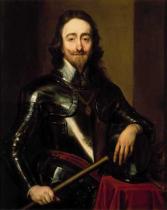
However, tampering with a state church was a highly political thing to attempt. It was safer to conduct this religious experiment overseas, and a group of Puritans managed to get a charter from King Charles I to found the Colony of Massachusetts a good safe distance away. This allowed them to separate from the English Church in all but name. In the New World they were under no bishop and each congregation ran its own affairs. They had to be quiet about it, of course, since the Church of England was increasingly hostile to Puritanism and what King Charles had given, he could also take away. [5] The last thing the Colony of Massachusetts needed was an open separatist like Roger Williams who advocated a break with the Church of England in public.

Soon the Massachusetts authorities encountered further problems with the young Puritan preacher. Not content to challenge the legitimacy of the English Church, he began to question the purity of the Puritan one, and finally decided he must separate from that, as well.

The impulse of separation was a natural extension of the perception of spiritual stain and impurity, and Puritans saw stain everywhere. Central to Puritan ecclesiology was the line of demarcation between the godly and ungodly, the holy and the profane. [6]

In the 17th century this drive to avoid spiritual impurity led to a series of further separations, as new churches separated from the churches which had themselves separated from Rome.
However, one of the remarkable things about Roger Williams is that unlike others, he did not set himself up as the leader of some new and purer church — even though his status as the founder of a new colony might have let him easily assume that role. Instead, he remained true to his Seeker beliefs, unwilling to impose some new orthodoxy on others, even in the name of spiritual purity. Thus he didn't separate in order to found a new church, but in order to keep any church from impeding the earnest search to learn God's will.

● However, without a third crucial experience, Williams could never have made the bold leap and founded a colony where everyone enjoyed complete religious freedom. In the 17th century it was assumed that a common religion was necessary to ensure social peace. This was the lesson that Europe had drawn from that century's devastating religious wars. Furthermore, to ensure the authority of the state, this common religion should be a state church, in other words, all subjects must follow the religion of their rulers. Otherwise, it was feared, they might try to topple the king and install one of their own faith. This had indeed been attempted when Roger Williams was a baby: the Gunpowder Plot was an attempt to bring back a Catholic king. This plot, though foiled, inspired religious oppression of Catholics and created a vicious circle of suspicion and disaffection that was only ended by the Catholic Emancipation Act in 1829.

However, Roger Williams knew that this tragic cycle of exclusion was totally unnecessary.
People didn't need a common church — or even any church at all — to live in harmony with their neighbours. He had experienced something that his contemporaries believed to be impossible, for he had lived among the Indians of Rhode Island, the Narrangasett, and even written a book about their language. He knew firsthand that people could tell the truth without swearing on the Bible, could help their fellows without any religious duty to do so and could keep the peace without oaths of allegiance to a divinely-appointed ruler.

Roger Williams had gone among the Indians to teach them Christianity but, true to his Seeker beliefs, he had remained open-minded. He let the Indians teach him a lesson that he could learn nowhere else: that church and state could be separated.

When Roger Williams was exiled from Massachusetts in 1636 he and a few companions founded a little settlement. There church and state were completely separate and they underlined their religious motives for doing this by naming it Providence. Overlooking the river they built their timber-framed cottages, the wattle-and-daub walls protected from the rain by the deep eaves of thatched roofs. Behind the cottages, in a field which rose to the foot of the bluffs, they planted their multicoloured Indian corn.

Life in the new settlement proved a struggle. In fact, the next year, when the Governor of Massachusetts paid a visit to the impetuous young preacher, he was so touched by their poverty that he pressed a gold piece into Mrs. Williams' hand. The hamlet was small, mosquito-infested, pig-ridden, dirt-laned, isolated, insecure and poor. Yet at that time it was perhaps the freest place on earth. [7]


Notes
For a selection of Roger Williams' writing online see http://en.wikiquote.org/wiki/Roger_Williams


1. Ronald Bruce Meyer, "Roger Williams Banished (1635): Separation of Church and State".
2. Cyclone Covey, The Gentle Radical: Roger Williams. New York: The MaCmillian Co., 1966, cover leaf. Cited at: http://users.erols.com/igoddard/roger.htm


3. Ibid., p. 3.
4. Ibid., p. xi.
5. Timothy L. Hall, Separating Church and State: Roger Williams and religious liberty, (University of Illinois Press, 1997), p. 24.
6. Ibid., p. 23.
7. Covey, p. 134.

.