Trump and the Supreme Court are undermining democracy. Here's what voters can do now.
Opinion
Guest Voices
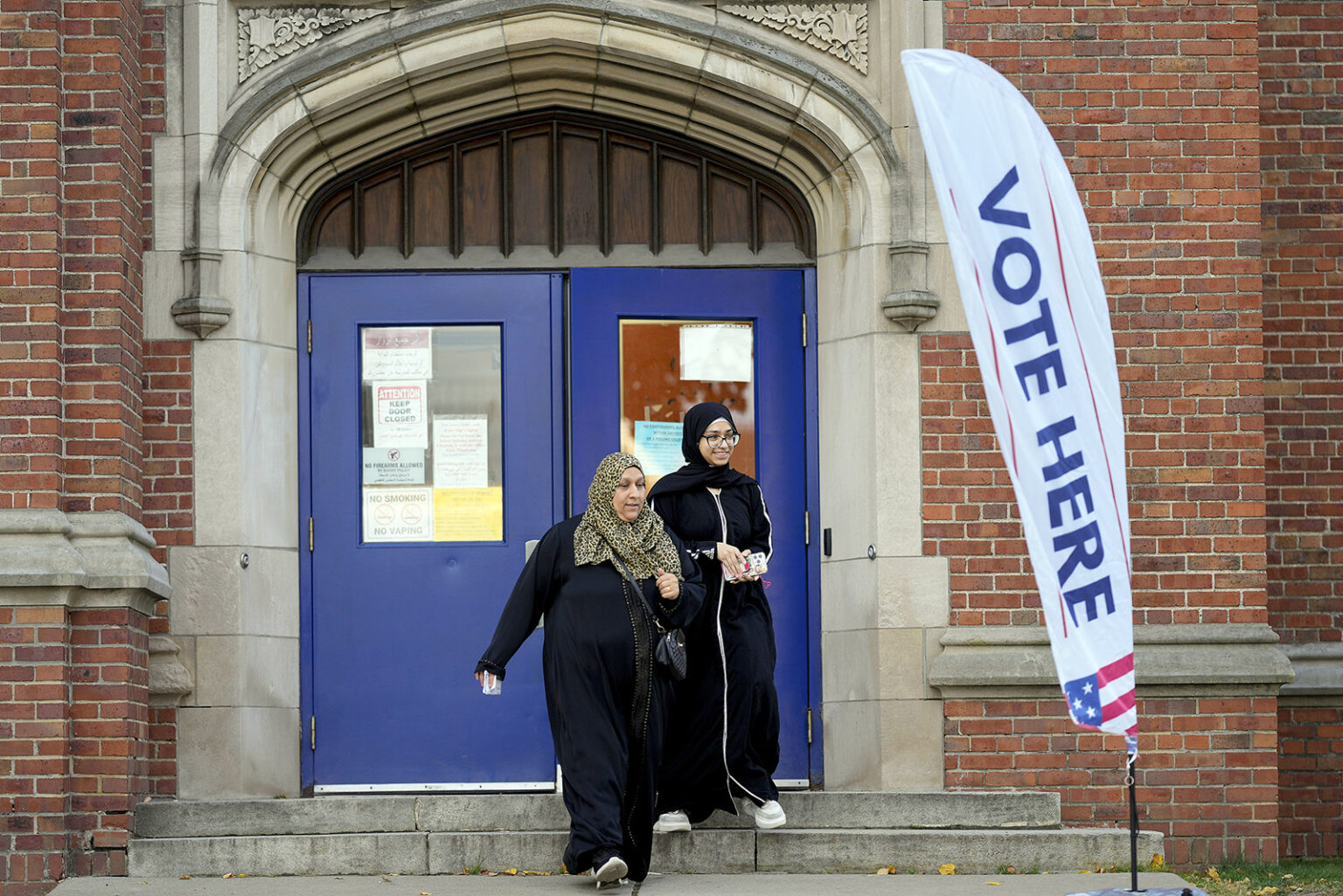
Voters depart a polling place at McDonald Elementary School, Nov. 5, 2024, in Dearborn, Mich. (AP/Charlie Neibergall)

Thomas Reese
View Author Profile
May 6, 2026
President Donald Trump and the U.S. Supreme Court have destroyed decades of progress in American democracy by gutting the Voting Rights Act last week and instituting a gerrymandering war to win more elections in red states.
The Democrats have responded by gerrymandering blue states. The result will be fewer Black candidates elected to office and fewer competitive elections where the voters have a real choice between the parties.
How did this happen?
Trump knows he and his supporters are going to be in trouble in the November midterm election. The party controlling the White House traditionally loses seats during midterm elections. These losses are greater if the president is unpopular, as is Trump currently. But the losses can only occur in districts that are competitive. It's very unlikely districts that are overwhelmingly Republican will go blue.
So now, Trump and other Republicans are trying to protect their majority in the House of Representatives by asking Republican officials in red states like Texas to redraw the House district lines to find him additional safe Republican seats.
The process of redrawing electoral district lines to favor one party is called gerrymandering, after Massachusetts Gov. Elbridge Gerry in 1812 backed a redistricting plan favoring his own party, the Democrat-Republicans. One of the districts looked like a salamander, so the press combined the governor's name with salamander to produce the name "gerrymander."
In response to Trump's request for five additional seats in Texas, Gov. Greg Abbott pushed the redistricting plan through a special session of the state legislature. But then, voters in California and Virginia adopted redistricting plans that give Democrats additional House seats.
Florida Republican Gov. Ron DeSantis is now trying to get additional House seats for Republicans even though the state constitution forbids partisan gerrymandering. Other Southern states are moving in the same direction.
The U.S. Supreme Court ruled in Rucho v. Common Cause in 2019 that partisan gerrymandering is legal under the U.S. Constitution. Whether it is legal under state law depends on a particular state's constitution and laws.
Legal or not, gerrymandering is bad for democracy. It means that in the general election, the voters have no choice in most districts because one party has an overwhelming majority so that the other party does not have a chance.
In addition, even if a state is evenly split across parties, gerrymandering can give a large majority of the seats to the party that controls redistricting. As the League of Women Voters and others have noted, gerrymandering "allows officials to choose their voters rather than voters choosing who represents them."