Showing posts with label equality. Show all posts

Tuesday, October 20, 2026

$32 million CEO lectures America on income inequality


Published October 19, 2026 12:13pm EDT

Scott Kirby also defended charging passengers more for certain seating options


By Bradford Betz FOXBusiness

United Airlines CEO wealth tax proposal blasted as double taxation

Dagen McDowell slams United Airlines CEO Scott Kirby over his proposal for a national wealth tax and a near-100% inheritance tax. She calls out the double taxation and points to the hypocrisy of the airline's own elite status pricing.

United Airlines CEO Scott Kirby is calling for a national wealth tax and inheritance taxes approaching 100% for certain estates, arguing that growing wealth inequality poses a threat to American society.

Kirby, who took home about $32.3 million in total compensation in fiscal year 2025, made the remarks when asked about declining public trust in corporate executives during an interview with The New York Times.

"Wealth inequality has become a danger to our society, and we need to address that," Kirby told the outlet in an interview published Sunday.


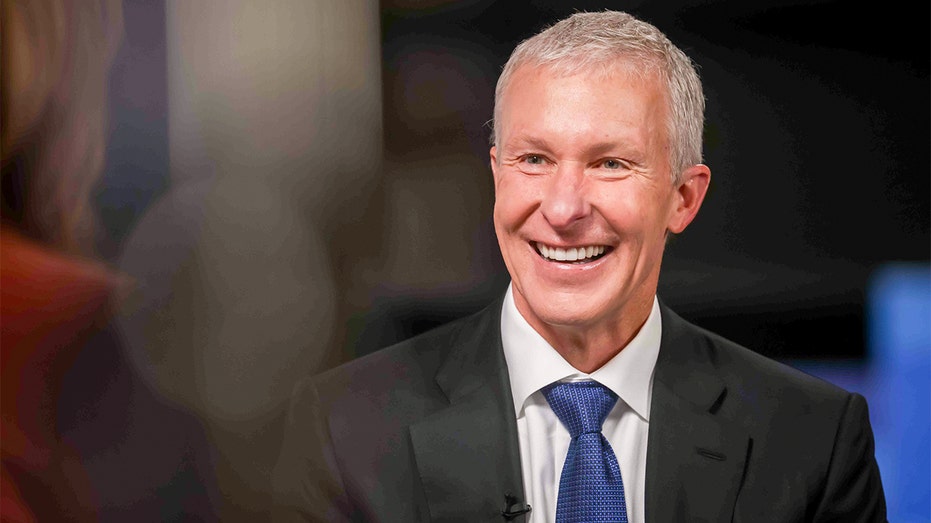
United Airlines CEO Scott Kirby is calling for a national wealth tax and inheritance taxes approaching 100% for certain estates. (Michael Nagle/Bloomberg via Getty Images)

The airline executive argued that a wealth tax would need to be implemented nationwide rather than at the state level to prevent wealthy Americans from relocating to avoid paying it.

Saturday, October 03, 2026

A Campaign to Address Global Economic Inequality

This content is not subject to review by Daily Kos staff prior to publication.

Friday, October 2, 2026 at 4:21 PM EDT


by Lawrence S Wittner
Community

Although the temper tantrums of Donald Trump and Benjamin Netanyahu dominated mass media coverage of the 81st session of the UN General Assembly, which opened in September 2026, the event also included the announcement of a far more significant matter: a campaign to address the problem of worldwide economic inequality.

On September 24, standing in for South African President Cyril Ramaphosa, Ronald Lamola, South Africa’s Minister of International Relations and Cooperation, told General Assembly delegates that “the promise of democracy and international cooperation wanes when we cannot demonstrate that they can address inequality and insecurity.” Thus, “together with Brazil, Norway, and Spain, South Africa calls on this Assembly to throw its weight behind the establishment” of an International Panel on Inequality (IPI). Based on the model of the Intergovernmental Panel on Climate Change, the IPI would research inequality within and between countries and develop policies to close the widening gap between the rich and the poor.

That gap is enormous. As Nobel Prize-winning economist Joseph Stiglitz and other specialists have recently reported, “the richest 10 percent of adults globally receives more than half (53 percent) of the world’s income, whereas the poorest half receives 8 percent.” When it comes to wealth, that “is even more concentrated, with the richest 10 percent owning around three-quarters of global wealth while the poorest half owns just 2 percent.” And “almost two-thirds of people live in countries where inequality is rising.” In turn, this economic inequality leads to “unequal access to education, health care, housing and finance,” factors shaping “the opportunities that direct people’s lives.”

The speech at the General Assembly, as well as the specialists’ report, originated with developments within the G20, an international forum of nations with advanced and emerging economies seeking to coordinate global economic policy. In 2025, when the South African government held the presidency of the G20, it commissioned a study of global inequality by independent experts and chaired by Stiglitz. Appearing last November, the study maintained that “inequality is one of the most urgent concerns in the world today,” and that “combating it is necessary and possible.” Indeed, according to the study, the inequality emergency was on a par with the climate emergency, and an IPI, once established, would gather information on the problem and propose solutions to it.

Recently, the campaign for a global response to global economic inequality has picked up momentum. By mid-September 2026, when the UN General Assembly session was underway, more than 1,500 economists and academics from more than 100 countries had signed an open letter backing the creation of an International Panel on Inequality. Among the high-profile signatories were former U.S. Treasury Secretary Janet Yellen, Nobel Prize-winning economist Daron Acemoglu, and numerous other prominent economists, including Thomas Piketty, Mariana Mazzucao, and Jayati Ghosh. In the letter, they maintained that “extreme concentrations of income and wealth translate into undemocratic concentrations of power, unravelling trust in our societies and polarizing our politics.”

Monday, April 27, 2026

If You Can Keep It: What the wealth gap means for democracy

10:00 AM

If You Can Keep It: What the wealth gap means for Democracy 


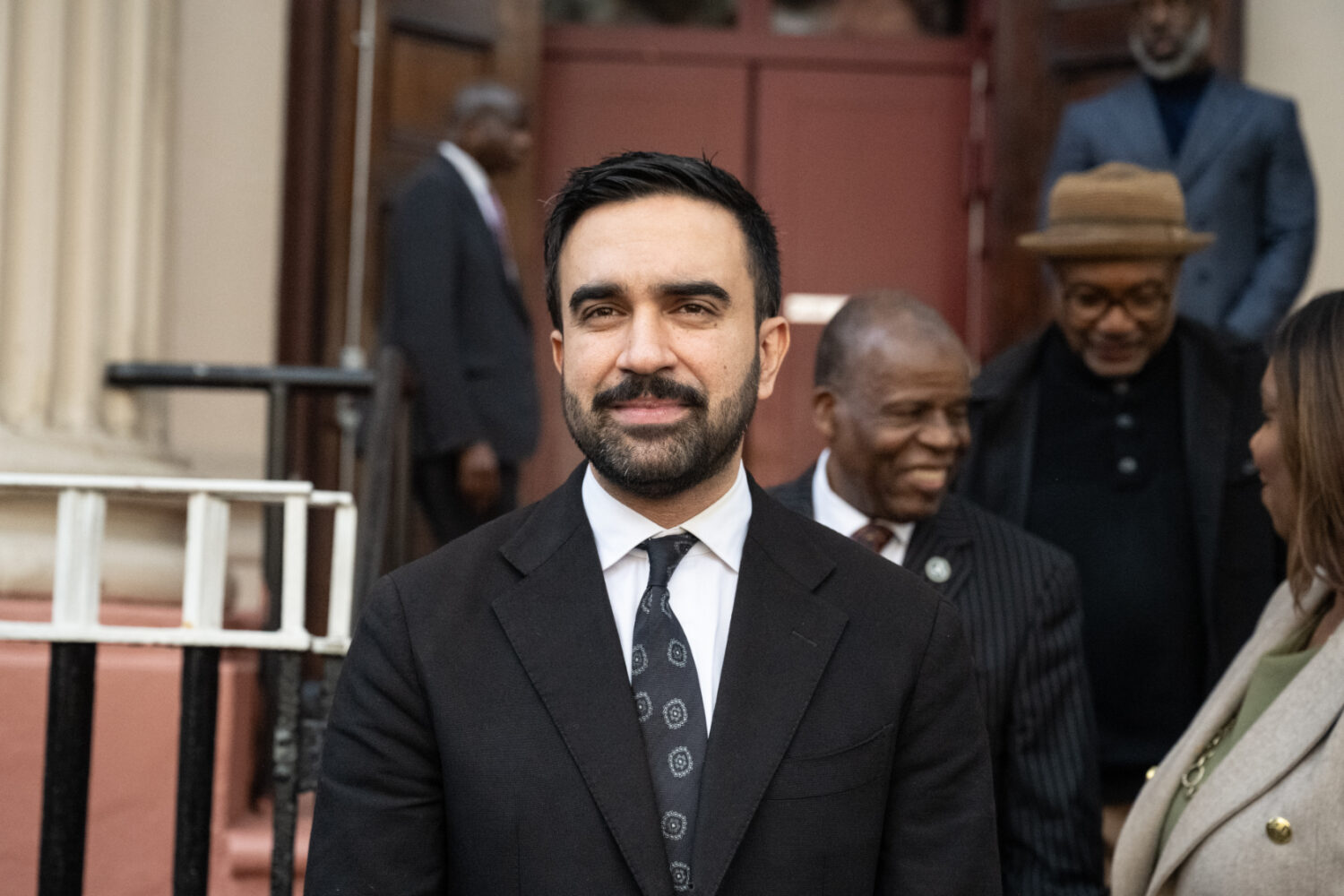
Democratic New York City mayor Zohran Mamdani in the Brooklyn borough of New York City.
Stephanie Keith/Getty Images


A growing number of states are looking at implementing a wealth tax to fund social services.

California is among them, with a billionaire tax set to be included on its November ballot. And this month, New York City Mayor Zohran Mamdani, a democratic socialist, and Democratic New York Gov. Kathy Hochul introduced a proposed tax on luxury second homes in the city. In March, Washington passed its first ever income tax – which has already been met with a legal challenge.

All this comes as the wealth gap in the U.S. grows to its widest point in three decades – and only looks set to keep increasing. In this installment of “If You Can Keep It,” we look at how tax codes have contributed to a growing inequality in the country, how to fix it, and what this wealth gap means for the health of our democracy.


Guests

Ray Madoff
professor, Boston College Law School; author, "The Second Estate: How the Tax Code Made an American Aristocracy"

Kyle Pomerleau
senior fellow, American Enterprise Institute

Morris Pearl
chair, Patriotic Millionaires; former managing director, BlackRock; co-author, "Tax the Rich!"


Saturday, October 04, 2025

FOR THE 111th WORLD DAY OF MIGRANTS AND REFUGEES 2025


MESSAGE OF POPE LEO XIV

FOR THE 111th WORLD DAY OF MIGRANTS AND REFUGEES 2025

[4-5 Octobre 2025]

Migrants, missionaries of hope

Dear Brothers and Sisters!

The 111th World Day of Migrants and Refugees, which my predecessor chose to coincide with the Jubilees of Migrants and of the Missions, offers us an opportunity to reflect on the connections between hope, migration and mission.

The current global context is sadly marked by wars, violence, injustice and extreme weather events, which force millions of people to leave their homelands in search of refuge elsewhere. The widespread tendency to look after the interests of limited communities poses a serious threat to the sharing of responsibility, multilateral cooperation, the pursuit of the common good and global solidarity for the benefit of our entire human family. The prospect of a renewed arms race and the development of new armaments, including nuclear weapons, the lack of consideration for the harmful effects of the ongoing climate crisis, and the impact of profound economic inequalities make the challenges of the present and the future increasingly demanding.

Faced with frightening scenarios and the possibility of global devastation, it is important that there be a growing desire in people’s hearts for a future of peace and of respect for the dignity of all. Such a future is essential to God’s plan for humanity and the rest of creation. This is the messianic future anticipated by the prophets: “Old men and old women shall again sit in the streets of Jerusalem, each with staff in hand because of their great age. And the streets of the city shall be full of boys and girls playing in its streets... For there shall be a sowing of peace; the vine shall yield its fruit, the ground shall give its produce, and the skies shall give their dew” (Zech 8:4-5, 12). This future has already begun, since it was inaugurated by Jesus Christ (cf. Mk 1:15; Lk 17:21), and we believe and hope in its full realization, for the Lord is always faithful to his promises.

Friday, July 25, 2025

Pope blasts new arms race, lack of climate action


Vatican releases Leo XIV's message for Day of Migrants, Refugees


ROME, 25 July 2025, 14:14

ANSA English Desk


- ALL RIGHTS RESERVED

Pope Leo XIV blasted the new arms race and the failure to address the climate crisis and social inequality in his message for the Catholic Church's World Day of Migrants and Refugees (WDMR).
"The current global context is sadly marked by wars, violence, injustice and extreme weather events, which force millions of people to leave their homelands in search of refuge elsewhere," Leo said in the message, which the Vatican released on Friday before this year's WDMR on October 4-5.
"The widespread tendency to look after the interests of limited communities poses a serious threat to the sharing of responsibility, multilateral cooperation, the pursuit of the common good and global solidarity for the benefit of our entire human family.

"The prospect of a renewed arms race and the development of new armaments, including nuclear weapons, the lack of consideration for the harmful effects of the ongoing climate crisis, and the impact of profound economic inequalities make the challenges of the present and the future increasingly demanding.

"Faced with frightening scenarios and the possibility of global devastation, it is important that there be a growing desire in people's hearts for a future of peace and of respect for the dignity of all".
The pope said that migrants and refugees "stand as messengers of hope" in a world darkened by war and injustice.

"Their courage and tenacity bear heroic testimony to a faith that sees beyond what our eyes can see and gives them the strength to defy death on the various contemporary migration routes," he said.


ALL RIGHTS RESERVED © Copyright ANSA

Monday, July 21, 2025

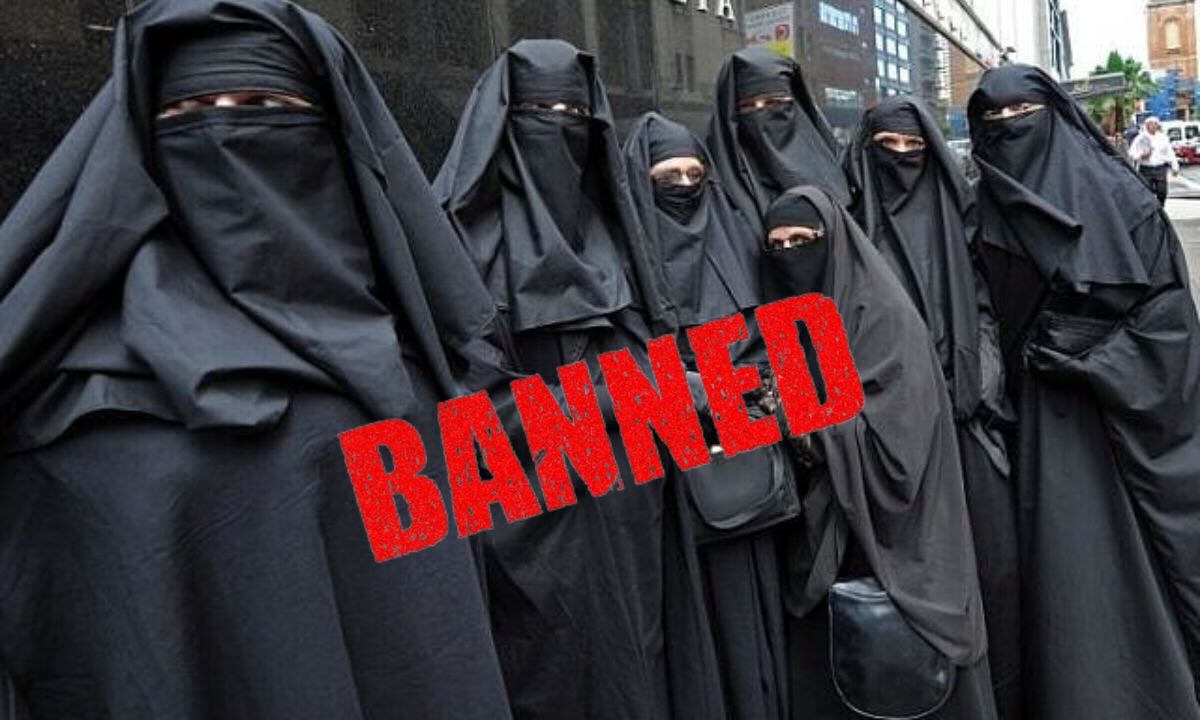
Denmark Bans Burqa In Public, Asks Muslims To Adapt Local Culture Or Leave. Details Inside!


The Denmark government had previously implemented a nationwide ban on burqas and niqabs in public spaces back in 2018!
Updated July 02, 2025 11:37 AM


Denmark is once again in the spotlight for its tough stance on religious face coverings. For the unversed, the Denmark government had previously implemented a nationwide ban on burqas and niqabs in public spaces back in 2018. Now the Danish government is proposing to expand that ban to include schools and universities.

What Did The Denmark Prime Minister Say About Banning Burqa?

Prime Minister Mette Frederiksen recently stated that the country’s democratic values must come first. “Democracy takes precedence,” she said, stressing that religious expressions that conflict with Danish norms shouldn’t be part of the education system. She also made it clear that immigrants who struggle to adapt to Danish cultural values should consider leaving the country.

This proposed extension has stirred a lot of international attention. Human rights organisations argue that the move is discriminatory, especially toward Muslim women who wear face coverings as part of their religious practice. Critics say the policy is not about integration or safety but about singling out a specific group and restricting their freedom of expression.

On the other hand, supporters of the proposal believe the government is taking necessary action to protect secular education and promote gender equality. They argue that face coverings can hinder communication and that schools should be places where openness and equal participation are encouraged. The debate is growing louder both inside and outside Denmark. Some view this as a firm step toward integrating newcomers and strengthening national identity. Others see it as an exclusionary move that could further alienate minority communities.


Sunday, July 13, 2025

2025 – Montréal Inclusive Solidarities: Reimagining Boundaries in Divided Times


Conference dates: 1-3 July 2025 (virtual); 9-12 July 2025 (in Montréal)

Inclusive Solidarities: Reimagining Boundaries in Divided Times

Solidarity is a central value practiced across social and labor movements and a key principle underpinning social democracies. It is also a term with many meanings, referring to the cohesion of groups, the development of social policy and welfare states, or the goals and tactics of labor and social movement organizations. Solidarity in all its forms involves an act of political and social imagination – to identify who one is willing to act in solidarity with, or who are the members of one’s ‘imagined community’ (Anderson 1983). How community is defined, and how the boundaries around that community are drawn or imagined, have implications for who is included and excluded in collective action to redistribute power and resources, to demand rights, and to fight oppression.

The theme of this year’s SASE meeting recognizes the importance of reimagining the boundaries that define commitments to and practices of inclusive solidarity, at a time when the most visible trends are toward intensified divisions. Tens of thousands of lives have been lost in wars, invasions, and violent conflicts over the past year alone. Climate change is fueling displacement and famine, while attempts to mitigate carbon emissions encourage organizing for and against policies to reform farming, manufacturing, and energy production. Far right political parties have experienced growing support, with recent major election wins in Europe and Latin America – and a rising share of the popular vote in many countries world-wide. And multinational companies and their investors continue to adapt to a post-COVID global economy through pursuing particularistic interests within and across national boundaries, from opposing proposed regulation of AI and platform work to challenging the right to strike as a critical dimension of the ILO’s fundamental right to freedom of association.

Saturday, July 12, 2025

Faith-based groups note “critical moment” for global financial transformation

In a message coinciding with the 4th International Conference on Financing for Development, faith-based groups representing more than 600 million Christians worldwide noted a “critical moment” for global financial transformation.


Photo: Ivars Kupcis/WCC

27 June 2025

NIFEA

Sustainability and Economy of Life

“The world today is grappling with a convergence of unprecedented economic, political, social, and environmental crises,” reads the message from the World Council of Churches, World Communion of Reformed Churches, Lutheran World Federation, World Methodist Council, Council for World Mission, and United Society Partners in the Gospel.

The message notes that, while the wealth of multi-millionaires and billionaires continues to soar, the vast majority of people struggle with rising costs for basic necessities, such as food and housing, and declining living standards.

“This deepening inequality has eroded trust in public institutions, weakened democratic systems, enabled corporate influence over state policy, and hindered progress on urgent climate action, reinforcing a vicious cycle of disparity and disempowerment,” reads the message. “We are amid an escalating crisis of biodiversity loss and climate change that threatens livelihoods and poses an existential risk to all life on Earth.”

Climate change also worsens sovereign debt burdens, the message notes.

Monday, December 02, 2024

During the campaign, Trump talked about ‘Black jobs’. He’s nominated just one Black person for his cabinet


Trump’s first administration was the least racially diverse in decades. More than 80 percent of his latest nominees are white

Friday 29 November 2024 12:16 EST


From reproductive rights to climate change to Big Tech, The Independent is on the ground when the story is developing. Whether it's investigating the financials of Elon Musk's pro-Trump PAC or producing our latest documentary, 'The A Word', which shines a light on the American women fighting for reproductive rights, we know how important it is to parse out the facts from the messaging.

At such a critical moment in US history, we need reporters on the ground. Your donation allows us to keep sending journalists to speak to both sides of the story.

The Independent is trusted by Americans across the entire political spectrum. And unlike many other quality news outlets, we choose not to lock Americans out of our reporting and analysis with paywalls. We believe quality journalism should be available to everyone, paid for by those who can afford it.Your support makes all the difference.Read more

Donald Trump owes his electoral victory to his campaign’s gains among Latino and Black voters. But the nominees for his historic second presidency largely reflect the overwhelmingly white makeup of Washington power.

Thus far, Trump has nominated one Black American to his 16-member Cabinet: Scott Turner for Secretary of Housing and Urban Development. He has also selected two Latino nominees: Lori Chavez-DeRemer for Secretary of Labor and Marco Rubio for Secretary of State.

When Trump was elected in 2016, his Cabinet included 19 white men, making it the least racially diverse group of the president’s closest advisers and heads of institutional power in more than 40 years.


Trump has nominated Scott Turner for Secretary of Housing and Urban Development (AP)

At the time, he had also appointed only one Black nominee to his cabinet; Ben Carson, like Turner, was also tapped for housing secretary.

But out of the 26 nominees for top roles in Trump’s next Cabinet and Cabinet-level positions thus far, 19 are white.

Thursday, April 11, 2024

Overton Window


From Wikipedia, the free encyclopedia

This article is about the political concept. For the 2010 novel, see The Overton Window.


An illustration of the Overton window, along with Treviño's degrees of acceptance

The Overton window is the range of policies politically acceptable to the mainstream population at a given time.[1] It is also known as the window of discourse.

The term is named after the American policy analyst Joseph Overton, who proposed that an idea's political viability depends mainly on whether it falls within this range, rather than on politicians' individual preferences.[2][3] According to Overton, the window frames the range of policies that a politician can recommend without appearing too extreme to gain or keep public office given the climate of public opinion at that time.
Summary[edit]

Overton described a spectrum from "more free" to "less free" with regard to government intervention, oriented vertically on an axis, to avoid comparison with the left/right political spectrum.[4] As the spectrum moves or expands, an idea at a given location may become more or less politically acceptable. After Overton's death, his Mackinac Center for Public Policy colleague Joseph Lehman further developed the idea and named it after Overton.[5]

The political commentator Joshua Treviño has postulated that the six degrees of acceptance of public ideas are roughly:[6]

Unthinkable
Radical
Acceptable
Sensible
Popular
Policy

The Overton window is an approach to identifying the ideas that define the spectrum of acceptability of governmental policies. It says politicians can act only within the acceptable range. Shifting the Overton window involves proponents of policies outside the window persuading the public to expand the window. Proponents of current policies, or similar ones within the window, seek to convince people that policies outside it should be deemed unacceptable. According to Lehman, who coined the term:

The most common misconception is that lawmakers themselves are in the business of shifting the Overton window. That is absolutely false. Lawmakers are actually in the business of detecting where the window is, and then moving to be in accordance with it.[5]

According to Lehman, the concept is just a description of how ideas work, not advocacy of extreme policy proposals. In an interview with The New York Times, he said:

It just explains how ideas come in and out of fashion, the same way that gravity explains why something falls to the earth. I can use gravity to drop an anvil on your head, but that would be wrong. I could also use gravity to throw you a life preserver; that would be good.[7]

Criticism

Laura Marsh of The New Republic argued that:

Viewing politics through the Overton Window reinforces liberal notions about the moderate center, even as that center ground erodes. ... Overton did little more than repackage the basic negotiating principle that if you ask for a lot, you will likely get more than if you ask for a little.[8]


Tuesday, August 29, 2023

Pope tells Jesuits inclusivity, doctrinal evolution, synodality are crucial to Church


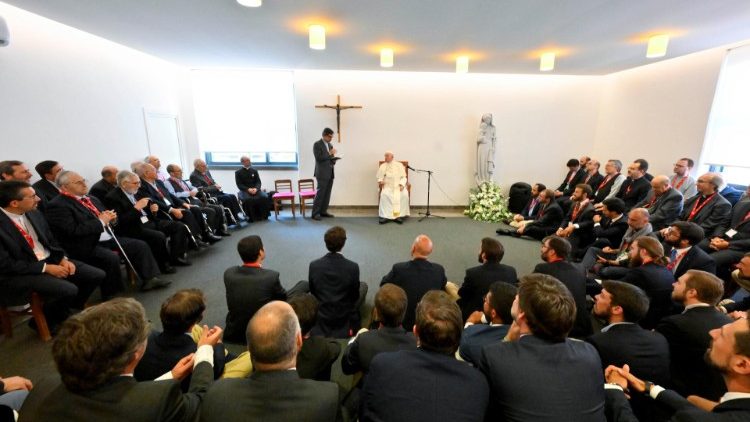
Pope Francis during his meeting with Jesuits in Lisbon during WYD 2023 (Vatican Media)
POPE


The Jesuit publication "La Civiltà Cattolica" publishes a transcript of the dialogue between Pope Francis and the Jesuits of Portugal during the Pontiff's visit to Lisbon for WYD 2023. In the conversation, the Holy Father addresses a range of topics, sharing insights on the Church's challenges and his vision for inclusivity, doctrinal development, and the Synod.


By Francesca Merlo

In an open dialogue with the Jesuits of Lisbon during his visit to Portugal for World Youth Day, Pope Francis engaged with them in conversation and covered a wide array of topics, sharing profound insights on the Church's contemporary challenges and his vision for inclusivity, doctrinal progression, and the Synod.
 
Inclusivity takes centre stage

Central to the discussion was the theme of inclusivity. Throughout World Youth Day in Lisbon, the rallying cry for an all-embracing Church resonated powerfully with the words "Todos, todos" (Everyone, everyone), pronounced by Pope Francis as he stressed that the Church "has space for everyone". He emphasized the pivotal importance of creating a space for all individuals, irrespective of their sexual orientation or gender identity, within the Church. This message continued to echo through his exchange with the Jesuits of Portugal.

Acceptance for all

The Pope reiterated his call to embrace homosexual people within the Church. He critiqued the disproportionate fixation on sexual transgressions, noting that other 'offenses' often remain overlooked. He emphasized the need for a pastorally sensitive and imaginative approach to accompany individuals on their spiritual journeys.

The Pope also recounted an encounter with a group of transgender individuals who were moved to tears by the Pope's acceptance and empathy. He underscored the necessity of reaching out to marginalized communities who often grapple with feelings of rejection, and he accentuated the significance of empathy and compassion.
Urgent concerns regarding ongoing wars

Addressing critical global concerns, Pope Francis conveyed deep apprehension over the persistent prevalence of wars since the conclusion of World War II. He spotlighted the contemporary state of global affairs and underscored the imperative of seeking peaceful resolutions.

Doctrinal Development

The dialogue delved into tensions existing within the Church, including reactionary attitudes and resistance to the tenets of the Second Vatican Council. The Pontiff acknowledged the intricate challenges posed by those who scrutinize Vatican II without explicitly naming it. He underscored the dynamic nature of doctrinal evolution and expounded on the notion that Church doctrine is not an unchanging monolith, but rather an evolving entity. He invoked historical instances such as the changing perspectives on the death penalty, nuclear weapons, and slavery to illustrate the fluidity of doctrine over time.

Against spiritual worldliness

Pope Francis expressed apprehensions about the encroachment of excessive worldliness into religious life. He cautioned against compromising core values with the allure of worldly ideologies. Referring to his recent communication to Rome's priests, he cautioned against succumbing to spiritual worldliness and the potential harm it could inflict on the Church. He further explored the challenges posed by a society permeated with an "eroticized" ethos and the implications of issues like pornography in the digital age.

Synodality

Finally, Pope Francis conveyed his anticipation regarding the impending Synod, a gathering of Church leaders to deliberate on significant matters. He clarified that the Synod wasn't his brainchild; instead, it aimed to restore synodality within the Church—a concept first championed by Pope Paul VI. He emphasized that the driving force behind the Synod was the Holy Spirit, guiding its deliberations devoid of political bias or a focus on garnering votes.


Saturday, June 24, 2023

Rich nations pledge to unlock hundreds of billions of dollars for climate fight


By John Irish and Leigh Thomas

June 23, 20238:15 AM EDT
Updated 19 hours ago


Summary
  • World leaders and global organisations meet in Paris
  • Agreement for development banks to boost lending
  • Rich nations close in on $100 bln climate finance pledge
  • U.S., China adopt conciliatory tone on debt relief

PARIS, June 23 (Reuters) - Multilateral development banks like the World Bank are expected to find $200 billion in extra firepower for low-income economies by taking on more risk, a move that may require wealthy nations to inject more cash, world leaders said on Friday.

The leaders, gathered at a summit in Paris to thrash out funding for the climate transition and post-COVID debt burdens of poor countries, said their plans would secure billions of dollars of matching investment from the private sector.

An overdue pledge of $100 billion in climate finance for developing nations was also now in sight, they said.

Many in attendance, however, said over the two-day summit that the World Bank and the International Monetary Fund were increasingly ill-suited for tackling the most pressing challenges and needed a broad revamp.

Wednesday, January 25, 2023

Symposium explores how religious communities can be agents of change in securing wellbeing and sustainability


NEWS
Symposium explores how religious communities can be agents of change in securing wellbeing and sustainability


More than 600 people attended the Ninth Annual Symposium on the Role of Religion and Faith-based Organizations in International Affairs, held online on 24 January. Exploring the theme “Securing People’s Wellbeing and Planetary Sustainability,” the symposium was organized by the World Council of Churches (WCC) and a coalition of faith-based and UN partners. The event featured UN officials, representatives of international faith-based organizations, and other experts on climate change, disarmament, and other relevant topics.


Rev. Dr. Liberato C. Bautista (third from left), Assistant General Secretary for United Nations and International Affairs, General Board of Church and Society of The United Methodist Church, served as chair of the 2023 Symposium Planning Team. In this photo taken during the concluding session of the symposium, he is accompanied by Ms. Nika Saeedi (fourth from left), global focal point on Religion, Mental Health and Psychosocial Support, and Hate Speech for UNDP, Mr. Jonathan Granoff (first from left), Senior Advisor and Representative to the United Nations of the Permanent Secretariat of the World Summit of Nobel Peace Laureates, and Dr. Ganoune Diop, Director, Public Affairs and Religious Liberty, Seventh-day Adventist Church. Photo:
WCC
25 January 2023


WCC central committee moderator Bishop Dr Heinrich Bedford-Strohm, who spoke at the symposium, noted that religion reaches not only people’s heads but also their hearts. “That is why religious communities are so important in issues like human wellbeing and planetary sustainability that are highly linked to our attitudes and lifestyles and can only be successfully pushed if political change is connected with a change of heart,” he said. “All together we want to secure people’s wellbeing and planetary sustainability as religious communities.”

On a personal note, Bedford-Strohm said this task comes closer to him when he thinks of his 3-year-old grandson. “I love him deeply,” he said. “He will be as old as I am now, in the year 2081. As every grandfather, I want him to have at least as good a life as I have now.”

Bedford-Strohm said he is convinced that churches and religious communities in general are the ideal agents of global civil society. “They are deeply rooted in local congregations and at the same time live in a global horizon by affirming their belief in a God who has created heaven and earth,” he said.

Many UN officials and civil society leaders reflected on why faith actors are critical players.

Ulrika Modéer, UN assistant secretary-general and director of the Bureau of External Relations and Advocacy for the United Nations Development Programme (UNDP), spoke on how gender inequality intersects with human insecurity.

“The rise of hate speech, radicalization, inequality, and political extremism are undoubtedly among the most pressing threats to human security, pushing back development gains by decades with a significant implication on women and girls,” she said. “Not to forget that at the current rate of progress, it may take close to 300 years to achieve full gender equality.”

Faith actors are a critical player, she said. “Historically, many faith actors have extended vital social services to local communities, especially humanitarian relief, health, and education,” Modéer said. “In fact, in many countries, they are the dominant civil society actors.”
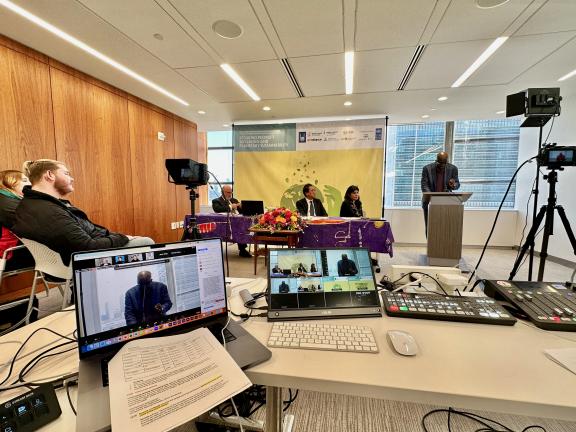


Some moderators and speakers took part of the symposium from a studio hub set especially for the event at the Church Center for the United Nations in New York City. Photo:
WCC

Discussions laid bare a variety of existential threats to human and planetary security, among them the threat of nuclear weapons.

Ambassador Sergio Duarte, a retired Brazilian ambassador and former UN High Representative for Disarmament Affairs, spoke on disarmament. “It has become commonplace to identify climate change and the existence of nuclear weapons as the two greatest existential threats to human life and civilization upon our planet,” he said. “We know that we cannot completely control the cosmic forces that shape our climate, but by working together we may avert disaster. Disarmament, on the other hand, depends entirely on our ability to muster the necessary political will.”

Speakers and participants also highlighted key learnings that relate to work for human security and the roles different actors can play. The symposium addressed, in concrete ways, the development of unity, solidarity, international cooperation, and global coordinated action necessary to make human security real.

Dr Ganoune Diop, director of public affairs for the World Headquarters of the Seventh-day Adventist Church and secretary general of the International Religious Liberty Association, reflected on envisioning and building a better future. “Nearly every area of human experience is connected to the undergirding issue of human security,” noted Diop. "From threats to personal security, to collective predicaments, to regional, national rifts in human solidarity, to needed global security, human security is in fact a lens through which to look at various aspects of human experience.”

WCC Director for International Affairs Peter Prove who attended the event in person remarked that “after 9 years, the Annual Symposium has become a fixture in the agenda of faith-based and UN partners in New York, and a key forum for the expression and development of shared priorities in the international agenda.”

The WCC’s participation in the promotion of all editions of the symposium has been facilitated by the Ecumenical Office to the United Nations, the WCC and ACT Alliance’s focal point for advocacy initiatives at the United Nations headquarters in New York City.

Learn more about the 9th Annual Symposium on the Role of Religion and Faith-Based Organizations in International Affairs

Watch the recording of the event

Ecumenical Office to the United Nations


Source

Saturday, October 01, 2022

Reorienting our way of living on the planet we have damaged


30 September 2022


On Thursday, 22 September, Pope Francis met with participants in the meeting of Deloitte Global. “I encourage you to become ‘integral consultants’ in order to cooperate in reorienting our way of living on this our planet, which we have damaged in terms of both the climate and inequality”, the Pope said to them. The following is the English text of the Holy Father’s address.

Dear friends, welcome!

I thank Mr Renjen for his words summarizing your work of assisting the business world to make right decisions in diverse situations. I have learned that at any given time of the day there are 350,000 people working for your company engaged in providing advice and assistance to other organizations. This is a weighty responsibility!

Today, the world is suffering from worsening environmental conditions. Moreover, many populations and social groups live in undignified manner due to a lack of nutrition, health, education and other fundamental rights. While our human family is globalized and interconnected, poverty, injustice and inequalities remain.

In what ways, then, can consultants, managers and experienced professionals help in reversing or at least correcting this situation? How are they to organize their work in order to strive for a more humane, just and fraternal world? I would like to suggest three such ways.

The first is always to remain aware that you can leave a mark. This means ensuring that your mark is positive and moves towards integral human development. Your knowledge, experiences, skills and vast network of relationships constitute an immense “non-material fund” that can help entrepreneurs, bankers, managers and public administrators to understand their situations, to imagine the future and to make decisions. By helping them to understand, therefore, you help them to make decisions. This gives your organization, and each one of you, the ability to guide choices, influence criteria and evaluate priorities for companies, universities, supranational bodies, national and local governments, and decision makers at the political level.

You are well aware of your “power”. This should be accompanied constantly by the desire to direct your analysis and proposals towards choices consistent with the paradigm of integral ecology. A good question to ask yourselves when evaluating what is and what is not effective would be: “What kind of world do we want to leave for our children and grandchildren?”

The second suggestion I would offer is to take up and fulfil your cultural responsibility, which also stems from your wealth of intelligence and connections. By “cultural responsibility” I mean two things: ensuring adequate professional standards, and also an anthropological and ethical standard that enables you to suggest responses that are consistent with an evangelical vision of the economy and society; in other words, with Catholic social doctrine. This is a matter of assessing the direct and indirect effects of decisions, and their impact, first on communities, individuals and the environment, and only then on businesses. “The different cultures that have flourished over the centuries need to be preserved, lest our world be impoverished. At the same time, those cultures should be encouraged to be open to new experiences through their encounter with other realities” (Fratelli Tutti, 134).

A third suggestion is to enhance diversity. All human organizations — institutions, businesses, banks, associations, movements — have the right, if honestly and correctly led, to be able to safeguard and develop their own identity. Here we can speak of “entrepreneurial biodiversity”, to use a good expression, as a guarantee of freedom of enterprise and freedom of choice for customers, consumers, savers and investors. Entrepreneurial biodiversity is also an indispensable condition of stability, equilibrium and human prosperity. This is what takes place in nature and can also happen in economic “ecosystems”.

Over the past fifteen years, the world has experienced severe and continuing crises. We had not finished dealing with the financial crisis of 2007 before we had to face the crisis of sovereign debt and of real economies, followed by the pandemic and the war in Ukraine with all its global consequences and threats.

In the meantime, our planet continued to suffer from the effects of climate change; cruel and hidden wars were being fought in various regions, and tens of millions of people have been forced to migrate from their homelands. While daily life improved for one part of humanity, the other part has suffered from unscrupulous choices and has become the main victim of a sort of counter-development. Indeed, Saint Paul VI explained clearly that development of social justice is the new name for peace (cf. Populorum Progressio, 76-80).

What can professional consultants do in this difficult and uncertain situation? They can do a great deal by organizing their analyses and proposals with an integral perspective and vision. Indeed, dignified employment for people, care for our common home, economic and social value, and positive impact on communities are all interconnected.

Today’s consultants, aware of their role, are called to propose and discuss new directions for new challenges. The old schemes worked only partially, in different contexts. I would call this new generation of consultants “integral consultants”: experts and professionals who take into account the connections between problems and their respective solutions and who embrace the concept of relational anthropology. Such an anthropology “helps the human person to recognize the validity of economic strategies that aim above all to promote the global quality of life that, before the indiscriminate expansion of profits, leads the way toward the integral wellbeing of the entire person and of every person. No profit is in fact legitimate when it falls short of the objective of the integral promotion of the human person, the universal destination of goods, and the preferential option for the poor,”1 and, we can add, the care of our common home.

My hope is that you can assist organizations to respond to this call. You have the right skills to cooperate in building that necessary bridge between the current economic paradigm — based on excessive consumption and which is experiencing its final phase — and the emerging paradigm centred on inclusion, moderation, care and wellbeing. I encourage you to become “integral consultants” in order to cooperate in reorienting our way of living on this our planet, which we have damaged in terms of both the climate and inequality.

Dear friends, in thanking you for this meeting and expressing my good wishes for your work, I bless you and your families, especially your children, the sick and the elderly, who are our wisdom. And I ask you, please, to pray for me. And if any of you do not pray or believe, at least wish me well. I need it! Thank you.


1Congregation for the Doctrine of the Faith — Dicastery for Promoting Integral Human Development, Oeconomicae et pecuniariae quaestiones. Considerations for an ethical discernment regarding some aspects of the present economic-financial system” (6 January 2018), 10


Friday, March 19, 2021

Pope Francis Calls for ‘New World Order’ After the Pandemic


(TIZIANA FABI/POOL/AFP via Getty Images)


THOMAS D. WILLIAMS, PH.D.

15 Mar 2021

ROME — Pope Francis insists in a new book things will never be the same in a post-pandemic world, calling instead for the establishment of a “new world order.”

In a book-length interview with journalist Domenico Agasso titled God and the World to Come, scheduled for release in Italian on Tuesday, the pontiff reiterates his case for the Great Reset with a shift away from financial speculation, fossil fuels, and military build-up toward a green economy based on inclusiveness.

After the coronavirus pandemic, “no one today can afford to rest easy,” the pope declares in a lengthy extract from the book published by Vatican News. “The world will never be the same again. But it is precisely within this calamity that we must grasp those signs which may prove to be the cornerstones of reconstruction.”

“Let us all keep in mind that there is something worse than this crisis: the drama of wasting it,” he states. “We cannot emerge from a crisis the same as before: we either come out better or we come out worse.”

We can heal injustice “by building a new world order based on solidarity, studying innovative methods to eradicate bullying, poverty and corruption,” he adds, “all working together, each for their own part, without delegating and passing the buck.”

This new world order will be based on eradicating inequalities and attending to the environment, the pope affirms.

“We can no longer blithely accept inequalities and disruptions to the environment,” he declares. “The path to humanity’s salvation passes through the creation of a new model of development, which unquestionably focuses on coexistence among peoples in harmony with Creation.”

As a path toward a solution, Francis points toward young people involved in “ecological movements.”

“If we don’t roll up our sleeves and immediately take care of the Earth, with radical personal and political choices, with an economic ‘green’ turn by directing technological developments in this direction, sooner or later our common home will throw us out the window,” he insists.

The pope also asserts his conviction the world needs to be healed from “the dominant speculative mentality” to be re-established “with a ‘soul’” in order to reduce the gap between those who have access to credit and those who do not.

Christians and people of good will should choose which enterprises to support based on four criteria, Francis proposes, namely: “inclusion of the excluded, promotion of the least, the common good, and care of Creation.”

“Right now, it is a matter of rebuilding from the rubble,” the pope suggests, a task that involves those in government as well as the rest of the population.

“It is time to remove social injustice and marginalization,” he states. “If we seize the current trial as an opportunity, we can prepare for tomorrow under the banner of human fraternity, to which there is no alternative, because without an overall vision there will be no future for anyone.”

Part of the Great Reset also entails an end to the arms race, he adds.

“It is no longer tolerable to continue to manufacture and traffic in arms, expending huge amounts of capital which should be used to treat people and save lives.”

“Against this planetary discord that is nipping the future of humanity in the bud, we need political action that is the fruit of international harmony,” he declares, urging for an end to “short-sighted nationalism” and other forms of “political selfishness” in favor of multilateral solutions.


Saturday, May 18, 2019

Seventh-day Adventist Church Responds to Equality Act


Proposed legislation passed by U.S. House of Representatives raises troubling religious freedom issues. 

May 17, 2019 | Maryland | General Conference and North American Division Leadership


On Friday, May 17, 2019, the U.S. House of Representatives passed the Equality Act (H.R. 5). The bill, if it were to become law, would extend protection to gay, lesbian, and transgender individuals across a broad spectrum of U.S. civil rights laws. This would include employment, housing, public accommodation, and social services.

The Seventh-day Adventist Church is concerned that this legislation would further erode the religious liberty of faith communities and their members. This bill makes no allowance for communities or individuals of faith who hold traditional views of marriage and gender.

The Seventh-day Adventist Church believes that every human being, regardless of their beliefs or choices, is created in the image of God and thus deserves to be treated with dignity and respect. We recognize LGBT individuals often suffer unjust discrimination and are in need of legal protection.

Unfortunately, in attempting to provide protection for some, the Equality Act unnecessarily infringes upon the rights of others.

The way forward means addressing the concerns of both the LGBT and religious communities. We believe there is a better approach, one that builds upon the civil rights protections offered in the Equality Act by also reaffirming the First Amendment religious freedom rights of people of faith.

The Seventh-day Adventist Church reaffirms its biblical interpretation of marriage, gender, and our long-held commitment to the separation of church and state. The Seventh-day Adventist Church calls on Congress to pass legislation that guards the civil rights of all Americans, while unequivocally protecting the right of faith communities to live, worship, and witness according to their convictions.