Showing posts with label stock markets. Show all posts

Monday, October 07, 2024

Wall Street falters on rising yields, geopolitical risks


By Lisa Pauline Mattackal and Pranav Kashyap

October 7, 202412:23 PM EDT
Updated 4 min ago


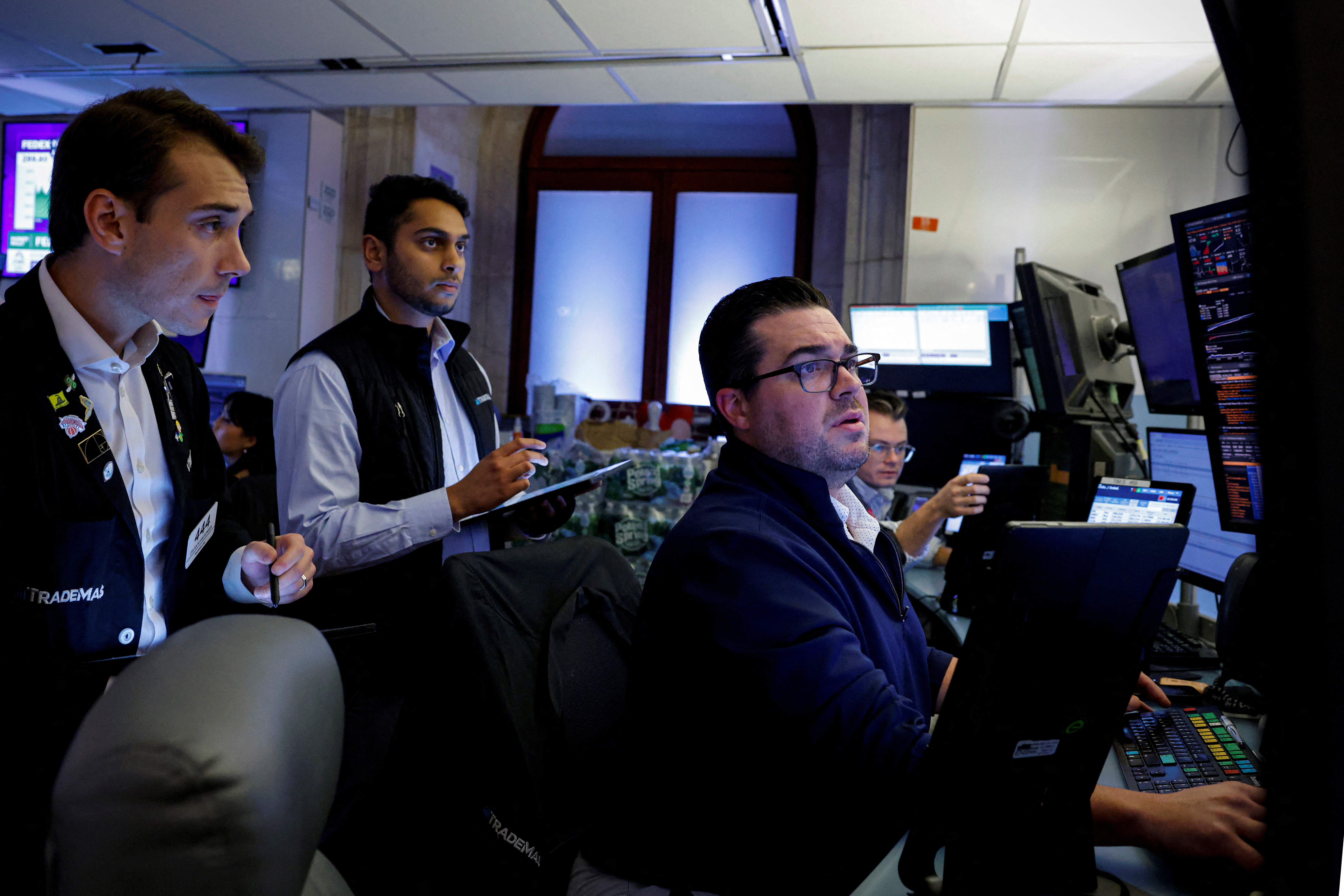
Traders work on the floor at the New York Stock Exchange (NYSE) in New York City, U.S., September 19, 2024. REUTERS/Brendan McDermid/File Photo

Summary Companies
  • CBOE Volatility index hits over one-month high
  • Pfizer gains on report Starboard Value takes $1 bln stake in co
  • Oil stocks track crude prices higher
  • Indexes down: Dow 0.5%, S&P 500 0.3%, Nasdaq 0.4%
Oct 7 (Reuters) - U.S. stock indexes fell on Monday, pressured by rising Treasury yields as markets recalibrated expectations for the Federal Reserve rate cuts, while rising conflict in the Middle East kept traders on the sidelines.

Thursday, June 11, 2020

Dow plunges more than 1,800 points


Dow plunges more than 1,800 points as rising COVID-19 cases roil Wall Street 


By Sylvan Lane - 06/11/20 04:07 PM EDT


Stocks plummeted Thursday as the emergence of new coronavirus hotspots and a caution from the Federal Reserve chairman shook Wall Street after months of steady gains.

The Dow Jones Industrial Average closed with a loss of 1,861 points, plunging 6.9 percent for its worst day of losses since March. The S&P 500 index closed with a loss of 5.9 percent, and the Nasdaq composite sunk 5.3 percent on the day.

All three major U.S. stock indexes closed with their steepest single-day losses since crashing in March amid the beginning of lockdowns imposed to slow the spread of COVID-19. Thursday’s losses come after more than two months of steady recovery toward the record highs seen before the pandemic derailed the economy.

Despite the loss of more than 21 million jobs and the deaths of more than 110,000 Americans due to the coronavirus, investors had gradually upped their bets on a quick economic recovery through April and May as states began loosening business closures and travel restrictions.

The surprise addition of 2.5 million jobs in May, according to the Labor Department, also fueled hopes for a quicker than expected rebound from a recession of unprecedented scale and speed.

But Thursday’s abrupt reversal comes as states across the U.S. see spiking COVID-19 cases and diminishing hospital capacity to handle a new wave of infections.

Week-over-week case counts are rising in half of all U.S. states, and only 16 states plus the District of Columbia have seen their total case counts decline for two consecutive weeks.

North Carolina, California, Mississippi and Arkansas are all facing record levels of hospitalizations, and the virus appears to be quickly spreading in Houston, Phoenix, South Carolina and Missouri.

Some market experts also attribute Thursday’s losses to Fed Chairman Jerome Powell’s Wednesday prediction of a “long road” to recovery.

During a Wednesday press conference, Powell said that while the U.S. may see significant job growth in coming months as people return to their jobs," the country is "still going to face, probably, an extended period where it will be difficult for many people to find work."

“What we’re trying to do is create an environment in which they have the best chance either to go back to their old job or to get a new job,” he continued.

President Trump, who frequently lashes out at the Fed when markets turn south, blasted the Fed for underestimating how quickly the U.S. economy could recover and how soon a COVID-19 vaccine would be available.

“The Federal Reserve is wrong so often. I see the numbers also, and do MUCH better than they do. We will have a very good Third Quarter, a great Fourth Quarter, and one of our best ever years in 2021. We will also soon have a Vaccine & Therapeutics/Cure. That’s my opinion. WATCH!" Trump tweeted.

On The Money: Dow plunges more than 1,800 points as rising COVID-19...
Stocks plunge amid concerns over rising coronavirus cases

Trump's top economic advisor Larry Kudlow also criticized Powell, urging the Fed chief to ease up on the dour forecasts

"I do think Mr. Powell could lighten up a little when he has these press offerings. You know, a smile now and then, a little bit of optimism," Kudlow said on Fox Business Network.

"I'll talk with him and we'll have some media training at some point.


Friday, February 21, 2020

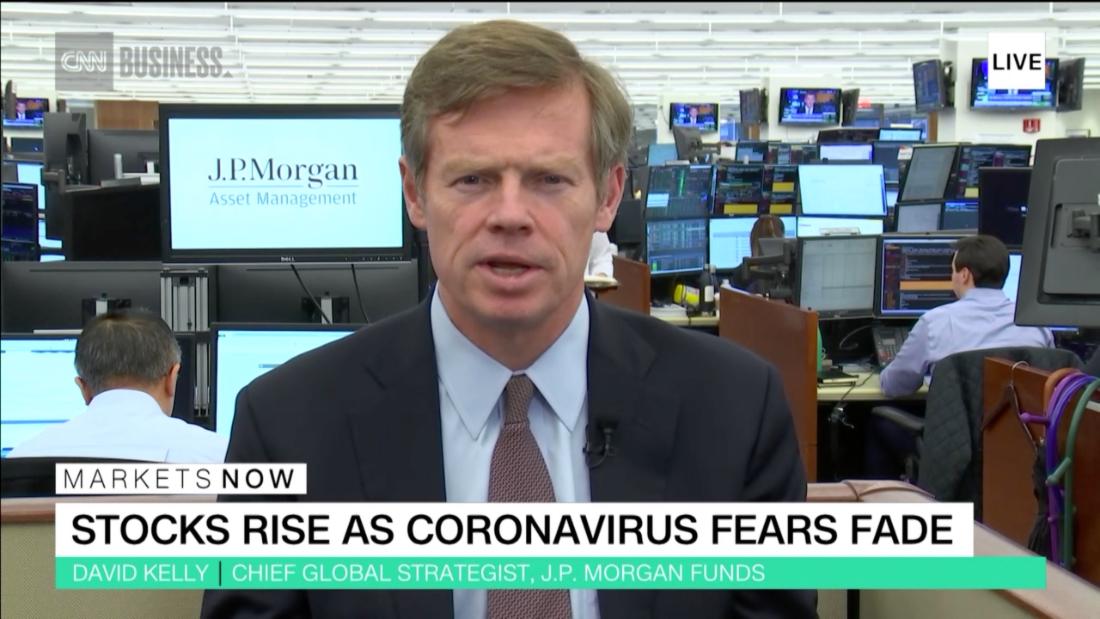
Markets were totally calm. Then stocks fell off a cliff


By Anneken Tappe, CNN Business

Updated 4:34 PM EST, Thu February 20, 2020


New York(CNN Business)It was shaping up to be a quiet day on Wall Street. Then around midday, stocks sold off sharply and investors scrambled. With no obvious catalyst triggering the selloff, worries about the coronavirus outbreak seemed to be the obvious suspect.

At its worst, the Dow (INDU) was off by 388 points, with all three major stock indexes sharply in the red. The drop in stocks followed a dip in Treasury bond yields, which move opposite to prices, and implied that investor appetite for safe haven bonds was high.

Still, investors scrambled to make sense of it. The dramatic selloff only lasted a short while and was followed by a swift rebound. Stocks still closed in the red, however, with the Dow ending 0.4%, or 128 points, lower. The S&P 500 (SPX) fell 0.4%, and the Nasdaq Composite (COMP) finished down 0.7%.

In recent days, investor confidence built up amid hopes that new cases of the virus were slowing down. But Thursday South Korea confirmed new cases of the virus, hammering home that the outbreak is not over.

The new cases "are leading to concerns that the global supply chain will be impacted in a material way," said Chris Zaccarelli, chief investment officer for Independent Advisor Alliance, in emailed comments.

This could be seen in price action in tech and semiconductor stocks, which led losses in the S&P 500. Shares of Advanced Micro Devices (AMD), for example, closed down nearly 3%.

Tech giant Apple (AAPL) warned investors earlier this week that it won't meet its revenue guidance for the first quarter because of the virus outbreak.

"We expect more zigging and zagging," said Stephen Lee, founding principal at Logan Capital Management. But he added that the domestic economy is still fine. Lee also noted that US companies might be in a better position to deal with manufacturing shutdowns in China related to the coronavirus because many blue chip firms were already moving factories to other locations to avoid tariffs.

While worries about the outbreak's fallout weighed on the technology sector, comments made by Federal Reserve Vice Chairman Richard Clarida didn't make things better.

Clarida told CNBC in an interview earlier Thursday he doesn't think the market expects an interest rate cut this year, although the CME FedWatch tool suggests otherwise. According to the data, market expectations are leaning towards another rate cut this summer this year.

Lower interest rates are good for stocks as they make it cheaper for companies to borrow money or refinance their debt.

--Paul La Monica contributed to this report.


Thursday, October 11, 2018

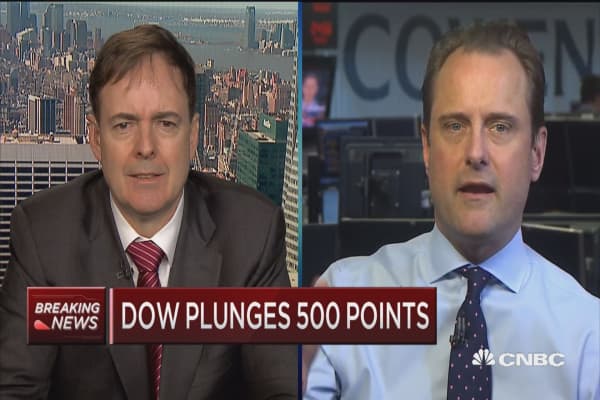
Dow drops 545 points as stock market slide continues


By Kevin Dugan


October 11, 2018 | 4:23pm | Updated


AP


see also 


Dow plunges more than 800 points as tech stocks take beating


Carnage on Wall Street deepened on Thursday, with the Dow plunging more than 500 points as fears grew that rising trade tensions and interest rates could put a cap on economic growth.

The Dow’s drop — which came on the heels of a day-earlier tumble of 831 points, the worst since February — came despite muted inflation data on Thursday morning. While stocks had initially peeked into positive territory on the news, a brutal selloff resumed in the late afternoon.

The blue-chip index slid as much as 699 points before ending the session down 545.91 points, or 2.13 percent, at 25,052.83. The S&P 500, a broader index of US stocks, ended the day down 2 percent, or 57 points, to 2,728.37.

Both indexes have fallen more than 5 percent the past two days.

The Nasdaq, which had fallen the most on Wednesday — a whopping 4.1 percent as Facebook, Apple, Amazon, Alphabet and Netflix all got hammered — was off the least, down 1.1 percent, to 6,964.03.

The volatile day came President Trump lambasted the Federal Reserve as “loco” for raising rates, and as investors gird themselves for other central banks around the world also start to tighten credit markets.

“This is a 10-year trend that’s now reversing,” Jack Ablin, chief investment officer at Cresset Wealth Advisors, told The Post. “So while President Trump blames the Fed for yesterday’s woes, he didn’t give them the credit for interest rates below fair value for 10 years.”

On Thursday, Trump continued to hammer on the Fed, saying he was “disappointed” in the central bank’s chairman, Jay Powell, for raising rates.

Investors, who expect one more interest rate hike this year in December, are also concerned about the European Central Bank, which is phasing out its $30 billion a month accommodative program this year.

“Most of this move has nothing to do with the Fed,” Ablin said. “It has more to do with the European Central Bank. They’re ending their [bond buying program] in about a month or so.”


Saturday, February 03, 2018

Dow plummets 666 points, capping worst week in 2 years


Dow plummets 666 points, capping worst week in 2 years

  • Friday marked the first time since June 2016 that the Dow fell at least 500 points.
  • The major indexes posted their worst weekly performance in two years
  • The benchmark 10-year yield rose to 2.85 percent.


Published 4:49 AM ET Fri, 2 Feb 2018 Updated 11 Hours Ago CNBC.com


Trading Nation: Dow plunges 500 plus points 13 Hours Ago | 03:48


U.S. stocks fell sharply on Friday after a stronger-than-expected jobs report sent interest rates higher.

The Dow Jones industrial average dropped 665.75 points to close at 25,520.96, capping off the index's sixth-largest points decline ever. The 30-stock index also fell below 26,000. Friday also marked the first time since June 2016 that the Dow fell at least 500 points.

The S&P 500 fell 2.1 percent and finished at 2,762.13, with energy as the worst-performing sector. The Nasdaq composite plunged 1.96 percent to 7,240.95 as a decline in Apple and Alphabet offset a strong gain in Amazon shares.

The Dow posted its worst day since June 2016. The S&P 500 and Nasdaq had their biggest one-day fall since September 2016 and August 2017, respectively.

"The key for the market today is rising interest rates," said Mike Baele, managing director at U.S. Bank Wealth Management. "The old adage is: 'Bull markets don't die of old age, they are killed by higher interest rates.' That looms large."

The U.S. economy added 200,000 jobs in January, according to the Bureau of Labor Statistics. Economists polled by Reuters expected growth of 180,000. Wages, meanwhile, rose 2.9 percent on an annualized basis.

The report sent interest rates higher. The benchmark 10-year yield rose to 2.85 percent on the back of the report, hitting a four-year high. Investors have been jittery about the recent rise in interest rates, worrying they may be rising too fast.

On Friday, the 30-year yield rose its highest level since March.


Tuesday, May 09, 2017

Roubini: "Why Are Markets Ignoring Geopolitical Risks?"


by Tyler Durden
May 9, 2017 6:55 PM


Authored by Nourial Roubini via MarketWatch.com,

With Emmanuel Macron’s defeat of the right-wing populist Marine Le Pen in the French presidential election, the European Union and the euro have dodged a bullet. But geopolitical risks are continuing to proliferate.

The populist backlash against globalization in the West will not be stilled by Macron’s victory, and could still lead to protectionism, trade wars, and sharp restrictions to migration. If the forces of disintegration take hold, the United Kingdom’s withdrawal from the EU could eventually lead to a breakup of the EU — Macron or no Macron.

At the same time, Russia has maintained its aggressive behavior in the Baltics, the Balkans, Ukraine, and Syria. The Middle East still contains multiple near-failed states, such as Iraq, Yemen, Libya, and Lebanon. And the Sunni-Shia proxy wars between Saudi Arabia and Iran show no sign of ending.

Related Video
North Korea Claims The US Plotted To Kill Kim Jong-Un, Gives No Proof


Asia, U.S. or North Korean brinkmanship could precipitate a military conflict on the Korean Peninsula. And China is continuing to engage in — and in some cases escalating — its territorial disputes with regional neighbors.


Despite these geopolitical risks, global financial markets have reached new heights. So it is worth asking if investors are underestimating the potential for one or more of these conflicts to trigger a more serious crisis, and what it would take to shock them out of their complacency if they are.

There are many explanations for why markets may be ignoring geopolitical risks.

For starters, even with much of the Middle East burning, there have been no oil-supply shocks or embargoes, and the shale-gas revolution in the United States has increased the supply of low-cost energy. During previous Middle East conflicts — such as the 1973 Yom Kippur War, Iran’s Islamic Revolution in 1979, and Iraq’s invasion of Kuwait in 1990 — oil-supply shocks caused global stagflation and sharp stock-market corrections.

A second explanation is that investors are extrapolating from previous shocks, such as the attacks of Sept. 11, 2001, when policy makers saved the day by backstopping the economy and financial markets with strong monetary and fiscal policy easing. These policies turned post-shock market corrections into buying opportunities, because the fall in asset prices was reversed in a matter of days or weeks.

Third, the countries that actually have experienced localized asset-market shocks — such as Russia and Ukraine after Russia’s annexation of Crimea and incursion into Eastern Ukraine in 2014 — are not large enough economically to affect U.S. or global financial markets.

Similarly, even as the U.K. pursues a “hard Brexit,” it still only accounts for around 2% of global GDP.

A fourth explanation is that the world has so far been spared from the tail risks associated with today’s geopolitical conflagrations. There has not yet been a direct military conflict between any major powers, nor have the EU or eurozone collapsed. President Donald Trump’s more radical, populist policies have been partly contained. And China’s economy has not yet suffered from a hard landing, which would create sociopolitical instability.

Moreover, markets have trouble pricing such black-swan events: “unknown unknowns” that are unlikely, but extremely costly. For example, the market couldn’t have predicted 9/11. And even if investors think that another major terrorist attack will come, they cannot know when.

A confrontation between the U.S. and North Korea could also turn into a black swan event, but this is a possibility that markets have happily ignored. One reason is that, notwithstanding Trump’s bluster, the U.S. has very few realistic military options: North Korea could use conventional weapons to wipe out Seoul and its surroundings, where almost half of South Korea’s population lives, were the U.S. to strike.

Investors may be assuming that even if a limited military exchange occurred, it would not escalate into a full-fledged war, and policy loosening could soften the blow on the economy and financial markets. In this scenario, as with 9/11, the initial market correction would end up being a buying opportunity.

But there are other possible scenarios, some of which could turn out to be black swans. Given the risks associated with direct military action, the U.S. is now alleged to be using cyber weapons to eliminate the North Korean nuclear threat against the U.S. mainland. This may explain why so many of North Korea’s missile tests have failed in recent months. But how will North Korea react to being militarily decapitated?

One answer is that it could launch a cyber attack of its own. North Korea’s cyber-warfare capabilities are considered to be just a notch below those of Russia and China, and the world got an early glimpse of them in 2014 when it hacked into Sony Pictures. A major North Korean cyber attack could disable or destroy parts of the U.S.’s critical infrastructure, and cause massive economic and financial damage.

That remains a risk even if the U.S. can sabotage North Korea’s entire industrial system and infrastructure.

Or, faced with disruption of its missile program and regime, North Korea could go low-tech, by sending a ship with a dirty bomb into the ports of Los Angeles or New York. An attack of this kind would most likely be very hard to monitor or stop.

So, while investors may be right to discount the risk of a conventional military conflict between the U.S. and North Korea, they also may be underestimating the threat of a true black-swan event, such as a disruptive cyberwar between the two countries or a dirty bomb attack against the U.S.

Would an escalation on the Korean Peninsula be an opportunity to “buy the dip,” or would it mark the beginning of a massive market meltdown? It is well known that markets can price the “risks” associated with a normal distribution of events that can be statistically estimated and measured.

But they have more trouble grappling with “Knightian uncertainty”: risk that cannot be calculated in probabilistic terms.


Source


Thursday, April 07, 2016

US stocks slump broadly, led by banks


Marley Jay, Ap Markets Writer


Updated 2:17 pm, Thursday, April 7, 2016


This July 9, 2015 photo shows a Wall Street sign near the New York Stock Exchange in New York. Stock markets turned lower in European trading on Thursday, April 7, 2016 as a rebound in oil prices ran out of ... more Photo: Seth Wenig, AP


US stocks slump broadly, led by banks


NEW YORK (AP) — U.S. stocks are sinking toward their biggest loss in two months Thursday as banks and technology companies skid. Bond yields are falling and the dollar continues to weaken compared to the Japanese yen. Stocks are on pace to fall for the third day this week.

KEEPING SCORE: The Dow Jones industrial average fell 227 points, or 1.3 percent, to 17,488 as of 3:01 p.m. Eastern time. The Standard & Poor's 500 index shed 32 points, or 1.6 percent, to 2,034. The Nasdaq composite index lost 88 points, or 1.8 percent, to 4,832.


BROAD SLUMP: All 10 industrial sectors of the S&P 500 traded lower. Financial companies took some of the largest losses. Goldman Sachs slid $5.19, or 3.3 percent, to $150 and Citigroup lost $1.87, or 4.5 percent, to $39.99 while JPMorgan Chase dipped $1.73, or 3 percent, to $57.08.

Scott Wren, senior global equity strategist for Wells Fargo's Investment Institute, said banks are struggling because interest rates remain low and economic growth is sluggish.

WHERE TO: Stocks have gradually lost momentum over the last few weeks after a furious rally that wiped out most of their losses from early 2016. Wren said stocks are rising and falling based on how investors expect the global economy to do.


"People are worried about growth today," he said. "It's the same fears that have been kind of going back and forth in the market for a year or more."

LOSING: eBay led tech stocks lower as it fell $1.41, or 5.5 percent, to $24.02 and Apple gave up $2.40, or 2.2 percent, to $108.56. Telecommunications companies continued to struggle and Verizon fell $1.58, or 2.9 percent, to $51.94.

WYNN-ING: Wynn Resorts jumped $8.77, or 9.8 percent, to $98.32 after the hotel and casino company proposed a new development. Wynn said it wants to build a recreational lake and hotel behind its Wynn Las Vegas property.


ENERGY: Benchmark U.S. crude fell 49 cents, or 1.3 percent, to $37.26 per barrel in New York. Brent crude, used to price international oils, dropped 41 cents to $39.43 a barrel in London.

BONDS, CURRENCIES: U.S. government bond prices rose. The yield on the 10-year U.S. Treasury note fell to 1.69 percent from 1.76 percent. The dollar continued to weaken against the yen, falling to 108.37 from 109.62 yen. The dollar is at its lowest price compared to the yen in almost a year and a half. The euro declined to $1.1364 from $1.1410.

TAP THE BRAKES: Used car dealership chain CarMax reported strong fourth-quarter results, but its stock lost $4.47, or 8.4 percent, to $48.82. The company said it faced a tougher sales environment in the second half of the fiscal year.

RETAIL RESULTS: Wholesale club operator Costco declined after the company disclosed its March sales. Its stock fell $5.18, or 3.3 percent, to $151.59. Retailer Ollie's Bargain Hunting Outlet Holdings traded higher after it announced solid quarterly results. The stock climbed $2.23, or 9.8 percent, to $24.93.

METALS: The price of gold rose $13.70 or 1.1 percent, to settle at $1,237.50 an ounce and silver gained 10 cents to $15.16 an ounce. Copper plunged seven cents, or 3.1 percent, to $2.08 a pound.

OTHER ENERGY TRADING: Wholesale gasoline fell 1 cent to $1.38 a gallon. Heating oil slipped 1 cent to $1.13 a gallon. Natural gas rose 11 cents, or 5.6 percent, to $2.02 per 1,000 cubic feet.

GOOD FIT: HanesBrands said it will buy Champion Europe. HanesBrands owns Champion and the deal gives it control of a company that owned the Champion trademark in Europe as well as the Middle East and Africa. It recently made a similar deal in Japan unit as well. The underwear, T-shirt and sock maker's stock added 54 cents, or 2 percent, to $27.64.

EAT UP: ConAgra Foods added 50 cents to $45.93. The maker of Chef Boyardee, Hebrew National hot dogs and other packaged foods reported third-quarter profit and sales were stronger than expected.

UNEMPLOTMENT AID: Applications for unemployment benefits fell slightly last week, according to the Labor Department. That shows employers aren't slashing jobs even though there are signs economic growth is weak.

OVERSEAS: Germany's DAX fell 1 percent and the CAC-40 in France shed 0.9 percent. Britain's FTSE 100 lost 0.4 percent. In Tokyo, the Nikkei 225 advanced 0.2 percent and Hong Kong's Hang Seng added 0.3 percent. Seoul's Kospi added 0.1 percent.

___

AP Markets Writer Marley Jay can be reached at http://twitter.com/MarleyJayAP His work can be found at http://bigstory.ap.org/journalist/marley-jay


Source
.

Saturday, January 16, 2016

Wall Street Bleeding: Oil, Fears Spur Manic Depressive Bear Market in US


© AP Photo/ Jin Lee

12:33 16.01.2016(updated 13:30 16.01.2016) 


US stocks have crashed 8% since the beginning of 2016 and are expected to fall further, with any improvements expected no earlier than in the second half of 2016.


Kristian Rouz — During the first two weeks of 2016, the US financial markets performed worse than most pessimistic previous forecasts would suggest.

Stocks across most sectors were decimated as global oil prices continued their fall below the $30/bbl threshold, while concerns over mainland China’s economic prospects weighed on expectations of global growth, hitting the US-based multinational corporations in turn. International headwinds intensified after the European stock markets on Friday dropped to 20% below their April 2015 highs.


© PIXABAY
The Emperors Clothes: World Rushes to De-Dollarize Oil Trade Before US Economy Crashes and Burns

By now, stock markets across the globe have lost over $14 trln since June, and despite Wall Street performing better during the period, now it might be time the US stocks officially entered bear market.


Meanwhile, most investors, while being generally pessimistic of further market movements, do not see the 2008 scenario unraveling again due to a healthier real economy and stricter governmental regulations.

US stocks have been retreating in the first two weeks of 2016, currently averaging at 12% (S&P 500) below their May records highs (posting a massive 8% slide in just past two weeks). Yet, it is hardly the right time to buy, as US stocks might plunge an additional 10% to 15% from where they are now as key market components, equity value, credit and commodities are all poised to go down.

“It comes down to one basic fear, which is the global economy,” Russ Koesterich, of wealth management firm BlackRock Inc. said. “What people are afraid of is this isn’t investors overreacting, but reflects a fundamental deterioration in growth.”

The current decline in stocks follows December’s meltdown in the US junk bond market with Third Avenue mutual fund suspending payments that month. The entire situation is largely attributed to the decline in the US shale oil industry, short on revenues and investment amidst the ever-declining crude prices.

The US mining and oil sectors are among the worst performers thus far, however, as fuel prices are closely linked to the global growth outlook, largely dependent on the mainland China situation, the downward trend might reverse as well. That said, there is hardly a financial crisis in the US, as macro fundamentals are relatively strong, and it is only the market dumping the once overpriced assets.

The main sources of moderate optimism come from the understanding of fundamentals. The consumer sector, driving the lion’s share of the US economy, might accelerate as households increase spending the money they save on cheaper petrol. The Federal Reserve might opt to postpone further tightening or even roll rates back to their accommodative near-zero levels.


© FLICKR/ PIETER VAN MARION
'Age of Crude Oil Over' as China Develops Alternative Energy Sources
Oil prices might swing back up as the current underinvestment in the oil industry might turn the lingering oil oversupply into a deficit by at least second half of 2016, as observed by Goldman Sachs.


Underlining the increased risk to market stability, high-yielding bonds (or junk bonds) slid in value, with average yield rising from 5.7% in early 2014 to their current 9.1%, according to Barclay’s data.

Meanwhile, the US stock market earnings are in a recession, having dropped 4.7% in Q4, a second consecutive quarter of decline. Current expectations place stock profits for all S&P-listed enterprises at zero. Even though profit growth is expected at 7.5% in 2016, the current reading was revised down from 10.3% as estimated in October.

The stocks slide will negatively affect the US inflation index, thus marring the overall US growth prospects. Moreover, the current stocks rout indicates a decline in Federal Reserve policy efficiency: even though the December hike in rates and pessimistic data might have been a coincidence, many market participants might think otherwise.


Source

.

Wednesday, January 13, 2016

Sell everything! 2016 will be a 'cataclysmic year,' warns RBS


Fear & Greed Index


by Jim Boulden @CNNMoneyInvestJanuary 12, 2016: 10:51 AM ET


CNNMoney's 2016 Playbook: Stocks

"Sell everything."

That harrowing advice is from The Royal Bank of Scotland, which has warned of a "cataclysmic year" ahead for markets and advised clients to head for the exit. Do not wait. Do not pass go.


"Sell everything except high quality bonds," warned Andrew Roberts in a note this week.

He said the bank's red flags for 2016 -- falling oil, volatility in China, shrinking world trade, rising debt, weak corporate loans and deflation -- had all been seen in just the first week of trading.

"We think investors should be afraid," he said.

Related: Fear & Greed Index

Morgan Stanley warned this week that oil could touch $20 a barrel. RBS says if it falls below $30, then $16 is on the horizon.

The world is in a global recession, Roberts wrote. This terrible cocktail means investors should now be thinking about getting a "return of capital, not return on capital."

RBS compares the market mood with that of 2008 before the collapse of Lehman Brothers and the start of the global financial crisis.


Related: Is this another 2008 for the stock market?

At least then, emerging markets were there to save the world from complete collapse.

China cannot this time around, let alone any other big emerging market. RBS remains "deeply skeptical" that Chinese authorities can right the ship any time soon. It warns that without allowing a massive devaluation of its currency -- around 20% -- China can be of no help.

Related: China spent $500 billion to prop up yuan last year

RBS believes China suffered a massive outflow of capital in December -- perhaps as much as $170 billion - with much of that money going straight into the dollar. A chart showing Chinese outflows in 2015 is "surely now the most important chart in the world," concluded Roberts.


CNNMoney (London)First published January 12, 2016: 8:17 AM ET


Source
\\.

Monday, August 24, 2015

Wall Street Invokes Obscure Rule to Prevent Crash


Joshua Krause 

August 24th, 2015


After taking several major hits on the stock market last week, Wall Street had every reason to believe that Monday would be a bloodbath. They’re currently doing everything in their power to prevent the panic selling that was expected to occur as soon as the stock market reopened.

The first thing that the New York Stock Exchange did today, was invoke the obscure “rule 48″ which is designed to stabilize volatile markets before they open. Rule 48 essentially suspends “the requirement that stock prices be announced at the market open.” The rule has existed since 2007, and has only been applied on two separate occasions. So far, this measure has only been moderately successful. Nasdaq immediately fell by 378 points on the opening bell, while the Dow fell by 1000 points. Both markets have recovered but are still fluctuating heavily.

But that’s not the only stop-gap measure being implemented. If the S&P 500 falls by 7% before 3:25 PM Eastern Time, then thousands of companies on the NY Stock Exchange and the Nasdaq will stop trading for 15 minutes. If the S&P 500 plunges by 20% at any point, the entire stock market will be shut down for the rest of the day. Much like a casino, when the house is losing, all bets are off.

.

Gerald Celente: Global Crash Will Force More Money Printing


August 24th, 2015


Greg Hunter: Top trends researcher Gerald Celente has recently predicted a market crash between now and the end of the year.

It looks like that prediction is unfolding now, and Celente contends, “It’s very simple. You have a global slowdown, and this is after central banks have pumped in trillions of dollars, yen, yuan, euros and you name it to propping it up.”

“We are in unprecedented territory. This has never happened before in the history of the world. Even the Wall Street Journal came out last week with a front page story and said the Fed used up all its ammunition.”

“They have nothing left to do because they have record low interest rates, but I disagree with them.”

“I believe they will come out with another round of quantitative easing (QE or money printing). They will do anything they can. It looks pretty sure they are not going to raise interest rates in September.”

“What is going to create jobs? The jobs they are creating stink. Here’s a number for you. Medium household income is 6% below where it was in 1990.”

“Look at the new home buyers. In good times, first time buyers are usually around 40%. It is down to 28%. Look at the amount of people who own homes.”

“It’s back to 1960 levels. Look at the labor force participation rate. It is back to late 1970’s levels. There is no recovery. It’s been a cover-up.”

Celente sees stocks and bonds taking a big hit, while gold prices spike.

Celente explains, “By the end of the year, the equity markets will be down by more than 20%. Look at the NASDAQ. It’s below 5,000. The last time the NASDAQ was at 5,000 was March of 2000.”

“That was 15 years ago. I am bullish on gold. I believe when gold prices go up, they are going to spike up. We believe, and we are on record, that the bottom in gold is between $1,000 per ounce to $1,150 per ounce. ”

“That was the downside risk because it doesn’t pay to pull it out of the ground at any level lower than that. It’s not like oil where you have to keep pumping just to keep things going. Now, we believe that when gold prices go up, they are going to skyrocket up.”

“We are looking for gold to beat its 2011 level when it was $1,927 per ounce. We believe it is going to go over $2,000 per ounce. We are not as bullish on silver because silver is used for production, and we don’t see production increasing.”

“Silver is a manufacturing metal, as well. However, having said that, it will not go down along with other raw materials. It will probably rise, but not at the pace we see gold rising. Gold has been looked upon as when all else fails, there is gold.”

“People will be looking for a safe haven commodity when this all begins to collapse. You are going to see riots in Brazil and more riots in Venezuela. I just got back from Italy. There are migrants everywhere. You got a war in Libya.”

“You got a war in Syria. You got a war in Iraq. You got a war in Yemen. You got a war in Afghanistan. You have destabilization from Mali to the Congo, central Africa to Sudan to Somalia. These people are flooding out into Europe.”

“There is no way of stopping this wave because besides the wars, you have crashing commodity prices. Commodities were holding these countries together as they were exporting it to China when China was manufacturing.”


Read more: http://etfdailynews.com/2015/08/24/gerald-celente-global-crash-will-force-more-money-printing/

.

Dow Jones Industrial Average Plummets, Global Stocks Take 'Black Monday' Plunge On 'Great Fall Of China'
By Jessica Menton @JessicaMenton j.menton@ibtimes.com on August 24 2015 9:33 AM EDT
Share on facebook
26
Share on twitter
26
Share on linkedin

Share on google_plusone_share
More Sharing Services

1


Traders work on the floor of the New York Stock Exchange August 21, 2015. Reuters/Brendan McDermid


U.S stocks plunged Monday, with the Dow Jones Industrial Average plummeting more than 1,000 points following a global stock sell-off across European and Asian markets as fears escalated about China’s slowing economy. All three major indexes are on course for one of their worst opens since the financial crisis of 2008.

The sharp U.S. stock downturn was anticipated after futures pointed to Monday mayhem. Dow futures plunged more than 800 points before the U.S. markets opened, as fears of a major Chinese economic downturn escalated across global markets. European markets extended losses in afternoon trade Monday, with the pan-European Stoxx 600 index down nearly 5 percent. Japan’s Nikkei 225 index dropped 4.6 percent to finish at its lowest closing level since February 23. China’s benchmark Shanghai Composite recorded its biggest one-day percentage loss since 2007, closing down 8.5 percent, dubbed “Black Monday” by China’s state media.

The Dow Jones Industrial Average (INDEXDJX:.DJI) tumbled 1,089 points, or 6 percent, to 15,370.33. The S&P 500 index (INDEXSP:.INX) lost more than 100 points, or 5 percent, to 1,867.01. And the Nasdaq composite (INDEXNASDAQ:.IXIC) dropped 412 points, or nearly 9 percent, to 4,292.14.

The stock rout began with China's posting of numbers that showed factory production in the world’s second-largest economy shrank in August at its fastest rate in more than six years. The numbers fuel concerns that China’s sudden slowing will have far-reaching effects around the world.

All 10 sectors in the S&P 500 traded lower, led by a more than 6 percent decline in consumer staples and technology stocks. Healthcare and consumer discretionary stocks dropped more than 5 percent.

Meanwhile, all 30 stocks in the Dow traded sharply lower, led by a 5 percent decline from The Coca-Cola Co. (NYSE:KO), while Cisco Systems Inc. (NASDAQ:CSCO) and McDonald's Corporation (NYSE:MCD) lost more than 4 percent.

The yield on the U.S. 10-year Treasury slid further Monday to 1.97 percent from 2.045 percent Friday amid growing uncertainty about global economic growth. When investor confidence is low, the price on the 10-year goes up as there is more demand for Treasurys as a safe investment, and yields subsequently fall.

The U.S. dollar fell against major currencies amid growing uncertainty of whether the U.S. Federal Reserve may wait even longer than planned after September to raise interest rates.

U.S. oil prices extended losses Monday, tumbling 4 percent to trade below $30 after tallying an eighth straight weekly decline last week, the longest weekly losing streak in nearly 30 years. U.S. crude oil has lost around 17 percent from its opening price at the start of the month.

West Texas Intermediate crude, the benchmark for U.S. oil prices, fell 4 percent to $38.69 per barrel for October delivery on the New York Mercantile Exchange. On the London ICE Futures Exchange, Brent crude, the global benchmark for oil prices, dropped nearly 3.5 percent to $43.87.


.

Thursday, August 20, 2015

Stocks Fall Sharply on Growth Worries


News: Dow Jones


08/20/15 02:45 PM EDT
By Dan Strumpf


Growth worries rattled stock markets from China to Germany and the U.S., with the Dow industrials on course for their lowest finish of the year.

The latest catalyst to pull shares lower was the Federal Reserve, which on Wednesday released July meeting minutes showing that some central-bank officials harbored doubts about the health of the global economy. That further spooked investors who were already unnerved by the economic and financial turmoil in China and a renewed plunge in crude-oil prices.

The Dow Jones Industrial Average fell 243 points, or 1.4%, to 17106, sending the blue chips on pace to close at their lowest level since mid-December.

"People are worried about the Fed," said Rick Fier, director of execution services at Conifer Securities. "People want the Fed raising rates [in response to] the economy getting better."

Wednesday's Fed minutes showed officials are divided on when to raise interest rates, seen as a possibility as soon as September. Some Fed officials pointed to slowing growth in China's once-booming economy as a reason for caution.

The losses in the U.S. come on the heels of declines in Asia and Europe. The Shanghai Composite dropped 3.4% and stocks in Hong Kong and Taiwan fell into bear-market territory. France's CAC-40 declined 2.1% and Germany's DAX lost 2.3%.

Ultralow interest rates have helped spur a rally in stocks since the financial crisis, which has prompted investors to monitor closely the Fed's timeline for rate increases. At the same time, if the Fed decides to delay raising interest rates on growth concerns, that could weigh on the outlook for corporate profits and stock gains.

The S&P 500 lost 1.3% and the Nasdaq Composite fell 2%. Higher-growth corners of the market that have run up this year, including health-care and consumer-discretionary stocks, took the biggest hit. Health shares in the S&P 500 shed 1.2%, while consumer-discretionary stocks gave up 1.9%.

Investors flocked to haven assets. Gold futures added 1.9% to $1149.40 an ounce. Treasury prices rose, pushing the 10-year yield down to 2.096% from 2.129% on Wednesday.

The lack of guidance from the Fed minutes on when a rate increase could come has left investors parsing economic data for clues. Initial jobless claims rose 4,000 to 277,000 in the week ended Aug. 15, the Labor Department said Thursday. The level remained historically low, suggesting the labor market continues to improve.

"If the Fed does not raise rates in September, does the market therefore assume that growth is too slow?" said Ernie Cecilia, chief investment officer at Bryn Mawr Trust.

On Thursday, oil prices reversed direction after plumbing fresh six-year lows in intraday trading. Crude-oil futures rose 0.5% to $41 a barrel. Lower energy prices have curbed inflation, complicating the Fed's decision to raise rates.

In corporate news, L Brands Inc. said earnings rose 7.5% on continued sales growth and stronger margins in the latest quarter. Shares gained 2.1%.

Valeant Pharmaceuticals International Inc. shares fell 1%. The company said Thursday it will pay $1 billion for Sprout Pharmaceuticals Inc., which just won approval to sell the first drug that aims to boost a woman's libido. The Wall Street Journal reported the deal talks late Wednesday.

Shares of several large media companies fell sharply after analysts at Bernstein downgraded Walt Disney Co. and Time Warner Inc. Those stocks fell 5% and 3.7%, respectively. Viacom Inc. lost 4.2%.

Write to Dan Strumpf at daniel.strumpf@wsj.com


(END) Dow Jones Newswires

August 20, 2015 14:45 ET (18:45 GMT)


Source: http://www.morningstar.com/news/dow-jones/TDJNDN_201508209589/stocks-fall-sharply-on-growth-worries.html

.

Wednesday, July 08, 2015

From stocks to airplanes to newspapers, it's just been a bad day for tech


Outages on Wall Street, in the airline industry and at a top newspaper on Wednesday show just how precarious our digitally organized lives are.

by Laura Hautala @lhautala
July 8, 2015 1:59 PM PDT


United Airlines flights were temporarily grounded on Wednesday, but are now back in the air.Justin Sullivan/Getty Images


They say everything happens in threes. Wednesday proved that adage as the New York Stock Exchange, United Airlines and The Wall Street Journal all suffering outages of crucial online systems.

The strange coincidence of episodes, two of which have been publicly attributed to internal errors and not hacking attacks, shows the extent to which we live at the mercy of online systems.

Trading on the stock exchange was suspended from about 11:30 a.m. to 3:10 p.m. in New York due to a computer glitch. United Airlines flights across the US were temporarily grounded by the Federal Aviation Administration Wednesday morning because of a problem in the airline's computer network caused by a faulty router. And in the midst of it, the Journal's online homepage crashed and stayed out of commission for just under an hour for reasons the company has not yet determined.


If you were a banker trying to catch a United flight and get updates on the New York Stock Exchange from the Journal this morning, your best bet was probably to head to the nearest airport bar.


Jeff Williams, a software security specialist and the chief technology officer at Contrast Security, said although two of the companies say they weren't hacked, it's actually not that easy to make that call right away. "Could an attacker have found a vulnerability (or multiple vulnerabilities) that would allow them to take down three major firms?" he wrote in an email. "Absolutely."


Trading did continue on the NYSE's competitor exchanges, and it's not the first time a stock market has suffered from technical problems. However, it was the first time in ten years that the NYSE shut down completely during what would otherwise be normal operating hours. The last time something like this happened was in 2005, when a communication system glitch shut it down four minutes before the closing bell.


The grounding of United flights is expected to cause delays going forward, and the company has put a note on its website offering waivers for missed flights.


.
.

Monday, December 15, 2014

Stocks slide, extending decline, as oil slumps


Street signs mark the corner of Broadway and Wall Street, in New York's Financial District. (Richard Drew / Associated Press)
ASSOCIATED PRESS

"What you're seeing is a correction that's long overdue"


U.S. stocks are closing lower, extending losses from last week.


The price of crude oil continued to drop Monday, and Russia's ruble plunged to a record low against the dollar.

The Dow Jones industrial average fell 100 points, or 0.6 percent, to 17,180.

The Standard & Poor's 500 index fell 12 points, or 0.6 percent, to 1,989. The Nasdaq composite lost 48 points, or 1 percent, to 4,605.


Russia's ruble plunged 13 percent against the dollar. The falling price of oil, which is the chief source of Russian exports and tax revenue, has weighed heavily on the currency.

The price of U.S. benchmark crude oil sank $1.90, or 3.3 percent, to $55.91 a barrel. Oil has fallen by nearly half since June.


Source
.

Monday, September 01, 2014

Special Message to the Market Oracles and Money Masters of the Universe


Posted on August 17, 2014 by State of the Nation 2014


Is the “Invisible Hand of the market” actually a very carefully … … … HIDDEN HAND?

The PRE-PLANNED Financial and Economic 9/11 of 2008”, as well as the other various market collapses and monetary meltdowns since then, reveal the true state of the US national economy, international finance and global economic picture. In fact, the true state of every market – real estate, equity, bond, commodities, currency, derivative, etc. has been in shambles for many years, just waiting for the Perfect Storm to come around and blow it all away.

It has been obvious to many that each of these markets have operated according to the whim of a very few individuals with extremely concentrated power to manipulate. Therefore, all markets can be, and are routinely, artificially inflated as we have seen time and time again. Likewise, they can be artificially deflated, sometimes rather quickly for effect, as we have seen. ’The Invisible Hand‘ of the market is just that – a very carefully HIDDEN HAND that makes a complete and total mockery of virtually every economic and financial theory ever advanced. Time for a lot of us to accept this fact of modern economic life.

Perhaps we should now take off our blinders and admit that while, yes, all of the indicators are there, as they have been for quite some time, for a truly catastrophic global economic meltdown and financial cataclysm, these events are still to a great extent controllable. All of us have seen bubble after bubble grow and balloon, and merge and overlap, and inextricably interpenetrate each other, until all we have is one massive bubble ready to pop. But, when will it pop?!

It will pop when the confidence level is sufficiently undermined by the very same MEDIA that controls the flow of the relevant information. And who, pray tell, controls the media, if not ‘The Invisible Hand‘? Clearly, the real Market Oracles are not a part of the system of mainstream media (MSM) which are held firmly within the grip of the Global Control Matrix. Therefore, it is incumbent upon each Oracle to get it right, since they now function as the most reliable sources of pertinent financial information and economic data available.

The inevitability of self-destructive corporate capitalism does not preclude the coordinated process of a tightly controlled demolition of markets and economies. Neither does it preclude the flagrant stock market manipulations, blatant commodity price-fixing (including the delivery of counterfeit precious metals) and too numerous to count, deliberately falsified financial reports/economic forecasts that have become the norm since the “Crash of 2008”.

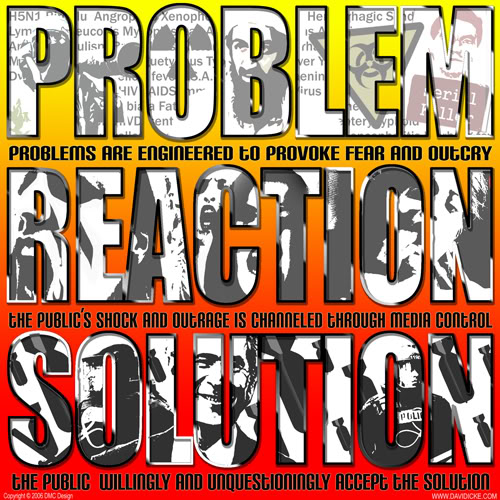
Remember their modus operandi: create problem – provoke reaction – impose solution. The current controlled demolition of various markets, national economies and regional economic unions has employed the same divide and conquer tactics that every war economy has utilized since time immemorial. Hence, we are witnessing the to be expected widespread panic, paralyzing chaos and wildly unpredictable market reactions that this antiquated stratagem has always produced.


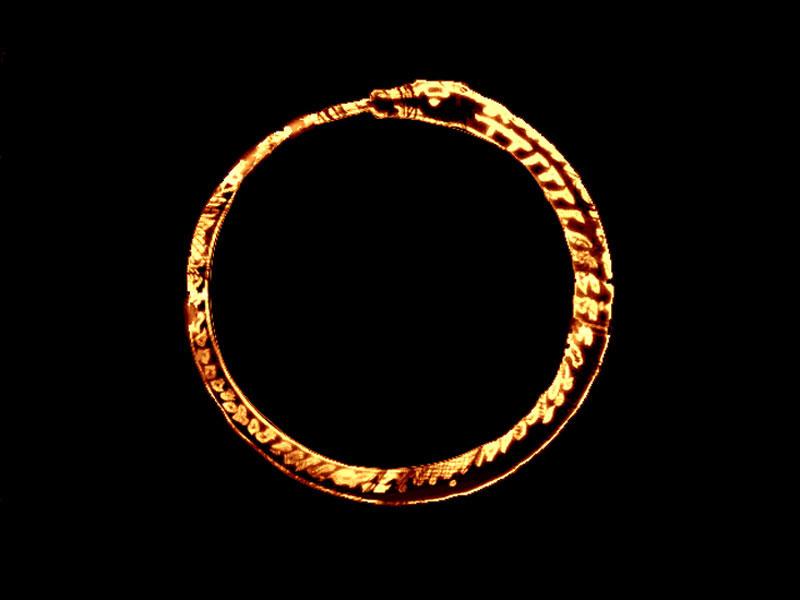
The snake eating itself has been a frequent metaphor to the current self destruction of Cowboy Capitalism.

Whereas the system of corrupt, corporate, crony capitalism does eat itself, there are those who will be eaten, and those who eat. The “strong” at the top of the pyramid have always done the eating, as the “weak” at the bottom provide the bone for the stew. We are all watching this survival of the fittest program in living color, as we both write and read these words, are we not? The only major difference at this particular, and final, feast is that the internet has allowed for an unprecedented explosion of true and accurate information in real time. Therefore, the playing field has been leveled like never before. The little guy or gal, for the first time ever, has the opportunity to take back a little, or a lot, of his or her power (read wealth), should he or she so choose.

Even as the Wall Street gangs team up with the opportunistic political class, as well as the numerous corporate raiders, legal jackals and lobby parasites, to effectuate the most massive redistribution of wealth (aka in your face THEFT) in recorded history, something has profoundly and fundamentally changed. There is a dynamic at work which can alter the game just enough to potentially turn the pyramid upside down.

Accomplishing this, however, requires a no nonsense, “look in the mirror with raw honesty” approach. In this instance, the Oracles will not deign to render investment advice, financial recommendations, business consultation or simple suggestions on money matters that are not fully baked. Recommendations made in this spirit are more likely to be issued in the best interest of ALL, especially for those who are in a position of class disadvantage, financial ignorance or structured powerlessness.

So, it should now be clear that all the forces have been put into place for the upcoming monetary meltdown. But even these forces are controlled, each and every one of them, all the way up to the top. It’s probably a very good time to contemplate just Who It Is that resides at the peak of the global financial decision-making process. As well as, their agenda?!?

HINT: Let’s get serious for a moment. Most of us know by now that the Crash of ’29, as well as the Great Depression that followed, were the main events of an intricately engineered financial and economic armageddon calculated as a necessary prelude to the real Armageddon known as WWII. Historically speaking, a man without a job, or prospects for employment in his homeland, is much more likely to hire himself out to his guvment as a mercenary fighting in a foreign land. Hasn’t this been their (TPTW)* formula for both war and wealth creation for eons?! Although it has always worked like a charm, wethinks the charm has finally worn out. Yes, that old fashioned Hegelian dialectic based ‘problem – reaction – solution’ MO has seen its final days. We also think their misbegotten plan to foist WWIII upon us has somehow been thwarted by the real TPTB. Yes, they’ve finally been snoockered!

*The Powers That Were


Cosmic Convergence Research Group
Submitted: July 7, 2012
cosmicconvergence2012@gmail.com

*This essay was first published in September, 2008


Source
.