Showing posts with label First Amendment. Show all posts
Showing posts with label First Amendment. Show all posts
Monday, September 07, 2026


Friday, August 28, 2026
Friday, July 31, 2026
Religious Liberty Essential to Preserving Life
(Zimmytws/Dreamstime.com
By Frank Pavone
Monday, 27 July 2026 09:53 AM EDT
Religious liberty is more than the freedom to hold private beliefs — it is the freedom to live according to one's faith in public life. The recommendations recently presented by the Religious Liberty Commission to President Trump reinforce the principle that Americans should never have to choose between following their faith and following the law.
This has particular impact on Americans who fight every day to protect children in the womb from the violence of abortion. Concerns for such Americans came up in one way or another in every one of the hearings that the Religious Liberty Commission held.
The anti-abortion movement is rooted in the very American conviction that every human life deserves equal protection under the law, despite its age.
That conviction, coupled with the American belief in peaceful protest, motivates those who are anti-abortion to stand for hours outside abortion facilities, enduring the hostile stares and words - and occasional vicious beatings - from abortion advocates in the hope of changing the mind of one mother, of saving one baby.
These same Americans believe that mothers and fathers need day to day support, and the pregnancy help movement provides such support across the country.
So often maligned for being "fake clinics" because they do not perform abortion, these vitally important centers are almost exclusively started and staffed with people of faith who are trying not to impose their faith on others but to use it to lead mothers and fathers to a much better choice than abortion.
Yet these centers are constantly harassed in abortion-friendly states and all too often find themselves embroiled in lawsuits or fighting unjust laws.
The First Amendment wins every time, with these suits settled in favor of pregnancy centers. Religious liberty helps protect the ability to advocate for life without compromising sincerely held beliefs.
One of the commission's key recommendations is to clarify the proper understanding of the Establishment Clause and the separation of church and state.
Religious liberty is more than the freedom to hold private beliefs — it is the freedom to live according to one's faith in public life. The recommendations recently presented by the Religious Liberty Commission to President Trump reinforce the principle that Americans should never have to choose between following their faith and following the law.
This has particular impact on Americans who fight every day to protect children in the womb from the violence of abortion. Concerns for such Americans came up in one way or another in every one of the hearings that the Religious Liberty Commission held.
The anti-abortion movement is rooted in the very American conviction that every human life deserves equal protection under the law, despite its age.
That conviction, coupled with the American belief in peaceful protest, motivates those who are anti-abortion to stand for hours outside abortion facilities, enduring the hostile stares and words - and occasional vicious beatings - from abortion advocates in the hope of changing the mind of one mother, of saving one baby.
These same Americans believe that mothers and fathers need day to day support, and the pregnancy help movement provides such support across the country.
So often maligned for being "fake clinics" because they do not perform abortion, these vitally important centers are almost exclusively started and staffed with people of faith who are trying not to impose their faith on others but to use it to lead mothers and fathers to a much better choice than abortion.
Yet these centers are constantly harassed in abortion-friendly states and all too often find themselves embroiled in lawsuits or fighting unjust laws.
The First Amendment wins every time, with these suits settled in favor of pregnancy centers. Religious liberty helps protect the ability to advocate for life without compromising sincerely held beliefs.
One of the commission's key recommendations is to clarify the proper understanding of the Establishment Clause and the separation of church and state.
Tuesday, June 09, 2026
Southern Baptists Want to Shrink First Amendment Protections
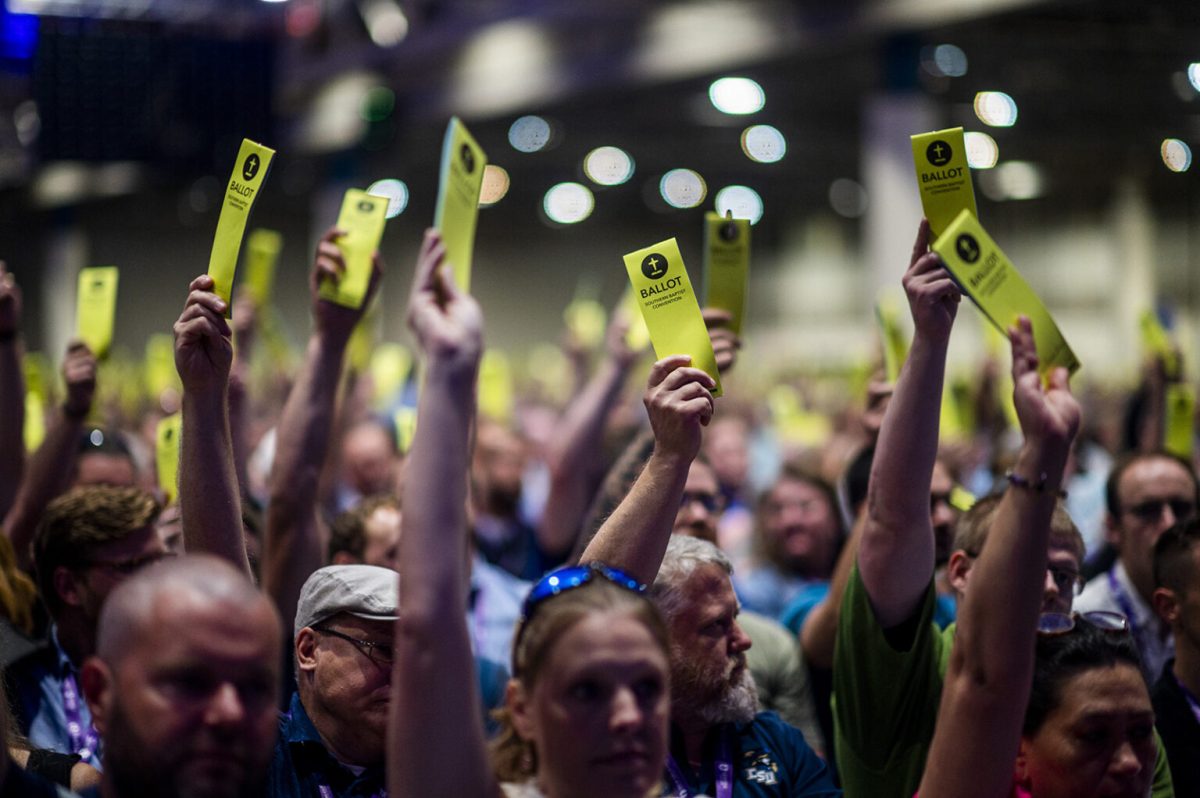
As messengers to the Southern Baptist Convention gather in Orlando, Florida, this week, they will debate several significant issues, including an effort to further restrict women from serving in ministry or even talking publicly about Scripture. And those gathered at the annual convention of the nation’s largest Protestant denomination will also consider several resolutions through which to sound off on key issues like assisted suicide, antisemitism, and immigration. But it’s the proposed resolution on “the 250th anniversary of the United States” that caught my eye for its rhetorical sleight of hand.
At first glance, the resolution seems like a good effort to particularly highlight “the Baptist contribution to religious liberty” during this year’s Semiquincentennial celebrations. It’s much milder in its “God and country” mixing than I expected, acknowledges the nation has often been wrong (including with slavery), and insists that we should protect “religious liberty for all people.”
But there’s a sneaky way the First Amendment’s religious clauses are summarized: “which guarantees the free exercise of religion and prohibits the establishment of a state church.” While it correctly uses the Constitutional language for protecting “the free exercise” of religion, it misquotes the other clause. The First Amendment prohibits “an establishment of religion,” but the resolution instead says it stops “the establishment of a state church.” That’s not the same thing.
Friday, February 20, 2026
Saturday, March 11, 2023
Saturday, February 25, 2023
Sunday, December 04, 2022
All of Us Are in Danger: When Anti-Government Speech Becomes Sedition
By John Whitehead, 06 October, 2022
Anti-government speech has become a four-letter word.
In more and more cases, the government is declaring war on what should be protected political speech whenever it challenges the government’s power, reveals the government’s corruption, exposes the government’s lies, and encourages the citizenry to push back against the government’s many injustices.
Indeed, there is a long and growing list of the kinds of speech that the government considers dangerous enough to red flag and subject to censorship, surveillance, investigation and prosecution: hate speech, conspiratorial speech, treasonous speech, threatening speech, inflammatory speech, radical speech, anti-government speech, extremist speech, etc.
Things are about to get even dicier for those who believe in fully exercising their right to political expression.
Indeed, the government’s seditious conspiracy charges against Stewart Rhodes, the founder of Oath Keepers, and several of his associates for their alleged involvement in the January 6 Capitol riots puts the entire concept of anti-government political expression on trial.
Enacted during the Civil War to prosecute secessionists, seditious conspiracy makes it a crime for two or more individuals to conspire to “‘overthrow, put down, or to destroy by force’ the U.S. government, or to levy war against it, or to oppose by force and try to prevent the execution of any law.”
It’s a hard charge to prove, and the government’s track record hasn’t been the greatest.
It’s been almost a decade since the government tried to make a seditious conspiracy charge stick—against a small Christian militia accused of plotting to kill a police officer and attack attendees at his funeral in order to start a civil war—and it lost the case.
Although the government was able to show that the Hutaree had strong anti-government views, the judge ruled in U.S. v. Stone that “[O]ffensive speech and a conspiracy to do something other than forcibly resist a positive show of authority by the Federal Government is not enough to sustain a charge of seditious conspiracy.”
Whether or not prosecutors are able to prove their case that Rhodes and his followers intended to actually overthrow the government, the blowback will be felt far and wide by anyone whose political views can be labeled “anti-government.”
Monday, October 24, 2022
Founders Designed Establishment Clause to Protect Religion, McConnell Says
Founders Designed Establishment Clause to Protect Religion, McConnell Says
October 31, 2005
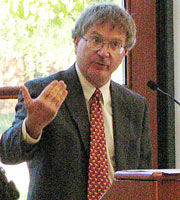
Judge Michael W. McConnell of the 10th Circuit Court of Appeals gave the Meador Lecture on Law and Religion last week.
The nation's founders included the Establishment Clause of the First Amendment to protect and promote the church's inculcation of public virtue, rather than to protect the federal government from the influence of religion, said Judge Michael W. McConnell at the Oct. 27 Meador Lecture on Law and Religion.
McConnell, who serves on the U.S. Court of Appeals for the 10th Circuit, delivered his speech to an overflowing audience in Caplin Pavilion.
He noted that the separation of church and state often has been a provocative issue in American history. "We seem to be at one of those times again in American public life when these questions of how to adjust the spheres are on many people's minds," he said.
McConnell challenged popular explanations of the separation of church and state.
"The conventional wisdom goes something like this: that the creation of a liberal democratic order requires or at least presupposes the secularization of the civic culture, and that this secularization is embodied in the establishment clause of the First Amendment, the separation of church, which protects the private practice of religion from government but also, it is said, protects government from the device of any irrational powers of religion," he said. "It's necessary according to this view to base public policy and public affairs on the neutral grounds of reason rather than the superstitious sway of priests and bishops or the fulmination of fundamentalists.
"To many religious intrusion into politics is an offense against their cherished ideal of a secular public sphere," McConnell said. "They speak darkly of betraying the principles of the founding and dismantling the wall of separation created by the founders."
Although McConnell said he believes the issue is overblown on both sides, he thought it was advantageous to rekindle interest in the role of religion in a democratic republic. "The founding was quite different and in many ways more interesting than this conventional wisdom."
Although the First Amendment prohibited the federal establishment of religion, he said, approximately half of the founding states had some form of religious establishment when the amendment was ratified and others were exploring the possibility.
"The 1780s were actually a time of renewed interest in and support for state religious establishments," McConnell said.
Founding fathers such as John Adams, George Washington, Patrick Henry, and John Marshall were among those who supported some kind of establishment of religion, according to McConnell.
Thursday, February 24, 2022
An Alabama high school basketball team say they were forced to choose faith over a tournament game
An Alabama high school basketball team say they were forced to choose faith over a tournament game. The governor is demanding answers
By Sara Smart, CNN
Updated 8:30 PM ET, Thu February 24, 2022
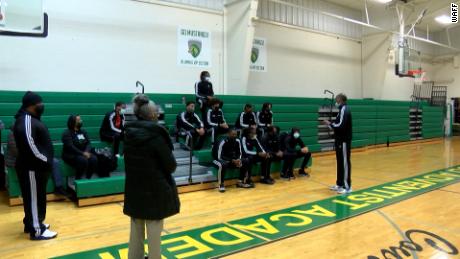
Oakwood Adventist Academy's men's basketball team forfeited a tournament game that fell during Sabbath.
(CNN)Alabama's governor is demanding answers after a high school basketball team say they were forced to choose between their faith or a game.
Oakwood Adventist Academy is a Seventh-Day Adventist school in Huntsville, located 100 miles north of Birmingham. Their men's basketball team had advanced to the semifinals of the state tournament last week, the school's Athletic Director, Calvin Morton, told CNN Wednesday.
But the regional semifinal game was set for Saturday, February 19 at 4:30 p.m., and would interfere with Sabbath, which is observed from sundown Friday to sundown on Saturday.
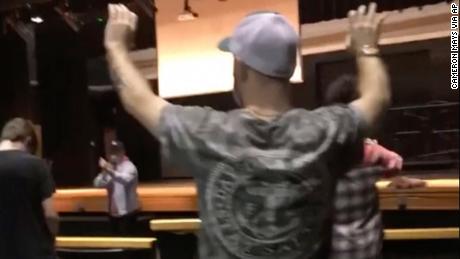
West Virginia school district says students' rights were violated during religious gathering on campus
Morton said he emailed the Alabama High School Athletic Association (AHSAA) to ask if they could play at 7:30 p.m. instead, after sunset, to meet their religious beliefs.
That request was denied.
"We weren't asking for a change of stadium or venue or a change of a different day," Morton told CNN. "It was a simple two-to-three hour game change ... which we thought was a reasonable ask."
The other teams participating in the tournament were willing to accommodate and swap game times, Morton said. When he relayed that message to AHSAA in a follow up, they still denied the change.
AHSAA told CNN they have no comment at this time.
Morton said they had a team meeting and everyone was on the same page: They would forfeit. "We were taken aback and upset that they weren't going to play," Morton said.
Now, Governor Kay Ivey is stepping in and demanding answers from the association.
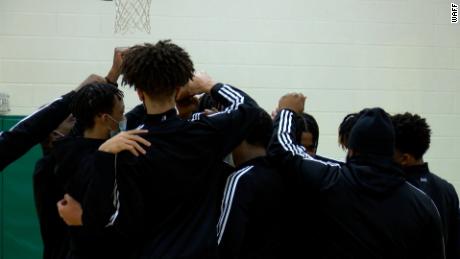
The team says they have no regrets in their decision to forfeit the game to meet their religious beliefs.
Ivey took to Twitter on Tuesday to share the letters she sent to AHSAA Director Alvin Briggs and Judy Chiles-Dent, Oakwood's principal.
"I am writing to express my profound concern -- and to get some answers -- about the alleged treatment of Oakwood Adventist Academy," Ivey wrote in the letter to Briggs.
That letter goes on to list questions for the organization that she demands answers to. These include: "Which AHSAA employees were responsible for making this decision?" and "How can we as a State ensure that something like this never occurs again?"
In her letter to Principal Chiles-Dent, Ivey offered solidarity.
"The idea that a team like Oakwood could be denied a chance to compete based on its faith -- without even the most modest of accommodations -- is deeply concerning," Ivey's letter reads.

A student athlete sparked national change after being disqualified from a volleyball match for wearing a hijab
The governor went on to invite the principal, players and coaches of the basketball team to the Alabama Capitol to celebrate the team's achievements and tell her about their time in the tournament. The team plans to accept Governor Ivey's invitation and hope they can meet her in the next week, Morton said.
"It's great that we have that support for us," Morton added. "It's not just for Oakland Adventist Academy, it's for any other school or academy that has religious values or beliefs."
Despite their forced forfeit of the game, the team still traveled to the tournament at Jacksonville State University to cheer on the other teams, according to CNN affiliate WAFF.
The team's senior captain, Raynon Andrews, told WAFF they have no regrets about their decision.
"There is a whole Facebook community, there are people all around the world texting parents, saying how proud they are of us," Andrews said. "That means a lot."
CNN's Jamiel Lynch contributed to this report.
Sunday, May 12, 2019
Sunday, April 15, 2018
Big guns from both sides defend pastor in bogus jury-tampering case
WND EXCLUSIVE
Michigan's claims against man who distributed brochures called threat to 1st Amendment Published: 1 day ago
-
- Bob Unruh
- Bob Unruh joined WND in 2006 after nearly three decades with the Associated Press, as well as several Upper Midwest newspapers, where he covered everything from legislative battles and sports to tornadoes and homicidal survivalists. He is also a photographer whose scenic work has been used commercially.


The libertarian Cato Institute advocates for liberty, free markets and limited government.
The American Civil Liberties Union is mostly on the opposite side in political disputes.
However, the two organizations are joining forces in a case that could set a precedent regarding free speech in Michigan.
It’s about the state’s prosecution of former pastor Keith Wood for handing out brochures about jury rights on a public sidewalk in front of the Mecosta County courthouse in November 2015 in Big Rapids, Michigan.
Officials charged him with a misdemeanor and a felony. While the felony count was dismissed, he was convicted on the misdemeanor for exercising his First Amendment rights, and his case is before the state Court of Appeals.
“It is difficult to overstate the extent to which the decision below, upholding the conviction of Keith Eric Wood, strikes at the core of the First Amendment,” Cato wrote.
“Mr. Wood was arrested and convicted for engaging in classic political advocacy (peacefully distributing pamphlets) in the quintessential public forum (the sidewalk in front of a courthouse) on a matter of public concern more ancient than Magna Carta, and at the heart of Anglo-Saxon law (the rights, duties, and independence of citizen jurors). One can well imagine why an English monarch might wish to suppress efforts to inform potential jurors of their power to resist tyranny by refusing to convict fellow citizens who had incurred the sovereign’s enmity; what is – or should be – more surprising is American courts American sovereigns to suppress such speech on American soil.”
Cato pointed out it was solely because the subject of the pamphlets was jury work that he was convicted.
Tuesday, May 19, 2015
The Establishment Clause

~0~
The Establishment Clause
What Does the First Amendment's Establishment Clause Really Mean?

An American penny, worth one cent. All U.S. currency bears the motto "IN GOD WE TRUST.". Photo: Copyright (c) 2006 Trish Parisy. Licensed under Creative Commons.

Tom Head
Civil Liberties Expert
The First Amendment to the U.S. Constitution begins with the phrase "Congress shall make no law respecting an establishment of religion..." This phrase is referred to as the establishment clause. Although Europe had been torn apart by religious conflict for almost the entirety of recorded history, the establishment clause was most likely motivated by hostility towards, and suspicion of, the Church of England.
Until 1784, there was no Anglican or Episcopal bishop in the United States. This meant that any priest belonging to the Anglican tradition--which was the official state religion in the Virginia, Georgia, and Carolina colonies--had been ordained in London and served at the pleasure of English bishops loyal to the Crown. By the time the American Revolution came about, Anglican priests were understandably held in high suspicion and the framers of the Constitution were reticent to create anything resembling an official Church of England in the United States. This popular sentiment made it easy to ratify the establishment clause. But what did individual framers believe? There was considerable variation. Some framers, such as Thomas Jefferson and revolutionary pamphleteer Thomas Paine, were rational deists who felt that the absolute freedom of conscience would invariably be threatened by any government endorsement of religion. In an 1802 letter to the Danbury Baptist Association, then-president Jefferson wrote:
What Does the First Amendment's Establishment Clause Really Mean?
An American penny, worth one cent. All U.S. currency bears the motto "IN GOD WE TRUST.". Photo: Copyright (c) 2006 Trish Parisy. Licensed under Creative Commons.
Tom Head
Civil Liberties Expert
The First Amendment to the U.S. Constitution begins with the phrase "Congress shall make no law respecting an establishment of religion..." This phrase is referred to as the establishment clause. Although Europe had been torn apart by religious conflict for almost the entirety of recorded history, the establishment clause was most likely motivated by hostility towards, and suspicion of, the Church of England.
Until 1784, there was no Anglican or Episcopal bishop in the United States. This meant that any priest belonging to the Anglican tradition--which was the official state religion in the Virginia, Georgia, and Carolina colonies--had been ordained in London and served at the pleasure of English bishops loyal to the Crown. By the time the American Revolution came about, Anglican priests were understandably held in high suspicion and the framers of the Constitution were reticent to create anything resembling an official Church of England in the United States. This popular sentiment made it easy to ratify the establishment clause. But what did individual framers believe? There was considerable variation. Some framers, such as Thomas Jefferson and revolutionary pamphleteer Thomas Paine, were rational deists who felt that the absolute freedom of conscience would invariably be threatened by any government endorsement of religion. In an 1802 letter to the Danbury Baptist Association, then-president Jefferson wrote:
Believing with you that religion is a matter which lies solely between Man and his God, that he owes account to none other for his faith or his worship, that the legitimate powers of government reach actions only, and not opinions, I contemplate with sovereign reverence that act of the whole American people which declared that their legislature should "make no law respecting an establishment of religion, or prohibiting the free exercise thereof," thus building a wall of separation between Church and State.
The phrase "wall of separation between Church and State" continues to define the popular meaning of the establishment clause. From a judiciary standpoint, however, there are actually three popular intepretations of the clause's meaning:
- separationism, which holds that the establishment clause prevents any government endorsement or support of religious establishments. Examples of those holding this view include House Speaker Nancy Pelosi as well as Justice Stephen Breyer, Justice Ruth Bader Ginsburg, and Justice David Souter of the U.S. Supreme Court.
- accommodationism, which holds that the government may support or endorse religious establishments as long as it treats all religions equally and does not show preferential treatment. This view is held by President George W. Bush and former President Bill Clinton, as well as Justice Anthony Kennedy and Justice Antonin Scalia of the U.S. Supreme Court.
- preferentialism or Christian dominionism, which holds that the establishment clause only prevents a literal Church of America from being created and does not prevent the government from explicitly endorsing Christianity. This uncommon view is held by the Rev. Pat Robertson and former Alabama Supreme Court Justice Roy Moore, and there is evidence that Justice Clarence Thomas of the U.S. Supreme Court may believe that the preferentialist interpretation of the establishment clause applies to state law. This is due more to his narrow interpretation of the incorporation doctrine than to his interpretation of the establishment clause itself, which is probably accommodationist.
During most of the 20th century, the Supreme Court held primarily to a separationist interpretation of the establishment clause. Recent Supreme Court decisions indicate that there may be a gradual shift to a mild accommodationist position in the coming years with respect to private school vouchers, federal funding for faith-based charities, and symbolic or historical affirmations of religious heritage (such as "under God" in the Pledge of Allegiance, or "in God we trust" on currency).
.
Wednesday, March 11, 2015
The President and the Press - John F. Kennedy

The President and the Press: Address before the American Newspaper Publishers Association,
April 27, 1961
Listen to speech here:
Listen to speech here:
View related documents here: 
President John F. KennedyWaldorf-Astoria Hotel, New York City
April 27, 1961
Mr. Chairman, ladies and gentlemen:
I appreciate very much your generous invitation to be here tonight.
You bear heavy responsibilities these days and an article I read some time ago reminded me of how particularly heavily the burdens of present day events bear upon your profession.
You may remember that in 1851 the New York Herald Tribune under the sponsorship and publishing of Horace Greeley, employed as its London correspondent an obscure journalist by the name of Karl Marx.
We are told that foreign correspondent Marx, stone broke, and with a family ill and undernourished, constantly appealed to Greeley and managing editor Charles Dana for an increase in his munificent salary of $5 per installment, a salary which he and Engels ungratefully labeled as the "lousiest petty bourgeois cheating."
But when all his financial appeals were refused, Marx looked around for other means of livelihood and fame, eventually terminating his relationship with the Tribune and devoting his talents full time to the cause that would bequeath the world the seeds of Leninism, Stalinism, revolution and the cold war.
If only this capitalistic New York newspaper had treated him more kindly; if only Marx had remained a foreign correspondent, history might have been different. And I hope all publishers will bear this lesson in mind the next time they receive a poverty-stricken appeal for a small increase in the expense account from an obscure newspaper man.
I have selected as the title of my remarks tonight "The President and the Press." Some may suggest that this would be more naturally worded "The President Versus the Press." But those are not my sentiments tonight.
It is true, however, that when a well-known diplomat from another country demanded recently that our State Department repudiate certain newspaper attacks on his colleague it was unnecessary for us to reply that this Administration was not responsible for the press, for the press had already made it clear that it was not responsible for this Administration.
Nevertheless, my purpose here tonight is not to deliver the usual assault on the so-called one party press. On the contrary, in recent months I have rarely heard any complaints about political bias in the press except from a few Republicans. Nor is it my purpose tonight to discuss or defend the televising of Presidential press conferences. I think it is highly beneficial to have some 20,000,000 Americans regularly sit in on these conferences to observe, if I may say so, the incisive, the intelligent and the courteous qualities displayed by your Washington correspondents.
Nor, finally, are these remarks intended to examine the proper degree of privacy which the press should allow to any President and his family.
If in the last few months your White House reporters and photographers have been attending church services with regularity, that has surely done them no harm.
On the other hand, I realize that your staff and wire service photographers may be complaining that they do not enjoy the same green privileges at the local golf courses that they once did.
It is true that my predecessor did not object as I do to pictures of one's golfing skill in action. But neither on the other hand did he ever bean a Secret Service man.
My topic tonight is a more sober one of concern to publishers as well as editors.
I want to talk about our common responsibilities in the face of a common danger. The events of recent weeks may have helped to illuminate that challenge for some; but the dimensions of its threat have loomed large on the horizon for many years. Whatever our hopes may be for the future--for reducing this threat or living with it--there is no escaping either the gravity or the totality of its challenge to our survival and to our security--a challenge that confronts us in unaccustomed ways in every sphere of human activity.
This deadly challenge imposes upon our society two requirements of direct concern both to the press and to the President--two requirements that may seem almost contradictory in tone, but which must be reconciled and fulfilled if we are to meet this national peril. I refer, first, to the need for a far greater public information; and, second, to the need for far greater official secrecy.
I
The very word "secrecy" is repugnant in a free and open society; and we are as a people inherently and historically opposed to secret societies, to secret oaths and to secret proceedings. We decided long ago that the dangers of excessive and unwarranted concealment of pertinent facts far outweighed the dangers which are cited to justify it. Even today, there is little value in opposing the threat of a closed society by imitating its arbitrary restrictions. Even today, there is little value in insuring the survival of our nation if our traditions do not survive with it. And there is very grave danger that an announced need for increased security will be seized upon by those anxious to expand its meaning to the very limits of official censorship and concealment. That I do not intend to permit to the extent that it is in my control. And no official of my Administration, whether his rank is high or low, civilian or military, should interpret my words here tonight as an excuse to censor the news, to stifle dissent, to cover up our mistakes or to withhold from the press and the public the facts they deserve to know.
But I do ask every publisher, every editor, and every newsman in the nation to reexamine his own standards, and to recognize the nature of our country's peril. In time of war, the government and the press have customarily joined in an effort based largely on self-discipline, to prevent unauthorized disclosures to the enemy. In time of "clear and present danger," the courts have held that even the privileged rights of the First Amendment must yield to the public's need for national security.
Today no war has been declared--and however fierce the struggle may be, it may never be declared in the traditional fashion. Our way of life is under attack. Those who make themselves our enemy are advancing around the globe. The survival of our friends is in danger. And yet no war has been declared, no borders have been crossed by marching troops, no missiles have been fired.
If the press is awaiting a declaration of war before it imposes the self-discipline of combat conditions, then I can only say that no war ever posed a greater threat to our security. If you are awaiting a finding of "clear and present danger," then I can only say that the danger has never been more clear and its presence has never been more imminent.
It requires a change in outlook, a change in tactics, a change in missions--by the government, by the people, by every businessman or labor leader, and by every newspaper. For we are opposed around the world by a monolithic and ruthless conspiracy that relies primarily on covert means for expanding its sphere of influence--on infiltration instead of invasion, on subversion instead of elections, on intimidation instead of free choice, on guerrillas by night instead of armies by day. It is a system which has conscripted vast human and material resources into the building of a tightly knit, highly efficient machine that combines military, diplomatic, intelligence, economic, scientific and political operations.
Its preparations are concealed, not published. Its mistakes are buried, not headlined. Its dissenters are silenced, not praised. No expenditure is questioned, no rumor is printed, no secret is revealed. It conducts the Cold War, in short, with a war-time discipline no democracy would ever hope or wish to match.
Nevertheless, every democracy recognizes the necessary restraints of national security--and the question remains whether those restraints need to be more strictly observed if we are to oppose this kind of attack as well as outright invasion.
For the facts of the matter are that this nation's foes have openly boasted of acquiring through our newspapers information they would otherwise hire agents to acquire through theft, bribery or espionage; that details of this nation's covert preparations to counter the enemy's covert operations have been available to every newspaper reader, friend and foe alike; that the size, the strength, the location and the nature of our forces and weapons, and our plans and strategy for their use, have all been pinpointed in the press and other news media to a degree sufficient to satisfy any foreign power; and that, in at least in one case, the publication of details concerning a secret mechanism whereby satellites were followed required its alteration at the expense of considerable time and money.
The newspapers which printed these stories were loyal, patriotic, responsible and well-meaning. Had we been engaged in open warfare, they undoubtedly would not have published such items. But in the absence of open warfare, they recognized only the tests of journalism and not the tests of national security. And my question tonight is whether additional tests should not now be adopted.
The question is for you alone to answer. No public official should answer it for you. No governmental plan should impose its restraints against your will. But I would be failing in my duty to the nation, in considering all of the responsibilities that we now bear and all of the means at hand to meet those responsibilities, if I did not commend this problem to your attention, and urge its thoughtful consideration.
On many earlier occasions, I have said--and your newspapers have constantly said--that these are times that appeal to every citizen's sense of sacrifice and self-discipline. They call out to every citizen to weigh his rights and comforts against his obligations to the common good. I cannot now believe that those citizens who serve in the newspaper business consider themselves exempt from that appeal.
I have no intention of establishing a new Office of War Information to govern the flow of news. I am not suggesting any new forms of censorship or any new types of security classifications. I have no easy answer to the dilemma that I have posed, and would not seek to impose it if I had one. But I am asking the members of the newspaper profession and the industry in this country to reexamine their own responsibilities, to consider the degree and the nature of the present danger, and to heed the duty of self-restraint which that danger imposes upon us all.
Every newspaper now asks itself, with respect to every story: "Is it news?" All I suggest is that you add the question: "Is it in the interest of the national security?" And I hope that every group in America--unions and businessmen and public officials at every level-- will ask the same question of their endeavors, and subject their actions to the same exacting tests.
And should the press of America consider and recommend the voluntary assumption of specific new steps or machinery, I can assure you that we will cooperate whole-heartedly with those recommendations.
Perhaps there will be no recommendations. Perhaps there is no answer to the dilemma faced by a free and open society in a cold and secret war. In times of peace, any discussion of this subject, and any action that results, are both painful and without precedent. But this is a time of peace and peril which knows no precedent in history.
II
It is the unprecedented nature of this challenge that also gives rise to your second obligation--an obligation which I share. And that is our obligation to inform and alert the American people--to make certain that they possess all the facts that they need, and understand them as well--the perils, the prospects, the purposes of our program and the choices that we face.
No President should fear public scrutiny of his program. For from that scrutiny comes understanding; and from that understanding comes support or opposition. And both are necessary. I am not asking your newspapers to support the Administration, but I am asking your help in the tremendous task of informing and alerting the American people. For I have complete confidence in the response and dedication of our citizens whenever they are fully informed.
I not only could not stifle controversy among your readers--I welcome it. This Administration intends to be candid about its errors; for as a wise man once said: "An error does not become a mistake until you refuse to correct it." We intend to accept full responsibility for our errors; and we expect you to point them out when we miss them.
Without debate, without criticism, no Administration and no country can succeed--and no republic can survive. That is why the Athenian lawmaker Solon decreed it a crime for any citizen to shrink from controversy. And that is why our press was protected by the First Amendment-- the only business in America specifically protected by the Constitution- -not primarily to amuse and entertain, not to emphasize the trivial and the sentimental, not to simply "give the public what it wants"--but to inform, to arouse, to reflect, to state our dangers and our opportunities, to indicate our crises and our choices, to lead, mold, educate and sometimes even anger public opinion.
This means greater coverage and analysis of international news--for it is no longer far away and foreign but close at hand and local. It means greater attention to improved understanding of the news as well as improved transmission. And it means, finally, that government at all levels, must meet its obligation to provide you with the fullest possible information outside the narrowest limits of national security--and we intend to do it.
III
It was early in the Seventeenth Century that Francis Bacon remarked on three recent inventions already transforming the world: the compass, gunpowder and the printing press. Now the links between the nations first forged by the compass have made us all citizens of the world, the hopes and threats of one becoming the hopes and threats of us all. In that one world's efforts to live together, the evolution of gunpowder to its ultimate limit has warned mankind of the terrible consequences of failure.
And so it is to the printing press--to the recorder of man's deeds, the keeper of his conscience, the courier of his news--that we look for strength and assistance, confident that with your help man will be what he was born to be: free and independent.
President John F. KennedyWaldorf-Astoria Hotel, New York City
April 27, 1961
Mr. Chairman, ladies and gentlemen:
I appreciate very much your generous invitation to be here tonight.
You bear heavy responsibilities these days and an article I read some time ago reminded me of how particularly heavily the burdens of present day events bear upon your profession.
You may remember that in 1851 the New York Herald Tribune under the sponsorship and publishing of Horace Greeley, employed as its London correspondent an obscure journalist by the name of Karl Marx.
We are told that foreign correspondent Marx, stone broke, and with a family ill and undernourished, constantly appealed to Greeley and managing editor Charles Dana for an increase in his munificent salary of $5 per installment, a salary which he and Engels ungratefully labeled as the "lousiest petty bourgeois cheating."
But when all his financial appeals were refused, Marx looked around for other means of livelihood and fame, eventually terminating his relationship with the Tribune and devoting his talents full time to the cause that would bequeath the world the seeds of Leninism, Stalinism, revolution and the cold war.
If only this capitalistic New York newspaper had treated him more kindly; if only Marx had remained a foreign correspondent, history might have been different. And I hope all publishers will bear this lesson in mind the next time they receive a poverty-stricken appeal for a small increase in the expense account from an obscure newspaper man.
I have selected as the title of my remarks tonight "The President and the Press." Some may suggest that this would be more naturally worded "The President Versus the Press." But those are not my sentiments tonight.
It is true, however, that when a well-known diplomat from another country demanded recently that our State Department repudiate certain newspaper attacks on his colleague it was unnecessary for us to reply that this Administration was not responsible for the press, for the press had already made it clear that it was not responsible for this Administration.
Nevertheless, my purpose here tonight is not to deliver the usual assault on the so-called one party press. On the contrary, in recent months I have rarely heard any complaints about political bias in the press except from a few Republicans. Nor is it my purpose tonight to discuss or defend the televising of Presidential press conferences. I think it is highly beneficial to have some 20,000,000 Americans regularly sit in on these conferences to observe, if I may say so, the incisive, the intelligent and the courteous qualities displayed by your Washington correspondents.
Nor, finally, are these remarks intended to examine the proper degree of privacy which the press should allow to any President and his family.
If in the last few months your White House reporters and photographers have been attending church services with regularity, that has surely done them no harm.
On the other hand, I realize that your staff and wire service photographers may be complaining that they do not enjoy the same green privileges at the local golf courses that they once did.
It is true that my predecessor did not object as I do to pictures of one's golfing skill in action. But neither on the other hand did he ever bean a Secret Service man.
My topic tonight is a more sober one of concern to publishers as well as editors.
I want to talk about our common responsibilities in the face of a common danger. The events of recent weeks may have helped to illuminate that challenge for some; but the dimensions of its threat have loomed large on the horizon for many years. Whatever our hopes may be for the future--for reducing this threat or living with it--there is no escaping either the gravity or the totality of its challenge to our survival and to our security--a challenge that confronts us in unaccustomed ways in every sphere of human activity.
This deadly challenge imposes upon our society two requirements of direct concern both to the press and to the President--two requirements that may seem almost contradictory in tone, but which must be reconciled and fulfilled if we are to meet this national peril. I refer, first, to the need for a far greater public information; and, second, to the need for far greater official secrecy.
I
The very word "secrecy" is repugnant in a free and open society; and we are as a people inherently and historically opposed to secret societies, to secret oaths and to secret proceedings. We decided long ago that the dangers of excessive and unwarranted concealment of pertinent facts far outweighed the dangers which are cited to justify it. Even today, there is little value in opposing the threat of a closed society by imitating its arbitrary restrictions. Even today, there is little value in insuring the survival of our nation if our traditions do not survive with it. And there is very grave danger that an announced need for increased security will be seized upon by those anxious to expand its meaning to the very limits of official censorship and concealment. That I do not intend to permit to the extent that it is in my control. And no official of my Administration, whether his rank is high or low, civilian or military, should interpret my words here tonight as an excuse to censor the news, to stifle dissent, to cover up our mistakes or to withhold from the press and the public the facts they deserve to know.
But I do ask every publisher, every editor, and every newsman in the nation to reexamine his own standards, and to recognize the nature of our country's peril. In time of war, the government and the press have customarily joined in an effort based largely on self-discipline, to prevent unauthorized disclosures to the enemy. In time of "clear and present danger," the courts have held that even the privileged rights of the First Amendment must yield to the public's need for national security.
Today no war has been declared--and however fierce the struggle may be, it may never be declared in the traditional fashion. Our way of life is under attack. Those who make themselves our enemy are advancing around the globe. The survival of our friends is in danger. And yet no war has been declared, no borders have been crossed by marching troops, no missiles have been fired.
If the press is awaiting a declaration of war before it imposes the self-discipline of combat conditions, then I can only say that no war ever posed a greater threat to our security. If you are awaiting a finding of "clear and present danger," then I can only say that the danger has never been more clear and its presence has never been more imminent.
It requires a change in outlook, a change in tactics, a change in missions--by the government, by the people, by every businessman or labor leader, and by every newspaper. For we are opposed around the world by a monolithic and ruthless conspiracy that relies primarily on covert means for expanding its sphere of influence--on infiltration instead of invasion, on subversion instead of elections, on intimidation instead of free choice, on guerrillas by night instead of armies by day. It is a system which has conscripted vast human and material resources into the building of a tightly knit, highly efficient machine that combines military, diplomatic, intelligence, economic, scientific and political operations.
Its preparations are concealed, not published. Its mistakes are buried, not headlined. Its dissenters are silenced, not praised. No expenditure is questioned, no rumor is printed, no secret is revealed. It conducts the Cold War, in short, with a war-time discipline no democracy would ever hope or wish to match.
Nevertheless, every democracy recognizes the necessary restraints of national security--and the question remains whether those restraints need to be more strictly observed if we are to oppose this kind of attack as well as outright invasion.
For the facts of the matter are that this nation's foes have openly boasted of acquiring through our newspapers information they would otherwise hire agents to acquire through theft, bribery or espionage; that details of this nation's covert preparations to counter the enemy's covert operations have been available to every newspaper reader, friend and foe alike; that the size, the strength, the location and the nature of our forces and weapons, and our plans and strategy for their use, have all been pinpointed in the press and other news media to a degree sufficient to satisfy any foreign power; and that, in at least in one case, the publication of details concerning a secret mechanism whereby satellites were followed required its alteration at the expense of considerable time and money.
The newspapers which printed these stories were loyal, patriotic, responsible and well-meaning. Had we been engaged in open warfare, they undoubtedly would not have published such items. But in the absence of open warfare, they recognized only the tests of journalism and not the tests of national security. And my question tonight is whether additional tests should not now be adopted.
The question is for you alone to answer. No public official should answer it for you. No governmental plan should impose its restraints against your will. But I would be failing in my duty to the nation, in considering all of the responsibilities that we now bear and all of the means at hand to meet those responsibilities, if I did not commend this problem to your attention, and urge its thoughtful consideration.
On many earlier occasions, I have said--and your newspapers have constantly said--that these are times that appeal to every citizen's sense of sacrifice and self-discipline. They call out to every citizen to weigh his rights and comforts against his obligations to the common good. I cannot now believe that those citizens who serve in the newspaper business consider themselves exempt from that appeal.
I have no intention of establishing a new Office of War Information to govern the flow of news. I am not suggesting any new forms of censorship or any new types of security classifications. I have no easy answer to the dilemma that I have posed, and would not seek to impose it if I had one. But I am asking the members of the newspaper profession and the industry in this country to reexamine their own responsibilities, to consider the degree and the nature of the present danger, and to heed the duty of self-restraint which that danger imposes upon us all.
Every newspaper now asks itself, with respect to every story: "Is it news?" All I suggest is that you add the question: "Is it in the interest of the national security?" And I hope that every group in America--unions and businessmen and public officials at every level-- will ask the same question of their endeavors, and subject their actions to the same exacting tests.
And should the press of America consider and recommend the voluntary assumption of specific new steps or machinery, I can assure you that we will cooperate whole-heartedly with those recommendations.
Perhaps there will be no recommendations. Perhaps there is no answer to the dilemma faced by a free and open society in a cold and secret war. In times of peace, any discussion of this subject, and any action that results, are both painful and without precedent. But this is a time of peace and peril which knows no precedent in history.
II
It is the unprecedented nature of this challenge that also gives rise to your second obligation--an obligation which I share. And that is our obligation to inform and alert the American people--to make certain that they possess all the facts that they need, and understand them as well--the perils, the prospects, the purposes of our program and the choices that we face.
No President should fear public scrutiny of his program. For from that scrutiny comes understanding; and from that understanding comes support or opposition. And both are necessary. I am not asking your newspapers to support the Administration, but I am asking your help in the tremendous task of informing and alerting the American people. For I have complete confidence in the response and dedication of our citizens whenever they are fully informed.
I not only could not stifle controversy among your readers--I welcome it. This Administration intends to be candid about its errors; for as a wise man once said: "An error does not become a mistake until you refuse to correct it." We intend to accept full responsibility for our errors; and we expect you to point them out when we miss them.
Without debate, without criticism, no Administration and no country can succeed--and no republic can survive. That is why the Athenian lawmaker Solon decreed it a crime for any citizen to shrink from controversy. And that is why our press was protected by the First Amendment-- the only business in America specifically protected by the Constitution- -not primarily to amuse and entertain, not to emphasize the trivial and the sentimental, not to simply "give the public what it wants"--but to inform, to arouse, to reflect, to state our dangers and our opportunities, to indicate our crises and our choices, to lead, mold, educate and sometimes even anger public opinion.
This means greater coverage and analysis of international news--for it is no longer far away and foreign but close at hand and local. It means greater attention to improved understanding of the news as well as improved transmission. And it means, finally, that government at all levels, must meet its obligation to provide you with the fullest possible information outside the narrowest limits of national security--and we intend to do it.
III
It was early in the Seventeenth Century that Francis Bacon remarked on three recent inventions already transforming the world: the compass, gunpowder and the printing press. Now the links between the nations first forged by the compass have made us all citizens of the world, the hopes and threats of one becoming the hopes and threats of us all. In that one world's efforts to live together, the evolution of gunpowder to its ultimate limit has warned mankind of the terrible consequences of failure.
And so it is to the printing press--to the recorder of man's deeds, the keeper of his conscience, the courier of his news--that we look for strength and assistance, confident that with your help man will be what he was born to be: free and independent.
Monday, August 18, 2014
Navy Caves In to Atheists, Removes Bibles From Guest Rooms
Written by Dave Bohon

The U.S. Navy has caved in to the demands of an atheist group that it remove Bibles from guests rooms on naval bases.
In March, attorneys from the atheist group Freedom From Religion Foundation (FFRF) sent a letter to the Navy Exchange Service Command (NEXCOM) claiming that two “concerned service members” had independently contacted FFRF to complain that “every Navy lodging room that they have stayed in during decades of service has contained a Bible” — most of them provided by the Christian group Gideons International, which appears to be a particular target of the FFRF.
The FFRF was deeply worried, as noted in the letter, that materials from other faiths were “rarely” seen in the Navy guest rooms. “One complainant noted that he 'never saw a Book of Mormon or Koran' in any Navy-run lodge and that he had 'been in varied Navy Bachelor Officer Quarters (BOQs) with Bibles,” wrote troubled FFRF staff attorney Andrew Seidel with a note of righteous concern.
Insisting that under the Establishment Clause of the First Amendment, “a government entity cannot in any way promote, advance, or otherwise endorse religion,” Seidel charged that the Navy's longtime tradition of allowing Bibles in its guest rooms “amounts to a government endorsement of that religious text. Including Bibles sends the message to non-Christian ... guests that they should read the Bible.... The military should not promote certain religious beliefs by placing Bibles in guest rooms.”
Arguing that “government-run entities have a constitutional obligation to remain neutral toward religion,” Seidel and the FFRF demanded that the Navy remove the offensive Bibles from its guest rooms, and “provide us with a written response outlining the actions that your office is taking to remedy this constitutional violation.”
In June, NEXCOM responded to the demand with a directive that Bibles were to be removed from all Navy guest rooms until further review of Navy policy on religious materials. “The Navy Lodge General Manager should advise the Installation Commanding Officer of our intention to work through the chaplain’s office to determine what [the] installation policy is,” read the directive, “and the method to remove religious material currently in the guest rooms.” According to the order, all Bibles currently in Navy guest rooms were to be removed by September 1.
The directive does not say that Bibles will be prohibited from rooms in the future, but that in the future the commanding officer of a naval base will determine, “in accordance with personnel readiness and military regulations, whether [religious materials] will be accepted and how they will be handled and distributed.”
Addressing the FFRF's issue, NEXCOM spokeswoman Kathleen Martin told reporters that “we looked at our policy and realized there wasn’t a consistent policy regarding Navy Lodges. We decided we needed to have some consistency.”
According to a report by the American Family Association (AFA), a Navy lodging housekeeper wrote in an e-mail to the AFA: “We were told today, June 23, 2014, that due to a new policy by the CEO of NEXCOM, Rear Admiral Robert J. Bianchi, we were to remove the Bibles from the rooms. They told us to put them in boxes, where they would be taken to a donation center somewhere.”
The AFA reported that a NEXCOM directive ordered the removal of Bibles from 34 Navy Lodge locations and 24,000 Navy Gateway Inns and Suites guest rooms on Navy bases around the world. Lodge managers were ordered to contact base commanders and chaplains and facilitate removing the Bibles and other 'religious material currently in the guest rooms.'”
While it is probable, based on the published directive, that Bibles may again be available in some Navy guest rooms in the future, the FFRF trumpeted the NEXCOM action as a victory for atheists, with FFRF spokesman Sam Grover announcing, “We’re pleased that NEXCOM has taken seriously its constitutional obligation to remain neutral toward religion as a representative of our federal government.... By removing Bibles from Navy-run lodges, the Navy has taken a step to ensure that it is not sending the impermissible message that Christians are favored over guests with other religious beliefs or over those guests with no religion.”
Among the conservative Christian leaders sounding off against the Navy's preliminary cave-in to the atheist attack was Ron Crews, a retired military chaplain and head of the Chaplain Alliance for Religious Liberty. “A Bible in a hotel room is no more illegal than a chaplain in the military,” said Crews of the FFRF's charge that the presence of the Bibles in Navy guest rooms was somehow unconstitutional. “They are there for those who want them.”
He added that “there is nothing wrong with allowing the Gideons to place Bibles in Navy lodges, which it has done for decades at no cost to the Navy. Our service men and women are often away from home, sometimes for long periods of time. It’s perfectly constitutional and legal to allow the Gideons to provide, at their own expense, this source of comfort for service men and women of faith.”
As for the ease with which Navy superiors surrendered to the atheist advance, Crews said that “it’s tiresome to see senior military leaders needlessly cave in to activist groups offended by anything Christian. We sincerely hope that the Navy will reverse its decision as the Air Force did in 2012 after the public spoke loudly and clearly against this sort of censorship.”
Crews was referring to the decision in 2012 by Air Force higher-ups to reverse their cave-in to the demands of another atheist group, the Military Association of Atheists and Freethinkers (MAAF). As reported at the time by The New American, following demands from MAAF, the Air Force dropped a policy that directed housekeepers to make certain there were Bibles in guest rooms on Air Force bases. “While the atheist group had wanted the Air Force to ban the Bibles, placed there for free by the Gideons, from the room altogether,” reported The New American, after deliberation the Air Force Services Agency decided instead to simply remove the question, 'Is a Bible provided?' from the lodging check list housekeepers go through in making up the rooms.”
An Air Force spokesman, Mike Dickerson, said at the time that while the checklist was being dropped, the Air Force was not prepared to sanitize Scripture from rooms entirely, as the atheist group had desired. “The Air Force has not directed the removal of Bibles from Air Force Inns lodging rooms at this time,” Dickerson said. “We continue to review the situation and weigh our multiple First Amendment responsibilities and obligations.”
Speaking of the present Navy actions, Mike Berry, director of military affairs at Liberty Institute, noted that “many of our military's religious traditions and observances pre-date America's founding, but groups like the Freedom From Religion Foundation want to erase that history. We've seen Bibles temporarily banned from military hospitals, demands that veterans' memorials be torn down, and crosses removed from military chapels. This is just the latest in a well-documented pattern of hostility against religion in our military.”
Wednesday, January 29, 2014
Establishment clause overview

Establishment Clause, Religion Research
First Amendment Center
Nashville, Tenn.
Friday, September 16, 2011
The first of the First Amendment’s two religion clauses reads: “Congress shall make no law respecting an establishment of religion … .” Note that the clause is absolute. It allows no law. It is also noteworthy that the clause forbids more than the establishment of religion by the government. It forbids even laws respecting an establishment of religion. The establishment clause sets up a line of demarcation between the functions and operations of the institutions of religion and government in our society. It does so because the framers of the First Amendment recognized that when the roles of the government and religion are intertwined, the result too often has been bloodshed or oppression.
For the first 150 years of our nation’s history, there were very few occasions for the courts to interpret the establishment clause because the First Amendment had not yet been applied to the states. As written, the First Amendment applied only to Congress and the federal government. In the wake of the Civil War, however, the 14th Amendment was adopted. It reads in part that “no state shall … deprive any person of life, liberty or property without due process of law… .” In 1947 the Supreme Court held in Everson v. Board of Education that the establishment clause is one of the “liberties” protected by the due-process clause. From that point on, all government action, whether at the federal, state, or local level, must abide by the restrictions of the establishment clause.
Establishment
There is much debate about the meaning of the term “establishment of religion.” Although judges rely on history, the framers’ other writings and prior judicial precedent, they sometimes disagree. Some, including former Chief Justice William Rehnquist, have argued that the term was intended to prohibit only the establishment of a single national church or the preference of one religious sect over another. Others believe the term prohibits the government from promoting religion in general as well as the preference of one religion over another. In the words of the Court in Everson:
“The establishment of religion clause means at least this: Neither a state nor the federal government may set up a church. Neither can pass laws that aid one religion, aid all religions, or prefer one religion over another. Neither can force a person to go to or to remain away from church against his will or force him to profess a belief or disbelief in any religion… . Neither a state or the federal government may, openly or secretly, participate in the affairs of any religious organizations or groups and vice versa. In the words of Jefferson, the clause against establishment of religion by law was intended to erect ‘a wall of separation between church and state.’”
To help interpret the establishment clause, the Court uses several tests, including the Lemon, coercion, endorsement and neutrality tests.
Lemon test
The first of these tests is a three-part assessment sometimes referred to as the Lemon test. The test derives its name from the 1971 decision Lemon v. Kurtzman, in which the Court struck down a state program providing aid to religious elementary and secondary schools. Using the Lemon test, a court must first determine whether the law or government action in question has a bona fide secular purpose. This prong is based on the idea that government should only concern itself in civil matters, leaving religion to the conscience of the individual. Second, a court would ask whether the state action has the primary effect of advancing or inhibiting religion. Finally, the court would consider whether the action excessively entangles religion and government. While religion and government must interact at some points while co-existing in society, the concern here is that they do not so overlap and intertwine that people have difficulty differentiating between the two.
Although the test has come under fire from several Supreme Court justices, courts continue to use this test in most establishment-clause cases.
Lemon test redux
In its 1997 decision Agostini v. Felton, the Supreme Court modified the Lemon test. By combining the last two elements, the Court now used only the “purpose” prong and a modified version of the “effects” prong. The Court in Agostini identified three primary criteria for determining whether a government action has a primary effect of advancing religion: 1) government indoctrination, 2) defining the recipients of government benefits based on religion, and 3) excessive entanglement between government and religion.
Coercion test
Some justices propose allowing more government support for religion than the Lemon test allows. These justices support the adoption of a test outlined by Justice Anthony Kennedy in his dissent in Allegheny County v. ACLU and known as the “coercion test.” Under this test the government does not violate the establishment clause unless it (1) provides direct aid to religion in a way that would tend to establish a state church, or (2) coerces people to support or participate in religion against their will. Under such a test, the government would be permitted to erect such religious symbols as a Nativity scene standing alone in a public school or other public building at Christmas. But even the coercion test is subject to varying interpretations, as illustrated in Lee v. Weisman, the 1992 Rhode Island graduation-prayer decision in which Justices Kennedy and Antonin Scalia, applying the same test, reached different results.
Endorsement test
The endorsement test, proposed by Justice Sandra Day O’Connor, asks whether a particular government action amounts to an endorsement of religion. According to O’Connor, a government action is invalid if it creates a perception in the mind of a reasonable observer that the government is either endorsing or disapproving of religion. She expressed her understanding of the establishment clause in the 1984 case of Lynch v. Donnelly, in which she states, “The Establishment Clause prohibits government from making adherence to a religion relevant in any way to a person’s standing in the political community.” Her fundamental concern was whether the particular government action conveys “a message to non-adherents that they are outsiders, not full members of the political community, and an accompanying message to adherents that they are insiders, favored members of the political community.” O’Connor’s “endorsement test” has, on occasion, been subsumed into the Lemon test. The justices have simply incorporated it into the first two prongs of Lemon by asking if the challenged government act has the purpose or effect of advancing or endorsing religion.
The endorsement test is often invoked in situations where the government is engaged in expressive activities. Therefore, situations involving such things as graduation prayers, religious signs on government property, religion in the curriculum, etc., will usually be examined in light of this test.
Neutrality
While the Court looks to the endorsement test in matters of expression, questions involving use of government funds are increasingly determined under the rubric of neutrality. Under neutrality, the government would treat religious groups the same as other similarly situated groups. This treatment allows religious schools to participate in a generally available voucher program, allows states to provide computers to both religious and public schools, and allows states to provide reading teachers to low-performing students, even if they attend a religious school. (See Zelman v. Simmons-Harris, 2002, and Mitchell v. Helms, 2000.) It also indicates that the faith-based initiatives proposed by President Bush might be found constitutional, if structured appropriately.
The concept of neutrality in establishment-clause decisions evolved through the years. Cited first as a guiding principle in Everson, neutrality meant government was neither ally nor adversary of religion. “Neutral aid” referred to the qualitative property of the aid, such as the funding going to the parent for a secular service such as busing. The rationale in Everson looked to the benefit to the parent, not to the religious school relieved of the responsibility of providing busing for its students.
Later cases recognized that all aid is in some way fungible; i.e., if a religious school receives free math texts from the state, then the money the school would have spent on secular texts can now be spent on religious material. This refocused the Court’s attention not on the kind of aid that was provided, but who received and controlled the aid. Decisions involving vocational training scholarships and providing activity-fee monies to a college religious newspaper on the same basis as other student groups showed the Court focused on the individual’s control over the funds and equal treatment between religious and non-religious groups.
In Zelman v. Simmons-Harris, the plurality decision clearly defines neutrality as evenhandedness in terms of who may receive aid. A majority of the Court continues to find direct aid to religious institutions for use in religious activities unconstitutional, but indirect aid to a religious group appears constitutional, as long as it is part of a neutrally applied program that directs the money through a parent or other third party who ultimately controls the destination of the funds.
While many find this approach intuitively fair, others are dissatisfied. Various conservative religious groups raise concerns over diminishing the special place religion has historically played in constitutional law by treating religious freedom the same as every other kind of speech or discrimination claim. Strict separationist groups argue that providing government funds to religious groups violates the consciences of taxpayers whose faith may conflict with the religious missions of some groups who are eligible to receive funding using an “even-handed” approach.
Conclusion
Although the Court’s interpretation of the establishment clause is in flux, it is likely that for the foreseeable future a majority of the justices will continue to view government neutrality toward religion as the guiding principle. Neutrality means not favoring one religion over another, not favoring religion over non-religion and vice versa.
Source
.
Wednesday, November 06, 2013
1st Amendment Says Nothing About "State" Religion!

CRUClEFICTION
Published on Nov 3, 2013
New Day Sunday, CNN, 11-3-2013, Amanda Knief, Managing Director and In-House Counsel of American Atheists, Inc..
About the word "thereof":
An overlooked aspect of the free exercise clause is that it looks back to the establishment clause for its definition of "religion". The establishment clause says that Congress may make no law respecting the establishment of religion, while the free exercise clause says that Congress cannot prohibit the free exercise "thereof". Logically, the word "thereof" must have the same content as the object to which it refers. Accordingly, what counts as religion for one clause MUST count as religion for the other. The free exercise clause makes no sense unless the word "religion" is read to encompass more than a church, denomination, or sect. As the free exercise clause pertains to religion generically, the word 'thereof', being placed where it is, clearly signifies that the establishment clause does likewise.
.
.
Sunday, August 04, 2013
Critics Fear Free Speech Crackdown amid Mideast Riots (9/12)
Deja vu, all over again!
Today, Sunday, 4 of August, 2013, twenty-two American Embassies are closed because of undisclosed chatter of an imminent terrorist attack from Al Qaeda
The news is full of these stories:
Let`s look back at an article from last year, a time when in several cities of the Muslim World, American Embassies and Consulates were being attacked:
By Paul Strand
CBN News Washington Sr. Correspondent
Sunday, September 16, 2012
RSS
Podcasts
WASHINGTON -- The violent attacks on the U.S. embassies in the Muslim world this week in part stemmed from a chaotic call to restrict speech: Rioting Islamists demanded a film that casts Mohammad in a negative light be banned.
Those keeping an eye on the stifling of religious freedom already taking place in America are worried scenes the Mideast unrest could increase pressure to shut up controversial speech by Christians.
Their biggest concerns: access to the Internet and the so-called New Media companies that control it.
Officials at the National Religious Broadcasters charge Web giants like Apple, Google, and Facebook already silence religious speech.
"We have continued to see examples of censorship which we believe we all ought to feel uncomfortable about and find them to be somewhat disturbing," Craig Parshall, general counsel for the NRB, said.
Parshall cited examples of YouTube blocking pro-life videos by the group Live Action that exposed questionable practices and standards at some Planned Parenthood branches.
Then there was the mysterious shut down of former Gov. Mike Huckabee's Facebook page after he organized a petition supporting Chick-fil-A and traditional marriage. Facebook called it a mistake, but Huckabee said he believed it was no accident.
"We caught a 12-hour bug. Apparently it hits when large numbers of Christians support something and post about it on Facebook!" Huckabee wrote in a Facebook post after the incident.
One of the first public cases of this censorship resulted from The Manhattan Declaration, organized by Prison Fellowship founder Chuck Colson.
Apple pulled the declaration's iTunes App because its signers opposed abortion and same sex marriage.
Colby May, senior counsel for the American Center for Law and Justice, said it's easy to see why those running the New Media would want to quell controversial speech.
"From their perspective as companies, they want to have as little controversy in the public eye as possible," May told CBN News.
"So if they can simply say, 'Let's not talk about those things that create controversy,' well then they're naturally, just instinctively going to do it, whether they want to do it with animus or not," he said.
Now the NRB and its allies have drafted the "Free Speech Charter for the Internet." It calls for the New Media's protection of all speech that flows through cyberspace, just like the First Amendment protects the free speech rights of all Americans.
"Whatever the Supreme Court has said about what the First Amendment allows is what you should allow," Parshall said.
The charter, Parshall explained, declares the only prohibited speech would be the kind that's criminal or violent or obscene.
"You can't incite people to violence. You can't communicate obscenity," Parshall said. "If the FCC were involved, you can't communicate indecency to children."
"We're asking the same kind of standard here," he said. "Those very limited number of exceptions. Everything else ought to be allowed."
"What's good is to have more speech, not less speech," Colby said. "And don't put yourself in the position of trying to decide whether this viewpoint is acceptable or that viewpoint is acceptable."
Source
.
Today, Sunday, 4 of August, 2013, twenty-two American Embassies are closed because of undisclosed chatter of an imminent terrorist attack from Al Qaeda
The news is full of these stories:
Threats against embassies 'very reminiscent' of pre-9/11 chatter
Let`s look back at an article from last year, a time when in several cities of the Muslim World, American Embassies and Consulates were being attacked:
zzzzzzzzzzzzzzzzzzzzzzzzzzzzzzzzzzzzzzzzzzzzzz
Critics Fear Free Speech Crackdown amid Mideast RiotsBy Paul Strand
CBN News Washington Sr. Correspondent
Sunday, September 16, 2012
RSS
Podcasts
WASHINGTON -- The violent attacks on the U.S. embassies in the Muslim world this week in part stemmed from a chaotic call to restrict speech: Rioting Islamists demanded a film that casts Mohammad in a negative light be banned.
Those keeping an eye on the stifling of religious freedom already taking place in America are worried scenes the Mideast unrest could increase pressure to shut up controversial speech by Christians.
Their biggest concerns: access to the Internet and the so-called New Media companies that control it.
Officials at the National Religious Broadcasters charge Web giants like Apple, Google, and Facebook already silence religious speech.
"We have continued to see examples of censorship which we believe we all ought to feel uncomfortable about and find them to be somewhat disturbing," Craig Parshall, general counsel for the NRB, said.
Parshall cited examples of YouTube blocking pro-life videos by the group Live Action that exposed questionable practices and standards at some Planned Parenthood branches.
Then there was the mysterious shut down of former Gov. Mike Huckabee's Facebook page after he organized a petition supporting Chick-fil-A and traditional marriage. Facebook called it a mistake, but Huckabee said he believed it was no accident.
"We caught a 12-hour bug. Apparently it hits when large numbers of Christians support something and post about it on Facebook!" Huckabee wrote in a Facebook post after the incident.
One of the first public cases of this censorship resulted from The Manhattan Declaration, organized by Prison Fellowship founder Chuck Colson.
Apple pulled the declaration's iTunes App because its signers opposed abortion and same sex marriage.
Colby May, senior counsel for the American Center for Law and Justice, said it's easy to see why those running the New Media would want to quell controversial speech.
"From their perspective as companies, they want to have as little controversy in the public eye as possible," May told CBN News.
"So if they can simply say, 'Let's not talk about those things that create controversy,' well then they're naturally, just instinctively going to do it, whether they want to do it with animus or not," he said.
Now the NRB and its allies have drafted the "Free Speech Charter for the Internet." It calls for the New Media's protection of all speech that flows through cyberspace, just like the First Amendment protects the free speech rights of all Americans.
"Whatever the Supreme Court has said about what the First Amendment allows is what you should allow," Parshall said.
The charter, Parshall explained, declares the only prohibited speech would be the kind that's criminal or violent or obscene.
"You can't incite people to violence. You can't communicate obscenity," Parshall said. "If the FCC were involved, you can't communicate indecency to children."
"We're asking the same kind of standard here," he said. "Those very limited number of exceptions. Everything else ought to be allowed."
"What's good is to have more speech, not less speech," Colby said. "And don't put yourself in the position of trying to decide whether this viewpoint is acceptable or that viewpoint is acceptable."
Source
.
Friday, June 14, 2013
Obama ‘Strongly Objects’ to Religious Liberty Amendment
Posted in Top Stories

Jun 12, 2013
By Todd Starnes
The Obama Administration “strongly objects” to a proposed amendment to the National Defense Authorization Act on Wednesday that would have protected the religious rights of soldiers – including evangelical Christian service members who are facing growing hostility towards their religion.
The amendment was authored by Rep. John Fleming, R-La. It would have “required the Armed Forces to accommodate ‘actions and speech’ reflecting the conscience, moral, principles or religious beliefs of the member.”
The Obama Administration said the amendment would have a “significant adverse effect on good order, discipline, morale, and mission accomplishment.”
“With its statement, the White House is now endorsing military reprimands of members who keep a Bible on their desk or express a religious belief,” Fleming told Fox News. “This administration is aggressively hostile towards religious beliefs that it deems to be politically incorrect.”
Fleming introduced the amendment after a series of high-profile incidents involving attacks on religious liberty within the military- including an Air Force officer who was told to remove a Bible from his desk because it might give the impression he was endorsing a religion.
He said there are other reports of Christian service members and chaplains being punished for their faith.
- The Air Force censored a video created by a chaplain because it include the word “God.” The Air Force feared the word might offend Muslims and atheists.
- A service member received a “severe and possibly career-ending reprimand” for expressing his faith’s religious position about homosexuality in a personal religious blog.
- A senior military official at Fort Campbell sent out a lengthy email officially instructing officers to recognize “the religious right in America” as a “domestic hate group” akin to the KKK and Neo-Nazis because of its opposition to homosexual behavior.
- A chaplain was relieved of his command over a military chapel because, consistent with DOMA’s definition of marriage, he could not allow same-sex weddings to take place in the chapel.
Last month Coast Guard Rear Admiral William Lee told a National Day of Prayer audience that religious liberty was being threatened by Pentagon lawyers and service members are being told to hide their faith in Christ.
“Leaders like myself are feeling the constraints of rules and regulations and guidance issued by lawyers that put us in a tighter and tighter box regarding our constitutional right to express our religious faith,” he said.
Fleming said the purpose of his amendment is to clarify ambiguities in the Pentagon’s policies.
“The bottom line is the military is bending over backwards to remove – even in the case of chaplains – expressions of faith and conscience,” Fleming said.
Tony Perkins, president of the Family Research Council, called the Obama Administration’s edict a “chilling suppression of religious freedom.”
“The Obama administration has joined forces with those who are attacking the religious freedoms of those who serve in our Armed Services,” Perkins said. “The Administration’s opposition to Rep. Fleming’s religious freedom amendment reveals that this administration has gone beyond accommodating the anti-Christian activists who want to remove any vestige of Christianity from the military, to aiding them by blocking this bipartisan measure.”
.
Friday, April 26, 2013
How 'Sexual Liberty' Devours Real Liberty
By Lee Duigon
April 25, 2013
NewsWithViews.com
Whenever there is a conflict between “sexual liberty” and religious freedom, “I’m having a hard time coming up with any cases in which religious liberty should win.”
So spoke Chai Feldblum, Georgetown law professor and now a member of the Obama administration, a commissioner of the EEOC. We understand her to mean that “sexual liberty,” or the freedom to fornicate, must always trump the free exercise of religion.
Case in point, and only one of many: the attorney general of the state of Washington has vowed to fine a florist $2,000 a day because she committed the crime of refusing to decorate a homosexual mock marriage event. She, with her little one-shop business, is an enemy of the people. She must be crushed. And just to make sure she gets the message, the ACLU is suing her, too. To stop her from being a bully, I guess.
Mind you, this is happening before the Supreme Court discovers a “right to gay marriage” cleverly concealed within the Constitution. Already the explicitly-stated First Amendment right to the free exercise of religion has been made to bow to a “sexual liberty” mentioned nowhere in the document. Maybe James Madison hid it under the coffee table.
If they come roaring after religious liberty like this before the Supremes enthrone “gay marriage,” what will life in America be like afterward?
Oh! But we can just all get along, can’t we?
The homosexual movement is insatiable and unappeasable. Like a fire, it won’t stop after consuming half the log. It’ll go on and on until either someone puts it out or all its fuel is consumed and there’s nothing left to burn.
Here is what we must expect.
The free exercise of the Christian religion will give way to the forced exercise of the secular humanist religion.
The federal government will force churches to perform same-sex “marriage” exercises. Pastors and priests will be punished if they speak against it.
All public schools—in case there are still a few that aren’t already doing it—will teach the normalization, acceptance, and celebration of homosexuality. As is already being done, children will be encouraged to try all sorts of sexual practices. Parents will not be allowed to opt their children out of these programs, and soon will be stripped of their right to determine the nature of their own children’s education. The religious schools will cease to be a refuge; and how long do you think Christian homeschooling will be allowed?
No one will be permitted to say or publish anything adverse to homosexuality (this is already the case in Britain and Canada). Our other First Amendment freedoms—of speech, of the press (presuming, perhaps wrongly, there’s still anyone among the press who might wish to exercise this freedom), and of association—will all be subordinated to “sexual liberty.” The fire will consume them all.
If that’s what we should expect, what ought we to do?
“As for me and my house,” said Joshua, “we will serve the Lord.” (Joshua 24:15)
They can’t jail all the Christians in America. But even if they could, it wouldn’t let us out of our duty to stay faithful to our Lord and His commandments.
Refuse, refuse—refuse outright to obey wicked officials in thrall to Big Sodomy. If your churches surrender, as some have done already, they aren’t churches anymore. Leave them to their apostasy and form house churches, as the Christians do in China.
Never, never speak of a same-sex coupling as “marriage.” It is no marriage, and will never be.
The hard part will be to decide what to do when they come for your children. But is it so much easier just to sit and suck it up when the “gender coach” comes to your first-grader’s classroom to teach the kiddies that “you can be a boy one day and a girl the next, depending on how you feel”? Is it so much easier to allow your kids to be recruited to march in a “Trans Pride Parade”?
The longer we wait to re-assert our God-given liberties—as opposed to newfangled bogus liberties made up by a lot of academic pinheads in their never-ending quest for a Garden of Eden run by themselves instead of God—the harder it’ll be to get them back at all. We won’t get them back for the asking. “Gee, Mr. Gay Activist Judge, I really miss my religious freedom. Do you think I might have it back, sometime soon? And maybe a little bit of freedom of speech to go with it?”
Don’t hold your breath waiting for them to say yes.
.
Subscribe to:
Posts (Atom)