Showing posts with label mergers. Show all posts

Thursday, June 07, 2018

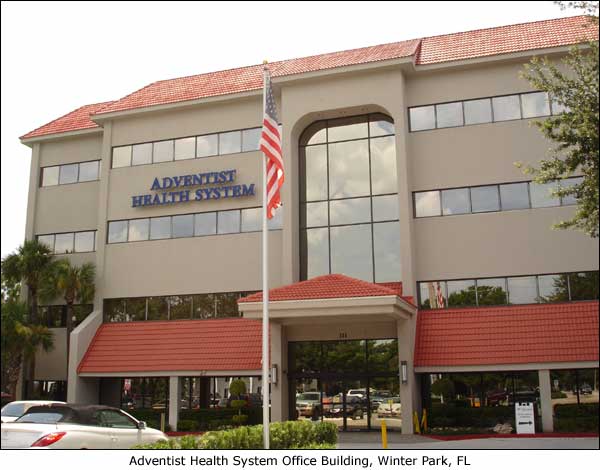
Adventist/MRMC deal: So many questions


Community Health Systems, Inc. announced Wednesday that an affiliate of the company has signed an agreement to sell Munroe Regional Medical Center to Florida Hospital Ocala, Inc., a subsidiary of Adventist Health System Sunbelt Healthcare Corporation. The transfer of the lease is subject to the consent of the Marion County Hospital District. [Doug Engle/Staff photographer] Next


By Carlos E. Medina


Sunday
Posted Apr 22, 2018 at 2:01 AM


The sale of the lease of Munroe Regional Medical Center to Adventist Health System brings lots of questions. Here are some answers.

For weeks, the worst-kept secret in the healthcare industry in Central Florida was the impending sale of the lease to operate Munroe Regional Medical Center in Ocala.

On Wednesday, official word came that, indeed, Community Health Systems was selling out to Adventist Health System. The sale of the lease to the largest and oldest hospital in Marion County brings with it lots of questions. While the finer points of the deal, including the sales price, are still not public, there is enough out there to answer some of the burning questions.

First, some perspective.

In 2014, CHS took over operations of Munroe under a 40-year lease agreement with the Marion County Hospital District, which still owns the hospital. The Franklin, Tennessee-based company inherited the lease that went to Health Management Associates. CHS closed on the purchase of HMA just after the lease award.

Related content


Explore the CHS-Munroe saga in recent years April 20, 2018

When announcing the sale, CHS stated that Adventist would assume the long-term lease. Joe Hanratty, the hospital district attorney, said assumption of the lease would include all its provisions as well. The hospital district, in addition to managing the proceeds of the lease, also enforces the lease agreement and its board of trustees must sign off on the sale before it is final.

What happens to MRMC employees?

In the short-term, nothing.


Monday, February 21, 2011

NASDAQ and ICE discuss about joint bid for NYSE Euronext

Submitted by Upneet Sandhu on Mon, 02/21/2011 - 17:36 Finance Sector


It now seems to be a less probable to get the merger done between the ICE: 127.22, 0.00, 0.00% (Intercontinental Exchange Incorporation) and the NASDAQ: 29.07, 0.00, 0.00% i. e. the NASDAQ OMX Group. However the bid for NYSE Euronext cannot be fully considered as closed because there are still discussions being held about the combined bid made for NYSE.

Earlier in this weekend Fox business has come to know about from some sources that the Intercontinental Exchange Incorporation (ICE) did not want to be controlled or regulated by the Securities & Exchange Commission. It was assumed by the ICE and also NASDAQ that in order to wrest the NYSE Euronext from the Deutsche Boerse they will have to pay an amount of money of near about 11 billion dollars.

Last week the Deutsche Boerse had agreed to obtain the Big Board. It has been determined by the ICE as well as NASDAQ that the antitrust issues would not act as barrier. NASDAQ is determined to take on the stock listings of the New York Stock Exchange (NYSE). It has been known that the Deutsche Boerse is willing for the merger with the NYSE Euronext. They have agreed to merge with plans of forming a Trans Atlantic exchange. The major hubs of the company will be at Frankfurt and New York. This deal which is soon expected to be a reality has created a fever of merger among the other major stock exchanges of the world. There have been discussions going on between the ICE and the Nasdaq OMX regarding the rival bid for NYSE.

According to some sources the ICE and NASDAQ are assumed to be making a move in the next five to seven days. In the mean time it has been known that the Bats Global Market has decided to obtain the Chi – X Europe. In other words this deal means the combing of the trading operations of Europe and the United States.
.


.

Wednesday, September 01, 2010

UCH health centers merge with Adventist chain

By SHANNON BEHNKEN The Tampa Tribune

Published: September 1, 2010

TAMPA - University Community Hospital has officially merged with Adventist Health System of Winter Park, a Christian hospital chain with 38 hospitals in 12 states.

The move gives UCH access to more capital. Adventist operates 37 hospitals in the Midwest and South, including 17 in Florida.

Adventist might benefit from UCH's greater presence in the Tampa Bay area. So far, Adventist's only local hospital is Florida Hospital Zephyrhills.

The new group's hospitals in the region include University Community Hospital; University Community Hospital-Carrollwood; Pepin Heart Hospital & Dr. Kiran C. Patel Research Institute; the Long Term Acute Care Hospital at Connerton; Florida Hospital Zephyrhills; and the soon to be built Wesley Chapel Medical Center.

Helen Ellis Memorial Hospital will also be joining Adventist Health System, serving the Tarpon Springs community.

The new hospital board appointed John Harding as president and CEO for the region. He is the currently president and CEO of Florida Hospital Zephyrhills and has more than 25 years of health care administration experience.

"John knows the Tampa Bay community and will provide the leadership experience needed to guide this new region," Mike Schultz, president and CEO of the AHS Florida Region and vice chairman for the UCH board, said in a news release.

"He embraces medical technology and advancement with an emphasis on quality and safety, all the while nurturing a Christian-based mission of health care delivery. These elements are vital to the future success of these hospitals."

Adventist Health System said it committed $125 million in capital investments, $10 million to the UCH Foundation and has agreed to take on UCH's debt and outstanding liabilities.

Adventist Health System, according to its website, is a not-for-profit health care organization that emphasizes Christ at the center of care.

It was founded in 1973 to support Seventh-day Adventist health care organizations in the south and southwest and is the now the largest not-for-profit Protestant health care provider in the nation, the website says.

Reporter Shannon Behnken can be reached at (813) 259-7804.
.
Source: http://www2.tbo.com/content/2010/sep/01/uch-health-centers-merge-adventist-chain/
.

Saturday, May 01, 2010

British Methodists prepare to die

By STEVE ADDISON
movements.net
April 8, 2010

We are prepared to go out of existence not because we are declining or failing in mission, but for the sake of mission.

Rev David Gamble, Methodist Conference President said this in an address to the Church of England's General Synod, February 11, 2010.

Once a world changing movement under John Wesley, the Methodist church has seen its membership shrink to just 265,000.

Winston Churchill said after the successful evacuation from Dunkirk in 1940 that, Wars are not won by evacuations. In other words, defensive measures may be necessary, but, as every chess player knows, attack is the best form of defence. A merger of the Methodist Church with the Anglicans may be necessary, but it is a defensive measure. At face value, it doesn't sound as if it is going to win the war.

Despite assurances to the contrary, this proposed merger is not driven by a commitment to mission or unity. Overwhelmingly mergers are driven by a) institutional decline, and b) lack of clarity and commitment to the movement's founding cause and core beliefs. They do nothing to arrest mainline decline.

The Methodists of Britain have gone down the same path as every other mainline Protestant denomination of the last fifty years. The sad reality is that attempts at union will actually speed up their decline. There is no other historical pattern.

END
.
.
Source: http://www.virtueonline.org/portal/modules/news/article.php?storyid=12461
.
P.S.
Yet, the "state" church of Britain remains (Anglican); Now displaying a clearer manifestation of its true identity, just a variation of the Catholic theme.

Could a divorce [Henry the VIII] denied, really establish a "Christian" church?

Friday, April 02, 2010

University Community Health, Adventist Health explore merger


Wednesday, March 31, 2010, 2:50pm EDT

University Community Health, Adventist Health explore merger

Tampa Bay Business Journal - by Margie Manning Senior Staff Writer

Adventist Health System and University Community Health have signed a non-binding letter of intent to explore a possible merger of the two systems.

The merger potentially could be completed this summer, pending completion of due diligence and any regulatory review, said Norm Stein, president and chief executive officer of UCH.

The merger would give Adventist, based in Winter Park and the largest not-for-profit Protestant health care provider in the United States, a big boost in market share in the Tampa Bay area.

University Community Health, which includes University Community Hospital, University Community Hospital-Carrollwood, Pepin Heart Hospital and Helen Ellis Memorial Hospital, accounts for about 9 percent of inpatient discharges and 9 percent of total acute-care beds in the Bay area, according to a February market review by HealthLeaders-InterStudy.

Adventist supports 37 hospitals, but only one of them — Florida Hospital Zephyrhills — is in the Bay area.

A merger would give Adventist an opportunity to grow on the partnerships and relationships UCH has in place, said Christine Stewart, communications manager for Adventist.

The two systems already are working together on a joint venture to build Wesley Chapel Medical Center, a health care complex in Pasco County. That joint venture relationship, formed in 2007, allowed the boards of UCH and Adventist to work together and get to know each other, Stein said.

The economic downturn has prompted some consolidation in the health care industry, but succession planning, more than dollars and cents, played a role in the potential Adventist-UCH merger, Stein said.

“At one point last year, I announced my retirement,” he said. Discussions with Adventist about a merger emerged as part of the planning process the UCH board undertook. “This was driven not out of financial need but out of the value of being able to work together more efficiently.”

Stein, who will turn 65 in April, plans to step down once the deal is completed. A new market manager would be named, but that person has not yet been identified. Adventist’s goal would be to not disrupt patient care and at this point does not intend to have any layoffs of staff reductions, although details remain to be worked out, Stewart said UCH reported $7.8 million in operating income on revenue of $502.5 million for the fiscal year ended Sept. 30, 2009, a dramatic turnaround from the $7.3 million operating loss in the year-earlier period. Adventist had revenue of $5.5 billion and total earnings after expenses of $233.5 million for the year ended Dec. 31, 2008, the most recent available.
.
.
.
.
Related:
.

Wednesday, May 06, 2009

The Impact Of Chrysler's Bankruptcy

Doctor Doom
The Impact Of Chrysler's Bankruptcy
Nouriel Roubini, 05.07.09, 12:01 AM EDT
Lessons for GM--and for the rest of us.


On April 30, Chrysler filed for Chapter 11 bankruptcy protection from its current creditors. As such, Chrysler will be able to operate as a going concern, while the company renegotiates its debt structure and other obligations. The U.S. government has described Chrysler's action as a "prepackaged surgical bankruptcy," through which it hopes the company will be able to exit the bankruptcy process within 30 to 60 days.

If Chrysler achieves this, it will emerge with a new global partnership with the Italy-based Fiat ( FIA - news - people ). Instead of cash, Fiat will provide the equivalent of billions of dollars in research- and investment-related (R&D) investments for a 35% stake in the new Chrysler. However, many experts think a quick trip into (and out of) bankruptcy might be unrealistic.


In the administration's view, cost cuts--implemented by Cerberus and the new management brought in by Bob Nardelli, who cut into Chrysler's R&D budget and new product development--left Chrysler, the smallest of the Detroit automakers, with a very thin line up of new vehicles.

The Obama administration set partnering with Fiat as a precondition for any further government assistance. Nevertheless, Chrysler was unable to avoid the bankruptcy process, because some creditors balked at the terms being offered in the proposed debt-to-equity swap by the government.

Fiat is vying to get a 35% stake in Chrysler without paying anything for it. What it brings to the table is billions of dollars in R&D that have positioned it well to produce new cars in the future.

Fiat exited the U.S. market decades ago. The marriage between Fiat and Chrysler is based on harsh realities, as evidenced by continuing layoffs in Chrysler's bloated U.S. and Canadian operations, but it seems to be a symbiotic relationship, aimed to help both car makers survive the new tests of an even more competitive landscape. Moreover, it is a reflection of the considerable overcapacities in the global auto sector which may require further consolidation in several national and international markets.

The short-term outcome of Chrysler's bankruptcy filing may come to determine the path for General Motors ( GM - news - people ), if not the entire U.S. auto industry. If bankruptcy proceedings for Chrysler go as the company and the U.S. government have planned, Chrysler's filing may very well turn out to be just a test case before the bankruptcy filing of GM itself.

GM has until the end of May to convince the government it has a viable business plan for restructuring outside a Chapter 11 reorganization. If it fails to renegotiate its debt and convince its current creditors to undergo a debt-for-equity swap--as Chrysler failed to do--then GM will have no option but to file for Chapter 11 protection.

GM's new chief executive, Fritz Henderson, has vowed to do whatever is reasonably necessary to prevent the automaker from going under, including seeking loan packages from U.S., Canadian and European governments (particularly Germany). But GM can no longer afford its extensive European operations and is in the process of looking for bidders.

The significant roles the auto sector plays in employment, exports and industrial production have heightened the political importance of responding to their vulnerabilities, which have been exacerbated by the credit crunch, prompting rescue packages including bridge loans, incentives to purchase domestic vehicles and increases in tariffs on imported cars and auto parts. In the face of rising unemployment in other sectors, governments hope to avoid any disorderly bankruptcy proceedings.

Furthermore, the Chrysler-Fiat merger could set off a chain of consolidations within the auto sector, which continues to have significant production overcapacities. Even emerging economies are likely to contribute slower auto demand growth in coming years. In Russia, automakers, including Toyota ( TM - news - people ), have repeatedly shuttered production, and domestic automakers are now increasing car loans in order to encourage purchases.

Other countries, such as China, also face the near-term challenge of consolidating their many automakers into several companies large enough to take advantage of economies of scale, increasing their share of the domestic market, and possibly expanding abroad.

Fiat is also trying to position itself to obtain an ownership stake in GM's European affiliate, Opel. The plan, which includes the other GM subsidiaries in Europe--Vauxhall in Britain and Saab in Sweden, would create a new global auto company with annual sales of up to 7 million cars and 80 billion euros (106 billion U.S. dollars) in revenues, which would secure Fiat a winning position in the post-crisis market.

The move, however, is likely to face political hurdles, as neither the German nor Italian governments would like to deal with the job losses (an estimated 8,000 to 9,000 jobs) likely from such a merger, particularly not in an election year (Germans vote this fall).

According to press reports, Berlin issued a list of conditions for Fiat, which includes stating where the headquarters would be located, where the taxes would be paid, the number of expected job losses and the future of Opel plants in Germany. GM, though, has the final say in assessing Fiat's offer. Yet the German economic minister suggested Fiat needs German state credits in lieu of adequate financing, which might increase German government leverage. However, supporting the formation of a global car maker with the German government's credit guarantees may enrage other German car makers, such as the VW Group, BMW and Mercedes-Benz.

The pressure on domestic jobs has increased the political importance of responding to the automakers' woes in many countries. In February, France raised protectionist fears after introducing state aid for the domestic car makers in return for an unwritten pledge to keep jobs and production at home. It posed a test for the EU's single-market rules and triggered an angry response from the Eastern European countries that would be hurt the most by the measure. Other countries, like Argentina and Russia, have increased restrictions on auto or parts imports in an attempt to support domestic industries. These might actually have the opposite effect--those in Russia hurt the business of used-car sellers.

But some government attempts to stoke auto demand may well erode future demand. So-called "cash-for-clunkers" deals--in which governments provide incentives for consumers to trade in their old cars for new (and often more fuel-efficient) ones--have had the desired effect, boosting auto sales in countries like Germany and China for the types of cars targeted.

These measures are helping to erode the inventory of manufacturers in a relatively orderly manner, but may be deferring the adjustment process the automakers will later face. Moreover, rising unemployment is likely to weigh on consumption, especially for large, credit-dependent purchases like cars.

The bankruptcy also has significant repercussions on the corporate bond market. Chrysler's bankruptcy filing was preceded by tough negotiations among creditors and the government to conclude an out-of-court restructuring in which lenders would receive 29 cents on the dollar in cash in exchange for wiping out about $6.9 billion of Chrysler's debt.

A group of about 20 secured creditors refused to sign off on the deal, arguing that their stakes were worth more and demanding that their seniority rights be observed. However, recent empirical evidence shows that as default rates increase, recovery rates are falling fast in this cycle. Moody's ( MCO - news - people ) reported that in the past seven months, completed CDS auctions resulted in a recovery rate of 30 cents on the dollar for loans and about 15 cents on the dollar for bonds, compared with 85 cents and 70 cents on the dollar, respectively, for all of 2008.

The latest research by Edward Altman yields similar results, stressing that distressed exchanges to avoid bankruptcy have surged since 2008, and that they usually yield significantly higher recovery rates to participating bondholders. In fact, S&P warns that, due to loose covenants and missing early-warning triggers, the losses even for secured creditors in this cycle might turn out to be substantial if a company cannot reorganize and liquidate.

Henry Hu of Texas University points to the "empty creditor" phenomenon to explain why some lenders prefer to hold out and force a bankruptcy seemingly against the company's--and thus their own--best interests. In short, creditors with enough credit default swaps may simultaneously have control rights and incentives to cause the debtor firm's value to fall. And if bankruptcy occurs, the empty creditor may undermine proper reorganization, especially if his interests (or non-interests) are not fully disclosed to the bankruptcy court.

But are credit markets finally thawing? Indeed, corporate bond issuance has picked up substantially since December, especially in the high-yield segment amid tighter spreads since the immediate Lehman aftermath. On a more cautious note, the IMF notes that, given shortening credit lines and still tight bank lending standards (confirmed in the April Bank Loan Officer Survey), corporations are taking advantage of this window of opportunity to refinance themselves in the bond market, despite substantially higher costs.

An additional factor fueling this front-loaded corporate bond activity is the likely future crowding-out by sovereign and government guaranteed debt. While the high-yield segment has returned 17.4% year-to-date in 2009, the fates of Chrysler and GM show the default rate may not yet have reached its peak.

Nouriel Roubini, a professor at New York University's Stern Business School and chairman of Roubini Global Economics, is a weekly columnist for Forbes. Analysts at Roubini Global Economics assisted in the research and writing of this piece.


Source:http://www.forbes.com/2009/05/06/chrysler-gm-fiat-bankruptcy-opinions-columnists-nouriel-roubini.html

P.S.My question to Professor Roubini is why is the White House micro-managing and giving it's blessing to this Fiat-Chrysler consolidation?

I pose that question to anyone: Why is there such an obssession with a merger with a foreign company, of the Italian persuasion?

Che Fai?

.