Showing posts with label traditions. Show all posts

Wednesday, July 01, 2026

Mamdani-backed socialist primary winner founded group whose goal is to ‘eradicate' Western civilization


Darializa Avila Chevalier helped launch Columbia University Apartheid Divest, which said it wants to end the West

Published June 25, 2026 9:50am EDT


The socialist backed by New York City Mayor Zohran Mamdani who won Tuesday night’s primary election in New York’s 13th Congressional District founded a group in college that called for the total destruction of the West.

Darializa Avila Chevalier, 32, a Democratic nominee for U.S. Congress who made career out of "community organizing," wrote in her biography for an opinion piece in independent news outlet The Electronic Intifada that she "helped launch the boycott, divestment and sanctions campaign Columbia University Apartheid Divest."

"We are Westerners fighting for the total eradication of Western civilization," the group said in a now-deleted 2024 Instagram post.

In May 2024, eight years after she graduated from Columbia, Chevalier was back on campus advocating alongside the group she founded, known as CUAD, wearing a keffiyeh and a t-shirt emblazoned with the group's name.


Darializa Avila Chevalier, Democratic candidate for Congress in New York's 13th Congressional District, speaks with a voter in the Morningside Heights neighborhood of Manhattan on June 14, 2026, in New York, N.Y. (Shuran Huang/For The Washington Post via Getty Images)

Avila Chevalier was interviewed by the Associated Press at the school's infamous encampment against Israel that year, which was later broken up by police.

Only months after that, CUAD, caused a firestorm when it reportedly posted its goal of eradicating Western Civilization.

Friday, May 01, 2026

A Brief History of the Maypole Dance


A traditional Maypole is raised in Glastonbury. Matt Cardy / Getty Images

By 
Patti Wigington
Updated on June 25, 2019


The maypole dance is a spring ritual long known to Western Europeans. Usually performed on May 1 (May Day), the folk custom is done around a pole garnished with flowers and ribbon to symbolize a tree. Practiced for generations in countries such as Germany and England, the maypole tradition dates back to the dances ancient people used to do around actual trees in hopes of harvesting a large crop.

Today, the dance is still practiced and holds special significance to pagans, including Wiccans, who have made a point to take part in the same customs their ancestors did. But people both new and old to the tradition may not know the complicated roots of this simple ritual. The history of the maypole dance reveals that a variety of events gave rise to the custom.

A Tradition in Germany, Britain, and Rome

Historians have suggested that maypole dancing originated in Germany and traveled to the British Isles courtesy of invading forces. In Great Britain, the dance became part of a fertility ritual held every spring in some areas. By the Middle Ages, most villages had an annual maypole celebration. In rural areas, the maypole was typically erected on the village green, but a few places, including some urban neighborhoods in London, had a permanent maypole that stayed up year round.

The ritual was also popular in ancient Rome, however. The late Oxford professor and anthropologist E.O. James discusses the Maypole's connection to Roman traditions in his 1962 article "The Influence of Folklore on the History of Religion." James suggests that trees were stripped of their leaves and limbs, and then decorated with garlands of ivy, vines, and flowers as part of the Roman spring celebration. This may have been part of the festival of Floralia, which began on April 28. Other theories include that the trees, or poles, were wrapped in violets as an homage to the mythological couple Attis and Cybele.

Wednesday, December 24, 2025

Every Popular "Christian" Tradition With Pagan or Non-Biblical Roots

Real Seventh-day Adventists Are Faithful To Truth! Christmas & Sunday Wo...

A look at highlights of Vatican II on 60th anniversary of its wrap


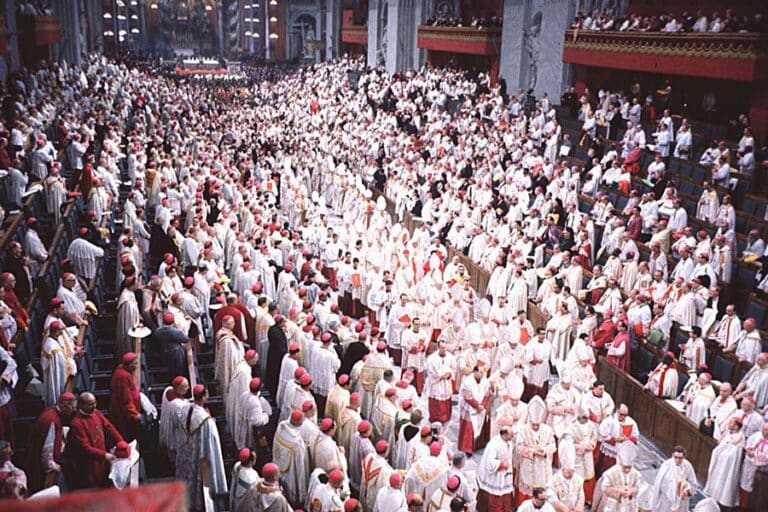
An undated photo shows prelates during the Council Hall in St. Peter's Basilica at the Vatican during the third session of the Second Vatican Council. (OSV News photo/Ernst Herb, KNA)


December 7, 2025
By Alexander Brüggemann


The Second Vatican Council, which after three years of dialogue and document drafting closed on Dec. 8, 1965, changed the face of the church, and opened it to the modern world. The council, opened under Pope John XXIII and closed under his successor, Pope Paul VI, initiated a comprehensive renewal, with major council texts released on hot-button church issues. As the church commemorates 60 years since the closing of Vatican II, here are seven key issues and documents that serve as its legacy for future generations.


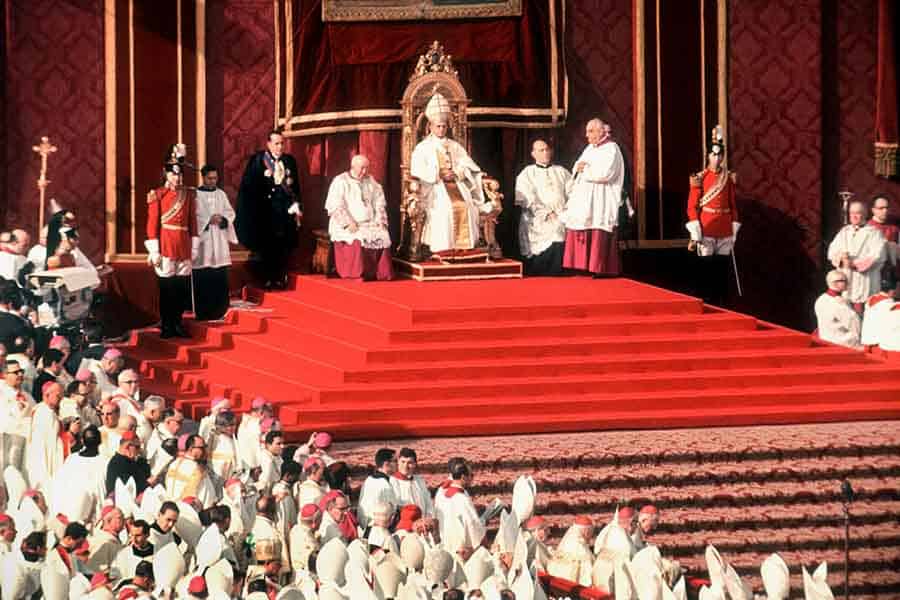
Pope Paul VI sits in the “cathedra” or bishop’s chair during the Second Vatican Council in July 1965 in St. Peter’s Square at the Vatican. (OSV News photo/Ernst Herb, KNA)

Understanding of the church: “Lumen gentium” (1964), one of the four primary constitutions of the council, sets out the new self-understanding of the Roman Catholic Church. It defines the church as a community of believers, as the “people of God” on their journey through time. In this constantly reforming church, a “common priesthood” of all believers is emphasized — something realized in different forms with clergy and laity. The constitution emphasizes the role of the college of bishops who lead the church “with Peter and under Peter,” as Cardinal Joseph Ratzinger, later Pope Benedict XVI, reminded years later. In several decrees, the council drafted guidelines for a contemporary form of Christian life and service in spiritual vocations for priests, religious and laity. The importance of the vocation of the laity is emphasized by the council fathers and the training of priests was reorganized. The church’s missionary activity was given a new theological foundation in the decree “Ad gentes.” In the decree “Christus dominus” (1965), on the episcopal pastoral office in the church, the leadership function of the bishop in his diocese was strengthened.

Thursday, November 27, 2025

Who Were the Pilgrims Who Celebrated the First Thanksgiving?


Photo caption
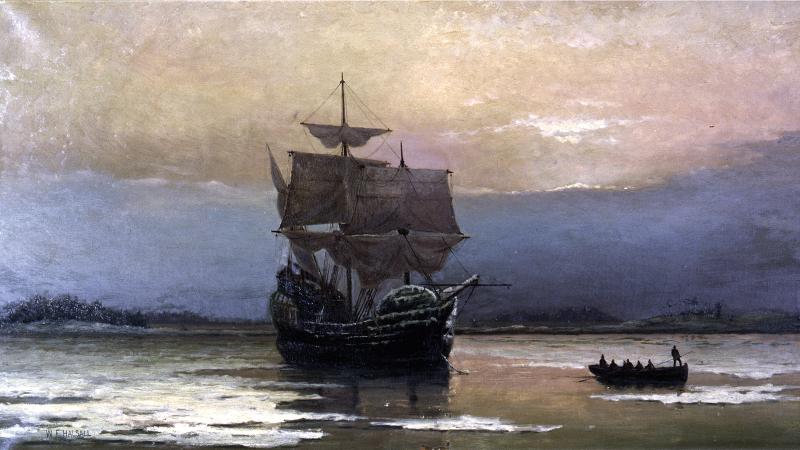
The Landing of the Pilgrims in 1620, a tapestry by Mabelle Linnea Holmes.
—Jamestown-Yorktown Educational Trust, Virginia / Bridgeman Images

An NEH-funded film revisits the Puritan Separatists who arrived aboard the Mayflower.

HUMANITIES, November/December 2015, Volume 36, Number 6

In 1620, the Mayflower plowed across the Atlantic through headwinds and ocean currents at an incredibly slow two miles per hour. The overcrowded vessel’s crossing took more than two harrowing months. On the way, its 102 passengers witnessed an astonishing scene. During a fierce storm, an indentured servant named John Howland had come topside for fresh air when the ship rolled violently, casting him into the raging sea. He sank well beneath the waves. Such a fate almost certainly meant death by drowning. Yet, somehow, Howland had managed to grab a halyard on his way overboard, and desperately clung to it long enough for the crew to haul him back to safety.


Friday, October 03, 2025

Presidential Message on the Feast of Saint Michael the Archangel

Presidential Message on the Feast of Saint Michael the Archangel

The White House
September 29, 2025

Today, I salute the millions of Christian believers in the United States and around the world observing the Feast of Saint Michael the Archangel.

According to sacred Scripture, when the Devil rebelled against God in Heaven, Saint Michael and his legion of angels cast Satan down to Earth—triumphantly reasserting God’s sovereignty over all creation. For 2,000 years, Christians have looked to Saint Michael the Archangel for protection, strength, and courage in times of conflict, distress, and doubt.

In 1886, nearly 140 years ago, Pope Leo XIII, leader of the Roman Catholic Church, fearing for the future of the western world, introduced the legendary Prayer to Saint Michael, which is still recited to this day in churches and homes all across our Nation and throughout the world:

Saint Michael the Archangel, defend us in battle. Be our defense against the wickedness and snares of the Devil. May God rebuke him, we humbly pray, and do thou, O Prince of the heavenly hosts, by the power of God, cast into hell Satan, and all the evil spirits, who prowl about the world seeking the ruin of souls. Amen.


Saturday, September 20, 2025

The 80th Annual Alfred E. Smith Memorial Foundation Dinner


 The 80th Annual Dinner

This year’s Dinner will take place at the Waldorf Astoria New York on October 16, 2025.

The 80th Alfred E. Smith Memorial Foundation Dinner

Thursday, October 16, 2025
New York, NY

The 80th Alfred E. Smith Memorial Foundation Dinner benefiting women and children in need will take place on October 16, 2025, at the Waldorf Astoria New York, 301 Park Ave.

We invite you to join us for a lighthearted evening celebrating our Happy Warrior, Robert K. Kraft, and keynote speakers, Secretary of State Antony J. Blinken and Secretary of State Michael R. Pompeo.

Questions?

For general inquiries, please contact us at 646.794.3315 or AlSmith.Foundation@archny.org

For media inquiries, please click here.

View our 2025 Invitation & RSVP Card

To view photos of last year's dinner, please click here.

View our 2025 Invitation & RSVP Card


Since its first dinner in 1946, The Alfred E. Smith Memorial Foundation Dinner has raised millions of dollars for New York’s most vulnerable women and children. The Dinner has featured renowned cultural, business, and political figures, including most major party presidential nominees during election years since 1960.

Today the dinner is a cultural landmark, a living memorial to one of New York’s most beloved sons, remembered as the first Roman Catholic presidential candidate for a major party and a four-term governor who catalyzed labor reform and social security legislation in America.


Saturday, April 26, 2025

5 "Sacred" Papal Symbols and Their Significance


The ancient office of the pope is rich in symbols and insignia.


VINCENZO PINTO/AFP via Getty Images

Published: April 23, 2025

Last Updated: April 23, 2025

In the Roman Catholic Church, the pope is the sucessor to St. Peter, who was given authority by Jesus to establish His church on Earth, according to the New Testament. The pope is the Bishop of Rome and the chief pastor of the Roman Catholic Church, which claims nearly 1.4 billion adherents worldwide.

The ancient office of the pope, also known as the Holy See, is rich in symbols and insignia. Here are some of the most visible and meaningful of the papal symbols.

1.

The Papal Tiara

Known as the papal tiara or the “Triple Crown,” this historic headdress is the most revered and sacred symbol of the papacy. In addition to appearing prominently on papal emblems and coats of arms, the tiara was also a physical crown worn by popes for more than 1,000 years.

The Latin name of the papal tiara is the triregnum or “triple reign.” It’s a cone-shaped headdress composed of three layers, giving the impression of an elaborate beehive adorned with gold and precious gems.

According to historians, the tiara didn’t always have three layers. The earliest versions, dating back to the fourth century, were inspired by a conical Greco-Roman headdress called a Phrygian cap, as well as a Byzantine hat known as a camelaucum.

The tiara got its first ringed “crown” in the 900s to represent the pope’s authority over the Papal States, large swaths of land in central Italy that included Rome. Even though they weren’t kings, popes in the Middle Ages enjoyed a certain level of earthly power, says Christopher Bellitto, a historian at Kean University.

The second crown debuted on the tiara of Pope Boniface VIII in 1298, who wanted to emphasize the spiritual dominion of the pope. A third crown was added a century later, perhaps to indicate the pope’s supreme spiritual and moral authority over earthly kings.

Over time, the papal tiara became more and more elaborate and bejeweled. Pope Julius II was crowned with a tiara in 1503 that was valued by a Milan jeweler at 200,000 ducats (each ducat was 3.5 grams of pure gold). Each new pope was crowned with a tiara at their coronation and wore it during special processions from St. Peter’s Basilica in Rome.

The physical tiara was removed as part of the pope’s official vestments as part of the Vatican II reforms of the 1960s.

“The last pope who had the tiara put on his head was Paul VI in 1963,” says Bellitto, author of 101 Questions & Answers on Popes and the Papacy. Paul VI’s stunning golden tiara is on display at the Basilica of the National Shrine of the Immaculate Conception in Washington, D.C.

As an emblem of the papacy, the tiara is depicted as three tiered crowns topped with an orb and a cross representing the dominion of Jesus over the world. The papal tiara figures prominently on the coat of arms of the Holy See.


The papal tiara of Pope Francis.
CLAUDIO ONORATI/AFP via Getty Images