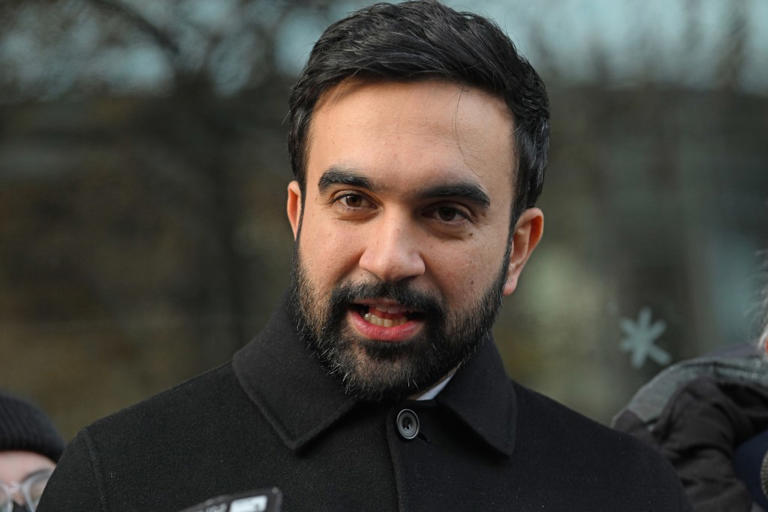
A Georgetown University scholar who was targeted for deportation by the Trump administration said he was terrified during his time in immigration jail. Badar Khan Suri was released on bond last week as his lawsuit against the U.S. government’s deportation case continues.
BY
OLIVIA DIAZ AND BEN FINLEY
Updated 6:34 PM EDT, May 23, 2025Share
ARLINGTON, Va. (AP) — One of the lowest moments of Badar Khan Suri’s
two months in federal custody was being crammed onto an airplane with hundreds of other shackled prisoners.
The Trump administration was
trying to deport the Georgetown University scholar over statements he made against Israel’s war in Gaza. The guards wouldn’t say where they were headed, but the Indian national was convinced it was out of the United States.
Then Khan Suri had to use the plane’s bathroom. He said the guards refused to unshackle his wrists.“They said, ‘No, you have to use it like this or do it in your trousers,’” Khan Suri recalled of the trip, taking him to a Louisiana detention center. “They were behaving as if we were animals.”
Khan Suri, 41, was released on bond last week as his lawsuit against the U.S.'s deportation case continues. In an interview with The Associated Press,
he spoke Thursday of a cramped cell, crowded with other detainees, where he waited anxiously, fearful about what would happen next.
He also addressed the Trump administration’s accusations that he spread “Hamas propaganda.” Khan Suri said he only spoke in support of Palestinians, who are going through an “unprecedented, livestreamed genocide.”
“I don’t support Hamas,” he said. “I support Palestine. I support Palestinians. And it is so deceiving for some people who just publish canards ... They will just replace Palestine with Hamas.”
Yet, because of his comments, he said U.S. authorities treated him as if he had committed a high-level crime. Fellow inmates said his red uniform was reserved for the most dangerous offenders.
“I said, ’No, I’m just a university teacher. I did nothing,” Khan Suri recalled.
Still, there were rays of hope. He said more than a hundred people from the Georgetown community wrote letters on his behalf to the federal judge overseeing his case, including some who are Jewish.
A crowd also greeted him when he arrived back in the Washington, D.C., area.
“Hindus, Jews, Christians, Muslims — everyone together,” said Khan Suri, a postdoctoral fellow who studies religion, peace and violence. “That is the reality I want to live with. That’s the reality I want to die for. Those people together.”
In a statement to the AP on Friday afternoon, Department of Homeland Security spokesperson Tricia McLaughlin refuted Khan Suri’s allegations of lack of due process and inhumane treatment.
McLaughlin said Khan Suri was in communication with attorneys “within hours of his arrival at the facility” and did not have to sleep on the floor. She said Immigration and Customs Enforcement “takes its commitment to promoting safe, secure, humane environments for those in our custody very seriously.”