By Sarang Sheth 03/15/2026
If not Palantir, why Palantir-shaped??
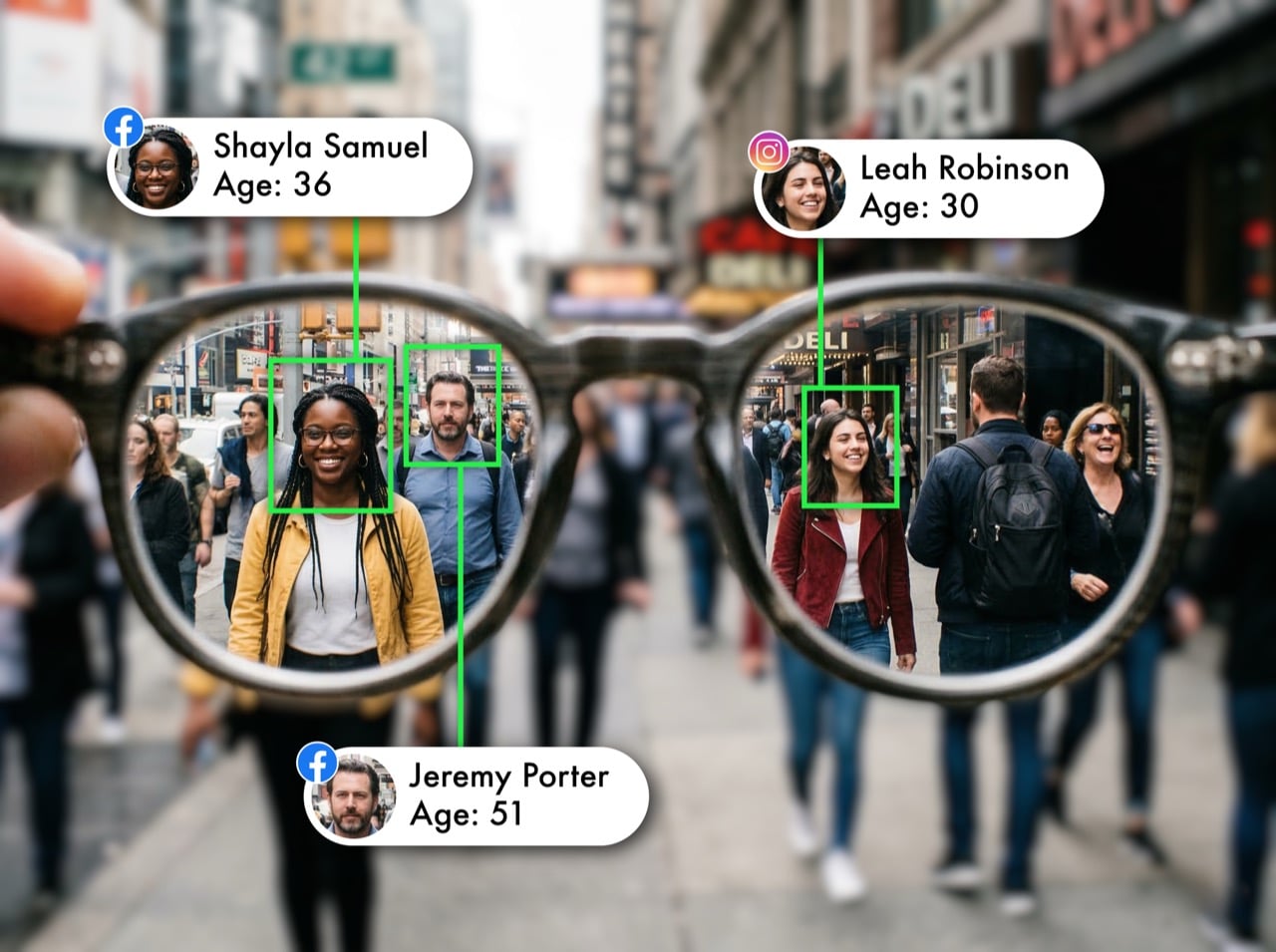
Palantir builds spy tech for the CIA, DHS, and ICE. It aggregates data, maps your life, and tells governments who to watch. Meta is building something with the same bones. It’s called Name Tag, a facial recognition feature coming to Ray-Ban smart glasses that lets a wearer look at a stranger in public and have an AI identify them in real time, pulling their name and profile directly from Facebook and Instagram. The surveillance hardware is a $300 fashion accessory, the database was built by 3 billion people tagging photos for free, and the targets are anyone, anywhere, who never agreed to any of it.
A leaked internal memo from May 2025, obtained by The New York Times, laid out the full scope: the feature is planned for every pair of Meta’s glasses, from Ray-Bans to the Oakley Meta HSTN sports line. Meta’s official response was a practiced non-denial: “we’re still thinking through options and will take a thoughtful approach if and before we roll anything out.” Companies that aren’t building something just say they’re not building it. Meta is not saying that.
The Database Was Being Built Before the Glasses Existed
Facebook turned on automatic photo tagging in 2010 with zero opt-in, and for eleven years, every time you tagged a friend’s face in a photo, you were feeding their facial recognition model. When Meta “deleted” over a billion faceprints in 2021 under lawsuit pressure, they kept the photos. They kept the social graph. They kept the engineers who built the whole thing. Name Tag isn’t a new product concept; it’s a previously mothballed capability getting a second run, this time with a camera on your face instead of a server in Menlo Park.
Anyone with a public Instagram account is immediately a potential target (it’s not like making your account private makes you any safer), which covers hundreds of millions of people who signed up to share photos, not to be enrolled in a real-world biometric identification system. Remember Portal, Meta’s smart home display with a face-tracking camera? It launched in 2018 right in the middle of the Cambridge Analytica fallout, and consumers collectively declined to put a Facebook camera in their living room. Meta discontinued it by 2022. The lesson they apparently took wasn’t “don’t build surveillance hardware.” It was “make sure the camera comes in wearing someone else’s face.”