Showing posts with label Republicans. Show all posts
Showing posts with label Republicans. Show all posts
Sunday, September 13, 2026


Thursday, September 10, 2026
Tuesday, July 28, 2026
Meet The Republicans Who Sided With Anthony Fauci To Shut Down The Country
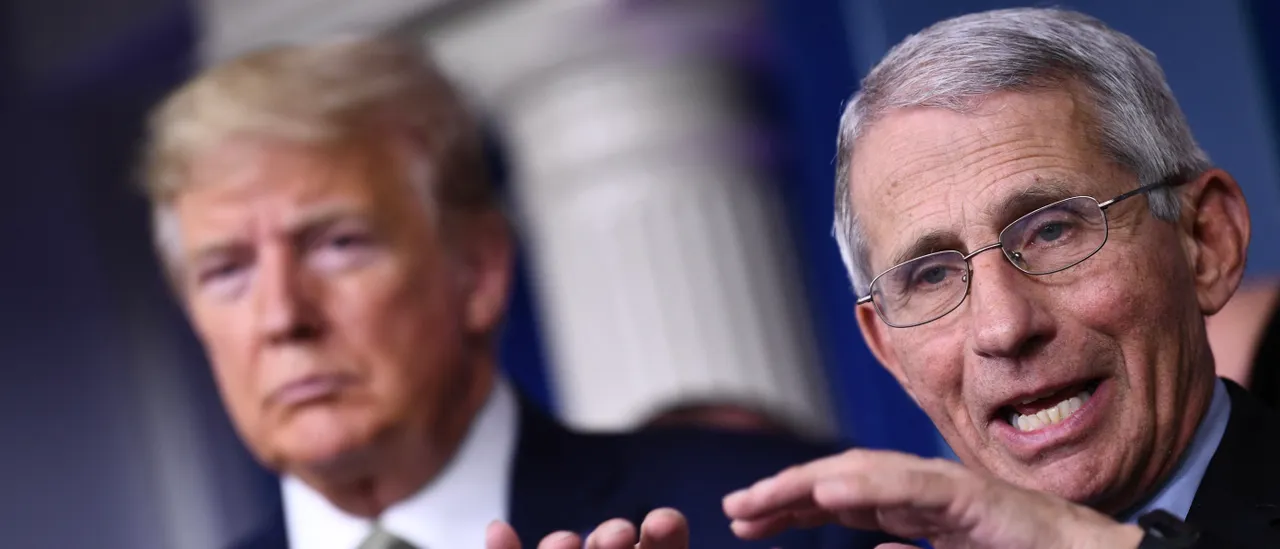
(Photo by BRENDAN SMIALOWSKI/AFP via Getty Images)
Derek VanBuskirk Reporter
July 27, 20266:10 PM ET
Republican Kentucky Sen. Rand Paul released Dr. Anthony Fauci’s personal diary Sunday, offering a behind-the-scenes look at the first Trump administration officials who aligned with Fauci as the country shut down during COVID-19.
The diary entries portray an administration divided over lockdowns, school closures and messaging, with several Republican officials backing the National Institute of Allergy and Infectious Diseases director’s efforts to maintain sweeping public health restrictions while sidelining dissenting voices. (RELATED: Fauci’s Own Diary Undercuts His Public Dismissal Of COVID Lab Leak)
One of the officials who backed the public health bureaucrat was Hope Hicks, a counselor to the president and former White House communications director, whom Fauci described as “very nice” after their first meeting in March 2020.
Fauci soon wrote that Hicks appeared to view him as a “future ally” after seeming uncomfortable with Trump’s desire for the COVID-19 team to hold two press briefings a day to boost morale and the economy through public transparency.
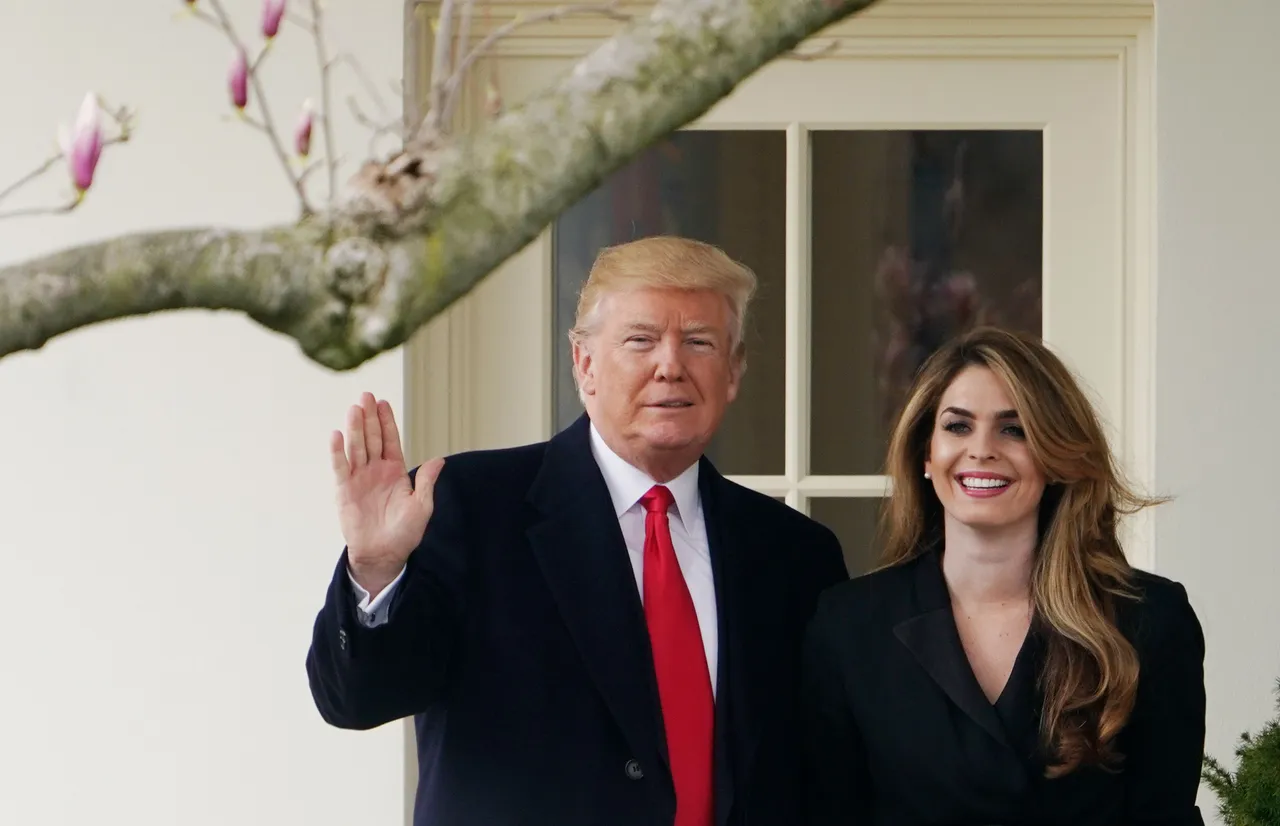
By early April, as Easter approached, Trump had grown increasingly frustrated with the continued shutdown of the economy and the country, calling Hicks and Fauci into the Oval Office to discuss reopening. Fauci wrote that Trump was “almost pleading” not to extend the country’s closure beyond the 30-day lockdown extension.
According to Fauci, Trump said he was destroying the country and that sports leagues and industry would be devastated by the administration’s recommendations.
In an attempt to appeal to Fauci’s Catholic background, Trump proposed reopening the country for Easter, Good Friday and Palm Sunday, suggesting that Masses could be held outdoors or in a drive-in format, but Fauci said he wasn’t persuaded by the president’s recommendation.
“Hope Hicks and I convinced him to essentially put Easter on hold for this year,” Fauci wrote.
By early October, Fauci wrote in bold red letters that “Hope Hicks is infected!!!”
Monday, July 13, 2026
Democratic pastors run to reclaim Jesus from Trump's Republicans
Democratic pastors run to reclaim Jesus from Trump's Republicans
Malcolm FOSTER
Sat, July 11, 2026 at 9:30 PM EDT

James Talarico, running for the Senate in Texas, is one of a crop of Democrats with deeply religious backgrounds who are challenging Republican dominance among Christians (RONALDO SCHEMIDT)
A band of white Democratic pastors have a striking message ahead of November's US midterm elections: Republicans have hijacked Jesus for political gain, and we're not going to stand for it.
For decades, it's been a truism that Republicans have cornered the Christian market -- at least when it comes to white voters.
But these ministers are so fed up with President Donald Trump, and particularly his policies against immigrants, that they're running as Democrats in November to rein him in.
"The Christians we're hearing in Washington don't reflect the Jesus of the Gospels," one of the insurgents, Adam Hamilton, told AFP.
As the head of a 24,000-member Methodist megachurch in a deeply conservative, rural area of Kansas, Hamilton would typically fit the profile of a right-wing Republican Christian.
However, along with support for fiscal responsibility and a strong military, the 62-year-old Hamilton backs legal access to abortion and protecting LGBTQ rights in his campaign for the US Senate.
Citing the "crassness and mean-spiritedness" of Trump's presidency, he said what's happening in Washington is "inconsistent with the values that I've preached for 36 years."
Malcolm FOSTER
Sat, July 11, 2026 at 9:30 PM EDT
James Talarico, running for the Senate in Texas, is one of a crop of Democrats with deeply religious backgrounds who are challenging Republican dominance among Christians (RONALDO SCHEMIDT)
A band of white Democratic pastors have a striking message ahead of November's US midterm elections: Republicans have hijacked Jesus for political gain, and we're not going to stand for it.
For decades, it's been a truism that Republicans have cornered the Christian market -- at least when it comes to white voters.
But these ministers are so fed up with President Donald Trump, and particularly his policies against immigrants, that they're running as Democrats in November to rein him in.
"The Christians we're hearing in Washington don't reflect the Jesus of the Gospels," one of the insurgents, Adam Hamilton, told AFP.
As the head of a 24,000-member Methodist megachurch in a deeply conservative, rural area of Kansas, Hamilton would typically fit the profile of a right-wing Republican Christian.
However, along with support for fiscal responsibility and a strong military, the 62-year-old Hamilton backs legal access to abortion and protecting LGBTQ rights in his campaign for the US Senate.
Citing the "crassness and mean-spiritedness" of Trump's presidency, he said what's happening in Washington is "inconsistent with the values that I've preached for 36 years."
Friday, July 10, 2026
Religion’s Longstanding Gender Gap Is Narrowing Among Gen Z. But Which Gender Is Narrowing It—and Why?
by Chantelle Lee
Reporter
Jul 9, 2026 6:00 AM ET
.png?branch=production&width=3840&quality=75&auto=webp&crop=3:2)
Photo-Illustration by Chloe Dowling for TIME (Source Images: Fabrice Lerouge—Getty Images; Weiquan Lin—Getty Images; Hiroshi Higuchi—Getty Images; Syuzanna Guseynova—Getty Images; SivStockMedia via Canva)
A gender gap has long persisted in religious identity. Historically, data has widely, and with remarkable consistency, shown women being more religious than men. But that appears to be changing when it comes to Gen Z.
Recent surveys indicate the longstanding gap is now closing among young men and women—and one even suggests that it might be beginning to open in the opposite direction.
Which gender is driving the shift, and why, is a matter of some contention, however.
Recent Gallup polling attributed the narrowing gender gap among Gen Zers primarily to a rise in religiosity—meaning the depth of religious belief—among young men. But other surveys have found no such change in young men’s religious identities, and have instead shown that the change is being caused by more young women turning away from religion—a trend that some attribute to young women’s frustration with the sexism that persists in some places of worship.
TIME spoke to pollsters, political scientists, religious leaders, and others about the data and what they make of it.
Are young men becoming more religious?
Gallup polling released in April found that in 2024-2025, 42% of men between the ages of 18 and 29 said religion was “very important” to them. That figure marks a jump of 14 percentage points from just two years before, when 28% of young men said this. It also shows a reversal of past gender dynamics: in previous years, women surpassed men in saying that religion is important to them. In 2012-2013, for instance, 51% of women between the ages of 18 and 29 said so, compared to just 41% of men in that same age group. In 2024-2025, meanwhile, just 29% of young women said religion is very important in their lives, notably lower than the 42% of young men who said the same.
“Historically, there has been a gender gap in religiosity in this country as long as we’ve had survey research,” says Frank Newport, a senior scientist at Gallup who worked on the poll. “What I think is important in our findings so far is that the gender gap among young Americans—18 to 29—has basically disappeared across several measures of religiosity. Men and women are either statistically the same or, in one measure, men are more religious, among 18 to 29 year olds.”
A gender gap has long persisted in religious identity. Historically, data has widely, and with remarkable consistency, shown women being more religious than men. But that appears to be changing when it comes to Gen Z.
Recent surveys indicate the longstanding gap is now closing among young men and women—and one even suggests that it might be beginning to open in the opposite direction.
Which gender is driving the shift, and why, is a matter of some contention, however.
Recent Gallup polling attributed the narrowing gender gap among Gen Zers primarily to a rise in religiosity—meaning the depth of religious belief—among young men. But other surveys have found no such change in young men’s religious identities, and have instead shown that the change is being caused by more young women turning away from religion—a trend that some attribute to young women’s frustration with the sexism that persists in some places of worship.
TIME spoke to pollsters, political scientists, religious leaders, and others about the data and what they make of it.
Are young men becoming more religious?
Gallup polling released in April found that in 2024-2025, 42% of men between the ages of 18 and 29 said religion was “very important” to them. That figure marks a jump of 14 percentage points from just two years before, when 28% of young men said this. It also shows a reversal of past gender dynamics: in previous years, women surpassed men in saying that religion is important to them. In 2012-2013, for instance, 51% of women between the ages of 18 and 29 said so, compared to just 41% of men in that same age group. In 2024-2025, meanwhile, just 29% of young women said religion is very important in their lives, notably lower than the 42% of young men who said the same.
“Historically, there has been a gender gap in religiosity in this country as long as we’ve had survey research,” says Frank Newport, a senior scientist at Gallup who worked on the poll. “What I think is important in our findings so far is that the gender gap among young Americans—18 to 29—has basically disappeared across several measures of religiosity. Men and women are either statistically the same or, in one measure, men are more religious, among 18 to 29 year olds.”
Wednesday, November 19, 2025
Schumer Shutdown Showed Vermont Democrats are Warped By Washington
VTGOP Monday Message for 11/17/2025
VT Republican Party
Nov 17, 2025
------

Schumer Shutdown Showed Vermont Democrats are Warped by Washington
The Schumer shutdown has ended. While many are rejoicing that hundreds of Vermonters who are federal employees now have certainty that their paycheck is coming, and thousands on SNAP know they can buy groceries, some people are still upset. Most notably, Vermont’s three federal delegates have each made public statements indicating that reopening the government—and ensuring workers and families got paid—was not the outcome they wanted.
Vermont’s sole Congressional Representative, Becca Balint, called reopening “a mistake” and insisted her party needs to “hold the damn line,” suggesting she believed it would have been better to continue depriving federal workers of their salary and low-income Vermonters of their food assistance to score political points. She also said “this whole thing stinks” and, in another interview, called it “B.S.”
Senator Welch, once viewed as a moderate voice and consensus builder, had been rumored as someone who might cross over to help Republicans reopen the government. But when the roll was called, he was not among them. Despite admitting that “a shutdown is a failure” and has “negative impacts” on federal workers, he continued to obstruct even when it served no practical purpose.
Saturday, November 08, 2025
A small Jesuit school in Denver has quietly become a pipeline for powerful Republicans surrounding Trump
By Dave Smith
October 3, 2025 at 6:03 AM EDT

Regis University in Denver
Faina Gurevich—Getty Images
A Catholic university nestled in the Rocky Mountains has quietly produced a surprising number of figures who now occupy influential positions within President Donald Trump’s political sphere and the broader conservative movement.
Regis University, a 148-year-old Jesuit institution in Denver, has become an unexpected common denominator among conservative leaders who have shaped American politics for decades.
The connection includes two women in Trump’s orbit currently making headlines: Erika Kirk, the new CEO of Turning Point USA following her husband Charlie Kirk’s assassination, and Lindsey Halligan, Trump’s nominee for U.S. attorney for the Eastern District of Virginia; both earned degrees from Regis.
But their alma mater has produced a much broader network of conservative power brokers who have shaped American politics for generations.
Regis University, which serves about 2,700 students, was able to confirm to Fortune that Erika Kirk was a student there from fall 2007 through the end of fall 2009, and Lindsey Halligan did graduate from the school in 2011, but offered no further comment.
A Catholic university nestled in the Rocky Mountains has quietly produced a surprising number of figures who now occupy influential positions within President Donald Trump’s political sphere and the broader conservative movement.
Regis University, a 148-year-old Jesuit institution in Denver, has become an unexpected common denominator among conservative leaders who have shaped American politics for decades.
The connection includes two women in Trump’s orbit currently making headlines: Erika Kirk, the new CEO of Turning Point USA following her husband Charlie Kirk’s assassination, and Lindsey Halligan, Trump’s nominee for U.S. attorney for the Eastern District of Virginia; both earned degrees from Regis.
But their alma mater has produced a much broader network of conservative power brokers who have shaped American politics for generations.
Regis University, which serves about 2,700 students, was able to confirm to Fortune that Erika Kirk was a student there from fall 2007 through the end of fall 2009, and Lindsey Halligan did graduate from the school in 2011, but offered no further comment.
Wednesday, November 05, 2025
Thursday, June 12, 2025
Monday, February 03, 2025
Jeffries lays out war plan for Democrats to take on Trump
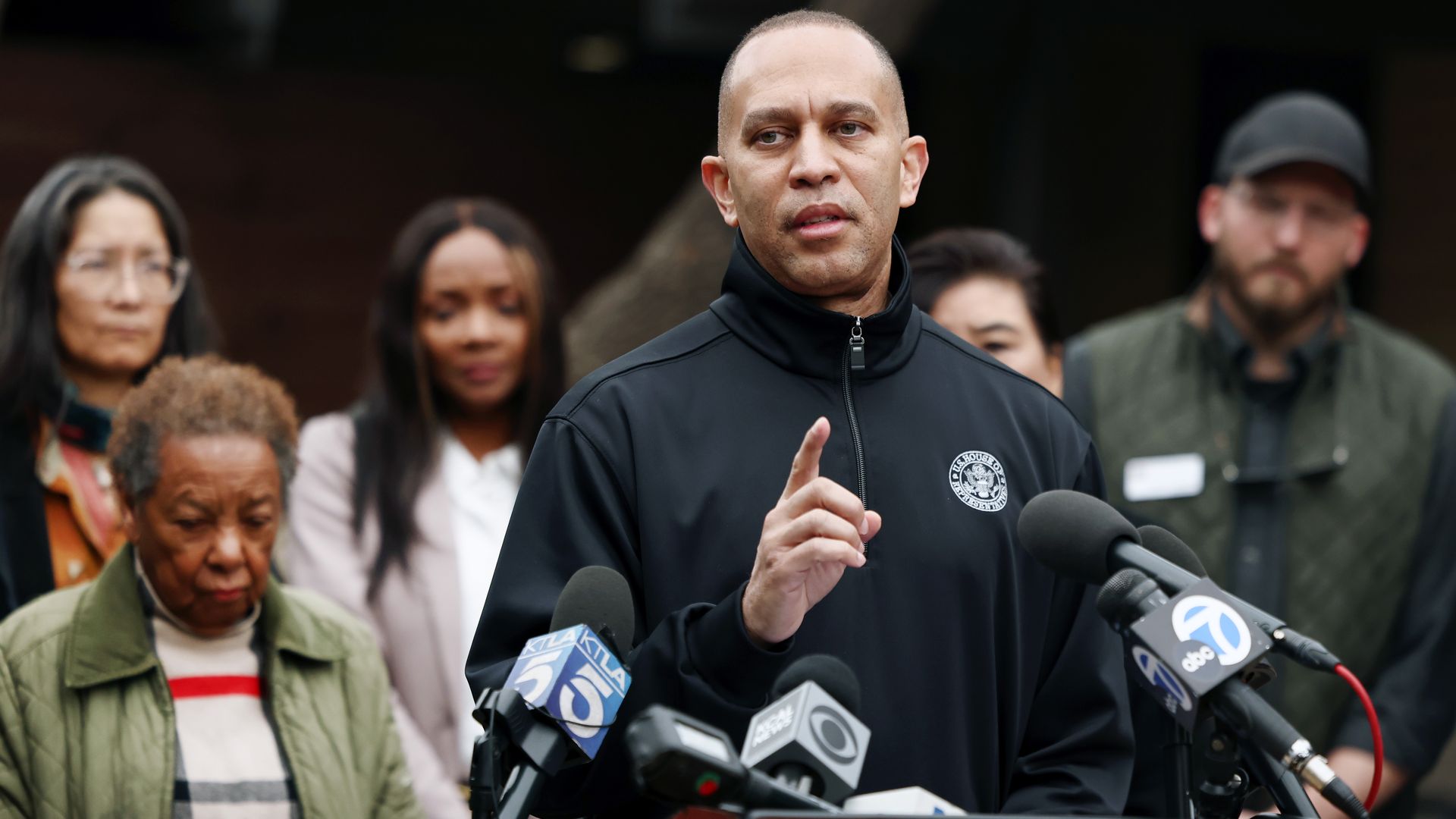
House Minority Leader Hakeem Jeffries speaks at a press conference in Altadena, Calif., on Jan. 30. Photo: Mario Tama/Getty Images

Andrew Solender
Why it matters: There has been rising tension between Democratic lawmakers and the party's grassroots over how the minority party, which has very little real power, can combat the new administration's most inflammatory moves.
Driving the news: In a "dear colleague" letter to House Democrats, Jeffries vowed to use a March 14 federal funding deadline as leverage to prevent Trump from freezing or diverting congressionally appropriated funds.
- "I have made clear to House Republican leadership," he wrote, that "any effort to steal taxpayer money from the American people ... must be choked off in the upcoming government funding bill, if not sooner."
- That is in direct response to a now-rescinded Office of Management and Budget memo that ordered federal grants and loans frozen, leading to widespread confusion and locking states out of the Medicaid portal.
- Jeffries also said Democrats will introduce a bill to prevent "unlawful access" to the Treasury Department's payment system after Elon Musk's Department of Government Efficiency reportedly obtained forced access to it over the objections of top officials.
Between the lines: With Republicans commanding a razor-thin majority in the House, Democrats believe Speaker Mike Johnson (R-La.) will be forced to go to them to fund the government and raise the debt ceiling.
- That would give them the opportunity to try to temper what they see as the excesses of the GOP trifecta now governing Washington, D.C.
- Some Republicans had hoped to include the debt ceiling in the massive party-line fiscal bill they are planning, but Johnson has signaled it will likely have to be passed on a bipartisan basis.
Zoom in: On top of those moves, Jeffries previewed a continuation of the public messaging campaign that Democrats credit for the rescission of the OMB memo.
- He urged members, for example, to reach out to canvass their districts for constituents affected by Trump's actions, saying he plans to hold a tele-town hall Monday night.
- He also wrote that Democrats on the House Oversight and Judiciary committees will lay out for their colleagues ongoing lawsuits to prevent some Trump acts like firing inspectors general and purging the civil service.
Tuesday, January 09, 2024
Friday, August 25, 2023
Climate Change Is Still a Huge Electoral Problem for Republicans
With Vivek Ramaswamy still calling it a “hoax,” how can the other GOP candidates gain credibility on an issue Americans care about?
BY NITISH PAHWA
AUG 25, 20235:50 AM
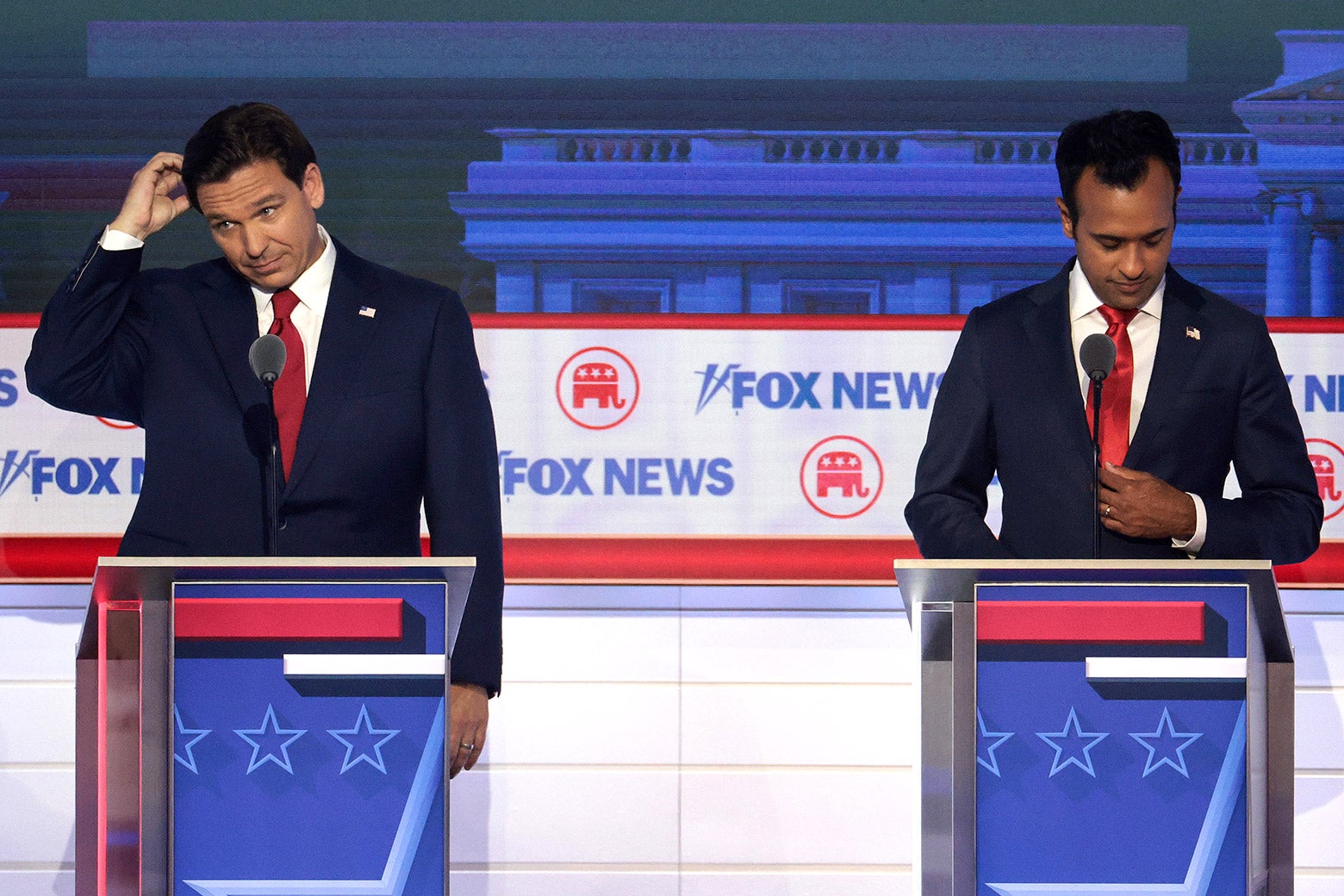
Ron DeSantis and Vivek Ramaswamy at the first GOP debate on Wednesday in Milwaukee. Win McNamee/Getty Images
About 20 minutes into Wednesday’s Republican presidential nominee debate, the Fox News anchors turned things over to a college student with a pertinent question. “Polls consistently show that young people’s No. 1 issue is climate change,” said Alexander Diaz, chair of Young Americans for Freedom at the Catholic University of America. “How will you, as both president of the United States and leader of the Republican Party, calm their fears that the Republican Party doesn’t care about climate change?”
It was, honestly, a remarkable moment. Fox News itself has been no slouch in the decades-spanning right-wing mission to downplay the effects of climate change, disputing the near-universal global agreement that human overdependence on fossil fuels is to blame. Yet, just before Diaz’s question, moderators Bret Baier and Martha MacCallum pointed to the historic weather disasters unfolding across the country—Maui’s wildfires, Tropical Storm Hilary, the Florida coast’s “hot tub” ocean temperatures, the record-breaking Southwestern heat waves—and noted their links to human impacts. They even closed out Diaz’s question with one of the most pointed gestures of the night: asking each candidate to raise their hand to demonstrate their belief that the climate was indeed changing thanks to human action.
Granted, the bar is so, so low. In the 2012 cycle, there were more questions asked about the moon than about the Earth. In 2016, voters concerned about our climate’s future had to watch Hillary Clinton declare that she believed in science as a laugh line, since the concept of a (denialist) President Donald Trump was still perceived as a joke. Last cycle, climate change did come up, albeit mostly in the Democratic primaries, not in Trump-devoted Republican circles. But over the past decade, the climate around climate change has, well, changed considerably: Following youth trends more broadly, Gen Z and millennial Republicans have consistently stated that they want their party to take firm action on the problem. As John Della Volpe, polling director at the Harvard Kennedy School Institute of Politics, noted in a pre-debate newsletter: “Protecting access to clean air and water … is about as important to younger Republicans as preserving traditional values is for older ones.”
Diaz himself is evidence of this new type of young Republican: He interned this summer for Arizona Rep. Juan Ciscomani, a freshman Republican who, in a bipartisan talk held in Tucson this week, touted the opportunity to make his state a “climate tech hub” while mentioning his congressional work to protect public lands and fund the cleanup of “forever chemicals” from Arizonan water supplies. Far from sufficient, but better than many Republicans these days.
About 20 minutes into Wednesday’s Republican presidential nominee debate, the Fox News anchors turned things over to a college student with a pertinent question. “Polls consistently show that young people’s No. 1 issue is climate change,” said Alexander Diaz, chair of Young Americans for Freedom at the Catholic University of America. “How will you, as both president of the United States and leader of the Republican Party, calm their fears that the Republican Party doesn’t care about climate change?”
It was, honestly, a remarkable moment. Fox News itself has been no slouch in the decades-spanning right-wing mission to downplay the effects of climate change, disputing the near-universal global agreement that human overdependence on fossil fuels is to blame. Yet, just before Diaz’s question, moderators Bret Baier and Martha MacCallum pointed to the historic weather disasters unfolding across the country—Maui’s wildfires, Tropical Storm Hilary, the Florida coast’s “hot tub” ocean temperatures, the record-breaking Southwestern heat waves—and noted their links to human impacts. They even closed out Diaz’s question with one of the most pointed gestures of the night: asking each candidate to raise their hand to demonstrate their belief that the climate was indeed changing thanks to human action.
Granted, the bar is so, so low. In the 2012 cycle, there were more questions asked about the moon than about the Earth. In 2016, voters concerned about our climate’s future had to watch Hillary Clinton declare that she believed in science as a laugh line, since the concept of a (denialist) President Donald Trump was still perceived as a joke. Last cycle, climate change did come up, albeit mostly in the Democratic primaries, not in Trump-devoted Republican circles. But over the past decade, the climate around climate change has, well, changed considerably: Following youth trends more broadly, Gen Z and millennial Republicans have consistently stated that they want their party to take firm action on the problem. As John Della Volpe, polling director at the Harvard Kennedy School Institute of Politics, noted in a pre-debate newsletter: “Protecting access to clean air and water … is about as important to younger Republicans as preserving traditional values is for older ones.”
Diaz himself is evidence of this new type of young Republican: He interned this summer for Arizona Rep. Juan Ciscomani, a freshman Republican who, in a bipartisan talk held in Tucson this week, touted the opportunity to make his state a “climate tech hub” while mentioning his congressional work to protect public lands and fund the cleanup of “forever chemicals” from Arizonan water supplies. Far from sufficient, but better than many Republicans these days.
Anyway, how did the candidates respond to the should-be layup of “raise your hand if you agree humans are changing the climate”? Not well, obviously, as this is the party whose base is still in thrall to Donald Trump—who gutted environmental regulations during his administration and has declared his intent to further that project should he win in 2024, likely in part by complaining about water-efficient showerheads.
A request for a quick gesture devolved into a melee of incoherent braying. Ron DeSantis interrupted the hand-raising exercise to say they should get to debate the issue instead. Then he went off on a misleading rant about President Joe Biden’s Maui response that moderators agreed was not an answer to the question at hand. Everything got worse when Vivek Ramaswamy jumped in with this absolute humdinger: “I’m the only person on this stage who isn’t bought and paid for, so I can say this: The climate change agenda is a hoax.” Wildly enough, the in-house viewers booed Ramaswamy for this; the polling firm Navigator found that his approval among independent women voters dropped sharply as Ramaswamy continued ranting about the “anti-carbon agenda” and attributed human casualties to “bad climate change policies.” This also fueled a heated personal squabble with Chris Christie, in an early manifestation of the candidates’ deep contempt for this fast-talking newcomer—who, tauntingly, brought up the Christie-Obama “hug” that followed Superstorm Sandy.
Then Nikki Haley responded, in … a relatively thoughtful manner? “We do care about clean air, clean water—we want to see that taken care of,” she declared. “Is climate change real? Yes, it is. But if you wanna go and really change the environment, then we need to start telling China and India that they have to lower their emissions.” Whatever you make of that line, it is maybe the most reasonable thing any Republican debater said about the issue—again, the bar is so, so low—and it earned a bit of applause.
Haley took a similar tack on abortion, dismissing the push for a federal ban (an incredibly unpopular policy helmed only by incredibly unpopular people, like Mike Pence) and holding forth on the need to protect vulnerable women instead of just, like, jailing them. Both subjects require GOP contenders, in the hopes of “appeasing the base,” to take extremist positions (being anti-abortion, denying human-caused climate change) that are wildly at odds with what the clear majority of American people actually want (access to abortion, action on climate change). Thanks to a detested former president and an outright-loathed Supreme Court, the GOP has backed itself into self-defeating stances both topics. The other candidates’ waffling only underscored this, as did post-debate polling demonstrating that even though Haley was favored by independents, Ramaswamy charmed the Trump-era base.
Overall, it wasn’t a great night for anyone who desires a more reality-oriented GOP. Ramaswamy hammered his oft-repeated “Drill, frack, burn coal” line, earning some cheers; Doug Burgum, known for embracing a bit of action to reduce emissions as North Dakota governor, nevertheless echoed Haley’s critiques of Biden’s climate policies for allegedly “subsidizing China,” conveniently forgetting the domestic battery factory coming to his state thanks to funds from the president’s infrastructure bill. “If we’re going to stop buying oil from the Middle East and start buying batteries from China, we’re going to trade OPEC for Sinopec,” he blustered. (Buddy, I’m sure that one sounded a lot better in your head.)
Once again, the Republican Party is on track to dismiss the existential concerns of young voters—even as they grow into an ever-important voting bloc. If this didn’t help the GOP in the past few election cycles, it’s probably not going to help them in the next one, either. At any rate, it’s going to be an interesting several months!
Saturday, August 12, 2023
Tuesday, June 15, 2021
Tuesday, December 24, 2019
G.O.P. Lawmaker Had Visions of a Christian Alternative Government
A Washington State legislator was accused of participating in the occupation of a federal wildlife refuge. Behind the scenes, he and right-wing activists were preparing for civil strife.

State Representative Matt Shea of Washington was accused of engaging in domestic terrorism in a report his colleagues commissioned.Credit...Ted S. Warren/Associated Press
By Mike Baker
Dec. 23, 2019
SPOKANE, Wash. — Matt Shea was 34 years old when he ran for the State Legislature in eastern Washington, but he had already established credentials that made him a promising Republican candidate.
A lawyer trained at Gonzaga University who had served a tour in Iraq with Washington’s Army National Guard, Mr. Shea pitched voters in 2008 on a platform of limiting taxes and punishing criminals, opposing same-sex marriage and supporting gun rights. He went on to win with nearly 60 percent of the vote, then moved up the ranks in the Legislature, reaching the powerful position of chair of his party’s caucus in 2017.
But back in his home district, Mr. Shea also began attracting the attention of law enforcement for his growing embrace of fringe ideologies and conspiracy theories. He networked with local militia groups, talked about plans to create a 51st state called Liberty and distributed to his closest followers a “Biblical Basis for War” document that calls for the “surrender” of those who favor abortion rights, same-sex marriage, “idolatry” and communism. “If they do not yield — kill all males,” it said.
Last week, a report commissioned by the State Legislature asserted that Mr. Shea had engaged in domestic terrorism in his support of the armed takeover of Oregon’s Malheur National Wildlife Refuge by militant ranchers and their supporters in 2016 — part of a protest over federal ownership of public lands in the West.
The scrubby pines and sparsely settled hills of the inland Northwest have long been seen as a potential homeland by fringe white supremacists and armed loners who are militantly suspicious of government power. But for the sheriff here in Spokane County, Ozzie Knezovich, Mr. Shea’s activities are part of a troubling trend: Far-right organizers have begun plying their message of civil conflict in mainstream political circles, building new networks that include elected politicians and voters who would never consider themselves part of an extremist group.
“I think a lot of people underestimate the size and the growth of what’s going on,” said Sheriff Knezovich, a longtime Republican who supports President Trump.
Investigation Into Washington State Representative Matt Shea
A state-sanctioned report accused Matt Shea of participating in domestic terrorism.
By Mike Baker
Dec. 23, 2019
SPOKANE, Wash. — Matt Shea was 34 years old when he ran for the State Legislature in eastern Washington, but he had already established credentials that made him a promising Republican candidate.
A lawyer trained at Gonzaga University who had served a tour in Iraq with Washington’s Army National Guard, Mr. Shea pitched voters in 2008 on a platform of limiting taxes and punishing criminals, opposing same-sex marriage and supporting gun rights. He went on to win with nearly 60 percent of the vote, then moved up the ranks in the Legislature, reaching the powerful position of chair of his party’s caucus in 2017.
But back in his home district, Mr. Shea also began attracting the attention of law enforcement for his growing embrace of fringe ideologies and conspiracy theories. He networked with local militia groups, talked about plans to create a 51st state called Liberty and distributed to his closest followers a “Biblical Basis for War” document that calls for the “surrender” of those who favor abortion rights, same-sex marriage, “idolatry” and communism. “If they do not yield — kill all males,” it said.
Last week, a report commissioned by the State Legislature asserted that Mr. Shea had engaged in domestic terrorism in his support of the armed takeover of Oregon’s Malheur National Wildlife Refuge by militant ranchers and their supporters in 2016 — part of a protest over federal ownership of public lands in the West.
The scrubby pines and sparsely settled hills of the inland Northwest have long been seen as a potential homeland by fringe white supremacists and armed loners who are militantly suspicious of government power. But for the sheriff here in Spokane County, Ozzie Knezovich, Mr. Shea’s activities are part of a troubling trend: Far-right organizers have begun plying their message of civil conflict in mainstream political circles, building new networks that include elected politicians and voters who would never consider themselves part of an extremist group.
“I think a lot of people underestimate the size and the growth of what’s going on,” said Sheriff Knezovich, a longtime Republican who supports President Trump.
Investigation Into Washington State Representative Matt Shea
A state-sanctioned report accused Matt Shea of participating in domestic terrorism.
Wednesday, June 14, 2017
Republican Rep. Claudia Tenney gets email threat: ‘One down, 216 to go’

Investigators confer before looking for evidence around the baseball field in Alexandria, Va., Wednesday, June 14, 2017, that was the scene of a shooting involving House Majority Whip Steve Scalise of La., and others, during Congressional baseball practice. (AP Photo/Alex ...
By Jessica Chasmar - The Washington Times - Wednesday, June 14, 2017
U.S. Rep. Claudia Tenney says she contacted Capitol Police about a threatening email she received in the immediate aftermath of Wednesday’s shooting at a congressional baseball practice in Virginia.
“One down, 216 to go,” a Boonville, New York, resident wrote in the email, published by Politico.
“Did you NOT expect this?” the person wrote. “When you take away ordinary peoples very lives in order to pay off the wealthiest among us, your own lives are forfeit. Certainly, your souls and morality were lost long before. Good riddance.”
Ms. Tenney, a freshman New York Republican told Syracuse.com that she immediately reported the email to Capitol Police.
“We should be having robust debate, but this is beyond another realm,” she said.
The email came after a leftist gunman opened fire on Republican congressmembers practicing at Eugene Simpson Stadium Park in Alexandria Wednesday morning, injuring House Majority Whip Steve Scalise, two Capitol police officers and a congressional aide. The shooting has prompted calls by Republicans for opponents to tone down their rhetoric out of respect for the contentious political climate.
Ms. Tenney’s office told Politico it “regularly” receives threatening messages, but that “today’s message was particularly disheartening following this morning’s tragic events.”
“The level of discourse in politics today is truly unfortunate,” Ms. Tenney’s office stated. “Our nation was founded on the principle of free speech, and it’s vitally important that we have a robust debate on the issues. However, protections under the first amendment do not extend to violence.”
Ms. Tenney reportedly plays for the bipartisan congressional women’s softball team.
Source
Tuesday, February 28, 2017
The GOP’s unholy sellout to Trump: Parallels with Pope Pius XI and Benito Mussolini

Richard Cohen
NEW YORK DAILY NEWS
Monday, February 27, 2017, 8:00 PM
Despite his jutting jaw and comical bravado, Donald Trump is not another Benito Mussolini. The Italian dictator had six children, one wife and several mistresses, the most loyal of whom, Claretta Petacci, chose to die with him and was hanged upside down in a Milan gas station.
On the other hand, the similarities between Trump and Mussolini are so obvious that it would amount to journalistic malpractice not to mention some of them. Mussolini was vain, bombastic, vulgar and, while the creator of fascism, he believed in nothing aside from himself. A former Italian prime minister, quoted in David Kertzer’s book “The Pope and Mussolini,” thought that Mussolini’s chief attribute “was his devotion to the cult of his own personality.” Is this our guy or what?
Kertzer’s book was first published in 2014 . So clearly, no analogy was intended, although one is certainly there. The most cogent parallel is contained in the book’s very title: the Pope.
Strip him of his vestments and Pius XI becomes a politician much like Reince Priebus, Mike Pence or any other member of the Republican establishment for whom, in exchange for something of value — lower taxes, less regulation or, in the case of Attorney General Jeff Sessions, a comforting certainty in the loo — a deal can be made. These Republicans and others would accept Trump and gamble on American democracy and world peace.
In Mussolini’s day, the Catholic Church, too, had its demands and grievances. The Italian state had seized church lands, reducing the Pope’s realm to itsy-bitsy Vatican City. The state had taken over the schools. It was no longer financially supporting the church. It had permitted divorce. Pius XI wanted to return to the status quo ante. In exchange for recognition of Mussolini’s Fascist government, by 1929 Il Duce was willing to oblige.
Mussolini was hardly religious. On the contrary, as a one-time doctrinaire socialist, he reviled the church, considering it an anachronistic picker of the average man’s pocket. Still, he was willing to do business with the Vatican. Mussolini’s only principle was his own self-interest.
As for Pius XI, he had many principles — but none of them stood in the way of making a deal with a Fascist whose goons routinely beat up priests, attacked Catholic social centers and murdered the occasional dissident. Violence displeased the Pope. What displeased him more, however, were current church-state relations. What the Pope feared most of all was the threat of communism and, of course, the entirely hallucinatory power he attributed to the Jews. Mussolini was willing to destroy them both.

Trump and Blackstone Group CEO Stephen Schwarzman (Chip Somodevilla/Getty Images)
Pius XI did not like Mussolini — not his swagger, not his use of violence, not his libidinous ramblings and not his vanity. Bit by bit, however, he came to terms with what he loathed and instead concentrated on what was good for the church. This amorality is often called pragmatism.
In today’s Republican Party, a similar process is underway. This accounts for the procession of Wall Street types who have backed Trump almost from the start — Wilbur Ross, Carl Icahn and Stephen Schwarzman, who once said of a possible tax increase on private-equity firms: “It’s a war. It’s like when Hitler invaded Poland in 1939.”
It’s not that these billionaires live in a world totally of their own. But when it comes to Trump, they have managed to overlook his mocking of the disabled, his insults regarding Mexicans, his attacks on the press, his cooing at Putin, his name-calling, his spectacular lying and his daunting ignorance.
In a recent speech, Bret Stephens, the deputy editorial page editor of The Wall Street Journal and an unquestioned conservative, likened the way “the new Trumpian conservatives have made their peace with their new political master” to those pathetic souls who once found virtue, if not inevitability, in Stalinism. But the billionaires and politicians who sit around Trump’s table and chortle cravenly at the boss’ jokes do not fear for their lives or their jobs.
It is instructive to read how the Vatican, a moral institution, once put its own self-interest above its moral duty and embraced Mussolini. It is just plain depressing to note how history repeats itself. The Vatican, at least, sold out for church privileges. The GOP business and political class has sold out for greed.
cohenr@washpost.com
Source
Friday, January 01, 2016
Jeb Bush: GOP Must Be Inclusive; Can't Insult Its Way To The White House
Updated December 31, 2015 11:55 AM ET
Published December 31, 2015 5:11 AM ET
Listen to the Story
7:11

POLITICS
Jeb Bush Says Voters' Passions For Trump Will Pass
Republican presidential candidate Jeb Bush talks to Steve Inskeep about his vision for the party and explains his immigration policy. While down in the polls, Bush still has a well-financed campaign.
RENEE MONTAGNE, HOST:
Jeb Bush is ending a challenging year. The son of a president and brother of a president started 2015 favored to win the Republican presidential nomination.
STEVE INSKEEP, HOST:
Bush ends the year looking differently. When campaign reporters spin out scenarios for who could win, they sometimes neglect to mention him.
What has sustained you these last few months?
JEB BUSH: Well, I've got - I'm not going to stand up and pull them out, but I have a little Jesus in my pocket that I carry with me and some rosary beads. And first and foremost, what sustains me is my faith.
INSKEEP: His faith and his belief that he could make a difference.
BUSH: The possibility of becoming president sustains me in ways that it's hard to describe.
INSKEEP: That possibility is at risk, though the former Florida governor still has money and a big goal. He wants to redirect the energies of his party. Bush talked of this in our year-end interview. He is among the Republicans who planned a new tone for this election until Donald Trump arrived. Trump spoke of walls on the border and keeping out Muslims, and many Republicans flocked to him. For Jeb Bush, the first question is - what went wrong?
BUSH: I would argue that Donald Trump is in fact a creature of Barack Obama. But for Barack Obama, Donald Trump's effect would not be nearly as strong as it is. We're living in a divided country right now, and we need political leaders, rather than continuing to divide us as both President Obama and Donald Trump do, to unite us.
INSKEEP: Your party sponsored a report in 2013. It was described as an autopsy of the election loss in 2012. One of your close advisors, I believe, was one of the authors of that report. Among the many recommendations was that the party needed to be more inclusive...
BUSH: ...Yeah...
INSKEEP: ...More welcoming to people of color, and embrace comprehensive immigration reform. What if it turns out that Republican primary voters just are not willing to go there?
BUSH: Well, look, it's - I think the report is accurate for us to win the election. That was the - their point wasn't how are people feeling, you know, in the primary, their mission was how do we win? It's tough being in exile. It's lonely for now near eight years, and to imagine another eight years or four years with Hillary Clinton as president is something that is unfathomable for most Republicans. So the argument that we need to realize our demography as a nation is changing and we need to make our - we're going to have to change our principles. In fact, I think we need to reestablish them because the Conservative movement is a hopeful, optimistic movement at its best.
INSKEEP: Although aren't you in a situation where, granting that no votes have been cast, but based on the polling in 2015, very large numbers of Republican primary voters don't seem to want to be in that spot you'd like them to be in.
BUSH: Well, they want to win though. And if they have a honest appraisal of how we're going to win - we're not going to win by insulting our way to the presidency. You cannot disparage women, people of disabilities, Mexican-Americans, POWs, Muslims. It's not a strategy for victory. It's a strategy to maintain this divisive kind of culture we're in right now.
INSKEEP: One of your rivals, Ted Cruz, made a joke the other day. It was a joke that spoke, I think, to a serious point. He said that the politically correct term for illegal immigrants now was undocumented Democrats, which speaks, I think, to the Republican suspicion that this is all about registering Democrats, ultimately, making citizens of people who are likely to be Democrats. Democrats have the opposite suspicion that Republicans just want to prevent immigrants from voting. How much of the impasse here is really about that question, the question of political power in the future?
BUSH: It's an interesting point. I don't know what percentage of the gridlock can be related to that. The proposal ought to be, for a Conservative, for the people that are here illegally, a path to legal status. Not a path to citizenship, but a path out from the shadows where you pay a fine, where you learn English, where you work, where you don't commit crimes, you don't receive federal government assistance, and over an extended period of time you earn legal status. That's the answer. The answer isn't to joke, as Senator Cruz apparently did. It's to offer a proposal that will solve the problem.
INSKEEP: And if someone says to you, Governor Bush just doesn't want that person to vote, that's why he's objecting to their citizenship...
BUSH: ...I think it's a question of fairness. I think it's a question of fairness. Why should someone - it's called illegal immigration for a reason. People came here illegally. Why should people gain citizenship by coming here illegally? I just - I don't quite understand why that is such a compelling moral argument.
INSKEEP: So let me ask about an implication of that. You have argued that on immigration and so many other issues, that you are far better positioned for a general election than many of your opponents for the Republican nomination. But Hillary Clinton, if she is the nominee - and you've made it clear in your remarks you believe she will be - no matter who the Republican nominee is, she will still be able to hammer them on this issue. She'd be able to hammer you and say you're against a pathway to citizenship. Aren't you still going to be vulnerable on this in a general election?
BUSH: No, because I have a proven record as it relates to immigrants and immigration, and a tone and a leadership as governor of Florida that defies whatever the attacks will be. As it relates to my reelection effort - when I ran for it in a purple state, I got 60 percent of the Latino vote. I got more Latino votes than I got non-Latino white votes. And there's a reason for that, because I campaigned and I governed in a way that was inclusive. Hillary can talk all she was about the stuff that she wants to do, but her record of accomplishment is quite narrow. She's passed - she was a senator for eight years, I believe, and she passed - three bills became law that she sponsored. One was renaming a highway, one was naming a monument, and one was naming a post office.
INSKEEP: Are you saying you'd tell her you'd never get a pathway to citizenship anyway?
BUSH: I would tell her that I have a proven record as it relates to - I don't need to be lectured to about my commitment to the immigrant communities because I did it.
INSKEEP: I also want to ask about your family, governor, but in a different way, I think, than you've been asked about it in the past. People ask you - will you be different than your brother, how would you be different than your brother...
BUSH: ...Yeah, I have a lot of that...
INSKEEP: ...Questions like that. This is a different question. I'm thinking about the fact that the Bush name, your last name, is in political terms a brand. So can you define it for us? What is the Bush brand?
BUSH: Well, I think the Bush brand, if there is one - I'm not sure people can be created into - we use branding now kind of in a broader context than maybe we're used to. It would be integrity. It would be having a servant's heart. It would be patriotic, loving the country. And in my case, you know - look, I'm a Conservative, but I believe that conservativism needs to be applied in a hopeful, optimistic way. And I think that's another part of the Bush brand that I hope people will be reminded of, that it's a hopeful, optimistic message, not a divisive one.
INSKEEP: Governor, thanks very much.
BUSH: Yeah, happy New Year.
INSKEEP: Happy New Year to you.
Copyright © 2015 NPR. All rights reserved. Visit our website terms of use and permissions pages at www.npr.org for further information.
NPR transcripts are created on a rush deadline by a contractor for NPR, and accuracy and availability may vary. This text may not be in its final form and may be updated or revised in the future. Please be aware that the authoritative record of NPR’s programming is the audio.
Source
P.S.

Jeb Bush on his knees in homage to Ratzinger.
.
.Monday, December 14, 2015
Kerry Rips GOP Over Climate Deal: If You Don’t Accept the Science, You Won’t Be President

Secretary of State John Kerry, fresh off touting a historic global climate deal in Paris, tore into Republican climate change deniers today and said anyone who denies the science will not be President of the United States.
On ABC’s This Week, George Stephanopoulos brought up Republican opposition to the deal. Kerry said there is a consensus about climate change amongst the American people and local leaders, touting how the deal got done thanks to American leadership.
“What do members of Congress think when leaders of major countries around the world are actually stepping up to do these things? These guys aren’t making up the science or the plans to do it,” Kerry said. “And I think, frankly, a lot of members of Congress are on the wrong side of history, and I don’t believe you can be elected President of the United States if you don’t understand climate change and you’re not committed to this kind of a plan.”
On ABC’s This Week, George Stephanopoulos brought up Republican opposition to the deal. Kerry said there is a consensus about climate change amongst the American people and local leaders, touting how the deal got done thanks to American leadership.
“What do members of Congress think when leaders of major countries around the world are actually stepping up to do these things? These guys aren’t making up the science or the plans to do it,” Kerry said. “And I think, frankly, a lot of members of Congress are on the wrong side of history, and I don’t believe you can be elected President of the United States if you don’t understand climate change and you’re not committed to this kind of a plan.”
°
Wednesday, November 11, 2015
GOP talks $15
By BRIAN MAHONEY
11/11/15 10:02 AM EST
With help from Marianne LeVine and Timothy Noah.
DEBATE RECAP: GOP TALKS $15, INEQUALITY: Fight for $15 got the first question in the GOP debate Tuesday night. “Just outside and across the country picketers are … demanding an immediate hike in the minimum wage to $15 an hour,” Fox Business’ Neil Cavuto said before asking frontrunner Donald Trump whether he supported a minimum wage hike. Trump, predictably, said no. "I would not raise it specifically because I'm interested in making sure that people are able to enter the job market and take advantage of opportunities.”
Notably, Ben Carson changed his position on the minimum wage. Previously he favored legislating an unspecified increase and then indexing it to inflation in the future. Now, apparently, he opposes a raise. He also said minimum wage hikes always increase unemployment. That is not true. Multiple studies have observed instances in which the minimum wage rose and unemployment did not rise. The best-known was a 1994 study by economists David Card and Alan Krueger, both then at Princeton.
We didn’t hear anything about paid family leave or on union rights. The candidates did spend some time on inequality, with Sen. Rand Paul saying Democratic-led states are usually more unequal. It’s actually quite mixed. Today, the District of Columbia is more unequal than all 50 states—and, yes, D.C. is governed by Democrats. But second place (and the most unequal actual state) belongs to Louisiana, whose governor, Bobby Jindal is seeking the GOP nomination for president. Third and fourth place belong to Democratic New York and Massachusetts, but Republican Mississippi and Alabama rank fifth and sixth.
GOOD MORNING! It's Wednesday, Nov. 11, and this is Morning Shift, POLITICO's daily tipsheet on labor and employment policy. Send tips, corrections and exclusives to bmahoney@politico.com, tnoah@politico.com andmlevine@politico.com. Follow us on Twitter at @politicomahoney, @TimothyNoah1 and @marianne_levine.
FIGHT FOR $15 AND THE VOTE: Amid the nationwide Fight for $15 protests Tuesday SEIU posted online a voter pledge card promoting a $15 minimum wage, expanded union rights, affordable child care, decent long-term care, activism against racism, and immigration reform. SEIU President Mary Kay Henry said that low-wage workers have “huge” potential to become a significant voting bloc. “I think it’s quite possible to inspire the 64 million workers earning under $15,” she told the Wall Street Journal. But the real target audience may have been lawmakers. “Come get our vote,” McDonald’s worker Laquita Jackson said in statement provided by Fight for $15.
New York Gov. Andrew Cuomo, meanwhile, took executive action mandating that as of 2021 all state workers be paid at least $15 an hour. Pittsburgh Mayor Bill Peduto did the same for city workers. And in Berkeley, Calif., the city council debated an even bigger measure: a $19 hourly minimum by 2020, according to CNN.
McDonald’s workers in Los Angeles said that they weren’t striking for union recognition. “We are striking,” said a letter the Los Angeles Organizing Committee sent a McDonald’s franchisee, “to protest unfair labor practices at numerous locations for which joint employer McDonald’s USA is responsible. We are also striking to demand a $15 an hour wage and the right to join a union without interference. We are not making a present demand for recognition at this time.”
DEMS FIDDLING WITH CADILLAC TAX: Democrats on Capitol Hill are discussing ways to modify the Affordable Care Act’s 40 percent excise tax on expensive (“Cadillac”) health care plans. Unions hate the tax and are trying hard to repeal it before it goes into effect in 2018. "I'm not proposing eliminating it at this point, I’m open to suggestions for changing it," Sen. Dick Durbin told reporters yesterday, according to Reuters. "I don't know if it'll be done this year or next year," Durbin added. "But we're trying to figure out a way to change it or remove it and the impact it would have." http://reut.rs/20LjiZh
Tom Leibfried, legislative representative for government affairs at the AFL-CIO, told POLITICO yesterday that he counted 160 Democrats in the House and 120 Republicans who support repealing the Cadillac tax.
GO WEST, TEENAGER: Is a decades-long decline in job-related migration within the U.S. impeding upward mobility? Much academic and journalistic research suggests it is, including a recent paper by Jason Furman, chairman of the White House Council of Economic Advisers, and Peter Orszag, former White House budget director. Morning Shift’s Timothy Noah wrote about this two years ago in the Washington Monthly, and Eli Lehrer and Lori Sanders wrote about it last year in National Affairs. Now Scott Winship of the conservative Manhattan Institute weighs in.
Winship concludes “we should be less concerned than we are about declining migration” because the only type clearly associated with upward mobility is that of young people between adolescence and adulthood--and that hasn’t declined at all. Less happily, Winship finds that “African-Americans, are less willing, or able, to move to economic opportunity,” and notes housing costs may play a role. More here: http://bit.ly/1SGOTWG
GIG COMPANIES BEGIN LOBBYING OVER ‘PORTABLE BENEFITS:’ Representatives of “sharing economy” companies like Lyft, Handy and Airbnb have been journeying to Capitol Hill to discuss employment law with a group of bipartisan lawmakers, Bloomberg BNA reports. The companies are likely feeling heat from the Labor Department’s ongoing scrutiny of misclassification in the U.S. workplace and from scores of private class action lawsuits targeting tech companies. Now these companies are urging lawmakers to adopt a “regulatory ‘timeout’ in which employers can tinker with worker classification without running afoul of federal laws,” BNA writes.
“Company representatives told caucus members that they’d be interested in expanding their relationship with workers, but are concerned about the increased cost and potential liability that comes with having full-blown employees.” http://bit.ly/1M4LPkP
Meanwhile, earlier this week an eclectic group of workplace advocates, local union leaders and tech CEOs released a statement calling for a “portable benefits” system to help independent contractors and freelance workers gain the benefits normally confined to full time employees.
Will union leaders in Washington get on board? We’re not so sure. Unions may feel reluctant to create a portable benefits system while they negotiate those same benefits for their members. We also wonder whether we’ll soon see a turf war between non-union worker advocacy groups like the Freelancers Union — whose president Sara Horowitz is a signatory to the “portable benefits” letter — and more traditional unions over the future of the law and the workplace.
ENQUIRE WITHIN: One of the most powerful SEIU locals is looking for a new top lobbyist. Kevin Finnegan, who’s been the political director of 1199 SEIU United Healthcare Workers East, is returning to his law practice after seven years, according to Crain’s Barbara Benson. http://bit.ly/1kKJtyg
UNIONS SPENDING BIG TO KILL RIGHT TO WORK IN MISSOURI: About two months ago a cohort of Democrats and Republicans teamed up to oppose right-to-work legislation in Missouri. The bill passed the legislature, but Democratic Gov. Jay Nixon vetoed it. Unions aren’t resting easy after that victory; they’re already spending heavily to head off right to work in 2016.
The Carpenters’ District Council of St. Louis & Vicinity plans to spend $400,000 by years end on candidates, both Democratic and Republican, who oppose right-to-work legislation that frees non-union members from paying fees to unions that bargain collectively on their behalf.
Labor leaders caution that “unions won’t be able to compete dollar for dollar with the individual megadonors who support right to work,” writes the Kansas City Star’s Jason Hancock. “For example, a recent analysis of campaign finance data by the Star showed conservative businessman Rex Sinquefield has donated more than $22 million since 2010 — three times as much as the next biggest donor.”
Labor’s biggest priority will be keeping Missouri’s governorship. They can’t bet on Nixon sticking around: he’s term-limited. http://bit.ly/1MJBKXM
NLRB KNOCKS AMEX ARBITRATION POLICY: American Express violated federal labor law by requiring its employees to sign a mandatory arbitration agreement, the NLRB ruled on Tuesday. No surprises here. The NLRB has consistently ruled against such agreements despite having been reversed by federal appeals courts. The Supreme Court may one day step in to resolve that impasse. Decision here: http://bit.ly/1NIvmVW
OUTSOURCING COMPANIES ‘GAMING’ H1-B SYSTEM: “Congress set up the H-1B program to help American companies hire foreigners with exceptional skills, to fill open jobs and to help their businesses grow,” the New York Times’ Julia Preston writes. “But the program has been failing many American employers who cannot get visas for foreigners with the special skills they need.”
“Instead, the outsourcing firms are increasingly dominating the program, federal records show. In recent years, they have obtained many thousands of the visas — which are limited to 85,000 a year — by learning to game the H-1B system without breaking the rules, researchers and lawyers said.” http://nyti.ms/1MyT85P
COFFEE BREAK
— “The Decline of Labor, the Increase of Inequality,” from Talking Points Memo: http://bit.ly/1L96tfW
— "Why a $15-an-Hour National Minimum Wage Won’t Happen Anytime Soon," from Money: http://ti.me/1WLFT8z
— Tech company memo says workers should be working 10 hours a day, from Pando: http://bit.ly/1O2rTjc
— Lufthansa crew rejects latest offer, from ABC: http://abcn.ws/1Nq52vh
THAT’S ALL FOR MORNING SHIFT.
Source: http://www.politico.com/tipsheets/morning-shift/2015/11/gop-talks-15-dems-fiddling-with-cadillac-tax-gig-companies-lobbying-on-portable-benefits-211214#ixzz3rCom8JrY
.
Subscribe to:
Posts (Atom)