Showing posts with label inflation. Show all posts

Monday, November 02, 2026

It’s Not Just France. Europe’s Political Center Is Crumbling.

Europe’s centrist parties are losing ground among young people and workers, who are increasingly tempted by populist promises of radical change.

A burned-out vehicle on Rue Yves Toudic in Paris on Monday after a weekend of rioting.Credit...Kiran Ridley/Agence France-Presse — Getty Images

By Steven Erlanger

Steven Erlanger, based in Berlin, writes about European politics and diplomacy.

Oct. 20, 2026

Centrist parties are in trouble in Europe’s largest and most important nations. Anger over low economic growth, high inflation, sizable government debt and poor prospects for the young are feeding protest and populist parties of the far right and far left.

The mass riots in France, which started as protests over underfunded schools, are a shocking example. But the phenomenon has been building for years, with the perceived failure of liberal democracy to make good on its promises of a better future, especially for the young and the salaried working class.

There is a growing perception among many Europeans that traditional parties of the center-left and center-right do not offer real alternatives and are led by an educated elite that has lost its connection to the poor, the workers and the young. Facing rising deficits, expenses and interest rates, governments feel constrained in what they can do to respond.

Instead, many people are supporting parties like the National Rally of Marine Le Pen, leading the polls for the French presidency on the far right, and France Unbowed of Jean-Luc Mélenchon, on the far-left, running second. In Germany, they are turning to the far-right Alternative for Germany and the far-left Die Linke party.

With major elections coming in the next year in four of Europe’s most populous states — Spain, France, Italy and Poland — there are significant challenges coming from more extremist parties. Even in Italy, where protests erupted over the weekend, the right-wing prime minister, Giorgia Meloni, faces a former general, Roberto Vannacci, who is running even further to the right.

Friday, September 18, 2026

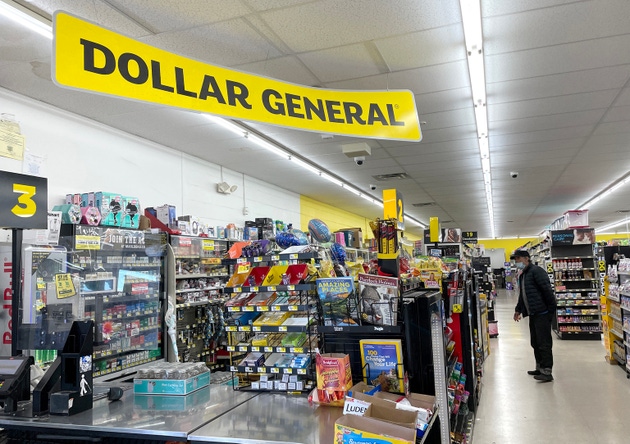
Dollar General CEO says even $100k earners shopping like bargain hunters


Sep 16, 2026, 11:37 AM ET


Justin Sullivan/Getty Images News

Dollar General (DG) CEO Todd Vasos said earlier in the week that sustained inflation and high gas prices (UGA) (XB1:COM) are squeezing shoppers across all income levels, driving even those earning over $100K to adopt budget-conscious habits and positioning the discount retailer to capture a broader demographic.

Speaking at a Goldman Sachs Global Consumer and Retail conference, Vasos highlighted that economic distress is no longer limited to the chain's core consumer base. He noted that whenever gas prices approach or surpass $4 a gallon, Dollar General’s (DG) traditional customers radically shift their behavior. To manage costs, these shoppers opt to stay closer to home, making more frequent trips but purchasing less on each visit.

As the Middle East conflict lingers and drives up global energy (USO) (BNO) (XLE) prices, the national average for a gallon of regular gas is sitting well above that threshold at around $4.36, according to recent AAA data.

The financial strain has also cascaded up the income ladder. According to Vasos, middle- and upper-middle-class consumers are now mirroring the purchasing habits of lower-income shoppers due to years of sustained inflation on basic goods. Even households earning over $100K—which Dollar General (DG) categorizes as high income—are feeling the pinch.

Vasos said that the retailer is hearing more from this demographic, noting that many say they no longer feel like high-income earners because of persistent economic headwinds.

Despite the challenging macroeconomic environment for consumers, Vasos remains optimistic about the company's outlook, believing Dollar General (DG) is in a strong position to serve this newly budget-conscious spectrum of shoppers across all demographics.


Saturday, March 28, 2026

'Dr. Doom' Nouriel Roubini Warns Trump May Escalate Iran War: 'If HeChickens Out Right Now...'


March 28, 2026 1:43 AM


by Ananya Gairola Benzinga Staff Writer


On Friday, Nouriel Roubini, the economist who called the 2008 financial crisis, cautioned that President Donald Trump is more likely to intensify the U.S. conflict with Iran rather than seek a quick resolution.

Trump May Choose Escalation Over Ceasefire

Roubini dismissed the notion that Trump is searching for an "off-ramp" to end the war, despite market optimism around a potential peace deal, he told CNBC at the Ambrosetti Forum in Cernobbio, Italy.

"If he chickens out right now, he loses credibility. He lost the war," Roubini said, adding that such a move could hurt Trump's chances in upcoming elections.

Monday, December 29, 2025

Iran: Tehran Bazaar Uprising Continues for Second Day, Spreading Across the Capital


29 Dec
2025


Mrs. Maryam Rajavi: Protesters’ slogans identify the Velayat-e Faqih system as the problem and resistance and uprising as the solution. I call on the public, especially the rebellious youth, to show solidarity with and support the protesters.

Today, Monday, December 29, the protest and strike by Tehran’s bazaar merchants continued for a second day, expanding to new areas of the city. The markets of Bein-ol-Haramein, Charsouq, the Gold Bazaar, Cheragh Bargh Bazaar, Jafari Bazaar, and the Melli, Rouhi, Mellat, Ghaem, and Saligheh arcades went on a full strike. Shopkeepers in Lalehzar, Sarcheshmeh, South Saadi, and the Aluminum Building, along with many other areas, have also joined the strike. A large crowd of people and merchants gathered in Hammam-chal Alley and on the routes leading to Goloubandak.

Slogans such as ‘This is the year of blood, Seyed Ali [Khamenei] will be overthrown,’ ‘Death to the dictator,’ ‘Pezeshkian, have some shame, let go of the country,’ ‘The merchant would rather die than be humiliated,’ ‘Honorable merchant, support, support,’ ‘High prices and inflation are the plagues of the people,’ ‘We are closing, we are closing,’ and ‘This nation will not be a nation until the mullahs are in shrouds’ echoed throughout large parts of Tehran.

Yesterday, Kiasari, a member of the parliament, said, ‘The fire of inflation is raging, and the fluctuations of currency and the dollar are fanning this fire like a violent wind, penetrating deep into people’s lives… What has made this fire uncontrollable is the conflict of interests. Those who should bring water to extinguish it have hidden gasoline along the way… Every sudden jump has created a wave of high prices for medicine, food, and housing.’

Terrified by the escalating uprising, the helpless clerical regime has placed its Sarallah security headquarters on alert and has put the repressive battalions of Fatehin, Ashura, and the Basij in Tehran on full alert. IRGC units in the provinces of Mazandaran, Qom, and Semnan have been put on standby to be dispatched as reinforcements to Tehran.

Mrs. Maryam Rajavi, the President-elect of the National Council of Resistance of Iran, saluted the honorable bazaar merchants on the second day of their strike and protest. She said, ‘With slogans like ‘This year is the year of blood, Seyed Ali [Khamenei] will be overthrown,’ ‘Death to the dictator,’ ‘Pezeshkian, have some shame, let go of the country,’ and ‘The merchant would rather die than be humiliated,’ the protesters have identified the odious Velayat-e Faqih system as the root of the problem and resistance and uprising as the solution. This reflects the anger of a people fed up with high prices, poverty, and the suppression of freedom under the mullahs’ rule, who are no longer willing to remain silent. I call on the public, especially the rebellious youth, to show solidarity with and support the bazaar merchants’ uprising.’

Secretariat of the National Council of Resistance of Iran (NCRI)
29 December 2025


Tuesday, October 01, 2024

East and Gulf coast dockworkers strike, sparking fears of inflation and shortages again


Medora Lee
USA TODAY

Dockworkers at ports from Maine to Texas are officially on strike after the clock struck midnight with no new labor deal in hand.

Thirty-six East and Gulf coast ports shut down as 45,000 union workers walked off the job after labor negotiations stalled between the International Longshoremen's Association (ILA) and the United States Maritime Alliance (USMX). The strike only exacerbates some temporary port closures in places like Florida, the Carolinas and Georgia in the wake of Hurricane Helene.

The ILA strike is the first at these ports since 1977 and has the potential to cost the economy up to $5 billion a day, upend holiday shopping for millions of Americans and dictate whether many small- and medium-sized businesses and farmers turn a profit or lose money this year, experts said.

“Every idle day that a ship does not get into the port costs money and sometimes a lot of money…that ultimately gets passed onto consumers,” said Stamatis Tsantanis, chairman and chief executive of shipper Seanergy Maritime and United Maritime, in a statement.

Length matters

Now that the strike is on, experts will turn their focus to how long the strike may last. Each day of the strike could cost the economy up to $5 billion a day as imports and exports are blocked, some economists estimated.

Get the Daily Briefing newsletter in your inbox.

The day's top stories, from sports to movies to politics to world events.

Delivery: Daily

“It’s not just about the shutdown but also, about the recovery period and how long it takes to get things up back and running,” said Jonathan Gold, vice president of supply chain and customs policy at the Nation Retail Federation.

For each day of the strike, it takes about three to five days to clear the backlog and resume normal operations, he said. “The longer it goes, the more it gets compounded,” he said.

A port strike in 2002 went for 11 days before the Bush administration invoked the Taft-Hartley Act to force the ports to reopen. The Act allows the federal government to seek a court injunction against a strike to allow both parties to continue negotiations during an 80-day cooling off period. It took six months to recover from those 11 days, Gold said.

Despite many industry groups calling for intervention, the Biden administration said it doesn’t intend to invoke Taft-Hartley. Instead, it encouraged continued negotiations and said in a statement that it would carefully monitor supply chain disruptions and “respond swiftly to help minimize potential disruptions in the event of a prolonged strike by engaging extensively with the ports, state and local officials, industry, labor, ocean carriers, rail and trucking companies."

What to expect:A port strike could cost the economy $5 billion per day, here's what it could mean for you

What’s affected by the strike?

Imports: With about half of U.S. ocean imports passing through the East and Gulf coast ports, a wide range of products are affected, including produce, cars, auto and machinery parts, clothing, pharmaceuticals, wine and spirits, holiday goods like toys, and seafood, experts said.

“Any strike that lasts more than one week could cause goods shortages for the holidays,” said Eric Clark, portfolio manager of the Rational Dynamic Brands Fund. “Retailers are running lean currently so inventory would get drawn down, and prices of shipping, and goods prices would go vertical for a period of time. We could get the kind of inflation for 6 months similar to or worse than peak inflation levels a year ago.”

Small and medium-sized businesses could suffer most, some said.

“Large businesses with dedicated procurement departments and considerable access to capital have been preparing for this strike for some time and many have ordered excess materials which they were able to finance with lower-cost debt,” said Ben Johnston, chief operating officer at small business lender Kapitus.

“Small businesses, however, are less likely to have been able to order early and in bulk and are less likely to obtain the capital required to order larger quantities of supplies in advance,” he said.

Exports: Businesses that sell products to international markets would suffer, experts said. For example, agricultural exporters of soybeans and poultry won’t be able to send their goods overseas and could end up losing market share, or worse, lose money because their goods are perishable, they said.

Jobs: Companies keeping lean inventories to keep costs low might have to shut down assembly lines amid a prolonged strike, for example, Gold said. This would come at a time when the job market is already cooling.


Medora Lee is a money, markets, and personal finance reporter at USA TODAY. You can reach her at mjlee@usatoday.com and subscribe to our free Daily Money newsletter for personal finance tips and business news every Monday through Friday morning.


Tuesday, July 28, 2015

The Bankrutpcy of the Planet Accelerates


by Michael Snyder
July 16, 2015

from TheEconomicCollapseBlog Website


There has been so much attention on Greece in recent weeks, but the truth is that Greece represents only a very tiny fraction of an unprecedented global debt bomb which threatens to explode at any moment.

As you are about to see, there are 24 nations that are currently facing a full-blown debt crisis, and there are 14 more that are rapidly heading toward one.

Right now, the debt to GDP ratio for the entire planet is up to an all-time record high of 286 percent, and globally there is approximately 200 TRILLION dollars of debt on the books.

That breaks down to about $28,000 of debt for every man, woman and child on the entire planet.

And since close to half of the population of the world lives on less than 10 dollars a day, there is no way that all of this debt can ever be repaid. The only "solution" under our current system is to kick the can down the road for as long as we can until this colossal debt pyramid finally collapses in upon itself.

As we are seeing in Greece, you can eventually accumulate so much debt that there is literally no way out.

The other European nations are attempting to find a way to give Greece a third bailout, but that is like paying one credit card with another credit card because virtually everyone in Europe is absolutely drowning in debt.

Even if some "permanent solution" could be crafted for Greece, that would only solve a very small fraction of the overall problem that we are facing. The nations of the world have never been in this much debt before, and it gets worse with each passing day.

According to a new report from the Jubilee Debt Campaign, there are currently 24 countries in the world that are facing a full-blown debt crisis…
  • Armenia
  • Belize
  • Costa Rica
  • Croatia
  • Cyprus
  • Dominican Republic
  • El Salvador
  • The Gambia
  • Greece
  • Grenada
  • Ireland
  • Jamaica
  • Lebanon
  • Macedonia
  • Marshall Islands
  • Montenegro
  • Portugal
  • Spain
  • Sri Lanka
  • St Vincent and the Grenadines
  • Tunisia
  • Ukraine
  • Sudan
  • Zimbabwe
And there are another 14 nations that are right on the verge of one…

  • Bhutan
  • Cape Verde
  • Dominica
  • Ethiopia
  • Ghana
  • Laos
  • Mauritania
  • Mongolia
  • Mozambique
  • Samoa
  • Sao Tome e Principe
  • Senegal
  • Tanzania
  • Uganda
So what should be done about this? Should we have the "wealthy" countries bail all of them out?

Well, the truth is that the "wealthy" countries are some of the biggest debt offenders of all. Just consider the United States. Our national debt has more than doubled since 2007, and at this point it has gotten so large that it is mathematically impossible to pay it off.

Europe is in similar shape.

Members of the Eurozone are trying to cobble together a "bailout package" for Greece, but the truth is that most of them will soon need bailouts too…

All of those countries will come knocking asking for help at some point. The fact is that their Debt to GDP levels have soared since the EU nearly collapsed in 2012.
  • Spain's Debt to GDP has risen from 69% to 98%
  • Italy's Debt to GDP has risen from 116% to 132%
  • France's has risen from 85% to 95%
In addition to Spain, Italy and France, let us not forget,
  • Belgium (106 percent debt to GDP)
  • Ireland (109 debt to GDP)
  • Portugal (130 debt to GDP)
Once all of these dominoes start falling, the consequences for our massively overleveraged global financial system will be absolutely catastrophic…

Spain has over $1.0 trillion in debt outstanding… and Italy has €2.6 trillion.
These bonds are backstopping tens of trillions of Euros' worth of derivatives trades. A haircut or debt forgiveness for them would trigger systemic failure in Europe.
EU banks as a whole are leveraged at 26-to-1. At these leverage levels, even a 4% drop in asset prices wipes out ALL of your capital. And any haircut of Greek, Spanish, Italian and French debt would be a lot more than 4%.

Things in Asia look quite ominous as well.

According to Bloomberg, debt levels in China have risen to levels never recorded before…

While China's economic expansion beat analysts' forecasts in the second quarter, the country's debt levels increased at an even faster pace.
Outstanding loans for companies and households stood at a record 207 percent of gross domestic product at the end of June, up from 125 percent in 2008, data compiled by Bloomberg show.

And remember, that doesn't even include government debt. When you throw all forms of debt into the mix, the overall debt to GDP number for China is rapidly approaching 300 percent.

In Japan, things are even worse.

The government debt to GDP ratio in Japan is now up to an astounding 230 percent. That number has gotten so high that it is hard to believe that it could possibly be true. At some point an implosion is coming in Japan which is going to shock the world.

Of course the same thing could be said about the entire planet. Yes, national governments and central banks have been attempting to kick the can down the road for as long as possible, but everyone knows that this is not going to end well.

And when things do really start falling apart, it will be unlike anything that we have ever seen before.

Just consider what Egon von Greyerz recently told King World News…
Eric, there are now more problem areas in the world, rather than stable situations. No major nation in the West can repay its debts.
The same is true for Japan and most of the emerging markets. Europe is a failed experiment for socialism and deficit spending. China is a massive bubble, in terms of its stock markets, property markets and shadow banking system.
Japan is also a basket case and the U.S. is the most indebted country in the world and has lived above its means for over 50 years.
So we will see twin $200 trillion debt and $1.5 quadrillion derivatives implosions. That will lead to the most historic wealth destruction ever in global stock, with bond and property markets declining at least 75-95 percent.
World trade will also contract dramatically and we will see massive hardship across the globe.


.

Monday, May 12, 2014

Martin Feldstein: A weaker euro for a stronger Europe


Europe's policymakers must intervene to weaken their currency

Martin Feldstein
May 12, 2014 Last Updated at 21:50 IST

Don't Invest in the Euro
The Dollar And Euro Are Doomed. These 3 Currencies Will Take Over. wallstreetdaily.com/Free-


More Columns by Martin Feldstein
Chasing the 'Chinese dream'
Saving retirement
The future of American growth
Looking up in 2014?
The Greek budget myth


Despite the recent upturn in some of its member countries, the euro zone's economy remains in the doldrums, with the overall rate of annual gross domestic product (GDP) growth this year likely to be only slightly higher than one per cent. Even Germany's growth rate is below two per cent, while GDP is still declining in France, Italy and Spain. And this slow rate of growth has kept the euro zone's total unemployment rate at a painfully high 12 per cent.

Slow growth and high unemployment are not the euro zone's only problems. The annual inflation rate, at just 0.5 per cent, is now so close to zero that even a minor shock could push it into negative territory and trigger a downward price spiral. Deflation would weaken aggregate demand by raising the real (inflation-adjusted) value of household and corporate debt, and by increasing real interest rates. Lower demand could, in turn, cause the fall in prices to accelerate, sending prices into a dangerous tailspin.

There are few if any panaceas in economics. But a sharp decline in the euro's exchange rate - say, by 15 per cent - would remedy many of the euro zone's current economic problems. A weaker euro would raise the cost of imports and the potential prices of exports, thus pushing up the euro zone's overall inflation rate. Devaluation would also boost average euro zone GDP growth by stimulating exports and encouraging Europeans to substitute domestically produced goods and services for imported items. Although competitiveness within the euro zone would be unaffected, a weaker euro would significantly improve the external balance with the rest of the world, which accounts for about half of euro zone trade.

European Central Bank (ECB) President Mario Draghi has emphasised his concern that the euro's rise over the past three years has increased the risk of deflation. But it was his famous declaration in July 2012 that the ECB would do "whatever it takes" to preserve the euro that, while successful in reducing interest rates in the distressed countries of the euro zone periphery, also contributed to the euro's current strength.

Today, neither Mr Draghi's recent statements nor the prospect of an American-style programme of large-scale asset purchases (also known as quantitative easing) has caused the euro to weaken or the inflation rate to move back towards the target level of two per cent. So the operative question is how to reduce the euro's relative value while maintaining the perception of stability that Mr Draghi helped to establish in 2012.

Because quantitative easing by the ECB has been advocated as a way to weaken the euro, it is worthwhile to examine the impact of its use by the Federal Reserve on the value of the dollar and the inflation rate in the United States.

The short answer is that it did very little to affect either. The real trade-weighted value of the dollar is now at the same level that it was in 2007, before the onset of the Great Recession. It rose briefly during the peak crisis year of 2008, as global investors sought the safe haven of dollar-denominated assets, but retreated during 2009 to its previous level. The dollar's value then remained relatively stable during more than three years of quantitative easing - and actually rose during 2013, when the Fed's asset purchases reached a high of more than $1 trillion.

Of course, other factors influenced the dollar's value during this period as well. Nonetheless, the behaviour of the dollar's exchange rate during the period of quantitative easing offers no support for the proposed use of large-scale asset purchases by the ECB as a way to bring about euro depreciation.

The Fed's quantitative easing also did not cause an increase in the rate of inflation. The consumer price index rose by 1.6 per cent in 2010, when quantitative easing began, then increased somewhat faster in 2011 and 2012, before dropping back to a gain of just 1.5 per cent in 2013, the peak year for asset purchases.

If the ECB wants to reduce the value of the euro and increase the euro zone's near-term inflation rate, the only reliable way to do so may be by direct intervention in the currency market - that is, selling euros and buying a basket of other currencies. While direct intervention to weaken the euro would create challenges in other parts of the world, policymakers in the US and elsewhere should recognise the importance of a more competitive euro to the future of the European economy.

The writer is professor of economics at Harvard University.
Project Syndicate, 2014


Source
.

Wednesday, June 12, 2013

Who Really Owns Your Gold? The Shocking Truth


By WDAGarner | Posted September 22, 2011 | Siesta Key, Florida

...............


The Great American Nightmare


The American Dream is dead and America is flat broke. That’s not to say you can’t still go out for a cold one after work each night, or rent a DVD and veg for hours in your overstuffed lounger in front of that 42-inch Samsung. Or get that wonderful foot massage and pedicure on Saturday morning. Even deep in the economic blood-red of the United States of America, there’s always room for a six pack, a movie and a foot rub..

Way things are now, you can’t possibly pay down all your bills in your lifetime, even though you probably worked out a plan to do so within ten years, but that was 12 years ago when things weren’t so bad and you had a fulltime job with bennies and a small savings account, the IRA and the 401K and all that stuff you probably never thought you’d ever need.

Too high and climbing, your mortgage is overwhelming. The insurance on your home keeps creeping up year after year for no apparent reason, or at least any sane reason the bank can give you, and you can’t very well cancel it because the bank that holds your mortgage won’t let you and they keep threatening you with immediate foreclosure if you as much as think about it.

With this new so-called healthcare reform now in place, your medical bills are skyrocketing, especially since your spouse went into the hospital with intestinal problems, and neither of you can afford health insurance because that would cost you both more than $2,000 a month in premiums, and neither of you takes home more than $1,500 after taxes every 30 days.

You have enough debt to saddle a medieval horse, and that horse’s back is swaying more and more with time. Any day now, it’ll surrender to gravity like a droopy chin, and the once majestic beast will drown in a sea of debt that screams over you like a tsunami that traveled 10,000 miles from the dark, cold Antarctic, gathering more and more momentum with each passing mile.

Is there any recovery from such a force of nature?

The good news is that once you come out from under that bankruptcy, all those material things you accumulated over your lifetime—the beautiful home and the car and truck, and your worldly possessions—will be in someone else’s hands, starting with your bank, which has no use for your stuff anyway except for what it might fetch at auction.

No more dusting off the little Hummel pieces from grandma. No more cleaning the fine silver you got on your wedding day from all your friends who chipped in money they didn’t have. No more vacuuming and cleaning your lovely home you built from scratch and promised to pay down before the end of that 30-year, 6% loan.

You’ll be left with little more than a few articles of clothing, if even those. Life is no longer what you thought it would be. The American Dream has fast become The American Nightmare, brought on by an invisible force some call dark matter, the stuff of science fiction that tells us we can’t see it or smell it or touch it, but it’s effects are there and they’re real so you best believe it.

And in the wake of all this, you’re left scratching your head, wondering what the hell just happened here?

Does anyone have an accurate answer? Does anyone outside your life even care? Your friends have all but abandoned you, because they’re in the same position, facing bankruptcy or having just been spat out by the court system that took everything they once owned. Daily phone calls that once beamed happiness and baseball and Oprah now scream and cry tales of IRS liens, foreclosures and that fourth job, the one that starts at two in the morning when the baby’s crying.

Your family can’t help you, either, because they just got hit with a huge tax bill that they’ll never be able to pay, but hey, wait, there’s always that monthly payment system with the IRS, and they only charge 30% interest on top of what they say you already owe them.

So, no, even family can’t help you. Seems everyone you know is being pulled under by this rip tide of dark matter whose invisible and unyielding gravity takes no prisoners, but it’s all too happy to take you down down down into that forever abyss.

The American Nightmare used to be the stuff of Edgar Allan Poe and Stephen King. Now it’s front-page headlines even in mainstream media. No one can escape it. The United States is going down that same road of hyperinflation and depression that effectively sacked the Weimar Republic in Germany, in 1923.[6] [7] [8]


.

Thursday, March 28, 2013

Not Even Gold Will Save You From What Is Coming - MARC FABER


Matthew Boesler | Mar. 27, 2013, 4:53 PM


Bloomberg Television
Marc Faber


See Also


Instead Of Doing His Job, Jeroen Dijsselbloem Has Given Us A Glimpse Of The Euro 'End Game'


ANALYST: The Market Reaction To Cyprus Has Been 'Fantastic' Thanks To 'Massive Manipulation'


Global Financial Stress Is Starting To Pick Up Steam, And That's Bad News For StocksMarc Faber, who authors the Gloom Boom & Doom newsletter, is usually pretty bearish on stocks and bullish on gold.


Lately, though, gold doesn't seem like it can catch a bid.

"Despite the continued reverberations regarding the Cyprus bailout and its involvement of bank deposits, gold struggled to maintain the positive momentum created in the first two weeks of March and instead now looks very likely to move lower, towards $1580/oz," wrote Deutsche Bank commodities analyst Xiao Fu in a note this morning.

So, what does Faber have to say about it?

This morning, on Bloomberg Surveillance with Tom Keene and Alix Steel, Dr. Doom was asked why gold wasn't holding up.

Here's his explanation:

When you print money, the money does not flow evenly into the economic system. It stays essentially in the financial service industry and among people that have access to these funds, mostly well-to-do people. It does not go to the worker. I just mentioned that it doesn't flow evenly into the system.

Now from time to time it will lift the NASDAQ like between 1997 and March 2000. Then it lifted home prices in the U.S. until 2007. Then it lifted the commodity prices in 2008 until July 2008 when the global economy was already in recession. More recently it has lifted selected emerging economies, stock markets in Indonesia, Philippines, Thailand, up four times from 2009 lows and now the U.S.

So we are creating bubbles and bubbles and bubbles. This bubble will come to an end. My concern is that we are going to have a systemic crisis where it is going to be very difficult to hide. Even in gold, it will be difficult to hide.

Faber is, of course, still bearish on U.S. stocks. He told Bloomberg that he sees "considerable downside risk" in the market.


Source

Tuesday, December 18, 2012

Roubini Says Fed Inflation Targeting Out the Window

.
Dec. 14 (Bloomberg) -- Nouriel Roubini, co-founder of Roubini Global Economics LLC, talks about Federal Reserve monetary policy, the outlook for the global economy and the U.S. budget negotiations. He speaks with Tom Keene, Sara Eisen and Scarlet Fu on Bloomberg Television's "Surveillance." (Source: Bloomberg)

Source
.

Monday, December 12, 2011

BIS Calls for Hyperinflationary Depression?


Monday, December 12, 2011 – by Staff Report

The Bank for International Settlements Sunday issued an oblique endorsement of coordinated action by the world's largest central banks to ease funding conditions for banks. "A freezing of interbank markets in major funding currencies, as during the recent crisis, may require the ability to supply official liquidity in major currencies in an elastic manner," the BIS wrote in its regular quarterly report." – MarketWatch

Dominant Social Theme: Inflate! And everything will work out.

Free-Market Analysis: We've already indicated that we believe the Anglosphere power elite is attempting to create a kind of Great Depression in order to ease the path of world government. This squib of an article in MarketWatch (excerpted above) – unnoticed by most of the mainstream press – only reconfirms our impression.

It endorses recent "coordinated" central banking loosening. But it does more: "A freezing of interbank markets in major funding currencies, as during the recent crisis, may require the ability to supply official liquidity in major currencies in an elastic manner."

Think about that. The BIS, whatever it is, is all for printing lots of money. And the BIS is no small-time trade group. It is perhaps the most powerful (and least known) global business body in the world. Its mysteries are manifold. its workings are well-hidden.

Of course, somebody actually set up the Bank for International Settlements in the late 1930s. And since then someone has set up or helped set up about 200 central banks around the world, many of them reporting directly to the BIS.

But who? And how did it happen? Dunno.

Who speaks to the head of a state, asking him or her to set up a central bank? Dunno. Do you?

Why is that Libya, Afghanistan and Iraq have central banks when they didn't before, or not the kind they do now? Did you read about it?

Meh ... this ruinous financial system is not a plant or a tree. It did not grow spontaneously. It did not grow naturally. And we would submit to you that those who created it know what they're doing.

The key as always is to pretend that one does NOT know. The key is to create cognitive dissonance. Even today, if you asked the average person-on-the-street if the powers-that-be are trying to create a Depression (let alone a hyperinflationary one), you would get the ol' crazy look, as in ... "What is this fellow ... nuts?"

But, no, nothing nutty about it. The European Union and the euro are grinding a whole European generation into dust. China's burgeoning middle class is about to get walloped if China ends up in a proverbial hard landing, as well it might. The US has NEVER recovered from the disaster of the mid-2000s (first decade) nor shall it for the foreseeable future.

Into this morass steps the BIS, with its suggestion (above) that further monetary inflation is the only viable solution to the problem that central banking itself has created.

Smile ... and nod! Don't acknowledge the reality that the ruin is a central banking ruin. The monetary decay is the result of a monopoly fiat. The great dollar expansion yet to come is also a direct outcome of the current system that was put in place after World War II.

No, it's not hard to discern what's going on if one simply disassociates oneself from the endless nattering of the mainstream media. Analyze what IS instead of what is SUGGESTED and the reality shall gradually become clear.

DB's manifestly accurate High Alert (published some four years ago now) was written because we were tracking what was actually happening to the world's economy instead of what was being reported ....

A financial hurricane is washing over America and, to a lesser extent, the entire West. To label it the "downstroke" of a super business cycle does not do it justice. These events occur in cycles, with the last one taking place in the 1970s — a mild storm compared to what is occurring today. ...

A strong inflation, even a soft hyperinflation, already has a grip on Western currencies, most notably in the United States — as anyone who buys groceries is aware. The dollar's plunge may be delayed by a kind of "race to the bottom" as other central banks adjust their currencies to reflect the weakness of the dollar. ...

In his "Great American Depression," free-market economist Murray Rothbard explains the ramifications of hyperinflation as follows: "Hyperinflation, on any count, is far worse than any depression: It destroys the currency — the lifeblood of the economy; it ruins and shatters the middle class and all fixed income groups; it wreaks havoc unbounded. And furthermore it leads finally to unemployment and lower living standards since there is little point in working when earned income depreciates by the hour."

(You can read the full book online here.)

THIS is what the BIS seems to have in mind. This is the fate that has been decreed, apparently, by those who want to crush middle classes around the world in order to create a "new world order." Out of chaos ... order. It is quite clear. Follow what IS rather than what you are being TOLD.

The BIS wants to inflate. it ENDORSES inflation. The proximate cause is the unraveling of the current financial system. But it is "their" system. They made it. They watched it rise and fall. It was obvious that it could not end in anything other than a massive contraction and perhaps hyperinflation.

The contraction – incipient Depression – has already taken place. Best case, the powers-that-be would stop trying to prop up failing markets and let the downturn have its way as quickly as possible. This they will not do. Instead, the next phase of an increasingly horrific scenario is about to unfold.

Rather than let the market alone, the elites are apparently readying massive central bank monetary inflation around the world. That's the real message of this innocent little squib of an article, so far as we can tell.

The BIS, in its inoffensive way, is signaling that the current level of disaster and despair is not good enough. The agony is not sufficient. The new world order is to be birthed on the graves of millions, and nothing but hyperinflation (and/or war) will produce the sufficient level of chaos. Here's some more from the article:

The U.S. Federal Reserve 10 days ago agreed to expand, and reduce the cost of, multilateral swap lines with five other large central banks, notably the European Central Bank, in an effort to restore access to dollar funding for European banks. Euro-zone banks used the new facility to borrow $50.7 billion at a rate of 0.59% at the first operation after the announcement.

The BIS's essay was its latest in a series analyzing the concept of global liquidity, and focused again on the interplay between official liquidity, that is, created by central banks, and the far greater liquidity created by the private sector on the basis of central bank money--the so-called money multiplier.

The essay observed that much is still unknown on this topic, particularly on the degree to which the accumulation of foreign exchange reserves by central banks, and their subsequent reinvestment, can affect the creation of private liquidity.

The BIS noted that the priority of policymakers should be to mitigate surges in the overall level of global liquidity. It said the new "Basel III" rules on capital and liquidity should help this trend of "counter-cyclical" policymaking.

Do you appreciate what you have just read, dear reader? Do you understand the black maw of the vicious, velvet trap that is now being readied? Unlimited money printing is to be aimed at a grievously wounded world – and the antidote is to be MORE GLOBAL REGULATION.

Over and over we see this sort of generic dominant social theme in action. Having unleashed a fear-based promotion (a new Great Depression), the elite now suggests that only their international agencies can rectify it.

So let the central banks print away! The regulators have figured it out. They've put into place something called Basel III. This "solution" has been initiated by the same banking community that has hollowed out the life savings of hundreds of millions; it is supposed to ensure that hyperinflation is damped and the velocity of money is damped.

Here at the Daily Bell we quantify the fear-based memes of the elite and their efficacy. We've kept track not only of the successes but of the failures as well. And in our view, the failures are mounting up.

Most recently we suggested that the current chaos in the Eurozone was yet another elite failure – that ideally, Britain wouldn't have had to pull away from the euro but would have drawn closer to the EU.

In fact, Britain's pullback itself may be not only an acknowledgement of the troubles the elites are having in creating their one-world order, it may also be a STRATEGY – one creating a favorite tool, the Hegelian Dialectic.

That's how you move the socio-political discussion in the "right" direction. You need opposing sides to create first a thesis and an antithesis and then, finally ... a synthesis. In this case, the current economic chaos is the thesis, and the BIS's idea of money printing is to be the anti-thesis.

What is to be the synthesis? Well ... perhaps one prints (relatively) slowly, at least at first. Of course, speed is relative. What is "slow" can soon become "faster." The Hegelian Dialectic, in fact, is likely merely a trick designed to create a false sense of satisfaction in those who participate or follow but do not have an understanding of the grand design. No, from our point of view, the "controllers" are making it clear what is to be the next step of the "great game."

Conclusion: Can you hear the noise? It is not a train headed down the track. It is not Superman flying through the air faster than the speed of sound. It is a printing press, running hard toward ruin.


Source

Friday, November 04, 2011

The crisis, its origin and solution: differences of opinion in the Vatican

11/ 4/2011


Justice and Peace ten days ago published a document requesting a world political authority and the taxation of financial transactions. Now in “L'Osservatore Romano”, the president of the IOR offers a different recipe

Against G20
Against G20


Andrea Tornielli
Vatican City


Ten days ago, the Pontifical Council for Justice and Peace, led by Cardinal Peter Appiah Turkson and bishop Mario Toso, published a document dedicated to the economic-financial crisis and its possible solutions. The document listed among the causes of the crisis, the economic system “pushed towards an inflationary spiral” , the “excessive liquidity and the speculative bubble that later became a serious crisis of insolvency and trust that propagated itself and was protracted over the years”. For the Vatican dicastery, “The speculative bubble regarding real estate and the recent financial crisis have the same origin in the excessive amassing of money and financial instruments on a global scale”.

The document affirmed that to come out of the crisis, a world political authority is necessary, which would guarantee market transparency. It even suggested three concrete proposals which, for that matter, are not even new: taxing financial transactions, because those who operate in the financial markets should contribute to pay the costs of the crisis; recapitalizing the banks; and distinguishing between ordinary credit activities and those of Investment Banking.

“L'Osservatore Romano”, published this afternoon but with tomorrow's date, bears an article by Ettore Gotti Tedeschi, president of the IOR, with the heading “In front of the prospects of deflation. A new model of leadership”, that sounds like a correction of course and at any rate is a different viewpoint on the crisis.

Gotti, who in the article never once cites the document from the Pontifical Council for Justice and Peace, affirms that “the errors of interpretation and the underestimating of the current economic crisis have been grave and continue”. And he reaffirms how much he himself has often affirmed even from the columns of the Vatican's daily, and that is, that the “true origins” of the crisis are “the decline in the birth rate, and the consequences that have led to the increase in taxes on the GDP to absorb the population's costs of aging”, themes unaddressed by the text from Cardinal Turkson's dicastery.

For Gotti Tedeschi, “the effects of decisions made to compensate these phenomena have been underestimated, above all with the delocalization of production and with the debt consumption”. He continues: “then, not enough consideration was given to the urgency of intervening and the criteria to be followed to deflate the debt produced. Thus, no one foresaw the collapse in trust that led to the redimensioning of the stock markets' prices and the debt crisis”.

For the president of the IOR, “at this point, there aren't many solutions left”, and to reduce the total debt “of the public, the banks, companies, the families – and bring it back to levels preceding the crisis, that is, to about 40 percent less, it is imaginable, but not advisable, to cancel a part of it with a type of preventive agreement on the basis of which creditors would be paid at 60 percent”.

“It is imaginable”, Gotti adds, “though it's a hypothesis with no future, to invent some new bill to compensate for the debt with a growth in the value of movable or immovable goods. It is worth considering – but we hope this is only an attempt – a tax on family wealth, sacrificing however a necessary resource for development and at the same producing time an injustice”.

The president of the IOR considers protective measures inappropriate, as “they would produce disadvantages for consumers and would reduce consumptions which are already in decline”, nor does he agree with devaluing the single currency, because “it would lead to an increase in the price of imported goods”. “Someone, to deflate the debt”, reads the article in L'Osservatore, “must also consider inflation. But inflation does not take place if there's zero economic growth, if salaries are frozen, if the shadow of unemployment looms and if even the prices of raw materials are in decline”. A passage that leads one to believe Gotti does not share the analysis of the document of the Pontifical Council for Justice and Peace, retaining instead that today the problem is not inflation – as the Vatican dicastery suggested – but deflation.

“There is no inflation”, writes the president of the IOR, “in part because cash is not circulating, but above all because the liquidity created by the central banks has substituted that produced by the banking systems to sustain due growth. The main problem today is not inflation but deflation. The markets are favoring liquidity. This is because in a deflationary system, the value of money grows, while during inflation it decreases”.

To make the economy progress without increasing the public debt, the author of the article affirms that it is necessary “to correlate interest rates to the GDP”. “In countries with a public debt above 100 percent of the GDP, it is evident that, to obtain a 1 percent growth without causing the debt to rise, interest rates cannot exceed 1 percent, thus penalizing savings».

“The solution”, Gotti concludes, “is in the hands of the governments and the central banks, who must carry out a coordinated strategic action of reindustrialization, the reinforcement of credit institutions, and support for employment. This will take time, a time of austerity in which to reconstitute the fundamentals of economic growth. But above all, governments must inspire trust in the citizens and the markets through a mode of governing that is suited to the times, that, besides guaranteeing technical competence, would also be a model of leadership. That is, an instrument to reach to objective of the common good”.

No reference to the hypothesis of a world political authority, nor even a hint at the possibility of taxing financial transactions. In the end, another point of view about the crisis, printed in the Pope's newspaper, hardly ten days after the presentation of a document on the crisis generated by a dicastery of the Holy See.


Source