Showing posts with label bitcoins. Show all posts
Showing posts with label bitcoins. Show all posts
Sunday, September 06, 2026


Saturday, December 14, 2024

Tuesday, January 02, 2024
Unmasking Farmington: FTX, Fluent Finance and the Coming Digital Dollar
INVESTIGATIVE REPORTS
Unmasking Farmington: FTX, Fluent Finance and the Coming Digital Dollar
A former partner of Farmington State Bank, the tiny rural bank embroiled in the FTX scandal, is now building the rails for CBDCs in the Middle East and beyond. Their recent activities may finally reveal the true motives behind Sam Bankman-Fried’s and his allies’ use of Farmington, with major implications for the coming Digital Dollar.

AND

DECEMBER 21, 2023
35 MINUTE READ
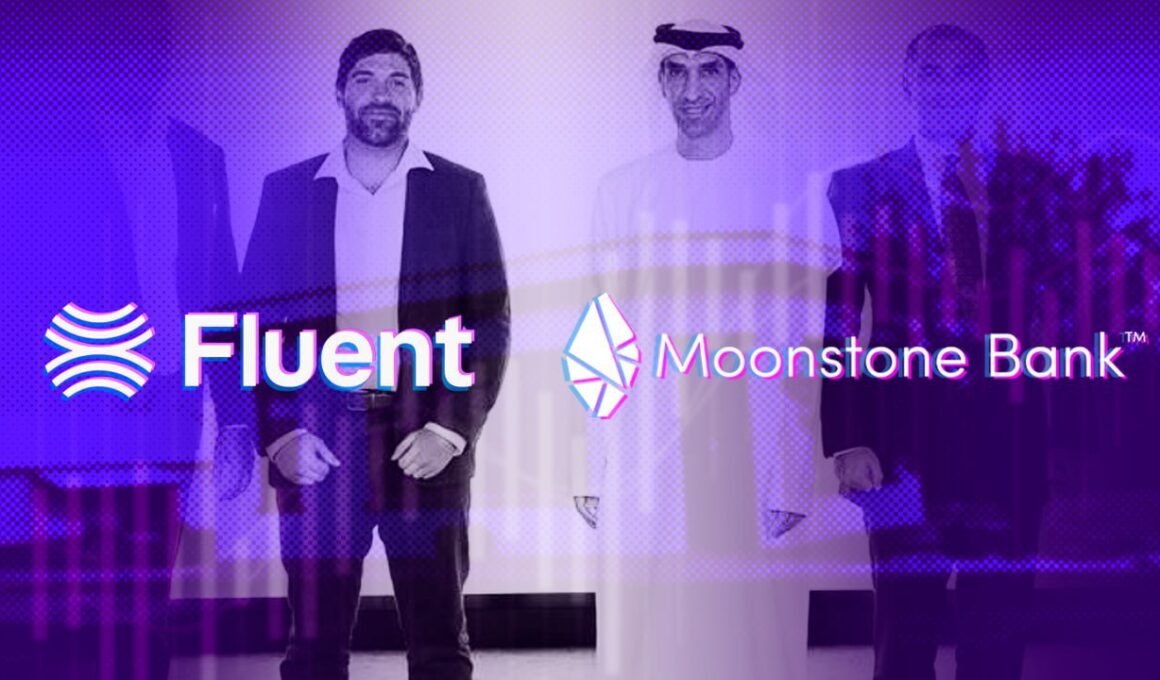
One of the oddest and most mysterious relationships that emerged out of the collapse of FTX last year was Alameda Research’s unusual relationship with Farmington State Bank, one of the smallest, rural banks in the United States that came under the control of Jean Chalopin in 2020. Chalopin is best known as the chairman of Deltec, one of the main banks for Alameda Research – FTX’s trading arm that played a central role in its collapse — and still one of the main banks for the largest fiat-backed stablecoin, Tether (USDT). Chalopin had acquired control over Farmington via FBH Corp., where Chalopin was listed as executive officer. Interestingly, Noah Perlman, a former DOJ and DEA official who is now Chief Compliance Officer at Binance and the son of Jeffrey Epstein associate and musician Itzhak Perlman, was also listed as a director of FBH Corp and has never publicly explained his connection with this Chalopin-controlled entity.
As Unlimited Hangout reported last December, soon after its acquisition by Chalopin’s FBH Corp., Farmington “pivoted to deal with cryptocurrency and international payments” after decades upon decades of serving as a single branch community bank in rural Washington. Soon after its pivot into the crypto space, Farmington struggled to move money and sought approval to become part of the Federal Reserve system. It also changed its name from Farmington State Bank to Moonstone Bank. The approval of Farmington by the Federal Reserve has been deemed highly unusual and as having “glossed over Moonstone’s for-profit foreign interests.” Late last December, Eric Kollig, spokesman for the Federal Reserve, told reporters that he could not comment “about the process that federal regulators undertook to approve Chalopin’s purchase of the charter of Farmington State Bank in 2020.”
Just days after Farmington formally changed its name to Moonstone in early March 2022, FTX-affiliated Alameda Research poured $11.5 million into the bank, which was – at the time – more than twice its entire net worth. Moonstone’s Chief Digital Officer, Jean Chalopin’s son Janvier, later stated that the funding from Alameda Research had been “seed funding … to execute our new plan of being a tech-focused bank.”
Tuesday, June 27, 2023
Monday, November 12, 2018
What if Bitcoin was a Scam and Most Cryptocurrencies Were Worth Zero?

Michael K. Spencer
Blockchain Mark Consultant, tech Futurist, prolific writer. WeChat: mikekevinspencer
Oct 15
Time
What if Bitcoin was a Scam and Most Cryptocurrencies Were Worth Zero?
A lot of banking executives have said some rather remarkably ignorant things about Bitcoin and crypto-assets over the years.
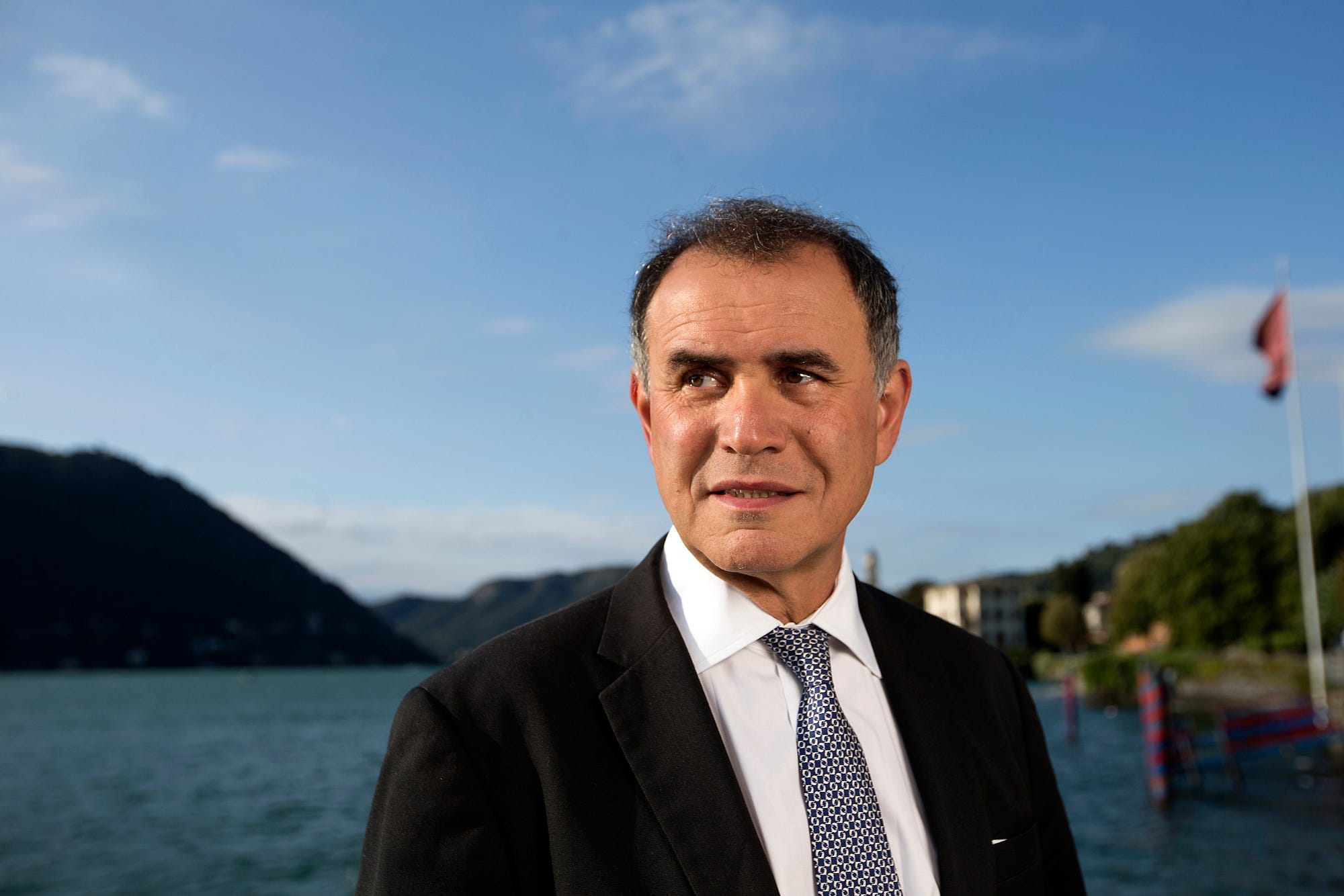
Nouriel Roubini is an American economist. As a renowned Global economist he’s one of the few who predicted the 2008 financial crisis, and he’s making sure U.S. senators don’t miss his warning on cryptocurrency. His basic message believe it or not is this:
Blockchain isn’t about democracy and decentralisation — it’s about greed!
There’s no doubt hundreds of ICOs have been scams, real fraud has occured in crypto and even Jimmy Song thinks EOS is a scam and ETH is amateurish. The debates about crypto have been some of the best in tech in the 2015 to 2020 period.
What if Bitcoin Really was a Scam
“Crypto is the mother or father of all scams and bubbles,” Roubini, also a professor at New York University, told the U.S. Senate Committee on Banking, Housing and Community Affairs at a hearing.
A Harvard alumnus and now a professor at NYU Stern School of Business, Mr. Roubini has always been critical of the crypto and blockchain industry. It’s important to have economists who don’t agree with crypto, it gives the generational divide some really interesting meat on the fate of digital assets and blockchain adoption.
He may however be right, most cryptos are likely worth close to nothing. EOS could indeed be a shitcoin. It’s not outside the realm of possibility. Bitcoin’s price we have to admit is a fairly manipulated and volatile asset, whatever the movers on its price seem to be. Apparently, CNBC is one of them.
Yet in 2018 we’ve basically learned that the fate of stablecoins could actually be to protect the global economy in times of crashes and hyper-inflation. Nevermind that for now though, to congress Nouriel said: I can see a bubble when there is one — and to me, this entire space has been the mother and the father of all financial bubbles and now it’s [going to] burst.
So if you bought in to Bitcoin late, for instance when it was at its peak — you probably lost 70 percent of your value. It is a bit like gambling. Crypto in many ways has been the high-risk high-reward play that young men would be most prone to.
The self-described expert on international financial markets, asset and credit bubbles and their bust, said the first warning sign came after late last year as bitcoin neared a high of almost $20,000. Yet people seem to have stronger views on crypto than they do on politics or religion. It inspires fanatical nearly cult-like following. Is it greed, or something else?
CNBC puts crypto skeptics on their stage on a regular basis. This feeds the flames of crypto propaganda whereby manipulation of these digital assets can take place for profit. It’s not good or bad journalism, but it certainly is clickbait. With everything in America, the internet is a tool for propaganda. However, with a Bitcoin ETF, Etheruem Futures, Bakkt launching and many other factors, we could actually see another bull run for Bitcoin. Whether you agree or disagree with it, it does exist and it’s slowly legitimatizing digital assets in a way few saw coming on a macro level.
Does the world really need public blockchains, privacy and stable coins, xxxxcoins? Probably not, we would be fine without all of these things. Is Blockchain the most hyped technology most people don’t understand? Without a doubt.
CNBC goes on quoting him: “Especially folks with zero financial literacy — individuals who could not tell the difference between stocks and bonds — went into a literal manic frenzy of Bitcoin and Crypto buying,” Roubini said in prepared testimony. If we were financially literate would we be investing in Wall Street instead — basically a tool the rich user to get richer? Can most of us even afford to do so?
Crypto is a poor man’s investment, where Bitcoin has become an idol — and that crypto greed is really a symbol of our poverty. Nouriel Roubini doesn’t have to be right, blockchain like AI can strengthen and make the global economy more resilient even if true decentralization might not manifest in our lifetime. The world can laugh at crypto, but it’s not ready for real decentralization. So what’s left? Likely a lot of frauds and ponzi-schemes.
Source
Friday, January 12, 2018
Will We Say Goodbye to Cash in 2018?

Maryalene LaPonsie
January 4, 2018
Cash isn't always the most convenient way to pay for your everyday expenses. Today, options ranging from cryptocurrencies like Bitcoin to mobile payment systems like Apple Pay mean it's possible to forego cash for most transactions. However, it remains to be seen whether 2018 will be the year in which these cashless systems go mainstream.
[Read: 5 Ways to Improve Your Cash Flow.]
Options for creating a cashless society. When people talk about moving to a cashless society, there are two ways to frame the discussion. One is the use of mobile payments. These include Apple Pay and Android Pay, which let people send payments electronically from their phone, as well as digital payment systems like Venmo and PayPal. These systems can be seen as a digital extension of physical credit and debit cards and let people pay using U.S. currency. Many people appreciate the convenience these systems offer. "I like using my phone and not taking out cash," says Peter Nigro, professor and chair of the finance department at Bryant University.
Other people see cryptocurrency as the way to create a cashless society. Bitcoin is the best known cryptocurrency, but there are numerous other systems vying to become a viable alternative to government cash.
Cryptocurrencies are digital systems that don't have the backing of any government. Their value can be volatile, but that may change as they are embraced by investors and the general public. In December, Bitcoin was added for trading on the CME and Cboe Global Markets futures exchanges, marketplaces for trading contracts and options for commodities and financial instruments.
"I feel like the futures have stabilized and legitimized this coin," says David Drake, founder and chairman of private-equity firm LDJ Capital in New York City. Bitcoin's first weeks on the market were marked by significant swings in value, but Drake attributes some of that to people cashing in their coins for holiday shopping. He doesn't see any reason to be alarmed over the volatility. "The market is still very young," he says.
[Read: Withdrawing Money With a Retina Scan: The Future of Biometrics and Banking.]
Foregoing cash appeals to consumers, government. Moving to a cashless society appeals to different people for different reasons. Some people like the convenience of mobile payments, while others appreciate that they can buy and sell online anonymously using cryptocurrencies.
Edward Stringham, president of the American Institute for Economic Research, says a cashless society could benefit another group as well: the government. "There's a lot of people advocating for this from a public policy perspective," Stringham says. Cash can be used to fund black market activities or terrorism because it's not easy to trace. And some people use cash to avoid taxation of their transactions. However, leaving a digital footprint behind each transaction helps eliminate those concerns. "More technology is allowing groups to monitor our activities, whether we like it or not," Stringham says.
[See: How to Max Out Your 401(k) in 2018.]
Why cash won't die in 2018. Virtual currency is not a new idea. In the 1990s David Chaum created DigiCash, a way for people to pay digitally using a currency that would be untraceable by the government and third parties. DigiCash went bankrupt in 1998, but the dream of a virtual currency lives on. "Here it is 20 years later, and we're still talking about it," Nigro says.
When asked if cash will disappear anytime soon, even fans of cryptocurrencies and cashless systems say that's not likely. "No, that's not realistic for the next 50 years," Drake says. While he remains confident in the viability of cryptocurrencies, "It will never replace cash in this century," he says.
If and when consumers embrace cryptocurrencies, Nigro predicts the government will get involved. "I think eventually we'll see some sort of digital currency issued by the federal government," he says. While that probably won't happen in the next five years, Nigro thinks it could realistically occur within a decade.
Meanwhile, Drake says consumers should expect to see new products designed to make using cryptocurrencies more convenient. "The [cryptocurrency] and the mobile payment solutions will be merging," he says. For instance, the Monaco cryptocurrency already offers Visa-affiliated cards for people to easily spend their money.
However, regardless of how mainstream these systems become, some people will always feel more comfortable with cash.
Cash isn't always the most convenient way to pay for your everyday expenses. Today, options ranging from cryptocurrencies like Bitcoin to mobile payment systems like Apple Pay mean it's possible to forego cash for most transactions. However, it remains to be seen whether 2018 will be the year in which these cashless systems go mainstream.
[Read: 5 Ways to Improve Your Cash Flow.]
Options for creating a cashless society. When people talk about moving to a cashless society, there are two ways to frame the discussion. One is the use of mobile payments. These include Apple Pay and Android Pay, which let people send payments electronically from their phone, as well as digital payment systems like Venmo and PayPal. These systems can be seen as a digital extension of physical credit and debit cards and let people pay using U.S. currency. Many people appreciate the convenience these systems offer. "I like using my phone and not taking out cash," says Peter Nigro, professor and chair of the finance department at Bryant University.
Other people see cryptocurrency as the way to create a cashless society. Bitcoin is the best known cryptocurrency, but there are numerous other systems vying to become a viable alternative to government cash.
Cryptocurrencies are digital systems that don't have the backing of any government. Their value can be volatile, but that may change as they are embraced by investors and the general public. In December, Bitcoin was added for trading on the CME and Cboe Global Markets futures exchanges, marketplaces for trading contracts and options for commodities and financial instruments.
"I feel like the futures have stabilized and legitimized this coin," says David Drake, founder and chairman of private-equity firm LDJ Capital in New York City. Bitcoin's first weeks on the market were marked by significant swings in value, but Drake attributes some of that to people cashing in their coins for holiday shopping. He doesn't see any reason to be alarmed over the volatility. "The market is still very young," he says.
[Read: Withdrawing Money With a Retina Scan: The Future of Biometrics and Banking.]
Foregoing cash appeals to consumers, government. Moving to a cashless society appeals to different people for different reasons. Some people like the convenience of mobile payments, while others appreciate that they can buy and sell online anonymously using cryptocurrencies.
Edward Stringham, president of the American Institute for Economic Research, says a cashless society could benefit another group as well: the government. "There's a lot of people advocating for this from a public policy perspective," Stringham says. Cash can be used to fund black market activities or terrorism because it's not easy to trace. And some people use cash to avoid taxation of their transactions. However, leaving a digital footprint behind each transaction helps eliminate those concerns. "More technology is allowing groups to monitor our activities, whether we like it or not," Stringham says.
[See: How to Max Out Your 401(k) in 2018.]
Why cash won't die in 2018. Virtual currency is not a new idea. In the 1990s David Chaum created DigiCash, a way for people to pay digitally using a currency that would be untraceable by the government and third parties. DigiCash went bankrupt in 1998, but the dream of a virtual currency lives on. "Here it is 20 years later, and we're still talking about it," Nigro says.
When asked if cash will disappear anytime soon, even fans of cryptocurrencies and cashless systems say that's not likely. "No, that's not realistic for the next 50 years," Drake says. While he remains confident in the viability of cryptocurrencies, "It will never replace cash in this century," he says.
If and when consumers embrace cryptocurrencies, Nigro predicts the government will get involved. "I think eventually we'll see some sort of digital currency issued by the federal government," he says. While that probably won't happen in the next five years, Nigro thinks it could realistically occur within a decade.
Meanwhile, Drake says consumers should expect to see new products designed to make using cryptocurrencies more convenient. "The [cryptocurrency] and the mobile payment solutions will be merging," he says. For instance, the Monaco cryptocurrency already offers Visa-affiliated cards for people to easily spend their money.
However, regardless of how mainstream these systems become, some people will always feel more comfortable with cash.
Tuesday, January 09, 2018
Millennials, Here's How Cryptocurrency Could Transform Your Future
Jan 9, 2018 @ 06:31 PM

Jules Schroeder ,
Contributor I write about millennials following nontraditional paths Opinions expressed by Forbes Contributors are their own.

Pexels
Source: www.pexels.com
To be completely honest, conversations about finances and investments usually tend to put me to sleep. But for some reason, all of this buzz about cryptocurrency really has my attention.
Some call cryptocurrency the “digital gold rush,” magnetizing thousands around the world to invest in digital currencies like Bitcoin and other alternative coins like Litecoin and TRON. Although skeptics have their concerns, there’s no denying cryptocurrency has an exponential growth trend that appears to be steadily rising.
For millennials, cryptocurrency could be the investment opportunity of a lifetime. Not to mention, it’s ushering in a tidal wave of technological innovation.
The biggest barrier to entry for most? Decoding all of that tech jargon.
It’s about time someone explained cryptocurrency to you in a language you can actually understand.
That’s why I’ve just launched one of the world’s first online crypto and blockchain summits, where 21 industry-leading experts will be sharing everything you need to know about cryptocurrency over the course of three days.
This week on the Unconventional Life Podcast, I spoke with a cryptocurrency geek who’s done all of the heavy lifting for you. Meet Michael Graziano, the founder of Global Degree, one of the largest online communities for millennial travelers worldwide. He’s racing to become the youngest North American male to visit all 193 countries in the world, documenting all of his adventures online. Across his social channels, and including collaborations with Discovery Channel and MTV, Graziano has a combined reach of 50M+.
“I’ve been to over 100 different countries and seen all different types of economies, people, and ways of life. Some of these countries’ databases are incredibly inefficient and outdated. Can you imagine what the world will look like when everyone’s on one database?” Graziano says.
Enter the blockchain.
If you don’t yet know what that is, don’t sweat it—below, I’ve transcribed my Q&A with Graziano where he breaks down the fundamentals of cryptocurrency, blockchain, and more, so you can finally get up to speed on everything crypto.
Thursday, December 19, 2013
Has the Fed been fueling bubbles? You be the judge
Some say the Fed-engineered rates have produced an economic sugar high that risks triggering a crash akin to the tech-stock swoon in 2000 and the housing bust in 2006.
By JOSH BOAK, AP Economics Writer 12/19/13 10:28 am :: Last updated: 12/19/13 10:28 am
The Federal Reserve’s super-low interest-rate policies have inflated a slew of dangerous asset bubbles. Or so critics say.
They say stocks are at unsustainable prices. California homes are fetching frothy sums. Same with farmland, Bitcoins and rare Scotch.

Under Chairman Ben Bernanke, the Fed has aggressively bought bonds to try to cut borrowing rates and accelerate spending, investing and hiring. Its supporters say low rates have helped nourish the still-modest economic rebound.
Yet some say the Fed-engineered rates have produced an economic sugar high that risks triggering a crash akin to the tech-stock swoon in 2000 and the housing bust in 2006.
STOCKS
The Standard & Poor’s 500 stock index has jumped about 26 percent since the Fed announced a year ago that it would buy $85 billion in bonds each month. And since the Fed’s first round of bond buying at the end of 2008, stocks have soared 124 percent. Stocks outside the United States have also surged as other central banks have followed the Fed with their own low-rate policies. Germany’s DAX is up 20 percent, Japan’s Nikkei index 46 percent.
Why it’s a bubble:
By artificially depressing bond yields, the Fed has led more investors to shift money into stocks. Such a flood of cash can swell share prices without regard to corporate earnings. Once the Fed unwinds its support, many investors could abandon stocks and send shares tumbling. “I am most worried about the boom in the U.S. stock market” because of its disconnect from a “weak and vulnerable” economy, Robert Shiller, the Nobel Prize-winning Yale economist, told the German magazine Der Spiegel a few weeks ago. Shiller knows a bubble when he sees one. He accurately warned of both the tech and housing bubbles before they burst.
Why it isn’t:
One key measure assesses stock prices relative to corporate profits. A healthy price-earnings ratio is around 15 — or $15 a share for each dollar of profit. The current P/E ratio is about 18.4, slightly above average but probably no cause to panic. Janet Yellen, nominated to succeed Bernanke, said last month: “If you look at traditional valuation measures … you would not see stock prices in territory that suggests bubble-like conditions.”
HOUSING
The last housing bubble ignited the worst economic catastrophe since the Great Depression. Home prices became inflated in part from an influx of cash and low rates driven by the Fed and other central banks. And in recent months, prices have again soared in some hot U.S. markets.
Why it’s a bubble:
It depends on location, location, location. All-cash sales, low rates and tight supplies have lifted prices in areas like New York City and Washington, D.C. Fitch Ratings estimated in November that a worrisome 17 percent of the U.S. home market is overvalued, a risk because much of the buying is tied to investments and house-flipping. Coastal California is “approaching bubble-year peaks,” with Bay Area prices nearing the “environment in 2003,” Fitch said. Some leading forecasters have also warned of bubbles in London and areas of Canada and Norway. New York University economist Nouriel Roubini worries about bubbles in Switzerland, France, India, Indonesia, Turkey, Israel and Brazil. These countries have accelerating prices, rising price-to-income ratios and huge proportions of mortgage debt as a share of total household debt.
Why it isn’t:
At least in the United States, some safety valves are in place that didn’t exist during the previous housing bubble, Roubini wrote this month. Lending standards are tighter. Banks are cushioned from possible losses from greater capital in reserve. And homeowners have more home equity this time.
FARMLAND
Over the past five years, the cost of Iowa farmland has rocketed 118 percent to $8,400 an acre, according to the Agriculture Department. Prices have more than doubled, too, in Kansas, Nebraska and North Dakota. The prices recall a 1970s-era boom. That ended with a bust that put many family farms into foreclosure, leading musicians such as Willie Nelson to start the Farm Aid benefit concerts.
Why it’s a bubble:
The Fed’s low-rate policies have encouraged farmers to expand their holdings over the past five years. Ethanol subsidies led them to plant more corn as prices for that crop rose during the past three years. “The bubble has been climbing,” said Dan Muhlbauer, a grain farmer who’s also a Democratic representative in the Iowa House. One ominous sign: The Environmental Protection Agency has proposed cutting ethanol blending requirements.
Why it isn’t:
Unlike during the 1970s bubble, farmers haven’t become “over-leveraged” with debt, Esther George, president of the Kansas City Fed, noted last summer. The percentage of farmers’ assets financed with borrowed money has dropped from 22 percent in 1985 to less than 11 percent. This decline in debt should protect many farmers if the value of cropland plunges.
BITCOIN
Critics fear that the Fed’s low rates are undermining the dollar’s value. For some, the hot new choice is an Internet-based currency called Bitcoin. Because there’s a finite supply of 21 million Bitcoins, devotees say the currency will continue to appreciate. The value of a Bitcoin relative to the U.S. dollar has surged at an average pace of 292 percent a year, according to a Bank of America analysis.
Why it’s a bubble:
Prices are insanely volatile. They jumped 50 percent on Nov. 18 after regulators signaled that digital currencies could be acceptable. They plunged 30 percent on Dec. 5 after China’s central bank banned Bitcoins as currency, according to the online exchange Mt.Gox. And the volatility suggests that Bitcoins are highly speculative. Bank of America said this month that Bitcoin is “at risk” of bubble status.
Why it isn’t:
Bitcoin may become a useful commodity in the future economy. Its digital nature could make it easier for immigrants to send money back home. It could charge lower transaction fees than credit cards, saving retailers money. Eli Dourado, an economics research fellow at George Mason University, says bubbles occur when assets are priced above their fundamental value, “but we don’t know the fundamental value of a Bitcoin yet.”
Source
:
Monday, July 04, 2011
I Spent a Coin (and I Liked It) — How I Bought Lunch With Bitcoins
6/28/11 at 12:45 PM

Photo: iStockphoto
Some claim that the unregulated digital currency known as Bitcoin is imaginary, or a Ponzi scheme. I have a different perspective, because last week I used it to pay for a hummus platter with olives in midtown Manhattan.
It began when someone sent me a Fortune article, “The Clock Is Ticking on Bitcoin." The article was mainly full of gloom and doom about the future of Bitcoin, an encrypted digital currency that can be transferred between users without any involvement from banks or governments. But it also happened to alert me to the existence of Meze Grill, a restaurant near Columbus Circle that accepts both U.S. dollars and bitcoins.
I decided to hop over to Meze Grill — "where authentic Mediterranean food meets modern flavor" — with my laptop in hand. The restaurant sports a rather professional-looking “Bitcoin Accepted Here” sign in the window. My conversation with the man behind the counter began awkwardly:
“I heard that you take ... bitcoins here ... as a way of paying for food,” I said.
“Oh,” he said, looking confused. “Ask him about that,” he added and pointed to the restaurant owner, who was sitting at a table explaining Bitcoin to another employee.
I walked up to them. “Excuse me,” I said, “I heard you accept bitcoins here?”
“Yes, of course,” the owner replied, nonchalantly. What kind of restaurant did I think this was — of course they accept bitcoins!
The owner calculated the current exchange rate, which has fluctuated wildly in recent months amid rampant hype about Bitcoin. My lunch was $5.51 plus tax: I owed him 0.52 bitcoins.
He held up an enormous laminated QR code the size of an entire sheet of paper, which I scanned on my phone yielding: bitcoin:1MTbKpYWnzqmsLvCjdTtwrvuX81g3HCgC. This was the address where I would send the money. Using my laptop, I opened up my account on the Mt. Gox Bitcoin exchange market, sent 0.52 bitcoins to 1MTbKpYWnzqmsLvCjdTtwrvuX81g3HCgC, and about three minutes later the restaurateur received an e-mail indicating that the coins had arrived.
The entire transaction was anonymous — we didn't know each other's names or any other identifying details. Incidentally, I'm keeping my name anonymous in accord with that feature.
While we were waiting for the transaction to clear, the Meze owner and I talked about how much nicer it would be if I could send the transaction directly from my phone. As if on cue, a young man I’d prefer to remember as wearing a trench coat, mirrored sunglasses, and with slicked-back hair walked in with his entourage. I knew why he was there even before he began inquiring about Meze Grill’s Bitcoin support.
The young man said he was a blogger and Android app developer, and he was hoping to make it easy to make a Bitcoin transaction from a phone. He bought lunch for his friends.
Feeling satisfied as I enjoyed my lunch, I remembered how many people I’ve heard continue to call Bitcoin an outright scam. I had just used it in a retail point-of-sale transaction and got a tasty meal, on the basis of nothing more than a cryptographic signature telling everyone on the Bitcoin network to consider the Meze Grill the new owner of my half of a virtual coin.
Bitcoins are not really imaginary, or at least no more so than the bits the traders down on Wall Street are signing over to each other all day long, the ones that encumber quantities of corn and wheat that haven’t been grown yet. Bitcoin is an experiment, which will probably fail at some point for reasons other people have already enumerated, and that’s fine. We’ll have learned an enormous amount from it.
All fiat currency gets its value from psychology and various institutional arrangements. That’s true of the currency in your wallet right now. There are tremendous resources that could be brought to bear to defend the value of the U.S. dollar. There isn't much to defend the value of a bitcoin once something goes awry, as it almost inevitably will. But I have no patience for theories that say that I couldn’t possibly have bought lunch with my half a bitcoin or that the restaurant was crazy to accept it. It was a delicious thrill; I suggest you go down to Columbus Circle and try it for yourself.
The most amazing part of the entire transaction at the Meze Grill was not the QR code or the military-grade cryptography, but the offhand composure of the restaurant owner when he said that of course his restaurant accepts bitcoins. Maybe the dividing line between a "real" currency and an "imaginary" one is how nervous you get asking if a business will accept it, and the eagerness of the business to say yes.
Adapted from a post on Star Simpson's blog.
Source
.

Photo: iStockphoto
Some claim that the unregulated digital currency known as Bitcoin is imaginary, or a Ponzi scheme. I have a different perspective, because last week I used it to pay for a hummus platter with olives in midtown Manhattan.
It began when someone sent me a Fortune article, “The Clock Is Ticking on Bitcoin." The article was mainly full of gloom and doom about the future of Bitcoin, an encrypted digital currency that can be transferred between users without any involvement from banks or governments. But it also happened to alert me to the existence of Meze Grill, a restaurant near Columbus Circle that accepts both U.S. dollars and bitcoins.
I decided to hop over to Meze Grill — "where authentic Mediterranean food meets modern flavor" — with my laptop in hand. The restaurant sports a rather professional-looking “Bitcoin Accepted Here” sign in the window. My conversation with the man behind the counter began awkwardly:
“I heard that you take ... bitcoins here ... as a way of paying for food,” I said.
“Oh,” he said, looking confused. “Ask him about that,” he added and pointed to the restaurant owner, who was sitting at a table explaining Bitcoin to another employee.
I walked up to them. “Excuse me,” I said, “I heard you accept bitcoins here?”
“Yes, of course,” the owner replied, nonchalantly. What kind of restaurant did I think this was — of course they accept bitcoins!
The owner calculated the current exchange rate, which has fluctuated wildly in recent months amid rampant hype about Bitcoin. My lunch was $5.51 plus tax: I owed him 0.52 bitcoins.
He held up an enormous laminated QR code the size of an entire sheet of paper, which I scanned on my phone yielding: bitcoin:1MTbKpYWnzqmsLvCjdTtwrvuX81g3HCgC. This was the address where I would send the money. Using my laptop, I opened up my account on the Mt. Gox Bitcoin exchange market, sent 0.52 bitcoins to 1MTbKpYWnzqmsLvCjdTtwrvuX81g3HCgC, and about three minutes later the restaurateur received an e-mail indicating that the coins had arrived.
The entire transaction was anonymous — we didn't know each other's names or any other identifying details. Incidentally, I'm keeping my name anonymous in accord with that feature.
While we were waiting for the transaction to clear, the Meze owner and I talked about how much nicer it would be if I could send the transaction directly from my phone. As if on cue, a young man I’d prefer to remember as wearing a trench coat, mirrored sunglasses, and with slicked-back hair walked in with his entourage. I knew why he was there even before he began inquiring about Meze Grill’s Bitcoin support.
The young man said he was a blogger and Android app developer, and he was hoping to make it easy to make a Bitcoin transaction from a phone. He bought lunch for his friends.
Feeling satisfied as I enjoyed my lunch, I remembered how many people I’ve heard continue to call Bitcoin an outright scam. I had just used it in a retail point-of-sale transaction and got a tasty meal, on the basis of nothing more than a cryptographic signature telling everyone on the Bitcoin network to consider the Meze Grill the new owner of my half of a virtual coin.
Bitcoins are not really imaginary, or at least no more so than the bits the traders down on Wall Street are signing over to each other all day long, the ones that encumber quantities of corn and wheat that haven’t been grown yet. Bitcoin is an experiment, which will probably fail at some point for reasons other people have already enumerated, and that’s fine. We’ll have learned an enormous amount from it.
All fiat currency gets its value from psychology and various institutional arrangements. That’s true of the currency in your wallet right now. There are tremendous resources that could be brought to bear to defend the value of the U.S. dollar. There isn't much to defend the value of a bitcoin once something goes awry, as it almost inevitably will. But I have no patience for theories that say that I couldn’t possibly have bought lunch with my half a bitcoin or that the restaurant was crazy to accept it. It was a delicious thrill; I suggest you go down to Columbus Circle and try it for yourself.
The most amazing part of the entire transaction at the Meze Grill was not the QR code or the military-grade cryptography, but the offhand composure of the restaurant owner when he said that of course his restaurant accepts bitcoins. Maybe the dividing line between a "real" currency and an "imaginary" one is how nervous you get asking if a business will accept it, and the eagerness of the business to say yes.
Adapted from a post on Star Simpson's blog.
Source
.
Subscribe to:
Posts (Atom)