Showing posts with label Chinese. Show all posts

Saturday, July 04, 2026

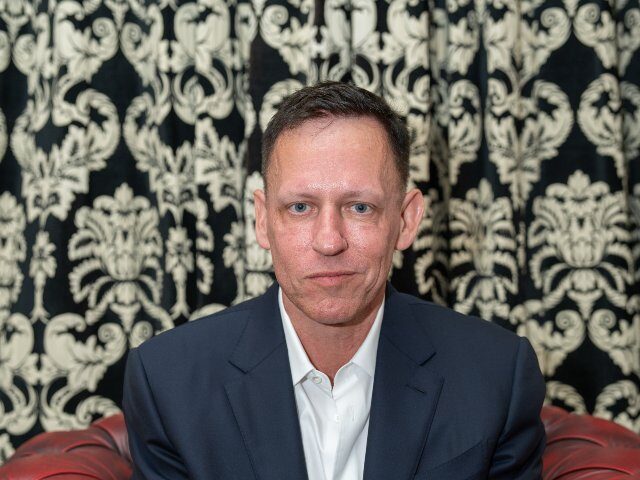
Peter Thiel Accuses Pope Leo of Serving as Chinese Communist Agent on AI


Nordin Catic/Getty Images for The Cambridge Union

3 Jul 2026

Billionaire tech investor Peter Thiel launched a series of controversial criticisms and predictions about AI and Western democracy during remarks at the Aspen Ideas Festival in Colorado on Tuesday. In his most provocative statement, Thiel accused Pope Leo XIV of serving the interests of China with his stance on AI.

CNN reports that Thiel, co-founder of Palantir and PayPal and an early Silicon Valley supporter of President Donald Trump, accused Pope Leo of inadvertently functioning as a Chinese communist agent by advocating for AI regulation. He also warned of what he described as an impending democratic-socialist takeover of the United States Democratic Party.

The tech investor delivered his remarks during a nonrecorded panel alongside political scientist Francis Fukuyama. During the event, Thiel specifically targeted the Vatican and Pope Leo, the first American pope, claiming he was unintentionally advancing Chinese interests by advocating for stronger international oversight of AI. Breitbart News previously reported that in May, Pope Leo issued his first encyclical titled “Magnifica Humanitas” or “Magnificent Humanity,” declaring that artificial intelligence “must be disarmed” and calling for greater international regulation of the technology:

Pope Leo frequently returns to the theme of uniformity versus communion, stressing that the quest for uniformity is sterile, mechanistic, and prone to tyrannical abuse, while communion is voluntary and joyous, bringing people together with each other and God. The encyclical asserts that, while AI might become smarter than any one of us, it will never be able to match the unexpected and delightful achievements of all of us — the unpredictable genius of magnificent humanity.

The pope’s Tower of Babel analogy draws parallels between the development of AI and the construction of the ancient Tower of Babel, “an impressive feat” constructed with “a single language, a single technology, a single direction.”

Sunday, October 26, 2025

Cuba Captures Fugitive Chinese National Accused of Running Fentanyl Network Into the U.S.

Story by Pedro Camacho


Alleged Chinese fentanyl kingpin Zhi Dong Zhang has been arrested by Cuba after escaping custody in Mexico back in July© Mexican government

Cuban authorities have detained a Chinese national accused by the United States of running an international fentanyl and cocaine trafficking network after his escape from custody in Mexico earlier this year, according to Mexican security officials.

Cuba has not issued an official statement on Zhang's detention or on whether it intends to extradite him to Mexico or the United States.

The fugitive, identified as Zhi Dong Zhang and also known as "Brother Wang," had been sought by U.S. authorities on charges of drug trafficking and money laundering, as Al Jazeera reports.

Zhang was first indicted in federal court in Atlanta in 2022, accused of directing a transnational network that trafficked large quantities of cocaine and fentanyl into the United States through distribution hubs in Atlanta and Los Angeles. Prosecutors allege millions of dollars in drug proceeds were collected in U.S. stash houses and transferred to accounts Zhang could access from Mexico.

Mexican authorities arrested Zhang in Mexico City in October 2024 at the request of the U.S. government. A judge later granted him house arrest, from which he escaped in July 2025 despite being under military guard.

Security officials quoted by El País described Zhang as "a major international money laundering operator" who established "connections with other cartels for the transfer of fentanyl from China to Central America, South America, Europe, and the United States." He is alleged to have maintained ties with Mexico's Sinaloa and Jalisco New Generation cartels.

The case has unfolded amid growing tensions between Washington, Mexico, and China over the trafficking of fentanyl, a synthetic opioid estimated to be 50 times more potent than heroin and responsible for tens of thousands of overdose deaths in the United States each year.

While Mexico has been the primary transit route for the drug, U.S. officials have increasingly turned their attention to China-based suppliers of precursor chemicals.


Saturday, April 18, 2015

Lord in the Morning (w Chinese Lyrics)


29)清晨頌主Lord in the morning


Published on Feb 5, 2013

Hymns 鋼琴伴奏
中英文字幕
基督復臨安息日會
.
.

Saturday, June 28, 2014

面具後面的人 (Chinese) / Total Onslaught - Walter Veith [The Man Behind the Mask]


205CN - 面具後面的人 (Chinese) / Total Onslaught - Walter Veith


Amazing Discoveries


Published on Mar 20, 2014


For more please Visit:
http://amazingdiscoveries.tv/c/227/To...
http://amazingdiscoveries.tv/media/17...
http://amazingdiscoveries.org

Disclaimer: The following translation has been provided courtesy of uncommissioned translators. Amazing Discoveries has not overseen or verified the translation of this video or article due to our limited resources, and is therefore not responsible for any errors in the translation. We are simply providing these translations on our website as a courtesy to those who speak the language and would like to access this information.
 http://amazingdiscoveries.tv/media/1754/205cn/

.

Tuesday, June 17, 2014

Beijin is in love with EndrTimes


这个网站是从下据说从北京一个未知的实体持续监控。永远不要因为山景,加利福尼亚州和理事会虚张声势,爱达荷州被争夺海誓山盟为“最常客”标题有这样的事情发生。

现在,据称由国泰航空(中国)的竞争者不断全天参观Endrtimes。我们小费我们的帽子,对他们撑起我们的“小红书”,以表彰他们的成就。

Zhège wǎngzhàn shì cóng xià jùshuō cóng běijīng yīgè wèizhī de shítǐ chíxù jiānkòng. Yǒngyuǎn bùyào yīnwèi shān jǐng, jiālìfúníyǎ zhōu hé lǐshì huì xūzhāngshēngshì, ài dá hé zhōu bèi zhēngduó hǎishìshānméng wèi “zuì chángkè” biāotí yǒu zhèyàng de shìqíng fāshēng.

Xiànzài, jù chēng yóu guótài hángkōng (zhōngguó) de jìngzhēng zhě bùduàn quán tiān cānguān Endrtimes. Wǒmen xiǎofèi wǒmen de màozi, duì tāmen chēng qǐ wǒmen de “xiǎo hóng shū”, yǐ biǎozhāng tāmen de chéngjiù.

.

Wednesday, August 14, 2013

Why the New York Times website went dark


CyberTruth Byron Acohido, USA TODAY 6:16 p.m. EDT August 14, 2013


(Photo: EMMANUEL DUNAND AFP/Getty Images)


SEATTLE -- Given multiple waves of denial of service attacks against U.S. banks by an Islamic group, the disabling this morning of the New York Times website had the cybersecurity community on alert.

The Times' public website became inaccessible as of around 11 a.m. Eastern time for at least an hour, longer in some parts of the nation, according to Internet reports.

A talk last month at the Black Hat conference in Las Vegas featured a proof-of-concept demonstration by WhiteHat Security chief technology officer Jeremiah Grossman showing how anyone could circulate a paid online ad in a way that would cause a targeted website to be inundated by mundane service requests triggered by the mere circulation of the ad.

But something even more mundane apparently caused the New York Times website outage: human error.

At least that's the consensus of IT pros who discuss things on puck.nether.net. One poster says "a self-inflicted wound, having to do with a software update that was rolled out to both the production and backup servers simultaneously," caused the failure.

Gunter Ollmann, chief technology officer at IOActive, says "based upon a couple of screen shots that people have posted it could have been something as simple as a misconfigured DNS server or load balancer. From the underground side, there's no discussions or perps claiming responsibility. I tend to believe that this was likely self-inflicted."

Tom Kellermann, Trend Micro's vice president of cyber security, for one, doesn't buy that explantion.

Kellermann notes that both the paper's web server and internal e-mail server were inaccessible, even after robust security measures taken in the wake of Chinese hackers targeting the New York Times and other big media outlets late last year and earlier this year.

"It's a good spin to blame this on a crappy update or bad management, but I'm leaning toward the fact that they're under attack again," says Kellermann.

Meanwhile, a blog posted on Monday by researchers at security firm FireEye, adds to the intrigue. Researchers Ned Moran and Nart Villeneuve assert that the Chinese hacking collective that cracked into the New York Times' computer network late last year appear to be at it again, mounting fresh assaults with new and improved versions of malicious software.

"After all the attention paid to security to have a web server and e-mail server go down in tandem just doesn't sound right. You usually lose one or the other, and when you lose your e-mail server it's usually from something nefarious," Kellermann says. "So is it hackers from the past returning to haunt them again or new hacktivists attacking them for something they've done or reported recently?"

Darien Kindlund, FireEye's manager of threat intelligence, says he does not believe the Chinese hacking group tied to earlier New York Times hack -- and back in action again -- caused the outage today.

"It goes against against their whole motive," Kindlund says. "They're into this to steal large scale quantities of intelligence and if they were to disrupt their victims it would be clear what's going on and they'd no longer be able to steal any intelligence."


Source
.

Monday, February 25, 2013

2013: The Year of America’s Financial Collapse

Sina, China


By Jia Pu Jing

If Congress is unable to find a solution, the U.S. national credit rating will be compromised, which could possibly even result in a financial meltdown

Translated By Chase Coulson

5 February 2013


Edited by Kyrstie Lane
China - Sina - Original Article (Chinese)

In a recent motion to raise the short-term debt ceiling, Congress voted to allow the U.S. Treasury to continue issuing debt to maintain the federal government's operations until May 19. This marks the second time in a month that both parties of Congress have extended the time limit in which to solve the national debt crisis.

The issue of the U.S. debt ceiling has been around for a while. As early as May 2011, when the national debt was already nearing $14.3 trillion, there was serious debate about the debt ceiling crisis. From May 2011 to May 2013, the Democratic and Republican Parties have continued to quarrel over the debt problem. Why can't they be straightforward about the issue? Why can’t they either raise the debt ceiling to a very high level or simply do away with the ceiling altogether?

Because, in a nutshell, what they are arguing about is how to apply the tax collected to pay the debt owed. If Congress is unable to find a solution, the U.S. national credit rating will be compromised, which could possibly even result in a financial meltdown.

The U.S. currently issues currency through the Federal Reserve's purchase of government bonds from the Department of the Treasury. From this, the Department of the Treasury acquires U.S. dollars and then by way of a finance payment scheme takes the dollars and circulates them through the general economy. The guarantee of yields brought in by the Treasury for its purchase of bonds is future taxes. That is to say, the foundation of the U.S. dollar is U.S. government bonds, and the foundation of the government bonds is future tax revenue. To increase the money supply, the U.S. often issues more government bonds, and the issuance of government bonds implies that taxes will increase in the future.

After the eruption of the financial crisis, the Federal Reserve began two rounds of quantitative easing in an effort to buy up the toxic assets that were clogging the financial system. Approximately $2.6 trillion was spent to accomplish this end, exhausting the entirety of the bonds available to be issued at that point. So after the 2011 debt ceiling crisis began, the biggest problem the U.S. faced was this: Continuing to increase the money supply would mean increasing future taxation. But one might say that the space for tax increases is nearing its limit. So what the two parties are arguing over now is, specifically, the section of society upon which to impose new taxes.

However, of the current U.S. population of 315 million people, only 115 million are employed full time, while 127 million people currently depend on some form of welfare assistance. Yet taxes cannot be raised on all 115 million full-time workers, because the yearly income of 6.1 million of these workers falls below the $20,000 poverty line. Add to this the calculations of former U.S. Securities and Exchange Commission Chairman Chris Cox, which take into account future health care, Social Security and retirement expenses and show that the budget deficit will exceed $86.8 trillion. To go about repaying such a debt while relying on tax increases on 56 million individuals, how much tax would each person have to pay?

A year and a half has gone by, and the reason the U.S. has been able to make ends meet up to this point is because it has been relying on a system in which there is no additional debt issued, by selling Treasury bills (short-term government debt) to replace equal amounts of Treasury bonds (long-term government debt). But if there is no new debt in circulation, eventually all the Treasury bills will sell out, which is an unsustainable measure.

Every time the two parties force the debt ceiling upward, the decision to “temporarily and slightly raise future taxation” is made under somewhat strenuous circumstances. But at this point, additional large-scale money printing is not a possibility, because the space no longer exists to substantially increase taxes.

However, there is a double-edged sword of Damocles hanging precariously over America’s head, namely the acquisition of toxic assets from the previous two rounds of quantitative easing. For the most part, most of this bad debt is akin to collateralized debt obligation. The term limit on these kinds of derivatives contracts is usually five years. In 2008, the last time there was an explosion of toxic assets, it forced the Federal Reserve to print $1.7 trillion to rescue the market. If at some point in the coming months of 2013 the contractual expiration of these toxic assets reaches its peak and the U.S. government is powerless to print currency to rescue the market, a financial collapse will very possibly occur.


CLICK HERE FOR ORIGINAL VERSION


.