Showing posts with label bankruptcy. Show all posts

Saturday, May 02, 2026

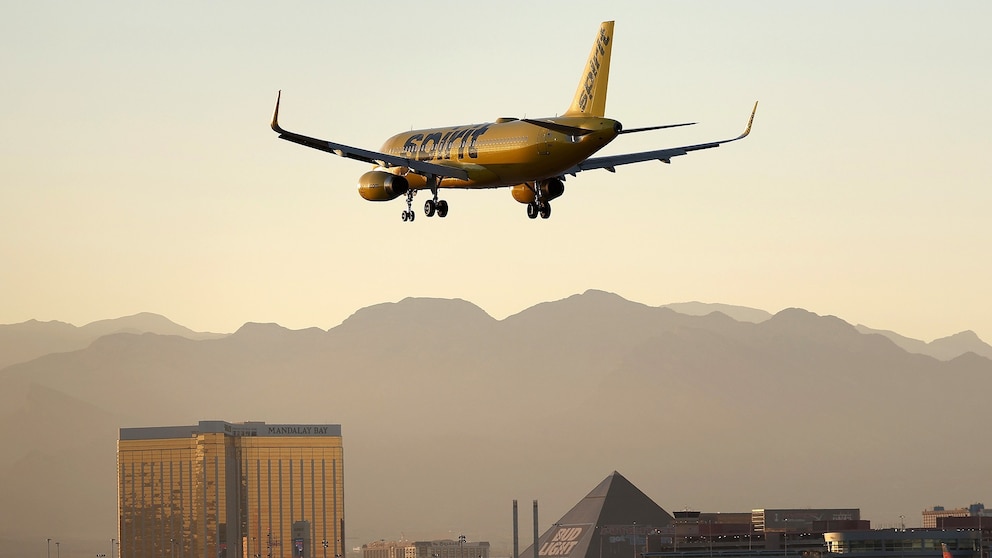
What to know about Spirit Airlines as it says it is 'winding down all operations'


Headlines from ABC News Live
Justin Sullivan/Getty Images

ByKelly McCarthy and Jon Haworth
May 2, 2026, 3:03 AM


Spirit Airlines says that it has "started an orderly wind-down of our operations, effective immediately" while the outcome of talks between the airline and the federal government over a $500 million rescue deal for the remains unclear.

Spirit Airlines final flight was flight 1833 which travelled from Detroit to Dallas and landed early Saturday morning just after midnight as the airline says it flew more than 50,000 passengers over the past day and is working to get more than 1,300 crew safely home to their bases.

A spokesperson for Spirit also said that the majority of the airline's employees found out about the airline's closure primarily through media reports that they were about to lose their jobs.

The airline was scheduled to operate 277 flights Saturday, according to data from Airline Data Inc, which have now all been cancelled.

"To our Guests: all flights have been cancelled, and customer service is no longer available," Spirit said in a statement on its website. "We are proud of the impact of our ultra-low-cost model on the industry over the last 34 years and had hoped to serve our Guests for many years to come."

The Wall Street Journal first reported that Spirit was preparing to shut down operations early Saturday.

Earlier Friday, President Donald Trump said an announcement about the airline rescue deal was possible.

Sunday, November 02, 2025

Heinz ketchup rival files for Chapter 11 bankruptcy

The maker of condiments, including ketchups, barbecue sauces, and mustards filed for Chapter 11 bankruptcy protection.

By Kirk O’Neil

Nov 1, 2025 11:13 AM EDT

Companies that produce certain natural, plant-based food products have struggled to generate adequate revenue and in some cases establish shelf space in mainstream grocery stores across the country since the Covid-19 pandemic.

Iconic retail food producer Atlantic Natural Foods LLC, which was established in 1890, sells its products in retail stores and markets its plant-based products on Amazon, including its Loma Linda brand Big Franks vegan hot dogs, plant-based canned Tuno fish and canned Chik’n, neat plant-based egg substitute, and caffeine-free coffee alternative Kaffree Roma.

Since 2019, the company’s plant-based food products have been found at various stores, such as Costco, Walmart, Target, and Aldi, according to the company. The company doesn’t have store shelf space problem, as its products are available in over 25,000 stores in the U.S. and 30 other countries.

Friday, September 08, 2023

PBS goes broke, shuts down entire operation; is moving to Substack


SEP 8, 2023


Multiple news outlets report the giant federally funded and viewer supported network is dead broke.

And is moving what’s left of its programming to Substack.

PBS CEO Ima Gnot talked to reporters outside her home on Martha’s Vineyard:

“It’s the fund drives. They sank us. Most of the old rock stars we used to promote those drives are dead. It happens. Old people pass away.”
“And our main viewership, we discovered, resides in nursing homes and retirement villages. They’re passing away, too.”

Professor Hiram Schwartz Fortunato, chairman of the Brain Studies Unit at MIT, told the Boston Globe, “We did a study last year that analyzed the national PBS news broadcasts. It turns out the people they employ, the anchors, transmit a special ‘leveling’ frequency that mesmerizes several key brain centers. In particular, Judy Woodruff, who retired last year, and Christiane Amanpour could be thought of as sleep gas. Amanpour also delivers an odd low-pitched wave length that reminds viewers of the word ‘beer’. We still don’t understand that. But most PBS viewers are not friendly toward beer. They prefer wine. Especially the pretentious California brands that try to compete with the French.”

I caught up with Eloise Fred X-Binary Leftwich, who is managing the PBS move to Substack. She told me the fund drives will continue on a very limited basis, but now staff will be donating their own possessions to viewers who send money.

“One of our long-time executives, Mike Brest Ivy, has collected dead garter snakes for decades. He stuffs them and keeps them in his bedroom, in bureaus. While supplies last, Mike will be sending a snake to every viewer who contributes $175 or more in a given year. And I have doilies and Native American carvings.”

The PBS Substack will feature 175 writers who have been working for the network. They’ll pen articles.

The 175 have formed a Collective. The Social of Substack. SS. They’ll evenly divide the proceeds from subscriptions.

I asked Leftwich whether each writer will contribute equally to the output of articles.


Tuesday, July 28, 2015

The Bankrutpcy of the Planet Accelerates


by Michael Snyder
July 16, 2015

from TheEconomicCollapseBlog Website


There has been so much attention on Greece in recent weeks, but the truth is that Greece represents only a very tiny fraction of an unprecedented global debt bomb which threatens to explode at any moment.

As you are about to see, there are 24 nations that are currently facing a full-blown debt crisis, and there are 14 more that are rapidly heading toward one.

Right now, the debt to GDP ratio for the entire planet is up to an all-time record high of 286 percent, and globally there is approximately 200 TRILLION dollars of debt on the books.

That breaks down to about $28,000 of debt for every man, woman and child on the entire planet.

And since close to half of the population of the world lives on less than 10 dollars a day, there is no way that all of this debt can ever be repaid. The only "solution" under our current system is to kick the can down the road for as long as we can until this colossal debt pyramid finally collapses in upon itself.

As we are seeing in Greece, you can eventually accumulate so much debt that there is literally no way out.

The other European nations are attempting to find a way to give Greece a third bailout, but that is like paying one credit card with another credit card because virtually everyone in Europe is absolutely drowning in debt.

Even if some "permanent solution" could be crafted for Greece, that would only solve a very small fraction of the overall problem that we are facing. The nations of the world have never been in this much debt before, and it gets worse with each passing day.

According to a new report from the Jubilee Debt Campaign, there are currently 24 countries in the world that are facing a full-blown debt crisis
  • Armenia
  • Belize
  • Costa Rica
  • Croatia
  • Cyprus
  • Dominican Republic
  • El Salvador
  • The Gambia
  • Greece
  • Grenada
  • Ireland
  • Jamaica
  • Lebanon
  • Macedonia
  • Marshall Islands
  • Montenegro
  • Portugal
  • Spain
  • Sri Lanka
  • St Vincent and the Grenadines
  • Tunisia
  • Ukraine
  • Sudan
  • Zimbabwe
And there are another 14 nations that are right on the verge of one…

  • Bhutan
  • Cape Verde
  • Dominica
  • Ethiopia
  • Ghana
  • Laos
  • Mauritania
  • Mongolia
  • Mozambique
  • Samoa
  • Sao Tome e Principe
  • Senegal
  • Tanzania
  • Uganda
So what should be done about this? Should we have the "wealthy" countries bail all of them out?

Well, the truth is that the "wealthy" countries are some of the biggest debt offenders of all. Just consider the United States. Our national debt has more than doubled since 2007, and at this point it has gotten so large that it is mathematically impossible to pay it off.

Europe is in similar shape.

Members of the Eurozone are trying to cobble together a "bailout package" for Greece, but the truth is that most of them will soon need bailouts too

All of those countries will come knocking asking for help at some point. The fact is that their Debt to GDP levels have soared since the EU nearly collapsed in 2012.
  • Spain's Debt to GDP has risen from 69% to 98%
  • Italy's Debt to GDP has risen from 116% to 132%
  • France's has risen from 85% to 95%
In addition to Spain, Italy and France, let us not forget,
  • Belgium (106 percent debt to GDP)
  • Ireland (109 debt to GDP)
  • Portugal (130 debt to GDP)
Once all of these dominoes start falling, the consequences for our massively overleveraged global financial system will be absolutely catastrophic

Spain has over $1.0 trillion in debt outstanding… and Italy has €2.6 trillion.
These bonds are backstopping tens of trillions of Euros' worth of derivatives trades. A haircut or debt forgiveness for them would trigger systemic failure in Europe.
EU banks as a whole are leveraged at 26-to-1. At these leverage levels, even a 4% drop in asset prices wipes out ALL of your capital. And any haircut of Greek, Spanish, Italian and French debt would be a lot more than 4%.

Things in Asia look quite ominous as well.

According to Bloomberg, debt levels in China have risen to levels never recorded before…

While China's economic expansion beat analysts' forecasts in the second quarter, the country's debt levels increased at an even faster pace.
Outstanding loans for companies and households stood at a record 207 percent of gross domestic product at the end of June, up from 125 percent in 2008, data compiled by Bloomberg show.

And remember, that doesn't even include government debt. When you throw all forms of debt into the mix, the overall debt to GDP number for China is rapidly approaching 300 percent.

In Japan, things are even worse.

The government debt to GDP ratio in Japan is now up to an astounding 230 percent. That number has gotten so high that it is hard to believe that it could possibly be true. At some point an implosion is coming in Japan which is going to shock the world.

Of course the same thing could be said about the entire planet. Yes, national governments and central banks have been attempting to kick the can down the road for as long as possible, but everyone knows that this is not going to end well.

And when things do really start falling apart, it will be unlike anything that we have ever seen before.

Just consider what Egon von Greyerz recently told King World News
Eric, there are now more problem areas in the world, rather than stable situations. No major nation in the West can repay its debts.
The same is true for Japan and most of the emerging markets. Europe is a failed experiment for socialism and deficit spending. China is a massive bubble, in terms of its stock markets, property markets and shadow banking system.
Japan is also a basket case and the U.S. is the most indebted country in the world and has lived above its means for over 50 years.
So we will see twin $200 trillion debt and $1.5 quadrillion derivatives implosions. That will lead to the most historic wealth destruction ever in global stock, with bond and property markets declining at least 75-95 percent.
World trade will also contract dramatically and we will see massive hardship across the globe.


.

Monday, July 13, 2015

Dread And Despair Among Greeks As They Wait To Learn Their Fate


JULY 12, 2015 7:48 AM ET
ELEANOR BEARDSLEY
JOANNA KAKISSIS


Listen to the Story


4:26

Playlist


From the capital to the countryside, there is pervasive fear in Greece as European leaders in Brussels debate the country's economic fate.


LYNN NEARY, HOST:

This weekend, the Greek government is in Brussels, negotiating with European Union creditors on its latest plan to reform the country's economy. All eight EU leaders will weigh in on the Greek proposal today. They'll decide whether it's enough to enable Greece to stay in the eurozone and receive a third desperately needed cash bailout. NPR reporters Joanna Kakissis and Eleanor Beardsley are in Greece, where people are nervously watching while their country's fate is decided.

JOANNA KAKISSIS, BYLINE: I'm Joanna Kakissis in Kiato, a small town of merchants, farmers and innkeepers in southern Greece. It's here, at a neighborhood cafe, that I meet Katerina Angelopoulou, a civil servant in the local tax office. In the last five years, Angelopoulou says she's often burst into tears as she watches friends and neighbors come in and beg for guidance because they lost their jobs and don't have enough money to pay their taxes.

KATERINA ANGELOPOULOU: (Through interpreter) When your income goes down and your taxes go up, you can't make it. When two thirds of it will go to taxes, that's a problem because you have other bills to pay.

KAKISSIS: The new Greek plan calls for higher taxes, pension cuts and more harsh austerity measures in exchange for more loans. But now, it looks like European Union leaders don't think the plan is good enough and may just want to pull the plug on Greece altogether. That scares Angelopoulou.

ANGELOPOULOU: (Through interpreter) People feel so insecure now. More than 80 percent of us Greeks - we want to stay in the European Union and keep the euro as our currency. So right now, we just feel depressed - so depressed. I feel depressed.

ELEANOR BEARDSLEY, BYLINE: I'm Eleanor Beardsley in Athens, the country's bustling capital. Taxi driver Sakis Evgeniou says he understands why Europe needs to be tough on Greece because if it gives in to the left-wing ruling party here, that will encourage other far-left movements Podemos in Spain.

SAKIS EVGENIOU: And after Spain is the elections in Portugal. And the Portuguese, they will ask the same. And don't forget that the third biggest economy of Europe, Italy, has similar problem. And the North Europeans, they don't want to give in. They play hard.

BEARDSLEY: Evgeniou says his own life is getting harder with fewer customers and higher taxes.

KAKISSIS: It's the same story back in Kiato, which is 65 miles west of Athens. As people walk on the beach on their day off from work, they say their lives feel so up in the air. Emily Tavoulareas, a Greek-American digital strategist, has spent every summer here since she was a kid. She's planning her big Greek wedding next weekend in a Byzantine village at the tip of southern Greece. She worries that with bank closures and credit problems, suppliers transporting food inside the country will struggle to pay for gas and cut down on deliveries. She spoke to the owners of a local tavern about a contingency plan.

EMILY TAVOULAREAS: And when I was asking them, you know, how does your food get here, where are your ingredients from, they pointed to the garden behind the restaurant, and they were like, everything's from here - everything from the goats to the cheese to the tomatoes. So, you know, it was in that moment I was like, oh, well, if things really fall apart, then we can just bring everything from here.

KAKISSIS: But Tavoulareas says she's much more worried about how this crisis will affect her family and friends here. She watches some neighbors, a group of retired men, sitting on plastic chairs near the beach.

UNIDENTIFIED MEN: (Speaking Greek).

KAKISSIS: The men spend every afternoon here arguing about how this crisis happened, who's to blame.

UNIDENTIFIED MAN: (Singing in Greek).

KAKISSIS: Sometimes one of them breaks the tension by singing bluesy old folk songs like this one, which tells a story of freedom and slavery.

VASSILIS KOUBOULAS: (Speaking Greek).

KAKISSIS: "We always talk about what went wrong," says retired bus driver Vassilis Kouboulas, shaking his head. "We should be asking ourselves what's going to happen tomorrow. Will we face tomorrow alone," he says, "or together with Europe?" For NPR News, I'm Joanna Kakissis in Kiato, Greece.

BEARDSLEY: And this is Eleanor Beardsley, NPR News, Athens.

Copyright © 2015 NPR. All rights reserved. Visit our website terms of use and permissions pages at www.npr.org for further information.

NPR transcripts are created on a rush deadline by a contractor for NPR, and accuracy and availability may vary. This text may not be in its final form and may be updated or revised in the future. Please be aware that the authoritative record of NPR’s programming is the audio.


Source
.

Wednesday, July 08, 2015

Dow ends down 261 as NYSE shutdown stuns markets


David Carrig and Adam Shell, USA TODAY4:48 p.m. EDT July 8, 2015


July 8 -- The NYSE says it experienced technical issues that affected symbols. Bloomberg's Julie Hyman reports on "Bloomberg Markets." Bloomberg


(Photo: Spencer Platt, Getty Images)


Losses in U.S. stocks following a global sell-off Wednesday accelerated when trading at the New York Stock Exchange suddenly halted for unknown technical reasons.

The Dow Jones industrial average was already off 177 points when at 11:32 a.m. ET trading in all securities on the NYSE stopped. Trading on the exchange resumed about 3:10 p.m.

Well into the 3½-hour shutdown came the release of the latest Fed minutes, which gave investors another opportunity to second-guess when the central bank will raise rates.

The Dow ended down 261 points, or 1.5% to 17,515.42. The Standard & Poor's 500index shed 1.7%, to 2046.69, while the Nasdaq composite index lost 1.8%, to 4909.76.

3½-HOUR SHUTDOWN: NYSE resumes trading

It's only Wednesday, but it's already been a tough week for investors around the world. Europe and Asia investors, especially, have confronted the longer-term issues of Greece's debt problem and a cratering market for China stocks.


USA TODAY

Fed officials worried about Greek crisis last month


Amid the NYSE shutdown, the exchange issued a statement saying: "We're currently experiencing a technical issue that we're working to resolve as quickly as possible. We will be providing further updates as soon as we can, and are doing our utmost to produce a swift resolution, communicate thoroughly and transparently, and ensure a timely and orderly market re-open."

It still wasn't clear after the 4 p.m. close what the nature of the tech issue was.

Even with the NYSE shut down, stock losses accelerated with the Dow's loss exceeding 200 points in afternoon trading. The outage didn't affect other markets including the Nasdaq Stock Market. In fact, trading in NYSE-listed stocks was still occurring on other exchanges, including the Nasdaq.

"There are 11 other stock exchanges," says Sal Arnuk, trader at Themis Trading. "The good news is there's redundancy in the system and stocks are continuing to trade." Arnuk says the other exchanges are handling the trading "fluidly and smooth."

In an increasingly electronic, automated market, market glitches — despite the uncertainty that results — are just part of the new investing landscaping, says Savena Mostowfi, head of U.S. equities research at TABB Group, a firm that specializes in market structure.

"System glitches are the new norm," she told USA TODAY.

Mostowfi lauded the NYSE's decision to shut trading down when it discovered a technical problem.

"It was a smart decision rather than create mass confusion," she says, noting that investors would rather not be in limbo, wondering what the status of their trades are.

And while the U.S. exchange system has gotten increasingly fragmented with 11 different exchanges, which is often a criticism, today the ability of investors to seamlessly move their trading to other exchanges is a sign the system "works," says Mostowfi. The fact that the stock market did not go into freefall despite the outage at the NYSE was "reflective of how seamless the transition was for brokers to go from one trading venue to another."

Stocks had been lower all morning as investors were confronted with a major sell-off in Asian markets, uncertainty over the future of Greece and the eurozone and the upcoming release of the Fed minutes.

Wall Street followed Asian markets lower as Hong Kong's Hang Seng index plunged as much as 8% before closing down 5.8% and China's Shanghai Composite sank 5.9%. Japan's Nikkei 225 index lost 3.1% to close at 19,737.64.


USA TODAY

China's dramatic stock plunge continues


The sell-off in China came despite measures announced by the Chinese government Wednesday to halt the stock slide including telling state-owned companies to buy shares, raising the amount of equities insurance companies can hold and promising more credit to finance trading.

Chinese stocks are now down more than 30% since early June.


A woman rubs her face as she stands at a computer terminal in a stock brokerage house in Nantong in eastern China's Jiangsu province on July 8, 2015. (Photo: AP)


The lack of progress on Greek debt talks also added to investor angst. Greece submitted a request to the European Union for aid on Wednesday, and must present a detailed new economic reform proposals to justify fresh lending by international creditors by Thursday. EU leaders have also give Greece a Sunday deadline to make a deal of face bankruptcy.


USA TODAY

Greece submits aid request; still to send full plan


European stocks were higher Wednesday after four straight days of declines. Hopes that Greece will eventually submit a proposal and spur talks that will lead to a deal helped stop the recent European drop. Germany's DAX index was up 0.7% and France's CAC 40 added 0.8%.

RATES: Will Fed plans be upended by global tumult?

Contributing: Jane Onyanga-Omara, Matt Krantz


Source: http://www.usatoday.com/story/money/markets/2015/07/08/stocks-wednesday/29856201/
.
.

Monday, February 10, 2014

Montana Catholic diocese files for bankruptcy amid 362 sex abuse claims


The diocese of Helena filed for bankruptcy in advance of a proposed $15 million settlement for victims of clergy sex abuse. Bishop Georg Leo Thomas apologized to the victims, while maintaining that most of the accused clergymen have died.
 
 THE ASSOCIATED PRESS
Published: Friday, January 31, 2014, 3:58 PM
Updated: Wednesday, February 5, 2014, 3:37 PM


JON EBELT/AP
Bishop George Thomas, right, apologized to the victims in a statement. He said most clergy members who were credibly accused have died, and none remain in active ministry.


HELENA, Mont. — The Roman Catholic Diocese of Helena filed for bankruptcy protection Friday as part of a proposed $15 million settlement for hundreds of victims who say clergy members sexually abused them over decades while the church covered it up.

The Chapter 11 bankruptcy reorganization plan comes after confidential mediation sessions with the plaintiffs' attorneys and insurers, resulting in a proposed deal to resolve the abuse claims, diocese officials said.

Bishop George Leo Thomas expressed "his profound sorrow" and apologized to the victims in a news conference.

"I know the pain is real, the pain is in the present tense, and in the name of the church, I want to say I'm sorry and we're sorry as a church," Thomas said.

RELATED: POPE BENEDICT DEFROCKED 400 PRIESTS OVER TWO YEARS

The $15 million "will at least be a beginning point for people who are seeking resolution in their lives and in their hearts," he added.

In addition to the money, the diocese must publicly apologize, publish the names of clergy members who have been credibly accused of abuse, offer to meet with abuse survivors, provide victim counseling and reinforce its policies and procedures to prevent abuse, plaintiffs' attorneys said.

The diocese already has set up abuse-prevention programs, including worker screenings, a claims-review board and a hotline to report abuse.

The settlement details are being worked out, but the U.S. Bankruptcy Court in Montana would be responsible for approving and supervising the disbursement of $15 million to compensate the 362 victims identified in the two lawsuits.

RELATED: U.N. COMMITTEE CRITICIZES VATICAN FOR ALLEGEDLY ENABLING CHILD SEX ABUSE

In addition, at least $2.5 million will be set aside for victims who come forward later, according to the diocese.

The church anticipates paying that $2.5 million, with the rest paid by insurers.

The victims and creditors will have the chance to vote on the proposed settlement, diocese officials said.


Church officials are planning to pay the diocese's share of the settlement with cash, though they may have to sell some property in the future, Thomas said.

RELATED: CATHOLIC OFFICIAL ACCUSED OF COVERING UP ABUSE TO BE FREED FROM JAIL

The diocese was in a precarious financial position before the lawsuits were filed, and a reorganization was already likely, he said.

Court documents filed Friday show the diocese has estimated assets between $1 million and $10 million, and estimated liabilities between $10 million and $50 million.

Molly Howard, an attorney for the plaintiffs in one of the lawsuits, said she believes the bankruptcy process will resolve the case more quickly than years of litigation and trials with uncertain outcomes.

"Given the age and ill health of many of the victims, this is in their best interest," Howard said.


Ron Zellar/AP
The Cathedral of St. Helena is the headquarters of the Roman Catholic Diocese in Helena, Montana. The diocese doesn’t expect to have to liquidate any assets or close programs because of the bankruptcy filing.


RELATED: EX-PRIEST HEADS TO CANADA COURT OVER INUIT SEX ABUSE

The Helena diocese is the 11th in the nation to seek bankruptcy protection in the face of sex-abuse claims.

David Clohessy, the executive director of the Survivors Network of those Abused by Priests, criticized the diocese for seeking bankruptcy protection, saying it will allow church officials to keep records closed that might have come out in a trial.

He also said the settlement falls short because it does not publicly name the church officials who shielded and protected predator clergy members.

"Those individuals have to be exposed and punished," Clohessy said.

RELATED: LOS ANGELES CATHOLIC CHURCH SEX ABUSE FILES RELEASED

Thomas said in response that church officials will comb their records to see if there were "intentional failures of leadership." But the records from the time of the abuse are incomplete, he said.

The two lawsuits filed in 2011 claim clergy members groomed and then abused the children from the 1940s to the 1970s. They claim the diocese shielded the offenders and knew or should have known the threat they posed to children.

The plaintiffs, the diocese and the Ursuline Sisters of the Western Province, another defendant, began mediation talks in 2012, but the talks faltered with legal challenges by the church's insurers over the claims they are obligated to cover.

A court hearing was scheduled for Friday ahead of the first civil trials, which were to begin in March. Howard said she expects the court proceedings will be suspended.

RELATED: CHURCH SLOW ON PUNISHING PRIESTS, NOT ON SAVING $57M

The diocese's territory covers all or part of 23 counties in western Montana and employs about 200 people in its parishes, schools and social-service programs. It was created in 1884, five years before Montana became a state, and covered the entire state until the Diocese of Great Falls was formed in 1904, according to the Helena diocese's website.

The Diocese of Great Falls-Billings now covers the eastern half of Montana.

Most clergy members who were accused in the lawsuits have died, and none remains in active ministry, diocese officials said.

In one of the lawsuits, the plaintiffs said they were repeatedly raped, fondled or forced to perform sex acts while at school, on the playground, on camping trips or at the victims' homes.

The second lawsuit, filed a week after the first in 2011, includes 95 of the 362 plaintiffs and contains similar allegations against priests, but also alleged that nuns at the Ursuline Academy in St. Ignatius abused dozens of Native American children.

The Ursulines are not part of the proposed settlement, the diocese said.

Blaine Tamaki, the plaintiffs' attorney in that lawsuit, said the case against the Ursulines will proceed to its July date.

Tom Johnson, an attorney for the Ursulines, acknowledged the sides were still far apart in negotiations, but that the order intends to either settle or file for bankruptcy on its own.

 
Source
.

Monday, September 30, 2013

Bankruptcy of Church and State: When Clergy Is Blind and Justice Isn’t


1:00PM EDT 5/30/2013 | Dan Cummins
Originally published at Charisma News


Dan Cummins is the pastor of Bridlewood Church in
Bullard, Texas.


America’s political and religious establishments are broken. Washington fails to provide the answers needed to solve the economic and political crises facing us at home and abroad. The church fails to exhibit the moral guidance necessary to hold a collapsing culture together. The nation is rapidly losing faith in both institutions, evidenced by declining approval ratings.

The political process in Washington is overheating in partisan gridlock while our churches are becoming increasingly ineffective and indifferently cold to the ongoing culture wars. Both institutions are insolvent to the fiscal and spiritual indebtedness they have incurred upon the nation. Neither can produce the economic capital or spiritual stimulus to jumpstart the economy or usher in revival.

Legislative issues are taking on greater moral ramifications. What were once considered moral issues discussed from the pulpit are now being politicized and aggressively commandeered by special interest groups with their radical social agendas. Civil rights are being sacrificed in the name of social justice upon the altar of special rights. Justice may be blind, but social justice has 20/20 vision. Equality before the law is becoming persecution under the law. The new persecution of the church will be in the form of prosecution of the church.

All the while, there seems to be little pushback from the clergy to preserve their institution’s voice as the spiritual leaders and moral guides for the nation. Complicity and compromise, on the other hand, seem to have replaced the spiritual backbone of America’s preachers. The clergy in America are, in most part, blind to the prophetic times in which we live and clueless to the spiritual solutions that will solve the troubles confronting a despondent nation. America’s sheep are being scattered due to the incompetence of hirelings who run at the first sign of political or cultural confrontation.

When government attempts to legislate morality apart from a spiritual relationship with God, moral rebellion will be the law of the land. When the church pontificates truth without exemplifying reality, her institutions will be rejected as charlatans. They both will soon be tossed aside, leaving the nation ripe for rebellion and anarchy. When the church loses its vision, where is the light to penetrate the moral and political abyss? When complicity robes the clergy, political leaders line their pockets in greed as the nation drifts aimlessly in a vacuum of ethical relativism.

This lesson is oft repeated but seldom learned. Unchecked principles by nature tend to run their own course. Thus history repeats itself. The first 11 chapters of 1 Samuel are but one of many such instances. Four hundred years out of Egyptian bondage, the nation of Israel faced a fundamental transformation in its government—from a godly theocracy overseen by holy priests to a humanistic monarchy dictated by a self-serving king, Saul.

Israel experienced redistribution of its wealth; there was a cry for globalism to become like all the other nations. A morally bankrupt but politically correct clergy produced a climate of judicial legislation. As the menorah slowly flickered out in the tabernacle, the Ark of God’s presence was whisked from the nation. The Ark of the Covenant that preceded the nation into the Promised Land—on the shoulders of holy anointed priests—was now suddenly snatched from her midst by the hands of uncircumcised Philistines. It was Israel’s darkest hour.

Inside the Ark were the Ten Commandments—the spiritual, civil and economic foundations of the nation. The Ten Commandments were no longer found in her schools, in her courthouses, in the town square or in her churches.

Sound familiar? How could the glory of God have departed the nation in this manner?

The glory of the Lord departed the nation because the priesthood was compromised. Eli, the high priest, became fat, lazy and blind. As he lost his vision, so went his usefulness to the nation. His uncircumcised (not in covenant) sons, Hophni (strong) and Phineas (mouth of a serpent), stole from the tabernacle offerings and committed adultery with the women who assembled at the outer gate. A complicit clergy cannot reproduce covenanted sons.

America has weak spiritual sons who cannot lead another awakening as our founding spiritual fathers once did because we’ve had a generation of complicity by the clergy with governmental intrusion into the church. Four hundred years ago, America’s forefathers left the political slavery and religious oppression of Europe for a new promised land—400 years ago! Now America, like Israel, has followed the same principled path to the same self-destructive destination. Will we make the same self-centered mistakes as they did or choose repentance over rebellion?

The Bankruptcy of America Begins

In July 1954, the spiritual bankruptcy of America’s clergy set in as the U.S. Senate passed an unconstitutional amendment to a tax overhaul bill. It was the Johnson Amendment, introduced by then Senator Lyndon B. Johnson who was angry at two wealthy Texas businessmen who used their 501(c)(3) tax-exempt organization to campaign against him.

Without a minute of senatorial debate regarding its constitutionality, a simple amendment that stated, “501(c)(3) organizations are absolutely prohibited from directly or indirectly participating in, or intervening in, any political campaign on behalf of (or in opposition to) any candidate for elective public office,” opened the floodgates of hell upon an unsuspecting church whose organizations were delineated under the 501(c)(3) category by the IRS. Johnson’s legal aide later admitted the amendment was only intended to silence two wealthy businessmen not churches, but the damage was done.

The IRS soon picked up on it and began a 50-year Gestapo-style reign of intimidation and fear upon America’s churches and clergy. In exchange for their political silence in the pulpits, America’s clergy were sold a bill of goods labeled “tax emption” by the IRS—something already granted the church constitutionally.

Fortunately, under the leadership of Alan Sears, founder of Alliance Defending Freedom (ADF) in Scottsdale, Ariz., last year over 1650 pastors in all 50 states continued a five-year national campaign, called Pulpit Freedom Sunday, to overturn the Johnson Amendment, challenging its constitutionality by recording a politically motivated sermon and sending it to the IRS. So far, not one pastor has been audited. Thank God for these courageous pastors and the 2,200 allied attorneys of ADF.

With the clergy’s complicity and silence secured in 1954, Satan’s propaganda machine began running wide open and unchecked. In 1963, prayer and Bible reading were taken out of public schools. The pulpits remained silent—it was a political issue. In 1973, the Supreme Court decided that unborn Americans had no civil rights and upheld a woman’s special right to have an abortion. The pulpit remained silent—it was a political issue. Fifty-five million abortions later, in June the Supreme Court will decide if God knew what He was doing when He created the institution of marriage to be exclusively between one man and one woman. So far, the pulpit has remained silent—it’s a political issue. We will need more than 1650 pastors out of 300,000 churches in America if we are going to turn the tide and see revival.

What is America’s solution? The same as it was for Israel in Eli’s day: There was one barren woman who knew how to pray a prayer of desperation. Her name was Hannah—which means the grace of God. Not only did Hannah grab the horns of the altar, she touched the heart of God. Her prayer—one woman’s prayer—saved the nation and brought the greatest revival in Israel’s history. In the midst of all the political and spiritual unrest of Israel, God answered one woman’s prayer. He gave her a son, a man child, named Samuel who would later anoint David as king. As his first act as king of Israel, David restored the Ark to its rightful place and brought the greatest spiritual awakening in their history—the tabernacle of David.

Second Chronicles 7:14 says, “If my people,” not “if my preachers,” or “if my politicians”! It says, “If my people … will humble themselves and pray.” The answer to America’s problems is the same answer it has always been throughout history: “If my people, which are called by my name, shall humble themselves, and pray, and seek my face, and turn from their wicked ways; then will I hear from heaven, and will forgive their sin, and will heal their land.”

I believe the greatest opportunity for America to experience another Great Awakening is here. But we must meet the four requirements for revival: humble ourselves, pray, seek the face of God and repent of our wicked ways.

Posted 11th August by America the Battlefield

Source
.