Showing posts with label WCC. Show all posts

Tuesday, August 11, 2026

Churches respond to earthquake in Colombia with solidarity and accompaniment


World Council of Churches (WCC) member church, the Presbyterian Church of Colombia, and ecumenical organizations in Colombia are mobilizing in solidarity with communities affected by a powerful earthquake that struck the western and central parts of the country on 10 August.


Photo: Marcelo Schneider/WCC

11 August 2026

According to preliminary figures, the 7.4-magnitude earthquake, with an epicentre near San José del Palmar in Chocó, has affected 16 departments. Authorities report over 110 deaths, hundreds of people injured, and over 1,000 homes damaged.

In a communiqué to ecumenical partners, the leadership of the Presbyterian Church of Colombia expressed its solidarity and called for prayers for affected families and communities, as well as for those engaged in rescue and emergency response efforts. The church is monitoring the situation in areas where it has a presence and is coordinating with its Presbyteries to develop an organized and responsible response based on the needs identified locally.

"May the God of all consolation sustain those who today face fear, pain, or uncertainty, strengthen those who are serving in the midst of this emergency, and enable us, as a church, to walk together and be instruments of hope, solidarity, and service,” reads the message signed by Rev. Leonardo Vargas Delgado, moderator of the church, and Marwin Hurtado Echavarria, executive secretary.

“Christian fellowship becomes especially visible through prayer, closeness, service and solidarity.”

Community infrastructure, including schools, health centres, and community buildings, has also been affected, while damage to roads and bridges has disrupted connectivity in several areas.

The ACT Alliance Colombia Forum is likewise in close contact with local churches, partner organizations, and community networks to assess the impact of the earthquake and identify humanitarian needs.

The forum will assess how its members and the ACT Alliance’s response mechanisms can complement the national emergency response, according to available capacities and presence in affected territories.

Churches and ecumenical partners emphasize that any response will be locally led, needs-based, and grounded in dignity and human rights. Alongside humanitarian assistance, they will continue providing pastoral presence, psychosocial support, and accompaniment through existing church and community networks.

The churches call on the ecumenical family to remain attentive to official updates and coordinated opportunities to support affected communities.


Wednesday, August 05, 2026

UN urged to take action against Iran’s latest crackdown on Protestants


By Michael Gryboski, Editor


Demonstrators gather with Iranian national flags for a rally in support of the new Supreme Leader at Enghelab Square in central Tehran on March 9, 2026. Iran marked the appointment of Ayatollah Mojtaba Khamenei to replace his father as its supreme leader with a new barrage of missiles against Israel and the Gulf states on Monday, as the Middle East war sent oil prices soaring. | Atta KENARE / AFP via Getty Images

A human rights advocacy group is calling on the United Nations to take action against the Islamic Republic of Iran’s latest crackdown on Protestants in the country.

The European Centre for Law and Justice (ECLJ) sent a letter to the United Nations Human Rights Council on Wednesday in response to recent attacks on Iran’s Christian minority.

Specifically, the ECLJ cited the Iranian government’s seizure of the property of St. Peter Evangelical Church, reportedly the oldest Protestant church in the capital, Tehran, last month.

Authorities also reportedly took control of church-owned residences in Tehran, forcing the Christian families living there to flee from Iranian security forces, according to the ECLJ.

Tuesday, May 26, 2026

“Enslaving Treaties – The Persistence of Colonial Ideology and Practice...."


“Enslaving Treaties – The Persistence of Colonial Ideology and Practice and the Quest for Sustainable Decolonization including Litigation”


The World Council of Churches (WCC), through its programme on Overcoming Racism, Xenophobia, and Related Discrimination, will convene on 26 May a global conversation shining a critical light on how colonial ideology continues to shape today’s economic systems through international investor treaties, especially the Investor-State Dispute Settlement system.


Photo: Albin Hillert/WCC


Titled “Enslaving Treaties – The Persistence of Colonial Ideology and Practice and the Quest for Sustainable Decolonization including Litigation,” the webinar will seek to expose how legal and financial frameworks established during and after colonial rule continue to constrain the sovereignty of nations in the Global South—often at the expense of human dignity, environmental protection, and intergenerational justice.

From the WCC’s 1st Assembly in Amsterdam in 1948, the WCC warned against the dangers of unchecked power—whether capitalist or communist—recognizing how vast economic and political concentrations of power give rise to greed, cruelty, and systemic injustice. The WCC also acknowledged that visions of racial equality, however imperfect, resonated deeply with peoples in Asia and Africa who were living under racist colonial domination.

Decades later, those warnings remain strikingly relevant.

International investor treaties, particularly those signed at the twilight of colonial rule or in its immediate aftermath, continue to bind developing nations into relationships of profound inequality. Often mediated through Euro-American economic frameworks, these treaties have created what many describe as a condition of “willing enslavement”—where governments are penalized for prioritizing environmental protection, public welfare, and climate action.

Through investor-state dispute settlement mechanisms, multinational corporations can sue governments for enacting climate or environmental regulations, effectively silencing democratic decision-making and perpetuating racialized economic injustice.

Building on its longstanding commitment to economic justice, climate justice, and children’s rights—including initiatives such as the New International Financial and Economic Architecture (NIFEA) and the Churches’ Commitment to Children programme—the WCC is reiterating the call to churches and ecumenical partners to speak truth to power, including embracing litigation as an appropriate approach to seeking justice for the marginalized and vulnerable communities.

The upcoming webinar will explore how churches can engage morally, ethically, and legally to challenge unjust treaties, including through third-party interventions in investor-state dispute settlement mechanisms cases. At stake is nothing less than the future of communities disproportionately affected by the climate emergency—especially racialized children, girls, and young women.

The webinar discussion will unpack the historical and contemporary realities of international investor treaties, particularly those rooted in the colonial and post-colonial eras. It will also explore strategies for effective, structured interventions by churches and ecumenical bodies to dismantle unjust and discriminatory economic frameworks.

As climate crises intensify and economic inequalities deepen, the WCC affirms that inaction is no longer a viable option.

This webinar marks a renewed call for churches worldwide to stand alongside marginalized communities, confront structures of domination, and work boldly toward a future where justice, sustainability, and dignity are not negotiable—but guaranteed.


Monday, May 18, 2026

Seeking unity within the worldwide Christian community

17 January 2026

Seeking unity within the worldwide Christian community


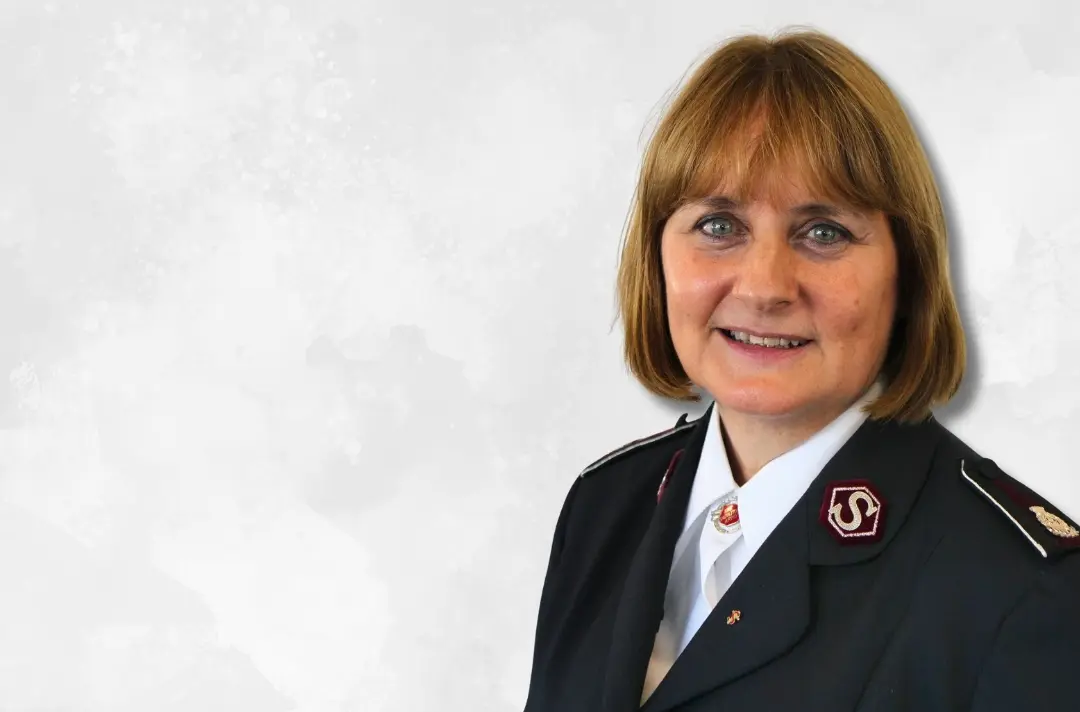
Secretary for International Ecumenical Relations Commissioner Jane Paone shares how Christian traditions across the world share and learn from each other.


What does ecumenism look like at an international level?


I represent the General in different international groups.

The Conference of Secretaries of Christian World Communions brings together all the general secretaries of the different traditions. We share once a year about challenges and joys for the Church. Then we pray for one another. It’s a very precious moment.

I’m also on the Central Committee of the World Council of Churches. The Salvation Army used to be a member of the council. We chose not to be in the 1970s, but we’re always represented with adviser status, so we’re in contact with what’s happening globally. Everybody is very respectful, and there’s a lovely atmosphere.

There’s also the Global Christian Forum. This is a lovely meeting for people to share faith experiences or how the Lord has been working through our traditions. There are no theological documents to be studied; it’s just your testimony.

We’re also part of the World Evangelical Alliance and the Lausanne Movement.

I also have strong links with European Ecumenical Officer Commissioner Vibeke Krommenhoek (IHQ), the General’s representative to the Vatican Lieut-Colonel Andrew Morgan (Italy and Greece Territory) and Territorial Ecumenical Officer Major Paul Robinson (UK and Ireland Territory).

Friday, March 20, 2026

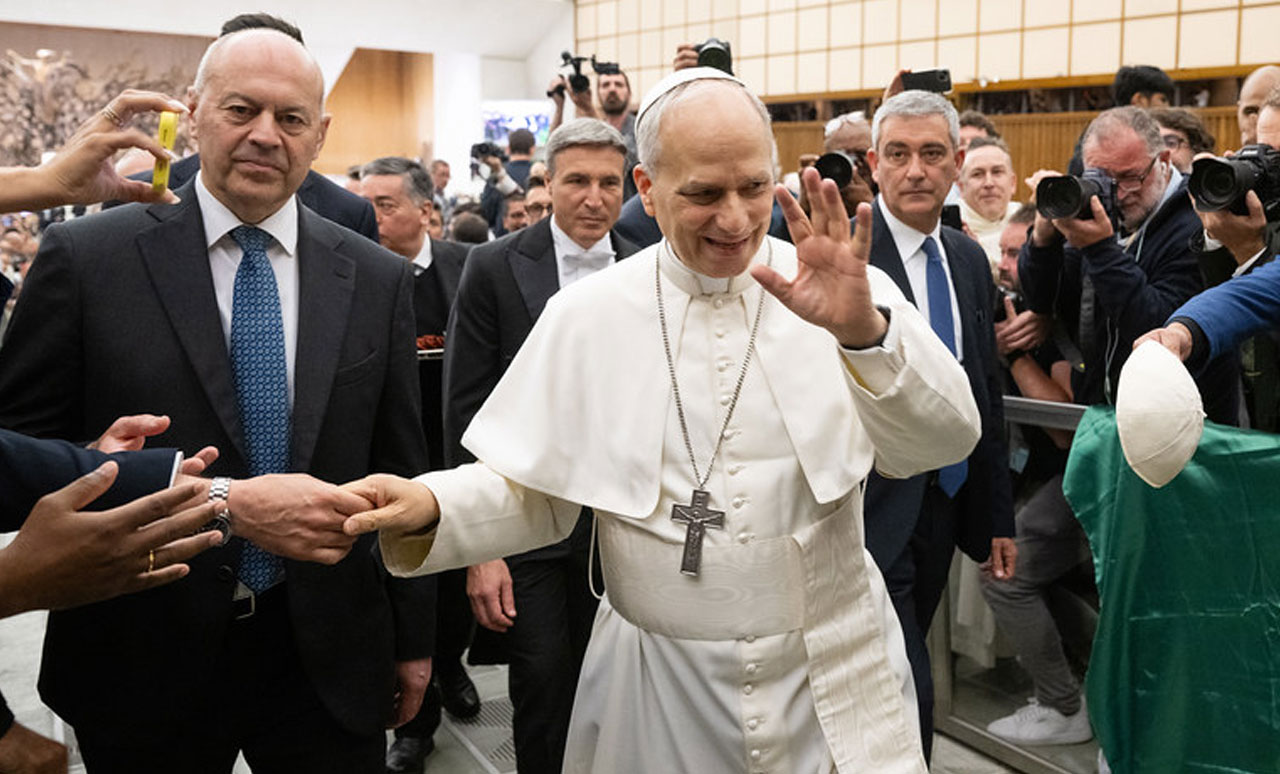
WCC leadership meets Pope Leo XIV


Image: Catholic Church England and Wales from flickr.com


Pastor Hal MayerSpeaker / Director

WCC leadership meets Pope Leo XIV

Wednesday March 18th, 2026


World Council of Churches: Bedford-Strohm said the meeting clearly strengthened his hope for increasing unity amongst the churches. “We wholeheartedly agreed upon the necessity to put Christ in the center to move us to visible unity,” he said. “We also agreed that a strong prophetic voice against the unscrupulous instrumentalisation of Christian faith for political purposes is needed.”

Bedford-Strohm added: “Whether it is about aggressive invasion, chasing migrants, or putting down whole groups of people, the churches must lift up the voice of the preacher of the sermon on the mount who encouraged us to practice, love, even of the enemy and advocacy for the most vulnerable in society. It was encouraging that we are united in giving this witness of love and empathy to the world in a time where division and violence seem to triumph.”

Pillay expressed gratitude for “a heart-to-heart talk with Pope Leo on very important global issues. Our conversation evolved around the need for visible Christian unity especially in this time of numerous global challenges.”

The WCC delegation outlined the WCC’s work in the area of Christian unity and discussed the importance of working with fellow Christians in giving visible expression to the prayer of Jesus that all may be one.

“We commended the Pope for his commitment to Christian unity and the collaboration and spirit in which the Vatican and WCC have been working together for many decades and reflected on what more we can do together, especially after the celebration of the 1700th anniversary of the first Ecumenical Council last year,” said Pillay. “We mentioned the numerous places in which the WCC is currently engaged in peace initiatives.”

The WCC delegation and Pope Leo also reflected deeply on the wars, conflicts, and violence that continue to pervade our world.

Friday, March 13, 2026

World Council of Churches calls on governments to hold Israel accountable for violations of international law


The World Council of Churches' new campaign called “From Condemnation to Consequences” aims to pressure governments to hold Israel accountable for its deepening occupation of the West Bank and its accelerated program of genocide and ethnic cleansing.
 March 11, 2026


Scenes showing the widespread destruction of buildings and infrastructure caused by Israeli attacks during the Gaza genocide in Beit Lahia in the northern Gaza Strip. February 22, 2026. (Photo: Omar Ashtawy/APA Images)


Last week, the World Council of Churches (WCC), headquartered in Geneva, launched a month-long campaign titled “From Condemnation to Consequences.” The program calls its member churches—clergy leaders and lay alike—to hold Israel accountable for its failure to fulfill its obligations under international law.

George Sahhar, Advocacy Officer in the Jerusalem Liaison Office of the World Council of Churches, tells Mondoweiss. “When attention is focused on the war in the Middle East, we want the world to see that human rights violations by Israel against Palestinians continue, and that annexation is ongoing and deepened.”

During a webinar introducing the March 4-31 campaign, Kenneth Mtata, WCC Program Director for Life, Justice and Peace, said, “[O]ur campaign needs to remain focused on the commitments that the churches have made together, with all their partners, to see how we move from the statements and condemnation of the occupation and annexation of Palestine, and to try to translate this into concrete changes and transformation.”
“When attention is focused on the war in the Middle East, we want the world to see that human rights violations by Israel against Palestinians continue, and that annexation is ongoing and deepened.” 

George Sahhar, Advocacy Officer in the Jerusalem Liaison Office of the World Council of Churches

Friday, January 23, 2026

Multitudes pray for unity around the world


From quiet utterances to radio broadcasts, from video messages to joyous celebrations, multitudes of people in churches and communities across the globe are participating in the Week of Prayer for Christian Unity.
 
Available in:
Français
Deutsch
Español


Opening prayer service of the Week of Prayer for Christian Unity 2026 at Iglesia Unida Ekyumenikal of the United Methodist Church on January 19, 2026. Photo: United Methodist Church in the Philippines

22 January 2026
Week of Prayer for Christian Unity

In the Philippines, a message brought by the National Council of Churches in the Philippines described a unity that transcends denominational boundaries, liturgical preferences, and organizational structures. “Our unity is our strongest witness,” reads the message. “And so we pray: Lord, make us one, that the world, and the Filipino people, may believe.”

The Catholic Bishops’ Conference in the Philippines Episcopal Commission on Ecumenical Affairs joined the National Council of Churches in the Philippines for celebrations that includes a series of services and fellowship events.

In the US, the National Council of Churches of Christ in the USA released a newsletter and daily videos. Releasing a new prayer daily via YouTube, the National Council of Churches of Christ in the USA invited all to participate in prayers offered by members of 37 communions. “May these prayers inspire us to walk faithfully in the call to be one body, united in love and purpose,” the council stated.

The Dominican Sisters of Peace—located across the US in about 22 states—used daily resources to draw people closer. “May we embrace our shared calling to live in Christ’s love and reflect His unity in a divided world,” they prayed.

In the UK and Ireland, Churches Together in Britain and Ireland organized celebrations, and distributed unique resources, including “Go and Do action points” from Christian Aid that were matched with daily reflections about the relief of poverty and advocacy of justice.

“The Week of Prayer for Christian Unity 2026 extends an invitation to draw upon this shared Christian heritage and to reflect on our fellowship in Christ, which unites Christians worldwide,” stated Churches Together in Britain and Ireland.

The Primates of All Ireland, in a message, called Christians to deeper unity and active peace-making. They emphasised that the church, though diverse in culture and tradition, is called to live as one body in Christ, united by humility, patience, love, and the bond of peace. They called for “us to live lives worthy of our calling, with humility, gentleness, patience, and love.”

A BBC Radio 4 service brought the Week of Prayer for Christian Unity to thousands of listeners. Musical worship included the singing of Psalm 133 and other hymns and anthems.

Week of Prayer for Christian Unity: Unity means support, not inferiority


The Week of Prayer for Christian Unity 2026
Church

During the week dedicated to praying for Christian unity, the director of the Ecumenical Department of the Mother of Holy Mary in the Armenian Apostolic Church speaks about how true unity means "there is no sense of inferiority."

By Augustine Asta and Kielce Gussie

One hundred and eighteen years ago, the founder of an Anglican religious community, who eventually entered the Catholic Church, introduced the practice of the Week of Prayer for Christian Unity. Fr. Paul Wattson launched this initiative, which was blessed by Pope St. Pius X a year later.

For this 2026 edition of the Week of Prayer for Christian Unity, the material was created by the Armenian Apostolic Church, together with local Churches in the country.

In an interview with Vatican News’ Augustine Asta, the director of the Ecumenical Department of the Mother of Holy Mary in the Armenian Apostolic Church, Fr. Garegin Hambardzumyan, stressed how this is the time to “return to what is essential.”

Back to the basics

The essence of this week, Fr. Hambardzumyan noted, is “praying together and listening together to the word of God and remembering in general that we belong to one body of Christ.”

However, the director emphasized that this does not mean there is no room for diversity. Rather, it can contribute to unity.

For example, he looked at the Armenian and the various other Christian Churches, which have their own Christian identity “so immersed in their national background.”

Monday, September 15, 2025

Season of Creation opens with call for “peaceful habitation” amid climate crisis


Season of Creation opens with call for “peaceful habitation” amid climate crisis


The World Council of Churches (WCC) and ecumenical partners opened the 2025 Season of Creation with an ecumenical prayer service on 1 September. Faith leaders from across denominations worldwide called for "peaceful habitation" and healing of creation.

Available in:
Photo:
Albin Hillert/Life on Earth Pictures
02 September 2025
Season of creation
Season of creation 2025

Speaking at the service were Rev. Dr Hyunju Bae, from the Presbyterian Church of Korea, and vice moderator of the WCC Commission on Climate Justice and Sustainable Development; Rev. Atahualpa Hernandez Miranda from Colombia, and Cardinal Fridolin Ambongo Besungu from the Democratic Republic of Congo. They called for immediate ecological transformation and climate justice.

Ecumenical partners work throughout the Season of Creation to engage Christians worldwide in prayer and action for creation care. Hundreds of participants globally joined the online service, which opened with the biblical promise from Isaiah chapter 32: “My people will live in peaceful dwelling places, in secure homes, in undisturbed places of rest.”

Speakers acknowledged the gap between this vision and current climate realities affecting vulnerable communities.

“Fear and anxiety have become daily visitors for many people. A growing number of children and young people suffer from anxiety. Climate inaction plunges them into silent despair about their own future on this planet,” said Bae during her reflection on peace. She called for urgent action: “People from all walks of life should develop climate solutions together and act upon them through radical collaboration for a just transition.”

She emphasized the role of faith communities: “Peace with creation is waiting for committed Christians who are motivated by God's peace, rise above eco-anxiety and focus on action and advocacy, in contemplation and resilience.”

During the prayer, a collective confession acknowledged ecological misbehaviours and intercessions were offered for environmental refugees and communities affected by climate change.

The Season of Creation runs from 1 September until 4 October, with the theme “Peace with Creation,” engaging 2.2 billion Christians worldwide in creation care. A St Francis Day service led by the Season Of Creation youth committee will conclude the season on 4 October, gathering Christian voices worldwide via Zoom and YouTube.


Saturday, July 12, 2025

Faith-based groups note “critical moment” for global financial transformation

In a message coinciding with the 4th International Conference on Financing for Development, faith-based groups representing more than 600 million Christians worldwide noted a “critical moment” for global financial transformation.


Photo: Ivars Kupcis/WCC

27 June 2025

NIFEA

Sustainability and Economy of Life

“The world today is grappling with a convergence of unprecedented economic, political, social, and environmental crises,” reads the message from the World Council of Churches, World Communion of Reformed Churches, Lutheran World Federation, World Methodist Council, Council for World Mission, and United Society Partners in the Gospel.

The message notes that, while the wealth of multi-millionaires and billionaires continues to soar, the vast majority of people struggle with rising costs for basic necessities, such as food and housing, and declining living standards.

“This deepening inequality has eroded trust in public institutions, weakened democratic systems, enabled corporate influence over state policy, and hindered progress on urgent climate action, reinforcing a vicious cycle of disparity and disempowerment,” reads the message. “We are amid an escalating crisis of biodiversity loss and climate change that threatens livelihoods and poses an existential risk to all life on Earth.”

Climate change also worsens sovereign debt burdens, the message notes.

Saturday, January 20, 2024

World Council of Churches (WCC) urges Davos Forum to consider longer-term good of all people


The General Secretary of the ecumenical body reminds world leaders meeting in Davos that, given the unprecedented constellation of global crises there is an urgent need for cooperation rather than division.


By Vatican News

The World Council of Churches is one of the many voices around the globe urging the the 54th World Economic Forum taking place in Davos, Switzerland, to commit to the longer-term good of all people.

The annual gathering bringing together leaders from government, business and civil society to discuss and shape global, regional, and industry agenda will conclude on Friday, 19 January after four days of discussions focused on the theme “Rebuilding Trust” as the world faces multiple crises.
Without trust world cannot function

In a statement this week WCC general secretary Rev. Jerry Pillay noted that trust is the essential ingredient without which human societies—and the global community—cannot function. “However, in today’s divided and increasingly conflictual world, it is a commodity in critically short supply,” he said. “While some of those in attendance in Davos are themselves drivers of inequality, injustice, and division, we want to believe that many others are genuinely committed to exercising their considerable influence to promote a greater measure of justice and peace in the world.”

The General Secretary of WCC remarked that rebuilding trust, will be an essential precondition for progress in any of the four areas discussed during the Forum: ‘Achieving Security and Cooperation in a Fractured World’, ‘Creating Growth and Jobs for a New Era,’ ‘Artificial Intelligence as a Driving Force for the Economy and Society,’ and ‘A Long-Term Strategy for Climate, Nature, and Energy.’
Urgent need for multilateral cooperation to address current world crises

“Given the unprecedented constellation of global crises – especially of climate, conflict, and economic inequality – there is an urgent need for cooperation and action, rather than division and unconstructive competition,” he stressed.


READ ALSO


17/01/2024

Pope to Davos Economic Forum: Development needs a moral compass

Hence the urgent need for a renewed commitment to multilateral cooperation to address the current epochal crises “The power of this gathering must be leveraged for rebuilding trust and the renewal of commitment to multilateral cooperation in facing these crises, not only in the short-term interests of a privileged few but for the longer-term good of all people and our common home," the WCC General Secretary said.

Pope Francis, on Wednesday, addressed a message to the world leaders in Davos along the same lines, calling on them “to be mindful of the moral responsibility that each of us has in the fight against poverty, the attainment of an integral development for all our brothers and sisters, and the quest for a peaceful coexistence among peoples.”


Wednesday, January 25, 2023

Symposium explores how religious communities can be agents of change in securing wellbeing and sustainability


NEWS
Symposium explores how religious communities can be agents of change in securing wellbeing and sustainability


More than 600 people attended the Ninth Annual Symposium on the Role of Religion and Faith-based Organizations in International Affairs, held online on 24 January. Exploring the theme “Securing People’s Wellbeing and Planetary Sustainability,” the symposium was organized by the World Council of Churches (WCC) and a coalition of faith-based and UN partners. The event featured UN officials, representatives of international faith-based organizations, and other experts on climate change, disarmament, and other relevant topics.


Rev. Dr. Liberato C. Bautista (third from left), Assistant General Secretary for United Nations and International Affairs, General Board of Church and Society of The United Methodist Church, served as chair of the 2023 Symposium Planning Team. In this photo taken during the concluding session of the symposium, he is accompanied by Ms. Nika Saeedi (fourth from left), global focal point on Religion, Mental Health and Psychosocial Support, and Hate Speech for UNDP, Mr. Jonathan Granoff (first from left), Senior Advisor and Representative to the United Nations of the Permanent Secretariat of the World Summit of Nobel Peace Laureates, and Dr. Ganoune Diop, Director, Public Affairs and Religious Liberty, Seventh-day Adventist Church. Photo:
WCC
25 January 2023


WCC central committee moderator Bishop Dr Heinrich Bedford-Strohm, who spoke at the symposium, noted that religion reaches not only people’s heads but also their hearts. “That is why religious communities are so important in issues like human wellbeing and planetary sustainability that are highly linked to our attitudes and lifestyles and can only be successfully pushed if political change is connected with a change of heart,” he said. “All together we want to secure people’s wellbeing and planetary sustainability as religious communities.”

On a personal note, Bedford-Strohm said this task comes closer to him when he thinks of his 3-year-old grandson. “I love him deeply,” he said. “He will be as old as I am now, in the year 2081. As every grandfather, I want him to have at least as good a life as I have now.”

Bedford-Strohm said he is convinced that churches and religious communities in general are the ideal agents of global civil society. “They are deeply rooted in local congregations and at the same time live in a global horizon by affirming their belief in a God who has created heaven and earth,” he said.

Many UN officials and civil society leaders reflected on why faith actors are critical players.

Ulrika Modéer, UN assistant secretary-general and director of the Bureau of External Relations and Advocacy for the United Nations Development Programme (UNDP), spoke on how gender inequality intersects with human insecurity.

“The rise of hate speech, radicalization, inequality, and political extremism are undoubtedly among the most pressing threats to human security, pushing back development gains by decades with a significant implication on women and girls,” she said. “Not to forget that at the current rate of progress, it may take close to 300 years to achieve full gender equality.

Faith actors are a critical player, she said. “Historically, many faith actors have extended vital social services to local communities, especially humanitarian relief, health, and education,” Modéer said. “In fact, in many countries, they are the dominant civil society actors.”
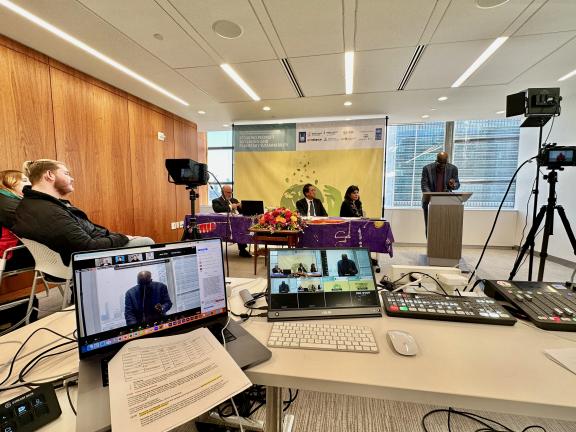


Some moderators and speakers took part of the symposium from a studio hub set especially for the event at the Church Center for the United Nations in New York City. Photo:
WCC

Discussions laid bare a variety of existential threats to human and planetary security, among them the threat of nuclear weapons.

Ambassador Sergio Duarte, a retired Brazilian ambassador and former UN High Representative for Disarmament Affairs, spoke on disarmament. “It has become commonplace to identify climate change and the existence of nuclear weapons as the two greatest existential threats to human life and civilization upon our planet,” he said. “We know that we cannot completely control the cosmic forces that shape our climate, but by working together we may avert disaster. Disarmament, on the other hand, depends entirely on our ability to muster the necessary political will.”

Speakers and participants also highlighted key learnings that relate to work for human security and the roles different actors can play. The symposium addressed, in concrete ways, the development of unity, solidarity, international cooperation, and global coordinated action necessary to make human security real.

Dr Ganoune Diop, director of public affairs for the World Headquarters of the Seventh-day Adventist Church and secretary general of the International Religious Liberty Association, reflected on envisioning and building a better future. “Nearly every area of human experience is connected to the undergirding issue of human security,” noted Diop. "From threats to personal security, to collective predicaments, to regional, national rifts in human solidarity, to needed global security, human security is in fact a lens through which to look at various aspects of human experience.”

WCC Director for International Affairs Peter Prove who attended the event in person remarked that “after 9 years, the Annual Symposium has become a fixture in the agenda of faith-based and UN partners in New York, and a key forum for the expression and development of shared priorities in the international agenda.”

The WCC’s participation in the promotion of all editions of the symposium has been facilitated by the Ecumenical Office to the United Nations, the WCC and ACT Alliance’s focal point for advocacy initiatives at the United Nations headquarters in New York City.

Learn more about the 9th Annual Symposium on the Role of Religion and Faith-Based Organizations in International Affairs

Watch the recording of the event

Ecumenical Office to the United Nations


Source

Thursday, February 14, 2019

FREEDOM OF RELIGION SEMINAR IN FINLAND


13 February 2019 | Helskinki, Finland

[Pekka Kärkkäinen]

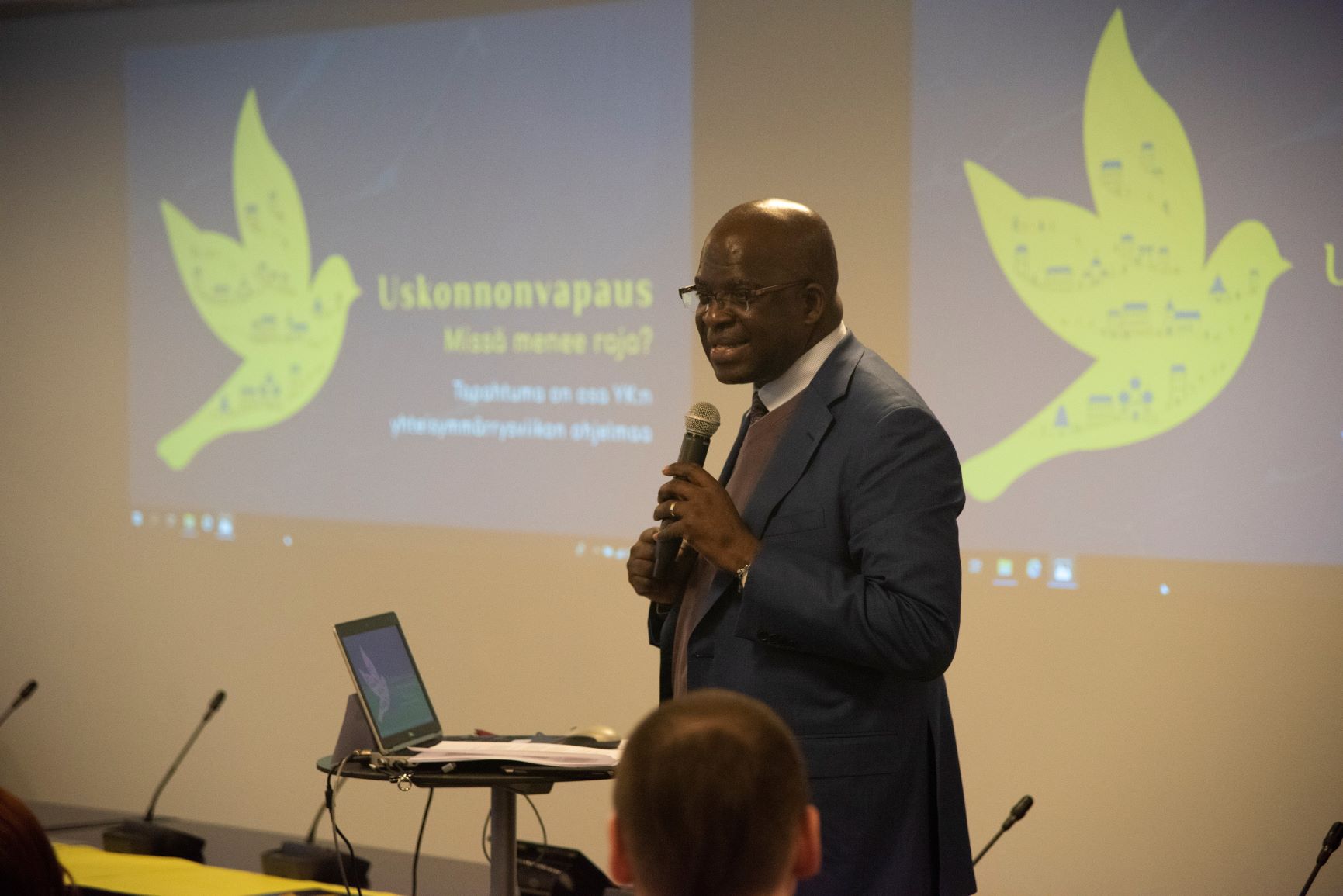
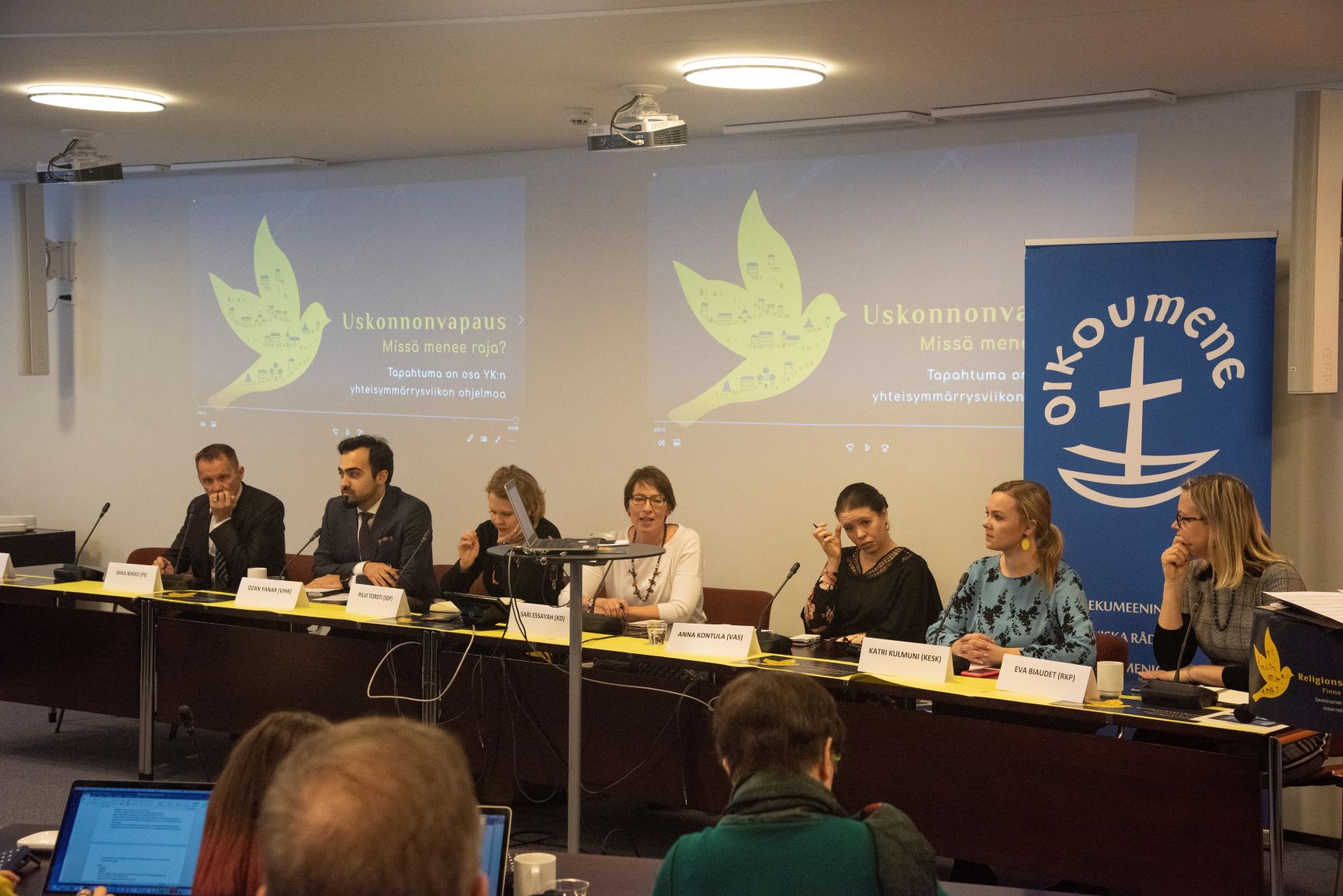
Dr Ganoune Diop, Director of Public Affairs and Religious Liberty for the worldwide Seventh-day Adventist Church, made the opening presentation at a Seminar on religious freedom held in the Finnish Parliament library on Wednesday, 6 February.


Dr Ganoune Diop

The seminar was organized by SVKN (the Council of Free Churches in Finland), together with most of the established religious bodies, and even included an interview from free-thinkers. No religious or non-religious bodies were excluded.

About 80 interested people listened as Diop dealt with the issue of freedom of religion as an inalienable human right. He emphasised that freedom of religion is not only a legal right but is fundamentally connected with the idea of humanity. “It is a global principle that defines what it means to be human,” he said. According to Diop, freedom of religion is about freedom of conscience, freedom of speech, the right to gather together, and the freedom to make decisions. It is equally an antidote to human exploitation.

Diop was one of three speakers and eight Members of Parliament who were invited. Former President of Finland Tarja Halonen also participated in the event, which was part of the United Nation’s Week of Mutual Understanding. The event was opened and concluded by the President of the Seventh-day Adventist Church in Finland, pastor Kalervo Aromäki.

Professor Elina Vuola from the University of Helsinki then dealt with the issue of the importance of understanding religions. She noted how important religious values are outside of Western Europe. More attention is now paid to religions and their values in international relations, she stated. She also warned against the danger of generalizing a religion and its practitioners based on a single crime committed by a member of that religion. She noted some newspapers that like to sensationalise in this way.


In the final speech, Professor Tuula Sakaranaho, also from the University of Helsinki, spoke about the principles of freedom of religion or belief, not just as individual freedom, but also within the whole context of society. Sakaranaho pointed out that often freedom of religion, the right to exercise faith, may be perceived by someone else as negative freedom of religion, a restriction of rights. She also reminded the audience that society cannot legislate to control thinking, nor can religions be discriminated against. However, she recognised that this is a delicate topic internationally, because roughly three out of four people in today’s world do not enjoy freedom of religion.

The seminar concluded with a panel of seven Members of Parliament answering questions about the topic. Their views varied considerably in an effort to balance rights between the individual and society, although everyone was ready to support the principle of freedom of religion as a human right.

In addition to the actual seminar, Dr Diop and Pastor Aromäki visited the Council of the Lutheran church. They met representatives and shared their thought that Adventists and Lutherans must continue to dialogue on this important topic now that the door has been opened for it.

Aromäki was the one who first introduced the idea for the symposium at one of the SVKN meetings. He noted that one of the benefits for the smaller denominations in Finland could be that they will be recognized as a viable voice on important human matters. For him, this very seminar is positive proof that this can happen.

tedNEWStaff: Victor Hulbert, editor; Sajitha Forde-Ralph, associate editor
119 St Peter's Street, St Albans, Herts, AL1 3EY, England

E-mail: tednews@ted.adventist.org
Website: www.ted.adventist.org
tedNEWS is an information bulletin issued by the communication department of the Seventh-day Adventist Church in the Trans-European Division. Readers are free to republish or share this article with appropriate credit including an active hyperlink to the original article.


Saturday, January 19, 2019

Churches worldwide observe ‘Week of Prayer for Christian Unity'


Churches worldwide observe ‘Week of Prayer for Christian Unity,' focus on Deuteronomy 16:20 


By Michael Gryboski, Christian Post Reporter | Thursday, January 17, 2019 


Ecumenical delegates at 50 years jubilee of Vatican Synod: From left: Methodist, Anglican, Estonian-Orthodox, Evangelical, Lutheran. Vatican City, October 17, 2015. | (Photo: Thomas Schirrmacher)


Churches worldwide are planning to observe the annual “Week of Prayer for Christian Unity” starting on Friday to promote ecumenical practices.

First started in the early 1900s, the Week of Prayer takes place Jan. 18-25, between the feasts of St. Peter and St. Paul on the liturgical calendar.

It features worship materials, such as liturgy, developed in cooperation between the International Committee of the Faith and Order Commission of the World Council of Churches and the Pontifical Council for Promoting Christian Unity.

The Garrison, New York-based Graymoor Ecumenical and Interreligious Institute helps to develop, publish, and disseminate these materials for use in North America and has done so since 1968.

Fr. Tom Orians, SA, associate director of the institute, told The Christian Post that this year’s theme is "Justice, and only justice, you shall pursue,” taken from Deuteronomy 16:20.

“This year’s theme, which finds its origins in Deuteronomy, was chosen for its powerful message of promoting truth, equality and unity,” Orians said.

“It was prepared by a group of representatives from different parts of Indonesia, including the Communion of Churches in Indonesia and the Indonesian Catholic Bishops’ Conference who felt it spoke powerfully to their situation and needs, and recognized this common need throughout the world.”

Orians also noted that this year “orders are increasing substantially” for the materials used by churches observing the Week of Prayer.

“We can say that hundreds of churches from the diverse Christian community across North America are participating this year, among them those from the Protestant, Anglican, Orthodox, and Catholic traditions,” Orians added.

“By annually observing the Week of Prayer for Christian Unity, Christians around the world move toward the fulfillment of Jesus' prayer at the Last Supper ‘that they all may be one.’”

Margaret Rose, Deputy for Ecumenical and Interfaith Collaboration with The Episcopal Church, told CP that the denomination “has always been deeply involved in” the Week of Prayer, seeing in it “the hope of the unity of the Church.”

“What we have done in the last few years is that we always, from the churchwide office, send out resources for ecumenical officers and to all the dioceses and churches in the hope that they will do some of these prayers, do some of the scripture study,” said Rose.

“Our job is to be a bridge for the resources that are offered to make sure that our people know about that in terms of prayer and liturgy.”

Rose also told CP that churches have been known to engage in diverse ways of observing the Week of Prayer, including not only “joint church services” but also volunteer projects.

“I think more recently, there’s been a sense that our unity is often made even deeper by the relationships we have with one another,” continued Rose.

“And so oftentimes there will be places that will say ‘let’s build a habit house together,’ ‘let’s work together on a soup kitchen.’ So that it’s something that actually sends people outside the walls of the churches.”


Monday, October 15, 2018

WCC general secretary: “we have to think and act ‘green’ in everything we do”


WCC general secretary: “we have to think and act ‘green’ in everything we do”


Rev. Dr Olav Fykse Tveit. Photo: Albin Hillert/WCC

12 October 2018


World Council of Churches general secretary Rev. Dr Olav Fykse Tveit responded to the recently released report of the UN Intergovernmental Panel on Climate Change on the impacts of global warming.

“Use of fossil fuels, unsustainable production of food, and deforestation, among other human economic activities, have raised greenhouse gases to a level that already has an unambiguous impact on the climate,” Tveit said. “The report states that the consequences of temperatures rising will be more severe than what was predicted earlier.”

As people of faith we must always have the impoverished and vulnerable in the midst of our prayers and actions, Tveit continued. “We cannot be silent and stay passive,” he said. “We all need to do what we can do.”

Governments, businesses, churches and individuals all have a part, he added.

“We have to think and act ‘green’ in everything we do. As general secretary of the World Council of Churches, I am just now leading a process towards a full-scale project of changing the Ecumenical Centre in Geneva, and of plans for building several new buildings there (the “Green Village” project).”

Tveit pledged to use his influence to convince investors, as a condition of becoming owners in the Green Village, to commit to attain a high quality ecological certification not only in energy efficiency, water management and biodiversity in the construction of the new buildings and park, but also in the ongoing operation of the Green Village as a community.

“What you and I do in response to perhaps the biggest global challenge humanity has ever confronted may be seen as a mere drop in the ocean,”he concluded. “But this can turn into a wave of change.”

Read the full statement of the WCC general secretary

"Climate justice: time to ramp up efforts" - a statement from Rev. Martin Junge, general secretary of the Lutheran World Federation

Read the statement of the European Christian Environmental Network

Learn more about the WCC's work on Care for Creation and Climate Change


Saturday, June 30, 2018

Pope Francis affirms Catholic Church's commitment to Christian unity


Peter Kenny |Thursday, June 21 2018


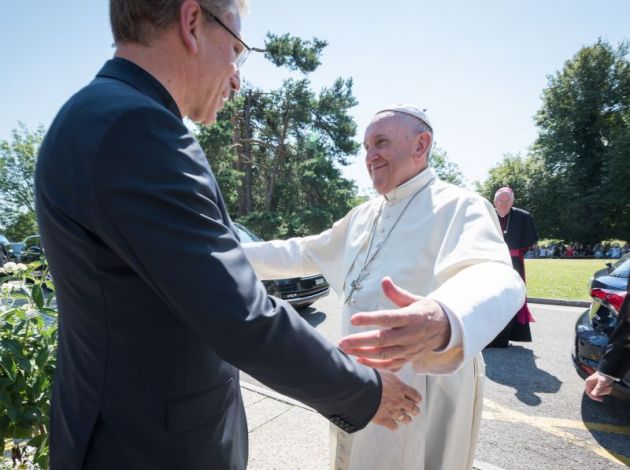
(Photo: Albin Hillert / WCC)Rev. Olav Fykse Tveit, general secretary of the World Council of Churches greets Pope Francis on his first papal visit to the WCC's Ecumenical Center in Geneva, Switzerland on June 21, 2018.


The thirst for material things blinds human beings to their companions and that indifference abounds in the world's streets today, Pope Francis said in a homily at the World Council of Churches in Geneva.

Swiss government officials including Alain Berset, who holds the rotating Swiss presidency this year, welcomed him at Geneva's international airport.

Berset told journalists that he shares the Pope's commitment to peace and human rights.

At the WCC's Ecumenical Center on June 21, Pope Francis spoke about walking towards Christian unity and the pitfalls that we encounter on the journey.

"For us as Christians, walking together is not a ploy to strengthen our own positions, but an act of obedience to the Lord and love for our world. Let us ask the Father to help us walk together all the more resolutely in the ways of the Spirit," said the Pope.

"I wanted to take part personally in the celebrations marking this anniversary of the World Council, not least to reaffirm the commitment of the Catholic Church to the cause of ecumenism and to encourage cooperation with the member churches and with our ecumenical partners.


"Whenever we say 'Our Father', we feel an echo within us of our being sons and daughters, but also of our being brothers and sisters. Prayer is the oxygen of ecumenism," said Francis.

The landmark visit of Pope Francis to the World Council of Churches on 21 June is the cornerstone of the ecumenical commemoration of the WCC's 70th anniversary.

Pope Francis' day at the WCC began with an ecumenical prayer service in the chapel of the Ecumenical Centre from where he delivered his homily on "walking the ecumenical journey."


Pope Francis visits WCC Geneva 70th Anniversary


PESCHKEN reports


Published on Jun 23, 2018

Subscribe 263 Pope Francis’ visit of the WCC , World Council of Churches, 70th anniversary. This meeting also marked 50 years of cooperation between the World Council of Churches and the Roman Catholic Church in the quest for Christian unity.

The theme of the visit was: “Walking, Praying and Working Together”, and it started with a prayer service at the Ecumenical Centre chapel.

I met with H.E. Archbishop Thomas E. Gullickson, Apostolic Nuncio to Switzerland and Liechtenstein (located in Bern) asking him why it took 14 years between the last Papal Visit and this one.

© copyright 2018 by Christian Peschken – Broadcast via “Vaticano” at EWTN – All Rights Reserved


Saturday, June 16, 2018

Papal trip to Geneva marks 'new spring' in ecumenism


Pope Paul VI stands next to Eugene C. Blake, general secretary of the World Council of Churches, as he arrives at the headquarters of the WCC in Geneva June 10, 1969. Pope Francis is scheduled to attend an ecumenical prayer service and meeting at the WCC during a one-day visit to Geneva June 21. CNS photo/courtesy World Council of Churches


By Catholic News Service


June 14, 2018


VATICAN – Pope Francis' one-day pilgrimage to Geneva will mark another major ecumenical moment in his papacy.

While he will celebrate Mass for the nation's Catholics and meet with Vatican diplomatic staff working at U.N. agencies there, the trip's major focus is highlighting the Catholic Church's commitment to seeking Christian unity and recognizing the unique contribution of the World Council of Churches.

Of his 22 apostolic trips abroad, the upcoming June 21 pilgrimage with be his second that's so intently focused on ecumenism.

In 2016, he traveled to Lund, Sweden, for a joint commemoration with the Lutheran World Federation marking the 500th anniversary of the Protestant Reformation begun by Martin Luther.

This time, Pope Francis heads to Geneva -- where John Calvin led the reformation in the 16th-century -- to celebrate the 70th anniversary of the founding of the World Council of Churches.

The WCC is a fellowship of 350 member-churches, representing Protestant communities and most of the Orthodox churches in the world. In total, these member churches represent 500 million Christians worldwide, making it the broadest coalition in the ecumenical movement.

Much like the United Nations grew from the desire to avoid war and divisions through the creation of a united body that could work together for peace, the WCC also grew from a similar desire -- not of nation states, but of Christians and church communities -- to join together for the good of the world in Christ's name.