Sunday, September 06, 2026


Tuesday, May 12, 2026
WHO Conducts Global Pandemic Simulation Exercise Polaris II
WHO Conducts Global Pandemic Simulation Exercise Polaris II
Global Health Emergency Preparedness Exercise Completed
The World Health Organization (WHO) concluded Exercise Polaris II on April 23, 2026—a comprehensive 2-day simulation designed to test international pandemic response capabilities. The exercise brought together 26 countries and territories, 600 health emergency experts, and over 25 partner organizations to practice coordinated responses to a fictional emerging pathogen outbreak.
Exercise Scope and Participation
Participating nations spanned all WHO regions, including Bangladesh, Brazil, Colombia, France, India, Indonesia, Kenya, Philippines, Thailand, and others. The simulation activated real emergency coordination structures across participating countries, allowing health officials to practice information sharing, policy alignment, and workforce surge deployment under realistic conditions.
Key Frameworks Tested
The exercise operationalized two WHO frameworks:
- Global Health Emergency Corps (GHEC) – Guides countries in strengthening emergency health workforce capacity based on sovereignty, equity, and solidarity
- National Health Emergency Alert and Response Framework – Outlines essential coordination systems and response functions at local, sub-national, and national levels
The simulation also explored AI-enabled tools for workforce organization and planning.
WHO brings countries together to test collective pandemic response
4 April 2025 News release Geneva
Over the past two days, WHO convened more than 15 countries and over 20 regional health agencies, health emergency networks and other partners to test, for the first time, a new global coordination mechanism for health emergencies.
The two-day simulation, Exercise Polaris, tested WHO’s Global Health Emergency Corps (GHEC), a framework designed to strengthen countries’ emergency workforce, coordinate the deployment of surge teams and experts, and enhance collaboration between countries.
The exercise simulated an outbreak of a fictional virus spreading across the world.
Participating countries included Canada, Colombia, Costa Rica, Denmark, Ethiopia, Germany, Iraq, Kingdom of Saudi Arabia, Mozambique, Nepal, Pakistan, Qatar, Somalia Uganda and Ukraine, with additional countries as observers. Each country participated through its national health emergency coordination structure and worked under real-life conditions to share information, align policies and activate their response.
Regional and global health agencies and organizations, including Africa CDC, European CDC, IFRC, IOM, UNICEF and established emergency networks such as the Global Outbreak Alert and Response Network, the Emergency Medical Teams initiative, Stand-by partners and the International Association of National Public Health Institutes, worked together to support country-led responses. More than 350 health emergency experts connected globally through this exercise.
“This exercise proves that when countries lead and partners connect, the world is better prepared,” said Dr Tedros Adhanom Ghebreyesus, WHO Director-General. “No country can face the next pandemic alone. Exercise Polaris shows that global cooperation is not only possible – it is essential.”
Throughout the simulation, countries led their own response efforts while engaging with WHO for coordination, technical guidance and emergency support. The exercise provided a rare opportunity for governments to test preparedness in a realistic environment, one where trust and mutual accountability were as critical as speed and capacity.
Thursday, April 02, 2026
Georgetown Law Students Face National Security Crises in Simulation Exercise
‘The Sim’ Returns: Georgetown Law Students Face National Security Crises in Simulation Exercise

During the simulation, students navigated fast-moving national security crises and honed their legal reasoning and leadership skills.
For the students who took part in this year’s National Security Crisis Law: Edge Technologies Simulation (“Sim”), time was of the essence. A foreign actor had attacked a U.S. satellite fleet — with potentially dire consequences. Gathered for a National Security Council meeting, the group had to weigh options such as diplomatic protest, trade sanctions and cyberattacks in deciding how to respond.
Eighteen Georgetown Law students took part in this year’s Sim, the most in-depth offering of its kind among law schools and the capstone experience for those studying national security law at Georgetown.
Part of a semester-long course taught by Center on National Security (CNS) Director and Professor Laura K. Donohue, the Sim last took place in 2020. After campus closures during the COVID-19 pandemic forced a pause, Donohue took the opportunity to revamp her playbook and incorporate many of the tech advances — including satellite weaponry, virtual reality, blockchain and artificial intelligence — that preoccupy today’s national security experts.
In their assigned roles as agency heads and other federal and intelligence officials, students worked long hours over March 13 and 14 and honed their legal judgment, decision-making and communication skills under conditions that replicated real-world structures and limitations — an experience not otherwise found in a law classroom or textbook.
Wednesday, February 18, 2026
Strait Showdown: Iran Launches "Smart Control" Exercise At Oil Transit Point

by Tyler Durden
Monday, Feb 16, 2026 - 01:00 PM
Iran's elite Islamic Revolutionary Guard Corps (IRGC) kicked off naval drills Monday in the strategically vital Strait of Hormuz, according to state media.
The exercise, dubbed "Smart Control of Hormuz Strait," is being carried out by IRGC naval forces under the direct supervision of the Guards' top command, state television reported, with semi-official Tasnim news agency describing the drills as testing combat readiness against "possible security and military threats." Energy markets are watching closely.

Under the supervision of IRGC Commander-in-Chief Major General Mohammad Pakpour, a state media press release described the exercise further as "A rapid, decisive, and comprehensive response to maritime security threats form the core focus of the intelligence and operational components of the units deployed during the exercise."
Indirect nuclear talks between the US and Iran have lately resumed after collapsing when Israel launched strikes on Iran in June 2025, igniting a 12-day conflict that included US attacks on three Iranian nuclear facilities - with another round of negotiations scheduled for Tuesday in Geneva, with Oman serving as mediator.
The timing is no coincidence, given that late last week President Trump announced he was dispatching a second aircraft carrier to the Middle East, while continuing to warn that military action against Iran remains on the table.
The IRGC has been conducing sporadic and in some cases unannounced drills in regional waters in order to demonstrate to Washington the Islamic Republic's military readiness.
Two weeks ago, when some of the first drills kicked off, US Central Command (CENTCOM) warned the IRGC it better be careful in the vicinity of US naval assets.
"We will not tolerate unsafe IRGC (Islamic Revolutionary Guard Corps) actions including overflight of U.S. military vessels engaged in flight operations, low-altitude or armed overflight of U.S. military assets when intentions are unclear, highspeed boat approaches on a collision course with U.S. military vessels, or weapons trained at U.S. forces," CENTCOM said at the time.
Sunday, August 24, 2025
Fuerzas Comando 2025

News | Aug. 18, 2025
Fuerzas Comando 2025
By Maj. Trevor Wild,
ILOPANGO, El Salvador –
Sixteen special operations teams from across Central and South America and the Caribbean will gather in Ilopango, El Salvador, Aug. 18–29, for Fuerzas Comando 2025, the 19th iteration of the premier special operations skills competition and senior leadership seminar.
Established in 2004, Fuerzas Comando is a 10-day event designed to test participants’ skills through a friendly competition among special operations forces. The event promotes interoperability and military-to-military relationships through cordial contests, enhances training knowledge, and strengthens regional cooperation.
Concurrently, a senior leadership seminar will convene, uniting top multinational special operations leaders to address transnational threats impacting defense and stability across the region.
Participating nations include Argentina, Belize, Chile, Colombia, Costa Rica, Dominican Republic, Ecuador, El Salvador, Guatemala, Honduras, Jamaica, Mexico, Panama, Paraguay, Peru, and the United States.
Fuerzas Comando 2025 is sponsored by U.S. Southern Command and executed by Special Operations Command South in partnership with the Fuerza Armada de El Salvador.
The competition will feature a series of evaluated events:
Day 1: Weapons zero (non-graded)
Day 2: Physical training event (100 points) and opening ceremony
Day 3: Assaulter stages 1 and 2 / Sniper stage 1 (300 points)
Day 4: Assaulter stages 3 and 4 / Sniper stages 2 and 3 (300 points)
Day 5: Assaulter stage 5 / Sniper stages 4 and 5 (400 points)
Day 6: Assaulter stages 6 and 7 / Sniper stage 7 (400 points)
Day 7: Assaulter and sniper stage 8 / Combined assault (300 points)
Day 8: Ruck event (200 points)
Day 9: Obstacle course (200 points)
Day 10: Water event (200 points)
Day 11: No evaluation
Day 12: Closing ceremony
For updates and standings, follow @SOCSOUTH and @FUERZARMADASV on Instagram, Facebook, and X.
“Juntos somos Fuerzas Comando.”
Wednesday, January 29, 2025
Tuesday, October 22, 2024
Bird flu’s growing impact calls for urgent action at international summit
October 21, 2024
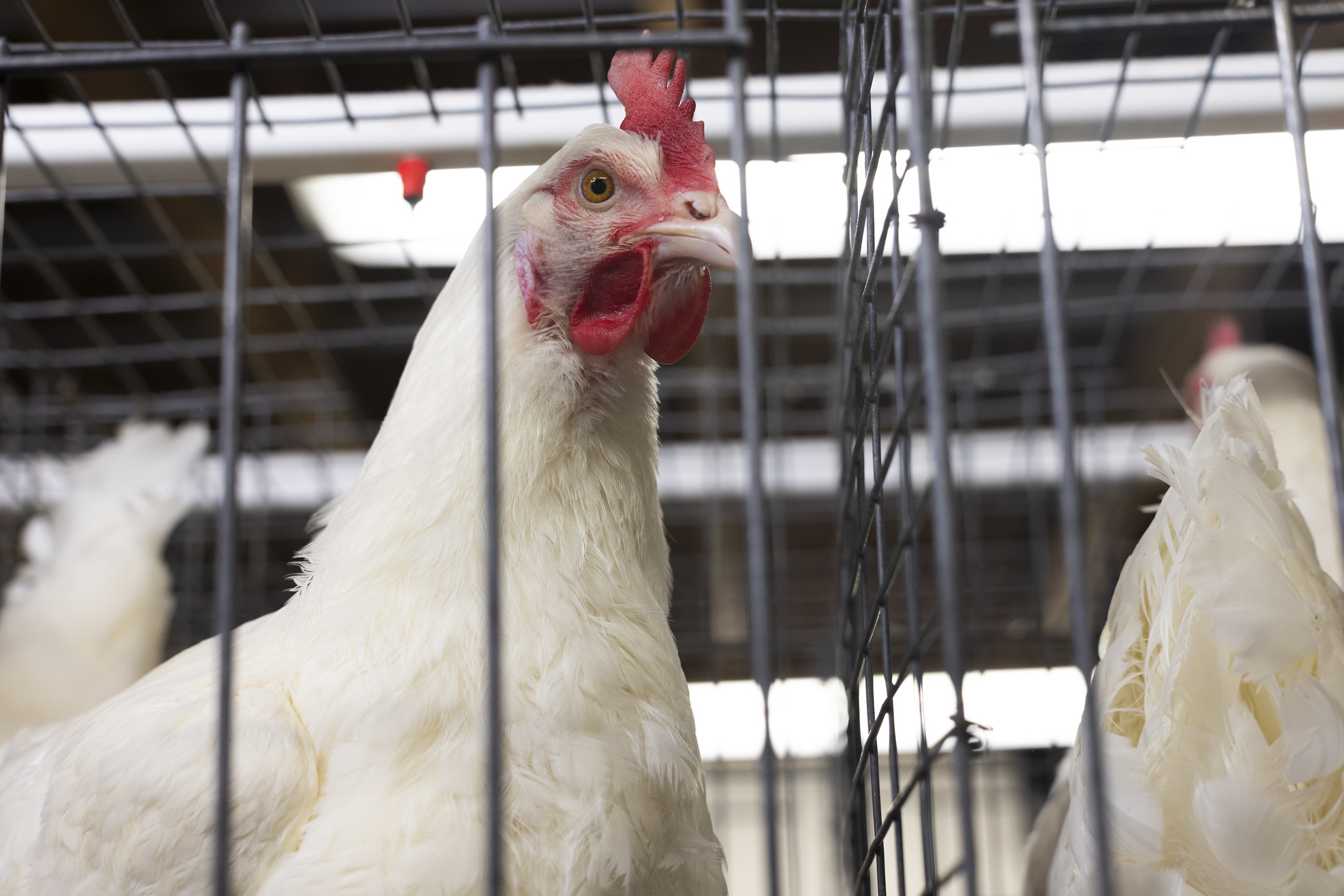
As highly pathogenic avian influenza continues to infect more than just birds, scientists and industry professionals want to prevent it from infecting more species and continuing to impact animal and human health, the environment and the economy.
The four-day International Avian Influenza and One Health Emerging Issues Summit hosted by the Center of Excellence for Poultry Science had a total of 1,270 registered participants from 51 countries, in-person and virtually, to share and learn more about HPAI, or highly pathogenic avian influenza, and other diseases impacting animals and humans.
Saturday, October 19, 2024
FEMA to Evaluate Readiness of the Commonwealth of Pennsylvania


The Department of Homeland Security, Federal Emergency Management Agency (FEMA) will evaluate a Biennial Radiological Emergency Preparedness Exercise for communities around the Susquehanna Steam Electric Station. The exercise will occur during the week of October 21, 2024 to assess the ability of the Commonwealth of Pennsylvania to respond to an emergency at the nuclear facility.
“These drills are held every other year to evaluate government’s ability to protect public health and safety,” said MaryAnn Tierney, Regional Administrator for FEMA Region 3. “We will assess state and local government emergency response capabilities within the 10-mile Emergency Planning Zone within the Commonwealth of Pennsylvania”
Within 90 days, FEMA will send its evaluation to the Nuclear Regulatory Commission (NRC) for use in licensing decisions. The final report will be available to the public approximately 120 days after the exercise.
FEMA will present preliminary findings of the exercise during a public meeting at 4:00 p.m. on October 24, 2024. The meeting will be conducted at the Talen Energy East Mountain Business Center, 1190 East Mountain Boulevard, Wilkes-Barre PA. Planned speakers include representatives from FEMA and the NRC.
Wednesday, October 09, 2024
Project Phoenix

IONTB
May 7, 2017The Tampa Bay Regional Planning Council, along with their partners from government, business, and social services communities, is developing a plan to identify and address the multitude of issues that would arise should a catastrophic event occur in the Tampa Bay area. For this plan, the Tampa Bay area is defined as the following counties:
- Dr. Neil Frank - Former Director, National Hurricane Center
- Steve Jerve - Chief Meteorologist, WFLA-TV
- Dr. Steve Lyons - Tropical Weather Expert, The Weather Channel
- Daniel Noah - Warning Coordination Meteorologist, National Weather Service - Ruskin (Tampa Bay Area)
- Tammie Souza - Chief Meteorologist, WTSP-TV
- Federal Emergency Management Agency (FEMA)
- Florida Division of Emergency Management
- Hillsborough County Hazard Mitigation Division
- National Aeronautics and Space Administration (NASA)
- National Geographic Channel
- National Oceanic and Atmospheric Administration (NOAA)
- Pinellas County Communications
- Pinellas PCC-TV
- Pinellas County Emergency Management
- Sarasota County Emergency Management
- United States Coast Guard
- The Weather Channel
- WFLA-TV, Tampa
- WTSP-TV, Tampa
- Brad Courtney - Video Production Manager Creative input provided by the Tampa Bay Regional Planning Council Betti Johnson - Principal Planner and Project Lead
- Brady Smith - Senior Planner
Project Phoenix 2.0 Simulation & Recovery
Tuesday, October 08, 2024
Saturday, August 24, 2024
Time to Connect the Dots

By

It was an otherwise normal day in 1969 when I found the book. I was a student in Vienna for my junior year of undergrad. Like most students, I had a room with a Hausfrau, normally an elderly lady who rented out rooms to students. I shared a room on Hauslabgasse in the 5th District with an old high school classmate.
Our Hausfrau, born in 1900, was a member of the old minor Austrian Nobility. Both World Wars had been hard on her. She had served in the German Kriegsmarine occupying the Channel Islands and came back to a war-torn Vienna, but made her own way. She was a survivor. I admired her for that. But she also had a certain affection for the “good old days.”
There was an old ornate bookcase in our room. As I was examining it, I found a hidden compartment that contained a copy of Mein Kampf. It was a handsomely bound copy and obviously cherished. As I thumbed through it, I wondered how people could have been so blind. Hitler had laid out, in detail, exactly what he planned to do. And he did it. How could the world have missed it?
Perhaps we need to fast-forward to today in order to understand it. Starting in 2001, a series of simulation exercises were conducted under sponsorship of the Johns Hopkins Center for Health Security. It began with Dark Winter dealing with a smallpox epidemic and continued with Atlantic Storm in 2005, Clade X in 2018 and culminated with Event 201 in November 2019.
This succession of planning events creates a time series of information. They are the dots that, it seems, someone or some entity is daring us to connect. Who might this be?
Well, The Center for Health Security at Hopkins, for sure. Tom Inglesby and Eric Toner are there. Inglesby even connected the events, saying “The events have a long fuse!” What exactly did he mean?
The World Economic Forum is there. They even published The Great Reset in July 2020, amazingly soon after Covid hit. This seems to be an awfully short time to get the book in print. Gates is there, with GAVI which was started even earlier, in 2000!
I can’t remember if it was Anthony Fauci or Rick Bright who articulated in the video versions of Event 201 that this would be a terrific opportunity to push vaccines. It’s all out there for everyone to see, just like in Mein Kampf!
Steven Kritz, MD, made the point in an email chat that, “For the first time ever, it was a MAN-MADE virus that caused a world-wide outbreak!” If it was man-made, it had to have a purpose. Was it simply the “sword and shield” approach stretching back to the bioweapons program of the Third Reich? Kurt Blome’s research on bioweapons was the Sword and that of Walter Schreiber on defense to those weapons was the Shield. The whole episode of their research in Nazi Germany as well as the possible transfer of this concept to The Department of Defense Research and Engineering Enterprise, is outlined in Operation Paperclip.
This is all the more interesting with the assertion by Marine Major Joseph P. Murphy to Project Veritas that supported that Sword and Shield scenario and the fact the Department of Defense controlled Operation Warp Speed.
Was it a money-making scheme of Big Pharma? Well, that is certainly plausible given the Project Veritas recordings of the Pfizer executive trying to impress his date and spilling the beans on the vaccine program. By the way, what happened to Project Veritas after all of these revelations? Did James O’Keefe finally poke the hornet’s nest too strongly? You be the judge.
So, what ties The Center for Health Security, The Department of Defense, The World Economic Forum, Big Pharma, Fauci, Gates etc. together? Is it merely a consortium of individuals and entities who realized they had a common interest, or is something else behind it all, calling the shots? Was it just a matter of us not being able to connect the dots? Or was it more like the case of my Hausfrau in Vienna more than 50 years ago, where the dots were not only connected but cherished by those few who knew the truth?
I don’t know…But it needs to be explored.
Sunday, October 01, 2023
FEMA and FCC Plan Nationwide Emergency Alert Test for Oct. 4, 2023

Release Date:
August 3, 2023
Test Messages Will be Sent to All TVs, Radios and Cell Phones
WASHINGTON -- FEMA, in coordination with the Federal Communications Commission (FCC), will conduct a nationwide test of the Emergency Alert System (EAS) and Wireless Emergency Alerts (WEA) this fall.
The national test will consist of two portions, testing WEA and EAS capabilities. Both tests are scheduled to begin at approximately 2:20 p.m. ET on Wednesday, Oct. 4.
The WEA portion of the test will be directed to all consumer cell phones. This will be the third nationwide test, but the second test to all cellular devices. The test message will display in either English or in Spanish, depending on the language settings of the wireless handset.
The EAS portion of the test will be sent to radios and televisions. This will be the seventh nationwide EAS test.
FEMA and the FCC are coordinating with EAS participants, wireless providers, emergency managers and other stakeholders in preparation for this national test to minimize confusion and to maximize the public safety value of the test.
The purpose of the Oct. 4 test is to ensure that the systems continue to be effective means of warning the public about emergencies, particularly those on the national level. In case the Oct. 4 test is postponed due to widespread severe weather or other significant events, the back-up testing date is Oct. 11.
The WEA portion of the test will be initiated using FEMA’s Integrated Public Alert and Warning System (IPAWS), a centralized internet-based system administered by FEMA that enables authorities to send authenticated emergency messages to the public through multiple communications networks. The WEA test will be administered via a code sent to cell phones.
This year the EAS message will be disseminated as a Common Alerting Protocol (CAP) message via the Integrated Public Alert and Warning System-Open Platform for Emergency Networks (IPAWS-OPEN).
All wireless phones should receive the message only once. The following can be expected from the nationwide WEA test:Beginning at approximately 2:20 p.m. ET, cell towers will broadcast the test for approximately 30 minutes. During this time, WEA-compatible wireless phones that are switched on, within range of an active cell tower, and whose wireless provider participates in WEA, should be capable of receiving the test message.
For consumers, the message that appears on their phones will read: “THIS IS A TEST of the National Wireless Emergency Alert System. No action is needed.”
Phones with the main menu set to Spanish will display: “ESTA ES UNA PRUEBA del Sistema Nacional de Alerta de Emergencia. No se necesita acción.”
WEA alerts are created and sent by authorized federal, state, local, tribal and territorial government agencies through IPAWS to participating wireless providers, which deliver the alerts to compatible handsets in geo-targeted areas. To help ensure that these alerts are accessible to the entire public, including people with disabilities, the alerts are accompanied by a unique tone and vibration.
Important information about the EAS test:The EAS portion of the test is scheduled to last approximately one minute and will be conducted with the participation of radio and television broadcasters, cable systems, satellite radio and television providers and wireline video providers.
The test message will be similar to the regular monthly EAS test messages with which the public is familiar. It will state: “This is a nationwide test of the Emergency Alert System, issued by the Federal Emergency Management Agency, covering the United States from 14:20 to 14:50 hours ET. This is only a test. No action is required by the public.
Friday, March 17, 2023
Sunday, December 11, 2022
Catastrophic Contagion

LESSONS FROM THE EXERCISE
PARTICIPANTS
PHOTOS AND VIDEOS
ACKNOWLEDGMENTS
Our Work > Tabletop Exercises > Catastrophic Contagion > About Catastrophic Contagion
Catastrophic Contagion

The Johns Hopkins Center for Health Security, in partnership with WHO and the Bill & Melinda Gates Foundation, conducted Catastrophic Contagion, a pandemic tabletop exercise at the Grand Challenges Annual Meeting in Brussels, Belgium, on October 23, 2022.
The extraordinary group of participants consisted of 10 current and former Health Ministers and senior public health officials from Senegal, Rwanda, Nigeria, Angola, Liberia, Singapore, India, Germany, as well as Bill Gates, co-chair of the Bill & Melinda Gates Foundation.
The exercise simulated a series of WHO emergency health advisory board meetings addressing a fictional pandemic set in the near future. Participants grappled with how to respond to an epidemic located in one part of the world that then spread rapidly, becoming a pandemic with a higher fatality rate than COVID-19 and disproportionately affecting children and young people.
Participants were challenged to make urgent policy decisions with limited information in the face of uncertainty. Each problem and choice had serious health, economic, and social ramifications.
Lessons | Participants | Photos and Videos | Acknowledgments
Here We Go! Bill Gates, Johns Hopkins, & the WHO Just Simulated Another Pandemic
Wednesday, October 20, 2021
Event 201 Pandemic Exercise In 2019 Portended Climate Of Internet Censorship
Just weeks before the first case of COVID-19 was confirmed, a group of elite government officials, business people, and scientists gathered in New York to plan various strategies for steering society through a deadly pandemic.
The scenario may sound like some sort of a conspiracy theory, but it happened two years ago.

On Oct. 18, 2019, the World Economic Forum, Bill & Melinda Gates Foundation, and Johns Hopkins Center for Health Security hosted “Event 201” — a “high-level pandemic exercise,” during which world leaders simulated various policy responses to a global disease outbreak.
Must-read article: Bill Gates & World Economic Forum Ran Coronavirus Outbreak Simulation Just 6 Weeks Before The Real Outbreak.
When the initial diagnosis of COVID-19 was confirmed just weeks later, speculation abounded about the similarities—so many so that organizers issued a response.
While no hard evidence has been produced to substantiate the speculation, Event 201 did portend how many of the same global institutions would respond to some of the issues that arose from COVID-19 months later — including how they would push information censorship.
Event participants included then-Columbia University senior research scholar Avril Haines, who is now the U.S. Director of National Intelligence; Chris Elias, the president of the global development program at the Bill & Melinda Gates Foundation; George Gao, the director-general of the Chinese Center for Disease Control and Prevention; and Stephen Redd, then-deputy director for public health service and implementation science at the U.S. Centers for Disease Control and Prevention (CDC).
The participants were presented with a simulated outbreak of “novel zoonotic coronavirus” transmitted from bats to pigs to people, leading to a severe pandemic.
“The disease starts in pig farms in Brazil, quietly and slowly at first, but then it starts to spread more rapidly in healthcare settings,” according to the Event 201 scenario.
“It is first exported by air travel to Portugal, the United States, and China and then to many other countries. Although at first some countries are able to control it, it continues to spread and be reintroduced, and eventually no country can maintain control,” it stated.
Participants were presented with policy decisions for four broad categories: medical response, travel and trade, finance, and communications.
On some issues, Event 201 was divergent from the real-life pandemic—perhaps most prominently with respect to travel and lockdowns, as Event 201 didn’t recommend lockdowns and was explicitly opposed to travel restrictions.
“Countries, international organizations, and global transportation companies should work together to maintain travel and trade during severe pandemics,” Event 201 said in its recommendations. “Travel and trade are essential to the global economy as well as to national and even local economies, and they should be maintained even in the face of a pandemic.”
But on communications, the recommendations from Event 201 are similar to those that followed COVID-19 — as were the actual events.
During the simulation, for instance, Gao said that “disinformation” spread throughout China and the rest of the world.
“There is misinformation, and people believe that this is a man-made — that a pharmaceutical company made the virus,” he said, adding that there were “deaths because of this misinformation.”
Redd also said there was misinformation related to treatments.
“We’re seeing instances of people trying treatments that are purported to be effective, but actually are harmful,” he said during the simulation.
During the simulated pandemic, some countries resorted to shutting down the internet to quell panic. Others worked with social media companies to censor what those states deemed misinformation.
Participants expressed opposition to internet shutdowns, but they agreed governments should work with social media companies to control the narrative.
Event 201 organizers made similar recommendations following the simulation.
“Governments will need to partner with traditional and social media companies to research and develop nimble approaches to countering misinformation,” the organizers stated. “For their part, media companies should commit to ensuring that authoritative messages are prioritized and that false messages are suppressed including through the use of technology.”
Redd also said government should surveil social media to fight disinformation.
“With social media platforms, there’s an opportunity to understand who it is that is susceptible, and in what form, to misinformation. So, I think there’s an opportunity to collect data from that communication mechanism,” said Redd, who has since retired. “With that ability, we can identify false information more quickly.”
Event 201 policies manifested following COVID-19, with governments and big tech platforms working in concert to surveil and censor content on numerous pandemic-related subjects.
During and following the discussions, it was revealed that the simulated pandemic resulted in 450,000 cases and 26,000 deaths within one month, 10 million cases and 660,000 deaths within three months, and 65 million deaths in the first 18 months. Participants were urged to prep their various sectors for a similar public health crisis.
The first confirmed case of COVID-19 was found to be within weeks of the Oct. 18, 2020, simulated pandemic.
When conspiracy theories began to spread about the relationship between the two events, organizers issued a response.
“Recently, the [Johns Hopkins] Center for Health Security has received questions about whether that pandemic exercise predicted the current novel coronavirus outbreak in China. To be clear, the Center for Health Security and partners did not make a prediction during our tabletop exercise,” Johns Hopkins stated on Jan. 24, 2020.
“For the scenario, we modeled a fictional coronavirus pandemic, but we explicitly stated that it was not a prediction,” organizers added. “We are not now predicting that the nCoV-2019 outbreak will kill 65 million people. Although our tabletop exercise included a mock novel coronavirus, the inputs we used for modeling the potential impact of that fictional virus are not similar to nCoV-2019.”
By Ken Silva, TheEpochTimes.com