Showing posts with label Doctrines. Show all posts
Showing posts with label Doctrines. Show all posts
Sunday, June 07, 2026


Friday, April 10, 2026
Inside Iran’s ruling ideology: How a ‘holy mission’ and messianic doctrine fuel regime extremism
New IRGC commanders shaped by years of conflict may entrench the regime's extremist ideology even further, analysts warn
Published April 5, 2026 2:00pm EDT
Updated April 5, 2026 8:00am EDT

Inside Iran’s hidden power center: Expert says supreme leader’s office runs a ‘state within a state’
Kasra Aarabi of United Against a Nuclear Iran says the regime's durability lies not in Ayatollah Ali Khamenei as an individual, but in the institutional machinery surrounding him.
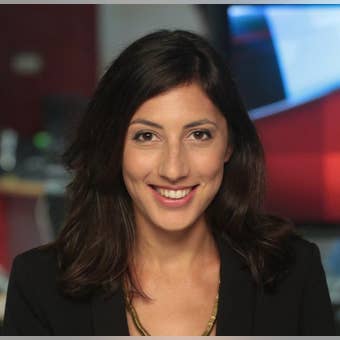
For Mehdi Ghadimi, the ideology behind Iran’s ruling system is not theoretical. It was something he was taught from childhood.
"You were told you are a part a small group chosen by God… to revive God’s religion and fight to defend it," the Iranian journalist told Fox News Digital, describing the message repeated in schools, mosques and state media.
That early indoctrination, he said, framed the world in stark terms: a divine struggle between good and evil, with Iran’s leadership positioned at the center of a religious mission.
Iran’s ruling system is often described in political terms, but critics and former insiders say its core is far more radical — a belief structure rooted in religious absolutism, messianic expectation and a worldview that leaves little room for compromise.
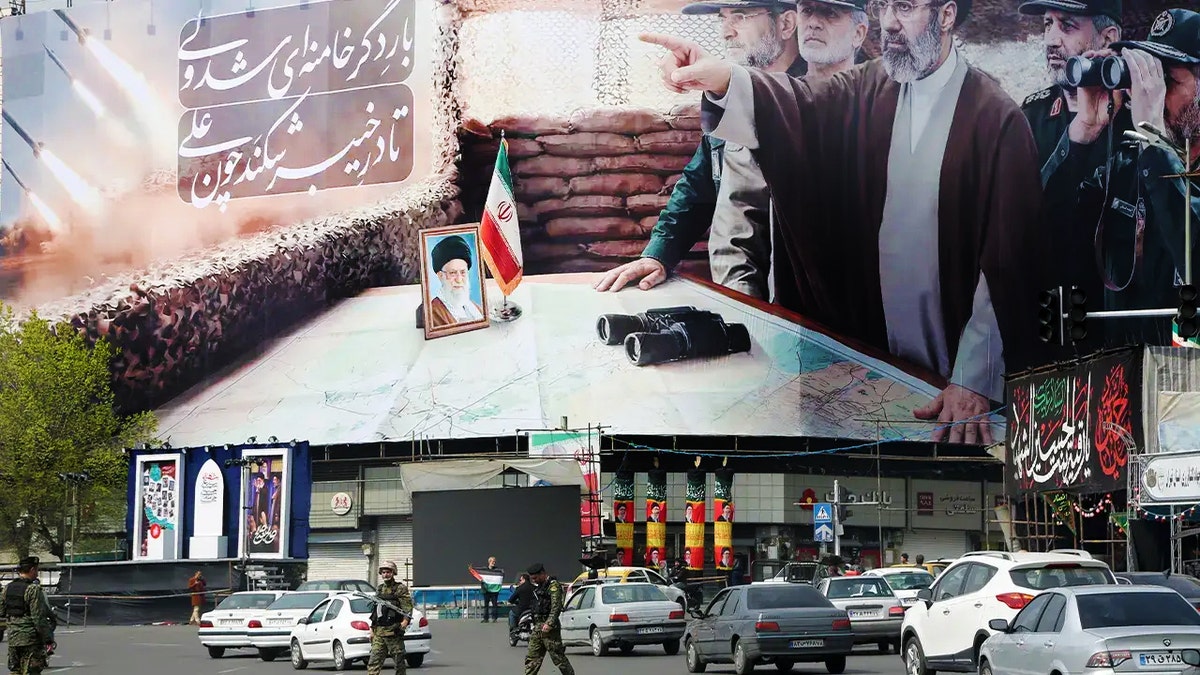
A banner featuring Iran’s new supreme leader, Mojtaba Khamenei, and senior commanders of the Islamic Revolutionary Guard Corps (IRGC) is displayed in Tehran, March 14, 2026. (Fatemeh Bahrami/Anadolu)
As a new generation of commanders rises within the Islamic Revolutionary Guard Corps following recent military blows under Operation Epic Fury, analysts warn that this ideology may become even more entrenched.
Figures such as Mohammad Bagher Ghalibaf and Ahmad Vahidi are often cited as part of a cohort shaped by years of conflict in Iraq and across the region — one that sees religion, security and survival as inseparable.
Sunday, March 15, 2026
Pope Leo suggests Christian leaders who start wars should go to confession

Mar 13, 2026
Pope Leo XIV said Christian leaders who bear responsibility for armed conflicts should examine their consciences and seek confession. "Do those Christians who bear serious responsibility in armed conflicts have the humility and courage to make a serious examination of conscience and to go to confession?" Leo said during a speech on Friday.
The pope did not name any specific conflict or individual, but he has repeatedly appealed for peace in Iran and the Middle East, describing the situation as "deeply disturbing." In January, Leo lamented that "war is back in vogue and a zeal for war is spreading."
via CNN
Saturday, March 07, 2026
Saturday, February 07, 2026
Thursday, February 05, 2026
Wednesday, December 24, 2025
A look at highlights of Vatican II on 60th anniversary of its wrap
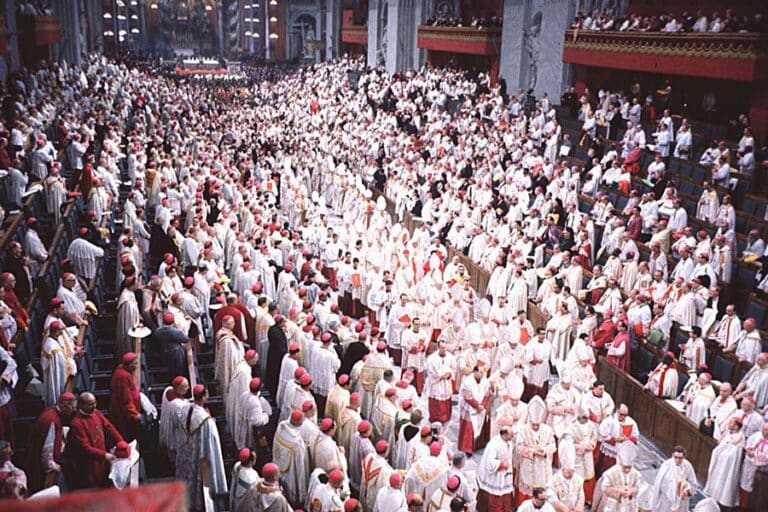
An undated photo shows prelates during the Council Hall in St. Peter's Basilica at the Vatican during the third session of the Second Vatican Council. (OSV News photo/Ernst Herb, KNA)

The Second Vatican Council, which after three years of dialogue and document drafting closed on Dec. 8, 1965, changed the face of the church, and opened it to the modern world. The council, opened under Pope John XXIII and closed under his successor, Pope Paul VI, initiated a comprehensive renewal, with major council texts released on hot-button church issues. As the church commemorates 60 years since the closing of Vatican II, here are seven key issues and documents that serve as its legacy for future generations.
December 7, 2025
By Alexander Brüggemann
By Alexander Brüggemann
The Second Vatican Council, which after three years of dialogue and document drafting closed on Dec. 8, 1965, changed the face of the church, and opened it to the modern world. The council, opened under Pope John XXIII and closed under his successor, Pope Paul VI, initiated a comprehensive renewal, with major council texts released on hot-button church issues. As the church commemorates 60 years since the closing of Vatican II, here are seven key issues and documents that serve as its legacy for future generations.
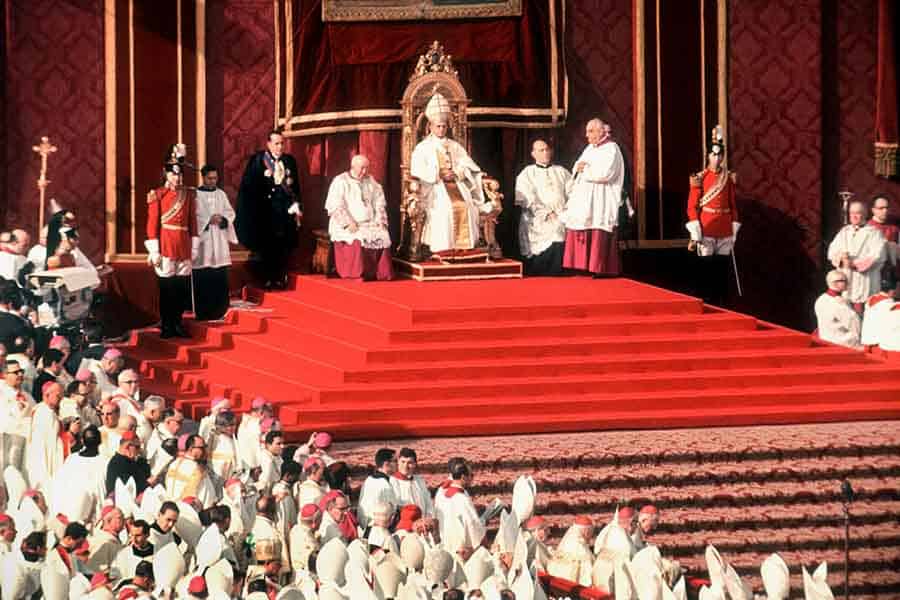
Pope Paul VI sits in the “cathedra” or bishop’s chair during the Second Vatican Council in July 1965 in St. Peter’s Square at the Vatican. (OSV News photo/Ernst Herb, KNA)
Understanding of the church: “Lumen gentium” (1964), one of the four primary constitutions of the council, sets out the new self-understanding of the Roman Catholic Church. It defines the church as a community of believers, as the “people of God” on their journey through time. In this constantly reforming church, a “common priesthood” of all believers is emphasized — something realized in different forms with clergy and laity. The constitution emphasizes the role of the college of bishops who lead the church “with Peter and under Peter,” as Cardinal Joseph Ratzinger, later Pope Benedict XVI, reminded years later. In several decrees, the council drafted guidelines for a contemporary form of Christian life and service in spiritual vocations for priests, religious and laity. The importance of the vocation of the laity is emphasized by the council fathers and the training of priests was reorganized. The church’s missionary activity was given a new theological foundation in the decree “Ad gentes.” In the decree “Christus dominus” (1965), on the episcopal pastoral office in the church, the leadership function of the bishop in his diocese was strengthened.
Understanding of the church: “Lumen gentium” (1964), one of the four primary constitutions of the council, sets out the new self-understanding of the Roman Catholic Church. It defines the church as a community of believers, as the “people of God” on their journey through time. In this constantly reforming church, a “common priesthood” of all believers is emphasized — something realized in different forms with clergy and laity. The constitution emphasizes the role of the college of bishops who lead the church “with Peter and under Peter,” as Cardinal Joseph Ratzinger, later Pope Benedict XVI, reminded years later. In several decrees, the council drafted guidelines for a contemporary form of Christian life and service in spiritual vocations for priests, religious and laity. The importance of the vocation of the laity is emphasized by the council fathers and the training of priests was reorganized. The church’s missionary activity was given a new theological foundation in the decree “Ad gentes.” In the decree “Christus dominus” (1965), on the episcopal pastoral office in the church, the leadership function of the bishop in his diocese was strengthened.
Sunday, December 07, 2025
William Miller's 14 Rules of Bible Interpretation
By The Watchman
Those who are engaged in proclaiming the third angel’s message are searching the Scriptures upon the same plan that Father Miller adopted. In the little book entitled “Views of the Prophecies and Prophetic Chronology,” FatherMiller gives the following simple but intelligent and important rules for Bible study and interpretation:– {RH,
November 25, 1884 par. 23}
“1. Every word must have its proper bearing on the subject presented in the Bible; 2. All Scripture is necessary, and may be understood by diligent application and study; 3. Nothing revealed in Scripture can or will be hid from those whoask in faith, not wavering; 4. To understand doctrine, bring all the scriptures together on the subject you wish to know, then let every word have its proper influence; and if you can form your theory without a contradiction, you cannot be in error; 5. Scripture must be its own expositor, since it is a rule of itself. If I depend on a teacher to expound to me, and he should guess at its meaning, or desire to have it so on account of his sectarian creed, or to be thought wise, then his guessing, desire, creed, or wisdom is my rule, and not the Bible.” {RH, November 25, 1884 par. 24} The above is a portion of these rules; and in our study of the Bible we shall all do well to heed the principles set forth. {RH, November 25, 1884 par. 25}
RULES OF INTERPRETATION
IN studying the Bible, I have found the following rules to be of great service to myself and now give them to the public by special request. Every rule should be well studied, in connexion with the scripture references, if the Bible student would be at all benefited by them. {1842 WiM, MWV1 20.1}
Sunday, October 19, 2025
“A Miracle for Venezuela” — Nation Rejoices as Vatican Blesses Two Heroe...
“A Miracle for Venezuela” — Nation Rejoices as Vatican Blesses Two Heroes of Faith | DWS News | AQ14

Oct 19, 2025
Venezuela celebrates a historic moment of faith as the Vatican announces the beatification of Dr. José Gregorio Hernández and Mother Carmen Rendiles — the country’s first two blessed figures. Thousands of faithful gathered in Caracas to honor their legacy and devotion. A powerful day of hope, unity, and spiritual pride.
Venezuela, beatification, Vatican, Catholic Church, Dr. José Gregorio Hernández, Mother Carmen Rendiles, Venezuelan saints, Pope Francis, Caracas, Catholic faith, religious news, Venezuela celebration, Latin America faith, miracles, Venezuelan Catholics, religion and spirituality, holy figures, church ceremony, Vatican news, DRM News
Saturday, March 15, 2025
Friday, February 28, 2025
Saturday, January 18, 2025
Gods, Guns and Missionaries — exploding the myth of a singular, ‘true’ Hinduism
Manu S Pillai’s deft exploration of four centuries of the faith reveals its underlying complexities


Hindu devotees offer prayers during Laksha Deepotsava, the festival of hundred thousand lights, at the Shri Panchalinga Nageshwara temple in Bengaluru in November © Getty Images
A book about Hinduism which begins with a maharaja’s cows sounds a little like a Rudyard Kipling tale, replete with spices, mystery and “backward” traditions. But in the hands of Manu S Pillai, Madho Singh II’s journey from Jaipur in the west of India to imperial London for Edward VII’s coronation in 1902 becomes the gateway to a deft exploration of what Hinduism actually means as a faith. Drawing on the lives of missionaries, maharajas and men of the Dutch, French and British East India Companies, Pillai builds the story of a system marked by adaptability, dynamism and compromise rather than ossified archaisms.
A book about Hinduism which begins with a maharaja’s cows sounds a little like a Rudyard Kipling tale, replete with spices, mystery and “backward” traditions. But in the hands of Manu S Pillai, Madho Singh II’s journey from Jaipur in the west of India to imperial London for Edward VII’s coronation in 1902 becomes the gateway to a deft exploration of what Hinduism actually means as a faith. Drawing on the lives of missionaries, maharajas and men of the Dutch, French and British East India Companies, Pillai builds the story of a system marked by adaptability, dynamism and compromise rather than ossified archaisms.
Hinduism is often imagined as a monolith of arcane and ancient rituals, in spite of the efforts of external invaders. In India itself, the image of a “faith under siege” is a core part of the Hindu nationalist rhetoric wielded by the Bharatiya Janata party — a party that has now led the world’s most populous nation for more than a decade.
------
He argues that even before the arrival of imperial powers, Hinduism was hardly a settled affair, emerging instead from “[Brahmins’] negotiations with a bewildering variety of counter-thoughts and alternate visions”. India’s priestly class was not unified, adds Pillai, adapting to local traditions ranging from sun worship to matrilineal succession as needed.
---------
The message throughout is that Hinduism is a living tradition defined more by variation than a singularity of thought and that those who would come to call themselves “Hindus” were more than passive subjects. Priests and potentates reshaped their beliefs in ways deemed more acceptable or sophisticated, consciously rewriting older texts to remove imagery considered embarrassing for the mores of the time. Their discussions with colonial powers were not merely those of vassals lapping up to masters, but of reflective thinkers adapting to a shifting world.
Read the whole article @ Source
Tuesday, December 03, 2024
Wednesday, October 02, 2024
O. C. Lambert, The Veteran Exposer Of Catholicism
Devoted to the Propagation and Defense of New Testament Christianity
VOLUME 6
January 27, 1955
NUMBER 37, PAGE 3a
O. C. Lambert, The Veteran Exposer Of Catholicism
Wm. E. Wallace, Akron, Ohio
What will it take to awaken the church? The church seems to sleep "the sleep of death" on more than one issue. Every hour the evils of Catholicism increase and continually endanger the American way of life, and the New Testament order of things. It seems that comparatively few men in the brotherhood seem willing to speak out where they can be heard, beyond the church building: fewer are capable of meeting the issue. Catholicism is such a complicated, involved mess it can be attacked at any angle; yet as vulnerable as it is, we seem to lack the power of initiative necessary for a sustained attack. Many brethren have launched out in an attack on Catholic organizations with charges they were unable to substantiate — such things as the purported Knights of Columbus oath have been used to the ultimate embarrassment of the attacker. Our preachers need to be better equipped to meet Catholicism at very angle. It is true that we can cut their doctrine asunder with the sword of the Spirit, yet the Catholic Church is such an involved politico-religio monstrosity it must be attacked not only from the doctrinal aspect, but from the political as well.
Brother O. C. Lambert has published a new book, just off the press, entitled "Roman Catholicism Against Itself." This book is literally loaded with quotations from approved Catholic books, publications endorsed with the "Permissu Superiorum," Nihil Obstat" and "Imprimatur." Brother Lambert has in his possession the books from which he quotes. While many brethren have been embarrassed because they could not produce the official Catholic publication, Brother Lambert stands ready to deliver the evidence. Many brethren have been called in question, some into court, over their charges against the Catholic Church — O. C. Lambert has not, for they know he speaks the truth. If and when the hierarchy sticks its neck out to question his veracity, Brother Lambert stands ready to produce the books from which he quotes. Every preacher will want his new book, in fact every preacher ought to have it. It sells for $4.00 and may be ordered only from O. C. Lambert, Winfield, Alabama.
Brother Lambert has devoted forty years in diligent study in Catholicism. He has traversed the country buying Catholic books by the scores. He has built up a library that is invaluable, a library that should exist in trust as a perpetual service to the church. Many of the books Brother Lambert has are out of print; many of them would be destroyed by the Catholics if they were to get their hands on them. Brother Lambert seeks to make arrangements for the library to be placed in a permanent location where brethren can have access to it after he is gone. It would be fine if some brethren blessed with an abundant amount of this world's goods would arrange for a suitable edifice to be erected in which the books can be placed for the use of succeeding generations.
The Thayer Street Church in Akron recently conducted an eight day session with lectures by Brother Lambert. We advertised extensively and the lectures began amongst great interest. Each night we had a large audience with Catholic people present. Brother Lambert forcefully presented the truth concerning the Catholic doctrinal error, its corrupt moral standards, its political aspirations and its position in the sight of God. The things he presented could not be denied, he preached from Catholic literature, approved Catholic publications. His experiences with Catholic authorities, from priest to Archbishop, have provided him with a storehouse of illustrations and examples. It was a great session, the other congregations in Akron were inspired; they supported the meeting well in their attendance. Even though some congregations where Brother Lambert has lectured are "sleeping the sleep of death" and fail to advertise and follow up the work of Brother Lambert, his labors are accomplishing much.
For several years Brother Lambert was handicapped with severe physical ailments, but after a series of nine major operations he is enjoying good health. This is a man that needs to be employed by congregations all over the country. He is a man you can place confidence in, having no fear that he will go out on a limb. Brother Lambert will serve you well in the battle against Catholicism. If congregations will work up interest in extensive advertisements before a meeting of this type, and then follow up with continuing attacks on Catholicism, much good can be accomplished.
The church is small in number in comparison to the great Roman Monster, but "If God be for us, who can be against us?" David slew the giant of the Philistines, Samson broke the might of his enemies, multitudes fled before Gideon and his three hundred, thousands yielded to the message of the twelve apostles, "If God be for us, who can be against us?"
VOLUME 6
January 27, 1955
NUMBER 37, PAGE 3a
O. C. Lambert, The Veteran Exposer Of Catholicism
Wm. E. Wallace, Akron, Ohio
What will it take to awaken the church? The church seems to sleep "the sleep of death" on more than one issue. Every hour the evils of Catholicism increase and continually endanger the American way of life, and the New Testament order of things. It seems that comparatively few men in the brotherhood seem willing to speak out where they can be heard, beyond the church building: fewer are capable of meeting the issue. Catholicism is such a complicated, involved mess it can be attacked at any angle; yet as vulnerable as it is, we seem to lack the power of initiative necessary for a sustained attack. Many brethren have launched out in an attack on Catholic organizations with charges they were unable to substantiate — such things as the purported Knights of Columbus oath have been used to the ultimate embarrassment of the attacker. Our preachers need to be better equipped to meet Catholicism at very angle. It is true that we can cut their doctrine asunder with the sword of the Spirit, yet the Catholic Church is such an involved politico-religio monstrosity it must be attacked not only from the doctrinal aspect, but from the political as well.
Brother O. C. Lambert has published a new book, just off the press, entitled "Roman Catholicism Against Itself." This book is literally loaded with quotations from approved Catholic books, publications endorsed with the "Permissu Superiorum," Nihil Obstat" and "Imprimatur." Brother Lambert has in his possession the books from which he quotes. While many brethren have been embarrassed because they could not produce the official Catholic publication, Brother Lambert stands ready to deliver the evidence. Many brethren have been called in question, some into court, over their charges against the Catholic Church — O. C. Lambert has not, for they know he speaks the truth. If and when the hierarchy sticks its neck out to question his veracity, Brother Lambert stands ready to produce the books from which he quotes. Every preacher will want his new book, in fact every preacher ought to have it. It sells for $4.00 and may be ordered only from O. C. Lambert, Winfield, Alabama.
Brother Lambert has devoted forty years in diligent study in Catholicism. He has traversed the country buying Catholic books by the scores. He has built up a library that is invaluable, a library that should exist in trust as a perpetual service to the church. Many of the books Brother Lambert has are out of print; many of them would be destroyed by the Catholics if they were to get their hands on them. Brother Lambert seeks to make arrangements for the library to be placed in a permanent location where brethren can have access to it after he is gone. It would be fine if some brethren blessed with an abundant amount of this world's goods would arrange for a suitable edifice to be erected in which the books can be placed for the use of succeeding generations.
The Thayer Street Church in Akron recently conducted an eight day session with lectures by Brother Lambert. We advertised extensively and the lectures began amongst great interest. Each night we had a large audience with Catholic people present. Brother Lambert forcefully presented the truth concerning the Catholic doctrinal error, its corrupt moral standards, its political aspirations and its position in the sight of God. The things he presented could not be denied, he preached from Catholic literature, approved Catholic publications. His experiences with Catholic authorities, from priest to Archbishop, have provided him with a storehouse of illustrations and examples. It was a great session, the other congregations in Akron were inspired; they supported the meeting well in their attendance. Even though some congregations where Brother Lambert has lectured are "sleeping the sleep of death" and fail to advertise and follow up the work of Brother Lambert, his labors are accomplishing much.
For several years Brother Lambert was handicapped with severe physical ailments, but after a series of nine major operations he is enjoying good health. This is a man that needs to be employed by congregations all over the country. He is a man you can place confidence in, having no fear that he will go out on a limb. Brother Lambert will serve you well in the battle against Catholicism. If congregations will work up interest in extensive advertisements before a meeting of this type, and then follow up with continuing attacks on Catholicism, much good can be accomplished.
The church is small in number in comparison to the great Roman Monster, but "If God be for us, who can be against us?" David slew the giant of the Philistines, Samson broke the might of his enemies, multitudes fled before Gideon and his three hundred, thousands yielded to the message of the twelve apostles, "If God be for us, who can be against us?"
Thursday, February 22, 2024
Friday, December 15, 2023
Sunday, June 25, 2023
Sunday, April 15, 2018
Wednesday, August 17, 2016
Rest on the Sabbath, at least in the spirit of the catechism
Spirituality

Father Kenneth Doyle
By Father Kenneth Doyle • Catholic News Service • Posted August 16, 2016
Q. I write to ask for guidelines on the Third Commandment — keeping holy the Lord’s day. I do not consider some of the things that I do to be work — cooking, for example, minor cleanups, mowing, trimming, weeding. Does the church look upon all chores as work? I find it very hard not to do some of the things that need to be done around the house.
I am thankful that God did give us this commandment, for I certainly do look upon Sunday as a day of rest — to spend with family when possible and to simply enjoy the day.
My husband (who is not a Catholic) is a business owner who can work from home. He is in a very challenging situation right now, without sufficient staff. On Sundays, he puts in a good six to eight hours of office work before he rests — otherwise the remainder of the week’s schedule would be overwhelming. (Chestertown, New York)
A. I credit you for your sincere desire to set Sunday aside as a special day, which honors the fact that even the God of all creation rested on the Sabbath. You have captured the spirit of the Catechism of the Catholic Church that says, “Sunday is a time for reflection, silence, cultivation of the mind and meditation which furthers the growth of the Christian interior life” (No. 2186).
Basic household maintenance is exempted from the prohibition against “servile work” on that day; doing the dishes, preparing a meal and what you describe as “minor cleanups” are certainly permitted. A modest amount of gardening or lawn cultivation can be recreational and surely not “servile.” What the Sabbath command means to avoid is unnecessary shopping or heavy housekeeping that could be deferred.
Employment needs or economic circumstances may prevent one from observing the Sabbath rest, and this the catechism envisions and exempts. Your husband’s current challenge, in my mind, fits in here.
I would hope, though, that his circumstance will only be temporary; while I don’t know his religious history or principles, wisely does the catechism note, “The faithful should see to it that legitimate excuses do not lead to habits prejudicial to religion, family life and health” (No. 2185).
I might point out that, among American males, there can be a slavish addiction to Sunday televised sports, doing damage to the Sabbath goals of family time, reflection and rest.
And finally, nowhere does your question mention Sunday Mass, which must always be the central feature of a Catholic’s Sabbath observance. For 2,000 years, followers of Jesus have come together as a family of faith to celebrate the day of Christ’s resurrection and to be nourished by his body and blood.
Q. I am grateful for the work you do with your question-and-answer column. Your responses reflect both wisdom and patience. And this prompts me to ask the following: What are some of the things in today’s parish or church that you find exciting? Or, to put it another way, what are some changes that you have been happy to see over your years in the ministry? (Virginia Beach, Virginia)
A. Normally I would not choose to answer an open-ended question like this one. Readers, I believe, are more interested in factual answers than in my musings. But since I have just celebrated my 50th anniversary of ordination, I welcome this chance to share a few thoughts about those years.
Space constraints limit me to two developments that I view as great blessings in Catholic life. First is the broader involvement of laypeople in the work of the church.
When I was ordained a half-century ago, many parishes had two lay organizations: a rosary society, which consisted of several women who offered prayers for the parish and helped out with church decorations; and a Holy Name Society, men who would make a yearly retreat and sponsor an annual parish smoker.
In the parish from which I just retired, there are now more than 400 lay parishioners who help with the work of the church — lay catechists; lectors and extraordinary ministers of holy Communion; those who visit and take Communion to shut-ins, patients in hospitals and residents of nursing homes; men and women who staff a parish food pantry and host homeless families overnight in a parish facility, etc.
The other is the 2013 election of Francis as pope. As the editor of Time magazine put it, “He has not changed the words, but he’s changed the music.” Whereas many may have associated the church in the past with rules and prohibitions, some of those same people now link the church first of all with help to the poor, mercy and forgiveness.
***
Questions may be sent to Father Kenneth Doyle at askfatherdoyle@gmail.com and 40 Hopewell St. Albany, N.Y. 12208.
Source
.
Saturday, January 16, 2016
Truth leads us to Christ not unity over faith or false doctrines

Published on Jan 16, 2016
FAIR USE NOTICE: This video may contain copyrighted material. Such material is made available for educational purposes only. This constitutes a 'fair use' of any such copyrighted material as provided for in Title 17 U.S.C. section 107 of the US Copyright Law.
Credits to ThirstyforTruth, a brother in the faith.
/
Subscribe to:
Posts (Atom)