Showing posts with label McCAIN. Show all posts
Showing posts with label McCAIN. Show all posts
Saturday, August 25, 2018
Wednesday, July 09, 2014
McCain: ‘They Call Me Amnesty John’
July 9, 2014 - 4:03 PM
By Penny Starr

Sen. John McCain (R-Ariz.) spoke at the United States Conference of Catholic Bishops' 2014 National Migration Conference on July 9, 2014 in Washington, D.C. (CNSNews.com/Penny Starr)(CNSNews.com) - Sen. John McCain (R-Ariz.) said Wednesday that while the majority of people in his state approve of his support for comprehensive immigration reform which includes a pathway to citizenship, those who oppose it have dubbed him “Amnesty John.”
“The 30 percent view [illegal immigration] as the compelling and only and most emotional issue to them,” McCain said. “They’re the ones who come to my town hall meetings and call me Amnesty John.”
McCain was one of the “Gang of Eight” in the Senate to sponsor the Border Security, Economic Opportunity and Immigration Modernization Bill, or S.744. The Senate passed the bill – which called for a pathway to citizenship for certain illegal aliens – in June 2013, but the House has not taken it up or alternative immigration legislation this term.
One of the attendees at the conference – which focused on advocating for migrants and refuges, even those in the country illegally – asked McCain how they could get immigration legislation efforts “back on track” in Congress.
“I think first we have to get this situation resolved as quickly as possible,” McCain said, referring to the more than 50,000 unaccompanied minors from Central America who have streamed across the U.S. border with Mexico in recent months. “And then I think – to be very candid with you – we have to activate those people politically that support comprehensive immigration reform.
“My friends, even in my home state of Arizona, 70 percent of my constituents support comprehensive immigration reform,” McCain said. “The entire business community in Arizona does, but the 30 percent view that as the compelling and only and most emotional issue to them,” McCain said.
“They’re the ones who come to my town hall meetings and call me Amnesty John,” he added.
But while many conservatives have criticized McCain for his pro-amnesty stance in the Senate, at the conference McCain repeatedly called for securing the border.
“I will support many things, but I will not support an unending flow of people coming across our border, and I’m sure that there are compelling cases,” McCain said. “I’m sure that there are threats, but to have an open border is not something my constituents will stand for, and I have to represent them as well, and I happen to agree with them.”
.
Wednesday, August 07, 2013
Egypt vows to remove protesters as mediation 'fails'
Posted: Wednesday 7 August, 2013 at 6:29 AM

Egypt's Vice President Mohamed ElBaradei talks with US Deputy Secretary of State William Burns in Cairo, August 3, 2013. Efforts by Western and Arab diplomats to mediate an end to Egypt's political deadlock between the interim government and Islamists have failed, the presidency said on Wednesday.
By: Samer al-Atrush, CAIRO (AFP)
NEWS SPONSORED BY: Caribbean Lottery C/o Gtech ( Tel: 246-435-8707 )
(Cairo, EGY) - Egypt's government vowed Wednesday to remove Islamist protest camps after it said foreign mediation failed, sparking fears of a violent end to the month-old standoff since president Mohamed Morsi's ouster.
"The cabinet affirms that the decision to disperse the Rabaa Adawiya and Nahda sit-ins is a final decision, on which all agree, and there is no going back on it," prime minister Hazem al-Beblawi said on state television.
Protesters have been camped out in the two Cairo squares and insist they will stay until the Muslim Brotherhood's Morsi is reinstated as president.
"We call on them now, anew, to quickly leave, and return to their homes and work, without being chased if their hands have not been soiled by blood," Beblawi said.
"The government's solicitude for the holy month of Ramadan... in which it hoped the crisis would be resolved without the intervention of security, did not mean the cabinet had gone back on its decision," he said, just hours before the end of the Muslim fasting month.
The presidency said earlier on Wednesday that Western and Arab efforts to mediate an end to Egypt's political deadlock had failed.
Its statement came hours after US Deputy Secretary of State William Burns left Cairo late Tuesday, without making headway in finding a compromise between the army-installed government and Morsi's supporters.
"The phase of diplomatic efforts has ended today," the presidency said, referring to mediation by Burns and EU envoy Bernardino Leon, who were among other diplomats who had travelled to Cairo.
"These efforts have not achieved the hoped for results."
The presidency said it "holds the Muslim Brotherhood completely responsible for the failure of these efforts, and for consequent events and developments relating to violations of the law and endangering public safety."
More than 250 people have been killed in clashes since Morsi's ouster by the military on July 3, following days of mass rallies demanding his resignation.
The government had already ordered police to end the sit-ins and protests, which it described as a "national security threat," but held off amid intense diplomatic efforts to find a peaceful resolution.
UN chief Ban Ki-moon urged the release of Morsi, who has been formally remanded in custody at an undisclosed location.
The government, which has faced intense domestic pressure to crack down on Morsi's supporters, lashed out on Tuesday against what it called excessive international pressure.
"Foreign pressure has exceeded international norms," the official MENA news agency quoted presidential spokesman Ahmed al-Muslimani as saying.
His statement came as US senators John McCain and Lindsey Graham outraged government supporters by describing Morsi's removal as a "coup."
"The people who are in charge were not elected, and the people who were elected are now in jail," Graham said.
The comments drew a harsh rebuke from the presidency, which described the comments as "clumsy."
Graham and McCain were later asked by CBS News if they were alarmed by events in Egypt.
"Oh my God," Graham responded. "I didn't know it was this bad. These people are just days or weeks away from all-out bloodshed."
Washington on Wednesday urged Egypt's military and political factions to resolve their differences through dialogue.
"We absolutely do not believe that the time for dialogue has passed. We will continue this conversation, and it certainly remains a priority of ours and obviously a priority of the EU and other officials around the world who've been involved," State Department spokeswoman Jen Psaki said.
Western envoys had pressured the Brotherhood to end its sit-ins, according to Islamists who attended the talks. They also demanded that the government release jailed Islamist leaders as a confidence-building measure.
Morsi himself is being held on suspicion of having collaborated with Palestinian militants to kill policemen and stage jail breaks during an early 2011 uprising against strongman Hosni Mubarak, while Morsi was in prison.
The Brotherhood's supreme guide, Mohamed Badie, and his deputies are to stand trial later this month on charges of inciting the shootings of protesters outside their headquarters on June 30.
The government says it is up to the judiciary to release prisoners. The Islamists say their release is a precondition for further talks on finding a settlement, which could include symbolically reinstating Morsi, who would then call early elections.
Authorities have promised demonstrators a safe exit and said ending their protests would allow the Brotherhood's return to political life.
More than 80 protesters were killed in clashes with police at the main sit-in outside Cairo's Rabaa al-Adawiya mosque on June 27.
Over 50 people died in earlier clashes with soldiers outside an elite army base.
Source: http://www.sknvibes.com/news/newsdetails.cfm/77210
Egypt's Vice President Mohamed ElBaradei talks with US Deputy Secretary of State William Burns in Cairo, August 3, 2013. Efforts by Western and Arab diplomats to mediate an end to Egypt's political deadlock between the interim government and Islamists have failed, the presidency said on Wednesday.
By: Samer al-Atrush, CAIRO (AFP)
NEWS SPONSORED BY: Caribbean Lottery C/o Gtech ( Tel: 246-435-8707 )
(Cairo, EGY) - Egypt's government vowed Wednesday to remove Islamist protest camps after it said foreign mediation failed, sparking fears of a violent end to the month-old standoff since president Mohamed Morsi's ouster.
"The cabinet affirms that the decision to disperse the Rabaa Adawiya and Nahda sit-ins is a final decision, on which all agree, and there is no going back on it," prime minister Hazem al-Beblawi said on state television.
Protesters have been camped out in the two Cairo squares and insist they will stay until the Muslim Brotherhood's Morsi is reinstated as president.
"We call on them now, anew, to quickly leave, and return to their homes and work, without being chased if their hands have not been soiled by blood," Beblawi said.
"The government's solicitude for the holy month of Ramadan... in which it hoped the crisis would be resolved without the intervention of security, did not mean the cabinet had gone back on its decision," he said, just hours before the end of the Muslim fasting month.
The presidency said earlier on Wednesday that Western and Arab efforts to mediate an end to Egypt's political deadlock had failed.
Its statement came hours after US Deputy Secretary of State William Burns left Cairo late Tuesday, without making headway in finding a compromise between the army-installed government and Morsi's supporters.
"The phase of diplomatic efforts has ended today," the presidency said, referring to mediation by Burns and EU envoy Bernardino Leon, who were among other diplomats who had travelled to Cairo.
"These efforts have not achieved the hoped for results."
The presidency said it "holds the Muslim Brotherhood completely responsible for the failure of these efforts, and for consequent events and developments relating to violations of the law and endangering public safety."
More than 250 people have been killed in clashes since Morsi's ouster by the military on July 3, following days of mass rallies demanding his resignation.
The government had already ordered police to end the sit-ins and protests, which it described as a "national security threat," but held off amid intense diplomatic efforts to find a peaceful resolution.
UN chief Ban Ki-moon urged the release of Morsi, who has been formally remanded in custody at an undisclosed location.
The government, which has faced intense domestic pressure to crack down on Morsi's supporters, lashed out on Tuesday against what it called excessive international pressure.
"Foreign pressure has exceeded international norms," the official MENA news agency quoted presidential spokesman Ahmed al-Muslimani as saying.
His statement came as US senators John McCain and Lindsey Graham outraged government supporters by describing Morsi's removal as a "coup."
"The people who are in charge were not elected, and the people who were elected are now in jail," Graham said.
The comments drew a harsh rebuke from the presidency, which described the comments as "clumsy."
Graham and McCain were later asked by CBS News if they were alarmed by events in Egypt.
"Oh my God," Graham responded. "I didn't know it was this bad. These people are just days or weeks away from all-out bloodshed."
Washington on Wednesday urged Egypt's military and political factions to resolve their differences through dialogue.
"We absolutely do not believe that the time for dialogue has passed. We will continue this conversation, and it certainly remains a priority of ours and obviously a priority of the EU and other officials around the world who've been involved," State Department spokeswoman Jen Psaki said.
Western envoys had pressured the Brotherhood to end its sit-ins, according to Islamists who attended the talks. They also demanded that the government release jailed Islamist leaders as a confidence-building measure.
Morsi himself is being held on suspicion of having collaborated with Palestinian militants to kill policemen and stage jail breaks during an early 2011 uprising against strongman Hosni Mubarak, while Morsi was in prison.
The Brotherhood's supreme guide, Mohamed Badie, and his deputies are to stand trial later this month on charges of inciting the shootings of protesters outside their headquarters on June 30.
The government says it is up to the judiciary to release prisoners. The Islamists say their release is a precondition for further talks on finding a settlement, which could include symbolically reinstating Morsi, who would then call early elections.
Authorities have promised demonstrators a safe exit and said ending their protests would allow the Brotherhood's return to political life.
More than 80 protesters were killed in clashes with police at the main sit-in outside Cairo's Rabaa al-Adawiya mosque on June 27.
Over 50 people died in earlier clashes with soldiers outside an elite army base.
Source: http://www.sknvibes.com/news/newsdetails.cfm/77210
Tuesday, May 28, 2013
Inside McCain's secret trip to Syria
The Situation Room|Added on May 27, 2013
Mouaz Moustafa, who helped plan McCain's trip to Syria, discusses details of the trip with CNN's Wolf Blitzer.
.
.
Wednesday, September 07, 2011
McCain calls for Holder, Napolitano, Jones to testify about Gunwalker under Oath
It isn’t just the House Oversight Committee that has focused on the Gunwalker fiasco. Arizona Senator John McCain has called for an investigation from the Senate Homeland Security and Governmental Affairs Committee, putting Homeland Security Secretary Janet Napolitano and Attorney General Eric Holder and the new acting ATF director under oath.
In a letter sent Wednesday, McCain said additional information released about the operation last week warrants a hearing of the Senate Homeland Security and Governmental Affairs Committee, of which McCain is a member.
“The committee should hold a meeting as soon as possible to examine these new revelations and determine what additional measures are needed to help prevent this type of malfeasance from occurring again,” McCain wrote in a letter addressed to Sen. Joe Lieberman, I-Conn., and Sen. Susan Collins, R-Maine.
The veteran Arizona Senator is asking for the committee to call the U.S. Attorney General, Eric Holder; the Homeland Security Secretary, Janet Napolitano; and the ATF’s acting director, B. Todd Jones; as witnesses.
Before taking over for Ken Melson, Jones was briefed on Operation Fast and Furious, and may be just as complicit in allowing the operation to go on as DOJ officials.
This is going to get real ugly, real fast, for the Obama Administration.
Posted at 4:58 pm on September 7th, 2011 by
Source
.
In a letter sent Wednesday, McCain said additional information released about the operation last week warrants a hearing of the Senate Homeland Security and Governmental Affairs Committee, of which McCain is a member.
“The committee should hold a meeting as soon as possible to examine these new revelations and determine what additional measures are needed to help prevent this type of malfeasance from occurring again,” McCain wrote in a letter addressed to Sen. Joe Lieberman, I-Conn., and Sen. Susan Collins, R-Maine.
The veteran Arizona Senator is asking for the committee to call the U.S. Attorney General, Eric Holder; the Homeland Security Secretary, Janet Napolitano; and the ATF’s acting director, B. Todd Jones; as witnesses.
Before taking over for Ken Melson, Jones was briefed on Operation Fast and Furious, and may be just as complicit in allowing the operation to go on as DOJ officials.
This is going to get real ugly, real fast, for the Obama Administration.
Posted at 4:58 pm on September 7th, 2011 by

Source
.
Wednesday, March 10, 2010
The Enemy Belligerent, Interrogation, Detention, and Prosecution Act of 2010
March 9th, 2010
Via: The Atlantic:
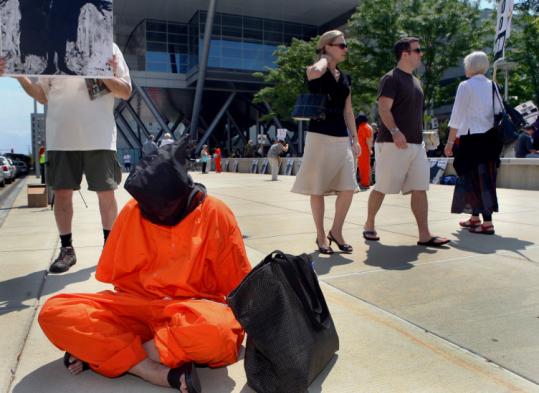
Why is the national security community treating the “Enemy Belligerent, Interrogation, Detention, and Prosecution Act of 2010,” introduced by Sens. John McCain and Joseph Lieberman on Thursday as a standard proposal, as a simple response to the administration’s choices in the aftermath of the Christmas Day bombing attempt? A close reading of the bill suggests it would allow the U.S. military to detain U.S. citizens without trial indefinitely in the U.S. based on suspected activity. Read the bill here, and then read the summarized points after the jump.
According to the summary, the bill sets out a comprehensive policy for the detention, interrogation and trial of suspected enemy belligerents who are believed to have engaged in hostilities against the United States by requiring these individuals to be held in military custody, interrogated for their intelligence value and not provided with a Miranda warning.
(There is no distinction between U.S. persons–visa holders or citizens–and non-U.S. persons.)
It would require these “belligerents” to be coded as “high-value detainee[s]” to be held in military custody and interrogated for their intelligence value by a High-Value Detainee Interrogation Team established by the president. (The H.I.G., of course, was established to bring a sophisticated interrogation capacity to the federal justice system.)
Any suspected unprivileged enemy belligerents considered a “high-value detainee” shall not be provided with a Miranda warning.
The bill asks the President to determine criteria for designating an individual as a “high-value detainee” if he/she: (1) poses a threat of an attack on civilians or civilian facilities within the U.S. or U.S. facilities abroad; (2) poses a threat to U.S. military personnel or U.S. military facilities; (3) potential intelligence value; (4) is a member of al Qaeda or a terrorist group affiliated with al Qaeda or (5) such other matters as the President considers appropriate. The President must submit the regulations and guidance to the appropriate committees of Congress no later than 60 days after enactment.
To the extent possible, the High-Value Detainee Interrogation Team must make a preliminary determination whether the detainee is an unprivileged enemy belligerent within 48 hours of taking detainee into custody.
The High-Value Detainee Interrogation Team must submit its determination to the Secretary of Defense and the Attorney General after consultation with the Director of National Intelligence, the Director of the Federal Bureau of Investigation, and the Director of the Central Intelligence Agency. The Secretary of Defense and the Attorney General make a final determination and report the determination to the President and the appropriate committees of Congress. In the case of any disagreement between the Secretary of Defense and the Attorney General, the President will make the determination.
Note that the president himself doesn’t get to make the call.
Via: The Atlantic:
Why is the national security community treating the “Enemy Belligerent, Interrogation, Detention, and Prosecution Act of 2010,” introduced by Sens. John McCain and Joseph Lieberman on Thursday as a standard proposal, as a simple response to the administration’s choices in the aftermath of the Christmas Day bombing attempt? A close reading of the bill suggests it would allow the U.S. military to detain U.S. citizens without trial indefinitely in the U.S. based on suspected activity. Read the bill here, and then read the summarized points after the jump.
According to the summary, the bill sets out a comprehensive policy for the detention, interrogation and trial of suspected enemy belligerents who are believed to have engaged in hostilities against the United States by requiring these individuals to be held in military custody, interrogated for their intelligence value and not provided with a Miranda warning.
(There is no distinction between U.S. persons–visa holders or citizens–and non-U.S. persons.)
It would require these “belligerents” to be coded as “high-value detainee[s]” to be held in military custody and interrogated for their intelligence value by a High-Value Detainee Interrogation Team established by the president. (The H.I.G., of course, was established to bring a sophisticated interrogation capacity to the federal justice system.)
Any suspected unprivileged enemy belligerents considered a “high-value detainee” shall not be provided with a Miranda warning.
The bill asks the President to determine criteria for designating an individual as a “high-value detainee” if he/she: (1) poses a threat of an attack on civilians or civilian facilities within the U.S. or U.S. facilities abroad; (2) poses a threat to U.S. military personnel or U.S. military facilities; (3) potential intelligence value; (4) is a member of al Qaeda or a terrorist group affiliated with al Qaeda or (5) such other matters as the President considers appropriate. The President must submit the regulations and guidance to the appropriate committees of Congress no later than 60 days after enactment.
To the extent possible, the High-Value Detainee Interrogation Team must make a preliminary determination whether the detainee is an unprivileged enemy belligerent within 48 hours of taking detainee into custody.
The High-Value Detainee Interrogation Team must submit its determination to the Secretary of Defense and the Attorney General after consultation with the Director of National Intelligence, the Director of the Federal Bureau of Investigation, and the Director of the Central Intelligence Agency. The Secretary of Defense and the Attorney General make a final determination and report the determination to the President and the appropriate committees of Congress. In the case of any disagreement between the Secretary of Defense and the Attorney General, the President will make the determination.
Note that the president himself doesn’t get to make the call.
.
.
Source: http://cryptogon.com/?p=14231
,
Friday, October 17, 2008
Where you sit says a lot about where you stand at annual Al Smith dinner
BY DAVID SALTONSTALL
DAILY NEWS SENIOR CORRESPONDENT
Friday, October 17th 2008, 10:59 AM

Edward Cardinal Egan is flanked by presidential candidates John McCain and Barack Obama at Thursday night's Alfred Smith dinner.
Appropriately, Republican John McCain was seated to Edward Cardinal Egan's right at Thursday night's annual Al Smith Dinner - Democrat Barack Obama to his left.
Donning white tie and tails, they put aside political rancor to roast and toast each other with equal relish.
McCain got the ball rolling with a mock announcement that he had fired his entire team of high-priced advisers, as he once did last summer.
SEE: OBAMA TO DEMS: DON'T GET COCKY
"All of their positions will now be held by a man named Joe the Plumber," deadpanned McCain, referring to real-life plumber Joe Wurzelbacher of Ohio, who became a minor star of the candidates' final debate Wednesday.
As for those who question whether Joe would have enough money to pay his taxes under an Obama administration, McCain whispered that Joe "recently signed a very lucrative contract with a wealthy couple to handle all the work on all seven of their houses" - a reference to McCain's many homes.
SEE: MCCAIN SHOWS UP; TELLS LETTERMAN, 'I SCREWED UP'
Obama got off his own zingers, beginning by telling the tuxedoed crowd that there is no other group in America that he would rather be "palling around" with, a dig at McCain ads asserting that Obama consorted with one-time radical William Ayers.
"It's often been said that I share the politics of Alfred E. Smith," said Obama, "and the ears of Alfred E. Neuman."
SEE: BOSS, BILLY JOEL HEADLINE OBAMA CASH BASH
The Illinois senator also paid homage to the dinner's location at the Waldorf-Astoria. "I hear from the doorstep, you can see all the way to the Russian Tea Room," he cracked in a shot at GOP veep nominee Sarah Palin's boast that she can see Russia from Alaska.
In another riff, Obama said "contrary to the rumors you have heard, I was not born in a manger. I was actually born on Krypton and sent here by my father, Jor-el, to save the planet Earth," a shoutout to Superman.
With Mayor Bloomberg sitting just a few feet away, Obama also got in a dig at the mayor's bid to seek a third term. "The mayor recently announced some news ... by announcing he is going to be rewriting the rules and running for a third term, which caused Bill Clinton to say, 'You can do that?'" joked Obama, causing the nearby Hillary Clinton to throw back her head in laughter.
But both men's jokes ended with poignant salutes to each other for a battle well-fought, offering what amounted to a goodbye. The two men are not expected to share the same stage again this election.
"There was a time when a mere invitation of an African-American citizen to dine at the White House was taken as an outrage and an insult," said McCain, adding, "I can't wish my opponent luck, but I do wish him well."
Said Obama, "There are very few of us that have served this country with the same dedication and honor and distinction as Sen. McCain."
The 63rd annual dinner, named in honor of the four-term governor of New York in the 1920s, raised $4 million for the Alfred E. Smith Memorial Foundation.
Smith's great-grandson, Alfred Smith 4th, began the evening by joking that he hoped both vice presidential nominees, Palin and Democrat Joe Biden, would also attend.
"But Sarah Palin is at the state troopers' ball," quipped Smith, "and Joe Biden couldn't find a white tie and tails at Home Depot."
dsaltonstall@nydailynews.com
Source: http://www.nydailynews.com/news/politics/2008/10/16/2008-10-16_where_you_sit_says_a_lot_about_where_you.html
DAILY NEWS SENIOR CORRESPONDENT
Friday, October 17th 2008, 10:59 AM

Edward Cardinal Egan is flanked by presidential candidates John McCain and Barack Obama at Thursday night's Alfred Smith dinner.
Appropriately, Republican John McCain was seated to Edward Cardinal Egan's right at Thursday night's annual Al Smith Dinner - Democrat Barack Obama to his left.
Donning white tie and tails, they put aside political rancor to roast and toast each other with equal relish.
McCain got the ball rolling with a mock announcement that he had fired his entire team of high-priced advisers, as he once did last summer.
SEE: OBAMA TO DEMS: DON'T GET COCKY
"All of their positions will now be held by a man named Joe the Plumber," deadpanned McCain, referring to real-life plumber Joe Wurzelbacher of Ohio, who became a minor star of the candidates' final debate Wednesday.
As for those who question whether Joe would have enough money to pay his taxes under an Obama administration, McCain whispered that Joe "recently signed a very lucrative contract with a wealthy couple to handle all the work on all seven of their houses" - a reference to McCain's many homes.
SEE: MCCAIN SHOWS UP; TELLS LETTERMAN, 'I SCREWED UP'
Obama got off his own zingers, beginning by telling the tuxedoed crowd that there is no other group in America that he would rather be "palling around" with, a dig at McCain ads asserting that Obama consorted with one-time radical William Ayers.
"It's often been said that I share the politics of Alfred E. Smith," said Obama, "and the ears of Alfred E. Neuman."
SEE: BOSS, BILLY JOEL HEADLINE OBAMA CASH BASH
The Illinois senator also paid homage to the dinner's location at the Waldorf-Astoria. "I hear from the doorstep, you can see all the way to the Russian Tea Room," he cracked in a shot at GOP veep nominee Sarah Palin's boast that she can see Russia from Alaska.
In another riff, Obama said "contrary to the rumors you have heard, I was not born in a manger. I was actually born on Krypton and sent here by my father, Jor-el, to save the planet Earth," a shoutout to Superman.
With Mayor Bloomberg sitting just a few feet away, Obama also got in a dig at the mayor's bid to seek a third term. "The mayor recently announced some news ... by announcing he is going to be rewriting the rules and running for a third term, which caused Bill Clinton to say, 'You can do that?'" joked Obama, causing the nearby Hillary Clinton to throw back her head in laughter.
But both men's jokes ended with poignant salutes to each other for a battle well-fought, offering what amounted to a goodbye. The two men are not expected to share the same stage again this election.
"There was a time when a mere invitation of an African-American citizen to dine at the White House was taken as an outrage and an insult," said McCain, adding, "I can't wish my opponent luck, but I do wish him well."
Said Obama, "There are very few of us that have served this country with the same dedication and honor and distinction as Sen. McCain."
The 63rd annual dinner, named in honor of the four-term governor of New York in the 1920s, raised $4 million for the Alfred E. Smith Memorial Foundation.
Smith's great-grandson, Alfred Smith 4th, began the evening by joking that he hoped both vice presidential nominees, Palin and Democrat Joe Biden, would also attend.
"But Sarah Palin is at the state troopers' ball," quipped Smith, "and Joe Biden couldn't find a white tie and tails at Home Depot."
dsaltonstall@nydailynews.com
Source: http://www.nydailynews.com/news/politics/2008/10/16/2008-10-16_where_you_sit_says_a_lot_about_where_you.html


Wednesday, September 24, 2008
Barack Obama Declines To Follow John McCain's Lead In Suspending Campaign
Barack Obama Declines To Follow John McCain's Lead In Suspending Campaign
'It will be part of the president's job to deal with more than one thing at once,' Democratic candidate says.
Just hours after Senator John McCain made the surprise announcement that he was suspending his presidential campaign and asking for a delay of Friday's first presidential debate to focus on the economic-bailout package being hammered out in Washington, his rival, Democratic Senator Barack Obama, said he would not be following suit.
"This is exactly the time when the American people need to hear from the person who in approximately 40 days will be responsible for dealing with this mess," Obama said. "It will be part of the president's job to deal with more than one thing at once. I think there's no reason why we can't be constructive in helping to solve this problem and also tell the American people what we believe and where we stand and where we want to take the country. In my mind, actually, it's more important than ever that we present ourselves to the American people and try to describe where we want to take the country and where we want to take the economy."
Calling it a moment of "great uncertainty in America," Obama warned that if Congress doesn't act soon, "People's jobs, people's savings, the economic security of millions of Americans will be put at risk."
Like McCain, Obama called on Democrats and Republicans, and the White House and Congress, to come together to figure out a solution to the worst economic crisis to face the country since the Great Depression. It was in that bipartisan spirit, Obama said, that he reached out to McCain on Wednesday morning (September 24) after determining that "many of the principles that I had set forth were ones that Senator McCain had adopted as well, in terms of how this financial proposal should be structured." Obama credited Republican Senator Tom Coburn with suggesting that the presidential rivals issue a joint statement about the financial crisis to show their unity on the issue. As of 5:40 p.m. ET, that statement had not yet been issued.
Obama verified that McCain called him back at 2:30 p.m. and that he urged McCain to join in issuing the statement "to let this Congress and this administration know where we stand and what we expect from this proposal." Among the four principles Obama has suggested to guide the bailout are: a bipartisan accountability board to monitor where the money goes, treating the American public like investors, and giving "every penny" back once the economy recovers, helping homeowners struggling to stay in their homes and making sure Wall Street executives don't profit from the crisis.
Saying he's been in constant contact with the leadership in Congress, Obama added that he's also been in daily contact with Treasury Secretary Henry Paulson, but that these difficult days are proof that "there are times for politics, and there are times to rise above politics and do what's right for the country."
The brief address was followed by a question-and-answer session, a pointed attempt by Obama, it seemed, to further distance himself from McCain, who has drawn fire lately for his lack of availability — as well as the virtual media blackout on his vice-presidential running mate Sarah Palin — and his infrequent Q&A's with the press, with whom the Arizona senator had long had a cordial relationship.
After Obama reached out to McCain, he said the Republican agreed to the joint statement and added that the two should have a meeting in Washington with congressional leaders and perhaps President Bush. Stressing that the statement should come out first to show their bipartisan spirit, Obama said he found out that McCain had announced the suspension of his campaign shortly after their 2:30 phone call.
Obama said he would not be following McCain's lead and suspending his campaign or pulling his ads from the air because of his feeling that it's important that the American people see the men who could potentially be dealing with this issue over the next couple of months. "We need to be focused on solving the problem, as I have been over the last several days," he said. "But I think it is also important that we communicate to the American people where we need to go in getting out of this situation."
Obama pledged to make himself available to be "anywhere, anytime" to help with the bailout negotiations but said it might not be helpful to "suddenly infuse" the process with potentially distracting presidential politics during the delicate negotiations.
Source: http://www.mtv.com/news/articles/1595554/20080924/story.jhtml
McCain suspends campaign to work on Wall Street plan
Wed Sep 24, 2008 3:59pm EDT
By Steve Holland
NEW YORK (Reuters) - Republican presidential candidate John McCain said on Wednesday he will break off from campaigning to help on a Wall Street rescue plan and asked that a Friday debate with Democrat Barack Obama be postponed.
McCain, in a statement to reporters, said he would suspend his campaign on Thursday to return to Washington.
He added he did not believe the Bush administration's proposed legislation on a $700 billion bailout plan for the financial industry would pass the U.S. Congress in its current form.
McCain, an Arizona senator, called on Obama to join him in working together on a plan and said he had spoken to the Democrat about doing so. He said a consensus agreement on a bailout plan is needed by the time the financial markets open on Monday.
Obama, an Illinois senator, planned to make a statement on the issue shortly.
"It's time for both parties to come together to solve this problem," McCain said. "We must meet as Americans, not as Democrats or Republicans, and we must meet until this crisis is resolved."
The Bush administration is pushing the plan hard in Congress. The White House welcomed McCain's announcement.
Dana Perino said, "We are making progress in negotiations on the financial markets rescue legislation, but we have not finished it yet."
McCain's dramatic move, aimed at projecting leadership during the greatest U.S. financial crisis since the Great Depression, came at a time when Americans have been telling pollsters they believed Obama could handle the economy better than McCain.
Obama spokesman Bill Burton said Obama had called McCain on Wednesday morning to ask if he would join him in issuing a joint statement aimed at taking a bipartisan approach to the endangered $700 billion bailout.
The aim, said Burton, would be to act in a bipartisan manner to pass a proposal.
"At 2:30 this afternoon, Senator McCain returned Senator Obama's call and agreed to join him in issuing such a statement. The two campaigns are currently working together on the details," Burton said.
McCain urged President George W. Bush to call for a bipartisan meeting of congressional leaders, including him and Obama, to try to find an agreement.
The debate scheduled on Friday in Oxford, Mississippi, is supposed to be the first of three face-to-face sessions between McCain and Obama, who face off in the presidential election on November 4.
"I am directing my campaign to work with the Obama campaign and the Commission on Presidential Debates to delay Friday night's debate until we have taken action to address this crisis," McCain said.
McCain said it was essential to pass legislation to deal with what he called a "historic crisis."
"If we do not, credit will dry up, with devastating consequences for our economy. People will no longer be able to buy homes and their life savings will be at stake," he said.
McCain senior adviser Mark Salter said the campaign suspension would include pulling McCain's television ads. (Additional reporting by Deborah Charles, Editing by Frances Kerry)
Source: http://www.reuters.com/article/newsOne/idUSTRE48N7ZP20080924?sp=true
By Steve Holland
NEW YORK (Reuters) - Republican presidential candidate John McCain said on Wednesday he will break off from campaigning to help on a Wall Street rescue plan and asked that a Friday debate with Democrat Barack Obama be postponed.
McCain, in a statement to reporters, said he would suspend his campaign on Thursday to return to Washington.
He added he did not believe the Bush administration's proposed legislation on a $700 billion bailout plan for the financial industry would pass the U.S. Congress in its current form.
McCain, an Arizona senator, called on Obama to join him in working together on a plan and said he had spoken to the Democrat about doing so. He said a consensus agreement on a bailout plan is needed by the time the financial markets open on Monday.
Obama, an Illinois senator, planned to make a statement on the issue shortly.
"It's time for both parties to come together to solve this problem," McCain said. "We must meet as Americans, not as Democrats or Republicans, and we must meet until this crisis is resolved."
The Bush administration is pushing the plan hard in Congress. The White House welcomed McCain's announcement.
Dana Perino said, "We are making progress in negotiations on the financial markets rescue legislation, but we have not finished it yet."
McCain's dramatic move, aimed at projecting leadership during the greatest U.S. financial crisis since the Great Depression, came at a time when Americans have been telling pollsters they believed Obama could handle the economy better than McCain.
Obama spokesman Bill Burton said Obama had called McCain on Wednesday morning to ask if he would join him in issuing a joint statement aimed at taking a bipartisan approach to the endangered $700 billion bailout.
The aim, said Burton, would be to act in a bipartisan manner to pass a proposal.
"At 2:30 this afternoon, Senator McCain returned Senator Obama's call and agreed to join him in issuing such a statement. The two campaigns are currently working together on the details," Burton said.
McCain urged President George W. Bush to call for a bipartisan meeting of congressional leaders, including him and Obama, to try to find an agreement.
The debate scheduled on Friday in Oxford, Mississippi, is supposed to be the first of three face-to-face sessions between McCain and Obama, who face off in the presidential election on November 4.
"I am directing my campaign to work with the Obama campaign and the Commission on Presidential Debates to delay Friday night's debate until we have taken action to address this crisis," McCain said.
McCain said it was essential to pass legislation to deal with what he called a "historic crisis."
"If we do not, credit will dry up, with devastating consequences for our economy. People will no longer be able to buy homes and their life savings will be at stake," he said.
McCain senior adviser Mark Salter said the campaign suspension would include pulling McCain's television ads. (Additional reporting by Deborah Charles, Editing by Frances Kerry)
Source: http://www.reuters.com/article/newsOne/idUSTRE48N7ZP20080924?sp=true
Tuesday, September 09, 2008
Palin Chosen as Vice-Presidential Running Mate

September 05, 2008
So Who is Sarah Palin?
Alaska Governor Sarah Palin has been chosen by Senator John McCain as his vice-presidential running mate. Palin carries very strong credentials for fighting corruption and cleaning up government, defense of gun ownership and she is pro-life and pro-family. She is a mother of five. Her eldest son volunteered for the military on September 11 last year and will be deployed to Iraq on September 11 of this year. Her most recent child was born four months before she was picked for the VP job by the Republican nominee. Palin is the second woman to run on the presidential ticket after Geraldine Ferraro in 1984 who ran with Walter Mondale.
Palin’s background includes a strong love of sports, runner up to the Miss Alaska beauty queen and several elected posts in local government before running for governor of Alaska. Forty-four year old Palin is the first woman and was the youngest person to hold the office of governor (at 42 years of age). She has been governor since 2006.
Evangelicals are ecstatic over McCain’s pick. Conservative Catholics are supportive, but not as emotional and are more muted and philosophical about it. Palin’s last child was known to have Down syndrome early in her pregnancy. Birthing the child puts personal sacrifice behind her convictions and greatly enhances her credibility among pro-life voters. Sarah Palin was born and baptized a Roman Catholic but her parents left the church. She was re-baptized in a Pentecostal church but is now a non-denominational Evangelical Christian. Palin has strong moral convictions particularly on social issues. Non-denominational churches tend to be quite ecumenical, only emphasizing those things on which most Christians can agree. Often they center on social issues. With her religious background, she should not have much resistance to the influence and political power of Rome in the halls of power in the United States.
It is important to understand that it is the Catholic Church that now often shapes at least some aspects of U.S. presidential politics, especially as it relates to abortion, traditional marriage, and other moral issues that Rome champions. The evangelicals have the political savvy to take those doctrines into the political arena. The issue of abortion is clearly front and center of the 2008 presidential election campaign. Roman Catholic voters (particularly conservatives) are viewed by many as able to determine an election. They largely vote on the basis of issues and have frequently influenced election outcomes at various levels of government. The record of George W. Bush in assisting the Roman Catholic Church to increase its power and influence in the U.S. reveals how important the Roman Catholic vote has become.
Now that John McCain has visited the Basilica of the Shrine of Our Lady of Guadalupe in Mexico, the most important Catholic icon in the Americas, and received the papal blessing while there (see: John McCain Visits the Virgin of Guadalupe), it is apparent that he sees the importance of the Roman Catholic voice in politics. He has also indicated that he would appoint Roman Catholics to his key advisory panels (see: John McCain Courts the Catholic Vote). Even Senator Obama has chosen a Roman Catholic running mate in Joe Biden at least in part to garner support from Roman Catholics for the democratic ticket. One reason McCain picked Palin was because she would appeal to conservative religious voters because of her strong moral stands. Palin will certainly strengthen the support of the Roman Catholic Church for the republican ticket.
Here is what is being said about Sarah Palin by some of the leaders in Christian circles.
“’I am now more confident about a John McCain presidency than I am about a George Bush presidency,’ said Tony Perkins, president of the Family Research Council. ‘The campaign has courted conservatives aggressively, and it has turned around remarkably in just the last few weeks.’”
“For skeptical Christian conservatives, Mr. Perkins said, the selection of Ms. Palin was evidence that when it came to the Supreme Court, Mr. McCain would deliver on the principles he laid out at Saddleback Church.”
“Colin Hanna, a prominent conservative organizer in Pennsylvania and Ohio said, ‘The candidate and his brain trust have evidently concluded what we have always held as a given: that he cannot succeed without the enthusiastic support of the conservative base.’”
“Dr. [James] Dobson said the Palin selection had persuaded him to endorse Mr. McCain. Dr. Dobson said in a statement that the nomination ‘gives us confidence he will keep his pledges to voters regarding the kinds of justices he would nominate to the Supreme Court.’”
“In Minneapolis, ‘it was as if the whole Republican convention had started drinking Red Bull,’ said Richard Land of the Southern Baptist Convention, who added that when the McCain campaign had sought his input weeks before he had suggested picking Ms. Palin.
John Allen, a Roman Catholic pundit said: “Palin’s nomination, therefore, does not simply mark a breakthrough for women, or for western states. She also puts a face on the fastest-growing and most dynamic segment of global Christianity these days – even if it’s proving difficult for journalists and political handicappers to get their minds around.”
One Catholic blogger wrote: “Actually the Dems and their women are ready to make hay about everything they can think of [concerning Palin], but with every issue they open a mirror reflecting back to themselves.”
Another blogger wrote: “McCain’s values and priorities overall are much more in line with the Catholic worldview, and it is vitally important to educate Catholics about this in key battleground states (Ohio, Pennsylvania, Michigan, etc).”
It was widely speculated that McCain wanted to pick off Hilary Clinton’s supporters that don’t like Obama. If elected, Palin would be the first female vice president of the United States.
As Hurricane Gustov bore down on the Gulf coast, presidential candidate John McCain picked Sarah Palin as his running mate, turning the election “upside down” and changing the direction of the race. Palin is something of a hurricane to the political establishment. Watch out. When it comes to religious principles, she has them, and her convictions run deep. She may well be the most conservative person to ever be on a presidential ticket. That makes conservatives happy, but perhaps Sabbath keepers should be wary, not because they don’t agree with her moral principles (most of them probably do), but precisely because they are so very strong. When Sunday laws begin to be agitated, what would Sarah Palin do to defend religious liberty? Or would she advocate and even assist in the movement to enforce Sunday observance?
Sources:
Source: http://www.ktfministry.org/news/290/palin-chosen-as-vice-presidential-running-mate
Tuesday, September 02, 2008
Live Video From the Republican Convention (2)

News Alert
News Alert: Live Video From the Republican Convention
For more information, visit washingtonpost.com
Friday, August 29, 2008
McCain picks Palin

McCain Picks Palin
DENVER -- John McCain has selected Alaska Gov. Sarah Palin to be his vice presidential running mate, according to the McCain campaign, a surprise pick sure to shake up the race and reinforce the idea of the Arizona senator as a reformer.
The news that Palin, the mayor of a small town in Alaska just two years ago, was the pick came after CNN reported that a private plane had traveled from the Last Frontier to Dayton, Ohio where McCain is set to unveil his vice presidential pick later today. The Palin news came after the two supposed frontrunners -- Minnesota Gov. Tim Pawlenty and former Massachusetts Gov. Mitt Romney -- each confirmed he would not be traveling to Dayton today.
In picking Palin, McCain is taking a calculated risk. She is totally unknown and untested on the national stage but also has impressive credentials in her short time in public life.
Of Palin, former White House political svengali Karl Rove said this morning on Fox News Channel: "It would be a clear sign from the McCain campaign that they were going to be making a very strong bid for the women whom they see up for grabs -- both the traditional, swing independent suburbanites and then the Hillary Clinton supporters who remain disillusioned."
Palin was a star at a young age in Alaska -- a member of the Wasilla basketball team that won the state championship (her aggressive style won her the nickname "Sarah Barracuda") in 1982 and Miss Wasilla two years later.
Palin's political career began a decade later when she was elected to the Wasilla City Council and, four years after that, in 1996, she won the mayorship -- knocking off the incumbent by just a handful of votes.
After a near-miss run in the Republican primary for lieutenant governor in 2002, Palin set her sights on the state's top office four years later. She campaigned on a platform of reform and was aided by the fact that the public had tired of Gov. Frank Murkowksi, and that the looming Veco scandal, which would come to badly imperil the state's Republicans, had begun to get real traction.
Palin won the Republican primary overwhelmingly (Murkowski finished third) and went on to defeat former Gov. Tony Knowles (D) in the general election.
In her two years in office, she has largely made good on her promises of reform -- and watched as her constituents have made her the most popular governor in the country.
Palin is a mother of five -- including a newborn with special needs -- which led many people to speculate that she would not ultimately be the pick. During an interview with washingtonpost.com earlier this year in Washington, Palin said being picked as the vice president was an "impossibility" but that the idea of serving in national office intrigued her.
Monday, August 25, 2008
Clinton Takes on New McCain Ads

washingtonpost.com Convention Update
Post LiveWire
Monday, August 25, 2008 - 1:41 p.m. ET
Clinton Takes on New McCain Ads
DENVER, Colo. -- Hillary Clinton struck back today at John McCain's efforts to woo her supporters in new television ads.
“I’m Hillary Clinton and I do not approve that message," Clinton said of the ads that suggest Obama passed over the New York senator because he was threatened by his primary rival. Clinton spoke at the New York Democratic Party’s delegation breakfast this morning at the Sheraton Hotel in downtown Denver.
Democrats open their national convention today with an ambitious agenda of selling the presidential candidacy of Sen. Barack Obama to a national audience and unifying a party still recovering from a bruising primary.
» Full convention coverage on washingtonpost.com/politics and on mobile at twp.com/politics
© 2008 The Washington Post Company
Washingtonpost.Newsweek Interactive
Saturday, August 23, 2008
The Moronic Party

From Off-Shore Drilling to the Georgian War
The Moronic Party
By PAUL CRAIG ROBERTS
“Although it is not true that all conservatives are stupid people, it is true that most stupid people are conservative.”
-- John Stuart Mill
Many years ago, during the 1970s if memory serves, neoconservative Irving Kristol, echoing John Stuart Mill, called his conservative party, the Republican Party, “the stupid party.”
Kristol was referring to the Republican’s inability to compete on the policy front. Jack Kemp and Ronald Reagan led the Republicans out of the wilderness, but now Republicans have reverted to the stupid party, or more precisely the moronic party.
Take a minute to examine the presidential campaign propaganda that Republicans send around the Internet, and you will see what I mean. For example, recently while Obama was traveling abroad, showing himself to the remnant of our allies, Republican political operatives blitzed the Internet with the suggestion that Obama might not be an American citizen. Doubt was cast on either of his parents being American citizens. The message went on to suggest that Obama refused to produce his birth certificate. All the while, Obama was traveling abroad on a US passport, a document that cannot be obtained without a US birth certificate.
Considering that the Republican candidate, John McCain, was born in the Panama Canal Zone, only the GOP would be dumb enough to make an issue over whether the Democrats’ candidate was born in one of the 50 states.
The innuendo and negativism with which the Republicans are conducting their presidential campaign are unprecedented. There is no sign of issues in McCain’s Karl Rovian campaign. Issues have been superseded by hate, lies, and war.
Republicans stand for war without end, a police state to make us “safe,” and “energy independence,” which means drilling for oil in the Arctic National Wildlife Preserve and offshore of Florida’s Gulf Coast beaches.
What Republicans really mean by “energy independence” is prevailing over environmentalists. Republicans lump environmentalists in the same category with abortionists, gays, feminists, food stamp recipients, trade unionists and terrorists. To a Republican, saving America means prevailing over these people.
The notion that Americans can achieve energy independence by drilling offshore wells and in the arctic is absurd. A number of experts have pointed out that the best data do not support any such possibility.
For example, Robert Kaufman at Boston University, citing US government data, reports that the US might have 40 billion barrels of oil in undeveloped reserves which are not off limits. Another 19 billion might be in off limit offshore sites and in the Arctic National Wildlife preserve.
All of this oil cannot be brought up at once, and apparently none before 2017. Bringing it all into production would, experts think, increase US oil production by 1-4 percent. In other words, nothing. Currently the US uses 21 million barrels a day, and the entire world uses 86 million barrels a day. At best, the Arctic Wildlife Refuge could by 2017 produce 1 million barrels a day, about one-twentieth of current US use and one-eighty-sixth of current world use.
This is not energy independence, and it would have no material effect on price. Indeed, the offshoring by US corporations of US jobs has a much greater effect on the dollar price of oil by inflating the US trade deficit and driving down the exchange value of the US dollar. But, of course, here we are talking about facts, and facts are of no interest to Republicans.
Republicans are interested in prevailing over the “bad guys.” The fact that the bad guys are Bush, Cheney, Rice, Wolfowitz, Perle, Billy Kristol, and other such is beyond the Republicans’ imagination. Bad guys are “towel heads” with beards and robes and are “over there” where they must be killed before the come “over here.” The extent of the Republican intellect boils down to “over here” vs. “over there.”
The other great bugaboo of Republicans is “the liberal media.” Fox “News” has Republicans convinced that “the liberal media” is endangering America by siding with terrorists.
Clearly, Republicans never look at “the liberal media.” It was Judith Miller at the “liberal” New York Times who served up as fact all the neocon disinformation about Saddam Hussein and his weapons of mass destruction and al Qaeda connections. Without the New York Times leading the way, the neocons could never have pulled off their illegal invasions.
On July 18, 2008, the New York Times allowed the Israeli historian Benny Morris to spew lies about Iran that he used to justify an attack on that country possibly even involving nuclear weapons. This is the same New York Times that the idiot conservatives believe is part of “the liberal media.”
It was ABC News that served up the neocon disinformation that the anthrax had been traced to Saddam Hussein. And, today, August 9, 2008, as I write, it is the “liberal” Washington Post that has written an editorial urging the US to go to war with Russia.
With its editorial, “Stopping Russia: the US and its allies must unite against Moscow’s war on Georgia,” the Washington Post has established a world record for the maximum number of lies in the minimum number of words.
Except for the Washington Post, the entire world knows that Georgia (the birthplace of Joseph Stalin, not Georgia USA) initiated the aggression that killed Russian peacekeepers and hundreds of civilians in South Ossetia, peacekeepers who were there with the blessing of Georgia and international agreements.
The true facts are available all over the world press. But the “liberal” Washington Post serves up the lie that Russia has attacked Georgia and conceivably plans to conquer all of Georgia. “This is a grave challenge to the United States and Europe,” thunders the Bush Regime’s mouthpiece, aka, “the liberal media.”
Thirsting for blood, the “liberal media” declares: “The United States and its NATO allies must together impose a price on Russia.”
Here we see the combination of idiocy and delusion in one sentence. The United States has proved that it is incapable of occupying Iraq, much less Afghanistan. Russia has a large trade surplus. America’s NATO allies are dependent on Russian natural gas. Yet the “liberal” Washington Post wants a bankrupt US and “its NATO allies” who are dependent on Russian energy “to impose a price on Russia” for defending its peacekeepers!
Seldom has the world seen such total insanity as the neoconservative Washington Post, a propaganda sheet as far from “liberal media” is it is possible to be.
Georgia was part of Old Russia and the Soviet Union for two centuries. After Soviet communism collapsed, the US taxpayer funded neoconservative National Endowment for Democracy broke every agreement that President Reagan had made with Gorbachev and began using US taxpayers’ money to rig and purchase elections in former constituent parts of the Russian/Soviet empire.
The Endowment for Democracy purchased Georgia as a US colony. The affront to Russia was extreme, but at the time Russia was weak. Oligarchs with outside money had grabbed control over Russian resources, and Russia was in dire straits and could not resist American imperialism.
Putin corrected the situation for Russia.
Now using American weapons Georgia for reasons yet to be revealed has violated its own agreement with Russia and attacked South Ossetia, killing in the process Russian peacekeepers. Vladimir Vasilyev, chairman of the Russian State Duma Committee for Security told the press: “The things that were happening in Kosovo, the things that were happening in Iraq – we are now following the same path. The further the situation unfolds, the more the world will understand that Georgia would never be able to do all this without America.”
Yes, without America there would be no war in Ossetia and no war between Russia and its former constituent part.
Without America there would be no war in Afghanistan. No war in Iraq.
Without America there would not be 1.2 million dead Iraqis and 4 million displaced Iraqis. We have no idea of the toll on Afghan civilians, although women and children appear to be the prime targets of the US/NATO forces that are “bringing peace and freedom to Afghanistan.”
Recently, US Secretary of State Condi Rice said that the US government could not prevent an Israeli attack on Iran. Israel is an independent country, said the American Secretary of State. What an extraordinary lie.
Israel cannot exist without American weapons and money. Israel cannot attack Iran without overflying Iraq, which the US air force can easily prevent. It is clear as day that the Bush Regime has given the green light to Israel to attack Iran so that the Bush Regime can rush to “Israel’s defense.”
Meanwhile the “liberal” media is urging the US to get involved in a war between Russia and Georgia. The insanity will lead to the unloosening of nuclear weapons.
Paul Craig Roberts was Assistant Secretary of the Treasury in the Reagan administration. He was Associate Editor of the Wall Street Journal editorial page and Contributing Editor of National Review. He is coauthor of The Tyranny of Good Intentions. He can be reached at: paulcraigroberts@yahoo.com
Monday, August 18, 2008
"You can't be pro-life, and be pro-war"

I saw that enigmatic, bombastic bumper sticker again. Personally, I'm pro life, but I'm also against killing (humans) of any kind. Today, while driving I spotted the sticker, on a car ahead of me: "You can't be Catholic and pro-abortion". Then, I thought about this past weekend having heard one of John McCain's sound bytes, "I'm pro life". So, today I thought to myself; You can't be pro life and pro-war. What a catchy slogan? It's trendy and a true statement: "You can't be pro-life, and be pro-war". It's that simple! Either he is or he isn't, no middle ground. This is a conflict of principles; either you are for life or for death. Like the pregnant analogy. You can't be half...

So, Mr. McCain, you can't be pro-life? If you promote war! These are contradictory concepts.
Thursday, July 17, 2008
Scarborough repeats McCain's falsehood...
July 17, 2008
Scarborough repeats McCain's falsehood that he called for Rumsfeld's resignation, despite MSNBC's previous correction
Scarborough repeats McCain's falsehood that he called for Rumsfeld's resignation, despite MSNBC's previous correction
Summary: On MSNBC's Morning Joe, Joe Scarborough repeated the falsehood that Sen. John McCain called for Donald Rumsfeld's resignation, saying, "I think he [McCain] was saying that Rumsfeld should be fired." Although MSNBC previously corrected this falsehood, and a McCain spokesman reportedly acknowledged that McCain "did not call for his resignation," MSNBC hosts have repeatedly failed to correct guests' assertions that he did so.
On the July 17 broadcast of MSNBC's Morning Joe, host Joe Scarborough repeated the falsehood that Sen. John McCain called for the resignation of former Secretary of Defense Donald Rumsfeld, saying, "I think he [McCain] was saying that Rumsfeld should be fired." Scarborough made his comments after airing a clip from the July 16 edition of MSNBC Live, during which Mika Brzezinski failed to correct former Republican presidential candidate and Massachusetts Gov. Mitt Romney's false assertion that McCain "said that Rumsfeld needed to go." In fact, as Media Matters for America has repeatedly documented, McCain did not call for Rumsfeld's resignation. Moreover, MSNBC chief Washington correspondent Norah O'Donnell issued a "clarification" after falsely claiming in March that McCain "called for Don Rumsfeld's resignation."
While McCain expressed "no confidence" in Rumsfeld in 2004, the Associated Press reported at the time that McCain "said his comments were not a call for Rumsfeld's resignation." Further, when Fox News host Shepard Smith specifically asked McCain, "Does Donald Rumsfeld need to step down?" on November 8, 2006 -- hours before President Bush announced Rumsfeld's resignation -- McCain responded that it was "a decision to be made by the president."
According to a February 16 Washington Post article, "[D]uring a debate at the Ronald Reagan Presidential Library in Simi Valley, Calif., aired on CNN, McCain said, 'I'm the only one that said that Rumsfeld had to go.' A McCain spokesman acknowledged this week that that was not correct. 'He did not call for his resignation,' said the campaign's Brian Rogers. 'He always said that's the president's prerogative.' " The article also noted that "McCain's false account has been unwittingly incorporated into the narrative he is selling by some news organizations, including The Washington Post."
Nevertheless, despite O'Donnell's correction and the Post's report, MSNBC hosts have repeatedly failed to correct guests' assertions that McCain called for Rumsfeld to be fired.
From the July 17 broadcast of MSNBC's Morning Joe:
BRZEZINSKI: But the surge -- the surge has definitely had an impact that changes the conversation a bit. I mean --
SCARBOROUGH: It does. And why did it -- why did it work? It's because Bush finally got rid of Rumsfeld, brought in a great new secretary of Defense, General Petraeus. They -- he finally --
BRZEZINSKI: Oh, that wasn't John McCain?
SCARBOROUGH: He finally put the right team together. Now, let's --
BRZEZINSKI: What? Are you sure?
SCARBOROUGH: -- let's talk about the what the McCain camp --
BRZEZINSKI: It was John McCain.
SCARBOROUGH: -- were saying yesterday that was wrong, Willie.
BRZEZINSKI: He did it.
GEIST: Well, the irony also is that John McCain yesterday was tying Barack Obama to George Bush, saying, as you said --
BRZEZINSKI: Oh, no. I'm confused.
GEIST: -- you said Barack Obama's feet are in cement, and --
SCARBOROUGH: Right.
GEIST: -- and John McCain said that's exactly right, much like this past administration.
SCARBOROUGH: Really?
BRZEZINSKI: Oh.
GEIST: Hasn't America seen enough?
SCARBOROUGH: You are kidding me?
GEIST: Their policy is not flexible. They won't change given conditions on the ground. So, sort of a creative way of --
SCARBOROUGH: Bush?
BRZEZINSKI: Yeah.
SCARBOROUGH: He compared Bush and Obama?
GEIST: Bush -- he tied -- he did. He tied them together.
SCARBOROUGH: Are you serious?
GEIST: He did it on a conference call and --
SCARBOROUGH: I'm dizzy.
GEIST: and then -- yeah, it doesn't make a whole lot of sense. Mitt Romney, though, out yesterday --
SCARBOROUGH: Uh-huh.
GEIST: -- looking very vice-presidential --
SCARBOROUGH: Yeah.
GEIST: -- talking about the fact that the surge -- John McCain's idea.
SCARBOROUGH: Really?
BRZEZINSKI: Yeah.
ROMNEY [video clip]: John McCain understands military strategy. He, after all, was the person who authored some time ago the philosophy that said a surge would work in Iraq. He said that Rumsfeld needed to go, and you know what? He ended up being right, and Barack Obama said the surge would not work. Guess who was wrong on that one?
BRZEZINSKI: Oh. Yes.
SCARBOROUGH: All right. So, there -- that's fine. But, I mean, it was George Bush's surge. I will say John McCain was the one man in Washington who supported that, it seemed at the time, but I wouldn't go around saying that was McCain's idea.
BRZEZINSKI: I --
GEIST: Yeah.
BRZEZINSKI: I'm thinking, yeah.
GEIST: Or that -- or that he was the one who wanted Rumsfeld out, either.
BRZEZINSKI: Umm --
SCARBOROUGH: Well --
BRZEZINSKI: Well --
SCARBOROUGH: He did not like Rumsfeld.
GEIST: No.
BRZEZINSKI: He did. We gave him the credit for not liking Rumsfeld.
SCARBOROUGH: He did that. He was after Rumsfeld.
BRZEZINSKI: There was a little friction there. I think.
SCARBOROUGH: Actually, I think he was saying Rumsfeld should be fired, but --
BRZEZINSKI: Yeah, no, I think there was legitimate friction there.
TIKI BARBER (NBC News correspondent): So did a host of other people.
BRZEZINSKI: Yeah.
SCARBOROUGH: Well, OK. Everybody in America, but George Bush. Talk about your feet in cement.
—C.S.
Source: http://mediamatters.org/items/200807170008?f=h_latest
Saturday, July 05, 2008
Next President Faces Housing Crisis
 AP / Getty Images
Next President Faces Housing Crisis
By JEANNINE AVERSA,
AP
Posted: 2008-07-05 12:01:30
WASHINGTON (July 5) - Home foreclosures will keep rising next year no matter who is elected president in November.Even the optimism that surrounds a new president taking office cannot resurrect home values overnight, and presidents have no direct ability to reduce rising mortgage rates. Nevertheless, Democrat Barack Obama and Republican John McCain both promise help for homeowners facing foreclosure.
Obama supports a broader role for government than does McCain. Both envision the Federal Housing Administration providing new, cheaper mortgages to distressed homeowners who otherwise would have difficulty refinancing into more secure government-insured loans with lower monthly payments.For the plans to work, lenders would have to be willing to take a substantial loss by reducing the amount owed on the loan. But some would have a powerful incentive to do so. A refinancing deal could allow them to recover far more money than they would get from the costly process of foreclosing on the property and trying to resell it.Obama supports legislation along these lines by Sen. Chris Dodd, D-Conn., that would help about 400,000 homeowners. People would not have to have good credit to qualify as long as they could show they can afford the new payments."If the government can bail out investment banks on Wall Street, we can extend a hand to folks who are struggling on Main Street," Obama said.McCain's plan would provide relief to 200,000 to 400,000 homeowners. The aid would be available only to people who could show they were creditworthy when they got their original loan. The plan offers "every deserving American family or homeowner the opportunity to trade a burdensome mortgage for a manageable loan that reflects the market value of their home," he said.
The FHA piece of the Dodd plan would cost close to $1 billion. The money would come from diverting dollars in the early years from an affordable housing fund financed by the profits of the mortgage companies Fannie Mae and Freddie Mac. McCain's FHA provision is estimated to cost from $3 billion to $10 billion and would mean either cutting federal spending elsewhere or having the government borrow more. The first choice is to trim spending, a McCain aide said.Experts predict foreclosures will continue to climb well into 2009. Some believe there is a chance for improvement in late 2009, but more think that will not happen until 2010.A long-term solution is tied to a turnaround in house prices. Slumping home values are blamed for the bulk of the increasing foreclosures. Troubled borrowers are left owing more to the bank than their homes are worth, so they walk away from their homes. Dumping more empty houses on the market adds to the pile of unsold homes, and that drives home prices down further."This is uncharted territory," said Susan Wachter, a professor of real estate and finance at the University of Pennsylvania's Wharton School of Business.Some predict house prices will not climb until the spring selling season of 2010 - at the earliest.Lawrence Summers, a treasury secretary in the Clinton administration, predicted that more than 2 million foreclosures are coming over the next two years and that as many as 15 million homeowners will owe more than their house is worth.
AOL Elections Main >>
According to a recent AP-Yahoo News poll, 57 percent of people said housing prices are important to them personally. For many, their home is their biggest asset. As home prices dropped, so did people's net worth - leaving them feeling less financially secure and more gloomy about the direction of the economy.Which candidate would do a better job of handling housing prices? In the poll, 25 percent said Obama and 17 percent thought McCain. Nearly 30 percent said neither.Although most voters think the next president will have a "great deal" or "some" influence over housing prices, the reality is there is no quick fix."The odds of that are slim to none," said Cal Jillson, political science professor at Southern Methodist University. If the next president can make people more optimistic about the future, "the slow rebuilding of confidence will help to increase home values," he said.When it comes to handling the broader economy, which is the top concern of voters, the poll found that 32 percent picked Obama and 28 percent went with McCain.An additional factor is the Federal Reserve, which presidents do not control. If the central bank were to raise interest rates to fend off inflation, the step would increase payments for homeowners whose loan rates are resetting higher. That, in turn, could push up foreclosures. "We are very exposed to interest rate risks and mortgage payment shocks in 2009," Wachter said.Mortgage rates, including those on 30-year home loans, already are climbing, propelled by inflation worries.In addition to his FHA proposal, Obama wants to create a $10 billion fund to counsel distressed homeowners before they slide into foreclosure; help people sell homes they bought but could not afford; and team with state governments, community groups and lenders to ensure sure loans can be modified in a timely manner to avoid foreclosure or bankruptcy.His approach, reflecting the traditional Democratic preference for greater government intervention, would establish a 10 percent mortgage credit for people who do not itemize their taxes. That would provide 10 million homeowners, most of whom earn less than $50,000 a year, with an average of $500 in savings, according to his campaign, and help those struggling to make mortgage payments.Obama also supports changing bankruptcy laws so homeowners going through that process can renegotiate terms of their mortgages - just as people or investors who own multiple homes or vacation homes can do.The Illinois senator also wants to combat mortgage fraud and improve mortgage disclosure. Deficiencies in those areas contributed to lax lending that allowed people to take out home loans that their incomes could not support, critics say."This kind of transparency won't just make our homeowners more secure, it will make our markets more stable, and keep our economy strong and competitive in the future," Obama said.McCain prefers a more limited government role in dealing with the housing crisis, a position consistent with traditional GOP leanings. The other component of his plan would have the Justice Department to set up a task force to investigate possible wrongdoing in the mortgage industry. The department has been pursuing cases of fraud and other mortgage-related matters."In some cases, lenders and borrowers alike were caught up in the speculative frenzy that has harmed the housing market," the Arizona senator said. "And it is not the responsibility of the American public to spare them from the consequences of their own bad judgment."Congress is working on legislation that would allow the FHA to help struggling homeowners. Differences have to be worked out between Dodd's plan, still in the Senate, and a similar House-passed proposal by Rep. Barney Frank, D-Mass., and with the White House, too. The White House has threatened a veto but is working behind the scenes with congressional leaders to find common ground.The plans envisioned by Obama and McCain - and Congress - would deliver short-term help but are not a cure-all, housing experts said.Long-term strategies are needed to prevent a repeat of the foreclosure crisis, experts said, and that must revamp the regulatory structure to improve oversight of players and borrowers in the mortgage finance system. The debate on such a broad overhaul has already started in Washington and will likely spill over to next president and Congress. Both Obama and McCain have indicated they favor tougher regulation.
Copyright 2008 The Associated Press. The information contained in the AP news report may not be published, broadcast, rewritten or otherwise distributed without the prior written authority of The Associated Press. All active hyperlinks have been inserted by AOL.
2008-07-05 11:37:15
Source: http://news.aol.com/elections/story/_a/next-president-faces-housing-crisis/20080705113609990001
Wednesday, June 11, 2008
STOP THE IRAN SABER RATTLING AND GIVE DIPLOMACY A CHANCE

Our view on the Middle East:
Stop the Iran saber rattling and give diplomacy a chance
Jun 11, 12:22 AM ET
Last year, Republican presidential candidate John McCain famously responded to a question about the Middle East by singing "bomb, bomb, bomb — bomb, bomb Iran" to the tune of the Beach Boys' Barbara Ann. McCain's joke wasn't funny at the time and, once again, the issue is turning deadly serious.

(Photo - In April: President Mahmoud Ahmadinejad tours a uranium enrichment facility in Iran / AP)
Last week, Israeli Prime Minister Ehud Olmert spoke in Washington of "drastic measures," and one of his Cabinet ministers warned that Israel will attack Iran if it doesn't abandon its nuclear program. On a trip to Europe on Tuesday, President Bush said that if Iran gets a nuclear weapon, "the free world is going to say, why didn't we do something about it at the time?"
The question is, what should that something be? For now, Bush is pushing "strong diplomacy" and a new focus on a package of carrots and sticks. That's the appropriate approach. Loose language about bombing or not bombing Iran is as dangerous and simplistic as the debate between McCain and Democrat Barack Obama over talking or not talking to its leaders.
Most experts believe it will be a few years before Iran can make a nuclear weapon. That leaves time for a new diplomatic push. So far, efforts to prevent Iran from developing nuclear weapons have involved intermittent talks with three European Union countries and United Nations sanctions that have been watered down because of objections from Russia and China, which do business with Iran.
The latest diplomatic effort starts as early as next week with a trip to Iran by the EU foreign policy chief, Javier Solana, and diplomats from major powers. Solana is expected to offer Iran incentives such as help building the nuclear power plants that Iran says are all it wants — and threaten more sanctions, including on Iranian banks, for continued defiance of a U.N. Security Council demand to stop enriching uranium. A main purpose is to make sure ordinary Iranians know exactly what the stakes are for them.
For the rest of the world, those stakes are huge. A nuclear-armed Iran could pose a mortal threat to Israel, menace its neighbors and trigger an arms race across the notoriously unstable region.
But one major lesson of the debacle in Iraq is that pre-emptive military action against any country should be a last resort. Airstrikes against Iran, by the United States or its ally Israel, would have consequences far greater than the Israeli attacks on nuclear facilities in Iraq in 1981 and a presumed site in Syria last year. Such strikes would be unlikely to disable all of Iran's dispersed and buried nuclear facilities. The strikes would unite ordinary Iranians, many of whom like the USA, and set back hopes they might one day overthrow the repressive leadership.
Iran is among the world's leading oil producers, and attacks would likely send oil prices soaring to levels that would make $130 a barrel look cheap. Even last week's warning by the Israeli Cabinet minister helped prompt a $10-a-barrel jump in a single day. Strikes could also turn the complex U.S.-Iranian Cold War in the region into a hot war, including through Iranian proxies in Iraq, the Gaza Strip and Lebanon.
Military action shouldn't be taken off the table, but it shouldn't be at the head of it, either. If diplomacy fails, a fateful decision will have to be made over which is worse: attacking Iran or allowing it to have nuclear weapons. That point has not been reached.
Subscribe to:
Posts (Atom)