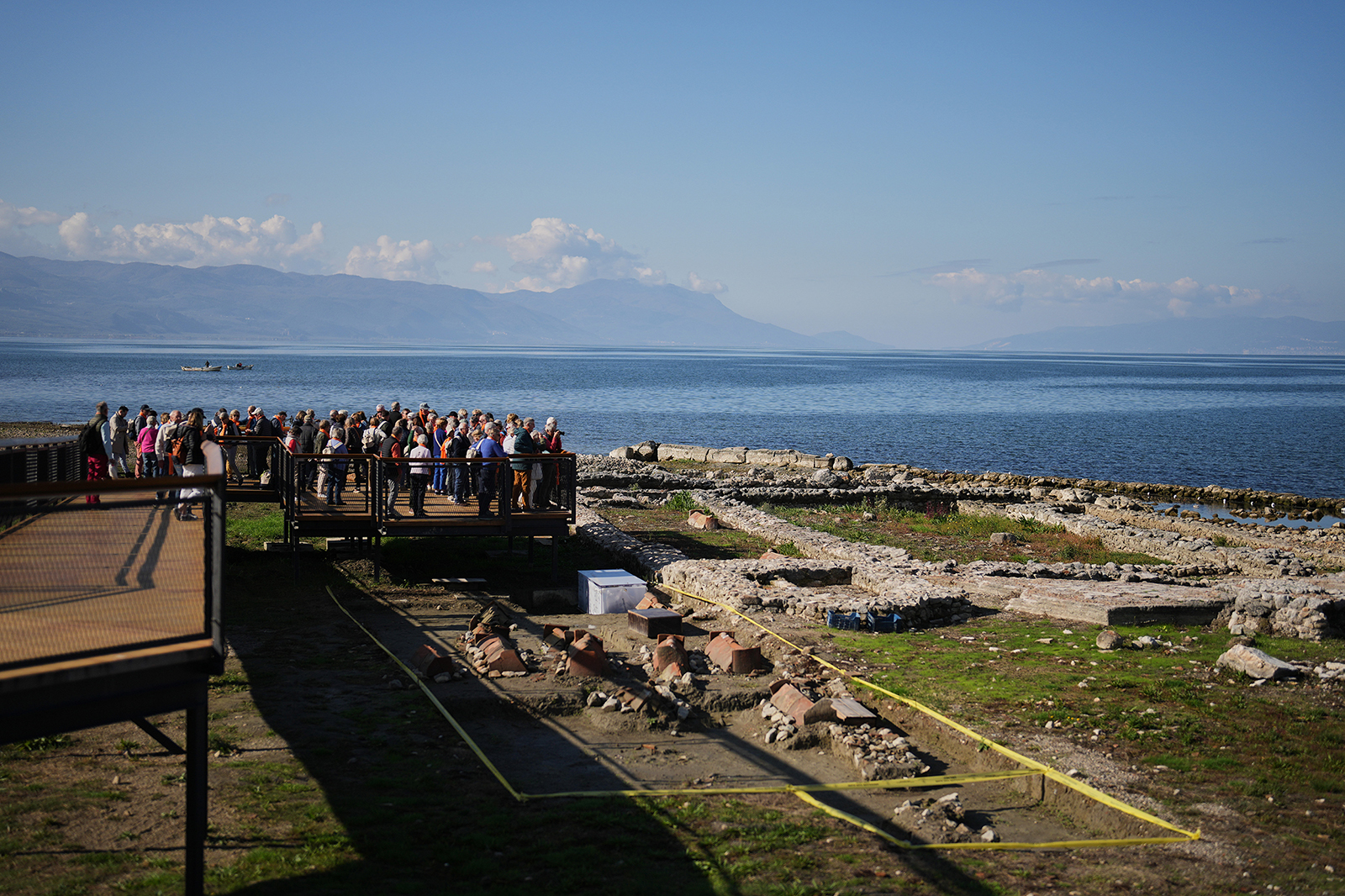
French pilgrims look at archaeological excavations of the ancient Byzantine-era Christian Saint Neophytos Basilica, in İznik, also known by its ancient name Nicaea, northwestern Turkey, Thursday, Nov. 13, 2025, ahead of the visit of Pope Leo XIV to mark the 1,700th anniversary of the First Council of Nicaea. (AP Photo/Francisco Seco)
David I. Klein
November 14, 2025
ISTANBUL (RNS) — Pope Leo XIV is set to touch down in Istanbul at the end of November before visiting Lebanon for his first international trip since his papal election in May. The pontiff will visit eight cities from Nov. 27 to Dec. 2, sitting down with both political and faith leaders and leading Masses for Catholic locals and pilgrims.
Though Leo will first meet with Turkish President Recep Tayyip Erdoğan and various religious leaders, one of the most significant aspects of his visit will be joint ceremonies with Bartholomew I, ecumenical patriarch of Constantinople and one of Eastern Orthodox Christianity’s chief spiritual leaders.
The two together are slated to visit the Turkish city of İznik, once Greek-speaking Nicaea that 1,700 years ago played host to the first ecumenical council. There, early church fathers determined some of Christianity’s most basic doctrines, such as setting the date of Easter, explaining the trinity and clarifying the divinity of Jesus. It was agreed that Jesus was “God from God, light from light, true God from true God, begotten not made, of one s ubstance with the Father,” as reads the Nicene Creed, which many churches hold to be the fundamental declaration of Christian faith.
The anniversary of Nicaea isn’t just a historical moment. It’s a symbol around which ecumenically minded leaders in both Orthodox and Catholic churches have continued to work on bridging the centuries-old divisions between the churches.
RELATED: On anniversary of the first Council of Nicaea, Christian leaders seek to return to ecumenism
The pope and patriarch standing together at Nicaea has been in the works for some time. Luca Refatti, an Istanbul-based Catholic priest, told RNS the trip was planned by Pope Francis but delayed by his sickness and canceled by his death earlier this year. That it was chosen for Pope Leo’s first apostolic international trip is a signal he will follow in Francis’ footsteps in bridging relations with other churches, Refatti said.
“To celebrate this moment is important because it is reminding us of our unity,” said Refatti, who stressed that the First Council of Nicaea — which occurred only a few years after Christianity was legalized in the Roman Empire — predates divisions of most modern churches. “Nicaea is important because it is basically the symbol, the creed, where every Christian is united. Now, Orthodox, Catholics, Syriacs, Armenians, everybody recognizes and accepts the creed of Nicaea.”

