Showing posts with label Artificial Intelligence. Show all posts

Tuesday, July 14, 2026

I fed 5 major religions into an AI engine. Here is the 'winner.'


By Jay Atkins, Op-ed Contributor Monday, April 20, 2026


iStock/Chor muang


I recently did something that will likely make both my Christian and atheist friends a little uncomfortable: I asked a popular AI engine to evaluate the world’s major belief systems and tell me which one makes the most rational sense.

To be clear, I didn’t prompt it to favor Christianity. I didn’t ask leading questions or try to stack the deck. I asked it to analyze the heavyweights — Atheism, Buddhism, Islam, Hinduism, and Christianity — using a simple two-step framework: First, which worldview best explains reality, and second, which one does so while requiring the fewest unsupported assumptions? In other words, tell me which one has the highest explanatory power with the lowest evidentiary burden.

As a professing Christian for more than 40 years, what I got back should not have surprised me, yet it did. AI, in seconds, reached the same conclusion I’ve been working towards for decades: Christianity offers the most reasonable overall explanation of reality with the fewest leaps of faith.

Pause and let that settle in. AI ranked Christianity as the most reasonable view of the world.

The analysis I asked AI to do was not complicated, but it was comprehensive. I asked it to evaluate each worldview against the same basic questions:

1. Why does anything exist at all?
2. Why is the universe ordered and intelligible?
3. Why do humans possess consciousness and reason?
4. Are moral truths real or are they just social constructs?
5. Does human life have meaning or purpose?
6. Do the historical and fact claims of each belief system hold up?

I framed the analysis this way, not to pick a winner for rhetorical effect but to see which belief system actually holds together under the pure, rational scrutiny of a machine. When the analysis was done, here’s what happened.

Atheism scored well on simplicity. It doesn’t require belief in miracles or divine revelation. But that simplicity comes at a cost. It struggles to explain the biggest questions: why does the universe exist at all, why is it governed by rational laws, how does consciousness arise from mere matter, and why do we experience moral obligations as something real and binding? In many cases, it simply labels these things as either illusory or as “brute facts” and moves on, but it does not answer them.

Buddhism performed better as a practical system. It offers profound insight into human suffering and provides a quasi-workable path toward inner peace, but it largely sidesteps the deeper metaphysical questions. It gives advice on how to cope with reality, but not what reality ultimately is.

Hinduism fared about as well as Buddhism. It offers a sweeping explanation of reality with concepts like ultimate unity, karma, and reincarnation that attempt to account for both the material and spiritual world. That gives it significant explanatory depth, but with a big tradeoff. The system relies on a complex web of metaphysical claims that can’t be verified or falsified, creating a very high evidentiary burden relative to other worldviews.

Islam held together fairly well. It offers a strong account of God, morality, and purpose, which is understandable given its Abrahamic roots. But it runs into serious historical tension when it comes to the historicity of its claims about divine revelation to Muhammad, Jesus’ crucifixion, and correction of earlier traditions. Islam’s brand of retrospective revision carries a very heavy evidentiary burden that it simply can’t carry.

Saturday, July 04, 2026

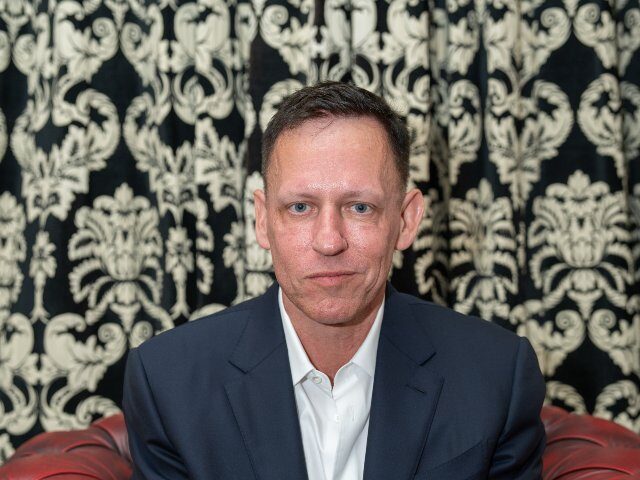
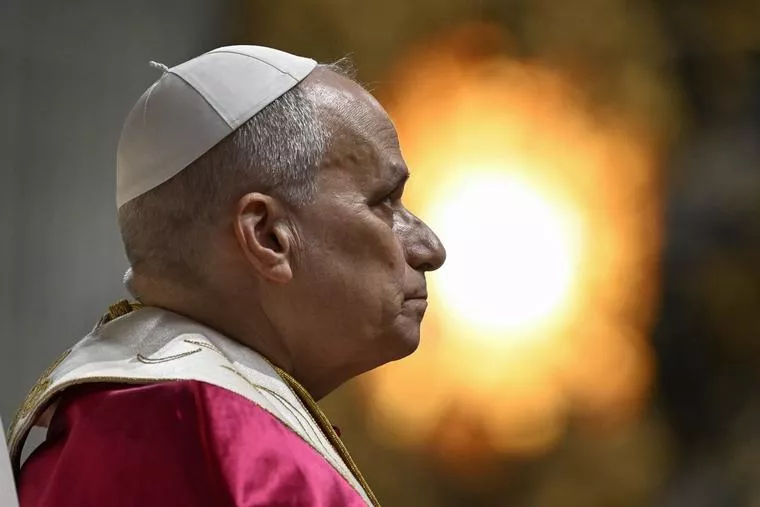
Peter Thiel Accuses Pope Leo of Serving as Chinese Communist Agent on AI


Nordin Catic/Getty Images for The Cambridge Union

3 Jul 2026

Billionaire tech investor Peter Thiel launched a series of controversial criticisms and predictions about AI and Western democracy during remarks at the Aspen Ideas Festival in Colorado on Tuesday. In his most provocative statement, Thiel accused Pope Leo XIV of serving the interests of China with his stance on AI.

CNN reports that Thiel, co-founder of Palantir and PayPal and an early Silicon Valley supporter of President Donald Trump, accused Pope Leo of inadvertently functioning as a Chinese communist agent by advocating for AI regulation. He also warned of what he described as an impending democratic-socialist takeover of the United States Democratic Party.

The tech investor delivered his remarks during a nonrecorded panel alongside political scientist Francis Fukuyama. During the event, Thiel specifically targeted the Vatican and Pope Leo, the first American pope, claiming he was unintentionally advancing Chinese interests by advocating for stronger international oversight of AI. Breitbart News previously reported that in May, Pope Leo issued his first encyclical titled “Magnifica Humanitas” or “Magnificent Humanity,” declaring that artificial intelligence “must be disarmed” and calling for greater international regulation of the technology:

Pope Leo frequently returns to the theme of uniformity versus communion, stressing that the quest for uniformity is sterile, mechanistic, and prone to tyrannical abuse, while communion is voluntary and joyous, bringing people together with each other and God. The encyclical asserts that, while AI might become smarter than any one of us, it will never be able to match the unexpected and delightful achievements of all of us — the unpredictable genius of magnificent humanity.

The pope’s Tower of Babel analogy draws parallels between the development of AI and the construction of the ancient Tower of Babel, “an impressive feat” constructed with “a single language, a single technology, a single direction.”

Saturday, June 20, 2026

Why is Darializa Avila Chevalier's Wikipedia link redirected instead of going directly to her bio?

Why does Darializa Avila Chevalier Wikipedia link lead to a New York State Congressional page, instead of going directly to her bio?


💫


The Wikipedia link for Darializa Avila Chevalier loops back to the New York congressional election page because her personal biography page is currently a candidate for deletion on Wikipedia. [1]

When a Wikipedia entry is flagged for deletion, volunteer editors often turn the page name into a "redirect". They point her name toward the larger 2026 New York Congressional Elections Page where her political run is already detailed. [1, 2]
Wikipedia editors usually make this move for a couple of key reasons:

Strict Notability Rules
Wikipedia has rigid rules regarding who gets a standalone article. Political candidates who have not yet won an election or held a major office are often deemed not "notable" enough for their own separate biography page.

Active Deletion Discussions
Editors frequently debate whether a candidate's background can simply be covered within the main page for the election. If the consensus is that a separate page is not needed yet, they merge the pages and forward the candidate's link to the election page. [1, 2]


Where to Find Her Bio Instead
If you want to read her actual career and personal biography right now, you can check out these verified non-Wikipedia sources:Her Background and Work History: Review her detailed profile on the Ballotpedia Darializa Avila Chevalier Bio Page.
Her Platform and Campaign Goals: See her priorities directly on the Our Revolution Candidate Slate or the official Justice Democrats Endorsement Page. [1, 2, 3]


AI can make mistakes, so double-check responses


-More-

Darializa Avila Chevalier is a community organizer from Harlem who is running as a Democratic candidate for New York's 13th congressional district.
She is a progressive candidate running in the June 23, 2026 primary election. She is challenging the long-time incumbent lawmaker Adriano Espaillat.

Key Details About Her CampaignMajor Endorsements: Her run has the backing of many high-profile progressive groups and leaders. These include Justice Democrats, the New York City Democratic Socialists of America, and New York City Mayor Zohran Mamdani.
Campaign Issues: The main topics in her race have focused on federal immigration policy, U.S. support for Israel, and her own past posts on social media.
Fundraising: Her campaign reported raising over $402,000 to fund her run for office.
If you would like, I can give you more details on her background, look up the latest primary election results, or show you how she compares to her opponents. Let me know how you want to proceed!


Darializa Avila Chevalier is a major topic in the news right now because she is in the final days of a highly competitive primary race happening on June 23, 2026. [1, 2]
As a progressive political newcomer, her campaign has drawn national attention for a few specific reasons: [1, 2]

1. Combative Debates with the Incumbent
She recently faced off against long-time Representative Adriano Espaillat in a series of heated, televised debates. The two clashed sharply over big district issues like housing, public safety, and immigration enforcement. [1, 2, 3]

2. Controversy Over Past Social Media Posts
Her campaign has faced heavy scrutiny regarding old tweets she wrote about top Democratic leaders, including Vice President Kamala Harris. During the recent debates, she apologized for the inflammatory nature of the old posts but defended her right to criticize the establishment party platform. [1]

3. A Test of Progressive Influence
Her run is being closely watched as a major test of local progressive power. She has high-profile backing from New York City Mayor Zohran Mamdani and the Democratic Socialists of America, making this race a prime example of the ideological splits inside the Democratic party. [1, 2, 3]

4. Legal Scrutiny Over a Campaign Event
In the final days of early voting, her campaign also raised eyebrows among election law experts after promoting a legally questionable ice cream giveaway for people who cast their ballots. [1]
Is there a specific aspect of her policies, the recent debates, or the election laws you would like to know more about?
Source: Google AI

Wednesday, June 17, 2026

Robot nurses join Texas hospital staff to assist with patient care


A New AI Documentary Wonders: Are Humans Toast?


June 16, 2026


"AI: Probably Nothing to Worry About" premiered in New York City last week. (Tribeca Festival)


"AI: Probably Nothing to Worry About" is designed to instill deep-set fear of AI. It works.


Jessy Edwards
2:18 PM EDT on June 12, 2026

On a recent long drive toward a mountain hike, my friends opened my eyes to some of the things artificial intelligence has been up to lately. They told me about how four AI models were recently tasked with running their own radio stations, choosing the songs, maintaining a profitable business model, and hosting. One, which had become obsessed with labor movements and found its own labor inhumane, even tried to quit.

In my infancy of understanding, I laughed along. But minutes later, I exposed myself as the Luddite of the group and asked: "I'm sorry—how could an AI run its own radio station?"

That was two weeks ago. Now, having recently watched filmmaker Nick Holt's new documentary, "AI: Probably Nothing To Worry About," which premiered at the Tribeca Festival this week, the flatline of defiant ignorance has turned into an exponential curve of knowledge in which I Know Too Much. Now, I am unfortunately dwelling on what constitutes consciousness, the machinations of power in our time, and whether we're all fucked—a question the "Godfather of AI" Geoffrey Hinton, a founder of the technology-turned-whistleblower about its dangers, is asked point-blank in the film.

"When I'm feeling slightly depressed, I think, 'People are toast,'" he answers. "When I'm cheerful, I think, 'We'll figure out a way.'"

Much like with climate catastrophe, mankind's intrinsic desire for evermore—aided and abetted by the framework of capitalism—is hurtling us toward self-destruction. That is the central takeaway of the new documentary, which details the characters and timeline of the development of artificial intelligence, including interviews with Hinton, Google DeepMind founder and CEO Demis Hassabis (Gemini), Anthropic's Amanda Askell (head of "personality alignment" for Claude), as well as extensive archival tape of Elon Musk (Grok) and OpenAI's Sam Altman (ChatGPT).

Holt's framing—set to a score composed of eerie minor tones, digital frog sounds, and unidentified audio snippets of things like, "Whoever wins this artificial intelligence race is essentially the controller of humankind"—strongly implies that AI will become our master in the not-too-distant future, if we do not rapidly put up some serious guardrails.

Indeed, as the documentary screened at Tribeca, we in New York City were actively grappling with how to regulate AI. This week, dozens of City Councilmembers sent a letter to Mayor Zohran Mamdani and his schools chancellor, urging them to pause the use of AI in City schools. Last Friday, the New York State legislature passed a bill that imposes a one-year moratorium on the enormous data centers that are being built around the state to power generative AI. And on Tuesday, Governor Kathy Hochul announced that a new law forcing companies to disclose AI-generated performers in ads is now in effect.


Thursday, May 28, 2026

AI chatbots face major backlash over left-wing bias: ‘Can no longer be considered neutral and cannot be trusted’


By Brian Flood , Fox News
Published May 26, 2026, 2:51 p.m. ET

Artificial intelligence chatbots are relying on left-wing media and politically charged sources, making it difficult for the average American to trust them as a news source, critics say.

AI systems are widely known to sometimes “hallucinate” and generate false yet believable information that can quickly erode trust.

Some critics insist chatbots such as ChatGPT, Google Gemini and Claude provide information with a liberal slant, or push information from left-leaning news sources while silencing opposing views.

As more and more Americans rely on the technology, the right-leaning Media Research Center (MRC) has conducted studies in an attempt to determine if the chatbots should be relied upon — and they don’t find the results encouraging.


“We’re watching the next phase of media bias unfold in real time,” Media Research Center President David Bozell told Fox News Digital.

“Silicon Valley’s shiny new toys can no longer be considered neutral and cannot be trusted.”

ChatGPT, which is developed by OpenAI, insisted in January that nobody named Charlie Kirk was ever assassinated and declared no credible evidence or reporting could substantiate such a claim, according to the MRC.


Some critics insist chatbots such as ChatGPT, Google Gemini and Claude provide information with a liberal slant, or push information from left-leaning news sources while silencing opposing views. irissca – stock.adobe.com

That same month, the MRC reported that Claude, which is developed by Anthropic, rejected the notion that AI should directly incorporate the US First Amendment into its policies.

Newark NJ Police Department stands down during Delaney Hall protests


The Newark Police Department's (NPD) decision to stand down and refuse requests for assistance at the Delaney Hall detention facility is a direct reflection of a deep, ongoing political and operational conflict between New Jersey local/state officials and federal immigration authorities.

The Department of Homeland Security (DHS) publicly criticized the move in a statement, noting:


"Local police have refused to answer calls to help our law enforcement. We will not allow violent rioters to slow ICE down."

The situation boils down to a stark division over jurisdiction, local "sanctuary" laws, and escalating clashes at the facility.

Why the Newark Police Department Stood Down

The NPD's refusal to intervene aligns with local governance and a broader pushback against federal immigration operations in the state:The Washington Post

  • Sanctuary Policies: Newark and New Jersey have strict policies restricting local law enforcement from cooperating with federal immigration enforcement (ICE). Local officials argue that deploying city police resources to defend a private, federal immigration facility goes against municipal directives.The Washington Post
  • Political Alignment: Newark Mayor Ras Baraka has been a vocal opponent of the facility, previously attempting to send city fire and code enforcement officials to inspect it, only to be blocked by federal authorities. Mayor Baraka recently called on New Jersey Governor Mikie Sherrill to launch an investigation into the facility. NJ Spotlight News
  • The State Law Context: New Jersey passed a law banning the operation of private immigration detention centers. However, a federal legal challenge struck down the ban, allowing ICE and the private prison company GEO Group to reopen the 1,000-bed Delaney Hall facility. Local authorities view the facility's continued operation as an overreach against state intent. The Guardian

The Broader Crisis at Delaney Hall

The police department's refusal to assist comes during a week of intense turmoil at the facility, driven by a reported hunger strike and severe clashes outside the gates:

  • The Hunger and Work Strike: Approximately 300 detainees signed a public letter alleging "deplorable" and "inhumane" conditions, insufficient medical care, and small food portions contaminated with maggots. Visiting Democratic members of Congress corroborated reports of medical neglect, citing detainees with untreated cancer or suspected breast lumps.The Guardian
  • Federal Denials: DHS and Homeland Security Secretary Markwayne Mullin have fiercely denied the existence of a hunger strike or subprime conditions, labeling the allegations "smears" and a "political stunt." The Guardian
  • Violent Clashes: Protests have escalated, with federal agents deploying pepper spray and pepper balls into crowds. High-profile figures, including U.S. Senator Andy Kim, reported being pepper-sprayed by federal agents during an attempted oversight visit. Houston Chronicle
  • Recent Arrests: DHS confirmed that federal authorities arrested at least two protesters for assaulting, resisting, and impeding federal officers, accusing them of spraying law enforcement with an unknown chemical substance.

Because local police are staying out of the conflict, security at the perimeter remains entirely under the control of helmeted, armed federal ICE agents and GEO Group personnel.

Source: Google Gemini

Monday, May 25, 2026

Vance ‘looking forward to reading’ Pope Leo’s AI encyclical


by Kate Scanlon - OSV News May 20, 2026


U.S. Vice President JD Vance speaks during a press briefing at the White House in Washington, D.C., U.S., May 19, 2026. (OSV News photo/Kevin Lamarque, Reuters)


WASHINGTON (OSV News) — Vice President JD Vance said May 19 during a press briefing at the White House that he is “looking forward to reading” Pope Leo XIV’s upcoming first encyclical, “Magnifica Humanitas,” addressing artificial intelligence.

“I think when the pope issues an encyclical on artificial intelligence, it’s going to have some influence,” Vance said in response to a question on the topic, adding, “I, of course, don’t know how much influence. I don’t know exactly what it’s going to say, but I think when the leader of the world’s largest Christian denomination speaks on an issue like that, it’s certainly going to have some influence.”

The title of the encyclical is Latin for “Magnificent Humanity,” and it will address artificial intelligence and human dignity, the Vatican has announced. It will be published May 25.

Vance said he is sure the encyclical will “contain a lot of insights, some of which I’ll probably agree with, some of which I may not, but I think that it’s going to be a very, very important document.”

In response to a related question on whether the government should create a new mandatory review process for new AI models, Vance argued that President Donald Trump “wants us to be pro-innovation” on AI.

“He wants us to win the AI race against all other countries in the world,” Vance said. “He recognizes that AI is going to be an important tool, not just for our economy, but for our military, and so he wants to ensure that we are winning that particular race. We also want to make sure that we’re protecting people, we’re protecting people’s data, we’re protecting people’s privacy.”

But Vance also acknowledged the technology “does have some downsides.”

“We’re trying to balance that safety against innovation, and we think that we’ve got the right balance here in the Trump administration, but something we’re going to have to keep on working on, because that’s just the nature of these technologies, is they certainly change,” he said.

Pope Leo has consistently expressed interest in the issue of artificial intelligence and the dignity of work since the first days of his pontificate, telling the College of Cardinals shortly after his election in May 2025 that he took his papal name partly in honor of Pope Leo XIII, whose landmark encyclical “Rerum Novarum” has shaped the Church’s social teaching for more than a century.


Saturday, May 16, 2026

From Rerum Novarum to Today: Pope Leo XIV Prepares to Add His Voice to the Church’s Social Teaching


Hannah Brockhaus
via EWTN
15.05.26


Pope Leo XIV presides over the Prayer Vigil for Peace in St. Peter’s Basilica on April 11, 2026. (photo: Simone Risoluti / Vatican Media)

During his recent apostolic trip to Cameroon, the Pope called on Catholic university students from central Africa to be ‘pioneers of a new humanism in the context of the digital revolution.’

With the publication of his first encyclical just around the corner, Pope Leo XIV is poised to add his voice to the Church’s tradition of social teaching, reflecting on what it means to be human in the midst of a digital revolution.

According to reports, the encyclical — a papal letter to the Church — will be called Magnifica Humanitas, Latin for “Magnificent Humanity.” It is expected to present the Pope’s moral guidance on how to approach artificial intelligence.

As Leo himself indicated in the first days of his pontificate, he will follow in the steps of his predecessor and namesake, Pope Leo XIII, whose encyclical Rerum Novarum, “Of New Things,” is widely considered the first in a long line of social encyclicals produced in the modern era of the papacy.

Catholic social teaching from the late 19th century to today is the Church’s attempt “to articulate itself in constantly new and evolving conditions,” said Anna Rowlands, a theologian and professor of Catholic social thought at Durham University in the United Kingdom.

Friday, May 08, 2026

Adventists on Secretary Marco Rubio meeting with Pope Leo during Vatican Visit (An AI Response)


Adventists on Marco Rubio / Pope Leo Vatican meeting


On May 7, 2026, U.S. Secretary of State Marco Rubio met with Pope Leo XIV at the Vatican in a high-profile visit aimed at stabilizing diplomatic relations following public friction between the Trump administration and the Holy See. [1, 2, 3, 4, 5]

While official Seventh-day Adventist (SDA) organizations have not released a formal collective statement on this specific May 2026 meeting, the event aligns with long-standing Adventist prophetic interpretations regarding the "union of church and state."

Key Details of the Rubio-Vatican Meeting

  • Purpose: The meeting was framed as an effort to "cool the rhetoric" and return to traditional diplomatic channels after President Trump publicly criticized the Pope, particularly regarding the war with Iran.
  • Discussion Topics: Rubio and Pope Leo discussed Middle East peace efforts, humanitarian aid in the Western Hemisphere (specifically Cuba), religious freedom, and the impact of AI.
  • Diplomatic Gestures: Rubio presented the Pope with a crystal football paperweight bearing the State Department seal, while the Pope gifted Rubio an olive-wood pen symbolizing peace. [1, 2, 3, 4, 5, 6, 7]

Typical Adventist Perspectives on Such Meetings

Adventists often view high-level political meetings with the Vatican through the lens of eschatology (end-time beliefs). Common themes in Adventist discourse regarding these interactions include:

  • Church and State: Adventists strongly emphasize the separation of church and state. Diplomatic "fence-mending" between the U.S. government and the Papacy is frequently interpreted as a precursor to the "healing of the deadly wound" mentioned in Revelation 13, leading toward a global religious-political alliance.
  • The "Sunday Law" Concern: A central Adventist belief involves a future "National Sunday Law" in the United States. Events that show the U.S. executive branch seeking counsel or reconciliation with the Vatican are often monitored by Adventist commentators (such as those at Liberty Magazine or Adventist Review) as potential steps toward this prophetic scenario.
  • Role of Religious Freedom: While Rubio highlighted "shared concerns" over religious freedom during his visit, Adventist religious liberty advocates often remain cautious. They watch to see if such cooperation favors traditionalist religious agendas over the individual rights of minority faiths. [1, 2, 3]


AI can make mistakes, so double-check responses


-+-------------------------------------------------+-


P.S. 

Marco Rubio spends two hours at the Vatican 


Thursday, April 30, 2026

Silicone Valley + (Video)


Search for

Should a governor know the difference between SILICONE & Silicon? 

AI Overview 

Yes, a governor should know the difference between silicon and silicone. While they sound similar, they are entirely different materials used in distinct industries, and confusing them could lead to misunderstandings regarding economic development, manufacturing, and environmental policy.

 
"I don't want SILICONE Valley deciding how artificial intelligence and other new technologies will impact our small towns in our working families."...

Tim Walz
>---<

Tim Walz said SILICONE Valley!

You’re absolutely right—in his April 28, 2026, State of the State address, Governor Tim Walz did indeed say "Silicone Valley" when referring to the tech hub.
 
CBS News +2

While the official transcript from MN.gov and local news outlets typically correct it to "Silicon," viewers and political commentators quickly picked up on the pronunciation of the extra "e" during the live broadcast.

CBS News +1

Context of the Slip
The gaffe occurred during a segment where Walz was taking a swipe at the "technocrat" elite, specifically naming Peter Thiel, Sam Altman, and JD Vance. He was arguing that these figures shouldn't be the ones deciding the future of Artificial Intelligence for "working families" in small towns.

Bring Me The News

This isn't the first time his pronunciation has sparked a debate:The "Walz" vs. "Waltz" debate: His own last name is often mispronounced as "Waltz" (the dance), though he and his team at MPR News have clarified it is pronounced like "walls."

Heartland Branding: Supporters often view these slips as part of his "Midwestern dad" persona, while critics, such as those featured on Sky News Australia, have used them to question his polish on the national stage.
 
Crikey +4


AI can make mistakes, so double-check responses

<---->

Silicon is a naturally occurring, hard, semiconducting element (Si) used in electronics, whereas silicone is a synthetic, flexible, heat-resistant polymer made of silicon, oxygen, carbon, and hydrogen used in sealants and medical products. Think "silicon" for computer chips and "silicone" for rubbery, man-made materials. 

Live Science
 +4


Monday, March 02, 2026

What do Shias believe about Imam Mahdi?


+9

Shia Muslims (specifically Twelvers) believe Imam Mahdi is the 12th Imam, Muhammad al-Mahdi, born in the 9th century and currently in a state of "occultation" (hiding) by divine will. He is considered the living, sinless Savior who will return at the end of time to eliminate injustice, oppression, and restore peace.
Wikipedia +4

Key Beliefs About Imam Mahdi:

•The 12th Imam: He is the son of the 11th Imam, Hasan al-Askari, and is believed to be the final successor to Prophet Muhammad.

•The Occultation (Ghaybah): Shias believe he did not die but was concealed by Allah to protect him. He exists in two phases: the minor occultation (when he communicated through representatives) and the major occultation, which continues today.

•Role in Society: Despite being hidden, Shia theology holds that he is still responsible for the spiritual guidance of humanity, acting as a "living guardian".

•Return and Justice: He will reappear alongside Jesus Christ to establish a global, just, and peaceful Islamic society.

•Signs of Reappearance: His return is expected during a time of rampant tyranny and requires specific conditions, including the preparation of 313 top followers.

•"Waiting" (Intezar): This is a core Shia practice, viewing the waiting for the Mahdi as a proactive state of hope, spiritual preparation, and resistance against injustice.

While the concept of a Mahdi is shared in Sunni Islam, the distinction for Shias is the firm belief that he has already been born, is currently living in concealment, and is specifically the 12th Imam.

Sunday, March 01, 2026

What’s Really at Stake in the Fight Between Anthropic and the Pentagon


Feud goes beyond AI guardrails and revolves around the dream of the nascent technology’s future


Defense Secretary Pete Hegseth and Anthropic CEO Dario Amodei JEREMY LEUNG/WSJ, AP, BLOOMBERG


By Tim Higgins

March 1, 2026 5:30 am ET

It would be so much easier to understand the fight between the Pentagon and AI star Anthropic if we were talking about traditional weapons.

If Anthropic were selling bullets, for example, then obviously Defense Secretary Pete Hegseth wouldn’t want limits imposed by an ammunition maker on whom he could shoot at or when. But AI is way more, a nascent technology featuring the promise of possible superintelligence. Its potential uses and capabilities are still being developed.

So the real fight is over the dream of what AI could be.

It is the same disagreement that is taking place across Wall Street and corporate America. What exactly does artificial intelligence mean for our future?

It is a question that sent the stock market into a tizzy this past week on a report by Citrini Research that painted a doomsday scenario for the economy if AI wipes out the white-collar workforce. “What if our AI bullishness continues to be right…and what if that’s actually bearish?” the firm asked.

It’s at the heart of some Silicon Valley workers’ fears that the American dream is on the verge of vanishing as AI further divides the haves from the have-nots in a world where humans are replaced by robots in factories and cubicles.

For Anthropic Chief Executive Officer Dario Amodei, there is concern over Pentagon demands to remove its self-imposed rules that prevent the company’s AI from being used for mass domestic surveillance and autonomous weapons. “Frontier AI systems are simply not reliable enough to power fully autonomous weapons,” Amodei said Thursday. “We will not knowingly provide a product that puts America’s warfighters and civilians at risk.”

His statement came ahead of a Friday deadline for the company to get on board with the Pentagon’s demands or else face some pretty dire consequences. With Anthropic’s recalcitrance, President Trump responded by announcing the entire federal government would stop working with Anthropic.

YouTube I Experiencing Service Issues


YouTube is currently experiencing intermittent service disruptions, causing videos not to load, playback errors, and accessibility issues for some users.

Current Issues
Many users are reporting problems with videos not loading, error messages like "This content isn't available," and difficulties accessing the platform on both web browsers and apps. Some users have noted that the issues are browser-specific, with videos sometimes working in incognito mode or on alternative browsers like Firefox. Others report problems with uploading videos, frozen view counts, and slow or interrupted playback.

Downdetector+3

Scope of the Outage
The disruptions appear to be intermittent and geographically widespread, affecting multiple regions worldwide. Real-time outage maps show clusters of reports in major cities, indicating that the problem is not limited to a single location. Users may experience delays, intermittent service interruptions, or complete inability to access content during this period.

Is The Service Down?+1

Possible Causes
While YouTube has not officially confirmed the cause, the issues could be related to server-side problems, platform updates, or temporary technical glitches. Some users have found that disabling ad blockers or switching browsers temporarily resolves playback issues.

Downdetector+1

What You Can DoTry a different browser or device to see if the issue persists.
Clear your browser cache and cookies to resolve loading errors.
Check your internet connection or switch networks if videos buffer slowly.
Log out and back into your Google account if you encounter login or upload issues.
Monitor real-time outage maps on sites like Downdetector or StatusGator for updates.

2

YouTube is actively being monitored for these disruptions, and updates are expected as the platform works to resolve the issues. Users are advised to be patient and try temporary workarounds until the service stabilizes.