Showing posts with label WALL ST. Show all posts

Thursday, June 11, 2020

Dow plunges more than 1,800 points


Dow plunges more than 1,800 points as rising COVID-19 cases roil Wall Street 


By Sylvan Lane - 06/11/20 04:07 PM EDT


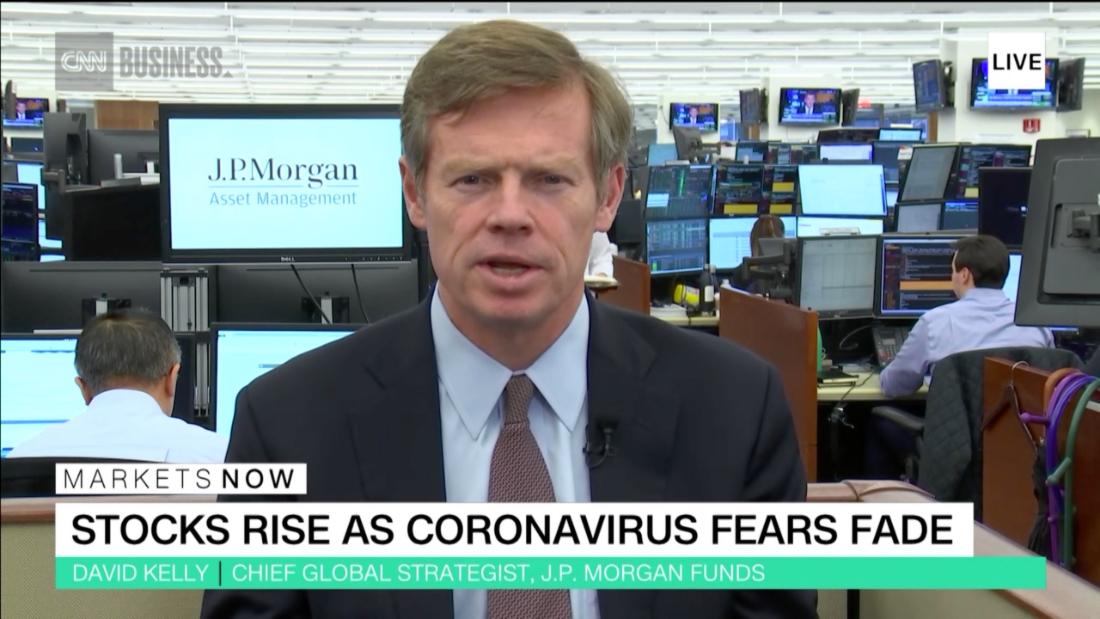
Stocks plummeted Thursday as the emergence of new coronavirus hotspots and a caution from the Federal Reserve chairman shook Wall Street after months of steady gains.

The Dow Jones Industrial Average closed with a loss of 1,861 points, plunging 6.9 percent for its worst day of losses since March. The S&P 500 index closed with a loss of 5.9 percent, and the Nasdaq composite sunk 5.3 percent on the day.

All three major U.S. stock indexes closed with their steepest single-day losses since crashing in March amid the beginning of lockdowns imposed to slow the spread of COVID-19. Thursday’s losses come after more than two months of steady recovery toward the record highs seen before the pandemic derailed the economy.

Despite the loss of more than 21 million jobs and the deaths of more than 110,000 Americans due to the coronavirus, investors had gradually upped their bets on a quick economic recovery through April and May as states began loosening business closures and travel restrictions.

The surprise addition of 2.5 million jobs in May, according to the Labor Department, also fueled hopes for a quicker than expected rebound from a recession of unprecedented scale and speed.

But Thursday’s abrupt reversal comes as states across the U.S. see spiking COVID-19 cases and diminishing hospital capacity to handle a new wave of infections.

Week-over-week case counts are rising in half of all U.S. states, and only 16 states plus the District of Columbia have seen their total case counts decline for two consecutive weeks.

North Carolina, California, Mississippi and Arkansas are all facing record levels of hospitalizations, and the virus appears to be quickly spreading in Houston, Phoenix, South Carolina and Missouri.

Some market experts also attribute Thursday’s losses to Fed Chairman Jerome Powell’s Wednesday prediction of a “long road” to recovery.

During a Wednesday press conference, Powell said that while the U.S. may see significant job growth in coming months as people return to their jobs," the country is "still going to face, probably, an extended period where it will be difficult for many people to find work."

“What we’re trying to do is create an environment in which they have the best chance either to go back to their old job or to get a new job,” he continued.

President Trump, who frequently lashes out at the Fed when markets turn south, blasted the Fed for underestimating how quickly the U.S. economy could recover and how soon a COVID-19 vaccine would be available.

“The Federal Reserve is wrong so often. I see the numbers also, and do MUCH better than they do. We will have a very good Third Quarter, a great Fourth Quarter, and one of our best ever years in 2021. We will also soon have a Vaccine & Therapeutics/Cure. That’s my opinion. WATCH!" Trump tweeted.

On The Money: Dow plunges more than 1,800 points as rising COVID-19...
Stocks plunge amid concerns over rising coronavirus cases

Trump's top economic advisor Larry Kudlow also criticized Powell, urging the Fed chief to ease up on the dour forecasts

"I do think Mr. Powell could lighten up a little when he has these press offerings. You know, a smile now and then, a little bit of optimism," Kudlow said on Fox Business Network.

"I'll talk with him and we'll have some media training at some point.


Friday, February 21, 2020

Markets were totally calm. Then stocks fell off a cliff


By Anneken Tappe, CNN Business

Updated 4:34 PM EST, Thu February 20, 2020


New York(CNN Business)It was shaping up to be a quiet day on Wall Street. Then around midday, stocks sold off sharply and investors scrambled. With no obvious catalyst triggering the selloff, worries about the coronavirus outbreak seemed to be the obvious suspect.

At its worst, the Dow (INDU) was off by 388 points, with all three major stock indexes sharply in the red. The drop in stocks followed a dip in Treasury bond yields, which move opposite to prices, and implied that investor appetite for safe haven bonds was high.

Still, investors scrambled to make sense of it. The dramatic selloff only lasted a short while and was followed by a swift rebound. Stocks still closed in the red, however, with the Dow ending 0.4%, or 128 points, lower. The S&P 500 (SPX) fell 0.4%, and the Nasdaq Composite (COMP) finished down 0.7%.

In recent days, investor confidence built up amid hopes that new cases of the virus were slowing down. But Thursday South Korea confirmed new cases of the virus, hammering home that the outbreak is not over.

The new cases "are leading to concerns that the global supply chain will be impacted in a material way," said Chris Zaccarelli, chief investment officer for Independent Advisor Alliance, in emailed comments.

This could be seen in price action in tech and semiconductor stocks, which led losses in the S&P 500. Shares of Advanced Micro Devices (AMD), for example, closed down nearly 3%.

Tech giant Apple (AAPL) warned investors earlier this week that it won't meet its revenue guidance for the first quarter because of the virus outbreak.

"We expect more zigging and zagging," said Stephen Lee, founding principal at Logan Capital Management. But he added that the domestic economy is still fine. Lee also noted that US companies might be in a better position to deal with manufacturing shutdowns in China related to the coronavirus because many blue chip firms were already moving factories to other locations to avoid tariffs.

While worries about the outbreak's fallout weighed on the technology sector, comments made by Federal Reserve Vice Chairman Richard Clarida didn't make things better.

Clarida told CNBC in an interview earlier Thursday he doesn't think the market expects an interest rate cut this year, although the CME FedWatch tool suggests otherwise. According to the data, market expectations are leaning towards another rate cut this summer this year.

Lower interest rates are good for stocks as they make it cheaper for companies to borrow money or refinance their debt.

--Paul La Monica contributed to this report.


Wednesday, July 08, 2015

Dow ends down 261 as NYSE shutdown stuns markets


David Carrig and Adam Shell, USA TODAY4:48 p.m. EDT July 8, 2015


July 8 -- The NYSE says it experienced technical issues that affected symbols. Bloomberg's Julie Hyman reports on "Bloomberg Markets." Bloomberg


(Photo: Spencer Platt, Getty Images)


Losses in U.S. stocks following a global sell-off Wednesday accelerated when trading at the New York Stock Exchange suddenly halted for unknown technical reasons.

The Dow Jones industrial average was already off 177 points when at 11:32 a.m. ET trading in all securities on the NYSE stopped. Trading on the exchange resumed about 3:10 p.m.

Well into the 3½-hour shutdown came the release of the latest Fed minutes, which gave investors another opportunity to second-guess when the central bank will raise rates.

The Dow ended down 261 points, or 1.5% to 17,515.42. The Standard & Poor's 500index shed 1.7%, to 2046.69, while the Nasdaq composite index lost 1.8%, to 4909.76.

3½-HOUR SHUTDOWN: NYSE resumes trading

It's only Wednesday, but it's already been a tough week for investors around the world. Europe and Asia investors, especially, have confronted the longer-term issues of Greece's debt problem and a cratering market for China stocks.


USA TODAY

Fed officials worried about Greek crisis last month


Amid the NYSE shutdown, the exchange issued a statement saying: "We're currently experiencing a technical issue that we're working to resolve as quickly as possible. We will be providing further updates as soon as we can, and are doing our utmost to produce a swift resolution, communicate thoroughly and transparently, and ensure a timely and orderly market re-open."

It still wasn't clear after the 4 p.m. close what the nature of the tech issue was.

Even with the NYSE shut down, stock losses accelerated with the Dow's loss exceeding 200 points in afternoon trading. The outage didn't affect other markets including the Nasdaq Stock Market. In fact, trading in NYSE-listed stocks was still occurring on other exchanges, including the Nasdaq.

"There are 11 other stock exchanges," says Sal Arnuk, trader at Themis Trading. "The good news is there's redundancy in the system and stocks are continuing to trade." Arnuk says the other exchanges are handling the trading "fluidly and smooth."

In an increasingly electronic, automated market, market glitches — despite the uncertainty that results — are just part of the new investing landscaping, says Savena Mostowfi, head of U.S. equities research at TABB Group, a firm that specializes in market structure.

"System glitches are the new norm," she told USA TODAY.

Mostowfi lauded the NYSE's decision to shut trading down when it discovered a technical problem.

"It was a smart decision rather than create mass confusion," she says, noting that investors would rather not be in limbo, wondering what the status of their trades are.

And while the U.S. exchange system has gotten increasingly fragmented with 11 different exchanges, which is often a criticism, today the ability of investors to seamlessly move their trading to other exchanges is a sign the system "works," says Mostowfi. The fact that the stock market did not go into freefall despite the outage at the NYSE was "reflective of how seamless the transition was for brokers to go from one trading venue to another."

Stocks had been lower all morning as investors were confronted with a major sell-off in Asian markets, uncertainty over the future of Greece and the eurozone and the upcoming release of the Fed minutes.

Wall Street followed Asian markets lower as Hong Kong's Hang Seng index plunged as much as 8% before closing down 5.8% and China's Shanghai Composite sank 5.9%. Japan's Nikkei 225 index lost 3.1% to close at 19,737.64.


USA TODAY

China's dramatic stock plunge continues


The sell-off in China came despite measures announced by the Chinese government Wednesday to halt the stock slide including telling state-owned companies to buy shares, raising the amount of equities insurance companies can hold and promising more credit to finance trading.

Chinese stocks are now down more than 30% since early June.


A woman rubs her face as she stands at a computer terminal in a stock brokerage house in Nantong in eastern China's Jiangsu province on July 8, 2015. (Photo: AP)


The lack of progress on Greek debt talks also added to investor angst. Greece submitted a request to the European Union for aid on Wednesday, and must present a detailed new economic reform proposals to justify fresh lending by international creditors by Thursday. EU leaders have also give Greece a Sunday deadline to make a deal of face bankruptcy.


USA TODAY

Greece submits aid request; still to send full plan


European stocks were higher Wednesday after four straight days of declines. Hopes that Greece will eventually submit a proposal and spur talks that will lead to a deal helped stop the recent European drop. Germany's DAX index was up 0.7% and France's CAC 40 added 0.8%.

RATES: Will Fed plans be upended by global tumult?

Contributing: Jane Onyanga-Omara, Matt Krantz


Source: http://www.usatoday.com/story/money/markets/2015/07/08/stocks-wednesday/29856201/
.
.

Monday, December 15, 2014

Stocks slide, extending decline, as oil slumps


Street signs mark the corner of Broadway and Wall Street, in New York's Financial District. (Richard Drew / Associated Press)
ASSOCIATED PRESS

"What you're seeing is a correction that's long overdue"


U.S. stocks are closing lower, extending losses from last week.


The price of crude oil continued to drop Monday, and Russia's ruble plunged to a record low against the dollar.

The Dow Jones industrial average fell 100 points, or 0.6 percent, to 17,180.

The Standard & Poor's 500 index fell 12 points, or 0.6 percent, to 1,989. The Nasdaq composite lost 48 points, or 1 percent, to 4,605.


Russia's ruble plunged 13 percent against the dollar. The falling price of oil, which is the chief source of Russian exports and tax revenue, has weighed heavily on the currency.

The price of U.S. benchmark crude oil sank $1.90, or 3.3 percent, to $55.91 a barrel. Oil has fallen by nearly half since June.


Source
.

Monday, September 01, 2014

Wall Street Admits That A Cyberattack Could Crash Our Banking System At Any Time

Cyberattack - Public Domain

Wall Street banks are getting hit by cyber attacks every single minute of every single day. It is a massive onslaught that is not highly publicized because the bankers do not want to alarm the public. But as you will see below, one big Wall Street bank is spending 250 million dollars a year just by themselves to combat this growing problem. The truth is that our financial system is not nearly as stable as most Americans think that it is. We have become more dependent on technology than ever before, and that comes with a potentially huge downside. An electromagnetic pulse weapon or an incredibly massive cyberattack could conceivably take down part or all of our banking system at any time.  
(Read More....).
.

Thursday, March 13, 2014

Wall Street tumbles as Ukraine tensions rise, China slows


By Angela Moon

NEW YORK Thu Mar 13, 2014 4:56pm EDT


Traders work on the floor of the New York Stock Exchange March 11, 2014.
Credit: Reuters/Brendan McDermid


Related Topics

Russia »


(Reuters) - U.S. stocks tumbled on Thursday, with the Dow and the S&P 500 suffering their worst day since early February, on rising concerns over Ukraine and Russia and new signs of a slowdown in China.

Selling accelerated in afternoon trading after Russia launched military exercises near its border with Ukraine, showing no sign of backing down in its plans to annex its neighbor's Crimea region despite a stronger-than-expected push for sanctions from the EU and the United States.

In an unusually robust and emotionally worded speech, German Chancellor Angela Merkel warned of "catastrophe" unless Russia changes course.

The CBOE Volatility index VIX .VIX, Wall Street's so-called fear gauge, jumped more than 12 percent to 16.22. The index usually moves inversely to the S&P 500. A key emerging market exchange-traded fund, iShares MSCI Emerging Markets ETF (EEM.P), fell 1.8 percent to $38.19.

"(Ukraine headlines) are certainly going to be the catalyst but there is more under the surface," said Paul Mendelsohn, chief investment strategist at Windham Financial Services in Charlotte, Vermont.

"There is no military solution to this. All it is, is positioning - and let's be realistic, these Chinese numbers last night were not good."

China's economy slowed markedly in the first two months of the year, as growth in investment, retail sales and factory output all fell to multi-year lows.

The S&P 500 broke below its 10-day and 14-day moving averages, which were acting as short-term technical support levels. It also broke below the 1,850 level.

The Dow Jones industrial average .DJI fell 231.19 points or 1.41 percent, to 16,108.89, the S&P 500 .SPX lost 21.86 points or 1.17 percent, to 1,846.34 and the Nasdaq Composite .IXIC dropped 62.912 points or 1.46 percent, to 4,260.42.

Economically-sensitive sectors such as industrials .SPLRCI, down 1.5 percent, and technology .SPLRCT, down 1.6 percent, fared the worst. General Electric (GE.N) fell 1.6 percent to $25.34; Apple Inc (AAPL.O) lost 1.1 percent to $530.65.

Earlier, gains were supported by better-than-expected weekly initial jobless claims and retail sales data for February, although the prior month of retail sales was revised lower.

Import prices increased 0.9 percent last month, their biggest rise in a year as petroleum soared, but there was little sign of a broad pick-up in imported inflation.

About 7.5 billion shares traded on U.S. exchanges, according to BATS Global Markets, above the 6.8 billion daily average so far this month.

(Editing by Nick Zieminski)


Source
.
.,

Monday, March 03, 2014

What Wall Street is watching in Ukraine crisis


Adam Shell, USA TODAY 1:39 p.m. EST March 3, 2014

Wall Street has a new worry: the escalating conflict between the Ukraine and Russia. Here are five things investors are watching.


(Photo: Richard Drew, AP)


Story Highlights
Wall Street is watching to see if political crisis turns into economic one
Key question is if hostilities result in full-fledged war
European economy at risk due to close proximity to hot spot

Geopolitical risk, saber rattling and war talk are not new to Wall Street.

The stock market survived the Cold War, European conflicts in Kosovo and Georgia, recent U.S. wars in the Middle East, and current political upheaval in places like Syria and Egypt.

The Standard & Poor's 500 stock index, if you recall, closed at yet another all-time high Friday, and the world hasn't been a terribly friendly place at times during the march higher.

History also shows that market shocks caused by war, terrorism and other fear-rattling events tend to be short-lived.

U.S. STOCKS: How markets are doing

FUNDS: Investments to watch in Ukraine crisis

5 WAYS: Ukraine unrest affects global economy

In 14 shocks dating back to the attack on Pearl Harbor in December 1941, the median one-day decline has been 2.4%. And the shocks, which also include the Sept. 11 terror attacks and the 1962 Cuban missile crisis, lasted just eight days, with total losses of 7.4%, data from S&P Capital IQ show. The market recouped its losses 14 days later.

So what's Wall Street watching now as the conflict in Ukraine heats up after Russia's military move into Crimea, the southern Russian-speaking part of the Ukraine.

Here are five things to watch:

1. Will political crisis bleed into economic crisis?

While Russia's troop movements into Crimea are unnerving and cause an initial knee-jerk reaction to sell risky assets, the ultimate question is whether the impact causes major economic headwinds in Europe, the U.S. and the rest of the globe.

Strict trade sanctions on the Russians, for example, could cause Russia to pull back on all energy exports to Europe, which could cause harm to Europe's economy, which could then spread to the U.S.

But for now, Wall Street doesn't view the conflict as a major economic event, despite a 2% jump in oil prices and stock market weakness around the globe.

"It appears that the markets -- at least for now -- are recognizing that problems in Ukraine provide significantly greater geopolitical risk than economic and market risk to the U.S. at this time," says John Stoltzfus, a market strategist at Oppenheimer.

2. Will hostilities morph into actual war?

"Stating the obvious, the key is fighting," says Andy Busch, a market strategist and editor of The Busch Update. "So far, there hasn't been much if any. I don't think the Ukraine has the money to fight a war at this point despite Russian troops on their soil. I expect the standoff to remain with a tense 'war of nerves' between Moscow and Kiev, keeping the markets in a 'risk-off' mode."

3. Will talk of Cold War redux spook investors?

The underlying fear in the Russia v. Ukraine faceoff is that it will somehow morph into a USA v. Russia-style return to a new Cold War. But that's probably an overblown risk, Tobias Levkovich, chief U.S. equity strategist at Citigroup, told clients in a report.

"A return to the Russian / U.S. Cold War days seems to be too pessimistic of a perspective," Levkovich wrote.

4. Will shock take toll on risk-taking. Markets hate uncertainty. And a conflict that involves Russia and is occurring in a key economic part of the globe like Europe could cool risk-taking until tensions ease, says Craig Johnson, a techncial market analyst at Piper Jaffray.

Investors may be unwilling to pay up for stocks, which could cause stock valuations to come in a bit, putting downward pressure on stocks prices.

"A further escalation of the present crisis could lead to an excuse for investors to take some money off the table," says Johnson.

5. Will Europe's economy take lethal hit?

The eurozone is emerging from recession and can't afford an economic shock. But economic sanctions against Russia to force it to withdraw from Crimea could hurt Europe.

Says Busch: "This has the potential to spill over into trade sanctions and Russia pulling back on all energy exports to Europe. Therefore, the end-game is how bad will this hurt Europe?"


A pro-Russian man wearing the Russian national flag on Monday walks past General Staff Headquarters of the Ukrainian Navy as unidentified gunmen stand outside in Sevastopol, Ukraine.(Photo: Andrew Lubimov, AP)


Source
.

Monday, June 24, 2013

Sell, sell, sell on Wall Street Monday as Dow drops as much as 1.7%


12:25 pm by Deborah Bacal


As of just about noon ET, the Dow was down 239 points to 14,560, after hitting a day low of 14,551.27, while the Nasdaq shed 61 points to 3,296, and the S&P 500 lost 31 points to 1,561.

U.S. markets embarked on another sharp slide Monday as Shanghai stocks plummeted 5.3%, the worst percentage fall since 2009, on growing fears over a liquidity crunch in China, the world’s second-largest economy.

As of just about noon ET, the Dow was down 239 points to 14,560, after hitting a day low of 14,551.27, while the Nasdaq shed 61 points to 3,296, and the S&P 500 lost 31 points to 1,561.

In China, the Shanghai Composite index (SHA:CN:SHCOMP) plunged 5.3% to 1,963.24 as banking stocks slid on fears Beijing officials could be unwilling to ease the liquidity crunch, with the country's central bank saying that the nation's banks need to control liquidity better. On top of this, Goldman Sachs also downgraded its GDP growth forecasts for China to 7.4% and 7.7% for 2013 and 2014, respectively, down from 7.8% and 8.4%, previously.

In the U.S. Monday, the economic calendar was relatively quiet, with data kicking off on Tuesday, in a week set to be dominated by durable goods, new home sales, consumer confidence, pending home sales, and Chicago PMI, amid a heavy raft of Fed speakers that starts later today with Richard Fisher. Investors were thus left to focus Monday on China's dire straits, with the drama taking its toll on commodities, for which the country is a major consumer.

The sell-off today comes after a major rout for markets last week in the U.S. The Dow lost 1.8% last week after the Fed suggested that its bond buying could be slowed later this year with an eventual halt to the policy in the middle of 2014, while the Nasdaq finished down 1.9% and the S&P 500 lost 2.1%.

In corporate news Monday, Boeing (NYSE:BA) led the decliners in the Dow, falling almost 3% after its 787 Dreamliner nightmare continues, this time grounding one of its planes flown by United Airlines due to a brake problem. The jet, traveling from Houston to Denver, had to make an emergency landing, and returned to Texas.

In other news, Tenet Healthcare (NYSE:THC) has agreed to acquire Vanguard Health (NYSE:VHS) for about $1.63 billion, or $21 per share in cash - a 70% premium to Vanguard's closing price on Friday. Shares of Vanguard surged almost 69%.

Elsewhere, Vodafone (NASDAQ:VOD) shares edged down in the U.S. after it said it has agreed to acquire Kabel Deutschland (KBDHY.OB) for 7.7 billion euros in what will be the U.K. operator's largest acquisition since its entry into India in 2007.

Shares of Apple (NASDAQ:AAPL) lost 3.3% Monday after Jefferies cut its price target on the iPhone developer to $405 from $420 previously on the possibility of the company slowing iPhone production.

Meanwhile, according to a report in the Wall Street Journal, Google (NASDAQ:GOOG) has confirmed that the Federal Trade Commission is carrying out an antitrust review on its purchase of Waze, given Google's dominant position in the online/mobile maps market. Shares of Google shed 1.7% on Monday.

Commodities

Gold futures fell a further $12 to $1,280 an ounce Monday after closing down more than 6% last week, with Goldman Sachs also cutting its outlook on gold prices today for this year and next on an improving U.S. economy. The bank now expects gold to end the year at $1,300 a troy ounce, a 9.4% drop from its previous forecast, while it now sees the yellow metal finishing 2014 at $1,050 an ounce, a decline of 17.3% from its prior outlook.

Crude for July delivery lost 2 cents to $93.65 a barrel.

Europe

European markets finished sharply lower today with shares in France leading the region. The CAC 40 finished down 1.71% while Britain's FTSE 100 was off 1.42% and Germany's DAX fell lower by 1.24%.


.

Thursday, May 23, 2013

Wall Street tries to buck global sell-off

MAY 23, 2013


BY BEN ROONEY, CNN


A wave of selling hit Wall Street early Thursday as markets tumbled from Tokyo to London, but the U.S. stock losses ebbed in early trading.

The Dow Jones industrial average fell 0.3%, the S&P 500 slid 0.5%, and the Nasdaq sank 0.4%

The declines were modest compared with overseas markets.

Japan was by far the hardest hit. The Nikkei sunk 7.3%. Stocks in Shanghai, Hong Kong, Syndey and Singapore also fell. European markets were all down 2% or more.

The global sell-off was triggered by worse-than-expected Chinese data that showed manufacturing slowed for the first time in seven months, and the latest minutes from the U.S. Federal Reserve's monetary policy meeting.

"We fear that this may get very ugly, very quickly," wrote Dennis Gartman, editor and publisher of daily financial newsletter The Gartman Letter. He said the big move lower in Japanese stocks could set the stage for a further fall of 7% to 10%.

U.S. stocks erased an early rally Wednesday as investors faced mixed messages from the Federal Reserve about when its bond buying program might end.

Economic bright spots: the Department of Labor reported that initial claims for unemployment benefits fell to 340,000 last week, down from 363,000 the week before.

Separately, new home sales rose 2.3% in April compared with the month prior, according to government data.

Eye on retail: Shares of Ralph Lauren slumped after the retailer failed to meet lowered revenue forecasts, even as earnings jumped 35%.

Gap and Sears Holdings are up after the bell.

Shares of Hewlett-Packard surged about 11% after the PC-maker reported quarterly earnings that beat estimates.

Shares of Tesla nudged higher, a day after the electric car maker announced that it had repaid a $465 million loan from the government nearly a decade before it was scheduled to do so.


.

Wednesday, February 20, 2013

Wall Street extends losses; Nasdaq off one percent


NEW YORK | Thu Feb 21, 2013 1:31am IST

(Reuters) - U.S. stocks extended losses on Wednesday following minutes from the U.S. Federal Reserve that suggested the central bank may have to slow or stop buying assets before seeing a pickup in hiring.

The Dow Jones industrial average .DJI was down 68.54 points, or 0.49 percent, at 13,967.13. The Standard & Poor's 500 Index .SPX was down 13.14 points, or 0.86 percent, at 1,517.80. The Nasdaq Composite Index.IXIC was down 33.43 points, or 1.04 percent, at 3,180.16.

(Reporting by Angela Moon; Editing by Jan Paschal)


Source


.

Monday, January 21, 2013

Cramer Storms the 'Street Signs' Set


Cramer Storms the 'Street Signs' Set


FRI 18 JAN 13 | 02:30 PM ET

in the meantime, let's get to herb. a red flag on some high-flying stocks. i would like to know, a what makes them look vulnerable here. great question. over the next month, six weeksor so, we see companies come out they are priced forperfection. now what is priced for perfection easy for you to say,varies. it is in the eyes of beholder. when i look at my list, you look at price earnings multiple. going forward or trailing, whichever you want it use. and stock prices. some go up and they don't go down. i put together lists of those. the people i talk to seem it shake their head at it. let's go through the list and wewill break it down further. top of the list, salesforce.com. 87 times earnings. such a high number. then growth by acquisition story. under armour. and look down the little totractor supply. costco, such a great company, but hits the list because it has to do everything just right. now of course sherwin-williams. if we break it down to the top three, based on pe or just crazy run in the stock, i wil break it down this way. and i have lumber -- by the way, these three, jim cramer favorites.no offense to jim. everything has to go right. lumber liquidators.sherwin-williams, which by the way, it has been declining. you wantto keep an eye on that. i know incringly people looking at that over and over. they know there is a new part to the story because there is continued risk there. well keep watching that.actually you mentioned jim cramer. we've got jim cramer. he is currently running out to the set. there he is. come on out, jim.before jim gets mic'd up, i want it push back on you a little bit buddy. sure. first, beauty is not in the eye of the beholder, it is in the eye of the shareholder. and risky stock valued and whyare they so far off their lows and are they close to bankruptcy so it has outsized gains which are somewhat artificial. i don't disagree with you. it is just a matter of just remember it all has to go just right. price to perfection, as they say, jim. all right, chief. what are the pricearnings a year ago for sherwin-williams? for costco? right. oh, you mean like -- yeah, sorry.yes of course you're right on that. i just want it raise the point that -- i'm not going to defend all ten any more. ka ching, ka ching. tractor supply. but some of these, i mean, sherwin-williams was absolutely underpriced. i'm in a biepd on some of these. if we were -- you have to wait for a pull back because they move so much. sherwin-williams, higher price point --look at the nation of -- and pimco says they were investing in housing. right. what about the falling sales growth? i put up my chart and say, i'm surprised to see the sales sliding the way they are, the growth. the growth. comp store numbers arefabulous at their paint stores. remember, the cost of paint hascome down rather dramatically. and it is a housing play. i guess it. but masco, stanley works -- i get it, i get it. i run a distinguish between ulta, something i know you challenged me on and i backed way on. you put up a certain number of stores, ulta will not grow like it did. sure stz i have trouble with the housing place because t may actually be based on say 700,000 housing starts and maybe we go to 1.5 million housing starts. i'm not making any broad calls here. i'm trying to say these thecompanies that the guys on the other side say, they are rippingtheir hair out every time -- see me there. using metrics you used here as to why you think these high flyers could be vulnerable, how long have you been wrong? oh, my gosh. my, when did you start -- wrong and early. wrong and early. by the way -- no, netflix right. chipotle, right. and cramer, under armour -- let herb defend himself. as i told john mackey, co-ceo of whole foods --and former tight end. as he was walking off theet here, i said, red flags i flew over your company many years ago, and i con grat rated him. he did a great job. but there are plenty of people raising issues. but point here, this is a street that expects just perfection. but if it gets it, it goes higher. isn't it a shame chipotle reported a number not so great. stock didn't go down as much as during previous disappointment. because price earnings multiple is shrinking. and i just think what happens isif they miss, they are cut in half. if they make it, they go up. herb, since i first met you -- i have no interest in the stock market. i own no stocks and i will say this. companies in four years, ulta's revenue doubled. yes. gross margin is expanding,doesn't that merit a 27 pe which is not historically outrageousfor that growth rate? i can't wait to hear this. maybe now. but as they grow, and as they put stores in perhaps smaller markets and put them closer together, they could run into the home cannibalization. one time he said, cramer, you're too much. i know you didn't like it because it sounds like -- you have to be skeptical and what i love about herb is herb keeps me skeptical and it should keep the people at home -- is that the only thing you love about him. he is a loveable guy. there are many reasons. generosity in planning dinners that he owes is not one of the thi you love. maybe was it the chicken -- he is saying it a grand slam. the pvh portion of jc penny is a grand slam. and i like mandy very much. you are real good, you know that. he is a good egg. herb is about as good as -- absolutely. he is right more than wrong, by far. jim, thank you. all right, well, the can'tmiss exclusive interview with

...

Tuesday, January 08, 2013

The four business gangs that run the US


December 31, 2012


Ross Gittins
The Sydney Morning Herald's Economics Editor


Illustration: Michael Mucci.

IF YOU'VE ever suspected politics is increasingly being run in the interests of big business, I have news: Jeffrey Sachs, a highly respected economist from Columbia University, agrees with you - at least in respect of the United States.

In his book, The Price of Civilisation, he says the US economy is caught in a feedback loop. ''Corporate wealth translates into political power through campaign financing, corporate lobbying and the revolving door of jobs between government and industry; and political power translates into further wealth through tax cuts, deregulation and sweetheart contracts between government and industry. Wealth begets power, and power begets wealth,'' he says.

Sachs says four key sectors of US business exemplify this feedback loop and the takeover of political power in America by the ''corporatocracy''.

First is the well-known military-industrial complex. ''As [President] Eisenhower famously warned in his farewell address in January 1961, the linkage of the military and private industry created a political power so pervasive that America has been condemned to militarisation, useless wars and fiscal waste on a scale of many tens of trillions of dollars since then,'' he says.

Second is the Wall Street-Washington complex, which has steered the financial system towards control by a few politically powerful Wall Street firms, notably Goldman Sachs, JPMorgan Chase, Citigroup, Morgan Stanley and a handful of other financial firms.

These days, almost every US Treasury secretary - Republican or Democrat - comes from Wall Street and goes back there when his term ends. The close ties between Wall Street and Washington ''paved the way for the 2008 financial crisis and the mega-bailouts that followed, through reckless deregulation followed by an almost complete lack of oversight by government''.

Third is the Big Oil-transport-military complex, which has put the US on the trajectory of heavy oil-imports dependence and a deepening military trap in the Middle East, he says.

''Since the days of John D. Rockefeller and the Standard Oil Trust a century ago, Big Oil has loomed large in American politics and foreign policy. Big Oil teamed up with the automobile industry to steer America away from mass transit and towards gas-guzzling vehicles driving on a nationally financed highway system.''

Big Oil has consistently and successfully fought the intrusion of competition from non-oil energy sources, including nuclear, wind and solar power.

It has been at the side of the Pentagon in making sure that America defends the sea-lanes to the Persian Gulf, in effect ensuring a $US100 billion-plus annual subsidy for a fuel that is otherwise dangerous for national security, Sachs says.

''And Big Oil has played a notorious role in the fight to keep climate change off the US agenda. Exxon-Mobil, Koch Industries and others in the sector have underwritten a generation of anti-scientific propaganda to confuse the American people.''

Fourth is the healthcare industry, America's largest industry, absorbing no less than 17 per cent of US gross domestic product.

''The key to understanding this sector is to note that the government partners with industry to reimburse costs with little systematic oversight and control,'' Sachs says. ''Pharmaceutical firms set sky-high prices protected by patent rights; Medicare [for the aged] and Medicaid [for the poor] and private insurers reimburse doctors and hospitals on a cost-plus basis; and the American Medical Association restricts the supply of new doctors through the control of placements at medical schools.

''The result of this pseudo-market system is sky-high costs, large profits for the private healthcare sector, and no political will to reform.''

Now do you see why the industry put so much effort into persuading America's punters that Obamacare was rank socialism? They didn't succeed in blocking it, but the compromised program doesn't do enough to stop the US being the last rich country in the world without universal healthcare.

It's worth noting that, despite its front-running cost, America's healthcare system doesn't leave Americans with particularly good health - not as good as ours, for instance. This conundrum is easily explained: America has the highest-paid doctors.

Sachs says the main thing to remember about the corporatocracy is that it looks after its own. ''There is absolutely no economic crisis in corporate America.

''Consider the pulse of the corporate sector as opposed to the pulse of the employees working in it: corporate profits in 2010 were at an all-time high, chief executive salaries in 2010 rebounded strongly from the financial crisis, Wall Street compensation in 2010 was at an all-time high, several Wall Street firms paid civil penalties for financial abuses, but no senior banker faced any criminal charges, and there were no adverse regulatory measures that would lead to a loss of profits in finance, health care, military supplies and energy,'' he says.

The 30-year achievement of the corporatocracy has been the creation of America's rich and super-rich classes, he says. And we can now see their tools of trade.

''It began with globalisation, which pushed up capital income while pushing down wages. These changes were magnified by the tax cuts at the top, which left more take-home pay and the ability to accumulate greater wealth through higher net-of-tax returns to saving.''

Chief executives then helped themselves to their own slice of the corporate sector ownership through outlandish awards of stock options by friendly and often handpicked compensation committees, while the Securities and Exchange Commission looked the other way. It's not all that hard to do when both political parties are standing in line to do your bidding, Sachs concludes.

Fortunately, things aren't nearly so bad in Australia. But it will require vigilance to stop them sliding further in that direction.

Twitter: @1Ross Gittins


Source 

.

Wednesday, November 14, 2012

Pros: Did the President Deliberately Snub Wall Street?


Published: Wednesday, 14 Nov 2012 | 3:12 PM ET

By: Lee Brodie
Producer


After meeting with top CEOs from almost every corner of the economy except banking, pro traders can’t help but wonder, does President Obama have a beef with Wall Street?

At a White House meeting of the nation’s most influential CEOs on Wednesday, not a single banking boss was among those in attendance.

GE [GE 20.01 -0.67 (-3.24%) ], Ford [F 10.67 -0.33 (-3%) ], Honeywell[HON 59.96 -1.28 (-2.09%) ], Pepsico [PEP 68.17 -0.41 (-0.6%) ] and many of the nation's other big companies were there. But not big banks.

The Wednesday meeting was one of a series of meetings with business, labor and civic leaders ahead of negotiations with Republicans to avert the fiscal cliff – that is the sharp tax hikes and deep spending cuts that loom at the end of the year.

--------------------------------------------------

What do you think? We want to know!


By not inviting bank CEOs to the White House, is President Obama sending a message to Wall Street?

Yes, he's going to come down hard on Wall Street.
No, he can't meet with everyone out of the gate.

Of all the businesses and industries in the nation, the fiscal cliff is by far the issue that matters most to markets and by proxy Wall Street. Yet they weren't invited.

What gives?

“It seems to me the President is setting up a divide right now,” said top trade Mike Murphy founder and managing partner at Rosecliff Capital. “Representative CEOs from every sector of every industry belonged in that meeting.”

Trader Stephen Weiss , managing partner at Short Hills Capital, also felt slighted.

”CEOs from technology, energy, industrials, consumer products, auto and other were in the room today. But not us.”

And Weiss doesn’t think the turn of events was simply poor planning.

“I think it’s payback for support during the election. This should have been a time to put partisanship aside. But clearly it's not - at least not at the White House.”

Jared Bernstein, former Chief Economist and Economic Advisor to Vice President Joe Biden thinks the criticism and ire are misguided.

“The question is this – is the President sending some kind of message and I’m convinced the answer is no.”

Bernstein went on to say that the President met with his supporters first as would be expected. (Largely Wall Street supported Mitt Romney.) "Of course he's going to meet with his base first," said Bernstein.

But “I guarantee you everyone is going to get their audience with the president.”


The traders weren’t easily convinced. “If the president was looking for a better relationship with Wall Street – he has a heck of a way of showing it,” said Murphy.

Source
.

Wall Street drops on deficit, Middle East concerns


Related News

Obama says tax hike will have to come first in "fiscal cliff" deal
5:48pm EST
World stocks drop on fiscal mess, oil up on Mideast woe
5:41pm EST
U.S. stocks slip on fiscal cliff woes; euro weakens
Tue, Nov 13 2012
Microsoft leads Wall Street lower, but retailers gain
Tue, Nov 13 2012
Euro slips vs yen, dollar on Greece, Spain concerns
Tue, Nov 13 2012

Analysis & Opinion

Japan shuns fiscal cliff, wont escape growth funk
The economy needs a ‘unity Cabinet’

Related Topics

Investing Simplified »


Related Video

Trading at Noon: Facebook makes friends as lockup expires
3:58pm EST


By Rodrigo Campos

NEW YORK | Wed Nov 14, 2012 5:58pm EST

(Reuters) - Stocks slid on Wednesday with declines accelerating after President Barack Obama set up a drawn-out fight over the fiscal cliff when he stuck to his pledge to raise taxes on the wealthy, and as violence increased in the Middle East.

Obama, in his first press conference since re-election, held to his position that marginal tax rates will have to rise to tackle the nation's deficits.

With talks over solving the U.S. "fiscal cliff" in early stages, investors are reacting to the uncertainty by shedding positions.

"I think we will have a last-minute cliffhanger solution," said Michael Cheah, portfolio manager at SunAmerica Asset Management in Jersey City, New Jersey, about a deal to avoid the so-called cliff.

"In the meantime, the market is going to get punched every day."

Without a deal, a series of mandated tax hikes and spending cuts will start to take effect early next year that could push the U.S. economy into a recession.

Taxes on capital gains and dividends could rise as part of the negotiations, pushing investors to sell this year and pay lower taxes on their gains.

Adding to the selling pressure, Israel launched a major offensive against Palestinian militants in Gaza, killing the military commander of Hamas in an air strike and threatening an invasion of the enclave. Egypt said it recalled its ambassador from Israel in response.

"We know Europe's in trouble, China's slowing down ... and now you've got the Middle East flaring up again. It's all hitting at once, and obviously, the market is taking a 'sell first, ask questions later' approach," said Ryan Detrick, senior technical strategist at Schaeffer's Investment Research in Cincinnati.

Industrial shares led the decline, dragged lower in part by a 1 percent spike in crude prices after the Israeli offensive on Gaza. The S&P industrial sector index .GSPI fell 2.5 percent.

Wall Street had opened higher after Dow component Cisco Systems Inc (CSCO.O) reported first-quarter earnings and revenue late Tuesday that beat expectations, driving its stock up 4.8 percent to $17.66. But the positive momentum was short-lived.

The Dow Jones industrial average .DJI fell 185.23 points, or 1.45 percent, to 12,570.95 at the close. The S&P 500 .SPX dropped 19.04 points, or 1.39 percent, to 1,355.49. The Nasdaq Composite .IXIC lost 37.08 points, or 1.29 percent, to 2,846.81.

Both the Dow industrials and the Nasdaq ended at their lowest levels since late June.

The S&P 500 has fallen 5.1 percent in the six sessions since election night. Wednesday marked the benchmark index's lowest close since July 25.

The Russell 2000 .RUT tumbled 2 percent. The Dow Jones Transportation average .DJT slid 2.6 percent. FedEx Corp (FDX.N) shares dropped 3.7 percent to $87.12. Bank of America (BAC.N) shares lost 3.6 percent to $8.99.

In contrast, Facebook (FB.O) shares jumped 12.6 percent to $22.36 as investors were relieved that expiring trading restrictions on a huge block of shares did not trigger an immediate wave of insider selling.

Teen clothing retailer Abercrombie & Fitch Co (ANF.N) jumped 34.4 percent to $41.92 after the company reported unexpectedly improved third-quarter results and a full-year outlook that exceeded Wall Street's forecasts.

About 7.53 billion shares changed hands on the New York Stock Exchange, the Nasdaq and NYSE MKT, more than the daily average so far this year of about 6.51 billion shares.

On the NYSE, decliners outnumbered advancers by a ratio of almost 9 to 1. On the Nasdaq, about four stocks fell for every one that rose.

(Reporting by Rodrigo Campos; Additional reporting by Steven C. Johnson and Leah Schnurr; Editing by Jan Paschal)


.

Monday, April 30, 2012

Occupy Wall Street Plans Global Disruption of 'Status Quo'

Monday, 30 Apr 2012 11:07 AM

Occupy Wall Street demonstrators, whose anti-greed message spread worldwide during an eight-week encampment in Lower Manhattan last year, plan marches across the globe Tuesday calling attention to what they say are abuses of power and wealth.

Organizers say they hope the coordinated events will mark a spring resurgence of the movement after a quiet winter. Calls for a general strike with no work, no school, no banking and no shopping have sprung up on websites in Toronto, Barcelona, London, Kuala Lumpur and Sydney, among hundreds of cities in North America, Europe and Asia.

In New York, Occupy Wall Street will join scores of labor organizations observing May 1, traditionally recognized as International Workers’ Day. They plan marches from Union Square to Lower Manhattan and a “pop-up occupation” of Bryant Park on Sixth Avenue, across the street from Bank of America’s Corp.’s 55-story tower.

“We call upon people to refrain from shopping, walk out of class, take the day off of work and other creative forms of resistance disrupting the status quo,” organizers said in an April 26 e-mail.

Occupy groups across the U.S. have protested economic disparity, decrying high foreclosure and unemployment rates that hurt average Americans while bankers and financial executives received bonuses and taxpayer-funded bailouts. In the past six months, similar groups, using social media and other tools, have sprung up in Europe, Asia and Latin America.

Pooling Resources

The Occupy movement in New York has relied on demonstrations and marches around the city since Nov. 15, when police ousted hundreds of protesters from their headquarters in Zuccotti Park near Wall Street, where they had camped since Sept. 17.

Banks have pooled resources and cooperated to gather intelligence after learning of plans to picket 99 institutions and companies, followed by what organizers have described as an 8 p.m. “radical after-party” in an undetermined Financial District location.

“If the banks anticipate outrage from everyday citizens, it’s revealing of their own guilt,” said Shane Patrick, a member of the Occupy Wall Street press team. “If they hadn’t been participating in maneuvers that sent the economy into the ditch, we wouldn’t even be having this conversation.”

Police Prepared

New York police can handle picketers, according to Paul Browne, the department’s chief spokesman.

“We’re experienced at accommodating lawful protests and responding appropriately to anyone who engages in unlawful activity, and we’re prepared to do both,” he said in an interview.

About 2,100 Occupy Wall Street protesters in New York have been arrested since the demonstrations began, said Bill Dobbs, a member of the group’s media-relations team.

Organizers describe the May Day events as a coming together of the Occupy movement, with activists also calling for more open immigration laws, expanded labor rights and cheaper financing for higher education. Financial institutions remain a primary target of the protests.

“Four years after the financial crisis, not a single of the too-big-to-fail banks is smaller; in fact, they all continue to grow in size and risk,” the group’s press office said in an April 26 e-mail.

Planning Since January

Five banks — JPMorgan Chase & Co., Bank of America, Citigroup Inc., Wells Fargo & Co., and Goldman Sachs Group Inc. — together held $8.5 trillion in assets at the end of 2011, equal to 56 percent of the U.S. economy, compared with 43 percent in 2006, according to central bankers at the Federal Reserve.

Occupy Wall Street began planning for May Day in January, meeting in churches and union halls with a decision-making system that avoids a single leader. Instead, participants rely on group “break-out” sessions in which clusters discuss such tasks as crowd-building, logistics and communications.

About 150 attended an April 25 meeting at the Greenwich Village headquarters of the Amalgamated Clothing & Textile Workers Union, making last-minute preparations for how to deploy legal and medical help; site selection for picketing; purchasing, production and distribution of protest signs; and how to talk to reporters.

The meeting convened inside the union hall basement, where attendees arranged chairs in a circle as three facilitators asked each of the assembled to identify themselves by first name and gender — he, she or they. Most appeared under age 30, though gray-haired baby boomers also participated. One of the older attendees pulled a ski mask over his head to protest the presence of a photographer from Tokyo.

Raging Musicians

Tuesday, beginning at 8 a.m. in Bryant Park, scheduled events include teach-ins, art performances and a staging area for “direct action and civil disobedience,” such as bank blockades.

Tom Morello, of the Grammy Award-winning rock band Rage Against the Machine, along with 1,000 other guitar-playing musicians will accompany a march to Union Square at 2 p.m., according to the maydaynyc.org website. That will be followed by a “unity rally” at Union Square at 4 p.m.; a march from there to Wall Street at 5:30 p.m.; and a walk to a staging area for “evening actions,” which organizers at the April 25 meeting said would be the so-called after-party.

Golden Gate Bridge

Occupy-related events are planned in 115 cities throughout the U.S., from college towns such as Amherst, Massachusetts, and Ann Arbor, Michigan, to Los Angeles, Houston, Chicago and Philadelphia.

In San Francisco, demonstrators intend to hold a rally at the toll plaza of the Golden Gate Bridge from 7 a.m. to 10 a.m. local time that “will result in the shutdown,” according to their website.

Across the bay in Oakland, protesters said they intend morning marches on banks and the Chamber of Commerce, followed by an afternoon rally and a march downtown.

“We’re looking forward to vigorously asserting our constitutional right to protest and giving a loud outcry about Wall Street and greed,” Dobbs said. “We’re hoping this will make a splash. We hope it will bring a lot of more people into the Occupy movement.”


.

Thursday, November 17, 2011

Occupy Wall Street's Day of Disruption Begins


video platformvideo managementvideo solutionsvideo player

By RICHARD ESPOSITO, ALAN FARNHAM and SUSANNA KIM (@skimm )
Nov. 17, 2011

New York City activists, angry at having been evicted from their encampment, began a "Day of Action" Thursday in an attempt to disrupt the New York Stock Exchange and transit in the city. Police arrested about 100 Occupy Wall Street protesters by mid-day for actions like obstructing traffic and resisting arrests, officials say.

One protester who was arrested threw a liquid that stung, possibly vinegar, in the faces of officers, said police.

Protest organizers claim today's events, falling on the two-month anniversary of the Occupy movement, will be their biggest yet. A New York City deputy mayor said yesterday that officials are bracing for the possibility that thousands may try to clog subways and bridges. Occupy protesters in other US cities are also planning disruptions.

"Otherwise it was orderly, with employees and residents using IDs to enter Wall St in vicinity of the exchange," said one senior New York City official, after the NYSE opened without incident. At nearby Zuccotti Park, police in riot gear held back a crowd of several hundred protesters.

Christopher Guerra, who formerly worked at the "information desk" at Zuccotti Park before protesters were evicted, gathered with others near the stock exchange.

"I say we shut the whole country down," Guerra said.

The group in a news release announced it would rally near the New York Stock Exchange, then head to subways and march over the Brooklyn Bridge. "Resist austerity. Rebuild the economy. Reclaim our democracy," the group wrote.

"The protesters are calling for a massive event aimed at disrupting major parts of the city," New York Deputy Mayor Howard Wolfson said in a news conference. "We will be prepared for that."

Amid reports that protesters would don suits and try to infiltrate the financial district, New York police this morning were asking people going to the Wall Street area to show company IDs indicating they belong there, WABC-TV reported.

Mayor Bloomberg told an audience of business leaders this morning that the protests are a dire sign of the public's economic fears.

"We're coming to a point where Occupy Wall Street is just the beginning, the Tea Party is just the beginning," he said. "The public is getting scared. They don't know what to do, and they're going to strike out, and they don't know where."

Amid arrests and scattered violence, Occupy groups around the country have been evicted in recent days from campsites in Portland, Oregon; Denver, Oakland, New York, St. Louis and other cities. Meantime, the movement's system for self-governance has been evolving, and its character has grown "more militant" in the words of Adbusters, the Canadian magazine and activist organization that originally gave rise to Occupy.

Adbusters reports the change in self-governance occurred in late October, when the "structure working group" of OWS's General Assembly pushed through a "modified spokes council model" that lays the foundation for a far larger, even global spokescouncil.

"We are beginning to see," says an Adbusters member, "how the Occupy movement will elevate itself into an international force."

In the U.S., its support from organized labor is increasing, as is its willingness to engage in violence, manifested by property damage in Oakland and other cities.

Meantime, a recent survey of OWS members by Hector R. Cordero-Guzman, Ph.D, of the School of Public Affairs at New York's Baruch College, sheds new light on who they are: Young (64.2 percent are under 34), well educated, white (81.3 percent) and male (67 percent). Only half are employed full-time. Over 70 percent say they are independents politically, 27 percent are Democrats, 2.5 percent are Republicans.

Experts, taking these developments and others into account, predict varying futures for Occupy.

Vincent Schiavone, founder and chairman of ListenLogic, a company that monitors social and business trends by analyzing everything from social network chatter to the content of religious sermons, doesn't see OWS going away anytime soon. To the contrary, he says, its presence on social media is "very much growing."

More people are joining—students especially. "There's increased activity on campus." He sees an increased sophistication in how OWS communicates: "They had live blogging of Tuesday night's New York City police action, minute by minute."

There are other ways, says Schiavone, that the OWS of today differs from what the movement was a month ago: There's an increased truculence, he says, as illustrated by protesters' signs making such threats as "Rich, beware. Your days are numbered."

"The words and images are darker, more violent. You see protesters covering their faces now, which they didn't do before." There's more talk of revolution. Increasingly, he says, the targets are conservative political figures. Just yesterday, for example, Herman Cain canceled an appearance in Iowa when his campaign learned that Occupy protesters had targeted it.

He finds it curious that Occupy Oakland chose the Port of Oakland as the prime focus for its general strike, since neither the port nor the shipping industry had figured previously as an Occupy villain. Why didn't they go after some big bank, say, or some other financial target? Schiavone believes the choice is proof of organized labor's increasing involvement in and support of the movement. Unions who support OWS now include the UAW, the SEIU, the AFL-CIO and the Teamsters.

Since Occupy's encampments are only one manifestation of the movement's strength, he doesn't see the loss of them—whether to police actions or winter and weather-related abandonment—as relevant. "It's sustainable without the encampments," he said. What's more significant, he thinks, is the growing number of people involved in the movement online around the world. "Physical encampments, it's true, may be shrinking. But the 'online' encampment, you could say, is growing dramatically."

The most surprising prediction may belong to John Friedman, a senior columnist for Dow Jones' MarketWatch, who sees ad agencies, marketing companies, and other stalwarts of mainstream U.S. business figuring out ways to make money off the very protesters now vowing to pull down the establishment. "It wouldn't surprise me," Friedman says, "to see some shrewd marketing professional on Madison Avenue hungrily eyeing the commercial potential of the rallies."

Farfetched? Not at all, he argues, pointing to how advertisers managed in the early '70s to co-opt the symbols, dress and music of '60s counter-culture radicals. In what he calls a "grotesque premonition," he imagines a future where "breathless New York City tour guides will lead groups to visit the demonstrators.

Remember when tourists flocked in the 1960s to the hippie Haight-Ashbury to 'see the freaks'?"

ABC News' Mark Crudele and Alyssa Newcomb contributed to this report.


Source


Tuesday, October 04, 2011

Protests against Wall Street spread across U.S.

By CHRIS HAWLEY, Associated Press

By Charles Rex Arbogast, AP

Protesters gather on the corner of LaSalle and Jackson during an "Occupy Chicago" protest Monday, Oct. 3, 2011, in Chicago.


Demonstrations are expected to continue throughout the week as more groups hold organizational meetings and air their concerns on websites and through streaming video.

NEW YORK – Protests against Wall Street entered their 18th day Tuesday as demonstrators across the country show their anger over the wobbly economy and what they see as corporate greed by marching on Federal Reserve banks and camping out in parks from Los Angeles to Portland, Maine.

In Manhattan on Monday, hundreds of protesters dressed as corporate zombies in white face paint lurched past the New York Stock Exchange clutching fistfuls of fake money.
In Chicago, demonstrators pounded drums in the city's financial district. Others pitched tents or waved protest signs at passing cars in Boston, St. Louis, Kansas City, Mo., and Los Angeles.

A slice of America's discontented, from college students worried about their job prospects to middle-age workers who have been recently laid off, were galvanized after the arrests of 700 protesters on the Brooklyn Bridge over the weekend.

Some protesters likened themselves to the tea party movement — but with a liberal bent — or to the Arab Spring demonstrators who brought down their rulers in the Middle East.
"We feel the power in Washington has actually been compromised by Wall Street," said Jason Counts, a computer systems analyst and one of about three dozen protesters in St. Louis. "We want a voice, and our voice has slowly been degraded over time."

The Occupy Wall Street protests started on Sept. 17 with a few dozen demonstrators who tried to pitch tents in front of the New York Stock Exchange. Since then, hundreds have set up camp in a park nearby and have become increasingly organized, lining up medical aid and legal help and printing their own newspaper, the Occupied Wall Street Journal.

About 100 demonstrators were arrested on Sept. 24 and some were pepper-sprayed. On Saturday police arrested 700 on charges of disorderly conduct and blocking a public street as they tried to march over the Brooklyn Bridge. Police said they took five more protesters into custody on Monday, though it was unclear whether they had been charged with any crime.

"At this point, we don't anticipate wider unrest," said Tim Flannelly, an FBI spokesman in New York, "but should it occur the city, including the NYPD and the FBI, will deploy any and all resources necessary to control any developments."

Flannelly said he does not expect the New York protests to develop into the often-violent demonstrations that have rocked cities in the United Kingdom since the summer. But he said the FBI is "monitoring the situation and will respond accordingly."

Wiljago Cook, of Oakland, Calif., who joined the New York protest on the first day, said she was shocked by the arrests.

"Exposing police brutality wasn't even really on my agenda, but my eyes have been opened," she said. She vowed to stay in New York "as long as it seems useful."

City bus drivers sued the New York Police Department on Monday for commandeering their buses and making them drive to the Brooklyn Bridge on Saturday to pick up detained protesters.
"We're down with these protesters. We support the notion that rich folk are not paying their fair share," said Transport Workers Union President John Samuelsen. "Our bus operators are not going to be pressed into service to arrest protesters anywhere."

The city's Law Department said the NYPD's actions were proper.

On Monday, the zombies stayed on the sidewalks as they wound through Manhattan's financial district chanting, "How to fix the deficit: End the war, tax the rich!" They lurched along with their arms in front of them. Some yelled, "I smell money!"

Reaction was mixed from passers-by.

Roland Klingman, who works in the financial industry and was wearing a suit as he walked through a raucous crowd of protesters, said he could sympathize with the anti-Wall Street message.

"I don't think it's directed personally at everyone who works down here," Klingman said. "If they believe everyone down here contributes to policy decisions, it's a serious misunderstanding."

Another man in a suit yelled at the protesters, "Go back to work!" He declined to be interviewed.
Mayor Michael Bloomberg, a billionaire who made his fortune as a corporate executive, has said the demonstrators are making a mistake by targeting Wall Street.

"The protesters are protesting against people who make $40- or $50,000 a year and are struggling to make ends meet. That's the bottom line. Those are the people who work on Wall Street or in the finance sector," Bloomberg said in a radio interview Friday.

Some protesters planned to travel to other cities to organize similar events.

John Hildebrand, a protester in New York from Norman, Okla., hoped to mount a protest there after returning home Tuesday. Julie Levine, a protester in Los Angeles, planned to go to Washington on Thursday.

Websites and Facebook pages with names like Occupy Boston and Occupy Philadelphia have also sprung up to plan the demonstrations.

Hundreds of demonstrators marched from a tent city on a grassy plot in downtown Boston to the Statehouse to call for an end of corporate influence of government.

"Our beautiful system of American checks and balances has been thoroughly trashed by the influence of banks and big finance that have made it impossible for the people to speak," said protester Marisa Engerstrom, of Somerville, Mass., a Harvard doctoral student.

The Boston demonstrators decorated their tents with hand-written signs reading, "Fight the rich, not their wars" and "Human need, not corporate greed."

Some stood on the sidewalk holding up signs, engaging in debate with passers-by and waving at honking cars. One man yelled "Go home!" from his truck. Another man made an obscene gesture.

Patrick Putnam, a 27-year-old chef from Framingham, Mass., said he's standing up for the 99% of Americans who have no say in what happens in government.

"We don't have voices, we don't have lobbyists, so we've been pretty much neglected by Washington," he said.

In Chicago, protesters beat drums on the corner near the Federal Reserve Bank of Chicago. In Los Angeles, demonstrators hoping to get TV coverage gathered in front of the courthouse where Michael Jackson's doctor is on trial on manslaughter charges.

Protesters in St. Louis stood on a street corner a few blocks from the shimmering Gateway Arch, carrying signs that read, "How Did The Cat Get So Fat?," "You're a Pawn in Their Game" and "We Want The Sacks Of Gold Goldman Sachs Stole From Us."

"Money talks, and it seems like money has all the power," said Apollonia Childs. "I don't want to see any homeless people on the streets, and I don't want to see a veteran or elderly people struggle. We all should have our fair share. We all vote, pay taxes. Tax the rich."
———

Verena Dobnik, Karen Matthews, Cristian Salazar and Jennifer Peltz in New York; Jim Suhr in St. Louis; David Sharp in Portland, Maine; Mark Pratt in Boston; Patrick Walters in Philadelphia; Pete Yost in Washington; Bill Draper in Kansas City, Mo.; Carla K. Johnson in Chicago, and Christina Hoag and Robert Jablon in Los Angeles contributed to this report.


Friday, September 30, 2011

Stocks slide as US data fails to lift sentiment

Readings on manufacturing and consumer sentiment come in better than expected. US personal incomes slipped in August, while spending rose. World markets decline on lackluster data from China and Germany.

By TheStreet Staff on Fri, Sep 30, 2011 7:33 AM


Image: Wall Street sign (© Corbis/SuperStock)By Chao Deng, TheStreet


Updated at 10:47 a.m. ET


Stocks were trading more than 1% lower after better than expected economic numbers from the U.S. did little to ease intense worries about global economic growth.


The Dow Jones Industrial Average ($INDU) was down 101.11 points, or 0.9%, at 11,052. The S&P 500 ($INX) was down 15.3 points, or 1.3%, at 1,145, and the Nasdaq ($COMPX) was down 33.1 points, or 1.3%, at 2,447.


The Dow bounced from its early low after the Chicago Purchasing Managers Index for August rose to 60.4 in September, topping expectations for a third straight decline to 54 and well ahead of August's reading of 56.5. The report was a welcome surprise given that August saw the lowest level since November 2009.


Also setting the tone this morning was a slightly better read on consumer sentiment. The University of Michigan reported that consumer sentiment rose to 59.4 in September, following a prior reading of 57.8.


A raft of negative data from abroad weighed on investors. A gauge of manufacturing in China declined for a third month in September, according to a report from HSBC Holdings and Markit Economics. Retail sales in Germany, Europe's largest economy, came in below expectations, dropping 2.9% in July. The reading marked the biggest drop in more than four years and underscored a possible slowdown in the global economy.


Eurozone inflation jumped 3% in September, exceeding the European Central Bank's target of below 2%, as well as economists' expectations for 2.5%. The latest reading on inflation cooled speculation that the ECB may take monetary easing measures in addition to lowering interest rates.


Before the open, personal income slipped 0.1% and spending increased 0.2% in August, according to the Commerce Department. Economists were looking for slight gains to income and spending of 0.1% and 0.2%. In July, spending rose a revised 0.7%, while income decreased a revised 0.2%.


In Europe, stocks were headed to close out the worst quarter since 2008. London's FTSE was falling 2.2%, while Germany's DAX was shedding 2.6%. Asian markets closed lower, with Japan's Nikkei down 0.01% and Hong Kong's Hang Seng dropping 2.32%.


http://video.msn.com?vid=76765cf6-445b-4e2c-b101-deed262a84dd&mkt=en-us&src=CPSmall:shareBar:permalink:tag_recent
Investors and funds may shift into better-performing assets Friday to shore up their portfolios as the quarter ends. The Dow is down almost 3.5% in September. The S&P 500, which is down 4% this month, may continue to fall in October, said Mark Arbeter, the chief technical strategist at S&P Capital IQ.

Related Articles

On the upside, Europe is getting closer to passing a proposal to expand the eurozone bailout fund. The most recent countries to approve the plan were Germany and Estonia on Thursday. However, the possibility of allowing the fund to borrow and buy bonds to inject capital into the European financial system is still in debate.


"The drama in Europe continues to play out like a dreary soap opera with daily twists and turns," according to investment firm D.A. Davidson & Co. "Traders have been whipsawed by highly volatile stock market price action as unexpected rumors or reports on the European situation continue to hit the tape."


Chinese companies with U.S. listings are expected to face another volatile session after Reuters reported Thursday that the U.S. Justice Department and Securities and Exchange Commission are digging deeper into the companies' accounting practices.


Americans' personal income declined 0.1% in August, while spending rose 0.2%, according to a report from the Bureau of Ecomomic Analysis. Economists had expected that incomes would rise 0.2%. In July, spending rose 0.8% and incomes rose 0.3%.


In corporate news, chip-maker Micron Technology (MU) posted a surprise quarterly loss on flat sales and declining margins. The company said it lost $135 million, or 14 cents a share, for the fourth quarter on revenue of $2.14 billion, down from a year-ago profit of $342 million, or 32 cents a share, on revenue of $2.49 billion. Micron also warned investors about the coming jury decision in its antitrust case with Rambus (RMBS), saying it can't reasonably estimate the range of possible losses from the suit. Shares were plunging 11.1% to $5.22 Friday.


Industrial and commercial products company Ingersoll-Rand (IR) has lowered its third-quarter earnings projections to 77 to 80 cents a share from 85 to 95 cents. Shares were falling 16.3% to $26.74.


The benchmark 10-year Treasury was gaining 18/32, diluting the yield to 1.94%. The euro was dropping, while the dollar was strengthening against a basket of currencies, with the dollar index rising 0.774%.


Gold for December delivery was climbing $6.10 to $1,623.40.


The November crude oil contract was slipping by $1.29 to $80.99 a barrel.


http://money.msn.com/market-news/post.aspx?post=064b5cb3-a43c-47ae-ae97-02e21ec09003&gt1=33009

.