Showing posts with label RHODES. Show all posts

Saturday, June 29, 2013

Susan Rice: Snowden leaks haven't weakened Obama


.
In this June 25, 2013 photo provided by the United Nations, outgoing U.S. Ambassador Susan Rice speaks to reporters at her final news conference at the U.N. headquarters. Rice, who will start her new job as U.S. national security adviser on July 1, said the U.N. Security Council's failure to take action to stop the conflict in Syria is "a moral and strategic disgrace that history will judge harshly." (AP Photo/United Nations Photo, Devra Berkowitz)


EDITH M. LEDERER 29 minutes ago PoliticsForeign PolicyBarack ObamaUnited States


UNITED NATIONS (AP) — U.S. Ambassador Susan Rice dismissed claims that Edward Snowden's highly classified leaks have weakened the Obama presidency and damaged U.S. foreign policy, insisting that the United States will remain "the most influential, powerful and important country in the world."

Rice's remarks were her only public ones on Snowden and came in an interview with The Associated Press as she prepared to leave the U.N. post and start her new job Monday as President Barack Obama's national security adviser.

She said it's too soon to judge whether there will be any long-term serious repercussions from the intelligence leaks by the former National Security Agency contractor who fled to Hong Kong and then Russia after seizing documents disclosing secret U.S. surveillance programs in the U.S. and overseas, which he has shared with The Guardian and Washington Post newspapers.

"I don't think the diplomatic consequences, at least as they are foreseeable now, are that significant," she said.

U.S. Defense Secretary Chuck Hagel and Gen. Martin Dempsey, chairman of the Joint Chiefs of Staff, have called Snowden's leaks a serious breach that damaged national security. Hagel said Thursday an assessment of the damage is being done now.

"There will always be difficult issues of the day," Rice said, "and frankly this period is not particularly unique."

"I think the Snowden thing is obviously something that we will get through, as we've gotten through all the issues like this in the past," she said in the interview Thursday before heading to a lunch in her honor hosted by Secretary-General Ban Ki-moon.

The United States has charged Snowden with espionage and demanded his extradition, but China and Hong Kong let him fly to Moscow and the Russians have so far refused. The Snowden case has not only raised tensions with Moscow and Beijing but with many Americans concerned about the NSA collecting their Internet and phone data.

Rice dismissed commentators who say Snowden's disclosures have made Obama a lame duck, damaged his political base, and hurt U.S. foreign policy, saying: "I think that's bunk."

"I think the United States of America is and will remain the most influential, powerful and important country in the world, the largest economy, and the largest military, (with) a network of alliances, values that are universally respected," she said.

Rice said Obama has "significant ambitions and a real agenda" for his second term, pointing to major speeches last week on disarmament and nonproliferation and this week on the impact of climate change.

As for Snowden, she said, "It's often, if not always something, and U.S. leadership will continue to be unrivaled, demanded, expected — and reviled and appreciated around the world."

Rice, 48, is expected to bring her outspoken and aggressive negotiating style to her new, higher-profile job
.

At the United Nations, she has been a bold and blunt ambassador, successfully pushing for tougher sanctions against Iran and North Korea and international intervention in Libya. But Libya ultimately caused her greatest professional disappointment when she became the face of the administration's bungled account of the terrorist attack in Benghazi that killed four Americans, including the U.S. ambassador.

The furor scuttled Rice's long-held hopes of becoming secretary of state when it became clear she would not gain Senate confirmation to that post, which went to John Kerry.

Rice has called her 4 1/2 years at the U.N. "the best job I ever had," and told The AP she would be "hard-pressed" to think of any better place to prepare for her new post.

"You get to deal with ... literally every country under the sun, and I think you get a unique feel for the orientations, interests, styles, of a wide, wide range of countries," she said.

To succeed at the U.N., Rice said, it's crucial to form alliances and coalitions, which change depending on the issue, so a friend one day can be an opponent the next day.

Rice has sparred repeatedly with Russia's U.N. Ambassador Vitaly Churkin, who can be equally blunt. But despite being on opposite sides of the Syrian conflict, which has paralyzed council action to end the fighting, Rice said they agree perhaps 85 percent of the time.

"I like and respect him," she said. "I think he likes and respects me, and it's been a good relationship. That's why I asked him to speak at my farewell. I asked people who were important to me. He's a very smart and a very funny guy and he can be a pain in the butt, too — and I tell him that to his face!"

At the farewell, Churkin delivered an off-the-record roast of Rice, without notes, that had some 300 diplomats, U.N. officials and journalists doubled-over in laughter.

The Syrian conflict will be near the top of Rice's agenda in Washington as will the nuclear ambitions of Iran and North Korea.

Rice said the result of Iran's presidential election earlier this month, a victory for Hasan Rouhani, a moderate who supports direct talks with Washington, "was a dramatic demonstration of the Iranian peoples' dissatisfaction with the status quo."

"To the extent that the leadership feels obliged to heed popular opinion — obviously we would hope they would — it may perhaps signal a readiness to move in a different direction, and if so, we would welcome it," she said.


.


P.S.
*Susan Rice (CFR, Trilateral Commission Executive Committee)
.
.
.

Thursday, June 06, 2013

Susan Rice biography


Synopsis

Susan E. Rice was born on November 17, 1964, in Washington, D.C. She went on to study at Stanford University and the University of Oxford in Oxfordshire with a focus on international affairs. She worked with President Clinton as part of the National Security Council and oversaw African affairs, later working at the Brookings Institution. In 2009, she joined President Obama's Cabinet, receiving Senate confirmation to be U.N. ambassador. In 2013, she was appointed national security adviser by Obama.


CONTENTS
Synopsis
Early Life
Interest in Diplomacy
Government Appointments
U.N. Ambassador
National Security Adviser


Early Life

U.N. Ambassador and foreign policy adviser Susan Elizabeth Rice was born in Washington, D.C., on November 17, 1964, to parents Lois Dickson Fitt and Emmett J. Rice. Rice's family is well renowned among the Washington elite; father, Emmett, is a Cornell University economics professor and former governor of the Federal Reserve System, while mother Lois is an education policy researcher and guest scholar at the Brookings Institution.

Growing up, Rice's family often spoke of politics and foreign policy at the dinner table. Her mother's job also brought notable figures through the house, including Madeleine Albright, with whom Rice's mother served with on a local school board. Albright would later become a pivotal figure in Rice's personal and professional life.

Rice attended National Cathedral School, a prep academy in Washington, D.C. She excelled in academics, becoming her class valedictorian, and showed her aptitude in the politic realm as president of the student council. She also loved athletics, competing in three different sports, and became a star point guard on the basketball team.

After graduation, Rice attended Stanford University in Palo Alto, California. In college, she pushed herself to excel. She not only earned Departmental Honors and University Distinction, but also became a Harry S. Truman scholar, was elected to Phi Beta Kappa and earned a Rhodes scholarship. She turned the heads of top administrators when she created a fund that withheld alumni donations until the university either stopped their investments in companies doing business in South Africa, or the country ended apartheid.
Interest in Diplomacy

After receiving her bachelor's degree in history in 1986, Susan Rice went on to attend University of Oxford in Oxfordshire, England. Here, she earned her M.Phil and D.Phil in international relations, and wrote a dissertation that examined Rhodesia's transition from white rule. Her paper won the Royal Commonwealth Society's Walter Frewen Lord Prize for outstanding research in the field of Commonwealth History, as well as the Chatham House-British International Studies Association Prize for the most distinguished doctoral dissertation in the United Kingdom in the field of International Relations.

She finished her schooling in 1990, and started work as an international management consultant at McKinsey & Company in Toronto, Ontario, Canada. On Septmber 12, 1992, she married her Stanford romantic interest, Ian Cameron, who was working as a television producer in Toronto for the Canadian Broadcasting Corporation.


.
.

Monday, November 30, 2009

Protect rights of the disabled, urges Rhodes Scholar

Published: Monday November 23, 2009


André Wright, Night Editor


Jamaica's 2010 Rhodes Scholar, Alecia Johns, chats with committee secretary Peter Goldson after the announcement was made at King's House last Friday. - Winston Sill/Freelance Photographer


The rights of disabled persons should be constitutionally enshrined to protect them from discrimination, Alecia Johns, the island's Rhodes Scholar for 2010, has argued.
Johns, 22, gained the nod for the scholarship last Friday ahead of seven other shortlisted candidates.

"The struggles of the disabled community are very real to me. I would love to see a lot of legal reform," Johns, a first-class honours-decorated final-year student at the University of the West Indies' Norman Manley Law School, told The Gleaner yesterday afternoon.

"I definitely have a passion for human rights and, particularly, working to champion the rights of the disabled. For example, the Constitution, as it is, does not prohibit using disability as grounds for discrimination.

"The Constitution states that we are not to discriminate on the grounds of race, gender, etc., but there is nothing to say one cannot discriminate because of a disability, and even in the newly proposed Charter of Rights, this hasn't been stated," added Johns, a Seventh-day Adventist, who has tutored disabled students. She also participates in Hands in Ministry, a church sign-language group, which caters to deaf congregants.

Fast thinker
The Rhodes Scholar, whose journey of academic excellence started at Wolmer's Preparatory and, later, Campion High, acknowledged that her love affair with law was honed in extra-curricular groups like debate clubs. In fact, she also credited her debating skills and the ability to think quickly on her feet for swaying the selection committee in her favour.

"His Excellency (Governor General Sir Patrick Allen) stated that the candidates were so close that it really came down to the speed of the responses, that was the tiebreaker. ... I attribute that to public speaking and debating."

Tough decision
Selection committee officials had also emphasised the candidates were almost inseparable.
"The candidates, generally, were very strong and very small in number," Peter Goldson, secretary of the Jamaica Rhodes Selection Committee, said on Friday. "They were close together, but the committee thought that Alecia Johns was the strongest candidate, and we really look forward to her going to Oxford University and doing well and making us proud."
Johns will read for the Bachelor of Civil Law, which is actually a master's degree, at Oxford in October 2010.

Rhodes Scholarships, issued mainly to citizens of some former British colonies, are awarded to elite candidates who have wracked up outstanding academic achievements. Strong moral character and an interest in social cases are indices which also play a major role. One Jamaican is awarded annually.

Johns, who has two sisters, has heaped praise on her parents, Patrick and Olive, for their insistence on making sure their girls were well schooled.

"My parents have definitely played an influential role in allowing me to reach this point," she said. "My parents have always been there for me, encouraging me to do well. It was just the right balance of encouragement, without undue pressure."

.

P.S.
Further reading on 'key' words; Revelations:
1.Campion College, Jamaica - Wikipedia, the free encyclopedia
Campion College, is a co-educational Jesuit high school in Kingston, Jamaica. The school is known for its outstanding academic and sporting record. ...en.wikipedia.org/wiki/Campion_College,_Jamaica - Cached - Similar

CATHOLIC ENCYCLOPEDIA: St. Edmund Campion
English Jesuit, martyr, d. 1581. Biographical article.www.newadvent.org › Catholic EncyclopediaE - Cached - Similar

.
.
The Norman Manley Law School is named after the famed politician and lawyer, the late Hon. Norman Washington Manley Q.C. He was born in Jamaica on July 4, 1893, at Roxborough in Manchester. He attended Beckford and Smith High School and later Jamaica College where he distinguished himself as a scholar and athlete. In 1914 he was awarded the Rhodes Scholarship to Oxford University. He interrupted his studies to serve as a soldier in the First World War and was decorated with the Military Medal for bravery in action.
At Oxford University, he obtained the B.A. and B.C.L. degrees, the latter with First Class Honours. He obtained a Class 1 in the Bar Examinations and was awarded a Certificate of Honour. In the same year he was Prizeman at Gray's Inn. He was called to the Bar on April 21, 1921.
7===========8
Lastly, I believe this is how you transform a church. It worked for the Jews in Jesus' day when the religious authorities went to study in the schools (universities) of Alexandria, Egypt; They eventually Hellenized the church into a philosophical, rather than a Messianic church.
We see in this article above many parallels with "How the Greeks changed the Jewish Church".
Then, we may ask whether there are any Jesuits within the SDA Church?
What do you think?
.

Thursday, August 06, 2009

brotherhood of darkness

Dr. Stanley Monteith - The Brotherhood of Darkness: The Council on Foreign Relations, the Cecil Rhodes Round Table, and Masonic Occultism (Video)


http://www.youtube.com/watch?v=Sbfl3iyA6bAhttp://
height="344">


Thursday, July 16, 2009

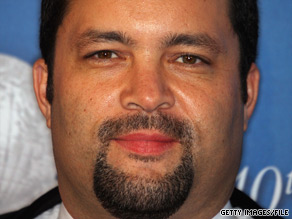
NAACP Ends First Century Stronger

Closing gaps in access to education is one of the goals the NAACP will continue to pursue in its next 100 years. Benjamin Todd Jealous is president and CEO of the National Association for the Advancement of Colored People.
National
By Denise Rolark Barnes - WI Staff Writer
Thursday, 16 July 2009

Officials are More Determined to Battle Injustice

The NAACP has a long and distinguished history layered with countless achievements and victories in the fight for civil and human rights for African Americans. Yet, as it brings to a close the celebration of its 100th anniversary in New York City on Thu., July 16, following an address by President Barack Obama, NAACP leaders and members find themselves continuing to recount the reasons why the organization should continue to exist.

The NAACP is the nation’s oldest civil rights organization and the largest. Today, it boasts more than 2,200 chapters and branches in the U.S. and abroad, including Germany and Japan, with more than half a million members. Its largest growth in membership has been seen among high school and college students, with more than 200 chapters on U.S. college campuses, and among the incarcerated who have established chapters in several U.S. prisons.

Centuries of racial abuse, and the denial of equal protection under the law and voting rights, led to the founding of the organization in New York City on Feb. 12, 1909. Grassroots activism, accompanied by boardroom dialogue and courtroom action by the NAACP, led to the passage of such significant human rights laws that include the Civil Rights Act of 1964, the Equal Pay Act of 1965 and the Voting Rights Act of 1965.

But this week, with speakers that included the nation’s first Black President and the first Black U.S. Attorney General, delegates attending the six-day convention, called a “homecoming,” returned to the city of the NAACP’s birth to reclaim, refocused and recommited to a political, social and economic agenda that still needs to be forged.

Benjamin Todd Jealous, at age 36, is the NAACP’s youngest president and CEO. His leadership role in the organization is included among such notables as author, sociologist, educator and NAACP co-founder William E.B Dubois; civil rights activist and Savannah, Ga. lawyer Earl Shinhoster; and former NAACP presidents and CEOs including civil rights lawyer and former chair of the Federal Communications Commission Rev. Benjamin Hooks; former Maryland congressman Kweisi Mfume; and former Verizon executive Bruce Gordon.

Hooks, 84, said, “It is hard to imagine what the nation would be like without the NAACP.”
On Mon., July 13, he demonstrated that he is still the fire and brimstone preacher who headed the NAACP from 1977 to 1992. He now uses a wheelchair, but he stood tall at the podium and delivered a rousing speech that proved to be the shot in the arm the 2,000 delegates needed to kick-off Monday’s plenary session.

“We are soldiers in the Army,” Hooks said. “Not soldiers of war, bloodshed, [and] violence; but soldiers of peace and justice; soldiers of legal battles and diverse legislation; soldiers of nonviolence, but nevertheless, soldiers. And, we are committed to our cause.”

In a room filled with more delegates over the age of 35 than under, they applauded Hooks when he reminded Jealous that there are still injustices that need to be addressed.

“We’re going to be with you, Brother Jealous,” Hooks said. “We are going to be with you all the way.”


Jealous, a former community organizer, newspaper editor and Rhodes Scholar, is the 17th president of the NAACP. He is planning a new agenda for the organization that includes broadening partnerships, expanding community organizing; investing in research, improving communications, utilizing technology and engaging young people to get involved in the movement.

Jealous was officially introduced to the delegates by 14-year-old DeJuan Davis, a scholar and a third generation member of the NAACP. Davis is also the nephew of Georgia death row inmate, Troy Davis, who was convicted in 1991 of the murder of an off-duty police officer outside of a Burger King in Savannah, Ga. Under Jealous’ leadership, the NAACP has joined in calling for Davis’ conviction to be overturned and for a hearing on his appeal that offers evidence that witnesses were coerced by police to assert Davis was the perpetrator. In June, the Supreme Court agreed to review the request.
“We will save Troy Davis’ life before this year is over,” Jealous said, as he reiterated the organizations continued fight against the death penalty in states across the country.

Jealous declared that the NAACP is winning. He noted the organization’s efforts aimed at outlawing racial profiling, “eviscerating” the controversial New York Rockefeller drug law, which imposed harsh mandatory sentences for drug possession, getting a “Confederate Swastika” removed from the South Carolina state capital, which also led to the Atlantic Coast Conference decision to move three major baseball tournaments out of the state, and changing a law in Maine to allow women to wear headscarves in prison.

“We are a very Black organization,” Jealous said, “but we ain’t just a Black organization. We are a human rights organization and a civil rights organization, and we will continue to fight for the rights of all people of this country.”

Among the notables who participated in the weeklong celebrations were: New York Governor David Patterson, Sen. Kirsten Gillibrand (D-N.Y.) U.S. Attorney General Eric Holder, members of the Congressional Black Caucus, including Sen. Roland Burris (D-Ill), National Urban League President Marc Morial, Republican National Committee Chair Michael Steele, a host of African dignitaries and President Obama.

Obama presented the Spingarn Medal of Honor to Julian Bond, who has served as NAACP board chair since 1999. Bond is a co-founder of the Student Non-Violent Coordinating Committee (SNCC), former member of the Georgia State House of Representatives and he was a commentator on “America’s Black Forum,” a PBS television program. He also narrated the award-winning documentaries, “A Time for Justice” and “Eyes of the Prize.”

Obama is the first U.S. president to address the Freedom Fund dinner and according to one convention delegate, “It took seven years for President George Bush to come speak to us; it only took President Obama seven months.”


.
.

Saturday, May 24, 2008

TRAGEDY & HOPE: A HISTORY OF THE WORLD IN OUR TIME

Backcover:

Conversion Testimony of a Former Jesuit Priest Professor about the New World Order and the International Bankers

Prof. Carroll Quigley, Tragedy & Hope: A History of the World in Our Time. Quigley was the renowned, late Georgetown macro-historian (mentioned by former President Clinton in his first nomination acceptance speech). Quigley was the most prominent Georgetown professor, an establishment insider and author of many books, who had access to their secret archives, and he revealed the global history of the international banking conspiracy, its origins and the use of central banks and secret and semi-secret societies to control governments worldwide. This scholarly work was soon suppressed as it revealed too much, and was only recently independently resurrected.

This renowned and well-respected Jesuit historian (Bill Clinton’s professor at Georgetown University), Dr. Caroll Quigley wrote:

"The powers of financial capitalism had a far-reaching plan, nothing less than to create a world system of financial control in private hands able to dominate the political system of each country and the economy of the world as a whole...Their secret is that they have annexed from governments, monarchies, and republics the power to create the world's money..."[1]

Quigley also wrote:

“The Rhodes Scholarships, established by the terms of Cecil Rhode's seventh will, are known to everyone. What is not so widely known is that Rhodes in five previous wills left his fortune to form a secret society, which was to devote itself to the preservation and expansion of the British Empire. And what does not seem to be known to anyone is that this secret society was created by Rhodes and his principal trustee, Lord Milner, and continues to exist to this day. To be sure, this secret society is not a childish thing like the Ku Klux Klan, and it does not have any secret robes, secret handclasps, or secret passwords. It does not need any of these, since its members know each other intimately. It probably has no oaths of secrecy nor any formal procedure of initiation. It does, however, exist and holds secret meetings, over which the senior member present presides."


[1] Prof. Carroll Quigley, Tragedy & Hope: A History of the World in Our Time. Quigley was the renowned, late Georgetown macro-historian (mentioned by former President Clinton in his first nomination acceptance speech). Quigley was the most prominent Georgetown professor, an establishment insider and author of many books, who had access to their secret archives, and he revealed the global history of the international banking conspiracy, its origins and the use of central banks and secret and semi-secret societies to control governments worldwide. This scholarly work was soon suppressed as it revealed too much, and was only recently independently resurrected.

Other books/DVDs on this subject: The Money Masters

Source: http://www.luxverbi.org.uk/arch/book_tragedy_and_hope_carollquigley.htm