Showing posts with label mahdi. Show all posts
Showing posts with label mahdi. Show all posts
Friday, July 10, 2026


Friday, April 10, 2026
Thursday, April 09, 2026
The Mahdi’s Shadow: Eschatology’s Role in Iran’s Modern Geopolitical Strategy
By Dr Kerry Bolton
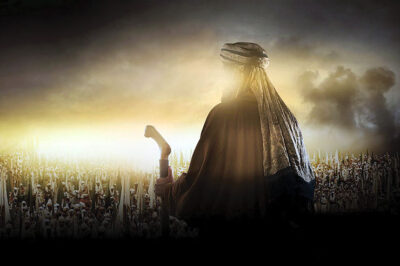
From New Dawn Special Issue Vol 18 No 4 (Aug 2024)
In the West, there’s a common misconception that ‘all Muslims are the same’. In reality, Islam comprises distinct branches, primarily Sunni and Shi’a, each with unique theological and eschatological beliefs. These eschatological views, which relate to end times and final events, significantly influence global politics and conflicts, despite often being overlooked.
The differing Sunni and Shi’a conceptions of a messiah, or saviour figure, often provoke anxiety among Jewish and Christian Messianists, as well as their more secular counterparts in the armed forces and governments of Israel and the USA. Regardless of whether these beliefs are taken literally, the perception of them plays a crucial role in international relations.
Historically, colonial powers faced fierce opposition from those who believed they were under divine protection, often manifesting as a belief in invincibility in battle. For example, the Sudanese Mahdi, Muhammad Ahmad, led a successful revolt against the British in the late 19th century, claiming divine support and inspiring his followers to believe they were invincible. Similarly, during the South Asian resistance to Western colonialism, various leaders and groups invoked religious and messianic beliefs to bolster their opposition to British rule, fostering a sense of divine mission and protection among their followers.
Monday, March 02, 2026
What do Shias believe about Imam Mahdi?

 +9
+9Shia Muslims (specifically Twelvers) believe Imam Mahdi is the 12th Imam, Muhammad al-Mahdi, born in the 9th century and currently in a state of "occultation" (hiding) by divine will. He is considered the living, sinless Savior who will return at the end of time to eliminate injustice, oppression, and restore peace.

Wikipedia +4
Key Beliefs About Imam Mahdi:
•The Occultation (Ghaybah): Shias believe he did not die but was concealed by Allah to protect him. He exists in two phases: the minor occultation (when he communicated through representatives) and the major occultation, which continues today.
•Role in Society: Despite being hidden, Shia theology holds that he is still responsible for the spiritual guidance of humanity, acting as a "living guardian".
•Return and Justice: He will reappear alongside Jesus Christ to establish a global, just, and peaceful Islamic society.
•Signs of Reappearance: His return is expected during a time of rampant tyranny and requires specific conditions, including the preparation of 313 top followers.
•"Waiting" (Intezar): This is a core Shia practice, viewing the waiting for the Mahdi as a proactive state of hope, spiritual preparation, and resistance against injustice.
While the concept of a Mahdi is shared in Sunni Islam, the distinction for Shias is the firm belief that he has already been born, is currently living in concealment, and is specifically the 12th Imam.
Key Beliefs About Imam Mahdi:
•The 12th Imam: He is the son of the 11th Imam, Hasan al-Askari, and is believed to be the final successor to Prophet Muhammad.
•The Occultation (Ghaybah): Shias believe he did not die but was concealed by Allah to protect him. He exists in two phases: the minor occultation (when he communicated through representatives) and the major occultation, which continues today.
•Role in Society: Despite being hidden, Shia theology holds that he is still responsible for the spiritual guidance of humanity, acting as a "living guardian".
•Return and Justice: He will reappear alongside Jesus Christ to establish a global, just, and peaceful Islamic society.
•Signs of Reappearance: His return is expected during a time of rampant tyranny and requires specific conditions, including the preparation of 313 top followers.
•"Waiting" (Intezar): This is a core Shia practice, viewing the waiting for the Mahdi as a proactive state of hope, spiritual preparation, and resistance against injustice.
While the concept of a Mahdi is shared in Sunni Islam, the distinction for Shias is the firm belief that he has already been born, is currently living in concealment, and is specifically the 12th Imam.
Monday, September 01, 2025
Zorhan Mamdani is waiting for the Mahdī & wants to be Mayor of New Yok City
Mamdani, the democratic socialist and Twelver branch Shia Muslim

(Photo Credit: https://www.nydailynews.com/2025/08/28/wall-street-protest-march-attacks-trump-on-dei-and-threatened-city-takeovers/)
AI Overview
Mahmood Mamdani is a prominent Ugandan academic known for his provocative analyses of colonialism, decolonization, and postcolonial political identities. What "makes him tick" is his core intellectual project: to dismantle conventional, Western-centric narratives of political modernity and show how colonial structures and power relations continue to shape contemporary conflict and identity in Africa and beyond.1
Ugandan-American scholar Mahmood Mamdani is driven by a deep historical analysis of the lasting, and often violent, legacies of colonialism on modern political identity, post-colonial state structures, and ethnic conflicts. His work challenges conventional narratives and aims to reframe how we understand politics and conflict in Africa and beyond.2
Source: Google AI
P.S. Mahmoood Mamdani is Zorhan Mamdani's father.
Monday, June 23, 2025
Apocalyptic Religious Belief Drives Iran's Leadership;..
Apocalyptic Religious Belief Drives Iran's Leadership; Attacks On Israel Will Hasten Return Of 'End Time - Hidden Imam' (Not Jesus)
Sunday, June 22 2025 by Richard D. Hunt
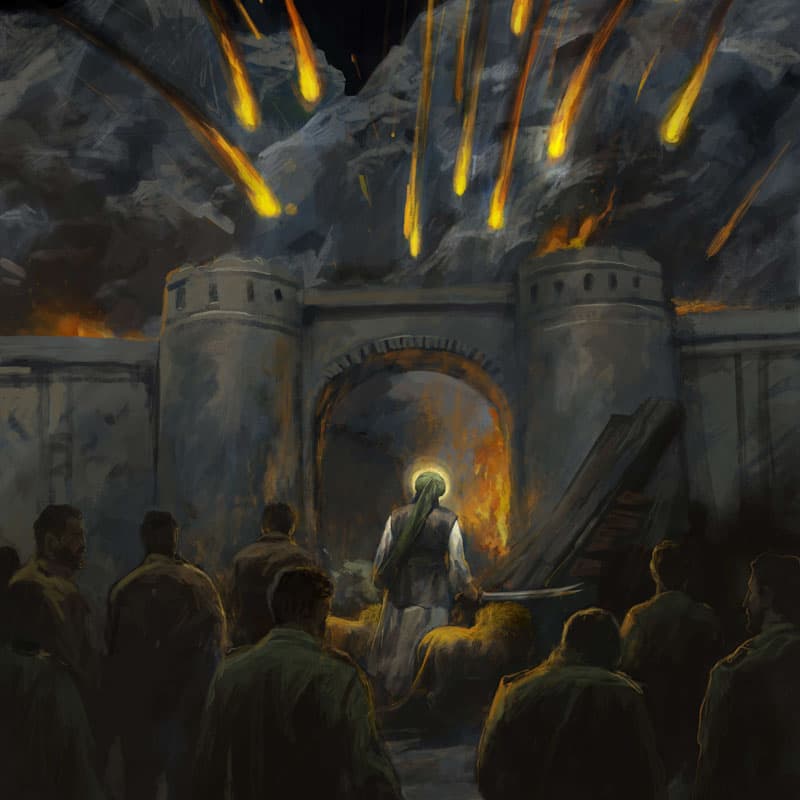
Khameini.ir
'End Times' type image posted by Iran's Ayatollah, suggesting the Mahdi (Shia's 'messiah') will attack enemies
In a very real sense, 'spiritual warfare' is resulting in actual warfare in a high stakes scenario
Iran's Supreme Leader Ayatollah Khamenei's beliefs on the "end times" are deeply rooted in Shi'ite Islamic theology, specifically Twelverism, which is the predominant belief system of Iran's leadership.
Key elements of this belief include:
Messianic-type belief in the Hidden Imam: Shi'ite theology emphasizes the belief in the return of the Hidden Imam, a messianic-like figure who they believe will appear in a violent, apocalyptic scenario to bring justice and establish a righteous rule.
The IRGC (Revolutionary Guard), a powerful Iranian military force, views world events through the prism of Mahdism, seeing their actions as contributing to the conditions for the Mahdi's reappearance, according to the Middle East Institute.
Ideological Propaganda: Hardline clerics like Hojatoleslam Alireza Panahian have linked events like the COVID-19 pandemic to the signs of the Mahdi's approach.
Iranian leaders, particularly the Supreme Leader, hold significant religious authority within the country's theocratic system. They are deeply rooted in Twelver Shia Islam, with the Supreme Leader being a key interpreter of Islamic law and tradition. - Google Labs
In a very real sense, 'spiritual warfare' is resulting in actual warfare in a high stakes scenario
Iran's Supreme Leader Ayatollah Khamenei's beliefs on the "end times" are deeply rooted in Shi'ite Islamic theology, specifically Twelverism, which is the predominant belief system of Iran's leadership.
Key elements of this belief include:
Messianic-type belief in the Hidden Imam: Shi'ite theology emphasizes the belief in the return of the Hidden Imam, a messianic-like figure who they believe will appear in a violent, apocalyptic scenario to bring justice and establish a righteous rule.
The IRGC (Revolutionary Guard), a powerful Iranian military force, views world events through the prism of Mahdism, seeing their actions as contributing to the conditions for the Mahdi's reappearance, according to the Middle East Institute.
Ideological Propaganda: Hardline clerics like Hojatoleslam Alireza Panahian have linked events like the COVID-19 pandemic to the signs of the Mahdi's approach.
Iranian leaders, particularly the Supreme Leader, hold significant religious authority within the country's theocratic system. They are deeply rooted in Twelver Shia Islam, with the Supreme Leader being a key interpreter of Islamic law and tradition. - Google Labs
Subscribe to:
Posts (Atom)