Showing posts with label Banks. Show all posts
Showing posts with label Banks. Show all posts
Tuesday, June 02, 2026


Thursday, February 19, 2026
Tuesday, February 17, 2026
Monday, October 27, 2025
The Vulture Tower (Bank of International Settlements) [OD_2021_12_28] BPI
---------------------------------------
P.S.
AI Overview

The Bank for International Settlements (BIS) is an international financial institution owned by its member central banks that fosters global monetary and financial cooperation and serves as a bank for central banks. It acts as a forum for discussion, a center for research, and a prime counterparty for central banks in financial transactions. Established in 1930, its headquarters are in Basel, Switzerland, with representative offices in Hong Kong and Mexico City.
Ownership:
The BIS is owned by member central banks, which collectively account for about 95% of world GDP.
Purpose:
Its primary goals are to promote international monetary and financial cooperation and stability, and to act as a bank for central banks. It does not provide services to private individuals or corporations.
Activities:
The BIS organizes meetings for central bankers, publishes research and statistics, and develops standards for international banking, such as capital and risk management regulations.
Structure:
Its management is directed by a General Manager who reports to the Board of Directors.
History:
It was established on May 17, 1930, in the context of the Young Plan to handle the German reparation payments from World War I, but its functions have since evolved to serve as a forum for central banks.
Ownership:
The BIS is owned by member central banks, which collectively account for about 95% of world GDP.
Purpose:
Its primary goals are to promote international monetary and financial cooperation and stability, and to act as a bank for central banks. It does not provide services to private individuals or corporations.
Activities:
The BIS organizes meetings for central bankers, publishes research and statistics, and develops standards for international banking, such as capital and risk management regulations.
Structure:
Its management is directed by a General Manager who reports to the Board of Directors.
History:
It was established on May 17, 1930, in the context of the Young Plan to handle the German reparation payments from World War I, but its functions have since evolved to serve as a forum for central banks.
Wednesday, September 24, 2025
Sunday, July 13, 2025
Central Banks Driving the World into Crisis with G. Edward Griffin
Central Banks Driving the World into Crisis with G. Edward Griffin

May 2, 2025 Macroeconomics
Interview recorded - 23rd of April, 2025
On this episode of the WTFinance podcast I have the pleasure of welcoming on G.Edward Griffin.
G.Edward is the author of the “Creature from Jekyll Island”.
During our conversation we spoke about the creation of the FED, the goals of the Federal Reserve, concentration of wealth, their true purpose and more. I hope you enjoy!
G.Edward Griffin is a writer, documentary film producer, and Founder of Freedom Force International. Listed in Who’s Who in America, he is well known because of his talent for researching difficult topics and presenting them in clear terms that all can understand.
He has dealt with such diverse subjects as archaeology and ancient Earth history, the Federal Reserve System and international banking, terrorism, internal subversion, the history of taxation, U.S. foreign policy, the science and politics of cancer therapy, the Supreme Court, and the United Nations.
His better-known works include The Creature from Jekyll Island, World without Cancer, The Discovery of Noah’s Ark, Moles in High Places, The Open Gates of Troy, No Place to Hide, The Capitalist Conspiracy, More Deadly than War, The Grand Design, The Great Prison Break, and The Fearful Master.
Ed is a graduate of the University of Michigan where he majored in speech and communications. He is a recipient of the coveted Telly Award for excellence in television production, the creator of the Reality Zone Audio Archives, Publisher of Need to Know News, and is President of American Media, a publishing and video production company in Southern California.
He has served on the board of directors of The National Health Federation and The International Association of Cancer Victors and Friends and is Founder and President of The Cancer Cure Foundation. He is the Founder of Freedom Force International and creator of Red Pill University, Red-Pill Expos, and Rabbit-Hole Expeditions. The mission of these Red-Pill and Rabbit-Hole endeavors is far more serious than they may sound. It is to popularize a global coalition for the victory of individualism over collectivism and liberty over tyranny.
G.Edward Griffin -
Political reading - https://g-edward-griffin.aweb.page/p/...
WTFinance -
Instagram - / wtfinancee
Spotify - https://open.spotify.com/show/67rpmjG...
iTunes - https://podcasts.apple.com/us/podcast...
Twitter - / anthonyfatseas
Thumbnail image from - https://www.fairobserver.com/economic...
Wednesday, June 18, 2025
Chinese Central Bank head pledges to expand international CBDC use — Report
Jun 18, 2025, 14:31 GMT-4
China’s central bank chief Pan Gongsheng has pledged to expand the footprint of the digital yuan, reaffirming the country’s vision for its central bank digital currency (CBDC).
According to a Reuters report, China is creating an international operations center in Shanghai for the digital yuan, also known as e-CNY. Pan made the remarks at the Lujiazui Forum, a professional forum for high-profile local and international finance regulators and executives.
China envisions a “multipolar” currency system where multiple currencies support the global economy, Pan said. This vision contrasts with the current system, where a few currencies, like the US dollar and the euro, play large roles in the global financial system.
The US dollar, in particular, may have become less appealing to investors in 2025, partly due to the unscripted rollout of tariffs by US President Donald Trump over the past months.
Pan also weighed in on digital technologies, claiming that traditional cross-border payment systems are vulnerable to geopolitical risk.
“Traditional cross-border payment infrastructures can be easily politicized and weaponized, and used as a tool for unilateral sanctions, damaging global economic and financial order," he said.
The battle between stablecoins and CBDCs
Stablecoins, often pegged to the US dollar, have become well-known for their ability to facilitate cross-border transactions. These digital assets are considered one of crypto’s first breakthrough mainstream use cases and present a contrast to CBDCs, which are controlled by a centralized entity, such as central banks.
Despite the rising adoption of stablecoins, many countries continue to pursue CBDCs. Hong Kong, a special administrative region of China, is advancing its stablecoin pilot program. In Europe, lawmakers across member states continue to push for a digital euro, while the United Arab Emirates expects to roll out the digital dirham by the end of 2025. Israel has also released a preliminary design for a digital shekel.
According to a Feb. 11 report from the Official Monetary and Financial Institutions Forum (OMFIF), CBDC interest is cooling among central banks, with 31% delaying implementation plans. Among the central banks, common concerns include regulation and economic conditions.
China began exploring the creation of a CBDC in 2014 and has plans to expand the digital yuan as a payment tool both internationally and domestically. The country has hoped to combat the US dollar’s role as the world’s reserve currency. The two countries had been mired in a trade war since Trump rolled out the tariffs.
Sunday, June 01, 2025
Saturday, May 03, 2025
Tuesday, December 17, 2024
Wednesday, October 02, 2024
US$50 bills will no longer be accepted in banks and ATMs from this date onwards
United States 2024: US$50 bills will no longer be accepted in banks and ATMs from this date onwards

The $50 Bills No Longer Accepted at Banks & ATMs
Did you know that some $50 bills will no longer be valid in the United States? We’ll tell you which ones and explain the new rules set by the Federal Reserve of the United States.
The $50 Bills That Will No Longer Be Accepted at Banks and ATMs
The Federal Reserve of the United States has announced that certain $50 bills will cease to be accepted at banks and ATMs nationwide. This change is part of a broader initiative to renew and modernize some currency notes. So, what exactly does this mean for you?
Major financial institutions such as Bank of America, JP Morgan Chase, Wells Fargo, and Citibank will stop accepting $50 bills with specific descriptions. However, other denominations, including $5, $20, and $100 bills, will remain valid.
This measure is being implemented due to the release of new designs and models for currency notes. The exclusion of certain $50 bills aims to modernize the monetary system, ensuring that the currency in circulation is up-to-date and secure.The $5, $20, and $100 bills will continue to be accepted.
The updated $50 bills will feature enhanced security features and design elements.
Financial institutions will gradually phase out the old $50 bills.
Stay informed about these changes to avoid any inconvenience when using cash. Make sure to check your $50 bills and exchange any outdated ones at your bank.
Starting in September 2024, major financial institutions like Bank of America and Wells Fargo will no longer accept $50 bills in the United States. This change is a response to the introduction of new designs and enhanced security features for this denomination.
Federal Reserve Initiative
This initiative by the Federal Reserve aims to encourage the use of well-maintained bills and promote the circulation of secure money. Banks have upgraded their systems to detect and reject bills that do not meet the established standards.
Ensuring Safety and Education
Additionally, this measure seeks to educate users on the importance of keeping bills in good condition in the United States. Financial institutions have launched informative campaigns to raise awareness about this new regulation.
By implementing these changes, the Federal Reserve hopes to ensure that the money in circulation is both secure and in good condition, benefiting everyone in the United States.
In the United States, banks and ATMs will no longer accept certain types of $50 bills. This policy is aimed at improving security and reducing the risk of counterfeiting.
Which $50 Bills Will Be Rejected?
The measure specifically targets mutilated, damaged, or worn-out $50 bills. These bills will be refused by both banks and ATMs, compelling users to exchange their deteriorated bills for ones in better condition at the Federal Reserve.
The decision to reject damaged bills will be implemented gradually, allowing customers to adapt to the new requirements. Financial institutions have communicated this measure to their users to avoid future inconveniences.
It’s worth noting that bills over $100, such as $500, $1,000, $5,000, and $10,000 bills, ceased production more than 50 years ago.
Federal Reserve’s Big Change: The $50 Bills You Need to Exchange Now Before It’s Too Late
By VIBUS 01/10/2024 07:08
The $50 Bills No Longer Accepted at Banks & ATMs
Did you know that some $50 bills will no longer be valid in the United States? We’ll tell you which ones and explain the new rules set by the Federal Reserve of the United States.
The $50 Bills That Will No Longer Be Accepted at Banks and ATMs
The Federal Reserve of the United States has announced that certain $50 bills will cease to be accepted at banks and ATMs nationwide. This change is part of a broader initiative to renew and modernize some currency notes. So, what exactly does this mean for you?
Major financial institutions such as Bank of America, JP Morgan Chase, Wells Fargo, and Citibank will stop accepting $50 bills with specific descriptions. However, other denominations, including $5, $20, and $100 bills, will remain valid.
This measure is being implemented due to the release of new designs and models for currency notes. The exclusion of certain $50 bills aims to modernize the monetary system, ensuring that the currency in circulation is up-to-date and secure.The $5, $20, and $100 bills will continue to be accepted.
The updated $50 bills will feature enhanced security features and design elements.
Financial institutions will gradually phase out the old $50 bills.
Stay informed about these changes to avoid any inconvenience when using cash. Make sure to check your $50 bills and exchange any outdated ones at your bank.
Starting in September 2024, major financial institutions like Bank of America and Wells Fargo will no longer accept $50 bills in the United States. This change is a response to the introduction of new designs and enhanced security features for this denomination.
Federal Reserve Initiative
This initiative by the Federal Reserve aims to encourage the use of well-maintained bills and promote the circulation of secure money. Banks have upgraded their systems to detect and reject bills that do not meet the established standards.
Ensuring Safety and Education
Additionally, this measure seeks to educate users on the importance of keeping bills in good condition in the United States. Financial institutions have launched informative campaigns to raise awareness about this new regulation.
- Bank of America and Wells Fargo stop accepting $50 bills in September 2024.
- New designs and security features are introduced for $50 bills.
- Banks enhance their systems to detect non-compliant bills.
- Educational campaigns inform the public about maintaining bill quality.
By implementing these changes, the Federal Reserve hopes to ensure that the money in circulation is both secure and in good condition, benefiting everyone in the United States.
In the United States, banks and ATMs will no longer accept certain types of $50 bills. This policy is aimed at improving security and reducing the risk of counterfeiting.
Which $50 Bills Will Be Rejected?
The measure specifically targets mutilated, damaged, or worn-out $50 bills. These bills will be refused by both banks and ATMs, compelling users to exchange their deteriorated bills for ones in better condition at the Federal Reserve.
The decision to reject damaged bills will be implemented gradually, allowing customers to adapt to the new requirements. Financial institutions have communicated this measure to their users to avoid future inconveniences.
It’s worth noting that bills over $100, such as $500, $1,000, $5,000, and $10,000 bills, ceased production more than 50 years ago.
Monday, September 16, 2024
Monday, February 26, 2024
Sunday, February 18, 2024
BRICS Bank Implementing 3-Year De-Dollarization Plan
BRICS
Joshua Ramos
Source: Reuters
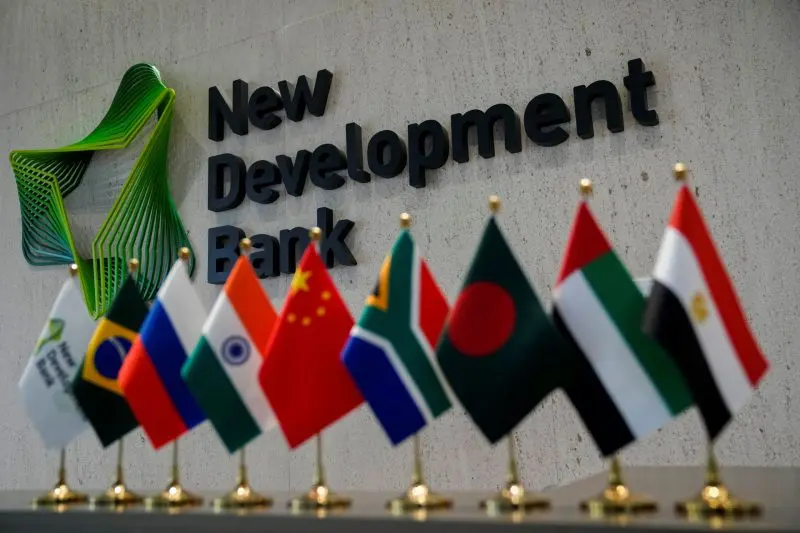
As the alliance continues to develop and establish the BRICS New Development Bank, it has officially announced a 3-year de-dollarization plan. Specifically, the bank is set to integrate by increasing the number of local currency transactions that take place. Therefore lessening its reliance on the greenback for developing country investment.
The bloc is set to expand its membership following a landmark invitation for six countries to join the alliance. Moreover, its expansion may well set the bloc up to be able to affect the lending model of its bank greatly. Overall, it would create a structure that facilitates alignment with an alliance strategy to move away from the dollar.

As the alliance continues to develop and establish the BRICS New Development Bank, it has officially announced a 3-year de-dollarization plan. Specifically, the bank is set to integrate by increasing the number of local currency transactions that take place. Therefore lessening its reliance on the greenback for developing country investment.
The bloc is set to expand its membership following a landmark invitation for six countries to join the alliance. Moreover, its expansion may well set the bloc up to be able to affect the lending model of its bank greatly. Overall, it would create a structure that facilitates alignment with an alliance strategy to move away from the dollar.
Source: energyintel.com / Hoverfly / Shutterstock
Also Read: Japan Accused of ‘Market Intervention’ Against US Dollar vs. Yen
BRICS Bank Seeking Local Currency Increase in 3-Year Plan
The BRICS economic alliance has undergone a massive growth period so far this year. Specifically, the bloc is set to introduce Saudi Arabia, the United Arab Emirates (UAE), Egypt, Argentina, Iran, and Ethiopia to its ranks. Subsequently, the bloc is rethinking how it approaches lending and the structure of its New Development Bank.
Now, the BRICS bank has officially introduced a 3-year de-dollarization plan. Specifically, this plan is set to aid in the lending of local currencies to member countries. Therefore, it diminishes the number of transitions that are done in the US dollar. Subsequently, it aligns itself further with what has proven to be a key principle of the collective.
Also Read: Japan Accused of ‘Market Intervention’ Against US Dollar vs. Yen
BRICS Bank Seeking Local Currency Increase in 3-Year Plan
The BRICS economic alliance has undergone a massive growth period so far this year. Specifically, the bloc is set to introduce Saudi Arabia, the United Arab Emirates (UAE), Egypt, Argentina, Iran, and Ethiopia to its ranks. Subsequently, the bloc is rethinking how it approaches lending and the structure of its New Development Bank.
Now, the BRICS bank has officially introduced a 3-year de-dollarization plan. Specifically, this plan is set to aid in the lending of local currencies to member countries. Therefore, it diminishes the number of transitions that are done in the US dollar. Subsequently, it aligns itself further with what has proven to be a key principle of the collective.

Source: economictimes.com
Also Read: Could Bitcoin be a Global Reserve Replacement for USD?
The Shanghai-based bank was always intended to be made by developing countries for developing countries. Yet, to truly be viable, it must continue moving away from 70% of its funds in US dollars. A process is currently implanted in a plan to lessen that figure.
The bank is eyeing a growth rate of 8% over the next three years in terms of transactions in local currencies. Specifically, the bloc currently transacts 22% in alliance currencies, which it hopes to reach 30% by the year 2026. Therefore, the development will help BRICS nations move away from US dollar lending and promote their currencies in the process.
Also Read: Could Bitcoin be a Global Reserve Replacement for USD?
The Shanghai-based bank was always intended to be made by developing countries for developing countries. Yet, to truly be viable, it must continue moving away from 70% of its funds in US dollars. A process is currently implanted in a plan to lessen that figure.
The bank is eyeing a growth rate of 8% over the next three years in terms of transactions in local currencies. Specifically, the bloc currently transacts 22% in alliance currencies, which it hopes to reach 30% by the year 2026. Therefore, the development will help BRICS nations move away from US dollar lending and promote their currencies in the process.
Friday, January 26, 2024
Wednesday, January 10, 2024
Thursday, November 16, 2023
Saturday, November 11, 2023
Thursday, September 28, 2023
Legal fog over central bank digital currencies "unacceptable", BIS warns
By Marc Jones
September 27, 202312:56 PM EDTUpdated 17 hours ago
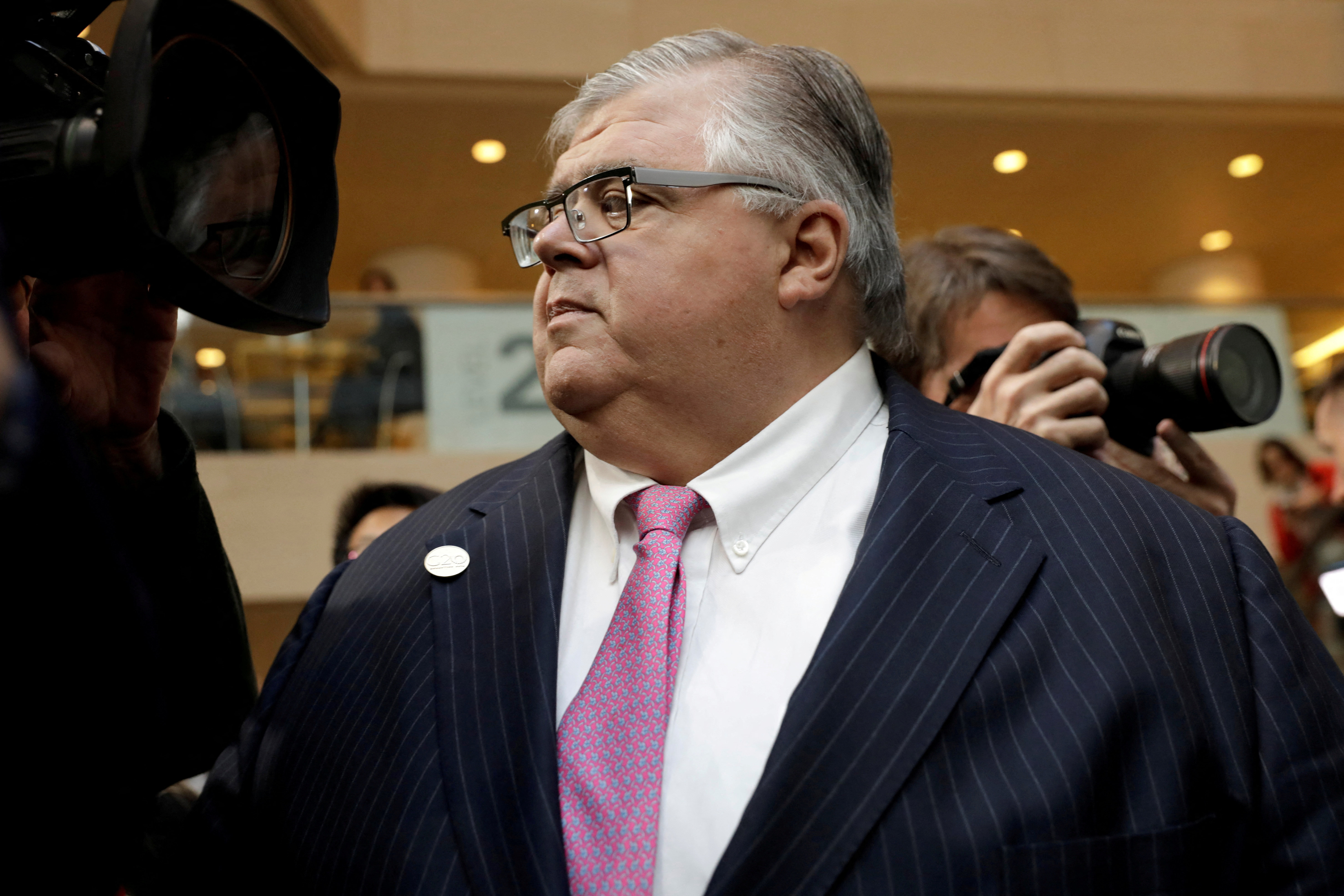
Agustin Carstens leaves after G-20 finance ministers and central banks governors family photo during the IMF/World Bank spring meeting in Washington, U.S., April 20, 2018. REUTERS/Yuri
LONDON, Sept 27 (Reuters) - Developing national digital currencies are at risk due to a lack of legal powers to issue them in most of the world, the head of the global central bank umbrella body, the Bank for International Settlements, warned on Wednesday.
While countries generally have laws on banknotes, coins and credit balances, an IMF paper in 2020 showed that close to 80% of central banks are either not allowed to issue a digital currency under their existing laws, or the legal framework is unclear.
"This needs to be rectified," the BIS' general manager Agustin Carstens said in a speech. "The public rightly demands forms of money that meet their needs and expectations."
His warning comes as central banks around the world push ahead with central bank digital currency (CBDC) development in a bid to make money more high tech and keep up with the features now offered by cryptocurrencies.
Some 11 countries have already launched them and next month the European Central Bank is expected to receive the green light to start work on a digital euro.
Carstens, whose organisation is overseeing much of the global test work, said central banks have a mandate to meet public demands and have also made significant investments into CBDCs.
"It is simply unacceptable that unclear or outdated legal frameworks could hinder their deployment," added Carstens, the former governor of the Mexico's central bank. "The work to address these issues needs to begin in earnest. And it needs to proceed at pace."
Reporting by Marc Jones; Editing by Josie Kao
Agustin Carstens leaves after G-20 finance ministers and central banks governors family photo during the IMF/World Bank spring meeting in Washington, U.S., April 20, 2018. REUTERS/Yuri
LONDON, Sept 27 (Reuters) - Developing national digital currencies are at risk due to a lack of legal powers to issue them in most of the world, the head of the global central bank umbrella body, the Bank for International Settlements, warned on Wednesday.
While countries generally have laws on banknotes, coins and credit balances, an IMF paper in 2020 showed that close to 80% of central banks are either not allowed to issue a digital currency under their existing laws, or the legal framework is unclear.
"This needs to be rectified," the BIS' general manager Agustin Carstens said in a speech. "The public rightly demands forms of money that meet their needs and expectations."
His warning comes as central banks around the world push ahead with central bank digital currency (CBDC) development in a bid to make money more high tech and keep up with the features now offered by cryptocurrencies.
Some 11 countries have already launched them and next month the European Central Bank is expected to receive the green light to start work on a digital euro.
Carstens, whose organisation is overseeing much of the global test work, said central banks have a mandate to meet public demands and have also made significant investments into CBDCs.
"It is simply unacceptable that unclear or outdated legal frameworks could hinder their deployment," added Carstens, the former governor of the Mexico's central bank. "The work to address these issues needs to begin in earnest. And it needs to proceed at pace."
Reporting by Marc Jones; Editing by Josie Kao
Subscribe to:
Posts (Atom)