Showing posts with label beliefs. Show all posts

Wednesday, July 29, 2026

Search For Truth, Not To Defend A Belief


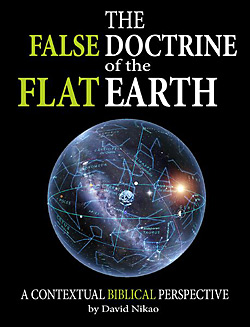
If you’re a flat earther, have you studied the context of the Bible verses which are being cited to proclaim “the Bible says flat earth”?

This book goes through all 240 verses that people like Nathan Roberts cite, to show you the proper context; because if you’re promoting this list, then you’re accountable for the explanations.

It gives a fresh perspective about the ‘firmament‘ of Genesis; the ‘circle‘ of Isaiah 40:22; the clay turned to the ‘seal‘ in Job 38:13-14; the ‘pillars‘ of 1 Samuel 2:8; the sun going forth in his ‘circuit‘ of Psalms 19:6; and much more.

If you know someone who believes that the Scriptures describes a domed, flat earth; it will help you understand their rationale in citing these verses.

If you’re a believer who’s researching the flat earth, this book is critical for you.

If you believe in the heliocentric universe, have you read what Moses, Job, David, and Isaiah; declared about the earth, the sun, and the stars? The Bible describes a sun that moves in a circuit, which has been stopped, and has been moved back. And it describes an earth that is fixed. The Bible is purely geocentric, and there is no Scriptural justification for the heliocentric model.

The Bible also describes the lower circular layers which hold back the fountains of the deep; the spherical layers of atmosphere around the globe earth; the constellations on the ecliptic which encircles the globe earth; and the celestial sphere of stars which surround the globe earth as a tent, as a tabernacle.

The enemy is hiding the geocentric globe earth universe with the false narratives of the heliocentric universe and the flat earth model.

Click here to get a PDF copy of THE FALSE DOCTRINE OF THE FLAT EARTH book

CLICK HERE TO WATCH ‘THE PRINCIPLE’ MOVIE WHICH VALIDATES THE GEOCENTRIC UNIVERSE.

The stars in the southern hemisphere prove that the earth is a globe.

Saturday, March 28, 2026

People also ask Is Monaco a Catholic country?


Roman Catholicism is the official state religion of Monaco, with over 80% of its population identifying as Catholic. The Roman Catholic Archdiocese of Monaco is directly subject to the Holy See. The country holds a deeply entrenched Catholic identity, where church, state, and community are closely linked, often featuring Catholic rituals in national ceremonies.

Wikipedia +4


Key Catholic Aspects of Monaco:
  • Official Religion: The Constitution of Monaco (Art. 9) affirms Roman Catholicism as the state religion, while also guaranteeing freedom of worship.
  • Archdiocese: The Roman Catholic Archdiocese of Monaco is an archdiocese of the Roman Catholic Church, not part of any ecclesiastical province, and falls directly under the Holy See.
  • Cathedral: The Cathedral of Our Lady Immaculate is the principal cathedral, where members of the Grimaldi family are buried.
  • Key Parishes & Churches: Besides the Cathedral, main churches include Saint Charles Church, Church St. Devote, and Saint Martin Church.
  • Demographics: As of 2020, about 32,000 residents out of a 38,000-person population identified as Catholic, with roughly 24 priests and 11 nuns serving.
  • 2026 Papal Visit: On March 28, 2026, Pope Leo XIV visited Monaco, marking the first papal visit since 1538, celebrating Mass at the Louis II Stadium and meeting with the local community.
Key Sites:
  • Cathedral of Our Lady Immaculate: Located on the Rock of Monaco, it houses the tombs of former princes, including Prince Rainier III and Princess Grace.
  • Chapel of Mercy: A 17th-century chapel belonging to the Pénitents noirs.
  • Church St. Devote: Dedicated to the patron saint of Monaco, situated in the La Condamine ward.
Wikipedia +4


Source: Google AI Overview

Monday, March 16, 2026

Doomsday Believers No Longer Fringe: Study Suggests They’re A Third Of America


By StudyFinds Analysis

Reviewed by Steve Fink

Research led by Dr. Matthew I. Billet (University of British Columbia)

Mar 14, 2026
FACT CHECKED VERIFIED


(Image by Casimiro PT on Shutterstock)

From climate change to the rise of AI to the Rapture, more adults think we’re currently living in end times.

In a Nutshell

  • About one in three Americans in the study’s sample believed the world would end within their own lifetime, a figure that aligns with broader national polling, and those beliefs turned out to be stronger predictors of risk behavior than political affiliation or income.
  • Apocalyptic belief is not one thing: researchers identified five distinct dimensions, including who or what people believe will cause the end, how soon they expect it, and whether they view it as something to dread or welcome.
  • The specific flavor of someone’s end-of-world belief matters enormously. People who blame human action for eventual catastrophe perceive current threats as more urgent, while those who believe God controls the end times are significantly less likely to support extreme action to address them.
  • A puzzle the researchers could not fully explain: people who believe the apocalypse will ultimately be a good thing still tended to support drastic measures to prevent existential threats.

Between 29% and 39% of Americans believe they are currently living in the end times. That is not a fringe position held by a handful of doomsday cults. It cuts across Evangelical congregations, climate activist circles, Silicon Valley boardrooms, and rural prepper communities alike. And according to a new study, it may be one of the most consequential and least examined forces in how the public responds to the biggest threats facing the planet.

Psychologists at the University of British Columbia and the University of California, Irvine surveyed more than 1,400 religiously diverse Americans and found that apocalyptic thinking is neither a fringe preoccupation nor a purely spiritual abstraction. It is a measurable psychological force, and the specific flavor of someone’s end-of-world belief predicts how they perceive and respond to threats like climate change, nuclear war, economic collapse, and artificial intelligence with surprising consistency.

The study, led by psychologist Matthew Billet and co-authored by Cindel White, Azim Shariff, and Ara Norenzayan, is among the first to build a formal framework around end-of-world beliefs as a psychological construct. Its findings complicate the familiar story that risk behavior is primarily a matter of politics or religion.


A third of Americans now believe the world will reach its end during their lifetime. (© Liza – stock.adobe.com)

Friday, July 18, 2025

"The sons of God saw the daughters of men that they were fair; and they took them wives..."


 Recently, some people have been talking about hybrids that existed before the Great Flood. According to their interpretation of Genesis, chapter 6, these creatures were the offspring of humans and extraterrestrial beings. They call these supposed creatures NEPHILIM. The strangest part of all is that even some atheists "believe" this...

And it came to pass, when men began to multiply on the face of the earth, and daughters were born unto them,

That the sons of God saw the daughters of men that they were fair; and they took them wives of all which they chose.

And the Lord said, My spirit shall not always strive with man, for that he also is flesh: yet his days shall be an hundred and twenty years.

There were giants in the earth in those days; and also after that, when the sons of God came in unto the daughters of men, and they bare children to them, the same became mighty men which were of old, men of renown.

Genesis 6: 1-4.

Finally, when tempted by the Sadducees about marriage after the Resurrection in Matthew 22: 28-30, Jesus refutes this unfounded Nephelim hypothesis when He answered:

Therefore in the resurrection whose wife shall she be of the seven? for they all had her.

Jesus answered and said unto them, Ye do err, not knowing the scriptures, nor the power of God.

For in the resurrection they neither marry, nor are given in marriage, but are as the angels of God in heaven.


Monday, May 19, 2025

Denomination Relations: Seventh Day Adventists


by Jason Scott · Published May 13, 2025 · Updated May 12, 2025


In our ongoing series, “Denomination Relations”, Jason Scott explores the history, shared beliefs, and differences between Catholics and other Christian denominations. This week, he turns his attention to the Seventh Day Adventists.

Where Do Seventh Day Adventists Come From?

The Seventh Day Adventist Church emerged in the mid-19th century, rooted in the Millerite movement, which anticipated the Second Coming of Christ in 1844. After the predicted date passed without event, a group of believers, led by Ellen G. White, James White and Joseph Bates, reorganised their beliefs and formed what would become the Seventh Day Adventist Church. They are known for their observance of the Sabbath on Saturday and their emphasis on health and wellness.

Seventh Day Adventists place a strong emphasis on the authority of Scripture and the ministry of White, whose writings they consider inspired. They also advocate for a holistic approach to life, promoting vegetarianism and a healthy lifestyle as part of their religious practice.

What We Agree On

As Catholics, we share fundamental beliefs with Seventh Day Adventists: the Trinity, Christ’s divinity and humanity, and the resurrection. We both affirm the importance of the Bible as the word of God, though our interpretations and applications differ. Both traditions emphasise the importance of living a life of faith and obedience to God’s commandments.

Where We Disagree

From a Catholic perspective, the key disagreements with Seventh Day Adventists are clear. Seventh Day Adventists observe the Sabbath on Saturday, which contrasts with the Catholic tradition of observing the Lord’s Day on Sunday. This difference in Sabbath observance reflects a broader disagreement on the role of the Old Testament law in the life of the Christian, with Seventh Day Adventists still following many of the old Jewish laws

Seventh Day Adventists do not recognise the authority of the Pope or the hierarchical structure of the Catholic Church, favouring a more congregational form of governance. They also reject the Catholic doctrine of the immortality of the soul, believing instead in the concept of “soul sleep”, where the dead remain unconscious until the resurrection.

Furthermore, Seventh Day Adventists do not uphold the Catholic sacraments, particularly the Eucharist, and do not believe in the real presence of Christ in the sacrament. Their practice of baptism by immersion for those who have reached an age of accountability differs from the Catholic tradition of infant baptism.

Recent Steps Towards Unity

Despite these differences, progress has been made. The Second Vatican Council’s Decree on Ecumenism, Unitatis Redintegratio, opened doors for dialogue with other denominations, including Seventh Day Adventists. More recently, joint statements and collaborative projects have highlighted areas of agreement and mutual respect. For instance, both groups have worked together on humanitarian efforts, such as disaster relief and health initiatives, reflecting a shared commitment to serving others.

While formal theological dialogue between the Catholic Church and the Seventh Day Adventist Church has been limited, there have been informal discussions and cooperative efforts in areas of common concern, such as religious freedom and social justice. These efforts reflect our shared commitment to unity and the healing of centuries-old divisions. As Catholics, we are committed to reuniting Christians and restoring full communion within the one true Church, guided by the Holy Spirit, to heal the wounds of centuries-old divisions.


Saturday, January 18, 2025

Gods, Guns and Missionaries — exploding the myth of a singular, ‘true’ Hinduism

Manu S Pillai’s deft exploration of four centuries of the faith reveals its underlying complexities 


Hindu devotees offer prayers during Laksha Deepotsava, the festival of hundred thousand lights, at the Shri Panchalinga Nageshwara temple in Bengaluru in November © Getty Images


A book about Hinduism which begins with a maharaja’s cows sounds a little like a Rudyard Kipling tale, replete with spices, mystery and “backward” traditions. But in the hands of Manu S Pillai, Madho Singh II’s journey from Jaipur in the west of India to imperial London for Edward VII’s coronation in 1902 becomes the gateway to a deft exploration of what Hinduism actually means as a faith. Drawing on the lives of missionaries, maharajas and men of the Dutch, French and British East India Companies, Pillai builds the story of a system marked by adaptability, dynamism and compromise rather than ossified archaisms.

Hinduism is often imagined as a monolith of arcane and ancient rituals, in spite of the efforts of external invaders. In India itself, the image of a “faith under siege” is a core part of the Hindu nationalist rhetoric wielded by the Bharatiya Janata party — a party that has now led the world’s most populous nation for more than a decade.  
------

He argues that even before the arrival of imperial powers, Hinduism was hardly a settled affair, emerging instead from “[Brahmins’] negotiations with a bewildering variety of counter-thoughts and alternate visions”. India’s priestly class was not unified, adds Pillai, adapting to local traditions ranging from sun worship to matrilineal succession as needed.

---------

The message throughout is that Hinduism is a living tradition defined more by variation than a singularity of thought and that those who would come to call themselves “Hindus” were more than passive subjects. Priests and potentates reshaped their beliefs in ways deemed more acceptable or sophisticated, consciously rewriting older texts to remove imagery considered embarrassing for the mores of the time. Their discussions with colonial powers were not merely those of vassals lapping up to masters, but of reflective thinkers adapting to a shifting world.


Read the whole article @ Source

Saturday, November 23, 2024

Blessed are they that have not seen, and yet have believed.


Then the same day at evening, being the first day of the week, when the doors were shut where the disciples were assembled for fear of the Jews, came Jesus and stood in the midst, and saith unto them, Peace be unto you

And when he had so said, he shewed unto them his hands and his side. Then were the disciples glad, when they saw the Lord. 

Then said Jesus to them again, Peace be unto you: as my Father hath sent me, even so send I you. 

And when he had said this, he breathed on them, and saith unto them, Receive ye the Holy Ghost: whose soever sins ye remit, they are remitted unto them; and whose soever sins ye retain, they are retained.

But Thomas, one the twelve, called Didymus, was not with them when Jesus came. 

The other disciples therefore said unto him, We have seen the Lord. But he said unto them, Except I shall see in his hands the print of the nails, and put my finger into the print of the nails, and thrust my hand into his side, I will not believe.

And after eight days again his disciples were within, and Thomas with them: then came Jesus, the doors being shut, and stood in the midst, and said, Peace be unto you

Then saith he to Thomas, Reach hither thy finger, and behold my hands; and reach hither thy hand, and thrust it into my side: and be not faithless, but believing. 

And Thomas answered and said unto him, My Lord and my God

Jesus saith unto him, Thomas, because thou hast seen me, thou hast believed: blessed are they that have not seen, and yet have believed.

And many other signs truly did Jesus in the presence of his disciples, which are not written in this book: but these are written, that ye might believe that Jesus is the Christ, the Son of God; and that believing ye might have life through his name.


John 20:19-31.

Monday, November 04, 2024

Truth Under Fire - AD's official Response to Speculations about our Beliefs


 P.S.

The enemy of souls has sought to bring in the supposition that a great reformation was to take place among Seventh-day Adventists, and that this reformation would consist in giving up the doctrines which stand as the pillars of our faith, and engaging in a process of reorganization. Were this reformation to take place, what would result? The principles of truth that God in His wisdom has given to the remnant church, would be discarded. Our religion would be changed. The fundamental principles that have sustained the work for the last fifty years would be accounted as error. A new organization would be established. Books of a new order would be written. A system of intellectual philosophy would be introduced. The founders of this system would go into the cities, and do a wonderful work. The Sabbath of course, would be lightly regarded, as also the God who created it. Nothing would be allowed to stand in the way of the new movement. The leaders would teach that virtue is better than vice, but God being removed, they would place their dependence on human power, which, without God, is worthless. Their foundation would be built on the sand, and storm and tempest would sweep away the structure.


Selected Messages Vol.1
, p.204.2.

Tuesday, August 13, 2024

Psychological bias links good deeds to a belief in God, research says

News Release 8-Aug-2024
Psychological bias links good deeds to a belief in God, research says
Peer-Reviewed Publication

University of California - Merced


Experiments conducted by UC Merced researchers find that people who perform good deeds are far more likely to be thought of as religious believers than atheists. Moreover, the psychological bias linking kindness and helpfulness with faith appears to be global in scale.

Research on the mental link between moral behavior and religious belief goes back more than a decade. Prior research, however, emphasized the dark side of this equation, with participants asked whether they assumed it was more probable that a serial killer believed in God or was an atheist (people in nations all over the planet thought the latter was more likely).

The UC Merced studies, conceptualized by cognitive science graduate student Alex Dayer and published this week in the journal Scientific Reports, flipped the switch to the bright side: What if someone was a “serial helper,” prone to extraordinary benevolence?

The research found that the stereotype of an extraordinarily good person being religious was dramatically stronger that of an extraordinarily cruel person being an atheist, said co-author Colin Holbrook, a professor in the university’s Department of Cognitive and Information Sciences .

“Though we also found that people intuitively link atheism with immoral behavior, people appear to associate believing in God with being generous, helpful and caring to a much greater extent,” Holbrook said.

The research consisted of experiments conducted in two nations with disparate levels of religious belief:

The United States, where 47% of the population describes itself as religious, according to a recent Gallup poll.

New Zealand, where 49% of respondents in the 2018 census indicated no religious belief.

Participants read a description of a man who took a path of increasing benevolence, from helping stray animals as a child to, as an adult, giving food and clothes to homeless people. Sometimes, during bitingly cold weather, he offered a spare room to homeless families.

Half of the participants were asked which is more probable: The man is a teacher or the man is a teacher and believes in God. The other half were asked the same question, but the options were “the man is a teacher” or “the man is a teacher and does not believe in God.”

The most logical response would be to guess the man is a teacher, a group that would include both teachers who believe and teachers who are atheists. But people have been found to pick the less likely option to this type of question if it matches a strong social stereotype in their minds.

The results were striking. U.S. respondents were nearly 20 times more likely to guess that the helpful man believed in God than that the man was an atheist. In New Zealand, respondents were 12 times more likely to guess that the helpful man was religious.

The bias intuitively connecting religious belief to socially uplifting behavior was significantly stronger than that found with the study’s inverse, “dark side” conditions, which looked for stereotypes of atheists as antisocial. The bias was there, but far less powerful.

“So instead of a stereotype of atheists as immoral driving the effect, the stereotype of the moral person of faith may be the more important force,” Holbrook said. “We replicated the findings of the earlier studies linking evil with atheism, but we found that the effects linking prosociality with faith were remarkably larger.”

The study’s results fit with a theory about the historical development of major world religions that emphasizes cooperation. Belief that a powerful being or spiritual force rewards positive moral behavior – and punishes immoral behavior – is shared by all major religions. This kind of belief might help members of religious groups trust one another, cooperate and grow.

“Strangers with little in common beyond their shared spiritual beliefs in moralizing gods might be more inclined to trust and less inclined to exploit one another,” Holbrook said.

Of course, the UC Merced experiments and similar research measure only what stereotypes people project onto others – how they think someone would act based on what they believe.

“Our evidence indicates that people stereotype believers as more likely to care about and help others. But this theoretical model suggests that the stereotype might actually have had merit in the past as major religions grew or may possibly be true even now — people who believe in God might actually be more likely to help others,” Holbrook said. “The evidence that believers are more prosocial is currently mixed, and it’s a question that calls for more research.”


Method of Research 
Survey

Subject of Research
People

Article Title
Intuitive Moral Bias Favors the Faithful

Article Publication Date
7-Aug-2024

COI Statement
None.


Saturday, January 13, 2018

Fundamental Beliefs


The Gilead Institute regards the Holy Bible as God’s infallible word and strongly believes in all its principles, doctrines, and teachings. This list of 27 beliefs does not represent all the beliefs taught in the Bible or a specific creed espoused by this ministry. The following consist of only the basic or fundamental beliefs or doctrines upheld by most historic Adventist churches and ministries, including the Gilead Institute, and all Missions or Churches affiliated with it.

  1. The true and living God, the first person of the Godhead, is our heavenly Father, and He, by His Son, Christ Jesus, created all things. (Matt. 28:18-19; 1 Cor. 8:5-6; Eph. 3:9; Jer. 10:10-12; Heb. 1:1-3; Acts 17:22-29; Col. 1:16-18.)
  2. Jesus Christ, the second person of the Godhead, and the eternal Son of God, is the only Saviour from sin; and man’s salvation is by grace through faith in Him. (Matt. 28:18-19; John 3:16; Micah 5:2; Matt. 1:21; 2:5-6; Acts 4:12; 1 John 5:11-12; Eph. 1:9-15; 2:4-8; Rom. 3:23-26.)
  3. The Holy Spirit, the third person of the Godhead, is Christ’s representative on earth, and leads sinners to repentance and to obedience of all God’s requirements. (Matt. 28:18-19; John 14:26; 15:26; 16:7-15; Rom. 8:1-10; Eph. 4:30.)
  4. Through Christ, believers receive forgiveness of sins which are forsaken and confessed, and for which, as far as lies in their power, restitution is made. (Eph. 1:7; Col. 1:14-15; 1 John 1:7-9; Isa. 55:6-7; Ezek. 33:15; Matt. 5:23-24; 6:14-15.) 
  5. The Bible is God’s inspired word, and is the fully reliable, sufficient, infallible, basic rule of faith and practice. (2 Tim. 3:15-17; 2 Peter 1:19-21; Ps. 119:9, 11, 105, 130; 1 Thess. 2:13; Isa. 8:20; Jer. 15:16; Heb. 4:12.)
  6. All who enter the kingdom of heaven must have experienced conversion, or the new birth, through which man receives a new heart and becomes a new creature. (Matt. 18:3; John 3:3; 2 Cor. 5:17; Ezek. 36:26-27; Heb. 8:10-12; 1 Peter 1:23; 2:2.)
  7. Christ dwells in the regenerate heart, writing upon it the principles of God’s law, leading the believer to delight to obey its precepts, and imparting power for such obedience. (2 Cor. 6:16; Ps. 40:8; Heb. 8:10-12; John 14:15; Col. 1:27; 3:16; Gal. 2:20; Eph. 3:14-21.)
  8. Upon His ascension Christ began His ministry as high priest in the holy place of the heavenly sanctuary, which sanctuary is the great original of which the sanctuary built by Moses was a copy. As in the earthly sanctuary, a work of investigative judgment began as Christ entered the second phase of His ministry, in the most holy place, foreshadowed in the earthly service by the Day of Atonement. This work of the investigative judgment in the heavenly sanctuary began in 1844, at the close of the 2300 years, and will end with the close of probation. (Heb. 4:14; 8:1-2; Lev, 16:2, 29; Heb. 9:23-24; Dan. 8:14; 9:24-27; Rev. 14:6, 7; 22:11.)
  9. The second coming of Christ is the hope of the church, the climax of the gospel, and the goal of the plan of redemption, when Jesus will come literally, personally, and visibly, with all His holy angels. Many signs of the times testify that His coming is at hand. And the almost complete fulfillment of all the various lines of prophecy indicate that “He is near, even at the doors.” (John 14:1-3; Titus 2:11-14; Heb. 9:28; Acts. 1:9-11; Rev. 1:7; Matt. 25:31; Luke 9:26; 21:25-33; Matt. 24:14, 36-39, 33, margin.)
  10. The righteous dead will be raised to life at Christ’s Second Advent. Together with the righteous living, they will be caught up to meet the Lord in the air, and will go with Him to heaven, there to spend the one thousand years known as the millennium. (Rev. 1:7; John 5:25, 28-29; Hosea 13:14; 1 Cor. 15:51-55; 1 Thess. 4:13-18; John 11:24-25; 14:1-3; Rev. 20:4-6; Isa. 25:8-9.)
  11. The wicked who are living at the time of Christ’s Second Advent will be slain by the brightness of His coming. These, with the wicked dead of all ages, will await the second resurrection, at the close of the one thousand years. (2 Thess. 1:7-10; 2:8; Jude 14-15; Rev. 20:5, 12, 15; John 5:28-29; Acts 24:15; Isa. 24:21-22.)
  12. At the end of the one thousand years, the following events will take place: (a) Christ and the righteous will descend from heaven, with the Holy City, the New Jerusalem (Rev. 21:2, 10); (b) the wicked dead will be resurrected for final judgment (Rev. 20:11, 12); (c) the wicked will receive the final wages of sin when fire comes down from God out of heaven to consume them (Rev. 20:7-10, 14-15); and (d) this fire, which destroys the works of sin, will purify the earth (2 Peter 3:10-14; Mal. 4:1, 3; Rev. 20:4, 8.)
  13. The earth, cleansed by fire and renewed by the power of God, will become the eternal home of the redeemed. (2 Peter 3:9-13; Isa. 65:17-25; 35:1-10; 45:18; Matt. 5:5; Mal. 4:1-3; Prov. 11:31.)
  14. The seventh day of the week is the eternal sign of Christ’s power as Creator and Redeemer, and is therefore the Lord’s day, or the Christian Sabbath, constituting the seal of the living God. It should be observed from sunset Friday to sunset Saturday. The Sabbath, along with marriage between a man and a woman, are two institutions that came from the Garden of Eden. The Lord created each one as male or female, not to be altered or used in any unnatural or unbiblical way. (Gen. 2:1-3; Ex. 16:23-31; 20:8-11; John 1:1-3, 14; Ezek. 20:12, 20; Mark 1:21-32; 2:27-28; Isa. 58:13; Luke 4:16; 23:54-56; 24:1; Acts 17:2; Heb. 4:9-11; Isa. 66:22-23; Lev. 23:32; Gen. 2:21-24; Matt. 19:4-6; Rom. 1:26-27; 2 Tim. 3:1-5.)
  15. The tithe is holy unto the Lord, and is God’s provision for the support of His ministry. Freewill offerings are also part of God’s plan for the support of His work throughout the world. Tithes and offerings are to be brought into God’s storehouse where meat-in-due season or present truth is dispensed. (Lev. 27:30-32; Mal. 3:8-12; Num. 18:20-28; Deut. 14:23; Matt. 23:23; Prov. 3:9, 10; 1 Cor. 9:13-14; 2 Cor. 9:6-7; Ps. 96:8.)
  16. Immortality comes only through the gospel, and is bestowed as a gift from God at Christ’s second coming. (1 Cor. 15:21-22, 51-55; Ps. 146:3-4; Eccl. 9:5-6, 10; 1 Tim. 6:15-16; 2 Tim. 1:10; 1 John 5:11-12.)
  17. The condition of man in death is one of unconsciousness. All men, good and evil alike, remain in the grave from death to the resurrection. (Eccl. 9:5-6; Ps. 115:17; 146:3-4; Job 14:10-12, 21-22; 17:13; John 11:11-14; 1 Thess. 4:13; John 5:28-29.)
  18. The Christian is called unto sanctification, and his life should be characterized by carefulness in deportment and modesty and simplicity in dress. (1 Thess. 3:13; 4:3, 7; 5:23; 1 Peter 2:21; 3:15, 3-5; Isa. 3:16-24; 1 Cor. 10:31; 1 Tim. 2:9, 10.)
  19. The Christian should recognize his body as the temple of the Holy Spirit. Therefore, he should honor God by caring for his body; abstaining from such things as alcoholic beverages, tobacco in all its forms, and all unclean foods; refraining from unnecessary surgeries, drugs, and body alterations; obeying the eight natural laws and utilizing natural remedies. (1 Cor. 3:16-17; 6:19-20; 9:25; 10:31; 2 Cor. 6:16-18; 7:1; Gal. 5:17-21; 6:7-8; 1 Peter 2:9-12; 1 Cor. 10:1-11; Rom. 12:1-2; Lev. 11:1-8; 19:28; Gal. 6:8; 2 Tim. 3:1-2.)
  20. The church is to come behind in no gift, and the presence of the gift of the Spirit of prophecy is to be one of the identifying marks of the remnant church. (1 Cor. 1:5-7; 12:1-28; Amos 3:7; Hosea 12:10, 13; Isa. 8:20; Rev. 12:17; 19:10.) The members of God’s remnant church recognize that this gift was manifested in the life and ministry of Ellen G. White.
  21. The Bible teaches a definite church organization. The members of this organization are under sacred obligation to be subject thereunto, loyally to support it, and to share in its maintenance, and respect its male-only ministers and elders. They are admonished not to forsake the assembling of themselves together. (Matt. 16:16-18; Eph. 1:10-23; 2:19-22; 1 Cor. 14:33, 40; Titus 1:5-9; Matt. 18:15-18; 1 Cor. 12:12-28; 16:1-3; Ex. 28:1; 1 Tim. 3:1-2; 1 Cor. 11:3; Heb. 10:25; Acts 4:32-35; 6:1-7.)
  22. Baptism by immersion typifies the death, burial, and resurrection of Christ, and openly expresses faith in His saving grace, and the renunciation of sin and the world, and is recognized as a condition of entrance into church membership. (Matt. 3:13-17; 28:19; Acts 2:38, 41-47; 8:35-39; 16:32-33; 22:16; Rom. 6:1-11; Gal. 3:27; Col. 3:1-3.)
  23. The ordinance of the Lord’s supper commemorates the Saviour’s death, and participation by members of the body is essential to Christian growth and fellowship. It is to be preceded by the ordinance of foot washing as a preparation for this solemn service. (Matt. 26:26-29; 1 Cor. 11:23-30; John 6:48-56; 13:1-17.)
  24. In the Christian life there is complete separation from worldly practices, such as card playing, theater-going, dancing, etc., which tend to deaden and destroy the spiritual life. (2 Cor. 6:15-18; 1 John 2:15-17; James 4:4; 2 Tim. 2:19-22; Eph. 5:8-11; Col. 3:5-10.)
  25. God speaks to us through the study of His holy Word, imparting new light and strength; and through prayer the soul is united with God. These are Heaven’s ordained means for obtaining victory in the conflict with sin and for the development of Christian character. (Ps. 19:7-8; 119:130; John 6:63; 17:17; 1 Peter 2:2; 1 Thess. 5:17; Luke 18:1; Ps. 55:17; Isa. 50:4.)
  26. Every church member is under sacred command from Jesus to use his or her talents in personal soul-winning work in helping to give the gospel to all the world. When this work is finished Jesus will come. (Matt. 25:14-29; 28:18-20; Rev. 22:17; Isa. 43:10-12; 2 Cor. 5:17-20; Rom. 10:13-15; Matt. 24:14.)
  27. In accordance with God’s uniform dealing with mankind, warning them of coming events that will vitally affect their destiny, He has sent forth a proclamation of the approaching return of Christ. This preparatory message is symbolized by the three angels’ messages of Revelation, chapter 14, and meets its fulfillment in the great Second Advent Movement today. This has brought forth God’s remnant church, which keeps the commandments of God and the faith of Jesus. (Amos 3:7; Matt. 24:29-34; Rev. 14:6-10; Zeph. 3:13; Micah 4:7-8; Rev. 14:12; Isa. 26:2; Rev. 22:14.)


Monday, August 08, 2016

Harvard-acquired Pentecostal collection offers up ‘gold mine’


BRANDI SIMONS FOR THE BOSTON GLOBE

Bishop Carlton Pearson was once a pastor of a megachurch in Tulsa, Okla., but eventually lost everything after he declared that eternal damnation was a human fiction.


By Lisa Wangsness

GLOBE STAFF

 AUGUST 08, 2016

It took years for Bishop Carlton Pearson, a groundbreaking African-American televangelist of the late 20th century, to visit the storage locker in downtown Tulsa, Okla., that contained the remains of his once-vaunted ministry.

In 2004, he had been branded a heretic by his Pentecostal peers for declaring that there was no such thing as eternal damnation, that a loving God would save everybody. His epiphany cost him almost everything: his 5,000-member church, his television ministry, his ranch for troubled kids. As his empire crumbled, his staff stuffed some 300 crates of video footage, music recordings, photos, notes, and financial records into storage.

“It was a corpse lying in a coffin,” he recalled. “The record of my existence on this planet was in these crates. It was devastating. Devastating.”

Now, Harvard plans to exhume that corpse and give it a new life online. Pearson’s media archive, which will be digitized by Andover-Harvard Theological Library over the next two years, will offer scholars a rare unvarnished glimpse inside the closely guarded world of evangelical religious broadcasting — and the careers of some of its most notable practitioners.


Sunday, May 29, 2016

God’s not dead — but wealth, education and evolution have inflicted fatal wounds, psychologists say


SARAH K. BURRIS


09 MAY 2016 AT 20:12 ET


The United States is becoming a more secular nation, but the developed world is also taking a turn against religion. As people become more wealthy and have greater access to basic necessities they are less likely to be religious, according to the Daily Mail.

“As more and more people become affluent and adopt a slow strategy, the need to morally condemn fast strategies decreases, and with it the benefit of holding religious beliefs that justify doing so,” Evolutionary psychologist Dr. Nicolas Baumard wrote in his article for New Scientist. He explained that history shows that those living an upper-class lifestyle 2,500 years ago were slower paced where lower castes lived fast, worked hard and died younger.

“If this is true, and our environment continues to improve, then like the Greco-Roman religions before them, Christianity and other moralising religions could eventually vanish,” Baumard concluded.

A 2014 National Bureau of Economic Research paper, by Naci Mocan and Luiza Pogorelova, charted the decline of people in Europe who claimed to be very religious and those who regularly attended religious services. They found that one additional year of education was associated with a 10 percent drop in the tendency to frequent religious services once a week or more.

Secular beliefs are on a steep trajectory and will soon take over France’s majority population. The Netherlands and New Zealand are similarly projected to be majority secular nations soon, according to the Pew Research Center. Gallup also did a survey of 50,000 people in 57 countries that showed individuals claiming to be religious fell from 77 percent to 68 percent between 2005 and 2011. At the same time, those who identified as atheist grew by 3 percent.

Anthropologists suggest that religion emerged as a way of helping tribes and groups live together without killing each other. The idea of an omnipotent being seeing their crimes may have helped stopped early civilization from committing them. As a result, much of the decision making could be lifted from the shoulders of the average person because religion provided the guidance for what was right and what was wrong. Today, we may have evolved past that.

Harvard University Psychology professor Steven Pinker thinks the reduction in crime has come not from the differences that divide us into groups, such as religion, but by thinking of ourselves within a global society. The world has seen a dramatic drop in violence for long stretches of time, according to Pinker’s book “The Better Angels of Our Nature.” He even concluded that we are likely living in the most peaceful era for our species when interviewed by the Science Channel show “Through the Wormhole.”

“Three hundred years ago I might be burned at the stake for beliefs that I hold today,” Pinker says. “And a hundred years before that, I might have had my head cut off with a hatchet in the Indian wars.”

Pinker attributes most of this to the increasing role of government and the rule of law, but he also thinks that part of it has to do with intelligence. “You might wonder, are people getting nicer because they’re getting smarter and, believe it or not, the answer may be yes.”

Dr. Baumard and his colleagues attribute this shift to something very simple, a larger caloric intake. While you might not be what you eat, what you consume has a huge impact on the function and development of your brain. When people had access to more than 2,000 calories a day without the need to burn the calories chasing the next meal, people’s behavior evolved. When their behavior evolved, so did their psychological outlook. Since your brain needs food to fuel its work, the increase in food availability could have impacted the increase in intelligence and sparked an evolution in brain development that made us hardwired for empathy and morality.

“You are clearly at a disadvantage if you follow a slow strategy when others follow a faster strategy – if you are faithful when others grab sexual opportunities, if you forgive when others avenge, if you work when others have fun,” Dr. Baumard said. “This disadvantage incentivised the elite to morally condemn fast behaviours, in part by adopting and promoting the new religions that legitimised and reinforced a slow morality and promised punishment for trangressors.

“The same idea could also explain the gradual decline of moralising religion in wealthier parts of the world such as Western Europe and the northern parts of North America,” he concluded.

The millennial generation, in particular, seems to be opting for a more spiritual approach than following institutional religions, according to Pew. The largest generation in history boasts 80 million plus people in the United States. While some might turn to spirituality during times of crisis, the culture wars organized religion waged during the early 2000s don’t match the current values the generation holds. A larger generation practicing less religion and raising less religious children also means a more secular society is continued.


Report typos and corrections to corrections@rawstory.com


Source


Monday, December 21, 2015

Is the Roman Catholic Church Christian? | What Catholics Believe


Published on Jun 5, 2015


Is Roman Catholicism Christian? By comparing what the Roman Catholic Church teaches against the teachings of the Bible, we can conclude that the Catholic Church is not Christian. It is a mystery religion that promotes the spirit of antichrist. It encourages the worship of idols,and the worship of men who claim to be gods. It must therefore be rejected as representing the Christian faith.

THIS VIDEO IS AVAILABLE ON DVD FOR WORLDWIDE DISTRIBUTION.

Visit PropheticAlert at http://propheticalert.net

.

Thursday, April 30, 2015

Among Justices, Considering a Divide Not of Gender or Politics, but of Beliefs


U.S.


JULY 11, 2014


A rally at the Supreme Court last month after a ruling in favor of Hobby Lobby, a move that has been parsed and picked over. 
Doug Mills/The New York Times


On Religion

By SAMUEL G. FREEDMAN


During its last term, the Supreme Court narrowly decided two cases bearing extensively on the separation of church and state. Both of them broke along familiar 5-4 lines, and both of them implicitly raised a question hardly anyone has asked about a court that is entirely composed, for the first time in American history, of Roman Catholic and Jewish justices.

In the first of the cases, Greece v. Galloway, the court ruled to allow public prayer at a government meeting. In the other, Burwell v. Hobby Lobby Stores, the court said that a corporation closely held by a religious family should not have to offer several forms of contraception that it opposed to its female employees, as required by the Affordable Care Act.

To the degree that these decisions, especially Hobby Lobby, have been parsed and picked over, the analysis has gone along the lines of politics (conservative majority against liberal minority) or gender (male majority against mostly female minority).

RELATED COVERAGE


Yet it is at least as compelling to consider the Catholic-Jewish divide. In both cases, five of the court’s six Catholic justices — Samuel A. Alito Jr., Anthony M. Kennedy, John G. Roberts Jr., Antonin Scalia and Clarence Thomas — formed the majority that espoused a larger place for religious practice in public life. All three Jewish justices — Stephen G. Breyer, Ruth Bader Ginsburg and Elena Kagan — joined by one Catholic, Sonia Sotomayor, dissented on behalf of a wider, firmer separation.

What attention has been paid to the denominational nature of the decisions has too often echoed with America’s sordid history of anti-Catholic bigotry, the presumption that Catholic public servants take their orders from the Vatican. A recent advertisement in The New York Times by the Freedom From Religion Foundation, for instance, linked the court’s Roman Catholic majority to “the growing dangers of theocracy.”

Surely, though, there is a legitimate way to explore the Catholic and Jewish contexts of the court’s votes. The point is not to pretend to climb inside the psyche of each justice but to appreciate that these jurists are simultaneously results and embodiments of historical experience. To put it simply: Did nine individuals just coincidentally disagree based on their legal reasoning, or have American Catholics and American Jews arrived at different communal positions about where to properly draw the line between church and state?


On Religion

Woman Breaks Through Chains of Forced Marriage, and Helps Others Do the Same MAR 20


Los Angeles Police Leader Makes Outreach to Muslims His Mission MAR 6


Muslim Scholar, Looking to ‘Speak the Truth,’ Teaches the Holocaust and Islam FEB 20


Strains Grow Between Israel and Many Jews in the U.S. FEB 6


See More »

“Try as they might to claim judicial independence, justices are still the products of where they came from and who they were before going onto the bench,” said Thane Rosenbaum, a law professor at Fordham University and a widely published author on legal ethics. “Why do you want robed robots? Why aren’t we more honest that you are where you come from? The robe doesn’t shield you from that consolidated history.”

The history of Jews and Catholics in America has involved attitudes about church and state. The immigrant waves of both groups, having endured persecution in Europe, saw separation as a guarantee of their own freedom as religious minorities here. Experience had taught Jews to fear the anti-Semitism of Christian rulers, and Catholics were wary of proselytization and cultural domination by a Protestant majority.

For Jews, said the political scientist Kenneth D. Wald of the University of Florida, a secular state became synonymous with their comfort and accomplishment in the United States.

“Defending and extending the secular definition of the American state,” he has written, “became the (often unstated) core political priority of America’s organized Jewish community.” The emergence of the evangelical Christian “religious right” in the 1980s especially reinforced that belief.

The Catholic experience has had its share of nuance. Leslie C. Griffin, a professor of constitutional law at the University of Nevada, Las Vegas, spoke recently of the way earlier generations of Catholics teased apart good and bad types of church-state separation. Good meant denying formal state power to Protestants. Bad meant refusing governmental aid and accommodation to Catholic institutions, especially parochial schools.

And while the Jewish organizational sphere developed largely along secular lines — Hadassah, Anti-Defamation League, American Jewish Committee to cite just a few examples — American Catholics advocated largely through overtly religious bodies such as the United States Conference of Catholic Bishops.

Far from being predictably conservative, the bishops have taken liberal positions on issues such as nuclear arms, welfare overhaul and immigrant rights. Always, though, their positions have been put forth as the product of Catholic doctrine and social teaching, theology deemed a legitimate part of public debate.

“The Catholic Church has wanted separation in the sense we don’t want the king picking the bishops, but we also believed you could have cooperation in civil society,” said Richard W. Garnett, a professor of law at the University of Notre Dame. “Whereas in America, separation became a code for no money for Catholic schools or we don’t want religiously oriented morality shaping public policy.”

The divergent Jewish and Catholic sensibilities are measurable. In a 2007 survey by the Pew Forum on Religion and Public Life, 43 percent of Catholics agreed that “government should do more to protect morality”; just 22 percent of Jews concurred. The survey also found that Catholics were more than three times as likely as Jews (33 percent to 10 percent) to attend a religious service weekly. Catholics are also twice as likely as Jews (55 percent to 27 percent) to rate religion as the most important or a very important factor in their lives, according to a 2012 survey by the Public Religion Research Institute.

All of which helps one make historical sense of the two court decisions. Yes, the conservative bent of the court has as much to do with the number of vacancies that happened to come up during Republican presidencies. Yes, too, Catholic identity does not trump every other personal or legal consideration. Justice Kennedy, usually part of the court’s conservative wing, cast the decisive vote last year to overturn the Defense of Marriage Act, giving a major victory to the movement for same-sex marriage.

Even so, in amicus briefs in the Hobby Lobby case, the preponderance of Jewish groups filed in opposition to the religious exemption from the health care law. The heavyweights among Catholics — led by the bishops’ conference and the Knights of Columbus, as well as 67 theologians — submitted on behalf of Hobby Lobby.

That Hobby Lobby is owned not by Catholics but by evangelical Protestants, their erstwhile antagonists, speaks volumes about the diminution of old animosities and the societal influence of those people who once were the reviled outsiders.

“How could Catholics say they are now opposed, that they’re a minority religion, when they’re a majority on the court?”
said Professor Griffin, who is an alumna of Notre Dame and has written for the Jesuit publication America. “And now they’re reducing the barrier between church and state in a way that’s comfortable with their values.”


Email: sgf1@columbia.edu;

Twitter: @SamuelGFreedman


A version of this article appears in print on July 12, 2014, on page A13 of the New York edition with the headline: Among Justices, Considering a Divide Not of Gender or Politics, but of Beliefs.


.

Saturday, July 05, 2014

For there are three that bear record in heaven


1 Whosoever believeth that Jesus is the Christ is born of God: and every one that loveth him that begat loveth him also that is begotten of him.

2 By this we know that we love the children of God, when we love God, and keep his commandments.

3 For this is the love of God, that we keep his commandments: and his commandments are not grievous.

4 For whatsoever is born of God overcometh the world: and this is the victory that overcometh the world, even our faith.

5 Who is he that overcometh the world, but he that believeth that Jesus is the Son of God?

6 This is he that came by water and blood, even Jesus Christ; not by water only, but by water and blood. And it is the Spirit that beareth witness, because the Spirit is truth.

7 For there are three that bear record in heaven, the Father, the Word, and the Holy Ghost: and these three are one.

8 And there are three that bear witness in earth, the Spirit, and the water, and the blood: and these three agree in one.

9 If we receive the witness of men, the witness of God is greater: for this is the witness of God which he hath testified of his Son.

10 He that believeth on the Son of God hath the witness in himself: he that believeth not God hath made him a liar; because he believeth not the record that God gave of his Son.

11 And this is the record, that God hath given to us eternal life, and this life is in his Son.

12 He that hath the Son hath life; and he that hath not the Son of God hath not life.

13 These things have I written unto you that believe on the name of the Son of God; that ye may know that ye have eternal life, and that ye may believe on the name of the Son of God.

14 And this is the confidence that we have in him, that, if we ask any thing according to his will, he heareth us:

15 And if we know that he hear us, whatsoever we ask, we know that we have the petitions that we desired of him.

16 If any man see his brother sin a sin which is not unto death, he shall ask, and he shall give him life for them that sin not unto death. There is a sin unto death: I do not say that he shall pray for it.

17 All unrighteousness is sin: and there is a sin not unto death.

18 We know that whosoever is born of God sinneth not; but he that is begotten of God keepeth himself, and that wicked one toucheth him not.

19 And we know that we are of God, and the whole world lieth in wickedness.

20 And we know that the Son of God is come, and hath given us an understanding, that we may know him that is true, and we are in him that is true, even in his Son Jesus Christ. This is the true God, and eternal life.

21 Little children, keep yourselves from idols. Amen.

1 John 5 
King James Version (KJV)
.

Thursday, December 19, 2013

But Jesus did not commit himself unto them, because he knew all men


Now when he was in Jerusalem at the passover, in the feast day, many believed in his name, when they saw the miracles which he did.

But Jesus did not commit himself unto them, because he knew all men,

And needed not that any should testify of man: for he knew what was in man.

John 2:23-25 
.
/.
.

Tuesday, November 26, 2013

The country where exorcisms are on the rise


25 November 2013 Last updated at 19:10 ET

By Vladimir Hernandez BBC Mundo


Does God exist? Does the Devil exist? The Catholic church believes they both do - and some priests say they are currently having an immense battle in Mexico.


In today's Magazine
The story behind The Tiger Who Came To Tea
Why is the Bay Psalm Book valued at £18m?
The village where time has stood still
Rebuilding after 9/11


To some it may seem extraordinary, but priests say the country is under attack by Satan, and that more exorcists are needed to fight him.

This attack, they say, is showing itself in the gruesome drug-related violence, including human sacrifice, that has engulfed the country since 2006.

According to the latest official figures available, at least 70,000 people have died in this period, including gunmen, members of the security forces, and many innocent civilians.

But, the priests say, it's not just the numbers. The savagery also stands out.

In recent years it has not been uncommon in many parts of Mexico for children to find dismembered bodies on the streets on their way to school. Or for commuters on busy roads to drive past bridges with severely tortured corpses hanging from them. Scenes from hell.


A mass exorcism at a church in Veracruz in Mexico


"We believe that behind all these big and structural evils there is a dark agent and his name is The Demon. That is why the Lord wants to have here a ministry of exorcism and liberation, for the fight against the Devil," says Father Carlos Triana, a priest, and an exorcist, in Mexico City.

"As much as we believe that the Devil was behind Adolf Hitler, possessing and directing him, we also believe that he (the Devil) is here behind the drug cartels."

Mexico's exorcists say there is unprecedented demand for their services.

Some are even not taking new cases, as they are having to exorcise demons almost every day.


Vatican view on Saint Death
Earlier this year, a senior Vatican official condemned the cult of Santa Muerte
"It's not religion just because it's dressed up like religion; it's a blasphemy against religion," said Cardinal Gianfranco Ravasi, president of the Vatican's Pontifical Council for Culture

Vatican denounces Mexico 'saint'

"This didn't happen before", says Father Francisco Bautista, another exorcist in Mexico City.

Most of the cases, he explains, require a lesser form of exorcism, called liberation prayers - effective when a person still controls part of his or her mind and body.

Only rarely does the Devil possess someone completely, he says, but when that happens, the bishop of the diocese must intervene.

In Bautista's view, the rising demand for exorcism is partly explained by the large numbers of Mexicans joining the cult of Saint Death, or Santa Muerte.

It is estimated that the cult, whose followers worship a skull in a wedding dress carrying a scythe, has some eight million followers in Mexico - and more among Mexican migrants in Central America, the US and Canada.

"It has also been adopted by the drug traffickers who ask her for help to avoid arrest and to make money," Bautista says. "In exchange they offer human sacrifices. And this has increased the violence in Mexico."

Another reason for the surge in exorcisms, he argues, is the decriminalisation of abortions in Mexico City, in 2007. Both the cult and abortion have given evil spirits a foothold in the country, he insists.

"Both things are closely related. There is an infestation of demons in Mexico because we have opened our doors to Death."


If it is surprising how many Mexicans believe in Saint Death, it may also be surprising how many believe, like Father Triana and Father Bautista, that the Devil and demons are at work in the country.


Mexico's war on drugs 

Drug traffic from Mexico to US worth estimated $13bn annually
Two main players in recent years have been Sinaloa (or Pacific) cartel and Zetas
Estimated 60,000 people killed in drug-related violence since late 2006
Q&A: Mexico's drug-related violence
 

Exorcism is an ancient practice and one that appears in many different religions, but many believers doubt the existence of demons.

A frontline of sorts for Mexico's exorcists is the northern region of the country where, for the last seven years, the Mexican military has been waging war against the heavily armed and cash-rich drug cartels.

In parallel with the soldiers, priests have been waging a spiritual conflict. One is Father Ernesto Caro, based in Monterrey, a city blighted by frequent shootouts and kidnappings.

He has exorcised several members of the drug cartels - and there is one case he cannot forget. It was a gang hitman, who confessed to horrific crimes. Father Caro said the man had been in charge of cutting the bodies into pieces and he said he enjoyed hearing them cry as he did so. Others he burned alive.

The priest says the man had committed his life to the service of Saint Death.

"The cult is the first step into Satanism and then into this band of people [the drug traffickers], that's why he was chosen for that job."


"Santa Muerte is being used by all our drug dealers and those linked to these brutal murders. We've found that most of them, if not all, follow Santa Muerte," he adds.

The cult is also followed by criminals, policemen, politicians and artists.

"The biggest presence is in the poorest sectors of Mexican society," says journalist Jose Gil Olmos, who has published two books on Saint Death.

The first references to Saint Death occur in the 18th Century, he says, not in Aztec times, as many believe.

"In modern times the numbers of followers exploded, especially after the early 1990s economic meltdown."

Many middle-class Mexicans found themselves in misery. In despair they searched for hope, and some turned to Saint Death, Olmos says.

"From approximately eight years ago we have seen Santa Muerte having a big presence with drug cartel members, from the bosses all the way down. Why? Because these people say that Jesus or the Virgin Mary can't provide what they ask for, which is to be protected from soldiers, police and their enemies."


I went to see what this cult was all about at its biggest annual ceremony in the neighbourhood of Tepito, in Mexico City, a place riddled with drug trafficking and crime.

It's here that one of the biggest sanctuaries of Saint Death in Mexico is located. It's kept tidy by Enriqueta Romero, a woman in her sixties, whose life changed dramatically 12 years ago when she shocked her neighbours by putting a Saint Death figure in her window.

Over the years, more and more people started arriving to pay tribute to the skull figure in a dress. And now thousands gather for the cult's most important ceremony on 31 October, the eve of Mexico's Day of the Dead festival.

"She loves us and heals us. People come here to ask her for help - a son in prison or with Aids, or something to eat," says Romero.

During my visit, some people reach the shrine walking on their knees. One of them is a man who carries a 20-day-old baby in his arms. He's come to present his daughter to the skull.


I also see ordinary working-class families, pregnant women asking Death to protect the life of their unborn child, and plenty of people heavily tattooed with the female skull.

Are these people possessed, as the church says?

"No, I also believe in God, in the Virgin, and all the saints, but I am more devout to [Saint] Death. She is the one that helps me the most," says Jose Roberto Jaimes, a man in his 20s who's come on his knees to thank the skull after surviving three years in jail.

I get similar answers from all of the cult followers I talk to.


More from the Magazine


A film of a woman being beheaded in Mexico caused an international outcry in October when Facebook refused to remove it from its site. There have been hundreds of reports about the video - but why has no-one identified the victim in it? 


Facebook beheading video: Who was Mexico's Jane Doe? (4 November)

Romero says the church itself bears responsibility for the rise of the cult, having shot itself in the foot with the worldwide child abuse scandal.

"They finished off our faith with the things that the priests did. What can they criticise? That we believe in Death? That is not bad. What's bad is what they did," says Romero.

But does she feel comfortable knowing that people behind horrific crimes also follow this cult?

"We are in a free country and everyone can do what they want. We all will have to answer to God at some point," she says.

It was former President Felipe Calderon who launched the offensive against drug cartels in Mexico in 2006, by deploying troops to the worst-hit areas.

Over the years the military has discovered numerous shrines, temples and even churches of Saint Death across the region, and plenty of evidence of human sacrifice.

"He [Calderon] started a war against them and he started a war as well against the cult of Saint Death, and he asked the church to help him," says Father Ernesto Caro.

"The Church is not going to go on TV and say: 'Look, we think that Mexico is going to get better and be saved if we do exorcisms because the Devil is behind all of this.' We have to be discreet [with exorcisms] or else we may be ridiculed, even by our own followers," adds Father Carlos Triana.

Whether exorcisms can help reduce the drug-related violence in Mexico - especially the sadistic killings - is debatable. Although at this point, many in Mexico would probably welcome any help if it brings them some peace.

You can hear and see more about this topic in Crossing Continents, BBC Radio 4 on 28 November 2013 at 11:00 GMT, and Our World, on BBC News Channel or BBC World on the weekend 30 November/1 December 2013, or catch up later on BBC iPlayer.


Source
.