Showing posts with label Confiscation. Show all posts
Showing posts with label Confiscation. Show all posts
Thursday, August 27, 2026


Wednesday, August 05, 2026
UN urged to take action against Iran’s latest crackdown on Protestants
By Michael Gryboski, Editor

A human rights advocacy group is calling on the United Nations to take action against the Islamic Republic of Iran’s latest crackdown on Protestants in the country.
The European Centre for Law and Justice (ECLJ) sent a letter to the United Nations Human Rights Council on Wednesday in response to recent attacks on Iran’s Christian minority.
Specifically, the ECLJ cited the Iranian government’s seizure of the property of St. Peter Evangelical Church, reportedly the oldest Protestant church in the capital, Tehran, last month.
Authorities also reportedly took control of church-owned residences in Tehran, forcing the Christian families living there to flee from Iranian security forces, according to the ECLJ.
Monday, July 20, 2026
How the Jesuits infiltrate and conquer the GCSdA
How Jesuits infiltrate and conquered SDA GC ..... Shown to Ellen white in Dream, just take time read it and meditate upon it .

That night I dreamed I was in Battle Creek looking out from the side glass at the door, and saw a company marching up to the house, two and two. They looked stern and determined. I knew them well and turned to open the parlor door to receive them, but thought I would look again. The scene was changed. The appearance now presented was like a Catholic procession. One of the company bore in his hand a cross. Another had a reed. And as they neared the house, the one carrying a reed made a circle ‘around the house, saying three times, “This house is proscribed. The goods must be confiscated. They have spoken against our holy order.” Terror seized me, and I ran through the house, out of the north door, and found myself in the midst of a company some of whom I knew, but I dared not speak a word with them for fear of being betrayed. I tried to seek a retired spot where I might weep and pray without meeting eager, inquisitive eyes everywhere I turned. I repeated frequently, “If I could only understand this! If they will tell me what I have said, or what I have done!” I wept and prayed much as I saw our goods being confiscated. I tried to read sympathy or pity for me in the looks of those around me, and marked several countenances of those whom I thought would speak with me, and comfort me, if they did not fear that they would be observed by others. I made one attempt to escape from the crowd, but I saw that I was watched, and I concealed my intentions. I commenced weeping aloud, and saying, “If they would only tell me what I have done.
Testimony for the Church, No. 13, a 1867 pamphlet, p.12.
Mirrored from a Martin Kot's post on FB.
Wednesday, December 17, 2025
Wednesday, February 12, 2025
Monday, September 02, 2024
Saturday, August 13, 2022
Tuesday, March 27, 2018
Repeal the Second Amendment
POLITICS & SOCIETYEDITORIALS
FEBRUARY 25, 2013 ISSUE

The Editors
February 12, 2013
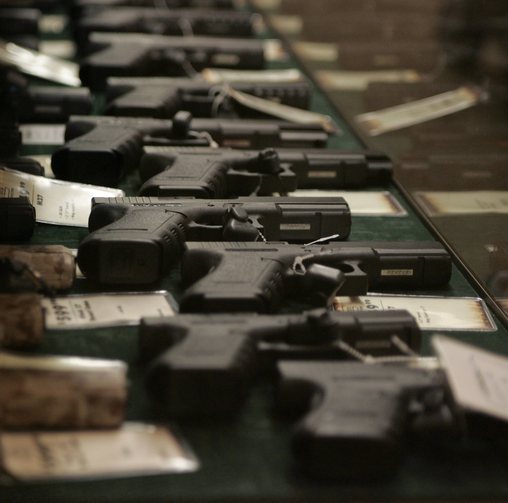
Plagued by rising levels of violent crime, in the autumn of 1976 the District of Columbia enacted one of the nation’s toughest gun control laws. The law effectively banned handguns, automatic firearms and high-capacity semiautomatic weapons. Police officers were exempt from the provisions of the law, as were guns registered before 1976. Over the following decade, the murder rate in Washington, D.C., declined, then increased, shadowing a national trend. Overall, however, the new law helped to prevent nearly 50 deaths per year, according to one study published in The New England Journal of Medicine. “We knew there were problems we couldn’t wipe out,” said Sterling Tucker, chair of the district council at the time, as he reflected on the law 22 years later. “But we had a little more control over it.”
On June 26, 2008, in a closely watched, far-reaching decision, the Supreme Court of the United States struck down the D.C. law, ruling that it violated the Second Amendment to the U.S. Constitution, which states: “A well regulated militia being necessary to the security of a free state, the right of the people to keep and bear arms shall not be infringed.” In the court’s majority opinion, Associate Justice Antonin Scalia wrote: “We are aware of the problem of handgun violence in this country, and we take seriously the concerns raised by the many amici who believe that the prohibition of handgun ownership is a solution.... But the enshrinement of constitutional rights necessarily takes certain policy choices off the table.”
Justice Scalia was right. Even those who subscribe to methods of constitutional interpretation other than Mr. Scalia’s brand of modified originalism must concede the basic point: The Second Amendment impedes the power of the government to regulate the sale or possession of firearms. Unfortunately, the grim consequence of this constitutional restriction is measured in body counts. The murder of 20 elementary school children and six adults in Newtown, Conn., in December was merely the latest in a string of mass shootings: Virginia Tech, Fort Hood, Tucson, Aurora, Oak Creek. In the last 30 years, there have been 62 mass shootings (each leaving at least four people dead) in the United States. Since the 1999 shooting at Columbine High School in Columbine, Colo., there have been 130 shootings at schools; nearly half involved multiple deaths or injuries.
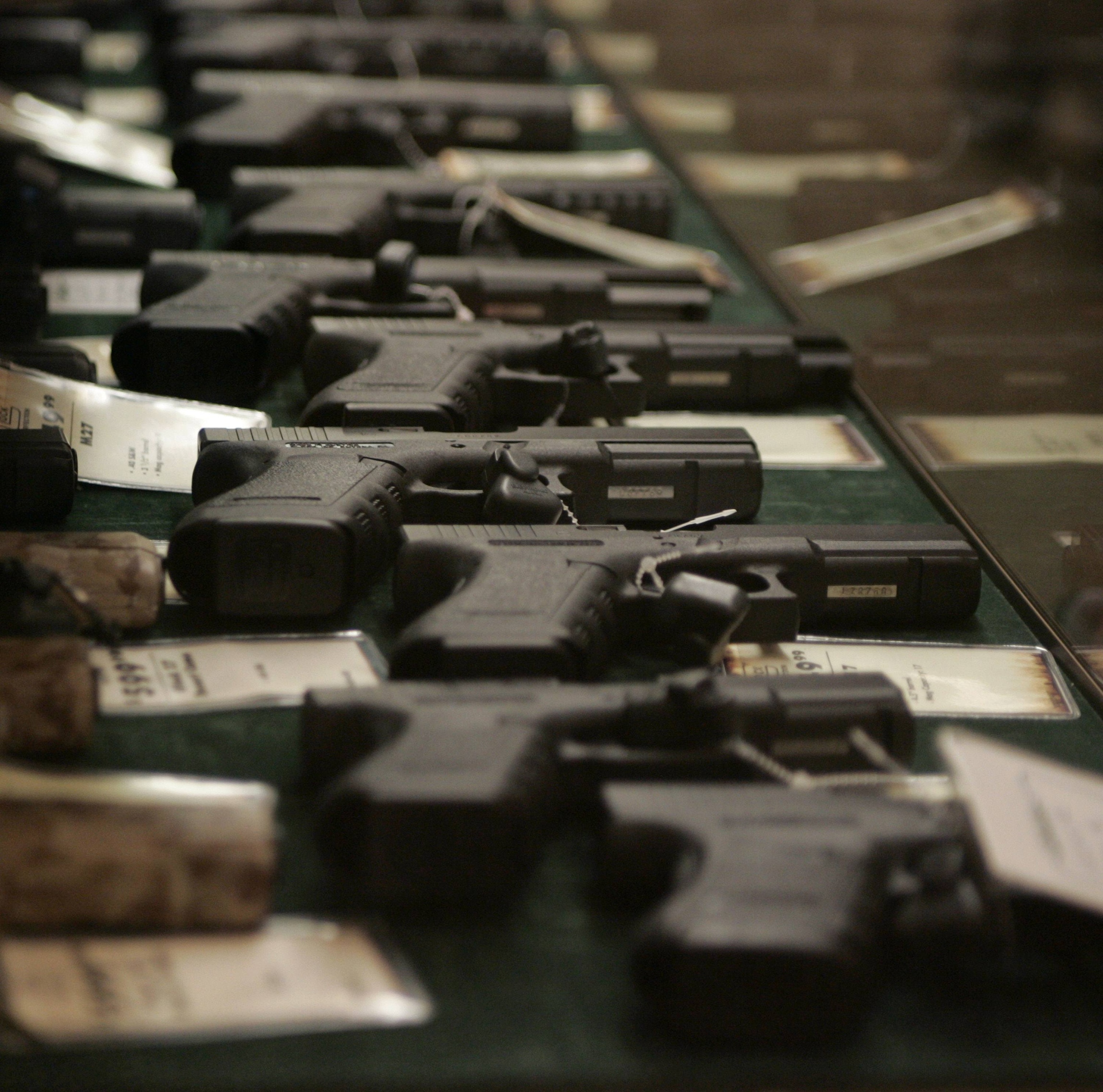
Plagued by rising levels of violent crime, in the autumn of 1976 the District of Columbia enacted one of the nation’s toughest gun control laws. The law effectively banned handguns, automatic firearms and high-capacity semiautomatic weapons. Police officers were exempt from the provisions of the law, as were guns registered before 1976. Over the following decade, the murder rate in Washington, D.C., declined, then increased, shadowing a national trend. Overall, however, the new law helped to prevent nearly 50 deaths per year, according to one study published in The New England Journal of Medicine. “We knew there were problems we couldn’t wipe out,” said Sterling Tucker, chair of the district council at the time, as he reflected on the law 22 years later. “But we had a little more control over it.”
On June 26, 2008, in a closely watched, far-reaching decision, the Supreme Court of the United States struck down the D.C. law, ruling that it violated the Second Amendment to the U.S. Constitution, which states: “A well regulated militia being necessary to the security of a free state, the right of the people to keep and bear arms shall not be infringed.” In the court’s majority opinion, Associate Justice Antonin Scalia wrote: “We are aware of the problem of handgun violence in this country, and we take seriously the concerns raised by the many amici who believe that the prohibition of handgun ownership is a solution.... But the enshrinement of constitutional rights necessarily takes certain policy choices off the table.”
Justice Scalia was right. Even those who subscribe to methods of constitutional interpretation other than Mr. Scalia’s brand of modified originalism must concede the basic point: The Second Amendment impedes the power of the government to regulate the sale or possession of firearms. Unfortunately, the grim consequence of this constitutional restriction is measured in body counts. The murder of 20 elementary school children and six adults in Newtown, Conn., in December was merely the latest in a string of mass shootings: Virginia Tech, Fort Hood, Tucson, Aurora, Oak Creek. In the last 30 years, there have been 62 mass shootings (each leaving at least four people dead) in the United States. Since the 1999 shooting at Columbine High School in Columbine, Colo., there have been 130 shootings at schools; nearly half involved multiple deaths or injuries.
Saturday, January 09, 2016
CNN: Guns in America town hall with President Obama
Full HD Video - CNN's Guns in America Town Hall - US President Barack Obama Town Hall

World SX
Published on Jan 7, 2016
During CNN's Guns in America town hall, President Barack Obama answers the questions
President Barack Obama rejected the "imaginary fiction" that he wanted to take away the guns of law-abiding Americans during a town hall meeting on his gun policies aired on CNN Thursday night.
"The way it is described, is that we are trying to take away everybody's guns," Obama said, charging that his opponents had twisted his plans on gun safety measures.
"Our position is consistently mischaracterized," Obama said. "If you listen to the rhetoric, it is so over-the-top, it is so overheated."
The town hall was a rare forum for a President who is entering his final full year in office. He fielded questions from those who support his actions, including a priest and victims of gun violence at the "Guns in America" special. But he also heard from a wide range of advocates opposed to his policies, including a gun executive, a sheriff, a rape survivor and a widow who criticized his executive actions that would, among other things, narrow the so-called "gun-show loophole" on background checks.
The President also said that he would be happy to meet with representatives of the National Rifle Association, which declined to take part in the town hall meeting even though other gun rights advocates did attend. But he said the conversation would have to be based on facts, "not some imaginary fiction in which Obama is trying to take away your guns."
He dismissed such accusations as conspiracies, and that the notion that he would be paving the way for eventual martial law as absurd given that he didn't have much time left in the White House.
"I'm only going to be here for another year," he said.
Obama is headlining the "Guns in America" event exclusively on CNN to press for public support for the executive measures he announced on Tuesday. In an interview with Anderson Cooper, Obama attributed some of the tensions over the issue to divergent perceptions on gun ownership between rural and inner city communities.
"Part of the reason, I think, that this ends up being such a difficult issue is because people occupy different realities," he said.
The President opened the event by acknowledging that he himself has never owned a gun and had little experience with them, stemming in part from his upbringing in Hawaii, where he said sport shooting is not as popular as in other parts of the country.
He then disputed the notion that most criminals got guns illegally or through personal connections, making background checks -- a major focus on his policy initiative on guns -- of little utility.
"All of us can agree that It makes sense to do everything we can to keep guns out of the hands of people who would do others harm, or themselves harm," he said.
He called on Congress to set up a system that is "efficient" and doesn't inconvenience lawful gun owners to create a background check system that would stem at least some illegal gun activity.
"The fact that the system doesn't catch every single person ... has to be weighed against the fact that we might be able to save a whole bunch of families from the grief that some of the people in this audience have had to go through," he said.
He made a similar argument in response to a question from Arizona Sheriff Paul Babeu, who said that the executive actions wouldn't have prevented the mass shootings that prompted much of Obama's push for greater gun control.
"How are we going to get them to follow the laws?" Babeu asked of those who commit gun crimes.
After Babeu was introduced as a Republican running for Congress, Obama responded with a hint of sarcasm as he wished him good luck in his race.
.
Wednesday, May 20, 2015
Run from Cuba, Americans cling to claims for seized property
Michigan
US families who fled Cuba generations ago wonder if new diplomacy will pay for what they lost

In this undated photo provided by Carolyn Chester, her parents, Edmund and Enna Chester and their daughter, Patricia, arrive in Cuba on a flight from Florida. When Fidel Castro's government began confiscating the property of thousands of U.S. citizens and companies in 1959, the Chesters lost an 80-acre farm and hundreds of thousands of dollars worth of stock. (AP Photo)(AP)
By ADAM GELLER AP National Writer
Posted on March 30, 2015 at 1:22 a.m.
OMAHA, Neb. (AP) — The smell of Cuban coffee drifts from the kitchen as Carolyn Chester digs through faded photos that fill boxes spread across the dining table.
Friends linked arm-in-arm on a Cuban beach.
Men in suits and women in evening gowns at a Havana nightclub.
And in almost every frame, an American man with a salt-and-pepper mustache and a raven-haired woman — Chester’s parents — smiling at good fortune that, they could not know, would soon be snatched away.
“I always heard about Cuba ... and all this money that we lost and ‘Maybe one day,‘ but I didn’t understand it,” Chester says.
Six decades later, that day may finally be nearing for Chester and others like her. To reach it, though, diplomacy will have to settle very old scores.
After Fidel Castro seized power in 1959, Cuba confiscated property belonging to thousands of American citizens and companies. Edmund and Enna Chester lost an 80-acre farm, thousands of dollars’ worth of stock, and a Buick that, who knows, may still be plying Havana’s streets.
In 1996, Congress passed a law insisting Cuba pay for confiscated property, valued today at $7 billion, before lifting the U.S. embargo.
That went unmentioned in President Barack Obama’s December announcement that the countries would resume diplomatic ties. Given Cuba’s frail economy, experts say companies whose property was taken might settle for rights to do business there and move on.
But corporations don’t cling to memories like families can. That’s clear inside Chester’s 832-square-foot bungalow, where her mother’s gold-framed portrait watches over the yellowing property deed and worthless stock certificates — reminders that Cuba before Castro is history.
But bitterness over what came after lingers on.
Inside a little-known federal agency, 5,900 claims files tally property that once belonged to Americans in Cuba.
But really, the claims are stories of lives left behind.
Edmund Chester’s story began when he returned to Louisville, Kentucky, from the Army and found work as a newspaper reporter. He taught himself Spanish and in 1929 was hired by The Associated Press, which dispatched him to Havana.
Chester spent a decade reporting from the Caribbean and Latin America, time that seeded two crucial relationships.
The first came after covering a 1933 revolt that put a former sergeant, Fulgencio Batista, in charge of Cuba’s military. In the 1950s, when Batista was Cuba’s dictator, he trusted Chester — by then a confidante and no longer a journalist — to write his biography.
The second began when Chester covered a 1939 earthquake in Chile and spotted Enna at a hotel swimming pool.
In 1940, CBS hired Chester as chief of radio broadcasting for Latin America. Eventually, he became the network’s director of news in New York.
Chester returned to Cuba in 1952, buying a chain of radio stations on an island that was a U.S. economic outpost and a hedonistic getaway for Americans, including celebrities like Frank Sinatra.
Chester eventually sold the stations, but the family continued splitting time between Havana and Florida. He opened a public relations agency in Cuba and bought an 80-acre farm there. In 1957, the Chesters acquired $250,000 worth of Cuban Telephone Co shares.
But Edmund Chester, then Batista’s speechwriter, grew uneasy as Castro gained ground.
“I agree that we ought to make (a) complete break with Cuba at the earliest possible moment,” he wrote Enna in 1958.
He rejoined the family in Florida before Christmas. Batista fled days later, and Castro seized control.
When the Soviet Union began shipping oil to Cuba, the U.S. ordered island refineries, most American-owned, not to process its archrival’s crude.
Cuba seized the refineries. The U.S. eliminated price protection for Cuban sugar, which earned 90 percent of the island’s hard currency. By the time President John F. Kennedy imposed the embargo in 1962, Cuba had confiscated scores of properties.
Marooned, Edmund Chester wrote that his nest egg had been “whipped into a batch of Cuban scrambled eggs by the tyranny of Fidel Castro.”
__
The federal Foreign Claims Settlement Commission fielded thousands of claims for confiscated Cuban property. The largest came from corporations, led by U.S.-owned Cuban Electric Company, for power plants valued at $268 million. But most came from individuals and families.
Experts differ on what to make of the American claims, protected by international law.
“You’re now dealing in the realm of memory more than anything else,” says Robert Muse, an attorney representing companies with claims.
But Mauricio Tamargo, commission chairman until 2010 and now a Washington attorney representing claimants, said confiscations inflicted lasting damage on families.
“Many of them never recovered financially,” Tamargo says.
__
Edmund Chester, in his early 60s with three young children, put his remaining savings into chicken farms that were “a financial disaster,” son Edmund Jr. says.
Stress weighed on the elder Chester, whose mental faculties were fading. He feared Castro’s men were coming to kill him. At night, he awoke screaming.
Before dying in 1975, he invested hopes in winning compensation for property seizures that were “so sudden, so violent, and so complete.”
Enna Chester’s death in 2001 left her daughter with old home movies, dense paperwork and debts.
After moving to Omaha in 2006, Carolyn Chester got a job at Creighton University and showed co-workers her Cuba photos.
One day, a colleague mentioned that law school professors were researching claims for confiscated Cuban property. Hadn’t Castro taken the Chesters’ property, too?
In 2005 U.S. officials commissioned a study of the claims and strategies for settling them. A group at Creighton won the job.
Professors pored over old claims. Two flew to Cuba, searching for the properties. Some were moldering, others gone.
“These are people’s lives, the things that they lost,” political science professor Rick Witmer says.
But Cuba doesn’t have the money to pay claims in full, law professor Michael Kelly says.
In 2007, Creighton professors cautioned claims might net just 3 or 4 cents on the dollar.
Claimants had long been told losses would be adjusted for inflation. When an investor offered to buy Chester’s claim for a fraction of its original $489,000 value, she grew angry and began devoting hours to studying records.
In December, Chester listened as Obama spoke of rewriting policy “rooted in events that took place before most of us were born.”
To Chester, the speech signaled the desire of politicians and corporations to look beyond the claims.
But Castro didn’t merely take property, she says. He stole her parents’ financial security, her father’s health — and her inheritance.
Fifty-six years later, she says, “I’m not going to let him take from me again.”
Adam Geller can be reached at features@ap.org. Follow him on Twitter at https://twitter.com/AdGeller


By ADAM GELLER AP National Writer
Posted on March 30, 2015 at 1:22 a.m.
OMAHA, Neb. (AP) — The smell of Cuban coffee drifts from the kitchen as Carolyn Chester digs through faded photos that fill boxes spread across the dining table.
Friends linked arm-in-arm on a Cuban beach.
Men in suits and women in evening gowns at a Havana nightclub.
And in almost every frame, an American man with a salt-and-pepper mustache and a raven-haired woman — Chester’s parents — smiling at good fortune that, they could not know, would soon be snatched away.
“I always heard about Cuba ... and all this money that we lost and ‘Maybe one day,‘ but I didn’t understand it,” Chester says.
Six decades later, that day may finally be nearing for Chester and others like her. To reach it, though, diplomacy will have to settle very old scores.
After Fidel Castro seized power in 1959, Cuba confiscated property belonging to thousands of American citizens and companies. Edmund and Enna Chester lost an 80-acre farm, thousands of dollars’ worth of stock, and a Buick that, who knows, may still be plying Havana’s streets.
In 1996, Congress passed a law insisting Cuba pay for confiscated property, valued today at $7 billion, before lifting the U.S. embargo.
That went unmentioned in President Barack Obama’s December announcement that the countries would resume diplomatic ties. Given Cuba’s frail economy, experts say companies whose property was taken might settle for rights to do business there and move on.
But corporations don’t cling to memories like families can. That’s clear inside Chester’s 832-square-foot bungalow, where her mother’s gold-framed portrait watches over the yellowing property deed and worthless stock certificates — reminders that Cuba before Castro is history.
But bitterness over what came after lingers on.
Inside a little-known federal agency, 5,900 claims files tally property that once belonged to Americans in Cuba.
But really, the claims are stories of lives left behind.
Edmund Chester’s story began when he returned to Louisville, Kentucky, from the Army and found work as a newspaper reporter. He taught himself Spanish and in 1929 was hired by The Associated Press, which dispatched him to Havana.
Chester spent a decade reporting from the Caribbean and Latin America, time that seeded two crucial relationships.
The first came after covering a 1933 revolt that put a former sergeant, Fulgencio Batista, in charge of Cuba’s military. In the 1950s, when Batista was Cuba’s dictator, he trusted Chester — by then a confidante and no longer a journalist — to write his biography.
The second began when Chester covered a 1939 earthquake in Chile and spotted Enna at a hotel swimming pool.
In 1940, CBS hired Chester as chief of radio broadcasting for Latin America. Eventually, he became the network’s director of news in New York.
Chester returned to Cuba in 1952, buying a chain of radio stations on an island that was a U.S. economic outpost and a hedonistic getaway for Americans, including celebrities like Frank Sinatra.
Chester eventually sold the stations, but the family continued splitting time between Havana and Florida. He opened a public relations agency in Cuba and bought an 80-acre farm there. In 1957, the Chesters acquired $250,000 worth of Cuban Telephone Co shares.
But Edmund Chester, then Batista’s speechwriter, grew uneasy as Castro gained ground.
“I agree that we ought to make (a) complete break with Cuba at the earliest possible moment,” he wrote Enna in 1958.
He rejoined the family in Florida before Christmas. Batista fled days later, and Castro seized control.
When the Soviet Union began shipping oil to Cuba, the U.S. ordered island refineries, most American-owned, not to process its archrival’s crude.
Cuba seized the refineries. The U.S. eliminated price protection for Cuban sugar, which earned 90 percent of the island’s hard currency. By the time President John F. Kennedy imposed the embargo in 1962, Cuba had confiscated scores of properties.
Marooned, Edmund Chester wrote that his nest egg had been “whipped into a batch of Cuban scrambled eggs by the tyranny of Fidel Castro.”
__
The federal Foreign Claims Settlement Commission fielded thousands of claims for confiscated Cuban property. The largest came from corporations, led by U.S.-owned Cuban Electric Company, for power plants valued at $268 million. But most came from individuals and families.
Experts differ on what to make of the American claims, protected by international law.
“You’re now dealing in the realm of memory more than anything else,” says Robert Muse, an attorney representing companies with claims.
But Mauricio Tamargo, commission chairman until 2010 and now a Washington attorney representing claimants, said confiscations inflicted lasting damage on families.
“Many of them never recovered financially,” Tamargo says.
__
Edmund Chester, in his early 60s with three young children, put his remaining savings into chicken farms that were “a financial disaster,” son Edmund Jr. says.
Stress weighed on the elder Chester, whose mental faculties were fading. He feared Castro’s men were coming to kill him. At night, he awoke screaming.
Before dying in 1975, he invested hopes in winning compensation for property seizures that were “so sudden, so violent, and so complete.”
Enna Chester’s death in 2001 left her daughter with old home movies, dense paperwork and debts.
After moving to Omaha in 2006, Carolyn Chester got a job at Creighton University and showed co-workers her Cuba photos.
One day, a colleague mentioned that law school professors were researching claims for confiscated Cuban property. Hadn’t Castro taken the Chesters’ property, too?
In 2005 U.S. officials commissioned a study of the claims and strategies for settling them. A group at Creighton won the job.
Professors pored over old claims. Two flew to Cuba, searching for the properties. Some were moldering, others gone.
“These are people’s lives, the things that they lost,” political science professor Rick Witmer says.
But Cuba doesn’t have the money to pay claims in full, law professor Michael Kelly says.
In 2007, Creighton professors cautioned claims might net just 3 or 4 cents on the dollar.
Claimants had long been told losses would be adjusted for inflation. When an investor offered to buy Chester’s claim for a fraction of its original $489,000 value, she grew angry and began devoting hours to studying records.
In December, Chester listened as Obama spoke of rewriting policy “rooted in events that took place before most of us were born.”
To Chester, the speech signaled the desire of politicians and corporations to look beyond the claims.
But Castro didn’t merely take property, she says. He stole her parents’ financial security, her father’s health — and her inheritance.
Fifty-six years later, she says, “I’m not going to let him take from me again.”
Adam Geller can be reached at features@ap.org. Follow him on Twitter at https://twitter.com/AdGeller
.
Sunday, April 07, 2013
1991 Book Predicts School Shootings By Drugged Individuals In Order To Disarm Public
Friday, December 28, 2012 22:15
(Before It's News)
The Arcane Front http://tiny.cc/u081pw
Does this seem familiar? From the pages of Milton William Cooper’s 1991 book Behold A Pale Horse:
“The government encouraged the manufacture and importation of firearms for the criminals to use. This is intended to foster a feeling of insecurity, which would lead the American people to voluntarily disarm themselves by passing laws against firearms. Using drugs and hypnosis on mental patients in a process called Orion, the CIA inculcated the desire in these people to open fire on schoolyards and thus inflame the ant-igun lobby. This plan is well under way, and so far is working perfectly. The middle class is begging the government to do away with the 2nd Amendment.” — with Anya Lambert. A complete lecture by Cooper on The Secret Government is available here:

Milton William Cooper (May 6, 1943 – November 5, 2001) was an American conspiracy theorist, radio broadcaster, and author best known for his 1991 book, Behold a Pale Horse, in which he claimed global conspiracies, some involving aliens.
On November 5, 2001 Cooper was fatally shot by a law enforcement officer at his Eagar, Arizona home after confronting deputies trying to arrest him and shooting one of them in the head. Authorities said Cooper was carrying a handgun and fled when Apache County deputies identified themselves and tried to arrest Cooper on charges of aggravated assault with a deadly weapon and endangerment stemming from earlier disputes with local residents. Federal authorities reported that Cooper spent years trying to avoid capture on a 1998 arrest warrant for tax evasion and according to a spokesman for the U.S. Marshals Service, Cooper vowed “he would not be taken alive”
Milton William Cooper

Credit: Wikipedia
Mark Potok, spokesman for the Southern Poverty Law Center, writes that Cooper was well known within the militia movement for his book, Behold a Pale Horse and his anti-government shortwave radio program that reportedly included Oklahoma City bomber Timothy J. McVeigh as a fan.
Political scientist Michael Barkun characterized Behold a Pale Horse as “among the most complex superconspiracy theories” and also among the most influential, being much read in militia circles as well as widely sold in mainstream bookstores. Read the rest of the article here- http://beforeitsnews.com/politics/2012/12/1991-books-predicts-schoo...
Source
.
Tuesday, April 02, 2013
Tax on Deposits Means Stealing Your Money - Gerald Celente

Greg Hunter
Published on Mar 31, 2013
http://usawatchdog.com/u-s-provoking-... Gerald Celente of The Trends Journal.com says the Cyprus banking crisis is coming to America. Celente explains, "Tax on deposits? Can any adult say stealing your money?" What about the recent lackluster performance of gold and silver? Can it still protect you? Celente says, "Suppose you can't get your money out of the banks. Suppose they just screwed you. You need food or fuel. You'd like a couple of pieces of gold or silver in your hand. You think that would buy you anything?" On the subject of Homeland Security stockpiling hollow point ammunition, Celente says, "That we are even having this discussion shows how fascist things have become. How much of history has to be repeated before we see it is repeating itself, again?" Join Greg Hunter as he goes One-on-One with Gerald Celente Publisher of the Trends Journal
Published on Mar 31, 2013
http://usawatchdog.com/u-s-provoking-... Gerald Celente of The Trends Journal.com says the Cyprus banking crisis is coming to America. Celente explains, "Tax on deposits? Can any adult say stealing your money?" What about the recent lackluster performance of gold and silver? Can it still protect you? Celente says, "Suppose you can't get your money out of the banks. Suppose they just screwed you. You need food or fuel. You'd like a couple of pieces of gold or silver in your hand. You think that would buy you anything?" On the subject of Homeland Security stockpiling hollow point ammunition, Celente says, "That we are even having this discussion shows how fascist things have become. How much of history has to be repeated before we see it is repeating itself, again?" Join Greg Hunter as he goes One-on-One with Gerald Celente Publisher of the Trends Journal
.
Monday, April 01, 2013
It Can Happen Here: The Bank Confiscation Scheme for US and UK Depositors
By Ellen Brown
Global Research, March 29, 2013

Confiscating the customer deposits in Cyprus banks, it seems, was not a one-off, desperate idea of a few Eurozone “troika” officials scrambling to salvage their balance sheets. A joint paper by the US Federal Deposit Insurance Corporation and the Bank of England dated December 10, 2012, shows that these plans have been long in the making; that they originated with the G20 Financial Stability Board in Basel, Switzerland (discussed earlierhere); and that the result will be to deliver clear title to the banks of depositor funds.
New Zealand has a similar directive, discussed in my last articlehere, indicating that this isn’t just an emergency measure for troubled Eurozone countries. New Zealand’s Voxy reported on March 19th:
The National Government [is] pushing a Cyprus-style solution to bank failure in New Zealand which will see small depositors lose some of their savings to fund big bank bailouts . . . .
Open Bank Resolution (OBR) is Finance Minister Bill English’s favoured option dealing with a major bank failure. If a bank fails under OBR, all depositors will have their savings reduced overnight to fund the bank’s bail out.
Can They Do That?
Although few depositors realize it, legally the bank owns the depositor’s funds as soon as they are put in the bank. Our money becomes the bank’s, and we become unsecured creditors holding IOUs or promises to pay. (See here and here.) But until now the bank has been obligated to pay the money back on demand in the form of cash. Under the FDIC-BOE plan, our IOUs will be converted into “bank equity.” The bank will get the money and we will get stock in the bank. With any luck we may be able to sell the stock to someone else, but when and at what price? Most people keep a deposit account so they can have ready cash to pay the bills.
The 15-page FDIC-BOE document is called “Resolving Globally Active, Systemically Important, Financial Institutions.” It begins by explaining that the 2008 banking crisis has made it clear that some other way besides taxpayer bailouts is needed to maintain “financial stability.” Evidently anticipating that the next financial collapse will be on a grander scale than either the taxpayers or Congress is willing to underwrite, the authors state:
An efficient path for returning the sound operations of the G-SIFI to the private sector would be provided by exchanging or converting a sufficient amount of the unsecured debt from the original creditors of the failed company [meaning the depositors] into equity [or stock]. In the U.S., the new equity would become capital in one or more newly formed operating entities. In the U.K., the same approach could be used, or the equity could be used to recapitalize the failing financial company itself—thus, the highest layer of surviving bailed-in creditors would become the owners of the resolved firm. In either country, the new equity holders would take on the corresponding risk of being shareholders in a financial institution.
No exception is indicated for “insured deposits” in the U.S., meaning those under $250,000, the deposits we thought were protected by FDIC insurance. This can hardly be an oversight, since it is the FDIC that is issuing the directive. The FDIC is an insurance company funded by premiums paid by private banks. The directive is called a “resolution process,” defined elsewhere as a plan that “would be triggered in the event of the failure of an insurer . . . .” The only mention of “insured deposits” is in connection with existing UK legislation, which the FDIC-BOE directive goes on to say is inadequate, implying that it needs to be modified or overridden.
An Imminent Risk
If our IOUs are converted to bank stock, they will no longer be subject to insurance protection but will be “at risk” and vulnerable to being wiped out, just as the Lehman Brothers shareholders were in 2008. That this dire scenario could actually materialize was underscored by Yves Smith in a March 19th post titled When You Weren’t Looking, Democrat Bank Stooges Launch Bills to Permit Bailouts, Deregulate Derivatives. She writes:
In the US, depositors have actually been put in a worse position than Cyprus deposit-holders, at least if they are at the big banks that play in the derivatives casino. The regulators have turned a blind eye as banks use their depositaries to fund derivatives exposures. And as bad as that is, the depositors, unlike their Cypriot confreres, aren’t even senior creditors. Remember Lehman? When the investment bank failed, unsecured creditors (and remember, depositors are unsecured creditors) got eight cents on the dollar. One big reason was that derivatives counterparties require collateral for any exposures, meaning they are secured creditors. The 2005 bankruptcy reforms made derivatives counterparties senior to unsecured lenders.
One might wonder why the posting of collateral by a derivative counterparty, at some percentage of full exposure, makes the creditor “secured,” while the depositor who puts up 100 cents on the dollar is “unsecured.” But moving on – Smith writes:
Lehman had only two itty bitty banking subsidiaries, and to my knowledge, was not gathering retail deposits. But as readers may recall, Bank of America moved most of its derivatives from its Merrill Lynch operation [to] its depositary in late 2011.
Its “depositary” is the arm of the bank that takes deposits; and at B of A, that means lots and lots of deposits. The deposits are now subject to being wiped out by a major derivatives loss. How bad could that be? Smith quotes Bloomberg:
. . . Bank of America’s holding company . . . held almost $75 trillion of derivatives at the end of June . . . .
That compares with JPMorgan’s deposit-taking entity, JPMorgan Chase Bank NA, which contained 99 percent of the New York-based firm’s $79 trillion of notional derivatives, the OCC data show.
$75 trillion and $79 trillion in derivatives! These two mega-banks alone hold more in notional derivatives each than the entire global GDP (at $70 trillion). The “notional value” of derivatives is not the same as cash at risk, but according to a cross-post on Smith’s site:
By at least one estimate, in 2010 there was a total of $12 trillion in cash tied up (at risk) in derivatives . . . .
$12 trillion is close to the US GDP. Smith goes on:
. . . Remember the effect of the 2005 bankruptcy law revisions: derivatives counterparties are first in line, they get to grab assets first and leave everyone else to scramble for crumbs. . . . Lehman failed over a weekend after JP Morgan grabbed collateral.
But it’s even worse than that. During the savings & loan crisis, the FDIC did not have enough in deposit insurance receipts to pay for the Resolution Trust Corporation wind-down vehicle. It had to get more funding from Congress. This move paves the way for another TARP-style shakedown of taxpayers, this time to save depositors.
Perhaps, but Congress has already been burned and is liable to balk a second time. Section 716 of the Dodd-Frank Act specifically prohibits public support for speculative derivatives activities. And in the Eurozone, while the European Stability Mechanism committed Eurozone countries to bail out failed banks, they are apparently having second thoughts there as well. On March 25th, Dutch Finance Minister Jeroen Dijsselbloem, who played a leading role in imposing the deposit confiscation plan on Cyprus, told reporters that it would be the template for any future bank bailouts, and that “the aim is for the ESM never to have to be used.”
That explains the need for the FDIC-BOE resolution. If the anticipated enabling legislation is passed, the FDIC will no longer need to protect depositor funds; it can just confiscate them.
Worse Than a Tax
An FDIC confiscation of deposits to recapitalize the banks is far different from a simple tax on taxpayers to pay government expenses. The government’s debt is at least arguably the people’s debt, since the government is there to provide services for the people. But when the banks get into trouble with their derivative schemes, they are not serving depositors, who are not getting a cut of the profits. Taking depositor funds is simply theft.
What should be done is to raise FDIC insurance premiums and make the banks pay to keep their depositors whole, but premiums are already high; and the FDIC, like other government regulatory agencies, is subject to regulatory capture. Deposit insurance has failed, and so has the private banking system that has depended on it for the trust that makes banking work.
The Cyprus haircut on depositors was called a “wealth tax” and was written off by commentators as “deserved,” because much of the money in Cypriot accounts belongs to foreign oligarchs, tax dodgers and money launderers. But if that template is applied in the US, it will be a tax on the poor and middle class. Wealthy Americans don’t keep most of their money in bank accounts. They keep it in the stock market, in real estate, in over-the-counter derivatives, in gold and silver, and so forth.
Are you safe, then, if your money is in gold and silver? Apparently not – if it’s stored in a safety deposit box in the bank. Homeland Security has reportedly told banks that it has authority to seize the contents of safety deposit boxes without a warrant when it’s a matter of “national security,” which a major bank crisis no doubt will be.
The Swedish Alternative: Nationalize the Banks
Another alternative was considered but rejected by President Obama in 2009: nationalize mega-banks that fail. In a February 2009 article titled “Are Uninsured Bank Depositors in Danger?“, Felix Salmon discussed a newsletter by Asia-based investment strategist Christopher Wood, in which Wood wrote:
It is . . . amazing that Obama does not understand the political appeal of the nationalization option. . . . [D]espite this latest setback nationalization of the banks is coming sooner or later because the realities of the situation will demand it. The result will be shareholders wiped out and bondholders forced to take debt-for-equity swaps, if not hopefully depositors.
On whether depositors could indeed be forced to become equity holders, Salmon commented:
It’s worth remembering that depositors are unsecured creditors of any bank; usually, indeed, they’re by far the largest class of unsecured creditors.
President Obama acknowledged that bank nationalization had worked in Sweden, and that the course pursued by the US Fed had not worked in Japan, which wound up instead in a “lost decade.” But Obama opted for the Japanese approach because, according to Ed Harrison, “Americans will not tolerate nationalization.”
But that was four years ago. When Americans realize that the alternative is to have their ready cash transformed into “bank stock” of questionable marketability, moving failed mega-banks into the public sector may start to have more appeal.
Ellen Brown is an attorney, chairman of the Public Banking Institute, and the author of eleven books, including Web of Debt: The Shocking Truth About Our Money System and How We Can Break Free. Her websites are webofdebt.com and ellenbrown.com. For details of the June 2013 Public Banking Institute conference in San Rafael, California, see here.
.
Subscribe to:
Posts (Atom)