Showing posts with label Newsweek. Show all posts

Thursday, October 22, 2026

Churches Strike Blow to Trump Admin in Fight Over ICE Raids


PUBLISHED
OCT 21, 2026 AT 11:30 AM EDT


By Billal Rahman
Immigration Reporter

A federal appeals court has allowed a coalition of religious organizations to pursue its challenge to the Trump administration’s decision to lift restrictions on immigration enforcement at houses of worship.

The U.S. Court of Appeals for the District of Columbia Circuit ruled 2-1 Tuesday that the religious organizations had sufficiently demonstrated standing at this stage of the case, reversing a lower court decision that found the threat of enforcement was not sufficiently imminent. U.S. Circuit Judge Florence Pan, a Biden appointee, joined by U.S. Circuit Judge Robert Wilkins, an Obama appointee, wrote the majority opinion. The case was sent back to U.S. District Judge Dabney Friedrich, a Trump appointee, to reconsider the request for a preliminary injunction. U.S. Circuit Judge Neomi Rao, a Trump appointee, dissented.

The ruling does not decide whether the administration’s policy is lawful, nor does it prohibit ICE from carrying out enforcement actions at churches.


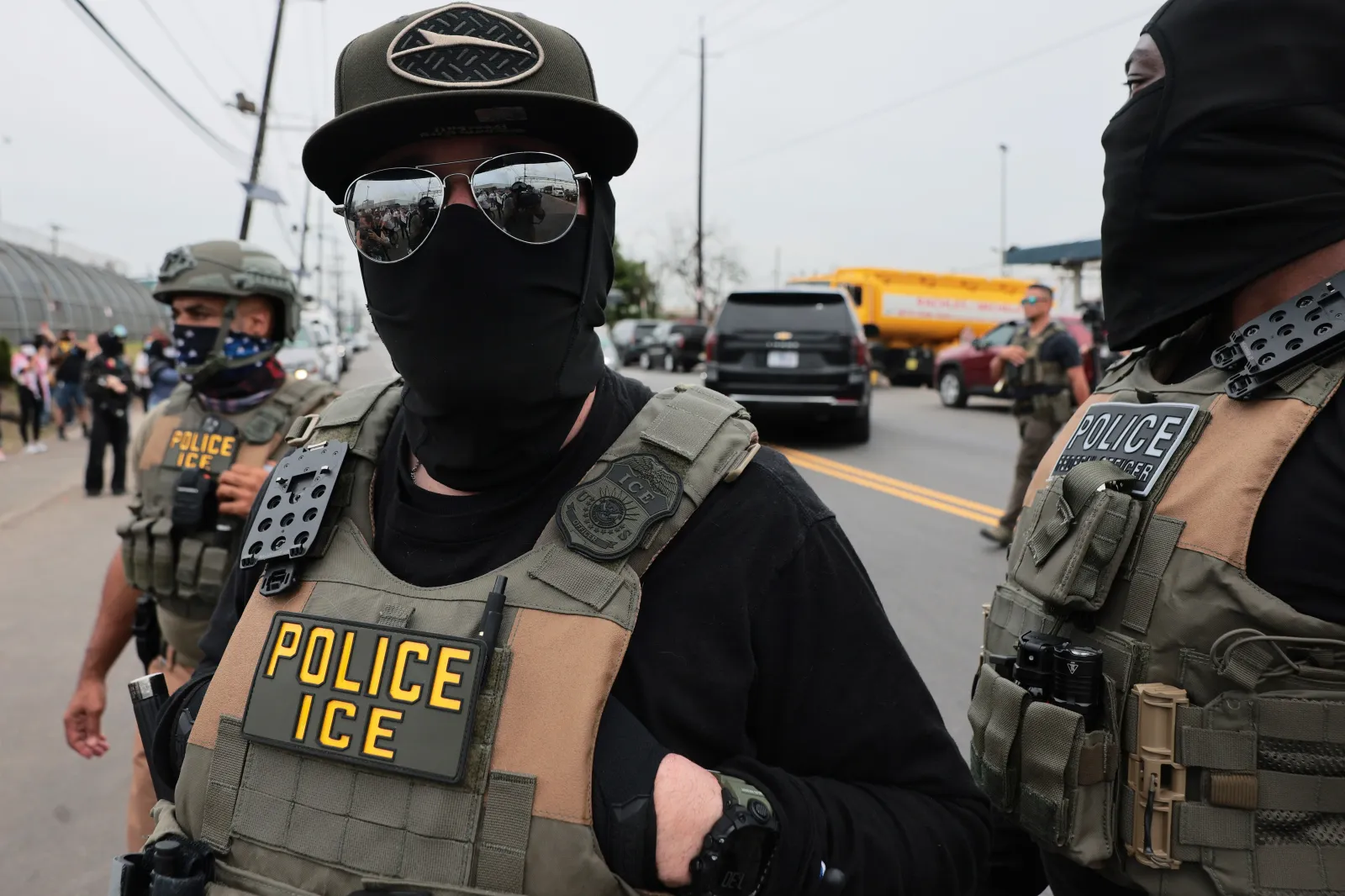
Immigration and Customs Enforcement (ICE) agents stand guard in front of protesters outside Delaney Hall, which is being used as an Immigration and Cu... | Michael M. Santiago/Getty Images

What to Know About ICE Arrests at Churches and Schools

The legal disputes follow the administration’s elimination of protections that had generally discouraged immigration arrests and other enforcement activity at sensitive locations.

Religious organizations challenging the change say immigration enforcement in and around churches can deter some people from attending worship services and participating in ministries. The administration has argued that immigration officers should retain discretion to enforce federal law rather than be governed by categorical restrictions on particular locations.

Sunday, October 11, 2026

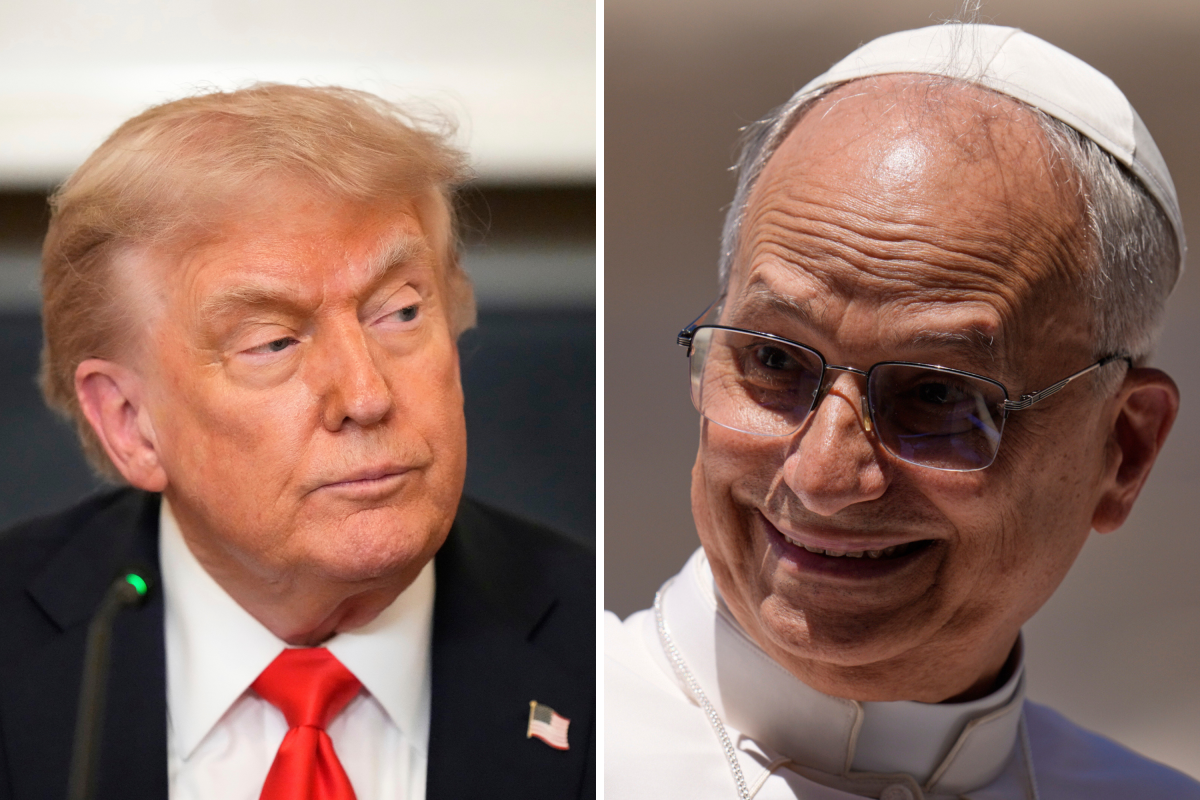
Trump Touts Pastor’s Support for Hasan Execution Livestream as Pope Objects


Trump Touts Pastor’s Support for Hasan Execution Livestream as Pope Objects


PUBLISHED

OCT 10, 2026 AT 05:27 PM EDT

UPDATED

OCT 11, 2026 AT 09:39 AM EDT


By Steve Mollman

News Editor

President Donald Trump promoted a pastor’s biblical defense of livestreaming Fort Hood mass shooter Nidal Hasan’s execution on Saturday, even as the president said he would personally decide whether the controversial broadcast goes ahead.

Trump reposted a report featuring Robert Jeffress, senior pastor of First Baptist Dallas and a longtime Trump ally, who argued that the public execution would demonstrate the sanctity of human life.

The post sharpened a divide among religious leaders after Pope Leo XIV reiterated the Catholic Church’s opposition to capital punishment and the head of the U.S. Conference of Catholic Bishops directly condemned the proposed livestream.

It also came as opposition widened among Democratic lawmakers and some Republicans who support executing Hasan but oppose livestreaming it.

Newsweek reached out to the White House for comment on Saturday.


Monday, September 28, 2026

Resistance to Christian Nationalism Could Help Decide Midterms | Opinion

Opinion
Resistance to Christian Nationalism Could Help Decide Midterms | Opinion

PUBLISHED

SEP 24, 2026 AT 05:00 AM EDT

By Melissa Deckman and Ruth Braunstein


Since the start of the second Trump administration, Christian nationalism—a political movement asserting that the U.S. was founded as, and should remain, a nation of, by and for Christians—has gained unprecedented influence in American politics, challenging long-established lines between church and state and promoting a policy agenda aligned with its right-wing vision of “Christian” values.

Several Trump cabinet officials have deep ties to the movement. Russell Vought was a primary architect of the Heritage Foundation’s Project 2025, widely considered a “Christian nationalist blueprint” for remaking the federal government. As head of the Office of Management and Budget, he has targeted programs the movement views as contrary to Christian values.

Defense Secretary Pete Hegseth has led Pentagon prayer sessions featuring Doug Wilson, an avowed Christian nationalist who supports repealing the 19th Amendment, outlawing all abortion and homosexuality, and has downplayed the horrors of Southern slavery. Under Hegseth's leadership, the Defense Department has also led a propaganda blitz that incorporates Christian nationalist symbolism and directly links American military actions to passages from Christian Scripture.


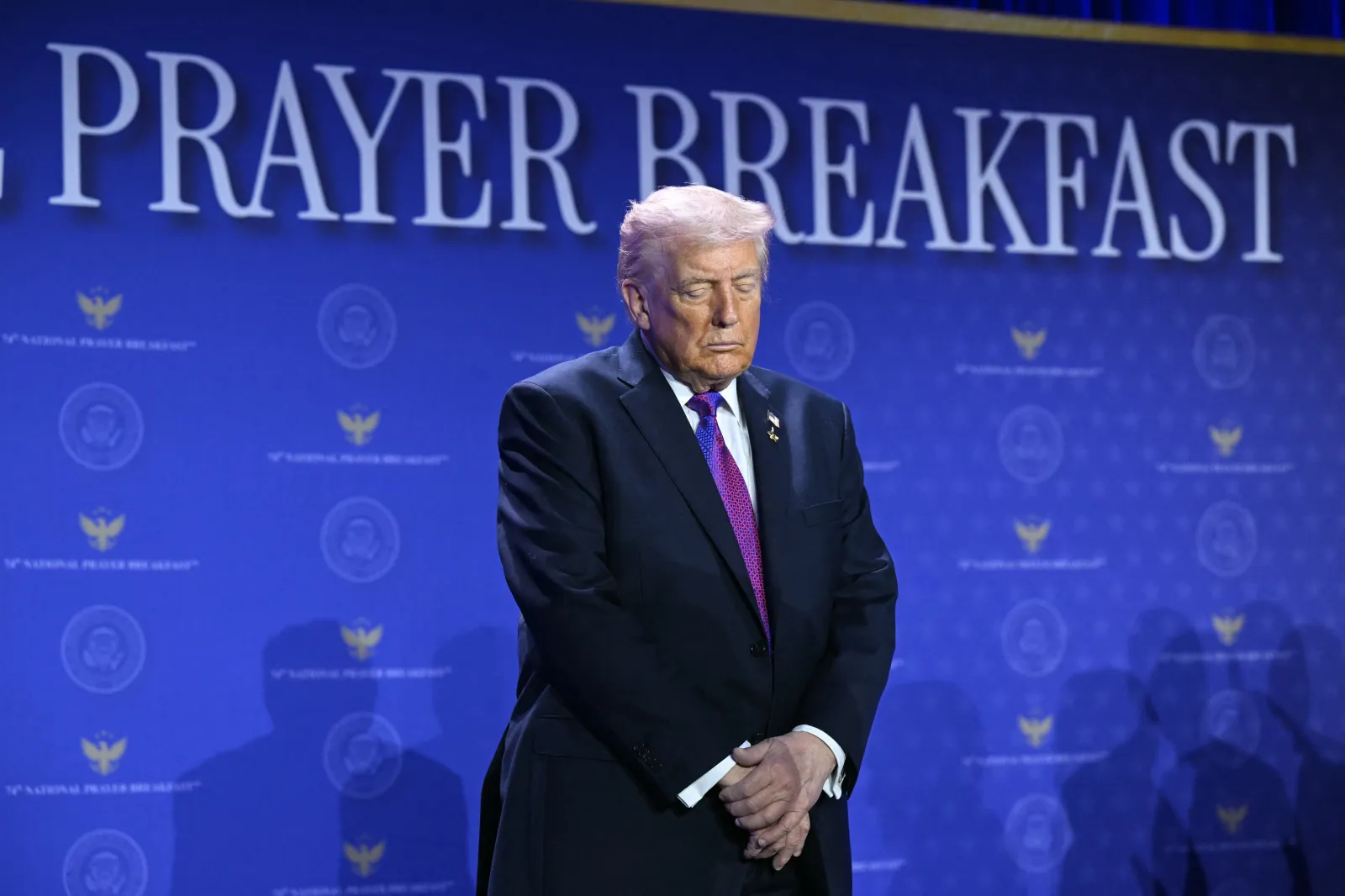
U.S. President Donald Trump bows his head in prayer during the National Prayer Breakfast on February 5, 2026, at the Washington Hilton in Washington, ...Read More | SAUL LOEB / AFP via Getty Images

Yet their worldview remains deeply unpopular. A new joint survey report from the Public Religion Research Institute (PRRI) and the Meanings of Democracy Lab of the SNF Agora Institute at Johns Hopkins University finds that nearly two-thirds of Americans reject this worldview. That could be important come November, when voters get their first chance to weigh in on Trump's second term performance, including the many overtures he's made to Christian nationalists while in office.

While 56 percent of Republicans support Christian nationalism, only 32 percent of Americans overall do. Majorities in all but four states reject Christian nationalism. In Iowa—where Trump won by 13 points in 2024—a strong majority (60 percent) oppose Christian nationalism, as do 57 percent of Texans and 56 percent of Alaskans.

Sunday, September 20, 2026

Trump Cuts Camp David Trip Short as US Issues Middle East Travel Alerts

PUBLISHED

SEP 20, 2026 AT 07:43 AM EDT


By Hugh Cameron

Reporter

Donald Trump ended a weekend trip to the Camp David presidential retreat in Maryland ahead of schedule, following a warning from the State Department that the security situation in the Middle East could “escalate rapidly.”

According to the White House’s public schedule, Trump was meant to depart Camp David on Sunday but returned to Washington, D.C. a day early. A White House pool report states that he landed at the Ellipse south of the White House just before 8 p.m.

The White House has not confirmed the reason for the shortened trip, though this came amid another escalation in the Middle East, with the Houthi rebels claiming responsibility for an attack on Saudi Arabia’s capital, Riyadh. Saturday also saw a new security and travel alert from the State Department concerning the region.

Read More on News

Xi Jinping Health Rumors Explained: What We Know and Don’t Know 4 min read


“Due to tensions in the Middle East, the security environment remains complex with the potential for unforeseen escalation,” read the notice, which has been pushed out by a number of embassies and consular offices. “Americans currently in the Middle East should exercise heightened vigilance and be aware of potential flight cancellations, airspace closures, and travel disruptions.”

Thursday, September 03, 2026

Mom Seeks Supreme Court OK to Take Daughter to Church Against Dad’s Wishes


PUBLISHED  SEP 02, 2026
By Jenni Fink  Senior Editor


A Maine mother's court battle over whether she can take her daughter to church might be headed to the U.S. Supreme Court, setting up a potential clash between parental rights, religious liberty and the authority of family courts to restrict a child's religious activities during custody disputes.

Emily Bickford said a court order preventing her from bringing her daughter to church violates her constitutional rights under the First and Fourteenth Amendments. But Maine's highest court recently rejected those arguments, ruling that the restrictions were based on concerns about the child's well-being rather than hostility toward religion.

Following the ruling, Bickford's attorneys at Liberty Counsel announced plans to petition the U.S. Supreme Court to hear the case, arguing that the decision represents a serious threat to religious freedom and parental rights.

Who Is Emily Bickford?

Bickford is engaged in a years-long custody dispute with her former partner, Matthew Bradeen, over decisions involving their teenage daughter. The conflict eventually expanded beyond ordinary parenting disagreements and into questions about religion, medical decisions and parental authority.

At the center of the case is Calvary Chapel in Westbrook, Maine, where Bickford worships. A Maine district court issued a custody order in December 2024 that prohibits Bickford from bringing her daughter to that church and grants Bradeen sole authority over the child's involvement with Calvary Chapel. The parents retain shared decision-making authority regarding other religious organizations.

Bickford maintains that the order unlawfully interferes with her ability to raise her daughter according to her Christian beliefs. Through Liberty Counsel, she has argued that she is a fit parent who has never been found abusive or neglectful and that government officials should not be permitted to decide whether a child can participate in a parent's religious practices.


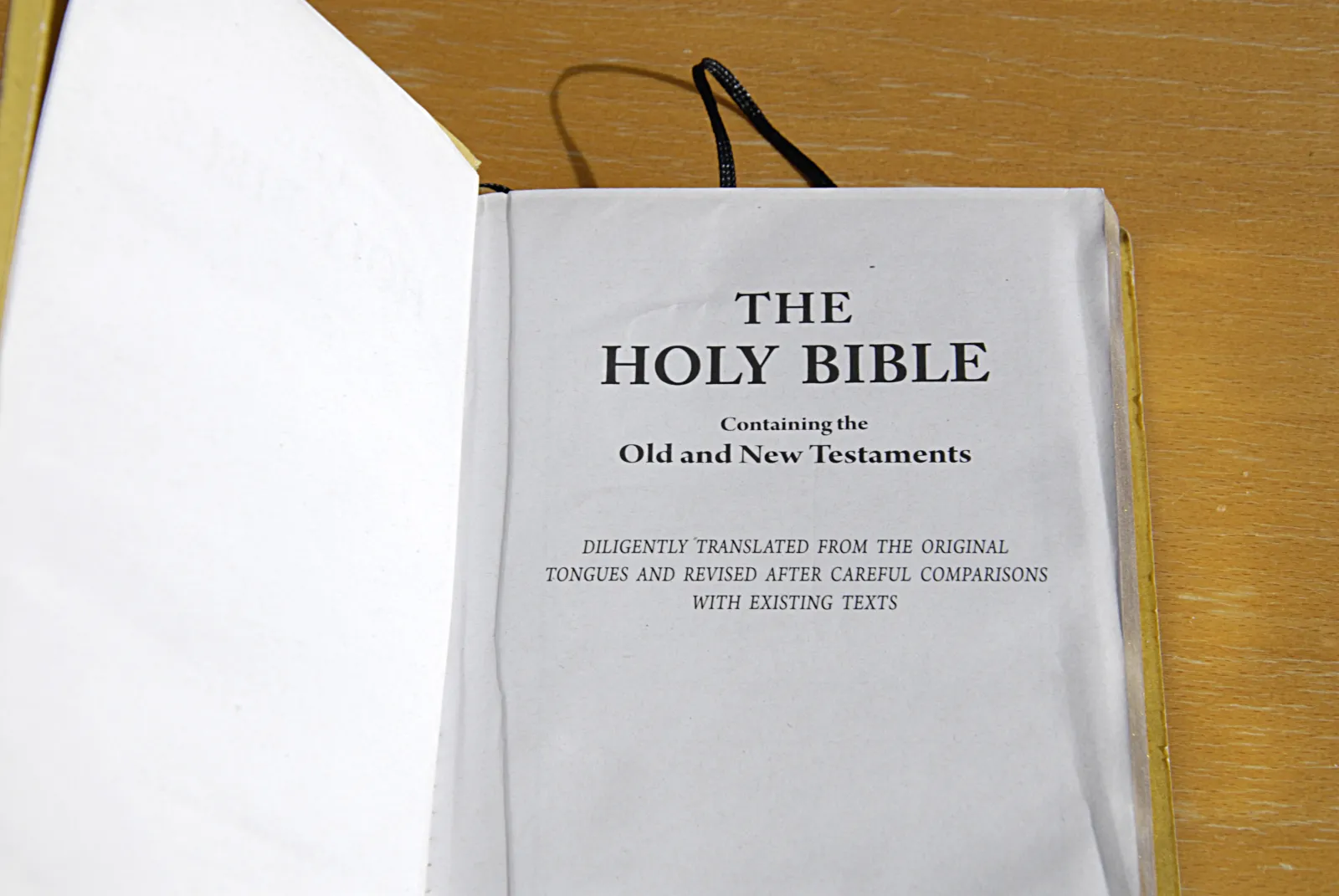
The Holy Bible, King James version. | Francis Dean/Corbis via Getty Images


Her legal team, led by Liberty Counsel founder Mat Staver, has framed the case as one involving fundamental constitutional protections. Following the Maine Supreme Judicial Court's ruling, Staver said the decision "rejects the First Amendment right of a fit parent to raise her child consistent with her Christian faith" and conflicts with existing Supreme Court precedent.

Friday, July 17, 2026

Scientists Design Particle That Makes Cancer Cells Self-Destruct


Published
Jul 16, 2026 at 07:22 PM EDT

updated
Jul 16, 2026 at 07:23 PM EDT


By Maria Azzurra Volpe
Reporter
Newsweek is a Trust Project member


Researchers have developed a new nanoparticle-based strategy that could advance a promising cancer treatment approach by using tumors’ own copper supply to trigger cancer cell death.

The study, led by researchers at Guizhou Medical University and published in Biomedical Analysis, focuses on cuproptosis, a form of cell death that occurs when copper disrupts cancer cell survival mechanisms.

Cuproptosis has previously attracted interest as a possible cancer treatment approach, but many previous strategies have relied on adding external copper—raising concerns about toxicity to healthy tissues.

The new system is designed to avoid that problem by delivering a copper-binding agent directly to cancer cells and taking advantage of the copper already present inside tumors.

To create the system, researchers developed biodegradable nanoparticles made from PLGA-PEG, a material known for its safety and ability to break down in the body. They modified the surface of the nanoparticles with iRGD, a tumor-penetrating peptide designed to help guide the particles toward cancer cells.

The nanoparticles were loaded with TPEN, short for N,N,N′,N′-tetrakis(2-pyridylmethyl)ethylenediamine, a compound that binds to metal ions such as copper.


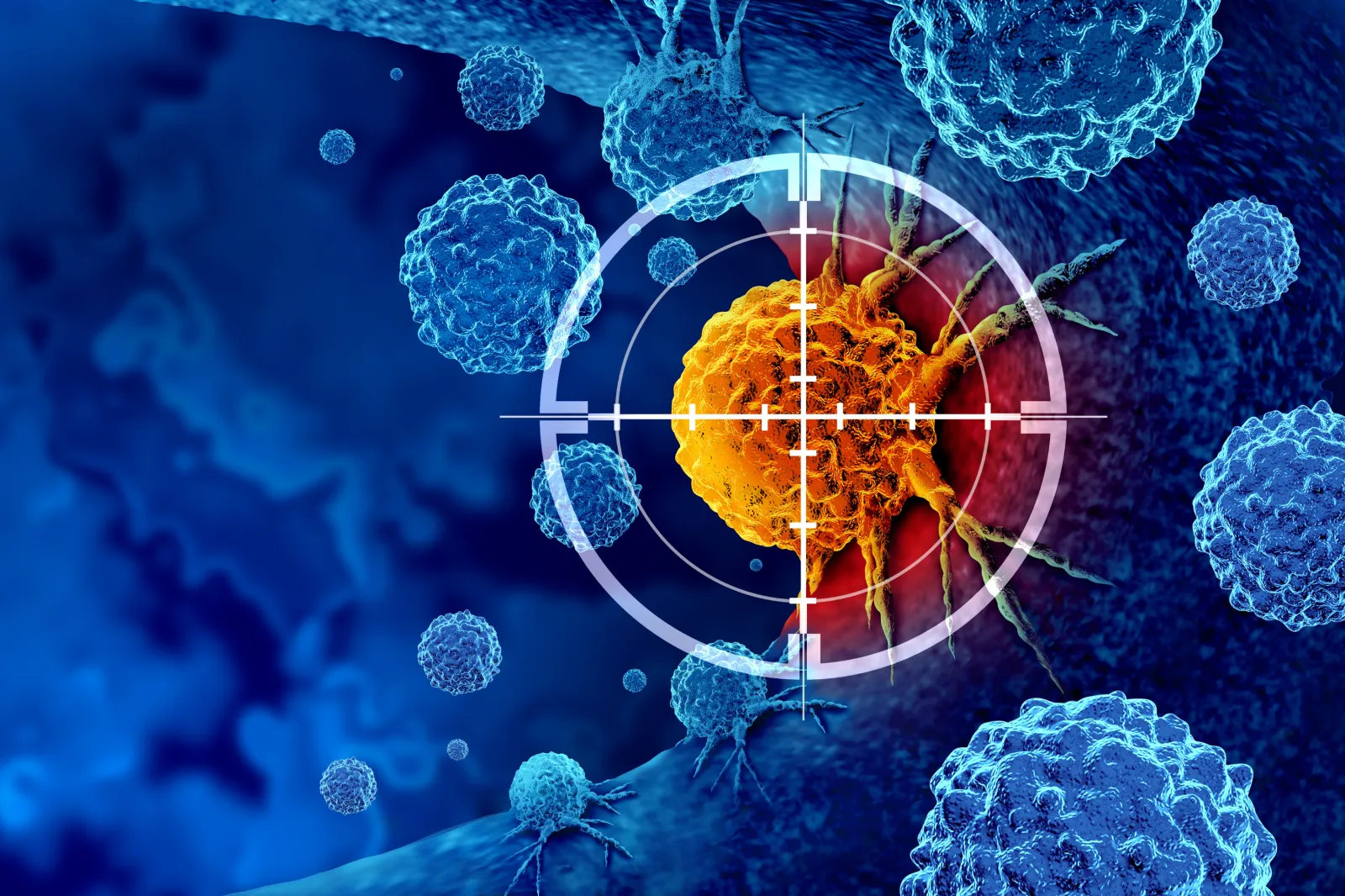
A 3D render illustrates targeted cancer cells treatment. | Getty Images

Saturday, June 13, 2026

Donald Trump’s Evangelical Base May Be Cracking


PUBLISHED

JUN 12, 2026 AT 11:09 AM EDT


By Andrew Stanton
Weekend Staff Writer

President Donald Trump’s approval rating with evangelical voters, a critical voting bloc for the Republican Party, is slipping, according to a new poll.

The poll suggests support for Trump among his evangelical base is cracking ahead of the 2026 midterms, when Democrats hope to win control of the House of Representatives and the Senate. White evangelical or born-again Christians were essential to his 2024 election, as he won the group with 82 percent support, according to CNN exit polling. A fracture in that base could be a major red flag for Republicans’ prospects in this year’s elections.

Trump Evangelical Support Slips: What To Know

Trump’s approval rating among evangelical voters fell to 52 percent in the latest Reuters/Ipsos poll, which surveyed 4,531 adults nationwide from June 3-8, with a margin of error of plus or minus 2 percentage points. That marks a downward trajectory from August 2025, when his approval rating among evangelical Americans was 61 percent, according to the poll.

Across all Americans, Trump’s approval rating was 35 percent. His approval has tumbled amid economic concerns around the cost of living and higher gas prices following the Iran war, which began at the end of February and has not polled well among Americans.

Fifty-four percent of evangelical respondents said they do not believe Trump’s use of the military in Iran is “in line with their understanding of Christianity,” compared to 41 percent who said it was.

Monday, March 09, 2026

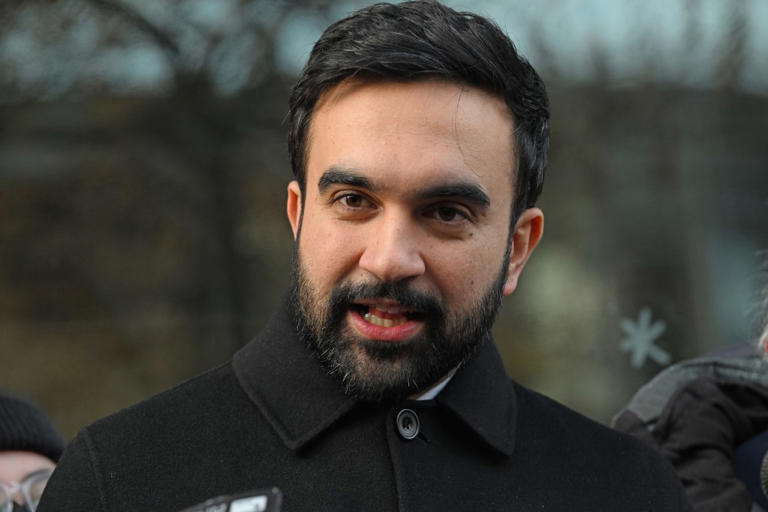
Zohran Mamdani’s 'white supremacist' protest post draws MAGA backlash

Story by Kate Plummer • 

Mamdani Says He Will ‘Not’ Ban Snowball Fights After Police Incident
Mayor, are you willing to revise your statement regarding the

New York Mayor Zohran Mamdani has triggered a backlash from people associated with the Make America Great Again (MAGA) movement after calling out a “white supremacist” following a protest outside his residence on Saturday.

The Context

Images taken at the scenes outside Gracie Mansion and posted to social media showed smoke and an apparent improvised explosive device lying in the street.

The event was organized by Jake Lang, a conservative influencer who was pardoned for charges tied to the January 6, 2021, U.S. Capitol riot.


Zohran Mamdani is seen in New York on December 1, 2025.

New York City Comptroller Mark D. Levine, citing information from NYPD Commissioner Jessica Tisch, told Newsweek that the two individuals arrested for deploying the ignitable devices were part of a counter-protest, not Lang’s group.

Two Pennsylvanians, 18-year-old Emir Balat and 19-year-old Ibrahim Kayumi, were arrested, NYPD Commissioner Jessica Tisch told reporters at a media conference on Saturday.

The men had not been charged by early morning Monday, according to CBS News. Newsweek contacted NYPD via email on for the latest on Monday morning.

Mamdani wrote on X about 1 p.m. ET on Sunday that “white supremacist Jake Lang” had organized the protest and said it was “rooted in bigotry and racism.” Mamdani then called out “the attempt to use an explosive device” as “criminal” and “reprehensible” but did not reference police reports that the devices were linked to counter protestors, nor did he name the individuals arrested in connection with the matter. The post has since been viewed more than 17 million times on X.

Newsweek reached out to Mamdani’s office outside of normal office hours on Monday.

Saturday, October 11, 2025

Pope Leo Blessing Ice Sparks Anger: ‘Pagan Earth-Worship Ritual’


PUBLISHED

OCT 02, 2025 AT 12:17 PM EDT


By Jordan King

US News Reporter


Multiple people have spoken out against Pope Leo blessing a block of ice during a global church summit on climate change, with one calling it part of a “weird pagan Earth-worshipping hippy ritual.”

Leo carried out the blessing while he presided over the 10th anniversary celebration of immediate predecessor Pope Francis's landmark ecological encyclical (a papal letter sent to all Roman Catholic bishops), Laudato Si, or Praised Be.

Pope Leo was presiding over the Raising Hope for Climate Justice’ International Conference at Castel Gandolfo, just south of Rome, in front of more than 1,000 people, according to the National Catholic Reporter.

Footage of him blessing a block of ice has been shared widely online. Several figures have criticized the move, classing it as “paganism” and saying the “the leader of the Catholic Church shouldn’t be anywhere near this nonsense.”

Sunday, August 31, 2025

JD Vance Says He's Ready to Take Over From Trump: How VPs Assume Presidency


Published Aug 30, 2025 at 1:11 PM EDTUpdated Aug 30, 2025 at 1:53 PM EDT

White House Addresses Trump's Health Speculation
By Peter Aitken
Politics Weekend Editor

Vice President JD Vance said this week he was ready to step into the Oval Office should a "terrible tragedy" befall President Donald Trump, and as speculation about the president's health went viral this week, many questioned what the actual process for the vice president to assume the presidency looks like.

Newsweek is looking back at the handful of times a vice president has stepped in to serve as president and outlines the process of ascendancy.

Thursday, June 26, 2025

Church Stormed by ICE Agents in California


Published Jun 26, 2025 at 9:52 AM EDT

Trump Administration Will Allow Migrant Arrests at Churches, Schools

By Billal Rahman
Immigration Reporter

Federal immigration agents conducted enforcement operations in and around several churches in Southern California.

U.S. Immigration and Customs Enforcement (ICE) agents entered Catholic parish properties in Montclair and Highland on Friday, June 20, according to The San Bernardino Sun.

Newsweek reached out to ICE and the churches involved via email for comment.

Why It Matters

The Department of Homeland Security reversed the Biden administration's policy of prohibiting ICE agents from operating in or near schools, churches, and other "sensitive locations."

Churches in the United States play a key role in supporting migrants by offering resources, aid, and assistance. They often act as temporary shelters, especially for newcomers or those passing through. Many provide designated areas for rest and recovery, while also operating food banks, distributing clothing, and supplying other essentials to help migrants address their immediate needs.

What To Know

ICE detained several individuals in the parking lot of St. Adelaide Church in Highland, none of whom were parish employees or registered parishioners, according to The San Bernardino Sun.

ICE agents took one male parishioner into custody at Our Lady of Lourdes Church in Montclair, the outlet reported.

"We have experienced at least one case of ICE agents entering a parish property and seizing several people. It should be no surprise that this is creating a tremendous amount of fear, confusion and anxiety for many. It is not of the Gospel of Jesus Christ – which guides us in all that we do," Bishop of the Diocese of San Bernardino, Alberto Rojas, said in a statement Tuesday.


A woman walks past Our Lady of Perpetual Help Catholic Church in Downey, California, where she said she witnessed masked federal agents detaining a person earlier this month, on June 20, 2025. AP/Damian Dovarganes

Saturday, June 07, 2025

Pope Leo Sells Out US Event Clashing With Parade on Trump's Birthday


Published Jun 07, 2025 at 11:44 AM EDT

By Martha McHardy
US News Reporter

Pope Leo XIV has helped sell out a stadium show in Chicago with a promised virtual appearance—scheduled for the same day as a major military parade in Washington, D.C.

Within the first 15 minutes of ticket availability, more than 9,000 people requested seats for the Chicago gathering. By the end of the first day, that number had climbed to 20,000. As of Friday, the $5 tickets were completely sold out. The event will be streamed live online, although CatholicTV has not confirmed whether it will air the broadcast.

Why It Matters

Pope Leo's expected involvement in the Chicago event, which will be streamed online, will draw huge interest and will divide some attention away from the Trump-backed military parade the same day, the president's birthday.

The pope, in his first address to world diplomats, said the dignity of migrants had to be respected, potentially putting himself on a collision course with the Trump administration, which has stepped up enforcement of immigration law, arguing voters' concerns on the topic have long been ignored.


From left: Donald Trump attends a meeting at the White House in Washington, D.C., June 5, 2025; and Pope Leo XIV leaves after his weekly general audience in St. Peter's Square at The Vatican, May... More AP

Sunday, May 04, 2025

Catholics Rebuke Donald Trump's AI-Generated Pope Image


Published May 03, 2025 at 7:23 PM EDT
Updated May 03, 2025 at 8:27 PM EDT


By Mandy Taheri
Weekend Reporter

Catholics denounced an artificial intelligence (AI)-generated image of President Donald Trump dressed as the pope, calling it offensive and disrespectful as they continue to mourn the death of Pope Francis.

Newsweek has reached out to the United States Conference of Catholic Bishops and the Holy See Press for comment via email on Saturday.
Why It Matters

Trump's social media post comes during Novemdiales, the nine-day period of official mourning observed by the Catholic Church following the death of a pope. Daily masses and prayers are being held through May 4 in honor of Francis who died on Easter Monday aged 88.

His funeral on April 26 in St. Peter's Square brought together heads of state, including Trump, religious leaders from around the world, and the general public. His body was laid to rest in St. Mary Major, one of the four papal basilicas in Rome.

Trump's post also comes just days after the president, who is not Catholic, jokingly told reporters that he would "like to be pope," saying "that would be my number one choice." Trump has also vowed to make American "more religious."

Sunday, September 15, 2024

Ryan Wesley Routh, Would-be Trump Assassin, Fought in Ukraine, Supports War


Published Sep 15, 2024 at 5:42 PM EDTUpdated Sep 15, 2024 at 7:04 PM EDT

By Barney Henderson AND Kaitlin Lewis


A suspect is in custody after an apparent assassination attempt against former President Donald Trump at his golf course in West Palm Beach, Florida.

The suspect was identified as Ryan Wesley Routh, aged 58, officials told The Associated Press.

Routh's support for Ukraine, past criminal offenses

CNN chief law enforcement and intelligence analyst John Miller reported Sunday afternoon that Routh's social media accounts have focused on his "self-proclaimed involvement" in the war in Ukraine, including his supposed effort to recruit soldiers to fight in the conflict. Routh also claimed to have fought in Ukraine as it continues to hold off Russia's invasion.

Miller said that Routh has been living in Hawaii and was formerly a construction worker in North Carolina. The suspect has also reportedly been previously arrested eight times, mostly for minor offenses.

Routh appears to have previously spoken with The New York Times about his effort to recruit Afghan soldiers who fled the Taliban to fight in Ukraine. At the time of the report, which was published on March 25, 2023, Routh told the Times that he had spent several months in Ukraine in 2022.

A Semafor report published on March 10, 2023, cited Routh as the head of the International Volunteer Center (IVC) in Ukraine, a private organization that works to "empower volunteers" and other non-profit groups that work to "enhance the distribution of humanitarian aid throughout Ukraine," according to the IVC's website.

The Associated Press (AP) reported that Routh was convicted in 2002 of possessing a weapon of mass destruction, per online North Carolina Department of Adult Correction records. While the documents reviewed by AP did not provide details about the case, a December 2002 story by News & Record in Greensboro, North Carolina, said that a man with the same name was arrested after a three-hour standoff with police. That report said that Routh was charged with carrying a concealed weapon and possessing a weapon of mass destruction, "referring to a fully automatic machine gun."


Ryan Wesley Routh speaking about the Russia-Ukraine War in 2022
AK-47 pointed into golf course

Friday, February 16, 2018

New 'The Community': 5 Things We Know About Fringe Christian Sect


Who is Korean pastor David Jang, what is the Community and how are they connected to the latest round of layoffs at 'Newsweek'?


Nicholas Kamm/Getty

By Elizabeth Yuko

3 days ago


Last week, several high-ranking editors and veteran reporters were fired from Newsweek, following a January 19th raid of their New York City office by the Manhattan District Attorney as part of an investigation into the publication's finances. The nearly 85-year-old magazine, as well as the International Business Times, are both owned by the Newsweek Media Group, which reportedly has connections to Olivet University – a small, evangelical Bible college in San Francisco – as well as a fringe Christian sect known as "The Community."

The extent of the relationship between the media organization, the university and The Community – or the ties to controversial Korean pastor David Jang, who is the founder of both the school and the sect – is not yet clear. (Newsweek Media Group and Jang did not respond to emails requesting comment; a representative for Olivet University tells Rolling Stonethat their institution was founded by Jang "and is affiliated with a group of evangelical Christians. Like millions of other Evangelical Christians worldwide, Olivet is associated with and shares the beliefs of Evangelical Christians. Recent media reports which attempt to portray a business as a religious business due to the beliefs of their owners is a practice which is plainly discriminatory.")

Yet details continue to emerge on what, exactly, is involved with membership in this Christian group that has been described as having some of the characteristics of a cult. Here's what we know about The Community so far.

It's been around for more than 25 years.

In a 2014 investigative feature, Ben Dooley at Mother Jonesreported that Jang founded "the Community" in 1992 based on the idea that, instead of Christians focusing on their reward in heaven, they should create heaven on earth via institutions that "will remake the world in the image of the church." So far, it seems Jang has attempted to accomplish this by founding Olivet University in 2000, and launching several online publications including Christian Today and Christian Post. In 2006, he took a more secular approach when he founded IBT Media, publisher of the International Business Times, which acquired Newsweek in 2013.

Thursday, February 11, 2016

VATICAN TELLS NEW BISHOPS THEY DON’T HAVE TO REPORT SEXUAL ABUSE TO POLICE


WORLD


BY LUCY WESTCOTT ON 2/11/16 AT 10:11 AM


A Vatican official has told newly appointed bishops that they have no obligation to report instances of clerical sexual abuse, as it's the responsibility of the victims and their families. Pope Francis, left, leaves at the end of the Ash Wednesday Mass in St. Peter's Basilica at the Vatican, February 10.ALESSANDRO BIANCHI/REUTERS


WORLDVATICANCATHOLIC CHURCH


Updated | The Vatican has told new Catholic bishops that they have no obligation to report clerical child abuse, according to reports.

During a presentation for newly appointed bishops, French Monsignor Tony Anatrella said they don’t have a duty to report abuse because it should be the responsibility of victims and their families to go to the police. The comments were first reported by John L. Allen at the Catholic news site Cruxnow.com earlier this week.

Anatrella, a psychtherapist and consultant to the Pontifical Council for the Family and the Pontifical Council for Health Care Workers, is known for his controversial views on homosexuality, including that the acceptance of homosexuality in the West is creating “serious problems” for children. He also helped to write a training document for newly appointed bishops that further spells out the church’s stance on clerical sexual abuse.

“According to the state of civil laws of each country where reporting is obligatory, it is not necessarily the duty of the bishop to report suspects to authorities, the police or state prosecutors in the moment when they are made aware of crimes or sinful deeds,” the training document, which was released by the Vatican earlier this month, reads. The document says bishops are required only to report the suspected abuse internally.

When reached for comment, a Vatican receptionist told Newsweek that Thursday is a holiday, so no one in the Vatican press office would be readily available. Newsweek also left a voicemail message at the Vatican’s Permanent Mission to the United Nations and emailed every person listed as the Mission’s permanent staff to seek confirmation and clarification of the comments, but has not yet received a response.

Anatrella’s comments appear to be at odds with efforts made by the Pontifical Commission for the Protection of Minors, which held a week-long meeting earlier this month. The proposals from the commission, which will be sent to Pope Francis for his consideration, include “a request for him to remind all authorities in the Church of the importance of responding directly to victims and survivors who approach him,” the Vatican said in a press release.

Allen notes that the commission was not involved in the training session given by Anatrella amd wonders why the commission is “not entrusted with making such a presentation to new bishops.” The next course for new bishops will be held in September, Allen reports.

"In one sense, this isn’t surprising. As BishopAccountability.org has pointed out, 'zero tolerance,' while often uttered by Catholic officials, isn’t even the official policy of the global church," Barbara Dorris of St. Louis, Outreach Director of SNAP, the Survivors Network of those Abused by Priests, said in a statement emailed to Newsweek.

"But it’s infuriating—and dangerous—that so many believe the myth that bishops are changing how they deal with abuse and that so little attention is paid when evidence to the contrary—like this disclosure by Allen—emerges," she said.

The commission was set up in March 2014 with the explicit goal of proposing initiatives for “protecting minors and vulnerable adults, in order that we may do everything possible to ensure that crimes such as those which have occurred are no longer repeated in the Church." Futhermore, the commission "is to promote local responsibility in the particular Churches, uniting their efforts to those of the Congregation for the Doctrine of the Faith, for the protection of all children and vulnerable adults.”

This story has been updated to include comments from SNAP, the Survivors Network of those Abused by Priests​.


.

Thursday, April 02, 2015

How the presidential candidates found their faith (Updated 4/4/15)


NEWSWEEK


By Matthew Cooper / April 2, 2015


It was built in the 1920s in the Spanish Mission style, topped by one of those red clay tile roofs so popular in South Florida back then. The Catholics laid their foundation just a short walk from the famed Biltmore Hotel (modeled on the Giralda, the tower of the Seville Cathedral in Spain), and named their church in honor of Saint Thérèse of Lisieux, also known as “the Little Flower.” These days, Coral Gables is majority Cuban-American, the Church of the Little Flower’s pastor, the Reverend Michael W. Davis, tells me, which might also explain why he is so comfortably bilingual. Unlike so many Catholic parishes in the U.S., Davis says, his still boasts packed pews and “reflects a vibrant community.” He adds playfully that the church’s lovely setting makes it a “wedding factory.”

On a more serious note, Davis explains the Rite of Christian Initiation of Adults (RCIA)—the Catholic conversion program. He tells me about it because Little Flower’s most famous parishioner is a convert: Jeb Bush, the former governor of Florida who’s already touted as the Republican front-runner in the upcoming presidential race, attends Mass frequently with his wife, Columba, and their daughter, Noelle. “[He’ll be] gone all week, and yet he regularly makes the liturgy,” Davis says.

Jeb, of course, hails from one of America’s great preppy families, one more strongly associated with J. Press suits and Kennebunkport tennis than a La Santa Misa (a Mass conducted in Spanish). The Bushes are famously of the Episcopal wing of Protestantism, whose origins trace back, in part, to Henry VIII’s peevish break with Rome. Jeb, which is an acronym for John Ellis Bush, joked in 2013, “[I’m] no longer a WASP; I guess I’m whatever a W.A.S.C. would be”

As a young man, Jeb showed no interest in Catholicism, the Vatican or much of anything except, perhaps, baseball and weed. He attended Phillips Academy Andover, like his brother George W., the 43rd U.S. president, and played baseball there, like his father, the 41st. While at Andover, he took a semester abroad, working with the poor in Leon, Mexico, where he was quickly and deeply smitten with a local young woman, Columba Garnica de Gallo.

They married when she was 20 and he was 21; in addition to exchanging vows, they exchanged languages: He became fluent in Spanish, and she learned English. It took the rest of the Bush clan some time to get used to having a Catholic in-law, and this being the mid-’70s—a time of coups and juntas across Latin America—it probably caused a few ripples for Columba’s family that her new father-in-law was head of the CIA.

They later married and lived in Texas and did a stint in Caracas, Venezuela before settling in Miami in 1980, where Jeb carved out a living in real estate, investments and finally politics. The couple attended Mass together, and their children were baptized and given confirmations, but Jeb didn’t convert. This wasn’t owing to any great desire to retain his ties to the Episcopal Church, friends say. He just didn’t feel moved to take on the course of studying and then going through the rites to become a full-fledged Catholic.


Jeb Bush waves to the crowd during his Florida Governor inauguration ceremony, January 7, 2003, in Tallahassee, Fla. Bush, the former governor of Florida who’s already touted as the Republican front-runner in the upcoming presidential race, attends Mass frequently with his wife and daughter.


That changed in 1995. He took RCIA, the gateway to conversion, at the Church of the Epiphany in Miami, when he was 43. Jeb has said he was motivated “by the faith of my wife. I didn’t want to raise our children in a mixed marriage,” although that explanation is a little puzzling since Jeb’s children were 20, 19 and 13 at the time. He has also acknowledged that there were strains in his marriage back then, many of them related to his 1994 campaign for governor. It was Jeb’s first run for office, and it weighed heavily on Columba, who has never cottoned to the role of being a hand-waving, ribbon-cutting, speech-giving candidate’s wife.

“You’re away from home. There’s stress,” says one person close to Jeb, explaining the clouds over the marriage then. What’s more, Jeb lost that race. Sure, the Bush men had seen defeat over the decades, but Jeb’s loss was particularly disheartening for him in a year when so many Republicans were swept into office nationwide, and when his brother George got elected governor of Texas despite starting out as a big underdog. Like so many people—regardless of whether they’re pols—Jeb turned to religion in hard times.

That emotional trough may have been the catalyst for his conversion, but Jeb soon became an enthusiastic Catholic who loved the ritual and the sacraments. He even started carrying a rosary in his pocket—a habit that continues to this day—but he retained his father’s reluctance to talk about his faith. “He’s not a cufflinks Catholic,” says Jim Towey, president of Ave Maria University, near Naples, Florida, and a longtime friend of Jeb’s. By that, he means Bush isn’t showy about it. “Faith isn’t something he talks a lot about,” says Towey, who ran the Office of Faith-Based and Community Initiatives in the George W. Bush White House.

A former lawyer, Towey dedicated his life to Christ after a mission to Calcutta to work with Mother Teresa, and he became her counsel in America. “Like a lot of people who convert, [Jeb] has a zeal about it and a joy,” he says. He recalls taking Jeb and Columba to Tijuana to meet with priests who had worked with Mother Teresa. The visitors were greeted with a song at the bus stop, a welcome that stirred something in Bush. “You could see his joy. He was moved to tears,” Towey says.

Jeb’s road to Catholicism is a telling example of the noble and knotty, maddening and comforting, always contradictory and confusing ways faith and politics intersect in America. We like to say we are independent thinkers basing our votes on carefully crafted political beliefs and goals, but we often vote with our tribe. We’re a church-going people, but we elect a diverse set of presidents—some who profess to having been saved, like George W. Bush, and some with a decidedly more secular mien, like Barack Obama. This year’s growing gaggle of presidential aspirants is an intriguing snarl of inconsistencies when it comes to faith—much like the rest of America.


U.S. Sen. Ted Cruz stands on stage while speaking to a crowd gathered at Liberty University to announce his presidential candidacy March 23, 2015 in Lynchburg, Va. Cruz was born to lapsed Catholics, but his father, Rafael, a Cuban exile, became born again when Ted was a toddler. MARK WILSON/GETTY

So while the media obsesses about Hillary Clinton’s emails or Ted Cruz’s pugilism or Chris Christie’s girth, one the biggest stories of the 2016 campaign will be how faith has changed the candidates themselves—and how it may decide which of the dozen or so likely candidates will be sworn in as our next president on January 20, 2017.

Consider for a moment the messy, mixed messages of that Inauguration Day, a pageant that’s so peculiar and so right for a republic that says it loves God but bans organized prayer from our schools. It’s a ceremony that’s secular, yet shrouded with religious references and symbolism. The incoming president lays his hand on the Bible—and so far it’s only been a man and it’s only been a Bible—and pledges to God that he will defend a Constitution that forbids a religious test for public office. It is both inspiring and contradictory. And when it comes to God and politics, so are we all.

Evangelists and Chanters
Jeb Bush’s conversion to Catholicism was a very personal journey, one that millions of his fellow Americans have made in one church or another. People in the U.S. switch faiths with remarkable frequency. There aren’t firm statistics comparing, say, conversion rates in the 19th century with those today, but social scientists believe it’s on the rise. And that’s notable if only because Americans have always been impulsive shoppers when it comes to their pew of choice. Think of the remarkable rise of that uniquely American creed Mormonism, and of charismatic evangelists like Aimee Semple McPherson and Billy Graham, and of the vast mega-churches.

According to the Pew Research Center’s Religion and Public Life Project, more than half of all Americans will leave the church of their youth at some point, which suggests that most churches and temples and mosques are launching pads, not permanent homes.

Many parishioners who flee eventually return to the fold, but the Religion and Public Life Project, in its “Faith in Flux” report, says about 40 percent of those who give up the religion of their birth don’t return. And many are joining a flock that’s one of the fastest-growing religious groups in America—those who believe in a higher being but don’t feel attached to any church. These “Nones” make up almost 20 percent of adults in this country.

Making the picture even more complicated is the question of dabbling in two religions. A relatively small number of Americans identify with more than one faith, e.g., “I’m Muslim and Lutheran.” But that doesn’t include another burgeoning group that social scientists know is out there but haven’t yet measured: Americans who identify with one religion but who also casually borrow practices from another—say, Buddhist chanting or Hindu meditation.

At times it seems as if we’re shopping for churches while pushing a cart at Wal-Mart. But we’re pious, too. America has one of the highest church attendance rates among Western countries. Around 40 percent of Americans report attending a service in the past week. That number is close to 15 percent in the U.K. And with apologies to that high priest of atheism, Bill Maher, American voters have no interest in nonbelievers. No atheist has ever made a serious run for president, and only one of the 535 members of Congress lists her religion as “none:” Kyrsten Sinema, Democrat of Arizona. And while very few of us would pick our surgeon or plumber based on his or her faith, we expect our politicians to be pious. We want to know they pray, even though we don’t seem to care all that much about how or where they pray.


Mike Huckabee greets voters at the Methodist Episcopalian Church polling station January 8, 2008 in Dover, N.H. The former Arkansas governor and minister has never strayed from his Baptist roots. DARREN MCCOLLESTER/GETTY


Harry Loved His Bourbon

But how much faith is enough? In presidential candidates, Americans are all over the map. Harry Truman was a drinking, gambling Baptist who didn’t talk a lot about his faith. Jimmy Carter drank rarely, never gambled and was a loquacious Baptist eager to share being born again. George W. Bush, an Episcopalian turned Methodist, has told journalists, and recounted in his memoir, how he stopped drinking. “I believe God helped open my eyes which were closing because of booze,” he wrote in Decision Points. He was followed in the White House by Barack Obama, who talks about his faith but in a less emotional, more intellectual way.

We don’t seem quite as bigoted as we once were when it comes to judging a candidate’s religion. Mitt Romney’s Mormonism didn’t stop him from being the Republican nominee against Obama last time around. Joe Lieberman, who is Jewish, didn’t seem to be a drag on Al Gore’s ticket, since they won the majority of votes in the 2000 presidential election. Conservative Catholic Rick Santorum polled best in the South in 2012, while John Kennedy in 1960 had to solemnly swear to Dixiecrats that he wouldn’t be taking orders from the Vatican.

But tribalism still rules at the ballot box. Among Mormons, 80 percent lean Republican, according to the Pew Forum on Religion and Public Life. Jews lean 65 percent Democratic. Atheists and agnostics are 71 percent Democratic. Black Protestants lean 88 percent Democratic. White Evangelicals are 70 percent Republican. And while it’s true that Catholicism is big enough to include Nancy Pelosi and John Boehner, Bill O’Reilly and Stephen Colbert, where we worship is often an excellent predictor of how we’ll vote.


Hillary Rodham Clinton speaks to the congregation at Northminster Presbyterian Church in Columbia, S.C., on January 13, 2008. Clinton has always been a devout Methodist. JOSHUA LOTT/THE NEW YORK TIMES/REDUX


Aqua Buddha or Purifying Fire?

This season’s crop of presidential candidates reflects this country’s many contradictions in faith. A minority of them have stuck with their first church. Hillary Clinton has always been a devout Methodist—her only conversion was from Goldwater Girl to ’60s liberal under the tutelage of her suburban Chicago pastor, Don Jones, who took his youth group to hear Martin Luther King Jr. speak. Mike Huckabee, the former Arkansas governor and minister, has never strayed from his Baptist roots—his latest book is called God, Guns, Grits and Gravy. Santorum has always been Catholic; he tells Newsweek his faith was invigorated while he was in the Senate, owing to factors like his parish priest in Northern Virginia, his experiences of fellowship in the Bible Study Group in the Senate and his wife’s deep faith.

Ben Carson, the renowned neurosurgeon, hews closely to Seventh-day Adventist teachings, which include observing the Sabbath on Saturday and a literal belief in creationism. (He allows that Earth may have been formed over six “periods,” but insists that however long it took, it was God and not a Darwinian struggle that made us who we are.) Carson says his faith strengthened when he had an epiphany as a teenager that took him off a path he believed was headed to prison and onto one that made him the pride of the Johns Hopkins School of Medicine. (He’s famous for pioneering an operation to separate twins joined at the back of the head.)

“I had a hair-trigger temper,” he tells Newsweek. “But doubt has crept out of my life over the years. I’ve seen too many miraculous things.” Carson’s presidential aspirations got a boost when he used the National Prayer Breakfast earlier this year to chide Obamacare—while standing just a few feet from the president.

But the rest of the Republican candidates are, like Jeb Bush, switchers—just like so many of the voters they are hoping to woo. Some of those shifts have been modest: Rand Paul was raised Episcopalian and is now a Presbyterian. The libertarian-leaning Republican may be best known for a very different and much less serious liturgy: In his 2010 Senate bid, Paul had to explain a college hazing ritual he took part in at Baylor University, one that forced pledges of the NoZe brotherhood to pray to a faux God, Aqua Buddha.

Other 2016 aspirants have made more dramatic moves, like Jeb’s conversion to Catholicism. Cruz was born to lapsed Catholics, but his father, Rafael, a Cuban exile, became born again when Ted was a toddler. “I’m Cuban, Irish and Italian, and yet somehow I ended up Southern Baptist,” says Cruz, who attended Baptist schools while growing up. His father is now a preacher with the Purifying Fire International ministry, founded by religious broadcasters Benny and Suzanne Hinn, and Rafael preaches more than the Gospel. (The elder Cruz has said Obama is trying to use the U.N. to take “our God, and our gun.”)

Marco Rubio’s story is just as interesting. The son of Cuban refugees, the Florida senator was born Catholic, but when his family moved West it converted to Mormonism and Rubio was baptized in the Church of Latter-day Saints. As a teenager, he came back to the Catholic fold, and he is still a Roman Catholic. These days, Rubio attends Mass, but since his wife was raised Baptist, he also spends part of Sunday at an independent Christian church near Miami. Some might say that second scoop of church diminishes Rubio’s Catholicism, but it is the kind of religious fusion, for lack of a better word, so many Americans embrace.


Wisconsin Gov. Scott Walker answers a question during an Associated Press interview, December 19, 2012, at the Governor's residence in Madison, Wis. Walker’s father is a retired Baptist preacher, and if he makes it to the White House, he would be the first preacher’s kid to take residence there since Woodrow Wilson. MORRY GASH/AP


Wisconsin Governor Scott Walker’s father is a retired Baptist preacher, and if he makes it to the White House, he would be the first preacher’s kid to take residence there since Woodrow Wilson. (The same goes for Cruz.) Like many Americans, Walker now attends an evangelical nondenominational church.

John Kasich, the Republican governor of Ohio, who seems increasingly likely to join the presidential fray, was born a Catholic but became an Anglican after his parents perished in a car accident. Today, he speaks openly about his faith and how it affects his governing, even citing the Gospels to defend his decision—rare among Republican governors—to accept Obamacare funds to expand Medicaid. When you meet St. Peter at Heaven’s Gate, Kasich told an Ohio legislator, “he’s probably not gonna ask you much about what you did about keeping government small, but he’s going to ask you what you did for the poor.”


Exorcisms and Rhodes Scholars


The boy sat in the closet with the door closed, worried that his parents would find him and be saddened and angered by what he was reading. He was awed, in the truest sense of the word, by the printed words in front of him. He’d been a great student, the pride of his mother and father, who had emigrated to Baton Rouge from Punjab just a few months before he was born. But this was a traditional Indian home, and the teenage Piyush, enraptured by the New Testament, feared his parents’ disappointment at seeing him swept away by the words of Jesus.


Today, that boy is no longer Hindu, and he’s no longer known as Piyush. He’s called Bobby Jindal, the governor of Louisiana, a proud Roman Catholic. (Born in 1971, he took his nickname from the youngest son on The Brady Bunch.) And, yes, he says, his parents are OK with it now. “I used to think that I had found God, but I believe it is more accurate to say that he found me,” Jindal told Newsweek. He had flirtations with Protestant churches of various kinds as he grew up in the ’80s and ’90s, but when he attended Brown University he found a Catholic church and settled in.


Louisiana Gov. Bobby Jindal, a proud Roman Catholic, sits with his daughter Selia Jindal during the Inaugural Prayer Service in honor of Gov. Jindal in Baton Rouge, La., January 8, 2012. KERRY MALONEY/AP

At Brown, Jindal even took part in what has been widely described as an exorcism, although the Rhodes Scholar avoids that label. Either way, this makes him the only candidate who has acknowledged participating in anything like that. Jindal wrote about it in a 1995 article, “Physical Dimensions of Spiritual Warfare,” for the New Oxford Review. The incident involved a fellow student, “Susan,” who had been facing medical problems and seemed to have a seizure, but not in a Hollywood, head-spinning way. Nevertheless, Jindal and friends who were holding a prayer meeting to help Susan sensed they were witnessing a spiritual crisis, and intervened. He wrote:

The crucifix had a calming effect on Susan, and her sister was soon brave enough to bring a Bible to her face. At first, Susan responded to biblical pas­sages with curses and profanities. Mixed in with her vile attacks were short and desperate pleas for help.

That Jindal needn’t hide his participation in “spiritual warfare”—or that Huckabee is running as a preacher as much as an ex-governor—shows that we’re a long way from what might be called the Kennedy conundrum. In 1960, JFK was only the second Catholic presidential nominee of a major party. (The other, New York Governor Al Smith, lost to the Republican candidate, Herbert Hoover, in 1928.) JFK made the argument that personal faith had nothing to do with governing not just for his own purposes—to woo Protestant voters suspicious of his Catholicism—but for all politicians. He said, “I believe in a president whose religious views are his own private affair.” In other words, God is great at home but not at the office.

That personal and voluntary separation of church and state seems to be an antiquated notion. The dilemma for today’s candidates is deciding how much religion is too much, and we clearly haven’t hit the limit yet. Jeb Bush speaks for most candidates when he says, “As it relates to making decisions as a public leader, one’s faith should guide you.” And if you’re Mormon or have performed an exorcism-ish rite or attend two churches? Most voters seem to be fine with that.


Looking back at past presidents, there is no pattern, no precedence, when it comes to God and governing. Many of the great presidents seemed to follow what the MBA types call Best Practices. Thomas Jefferson attended church and believed in a supreme being, but most historians tag him a deist who believed in God but perhaps not the divinity of Christ. Whatever his inclination or ambivalence, Jefferson is the man America can thank for its freedom of religion.


Ohio Republican Governor John Kasich addresses delegates at the Republican National Convention at the Tampa Bay Times Forum in Tampa, Fla., August 28, 2012. John Kasich, who seems increasingly likely to join the presidential fray, was born a Catholic but became an Anglican after his parents perished in a car accident. TANNEN MAURY/EPA


Abraham Lincoln evoked God repeatedly as he sought to preserve the Union and, later, to end slavery. But he never joined a church—although he rented a pew when he was president. He was accused in his 1846 campaign for the House of Representatives of being “a scoffer of Christianity.” It was a charge Lincoln denied, while acknowledging, “That I am not a member of any Christian church is true.” Yet signs of his faith abounded. When freed slaves presented him with a Bible, he declared, “In regard to this great book, I have but to say, it is the best gift God has given to man.”

Ronald Reagan was born into the Disciples of Christ denomination and was famous for his lack of church attendance as president. But he believed in God, and believed that God believed in America. His frequent likening of America to the shining city on the hill—a phrase from Jesus’s Sermon on the Mount—has become a holy cliché in American politics.

Jefferson, Lincoln and Reagan showed that there are many roads to political heaven, and that it’s less important how you read the Bible than how well you use the pulpit.

This article originally and incorrectly stated that Jeb Bush and wife met in Caracas, Venezuela. The two met in Leon, Mexico. The article also incorrectly stated that Jeb Bush converted to Catholicism in 1996. It was 1995.


Source

Tuesday, November 26, 2013

Atheists Take On The IRS


By Victoria Bekiempis / November 22 2013 4:17 PM


Top American secularists allege the tax agency discriminates against them. Reuters


IRS policies on church tax exemptions aren’t just potentially making America poorer – they also illegally discriminate against atheists, a lawsuit alleges.

American Atheists and several other secularist groups claim that the Internal Revenue Service gives preferential treatment to churches and religious organizations who seek or have 501(c)(3) non-profit status compared to secular non-profit organizations. The groups say this violates non-believers’ Constitutional rights because it treats churches differently than non-churches and equates to government support of religion.

Under current IRS policy, churches automatically qualify for 501(c)(3) status, though nonreligious 501(c)(3)s must go through an extensive application process to get the same tax benefits. In addition, religious organizations do not have to fill out annual Form 990 returns reports, which detail charities’ finances so the IRS or nonprofit watchdogs can identify possible fiscal wrongdoing and law-breaking. Critics, who have recently renewed their calls for religious exemption reform, say that these filing differences cost the U.S. government from some $17 to $71 billion annually.

Though American Atheists’ first filed their federal lawsuit in December 2012, oral arguments in the case began late this week.

“We find it discriminatory, so we’re suing,” American Atheists spokesman Dave Muscato tells Newsweek. “The way that this is set up, we all pay for it. We’re all supporting churches for what they do.”

In court filings, the advocacy group argues that a 1961 U.S. Supreme Court opinion that “neither the federal government nor state governments can ‘constitutionally pass laws or impose requirements which aid all religions as against non-believers, and neither can aid those religions based on a belief in the existence of God, as against those religions founded on different beliefs’” supports their claims. American Atheists is also arguing that church-only tax breaks, such as the “parsonage exemption,” which lets clergy members write off housing expenses from their taxable income, aren’t constitutionally kosher, since “non-religious entities may not take any deductions for the housing or living expenses of their employees or volunteers.”

IRS policies also discriminate against donors to non-religious organizations, American Atheists alleges. Non-religious nonprofits must identify, on Form 990, contributors who give more than $5,000, or 2 percent of the organization’s total contributions and grants. But religious non-profits don’t have to disclose mega donors, because they don’t have to fill out a 990. These policies, plus the expense and labor required to meet 501(c)(3) filing requirements, gives churches a “fundraising advantage” and put atheists at risk. “Because there’s a lot of stigma about atheism, many people talk to us and say they would donate more but don’t want their name publicized in that way,” Muscato says.

Court proceedings are set to continue in the coming weeks.

The IRS did not immediately reply to requests for comment, though the agency often does not comment on pending litigation.

When asked previously about the issue, an IRS spokesman sent Newsweek an e-mail linking to a tax guide for religious nonprofits.

 
Source
.

Monday, April 29, 2013

The Secret Faith of Washington

 AUTHOR  Joshua DuBois


From Newsweek
Apr 29, 2013 4:45 AM EDT

A godless city? Please. President Obama’s former religious adviser on the surprising number of believers in D.C.’s corridors of power.


In 1993, Pat Robertson, the Christian broadcaster and stalwart of the religious right, sat down with legendary columnist Molly Ivins and gave a doozy of an interview. “It is the Democratic Congress, the liberal-biased media, and the homosexuals who want to destroy all Christians,” Robertson declared. He also said that Washington was inflicting on Christians “wholesale abuse and discrimination and the worst bigotry directed toward any group in America today. More terrible than anything suffered by any minority in history.”


Shotshop GmbH/Alamy


Now, Pat Robertson is not necessarily known for his rhetorical moderation. This is, after all, the guy who blamed the Haitian earthquake on voodoo, said the “feminist agenda” encourages women to practice witchcraft, and claimed that Episcopalians, Methodists, and Presbyterians have the “spirit of the anti-Christ.” Even most conservative evangelicals cringe whenever he speaks.

But in that interview, Robertson gave voice to a perception that’s still widely shared across the country: most of America thinks Washington is a pretty godless place.

Indeed, this pervasive image of Washington is probably stronger today than at any point in recent memory. Last year’s debate between the White House and the Catholic Church over contraception served for some believers as confirmation that the government simply doesn’t get the importance of faith. More recently, many Americans saw the relative lack of media coverage of the grisly trial of Kermit Gosnell—a Philadelphia abortion doctor—as evidence that Beltway journalists are contemptuous of religious values.

I’ve seen this stereotype about D.C. play out firsthand in my former role as President Obama’s religious adviser and director of the White House faith-based initiative. I recall sitting in the White House with groups of evangelical college students from Texas or Jewish seminarians from New York, who wondered aloud how I could be a practicing believer in a town that dislikes God so much.

Over the years, I saw, and had to respond to, the false email chains and rumors about Washington that have seeped into the consciousness of believers around the country. I remember being at a dinner party in California when a very prominent Christian asked me if Obama had really canceled the National Day of Prayer (he has not). And I spent countless hours explaining that it is not in fact true that military chaplains are prohibited from praying in Jesus’s name (they can, if they choose to).

Last month, Rick Santorum appealed to these beliefs when he accused Obama of seeking to create a society that is “anti-clerical, anti-God, where the government is the center, and they are the ones who care for us.” Listening to Santorum and Robertson talk about government, it would be easy to conclude that, aside from the religious right, believers in Washington simply don’t exist. But here’s the thing: they do exist—and not just in the places you’d expect. Everyone knows about the politicians and interest groups—mainly conservative—who wear their faith on their sleeve. Yet across the ideological spectrum, Washington is filled with people at the height of political power who are practicing their faith seriously and profoundly, but largely out of public view. I recently spoke to some of these people about the role that religion plays in their private and public lives. What their stories make clear is that—in coffee shops, vibrant local congregations, congressional offices, and White House corridors—God is far more present in Washington than most Americans realize.


The bible used by U.S. Vice President Joe Biden to takes the oath of office is seen at the Naval Observatory on January 20, 2013 in Washington, DC. (Kevin Lamarque/Pool/Getty)


FEW PEOPLE in Washington are as close to the center of the action as Denis McDonough, Obama’s chief of staff. Since his appointment this past January, McDonough has helped the president navigate budget negotiations, the gun-control push, and a series of national crises from the Boston bombing to the fertilizer plant explosion in Texas. He’s a seasoned vet in situations like these, having previously served in senior positions on the White House national security staff, the 2008 Obama campaign, and Capitol Hill. In the famous photograph of the Situation Room during the raid against Osama bin Laden, McDonough sat just a few feet away from Obama.

But as close as he is to the president, McDonough is even closer to his faith. In fact, he can sometimes be found in the basement of the West Wing, sharing an early morning breakfast and conversation with a bishop or priest. In a recent interview, his first-ever in-depth conversation with the media about his religious beliefs, MCDonough told me that his deep Catholic faith did not come by accident. In 1966, when his Irish Catholic parents, Bill and Kathleen, moved from Boston, Massachusetts, to Stillwater, Minnesota, his mother had two rules for their relocation: they had to live close to the kids’ school, and close to a Catholic church.


,